Understanding the Main Types of Asphalt Shingles
Asphalt shingles are the most widely installed residential roofing material in North America because they deliver the strongest overall balance of cost, weather protection, design flexibility, and repairability for most homes. For homeowners comparing roofing systems, working with a trusted roofing and exterior contractor like First State Roofing & Exteriors is one of the most reliable ways to match shingle style, ventilation, and underlayment to your budget and climate.
| Feature | Details |
|---|---|
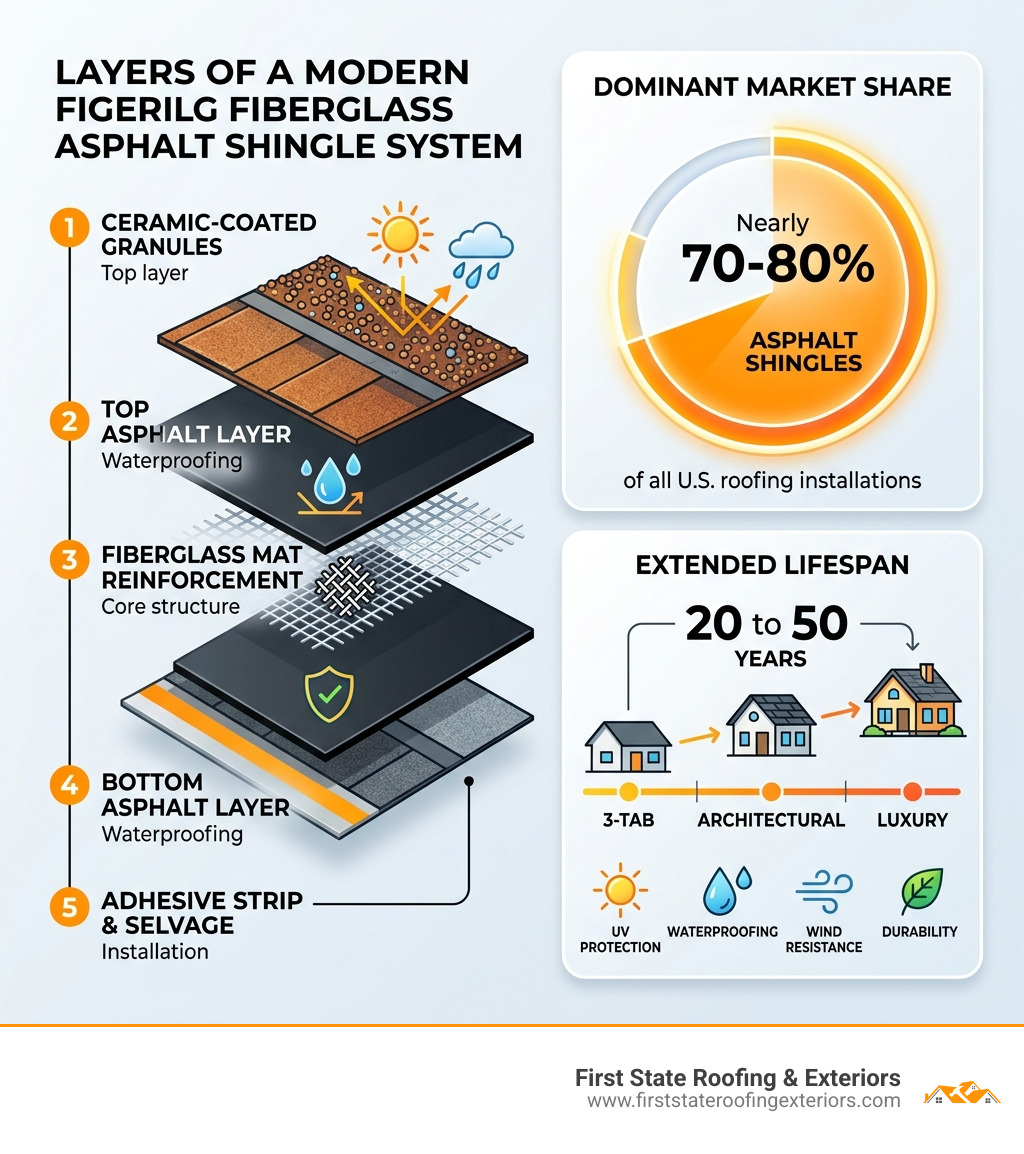
| Market share | Nearly 70-80% of all U.S. roofing installations |
| Lifespan | 20 to 50 years depending on type |
| Cost (materials) | $100 to $200 per square (100 sq. ft.) |
| Types available | 3-tab, architectural, luxury/multilayered |
| Wind resistance | Up to 150 mph (Class H) |
| Fire rating | Class A (highest available) |
| Key features | Algae resistance, impact resistance, cool roof options |
As a trusted Delaware roofing company, we’ve seen how the right shingles protect homes through everything from brutal summer heat to ice-laden winters. This guide gives homeowners direct, practical answers on shingle types, roof system components, performance ratings, realistic cost ranges, installation standards that affect service life, and the upgrade decisions that matter most when planning a roof replacement.
I’m Richard McCain, Owner and President of First State Roofing & Exteriors, and over more than 20 years of hands-on roofing work across Delaware, I’ve installed and evaluated virtually every category of asphalt shingles on the market. That field experience shapes every recommendation in this guide.
Asphalt shingles vocabulary:
When you start shopping for a new roof, you’ll quickly realize that not all asphalt shingles are created equal. Modern shingles are engineered systems built around a fiberglass mat core, coated with weather-grade asphalt, and surfaced with ceramic granules that provide UV protection, color, and impact resistance. This is a major improvement over older organic base shingles made from wood or paper fibers, which absorbed moisture more readily and are now largely obsolete.
The Asphalt Shingle History and Composition shows a steady evolution from simple roll roofing in the late 1800s to the high-performance asphalt shingle roof systems installed today. Choosing the right type depends on your budget, presidential ownership timeline, climate exposure, and the finished look you want your home to have.
Comparing 3-Tab vs. Architectural Shingles
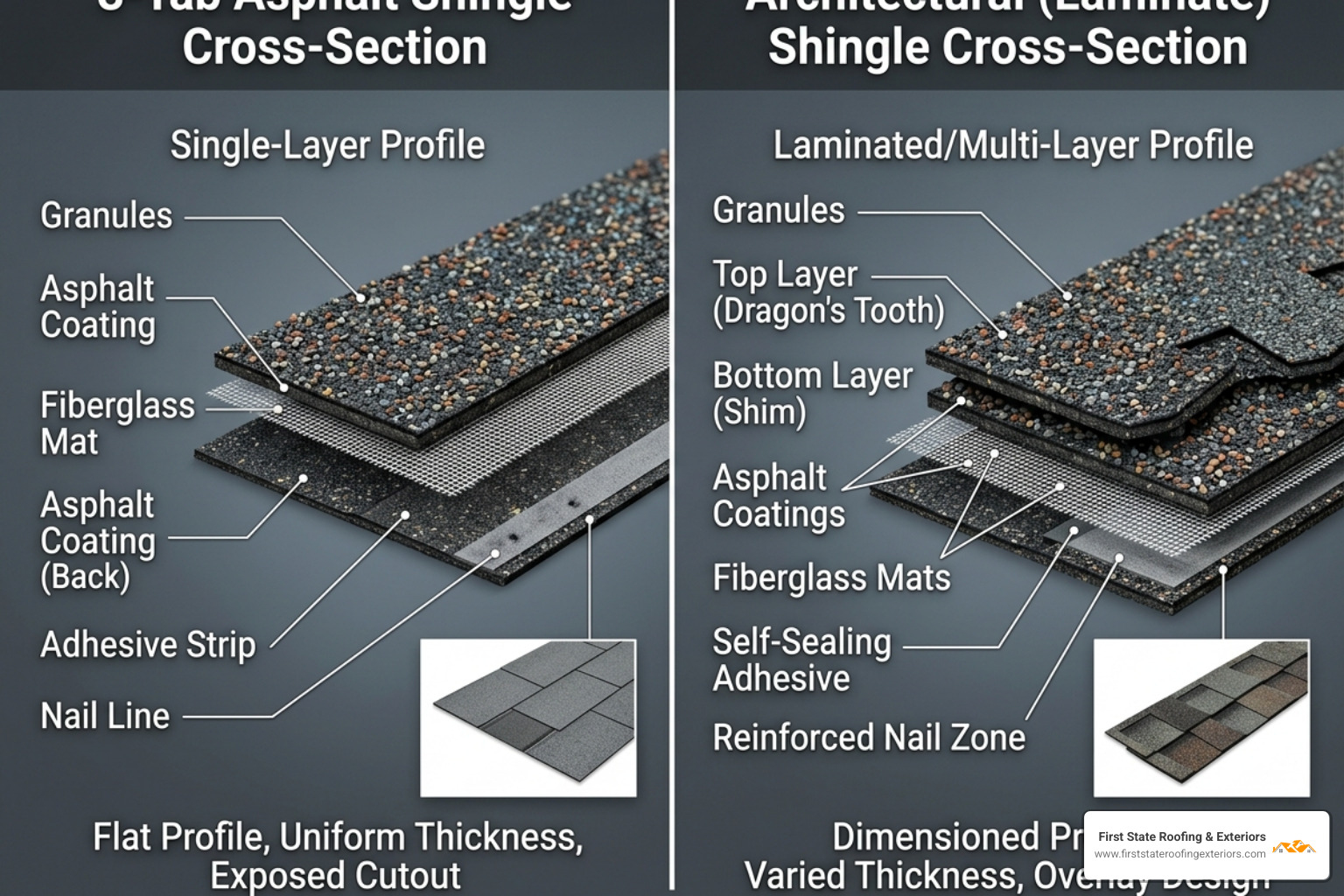
Architectural shingles are the better choice for most homeowners because they last longer, resist wind better, and create a more dimensional appearance than 3-tab shingles.
- 3-Tab Shingles (Strip Shingles): These use a single layer of material with cutouts that create three visible tabs. They deliver a flat, uniform appearance and the lowest upfront cost, but they typically come with a lower 60 mph wind rating and a shorter service life of around 20 years.
- Architectural Shingles (Laminated Shingles): These are built with two or more laminated layers of asphalt bonded together. That construction creates a thicker profile, a more textured appearance, better shadow lines, improved wind performance, and a longer expected lifespan. Many architectural products offer 30-year to lifetime protection depending on the manufacturer and system.
Luxury and Multilayered Asphalt Shingles
Luxury shingles are the premium asphalt option because they are engineered to deliver the boldest appearance and some of the strongest weather resistance available in this category. These are often triple-laminate products that are thicker and heavier than standard shingles. They are designed to replicate an old-world slate look or a rugged wood shake imitation without the structural weight, maintenance demands, or cost of natural materials. In practical terms, they combine upscale appearance with strong performance for homeowners who want curb appeal without moving to slate or cedar.
Performance Factors: Durability, Wind, and Algae Resistance
Asphalt is the primary material for waterproofing, but its performance is boosted by modern engineering. When comparing materials, asphalt shingles hold their own against much pricier alternatives.
| Material | Lifespan | Fire Rating | Cost |
|---|---|---|---|
| Asphalt Shingles | 20–50 Years | Class A | Low to Moderate |
| Metal | 40–70 Years | Class A | High |
| Slate | 75–100+ Years | Class A | Very High |
| Wood Shake | 20–30 Years | Class B/C | Moderate to High |
One of the most important metrics for Delaware homeowners is impact resistance. A Class 4 rating (UL 2218) means the shingle has been tested to withstand the impact of a 2-inch steel ball dropped from 20 feet, simulating heavy hail. Choosing these can often lead to insurance discounts. Furthermore, Asphalt Shingles: Cost Effective Roofing means you get a Class A fire rating—the highest possible—protecting your home from external fire spread.
Selecting Algae-Resistant Asphalt Shingles
In damp or humid climates like ours in Dover and Milford, those ugly black streaks on roofs are a common sight. This is caused by blue-green algae (Gloeocapsa magma). To combat this, many manufacturers incorporate copper granules into the shingle surface. When it rains, copper ions are released, killing algae before it can take hold. Look for products with Scotchgard protector or similar stain-guard technology to keep your roof looking new for years.
Climate Performance and Energy Efficiency
Delaware weather is unpredictable. In the winter, ice dam prevention is critical. A properly installed asphalt system includes leak barriers that prevent water from backing up under shingles. In the summer, cool roof technology becomes the hero. These shingles use solar-reflective granules that can lead to a 20% temperature reduction in the attic, significantly lowering your AC bills. This is a key factor we discuss in our Shingle Roof Installation Cost Guide 2026.
Cost Analysis and Material Estimation for Your Project
In the roofing industry, we measure everything by the “square.” One roofing square equals 100 square feet.
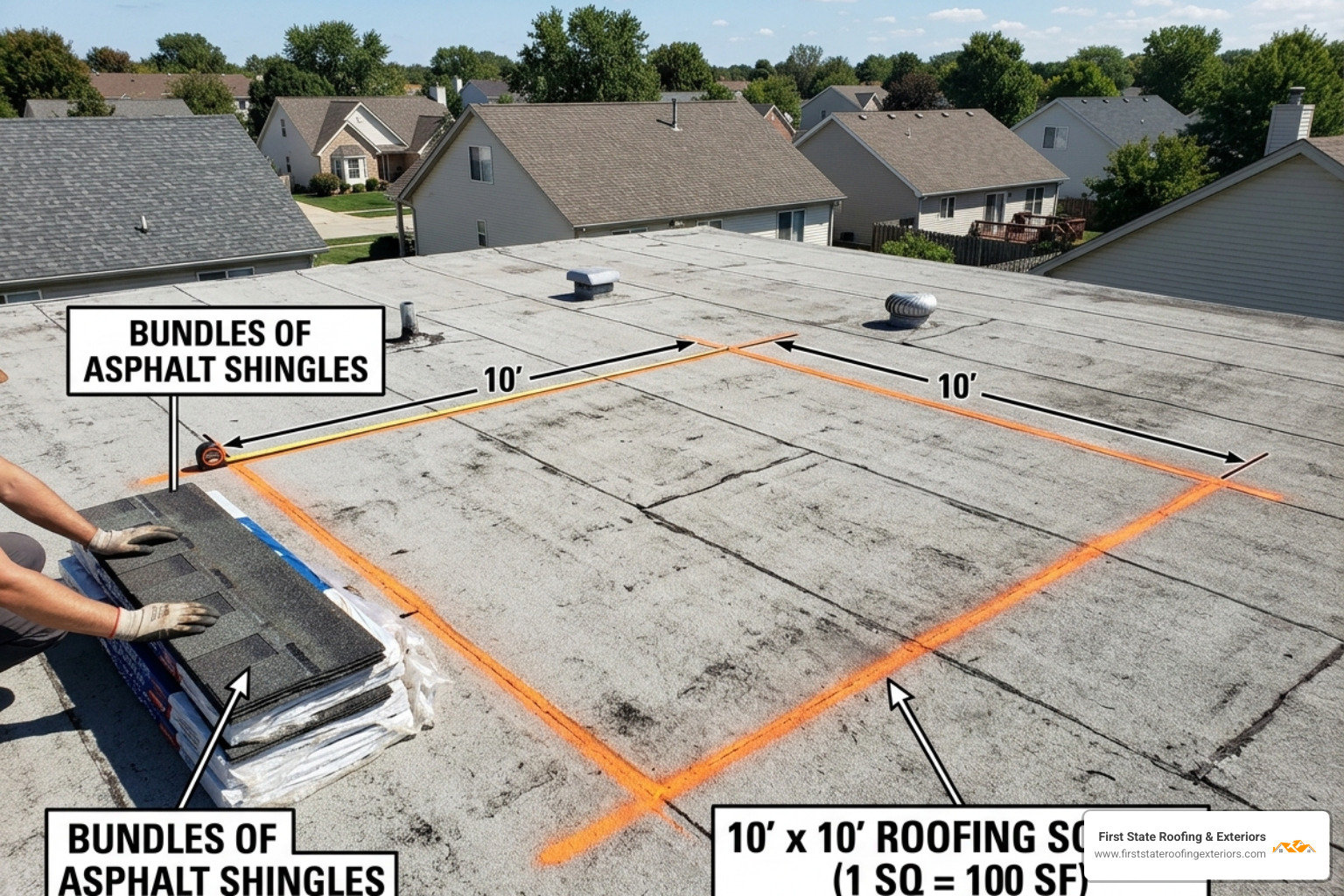
Most asphalt shingles are sold in bundles. For example, a bundle of GAF Timberline HDZ covers 33.33 sq. ft., meaning you need three bundles to make one square. Our Asphalt Roof Replacement Ultimate Guide notes that material costs typically range from $100 to $200 per square for the shingles themselves, though bulk discounts are often available for larger projects.
How to Calculate Shingles Needed
To get an accurate estimate, you can’t just measure the floor plan of your house. You must account for the roof’s pitch and complexity.
- Calculate Total Squares: Measure the total roof area and divide by 100.
- Add Waste Factor: We always add a 10-15% waste factor (up to 20% for complex roofs with many valleys) to account for cuts and errors.
- Linear Footage: Calculate the total length of the eaves and rakes for starter strip requirements, and the length of all peaks for hip and ridge requirements.
Understanding these numbers helps prevent “shingle shock” when you see the final quote. For more on this, read Shingle Shockers: Uncovering the Real Cost of Your Roof Replacement.
Visualizing Colors and Styles
Gone are the days of only choosing between light gray and dark gray. Popular colors in 2026 include Charcoal, Pewter Gray, Onyx Black, and Weathered Wood. We recommend using online visualizer tools like Owens Corning’s Design EyeQ® or GAF’s virtual remodeler. These tools let you upload a photo of your home to see how different asphalt shingles match your siding and trim before you spend a dime.
Essential Components of a Complete Roofing System
A roof is more than just shingles; it is a system of integrated parts working together. If one part fails, the whole system is compromised.
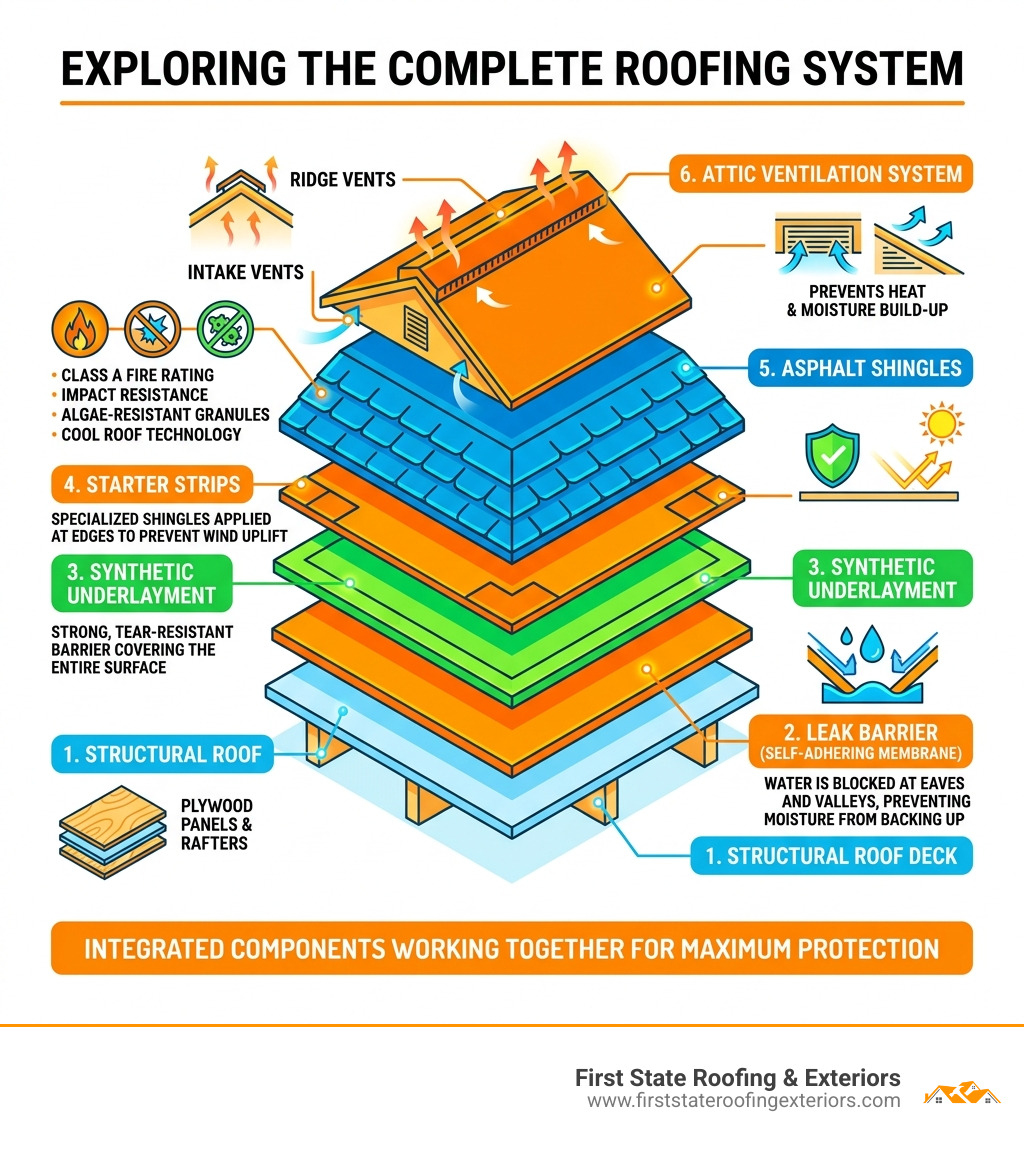
A complete asphalt shingle roof system includes the deck, leak barriers, underlayment, starter strips, field shingles, ridge components, flashing, and balanced attic ventilation. Every one of these parts affects how long the roof lasts and whether the manufacturer warranty remains valid.
- Synthetic Underlayment: This has largely replaced old felt paper. It is a high-tech water barrier that is much harder to tear.
- Leak Barriers (Ice and Water Shield): These are self-adhering membranes placed in vulnerable areas like valleys, chimneys, and eaves.
- Starter Strips: These are specialized shingles installed at the edges to prevent wind uplift.
- Attic Ventilation: Proper ridge vents and intake vents are essential. Without them, heat and moisture build-up will bake your shingles from the inside out, voiding your warranty.
For homeowners planning a full shingle replacement, our roof replacement services page explains how these components work together as a complete system.
Installation Best Practices for Longevity
Correct installation matters as much as product quality because even premium shingles can fail early if fastening, sealing, or deck preparation is wrong. We follow strict nailing patterns (usually 4 to 6 nails per shingle depending on the wind zone) to ensure they stay put. Temperature also matters; shingles have a thermal seal that requires sun and heat to activate. We generally recommend a 50°F minimum installation temperature. Before any shingles go down, a thorough roof deck inspection is mandatory to find and replace any rotted wood.
Understanding Warranties and Registration
Most manufacturers offer a lifetime limited warranty, but coverage depends on product registration, installation method, and whether the full roofing system meets manufacturer requirements. These warranties usually cover manufacturer defects for a specific “useful life” (often 15-30 years) and might include labor for the first few years. To get the best coverage, use a manufacturer-certified contractor. This often unlocks “enhanced” warranties that cover the entire system and include workmanship coverage.
Frequently Asked Questions about Asphalt Shingles
How long do asphalt shingles typically last?
Asphalt shingles generally last between 20 and 50 years depending on the specific type and local climate. Standard 3-tab shingles average 20 years, while high-quality architectural and luxury shingles often carry lifetime warranties and last 30 to 50 years with proper maintenance.
Can you install new shingles over an existing roof?
Yes, it is often possible to install a second layer of shingles over an existing one if the roof deck is in good condition and there is only one current layer. However, a full tear-off is recommended to inspect for underlying rot and ensure the longest possible lifespan for the new materials.
Are asphalt shingles environmentally friendly?
Modern asphalt shingles are increasingly sustainable, with approximately 11 million tons of shingle scrap recycled annually in the U.S. for use in road pavement. Additionally, cool-roof asphalt shingles reduce energy consumption by reflecting solar heat away from the home.
Conclusion
Choosing the right roof is one of the biggest investments you’ll make in your home. Asphalt shingles remain the top choice because they combine affordability, dependable weather protection, broad style options, and straightforward maintenance in a way few other roofing materials can match.
At First State Roofing & Exteriors, we bring local expertise and a commitment to integrity to every job. Whether you are in Dover, Milford, or anywhere across Delaware, our team offers free estimates and can help you compare options with a clear scope of work. Contact us today or call (302) 222-4065 for a free inspection.
If you are comparing contractors in Kent County, our Dover DE roofing experts page is a helpful place to learn more about local service coverage and roofing support.