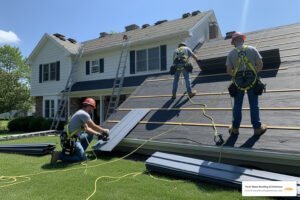
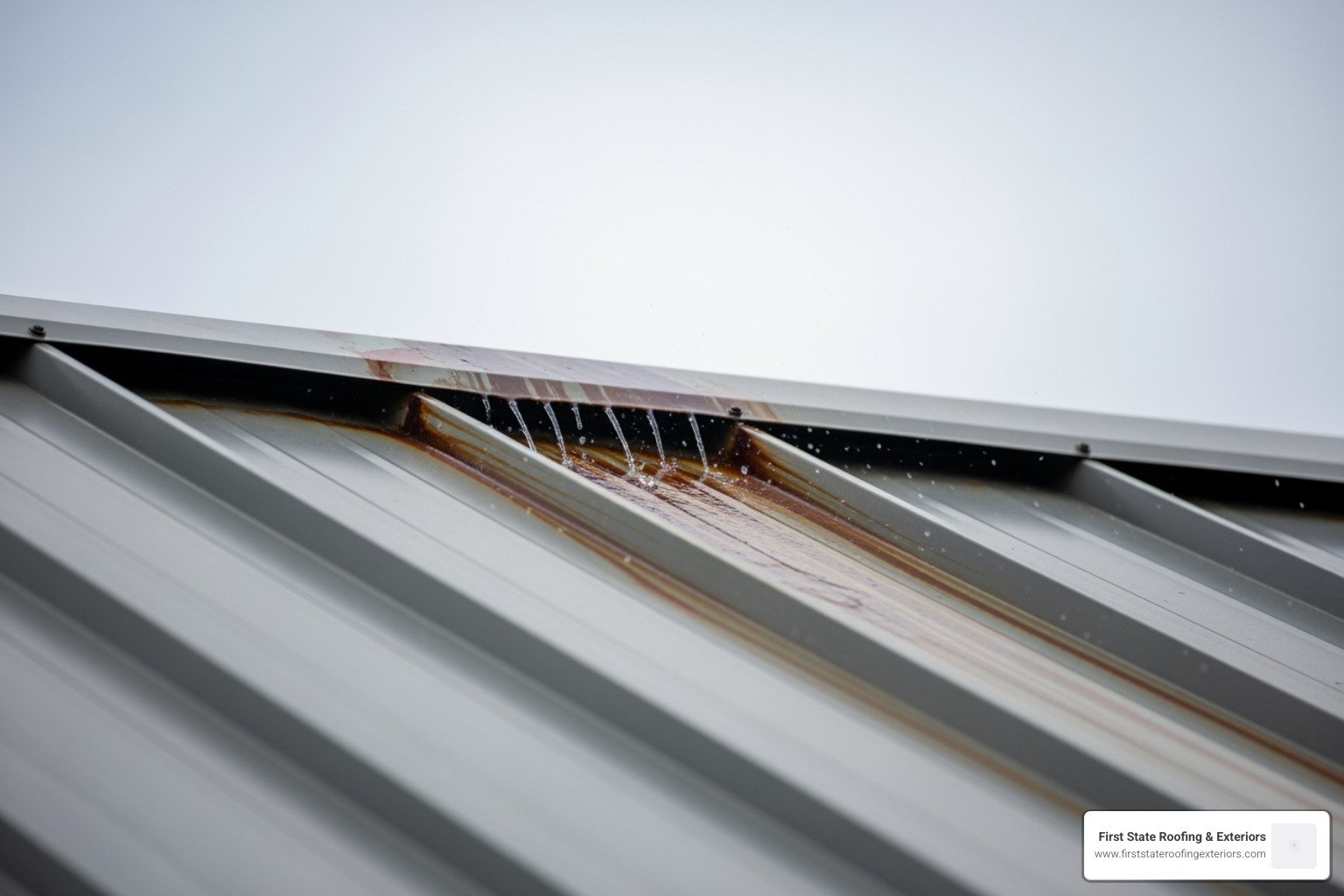
Why a Metal Roof Ridge Cap Leaking Is a Problem You Can’t Ignore
A metal roof ridge cap leaking is not a cosmetic issue. It is a direct pathway for water intrusion at the highest and most weather-exposed point of your roofing system, and even a small opening can soak insulation, stain rafters, and rot roof decking before you notice damage indoors. If you need help from Kent and Sussex County, DE roofing and exterior specialists, the most important step is to confirm whether the leak is coming from failed fasteners, worn sealant, missing closure strips, or a damaged ridge cap section.
Quick Answer: How to Fix a Leaking Metal Roof Ridge Cap
- Tighten or replace loose screws — use corrosion-resistant fasteners with neoprene washers
- Remove old sealant and apply a fresh bead of polyurethane or neutral-cure silicone rated for metal roofs
- Insert foam or hog-hair closure strips beneath the ridge cap to block wind-driven rain
- Check for bent, lifted, or rusted ridge cap sections and replace damaged panels
- Call a professional if there is structural rot, widespread rust, or the leak returns after repairs
Metal roofs commonly last 40 to 70 years, but ridge components such as sealants, closures, and exposed fastener washers wear out much sooner. That is why ridge leaks often appear on otherwise serviceable roofs. The challenge is that water entering at the peak can travel along rafters and roof framing before it becomes visible inside the house. As Kent and Sussex County, DE home exterior experts will tell you, the stain on the ceiling is often not directly below the real entry point.
I’m Richard McCain, Owner and President of First State Roofing & Exteriors, and with over 20 years of hands-on experience repairing and installing metal roofing systems across Kent and Sussex County, DE, I’ve seen how a metal roof ridge cap leaking can start as a simple maintenance issue and turn into a major repair when ignored. In this guide, I’ll show you how to identify the cause, choose the right repair, and prevent repeat leaks.
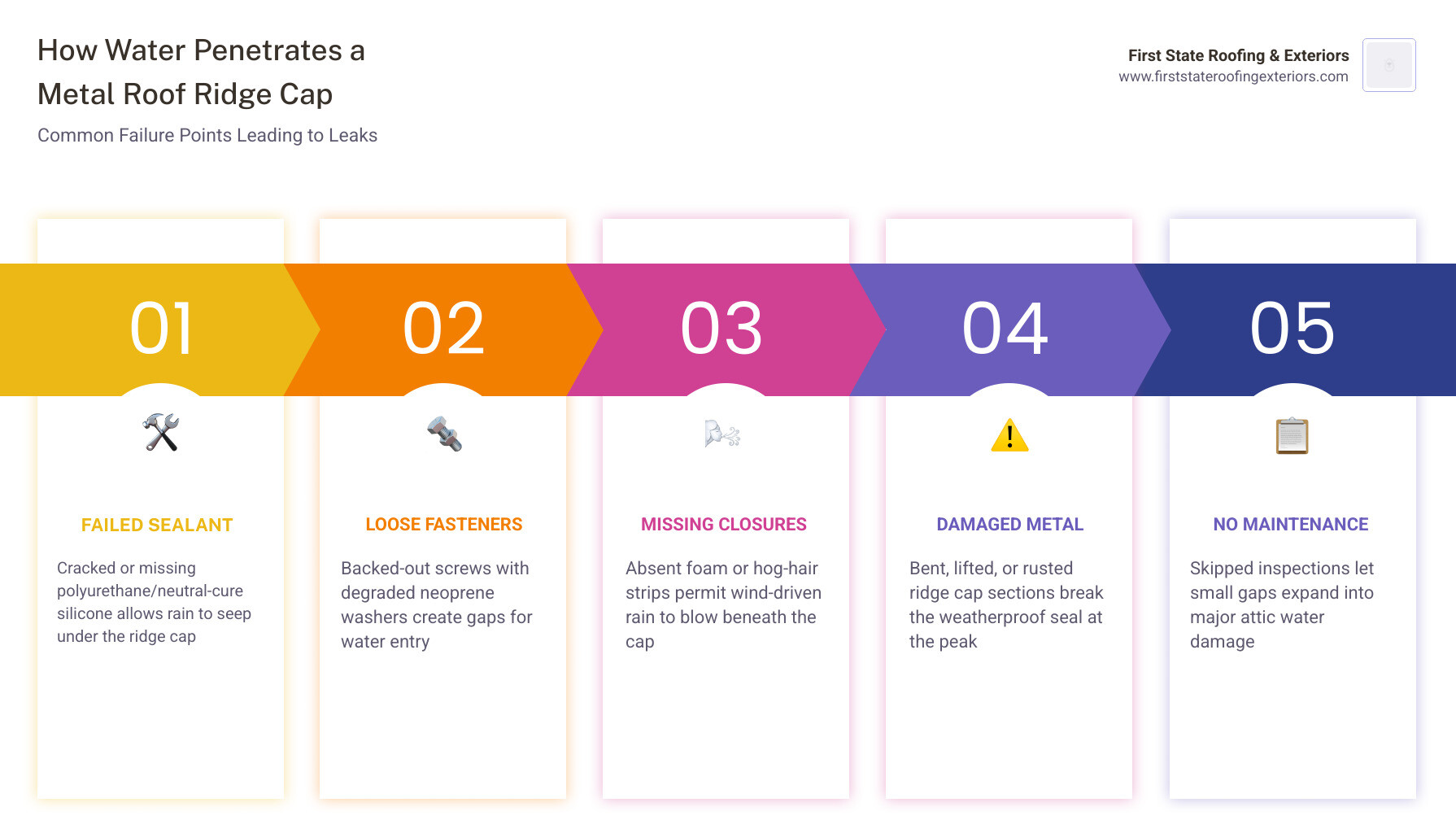
Simple metal roof ridge cap leaking word guide:
Understanding the Metal Roof Ridge Cap and Its Vulnerabilities
A metal roof ridge cap is the specialized finishing trim that runs horizontally along the peak of your roof. Its primary purpose is to seal the gap where two opposing roof slopes meet. Without this critical component, rainwater, snow, wind, and pests would have a direct, unobstructed pathway straight into your attic.
Beyond acting as a physical shield, the ridge cap plays an active role in attic ventilation and weatherproofing. It must allow hot, humid air to escape from the home’s interior while simultaneously blocking external moisture. Achieving this balance is a difficult engineering feat because metal is a highly dynamic material.
Throughout the day, solar heating causes metal panels to expand, while nighttime cooling causes them to contract. This relentless thermal expansion and contraction puts immense physical stress on the ridge cap, its fasteners, and its sealants. Over time, this movement can back out screws, tear sealant joints, and create microscopic pathways for water ingress.
According to industry studies on Ridge Cap Leaks in Pre-Engineered Metal Buildings: Causes, Fixes, and Prevention, minor structural shifting and panel modulation variances during installation can also create friction and binding. This friction gradually breaks down the watertight integrity of the ridge assembly, leading to premature failure if the components are not perfectly aligned.
Why a Metal Roof Ridge Cap Leaking Occurs During Storms
During severe Kent and Sussex County, DE storms, standard gravity-driven rain isn’t the primary threat. Instead, wind-driven rain and snow infiltration pose the greatest risk to your roof peak. High-velocity winds create severe pressure differentials across the roof surface. This pressure dynamic literally forces rainwater upward, pushing it backward under the lower edges of the ridge cap.
If you don’t have a secure, continuous barrier beneath the cap, wind-driven moisture will bypass the metal trim entirely. Homeowners frequently report seeing fine snow or mist settling in their attics after a heavy storm, even when the roof performs perfectly during vertical rain showers. As documented in real-world owner discussions on the Roof Ridge/Cap Wind Driven Leak – TractorByNet forum, these storm-induced leaks are almost always caused by missing, degraded, or improperly seated closure strips that fail to block lateral wind currents.
Vented vs. Non-Vented Ridge Caps
When addressing a metal roof ridge cap leaking, you must first identify whether your system is vented or non-vented. This distinction entirely dictates how the ridge must be sealed and repaired.
- Vented Ridge Caps: These systems are designed to facilitate attic airflow. They feature a physical gap between the roof panels at the peak, covered by a ridge cap that sits slightly elevated on specialized breathable mesh or perforated closures. These closures (often called hog-hair or matrix vents) allow hot air to rise and escape while filtering out wind-driven rain. If you slather solid caulk or sealant along the edges of a vented ridge cap, you will trap moisture inside your attic, leading to condensation, wood rot, and mold growth.
- Non-Vented Ridge Caps: These systems are completely sealed and do not contribute to attic ventilation. They rely on solid, impermeable foam closure strips custom-cut to match the exact profile of your metal roof panels. These foam strips are sandwiched tightly between the roof panels and the ridge cap to create a 100% airtight and watertight barrier.
To prevent leaks, both systems require flawless profile matching. If the closure strips do not perfectly match the ribs and valleys of your specific metal panel profile, gaps will remain, and water will inevitably find its way inside.
Common Causes of Metal Roof Ridge Cap Leaking
Identifying the root cause of a leak is the first step toward a permanent fix. Because the ridge line is highly exposed, it is susceptible to several distinct forms of material degradation and mechanical failure.
To understand how different metal roof styles hold up at the ridge, let’s compare the two primary panel fastening methods:
| Feature | Exposed Fastener Ridge Caps | Concealed Fastener (Standing Seam) Ridge Caps |
|---|---|---|
| Fastener Location | Screws penetrate directly through the top of the metal ridge cap. | Fasteners are hidden beneath interlocking seams and flashing. |
| Leak Vulnerability | High; relies heavily on individual rubber washers. | Extremely Low; no direct penetrations exposed to weather. |
| Thermal Stress Impact | High; panel movement stresses screw holes and backs screws out. | Low; panels slide freely within clips, preserving the cap seal. |
| Maintenance Needs | Requires inspection and screw tightening every 5–10 years. | Minimal maintenance; sealants last much longer. |
| Average Lifespan | 15–20 years before major screw/washer overhaul. | 40–70 years with minimal intervention. |
Fastener Failure and Backed-Out Screws
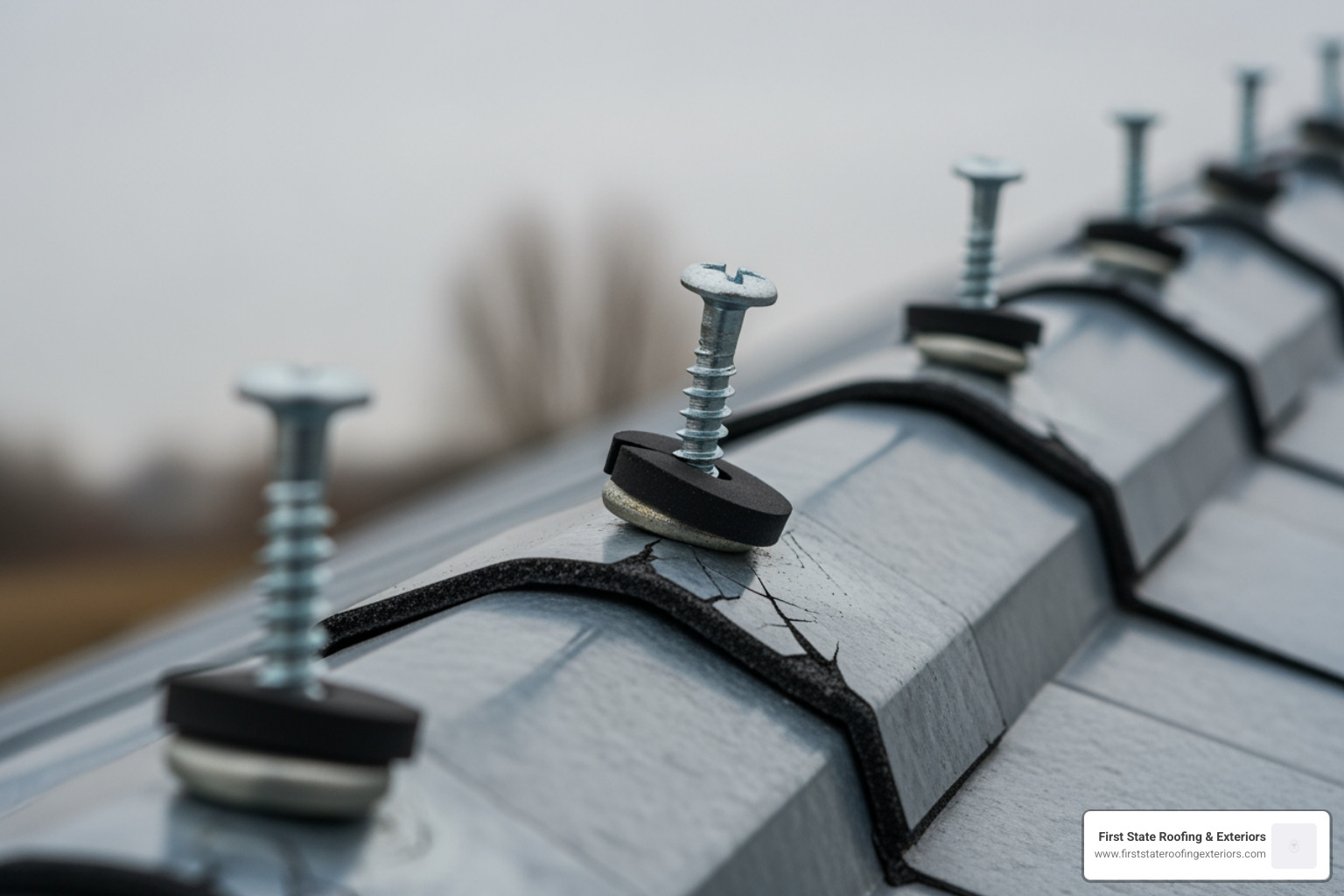
It is a well-established industry fact that roofing screws cause the majority of metal roof leaks. In an exposed fastener system, hundreds of screws are driven directly through the metal panels. Each screw relies on a small neoprene or EPDM rubber washer to create a compressed gasket seal against the metal surface.
Over time, several factors cause these fasteners to fail:
- Thermal Back-Out: The daily expansion and contraction of the metal panels acts like a slow-motion jackhammer, gradually backing the screws out of the wood framing.
- UV Degradation: Constant exposure to intense sunlight dry-rots the neoprene washers, causing them to crack, split, and shrink. Once the rubber loses its elasticity, water can seep directly down the screw threads.
- Installation Errors: If screws are over-driven, the rubber washer squishes outward and splits. If they are under-driven or installed at an angle, the washer cannot seat flat, leaving an open pathway for water.
- Rust and Corrosion: Non-compatible or cheap screws will corrode, widening the screw hole and allowing water to bypass the fastener entirely.
Degraded Sealants and Missing Closure Strips
Metal roof installations rely heavily on hidden sealants to back up their primary metal barriers. Underneath the ridge cap, installers use butyl tape (a sticky, double-sided sealant tape) and custom-molded foam or rubber closure strips.
When these materials are missing or degraded, a leak is guaranteed. Over years of seasonal temperature shifts, liquid sealants can dry out, crack, and lose their adhesion to the metal. Furthermore, nesting birds, rodents, and insects love to pull out loose foam closure strips to build nests. This leaves wide-open gaps along the ridge line where wind-driven rain can easily enter.
How to Diagnose a Leaking Ridge Cap
Diagnosing a ridge cap leak requires a systematic approach. Because water can travel long distances along structural members before dripping onto your ceiling, you cannot assume a leak is directly above the water stain in your drywall.
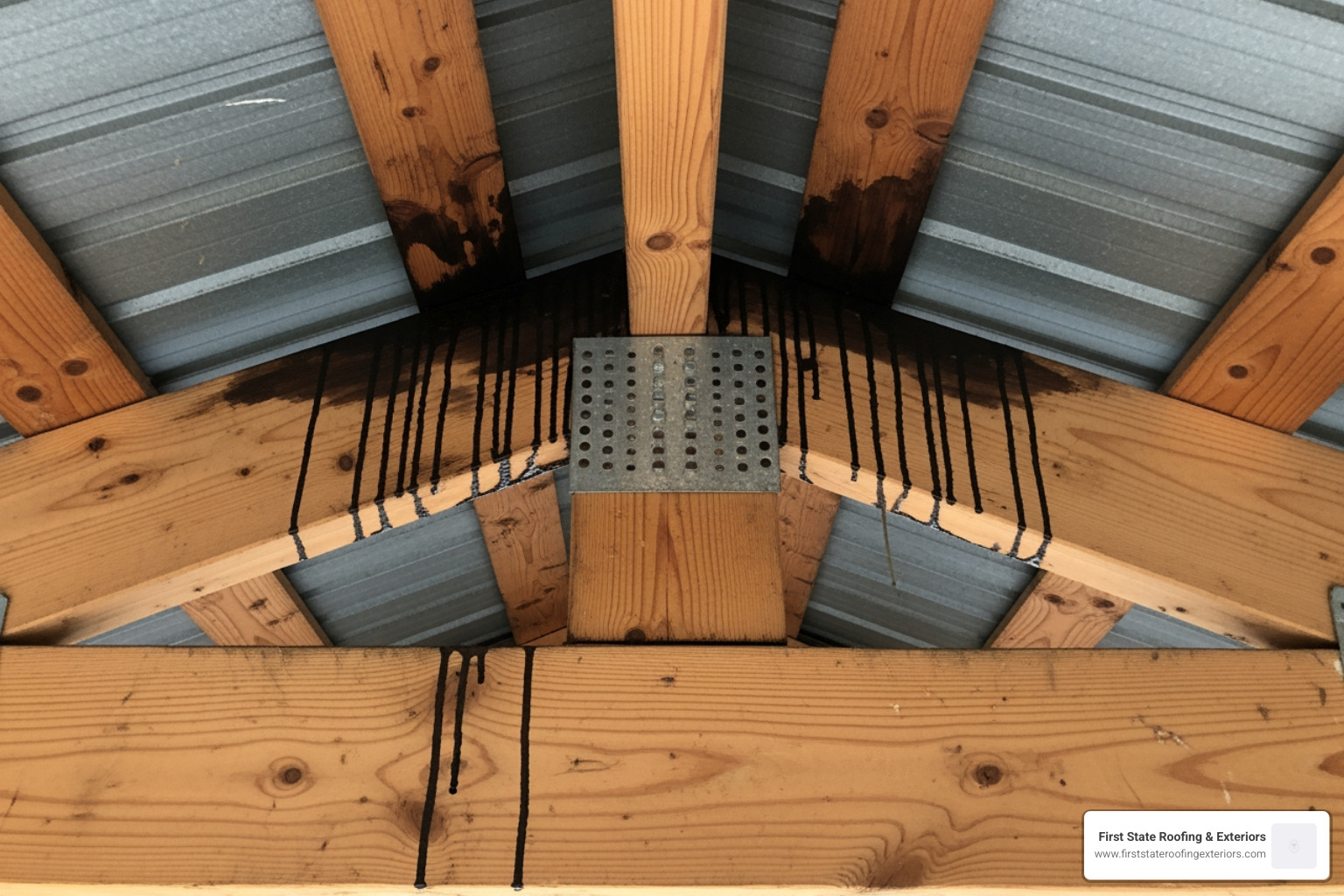
To perform a thorough diagnosis, grab a high-powered flashlight and head into your attic during or immediately after a heavy rainstorm. Look for the following signs:
- Dampness or dark water stains running down the sides of the ridge beam or the top ends of the rafters.
- Wet, matted, or discolored insulation directly beneath the roof peak.
- Swollen, soft, or delaminating plywood decking near the apex.
- A musty odor or visible mold growth concentrated along the ridge line.
Identifying a Metal Roof Ridge Cap Leaking vs. Flashing Failure
Before you begin repairing your ridge cap, you must rule out other potential leak sources. It is common to confuse a ridge cap leak with failed penetration flashing.
For example, stack flashings (the rubber boots around plumbing vents) only last about half as long as the actual roofing material. If a vent pipe is located near the peak of your roof, a split rubber boot can mimic a ridge cap leak. Similarly, damaged valley flashing or deteriorated drip edges can allow water to migrate horizontally along structural boards.
For a complete breakdown of how to isolate different leak sources, check out our Roof Leak Repair Complete Guide.
Physical Signs of Ridge Cap Damage
If safely accessing your roof is possible, a close-up visual inspection will often reveal the exact point of failure. Crouch down at eye level with the ridge line and look for:
- Lifting or Gaps: Any sections of the ridge cap that have warped, bowed, or lifted away from the roof panels.
- Missing or Loose Screws: Look for screw heads that are visibly raised above the metal surface or completely missing.
- Cracked Caulk: Old, brittle, or peeling silicone that has separated from the metal joints.
- Corrosion: Rust forming around fastener holes or along the cut edges of the ridge cap.
Step-by-Step Guide: How to Fix a Leaking Ridge Cap
Once you have diagnosed the issue, you can proceed with repairs. Always prioritize safety. Metal roofs are incredibly slippery, especially when wet or dusty. Never walk on a metal roof without wearing soft, rubber-soled shoes, and always utilize a secure, OSHA-approved safety harness anchored properly to the roof structure.
Quick Temporary Fixes for Emergency Leaks
If a major storm is active and you need to stop water damage immediately, you can apply a temporary patch. That these quick fixes are only meant to buy you time until weather conditions permit a permanent repair.
- Butyl Tape Patch: If you locate a specific gap or loose seam, you can apply heavy-duty, UV-resistant butyl flashing tape directly over the joint. Press it down firmly to ensure a watertight seal against clean metal.
- Emergency Sealant: You can use a high-quality co-polymer emergency roof sealant that is rated for application in wet conditions. Apply a generous bead directly over the leaking seam or backed-out screw head.
- Tarping the Peak: For widespread damage, draping a heavy-duty tarp over the ridge line and securing it with sandbags or padded 2x4s is the most reliable way to shed water until repairs can be made. If you need immediate professional assistance in Kent and Sussex County, DE, refer to our Emergency Roof Repair Complete Guide.
Permanent Repair and Replacement Best Practices
To permanently resolve a metal roof ridge cap leaking issue, follow these professional-grade steps:
- Prepare the Surface: Clean the repair area thoroughly. Use a wire brush and a plastic scraper to remove all traces of old, failed sealant, dirt, rust, and debris. Wipe the metal down with a manufacturer-approved solvent (like isopropyl alcohol) to ensure perfect sealant adhesion.
- Apply Metal Primer: If you are working with painted or galvanized steel, apply a thin, even coat of metal primer to the clean surface. This prevents future corrosion and dramatically extends the lifespan of your new sealant.
- Address Large Gaps: If you encounter gaps wider than 1/4 inch, do not try to bridge them with sealant alone. Insert a closed-cell backer rod into the gap first. This provides a backing material and prevents “three-sided adhesion,” which causes sealants to tear during thermal expansion.
- Install New Closure Strips: If your old foam closures are missing or degraded, loosen the ridge cap screws in the affected section. Slide new, profile-matched foam closure strips (for non-vented roofs) or hog-hair matrix vents (for vented roofs) beneath the cap.
- Apply the Right Sealant: Run a continuous, generous bead of high-performance polyurethane or neutral-cure silicone sealant along the lap joints and under the edges of the ridge cap. Avoid cheap, acetic-cure silicone caulks, as they release acid during curing that corrodes metal panels.
- Refasten with Upgraded Screws: Replace all damaged or backed-out screws with slightly larger, upgraded stainless steel or galvanized roofing fasteners. Ensure each new screw features an EPDM rubber washer. Drive the screws straight down at a 90-degree angle, tightening them until the rubber washer compresses slightly past the edge of the metal cap without splitting.
- Conduct a Final Inspection: Check your work to ensure no gaps remain and that all fasteners are seated perfectly flat. For a deeper look at professional installation standards, read our Metal Roof Ridge Cap: Comprehensive Guide on Installation.
Preventing Future Ridge Cap Leaks: Maintenance and Installation
The best way to handle a leaking ridge cap is to prevent it from failing in the first place. Routine inspections, correct materials, and prompt minor repairs are what keep a localized ridge issue from becoming structural water damage.
We recommend inspecting a metal roof twice a year — once in spring and once in fall — and after major wind, hail, or snow events. During those checks, look for lifted cap edges, backed-out fasteners, cracked sealant, rust at cut edges, and missing closure material. Remove leaves, pine needles, and nesting debris from the ridge area because trapped organic debris holds moisture against the metal and accelerates coating breakdown.
If your roof needs more than a simple visual check, our main roof repair services page explains when targeted repairs are the right next step.
Best Materials for Long-Term Durability
If you are replacing a severely damaged ridge cap or installing a new metal roof, material compatibility matters as much as workmanship.
- Material Synergy: Always match the metal of your ridge cap to the metal of your roof panels. Mixing dissimilar metals can trigger galvanic corrosion, which shortens service life and creates leak points.
- Protective Coatings: Choose steel ridge caps with robust zinc or zinc-aluminum alloy coatings such as Galvalume to improve corrosion resistance, especially at cut edges and fastener penetrations.
- Premium Fasteners: Use stainless steel or long-life coated fasteners with high-grade EPDM washers rather than low-grade neoprene when possible. EPDM generally provides better resistance to UV exposure and temperature cycling. Explore our material standards on our High Quality Metal Roofing page.
When to Call a Professional Roofer
A homeowner may be able to tighten an isolated loose screw, but many ridge cap leaks require a trained roofer to diagnose correctly and repair safely. You should call a professional if:
- Your roof has a steep pitch (6:12 or greater) or is higher than a single story.
- The ridge cap has extensive rust, deep dents, or structural warping that requires partial replacement.
- You find soft, spongy decking or water-damaged rafters in your attic, indicating advanced wood rot.
- Your metal roof is still under a manufacturer or workmanship warranty, as DIY repairs can void your coverage.
For homeowners in Dover, Milford, and throughout Kent and Sussex County, DE, our local team is ready to help. You can read our regional service details in our Roof Repair Dover Kent and Sussex County, DE Complete Guide. We provide free estimates, and you can call (302) 222-4065 to schedule a free inspection.
Frequently Asked Questions About Ridge Cap Leaks
How long do metal roof ridge caps last?
A high-quality metal roof ridge cap can last between 40 and 70 years, matching the lifespan of the metal panels themselves. However, the sealants, foam closure strips, and rubber screw washers underneath the cap typically only last 10 to 20 years. Regular maintenance is required to replace these wearing components before they cause a leak.
Can I use regular silicone caulk to seal my ridge cap?
No. You should never use standard household silicone caulk (acetic-cure) on a metal roof. As acetic-cure silicone cures, it releases acetic acid, which actively corrodes steel and aluminum. Always use a high-quality polyurethane sealant or a neutral-cure silicone specifically formulated for metal roofing applications.
Does a leaking ridge cap mean I need a whole new roof?
Absolutely not. In the vast majority of cases, a leaking ridge cap is a localized issue caused by backed-out screws, dried-out sealant, or shifted closure strips. These issues can be easily and affordably resolved through targeted repairs without requiring a full roof replacement.
Conclusion
A metal roof ridge cap leaking is usually repairable, but it should never be ignored. In most cases, the root cause is one of four issues: failed fasteners, deteriorated sealant, missing closure strips, or physical damage to the ridge cap itself. Identifying which one is present is what makes the repair last.
At First State Roofing & Exteriors, we are proud to serve homeowners across Kent and Sussex County, DE with honest recommendations, free estimates, and practical repair solutions. If you suspect a ridge leak, call (302) 222-4065 to schedule a free inspection, or schedule a free inspection and estimate with our team today.