Why the Right Siding Repair Companies Make All the Difference for Your Home
When damage strikes your home’s exterior, choosing from the right siding repair companies is one of the most important decisions you’ll make as a homeowner. Damaged siding isn’t just an eyesore — it exposes your home to moisture, mold, structural rot, and rising energy bills.
Here’s what to look for when evaluating siding repair companies:
| Factor | What to Look For |
|---|---|
| Licensing & Insurance | Licensed general contractor, minimum $1M general liability |
| Experience | 3+ years under the same business name, verifiable track record |
| Warranties | Workmanship warranty (10-year minimum) + manufacturer product warranty |
| Free Estimates | Transparent, no-obligation quotes before work begins |
| Reviews | Verified Google or third-party ratings with consistent positive feedback |
| Material Expertise | Experience with vinyl, fiber cement, wood, and composite siding |
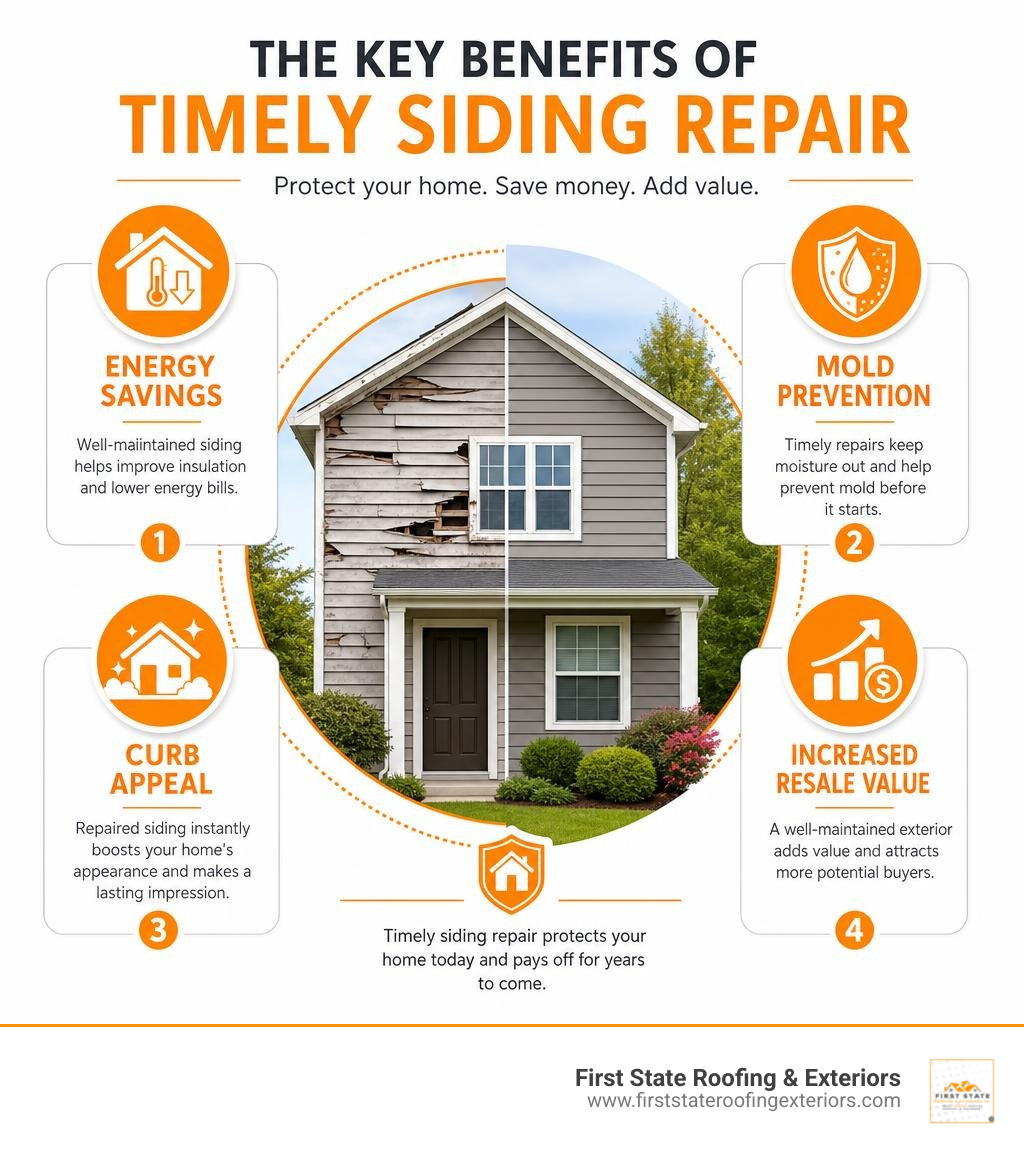
Siding does far more than improve curb appeal. It acts as your home’s first line of defense against wind, rain, UV exposure, and temperature swings. When panels crack, warp, or loosen, water infiltrates wall cavities — and mold can begin growing on wet building materials within just 24 to 48 hours. The longer damage goes unaddressed, the more expensive the fix becomes.
For Kent and Sussex County, DE homeowners especially, the region’s humidity, coastal salt air, and seasonal storms create a uniquely demanding environment for exterior materials. That’s why working with a local, experienced contractor — rather than a generalist — matters so much. You can explore professional exterior services from a team that understands Kent and Sussex County, DE’s specific climate challenges.
I’m Richard McCain, Owner and President of First State Roofing & Exteriors Co., and with over 20 years of hands-on experience leading exterior renovation projects across Kent and Sussex County, DE, I’ve seen how the right siding repair companies protect homeowners from costly, preventable damage. We offer free estimates on all our services—call us at (302) 222-4065 to schedule your free inspection today.
Simple guide to siding repair companies terms:
Understanding Siding Damage: Causes, Materials, and When to Repair
Siding functions as your home’s primary protective envelope, shielding the interior framing from harsh environmental conditions. When this barrier is breached, the structural integrity of your entire home is compromised.
To keep your home safe, you must understand what causes siding to fail, how different materials behave under stress, and when localized repairs are sufficient. For a detailed breakdown of protective measures, check out our Kent and Sussex County, DE siding repair guide, which covers the essential strategies for securing your home’s exterior.
Common Types of Siding Damage and Their Root Causes
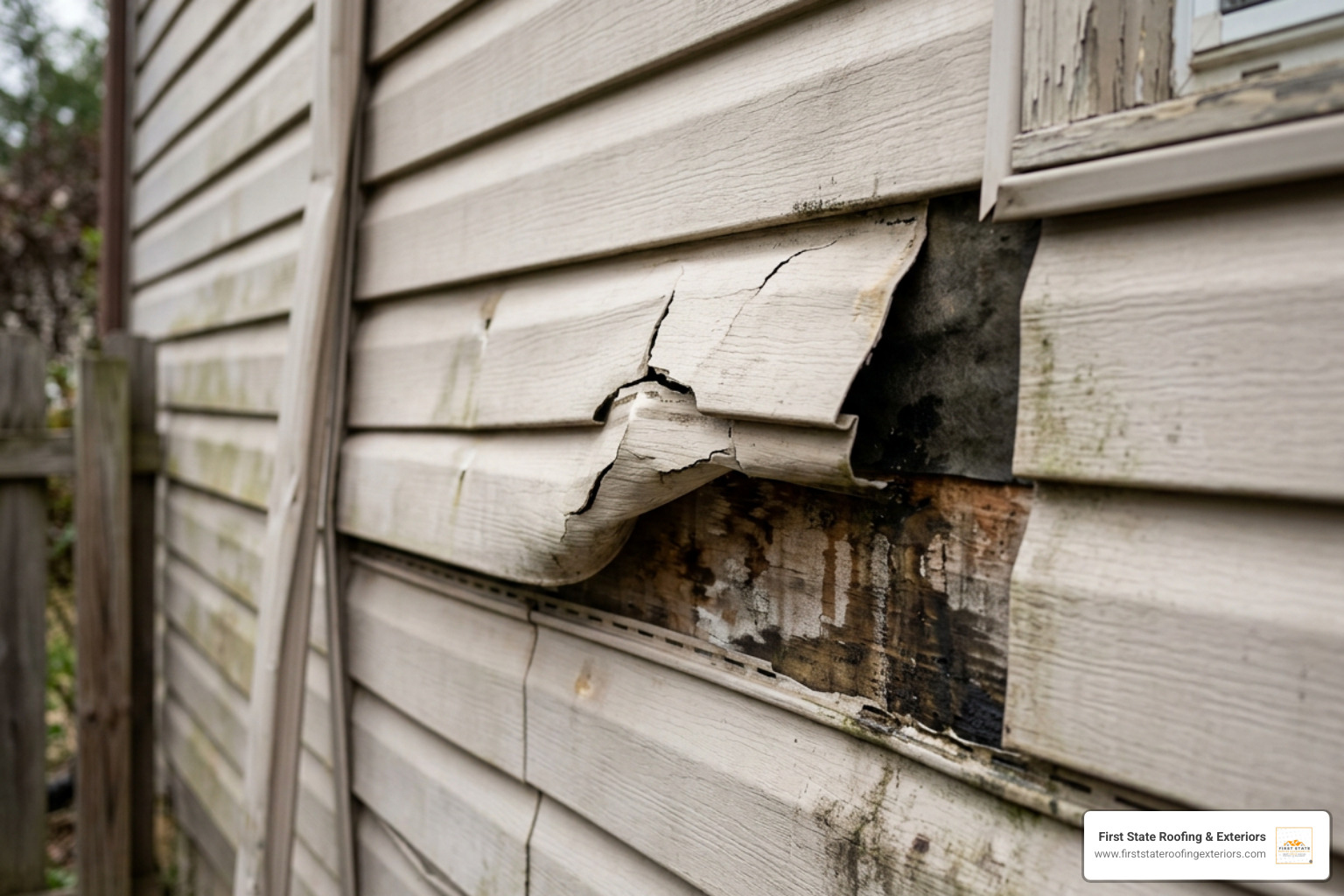
Siding damage is rarely just a cosmetic issue. It is typically the result of environmental wear, mechanical impact, or systemic home issues. The most frequent types of damage we repair in Kent and Sussex County, DE include:
- Cracked and Split Panels: Often caused by thermal expansion and contraction. In Kent and Sussex County, DE, temperature swings stress materials like vinyl. If panels were nailed too tightly during installation, they cannot move freely, resulting in cracks. Mechanical impacts from lawnmowers, flying debris, or hail also cause immediate cracking.
- Loose or Missing Siding: High winds from coastal storms can pull panels away from the wall. This is especially common if the siding was improperly fastened or if the nails missed the wall studs during original construction.
- Wood Rot: Affects traditional wood siding. It occurs when moisture remains trapped against the wood fibers for extended periods, often due to clogged gutters spilling water down the walls or soil being piled too high against the foundation.
- Mold, Mildew, and Algae Growth: Kent and Sussex County, DE’s high humidity levels encourage organic growth on shaded walls. While surface mold can be cleaned, mold behind the panels indicates active water leaks and requires immediate professional intervention.
- Melting and Warping: This occurs when vinyl siding is exposed to extreme heat source reflections, such as double-pane window reflections from neighboring homes, or when a backyard grill is placed too close to the exterior wall.
Pros and Cons of Repairing Different Siding Materials
Different siding materials require specialized repair techniques. Understanding the strengths and weaknesses of each material helps you make informed choices during a restoration project.
Vinyl Siding
Vinyl is the most popular siding material in Kent and Sussex County, DE due to its affordability and low maintenance requirements.
- Pros: It is highly resistant to rot and insect damage, and minor cracks can often be resolved by replacing individual panels.
- Cons: Vinyl is susceptible to cracking in cold weather and warping or melting under high temperatures. Matching the color of older vinyl siding can be difficult due to UV fading over time.
Fiber Cement Siding
Fiber cement offers exceptional durability and mimics the appearance of natural wood.
- Pros: It is completely non-combustible, resistant to rot, pests, and severe weather. It holds paint exceptionally well. For a deeper look at this material, read our fiber cement siding complete guide.
- Cons: Fiber cement is heavy and requires specialized tools and handling to repair. If the material is cracked, it must be replaced rather than patched to maintain its structural integrity.
Metal and Aluminum Siding
Commonly chosen for its modern aesthetic and extreme durability.
- Pros: Fireproof, insect-proof, and highly durable. It does not rot or warp. You can learn more about its benefits in our metal siding installation complete guide.
- Cons: Metal siding is prone to denting from hail or yard debris. Once dented, it is incredibly difficult to pop back into shape, often requiring full panel replacement.
Traditional Wood Siding
Wood siding offers a classic, premium look but requires the highest level of maintenance.
- Pros: Highly customizable, easy to paint or stain, and damaged sections can be easily cut out and replaced with matching wood stock.
- Cons: Highly vulnerable to moisture, rot, warping, and wood-boring insects. It requires repainting or resealing every 3 to 5 years.
Siding Repair vs. Replacement: Making the Right Investment
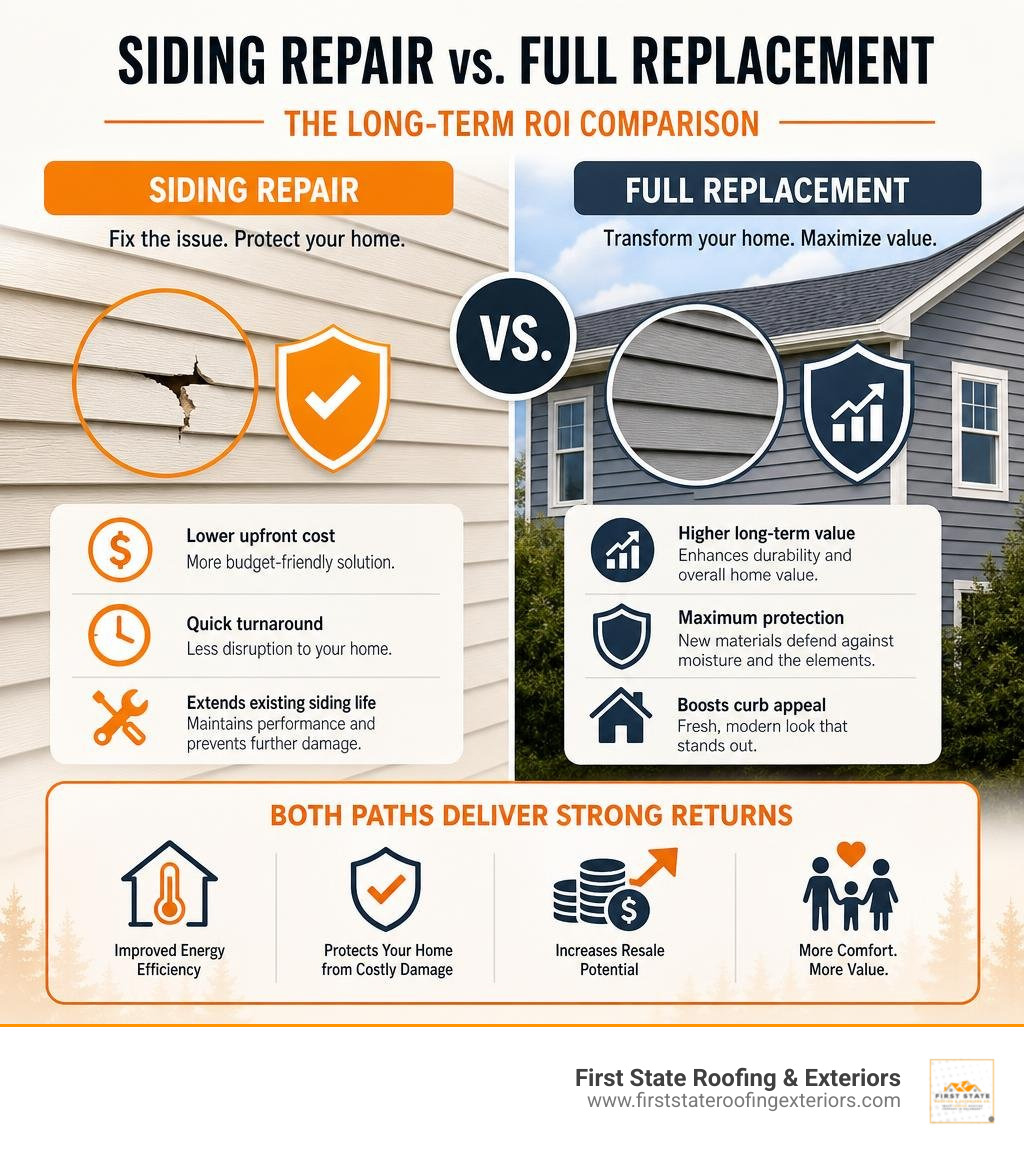
Deciding whether to repair a localized section of siding or invest in a full exterior replacement is a major financial decision. Homeowners must balance immediate costs against long-term performance and home protection.
To help you make the right choice, we have compiled a quick-reference indicator table:
| Condition | Recommended Action | Key Reason |
|---|---|---|
| Localized cracks or holes (under 15% of total surface) | Repair | Cost-effective; preserves existing material. |
| Widespread warping, buckling, or bubbling | Replacement | Indicates systemic moisture trapping or severe heat damage. |
| Active mold or rot behind multiple panels | Replacement | Requires removing siding to address structural sheathing rot. |
| Severe fading or discontinued siding style | Replacement | Aesthetic uniformity; impossible to match individual panels. |
| Siding is over 25–30 years old | Replacement | Material has reached the end of its natural lifespan. |
If you are unsure of which path is right for your home, our team provides detailed assessments through our exterior siding repair services to help you weigh your options.
How to Determine If You Need Repair or Full Replacement
Determining the scale of work required comes down to assessing the extent of the physical damage and the age of the installation.
If the damage to your siding is localized — such as a single panel punctured by a lawnmower stone or a small area of wind damage near a corner — a targeted repair is the smartest, most economical solution. Professional siding repair companies can easily remove the damaged pieces and install matching replacements without disturbing the surrounding exterior.
However, if your siding is showing signs of widespread failure, replacement is necessary. Look for bubbling or blistering on vinyl panels, which indicates that water has penetrated the material and is heating up behind it. If you notice interior paint peeling, water stains on your drywall, or soft spots in your exterior sheathing, water has bypassed the siding entirely.
To see what local options are available for comprehensive replacements, you can check out Yelp’s top siding contractors in Wilmington, DE to compare regional service providers.
How Siding Restorations Impact Energy Efficiency and Resale Value
Siding is a crucial component of your home’s thermal envelope. Gaps, cracks, and missing panels allow conditioned indoor air to escape while letting outdoor drafts in. This thermal bridging forces your heating and cooling systems to work harder, leading to spike in your monthly utility bills. By sealing these gaps, professional repairs restore your home’s thermal resistance and lower energy consumption.
From an investment standpoint, maintaining your siding is highly lucrative. According to industry data, new siding installations recoup an average of 76.7% of their cost back in added home resale value. Even minor repairs yield a massive return by preventing negative home inspections and maintaining high curb appeal. To learn more about maximizing your home’s value, read our residential exterior services ultimate guide.
What to Expect from Professional Siding Repair Companies
Hiring professional siding repair companies ensures that your home’s exterior is restored using industry-standard techniques, proper flashing, and weatherproofing barriers. Understanding the process helps you prepare for the project and ensures minimal disruption to your daily routine.
The Step-by-Step Siding Repair Process and Timeline
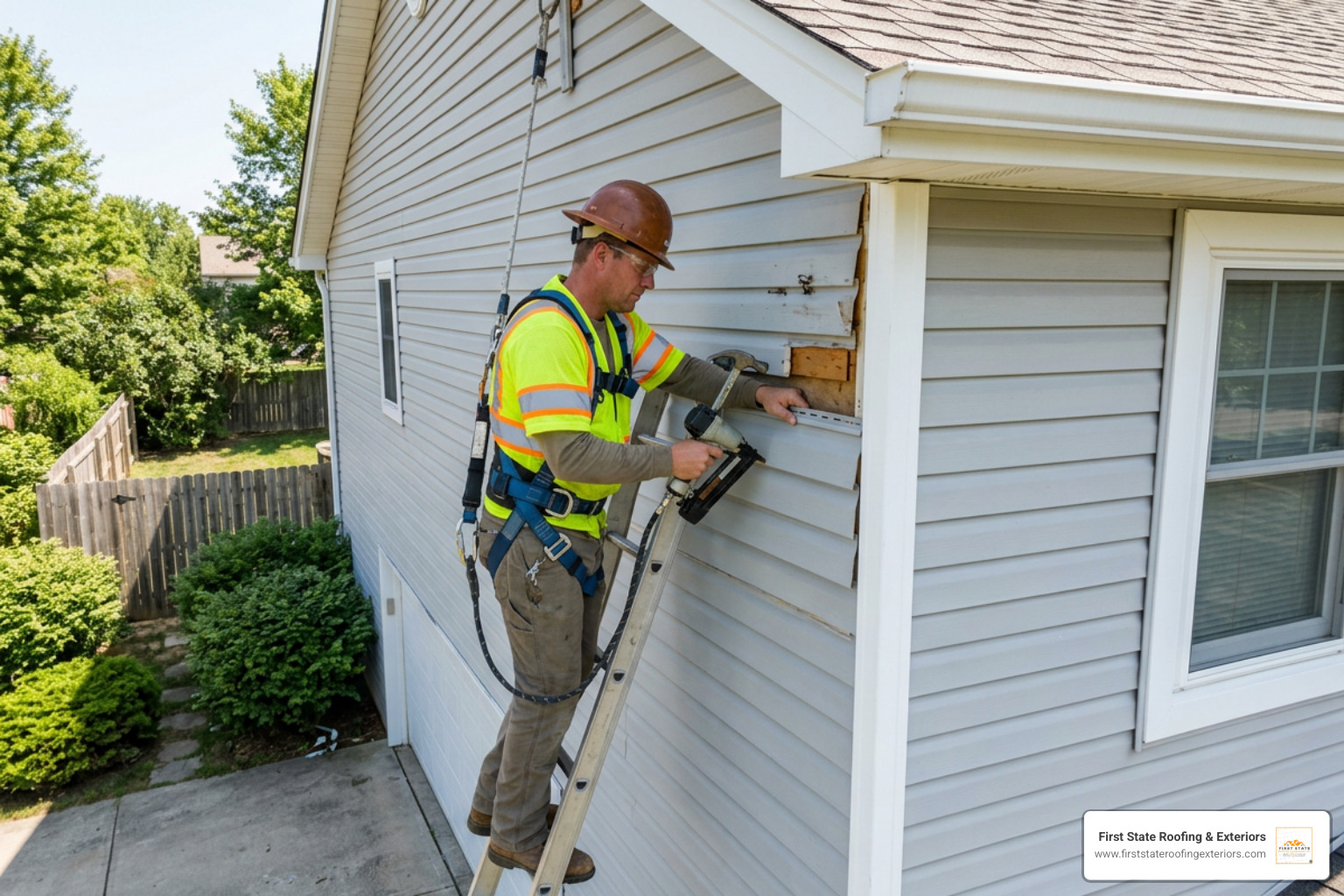
A professional siding repair project is highly structured to guarantee long-lasting results. When you work with an expert team like ours, here is the process you can expect:
- Initial Inspection and Diagnosis: The crew inspects the damaged area to find the root cause. This includes checking for hidden moisture behind the panels and inspecting the integrity of the house wrap and flashing.
- Color and Style Matching: The contractor identifies the manufacturer, profile, and color of your existing siding. For older siding with UV fading, we use specialized color-matching techniques or source archived colors to ensure a seamless match.
- Preparation and Demolition: The damaged panels are carefully unzipped and removed. The contractor inspects the exposed sheathing for wood rot or mold. Any compromised wood is replaced before the new siding is installed.
- Weather Barrier Restoration: If the house wrap or flashing was damaged, new weather-resistive barriers are applied and sealed with exterior-grade flashing tape.
- Installation of New Siding: The replacement panels are hung. For vinyl siding, our technicians ensure the nails are placed in the center of the slots and left slightly loose to allow for natural thermal expansion.
- Final Cleanup and Walkthrough: The crew cleans up all debris, runs a magnetic sweep to collect loose nails, and conducts a final inspection with the homeowner.
For most residential homes, minor to moderate repairs are completed within 1 to 2 days. Simple panel replacements can often be finished in just a few hours. If you are located in Kent County, you can find localized support through our specialized services for siding repair in Smyrna.
Siding Repair Cost Factors and Permit Requirements
The cost of siding repair depends on several variables, including the material used, the height and accessibility of the damaged area, and whether structural water damage is discovered behind the panels.
While minor vinyl siding repairs in the region can start as low as $225 for simple panel replacements, extensive repairs involving scaffolding, fiber cement, or wood rot remediation will cost more.
When planning your budget, it is also important to consider local building regulations. In Kent and Sussex County, DE, minor cosmetic siding repairs (such as replacing a few damaged panels) generally do not require a building permit. However, extensive siding replacements or repairs that involve structural alterations do require permits from your local municipality.
To explore certified professionals who can assist with both repairs and permit navigation in southern Kent and Sussex County, DE, you can review Yelp’s top siding contractors in Dover, DE.
How to Choose the Best Siding Repair Companies for Your Home
Selecting the right contractor to work on your home’s exterior is critical. Shoddy workmanship can lead to hidden leaks, voided manufacturer warranties, and premature siding failure.
Key Credentials to Look For in Siding Repair Companies
To protect your investment, always screen potential contractors against these essential industry standards:
- Proper Licensing: Ensure the company holds an active general contractor license in the state of Kent and Sussex County, DE.
- Comprehensive Insurance Coverages: The contractor must carry at least $1,000,000 in general liability insurance and active workers’ compensation insurance to protect you from liability in the event of an accident on your property.
- Established Business History: Look for companies that have operated under the same business name for at least three years, indicating financial stability and a reliable local reputation.
- Positive Local Reviews: Check third-party review platforms for consistent praise regarding communication, cleanliness, and quality of work. For more tips on finding the right exterior professionals, consult our exterior renovation specialists guide.
If you are planning a larger exterior upgrade that includes painting your new siding, it is also wise to check out our ultimate guide to hiring professional exterior painters to ensure you hire a fully vetted crew.
Evaluating Warranties and Guarantees Offered by Siding Repair Companies
A reputable siding contractor should stand behind their work with robust warranties. When reviewing quotes, look for two distinct types of coverage:
- Workmanship Warranty: This is provided directly by the contractor and covers the quality of the installation labor. A reliable exterior company should offer a workmanship warranty of at least 5 to 10 years on repairs, while some premium installers offer lifetime labor guarantees.
- Manufacturer Warranty: This covers defects in the siding material itself. Vinyl and fiber cement siding products typically carry manufacturer warranties ranging from 20 to 50 years. Ensure your contractor is certified by the manufacturer, as uncertified installations can void these material warranties.
Frequently Asked Questions About Siding Repair
Do I need a permit for minor siding repairs in Kent and Sussex County, DE?
No, minor cosmetic repairs on Kent and Sussex County, DE homes typically do not require a building permit. If you are replacing a few cracked or loose panels, you do not need to file paperwork. However, if you are replacing entire walls of siding, changing the exterior material type, or performing structural repairs to the wall framing, you must obtain a permit from your local county or municipal building department.
How can I prevent future siding damage?
The best way to prevent siding damage is through regular maintenance. Keep your gutters clean to prevent water from spilling over and rotting your siding. Trim trees and bushes back at least three feet from your walls to prevent branches from scratching or cracking the panels.
Additionally, schedule professional washing to remove mold and mildew. To keep your home looking its best without damaging the siding material, explore our professional services for power washing Kent and Sussex County, DE.
Can a single damaged siding panel be replaced?
Yes, a single damaged panel can absolutely be replaced without tearing down the rest of your wall. Professional siding contractors use a specialized tool called a “zip tool” to unlock the damaged panel from the surrounding pieces, remove the nails, and slide a new, perfectly matched panel into place. This localized repair saves homeowners thousands of dollars compared to a full replacement.
Conclusion
Your home’s siding is its shield against the elements. When that shield is damaged, you need local, trustworthy professionals who can restore it quickly and correctly. As a family-owned Kent and Sussex County, DE company, First State Roofing & Exteriors is dedicated to protecting your home with integrity, transparency, and 24/7 availability.
Whether you need a quick panel fix, storm damage restoration, or a complete exterior transformation, we are here to help. Explore our full range of exteriors and siding solutions to find the perfect fit for your home. We proudly serve homeowners across the state, including those looking for dedicated service from our Seaford, DE exterior specialists. If your exterior issues extend to your roof during a storm, we also provide rapid emergency roof repair to keep your entire property safe.
Don’t let minor siding issues turn into costly structural damage. We offer completely free, transparent estimates with no obligation. Call us today at (302) 222-4065 to schedule your free inspection, and let our family protect yours!