What Every Kent and Sussex County, DE Homeowner Should Know Before Hiring Exterior Painting Services
Exterior painting services are one of the most impactful investments a homeowner can make — improving curb appeal and shielding the home from moisture, UV rays, and the wear of changing seasons.
Here’s what to know at a glance:
| Topic | Quick Answer |
|---|---|
| What surfaces can be painted? | Wood, brick, stucco, fiber cement, aluminum, vinyl, PVC |
| Best paint type | 100% acrylic latex for most exterior surfaces |
| How long does it last? | 5 to 15 years depending on prep, paint quality, and climate |
| Best time to paint | Late spring through early fall (50°F–85°F, low humidity) |
| Average cost driver | Home size, prep work needed, number of coats |
| DIY vs. professional | Pros bring safety gear, commercial equipment, and warranties |
| How to vet a contractor | Check licensing, insurance, written warranty, and detailed estimate |
Your home’s exterior is its first line of defense against the elements. A peeling, faded, or cracked paint job isn’t just an eyesore — it’s an open door for water damage, mold, and rot. That’s especially true in Kent and Sussex County, DE, where Mid-Atlantic humidity, coastal salt air, and freeze-thaw cycles put real stress on exterior surfaces year after year.
The good news? A properly applied paint job — done with the right prep, the right products, and the right technique — can protect your home for a decade or more. As the trusted Kent and Sussex County, DE home exterior experts at First State Roofing & Exteriors know firsthand, the difference between a paint job that lasts and one that peels within two years almost always comes down to preparation.
I’m Richard McCain, Owner and President of First State Roofing & Exteriors, and with over 20 years of hands-on experience managing exterior renovation projects across Kent and Sussex County, DE, I’ve seen every mistake homeowners make when it comes to exterior painting services — and exactly what it takes to get it right. In this guide, I’ll walk you through the seven things you need to know before you hire a painter or pick up a brush.
Simple exterior painting services glossary:
- fence installation Kent and Sussex County, DE
- deck repair Kent and Sussex County, DE
- exterior renovation specialists
1. What Surfaces Can Professional Exterior Painting Services Revitalize?
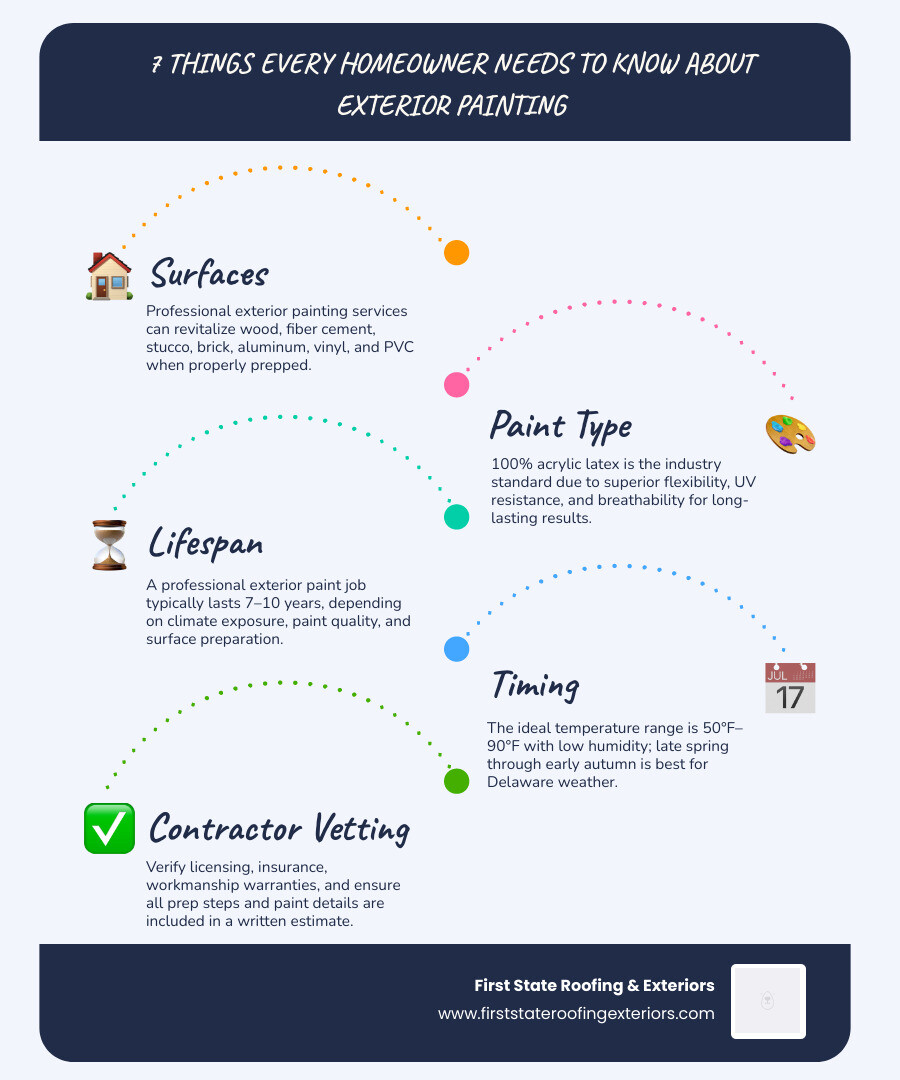
Professional exterior painting services can revitalize almost any exterior substrate, including wood, fiber cement, stucco, brick, aluminum, and PVC, provided the surface is correctly prepped and primed.
Different materials require distinct chemical approaches. Applying the wrong paint to a specific siding type will result in rapid peeling, bubbling, or cracking.
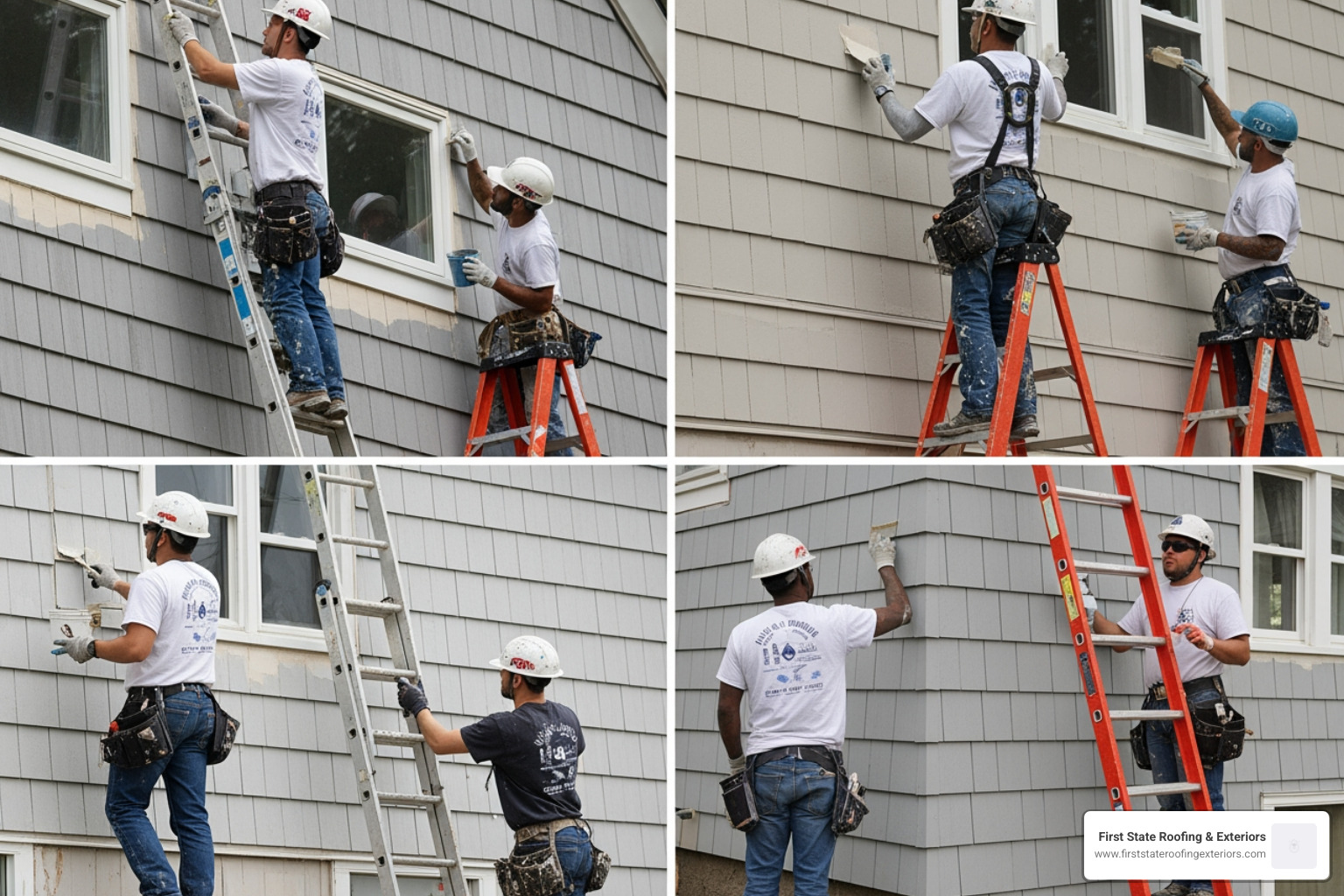
Wood Siding and Trim
Wood is beautiful but highly vulnerable to moisture. It acts like a sponge, expanding when wet and contracting as it dries. To paint wood successfully, technicians must scrape away loose paint, sand rough edges, and apply a high-quality moisture-barrier primer. This primer seals the wood pores, blocking tannins from bleeding through and ensuring the topcoat adheres securely.
Fiber Cement Siding
Fiber Cement Siding is exceptionally durable and highly receptive to premium acrylic latex paints. Because it contains cement, sand, and cellulose fibers, it does not expand and contract as dramatically as wood. However, it must be completely dry and clean before painting. Once prepped, fiber cement holds paint beautifully, often lasting significantly longer than traditional wood.
Stucco and Masonry
Stucco, brick, and concrete are highly porous, alkaline materials. They require specialized paints—such as elastomeric or breathable masonry paints—that allow internal moisture to escape while blocking rain from entering. Standard paints applied to masonry will trap moisture behind the paint film, causing the paint to blister and pop off.
Aluminum and Vinyl Siding
Many homeowners do not realize that metal and vinyl Exterior Siding can be painted. Painting vinyl siding requires paint formulated with “vinyl-safe” color technology. Dark colors absorb heat, which can warp vinyl siding if the paint is not engineered to reflect solar radiation. For aluminum, a specialized metal-bonding primer is required to prevent oxidation and ensure the topcoat bonds to the slick metal surface.
2. Selecting the Best Paint Types and Colors for Curb Appeal
100% acrylic latex paint is the industry standard for exterior residential surfaces due to its superior flexibility, UV resistance, and breathability compared to oil-based alternatives.
Choosing the right paint is a balance of chemistry and aesthetics. The paint you select must withstand Kent and Sussex County, DE’s hot, humid summers and freezing winters.
Key Paint Characteristics
- UV Resistance: High-quality acrylic resins absorb harmful ultraviolet rays. This prevents the paint from breaking down, chalking, or fading prematurely.
- Flexibility: Acrylic latex paint remains flexible after it cures. This allows it to stretch and contract with your home’s siding during extreme temperature swings without cracking.
- Low-VOC Formulations: Modern paints feature low Volatile Organic Compound (VOC) levels. This makes them environmentally friendly and reduces the release of harsh chemical fumes during application.
- Color Consulting: Selecting the right color palette is crucial. While personal preference matters, choosing timeless neutrals (like warm grays, soft beiges, or classic whites) paired with bold accent colors on shutters and front doors maximizes curb appeal and resale value.
Paint Type Comparison Table
| Metric | Acrylic Latex Paint | Oil-Based Paint |
|---|---|---|
| Flexibility | High (stretches with temperature shifts) | Low (becomes brittle over time) |
| Drying Time | Quick (typically 1 to 4 hours) | Slow (often 12 to 24 hours) |
| Durability | Excellent UV and moisture resistance | High impact resistance; prone to chalking |
| Clean-up | Simple (soap and water) | Complex (requires mineral spirits/solvents) |
Understanding these chemical differences is essential for long-term durability. To learn more about industry standards and paint performance metrics, consult the Paint Contractors Association (PCA).
3. The Step-by-Step Professional Painting Process
A flawless, long-lasting paint job is 70% preparation and 30% application; skipping prep steps like washing, scraping, or priming guarantees premature paint failure.
We believe in a meticulous, preparation-first philosophy. Applying premium paint over a dirty, peeling, or damp surface is a waste of resources. Our professional crew follows a strict five-step standard to ensure every project stands the test of time.

Step 1: Surface Cleaning
Every project begins with a comprehensive wash. We utilize professional Power Washing Kent and Sussex County, DE services to eliminate dirt, chalking paint, mold, and mildew. This step is vital because paint cannot form a mechanical bond with dirty or dusty siding.
Step 2: Scraping and Sanding
Once the home is completely dry, we scrape away loose, peeling, or flaking paint. Technicians then sand the edges of the remaining paint to create a smooth, feathered transition. This ensures the final coat looks uniform and prevents future peeling at the seams.
Step 3: Caulking and Sealing
Moisture is the enemy of any paint job. We apply high-grade elastomeric caulk around window frames, door casings, trim joints, and siding seams. This seals out moisture and drafts, acting like a flexible barrier that stretches as your home naturally settles.
Step 4: Spot Priming
Any bare wood, exposed metal, or repaired siding must be primed. Priming seals porous surfaces, prevents wood tannins from bleeding through, and provides a highly adhesive surface for the topcoat to cling to.
Step 5: Two-Coat Application
We always apply two full coats of premium exterior paint. While a single coat may look acceptable initially, it lacks the mil thickness required to withstand intense UV rays, wind, and rain. We apply paint using professional sprayers for a uniform finish, followed by brushing and rolling to ensure deep adhesion.
4. Lifespan, Cost, and Seasonal Timing
Factors That Influence the Longevity of Exterior Painting Services
A professional exterior paint job typically lasts 7 to 10 years, depending heavily on local climate exposure, the quality of the paint used, and the thoroughness of the initial surface preparation.
- Climate Exposure: Homes in coastal Kent and Sussex County, DE face salt air, high humidity, and intense sun exposure, which degrade paint faster than shaded, inland properties.
- Substrate Condition: Siding that is clean, dry, and structurally sound holds paint far longer than old, moisture-damaged wood.
- Local Expertise: Partnering with experienced Dover, DE exterior contractors ensures your paint is selected and applied to withstand specific Mid-Atlantic weather patterns.
Estimating the Cost of Professional Exterior Painting Services
The cost of professional exterior painting is determined by the home’s square footage, architectural complexity, material costs, and the amount of prep work required.
- Labor Rates and Height: Multi-story homes require scaffolding, ladders, and specialized safety rigging, which increases labor hours and costs.
- Siding Repairs: Painting over damaged siding is never a good idea. Addressing underlying rot or cracks with professional Exterior Siding Repair before painting prevents costly failures down the road.
The Best Time of Year to Schedule Your Project
The ideal temperature range for applying exterior paint is between 50°F and 90°F with low humidity, making late spring, summer, and early autumn the prime seasons for painting in Kent and Sussex County, DE.
- Moisture Constraints: Painting on damp morning dew or right before a rainstorm traps moisture under the paint film, causing immediate blistering and peeling.
- Temperature Fluctuations: Water-based paints require stable temperatures to cure properly. If the temperature drops below 50°F overnight, the paint film may fail to form a cohesive, protective shell.
5. Professional Painting vs. DIY: Why Expertise Matters
While DIY painting saves on upfront labor costs, hiring professionals guarantees safety on high ladders, access to commercial-grade equipment, and a flawless finish backed by a warranty.
Many homeowners underestimate the sheer physical labor and safety risks involved in painting a home’s exterior.
Safety Protocols
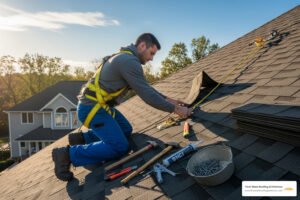
Painting the second story of a home requires working on tall ladders and scaffolding. Professional crews are trained in OSHA safety guidelines, including the use of safety harnesses and proper ladder placement, minimizing the risk of dangerous falls.
Specialized Equipment
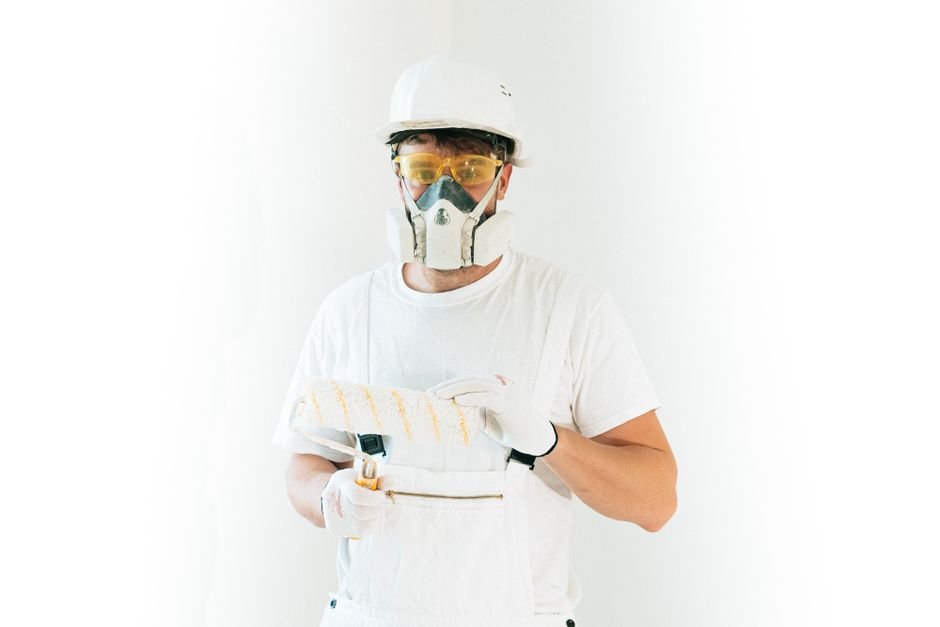
A professional paint job requires more than a roller and a brush. Professional painters utilize heavy-duty power washers, commercial airless sprayers, drop cloths, and scaffolding. This equipment allows us to apply paint with precise thickness and clean lines.
Comprehensive Exterior Care
When you hire a full-service contractor, you get more than just painters. We evaluate your entire home envelope. If we discover structural issues during our prep work, we can seamlessly coordinate painting with other vital updates, such as siding replacement or roof replacement services.
6. How to Vet Contractors and Understand Warranties
Homeowners should only hire exterior contractors who carry active general liability insurance, worker’s compensation, and offer a written warranty covering both materials and labor.
Protect your home and your wallet by thoroughly vetting any painting company before signing a contract.
- Licensing and Insurance: Ensure the contractor is licensed to work in Kent and Sussex County, DE and carries at least $1 million in liability insurance. This protects you from financial liability in the event of property damage or worker injury.
- Workmanship Warranties: It is important to distinguish between the manufacturer’s product warranty (which covers paint defects and can last 25+ years) and the contractor’s workmanship warranty (which covers application errors and typically lasts 1 to 5 years).
- Written Estimates: Never accept a verbal quote. A professional estimate should detail all surface preparation steps, the specific paint brands and lines to be used, and the exact number of coats applied.
Frequently Asked Questions About Exterior Painting
Do you need to tip professional exterior painters?
Tipping exterior painters is not required or expected, but it is a highly appreciated way to reward exceptional craftsmanship, clean work habits, and outstanding customer service.
If you wish to show your appreciation, a tip of $20 to $50 per crew member is standard. Providing cold drinks on a hot summer day or offering lunch is another excellent, highly welcomed way to show your gratitude.
How much paint is required for an average-sized home?
An average 2,000-square-foot home typically requires 15 to 25 gallons of paint for a standard two-coat application, depending on the texture and porosity of the siding.
One gallon of premium exterior paint generally covers 350 to 400 square feet of smooth surface with a single coat. However, rough surfaces like stucco, cedar shingles, or deeply textured brick can require up to twice as much paint.
Can you paint over damaged siding or stucco?
No, you should never paint over rotted wood, cracked stucco, or warped siding, as paint will not restore structural integrity and will quickly peel or bubble over damaged areas.
Before applying any primer or paint, it is crucial to perform comprehensive Siding Exterior Maintenance and replace any damaged, soft, or rotting materials.
Conclusion
Professional exterior painting is one of the most cost-effective ways to protect your home’s structure while dramatically boosting its curb appeal. For a complete guide on maintaining your home’s exterior, explore our Residential Exterior Services Ultimate Guide.
Ready to transform your home’s exterior? The local Kent and Sussex County, DE experts at First State Roofing & Exteriors are here to help. We give free estimates for all your exterior needs. Call (302) 222-4065 today to schedule your free inspection!