When Every Minute Counts: Finding a 24 Hour Roofer in Delaware
Finding a reliable 24 hour roofer in Delaware is one of the most urgent decisions a homeowner can face, especially when a storm is still raging and water is actively entering your home. Delaware averages more than 45 inches of precipitation each year, and coastal wind exposure adds constant stress to shingles, flashing, and roof decking. Working with a trusted local Delaware roofing team gives you the best chance of getting fast help from professionals who understand regional weather, local building practices, and emergency mitigation standards.
Here is the quick answer if you need help right now:
- Call a local 24/7 emergency roofer immediately – prioritize contractors based in New Castle, Kent, or Sussex County for faster dispatch
- Expect arrival within 2-4 hours for many Delaware locations, depending on storm severity and road conditions
- Temporary tarping usually comes first to stop active water intrusion before permanent repairs are scheduled
- Document all damage with photos before the roof is touched so your insurance claim has clear evidence
- Request a free emergency inspection and estimate from a local contractor that can provide both mitigation and repair planning
Roofing emergencies do not wait for business hours. A small leak left unaddressed for even a few hours can lead to wet insulation, damaged drywall, mold growth, and compromised framing. In many cases, the difference between a manageable repair and a major restoration comes down to how quickly the home is stabilized.
I’m Richard McCain, Owner and President of First State Roofing & Exteriors, a family-run Delaware contractor based in Milford with over 20 years of hands-on experience in emergency roof repair across the state. I’ve seen how quickly storm damage can spiral when homeowners cannot locate a trusted 24 hour roofer in Delaware, and this guide is designed to help you make the right decision fast.
What Qualifies as a True Emergency for a 24 Hour Roofer in Delaware?
Not every roofing issue requires waking up a crew at 2:00 AM on a Sunday. However, distinguishing between a standard maintenance issue and a true emergency is critical for protecting your family and your wallet.
An emergency roofing scenario is any situation where roof damage compromises the structural integrity of the home or allows active water to enter the living space. Immediate mitigation is required to prevent mold growth, structural rot, and electrical hazards.
| Damage Type | Standard Repair (Wait for Business Hours) | Emergency Repair (Call 24/7 Immediately) |
|---|---|---|
| Water Leak | Minor drip into a bucket; dry attic space. | Active streaming water; ceiling sagging; multiple leak points. |
| Shingle Loss | One or two missing shingles with underlayment intact. | Large sections of shingles ripped away, exposing bare wood decking. |
| Tree/Debris Impact | Small branch resting on the roof; no visible structural damage. | Large limb or tree punctured through the roof; visible structural sag. |
| Flashing & Gutters | Loose gutter bracket or slightly rusted chimney flashing. | Flashing completely torn off; water pouring behind siding or into walls. |
If you are dealing with active water leaks, structural damage, wind blow-off, or fallen trees, you must bypass the standard contact forms and call a professional right away. For a comprehensive breakdown of these scenarios, see our Emergency Roof Repair Complete Guide.
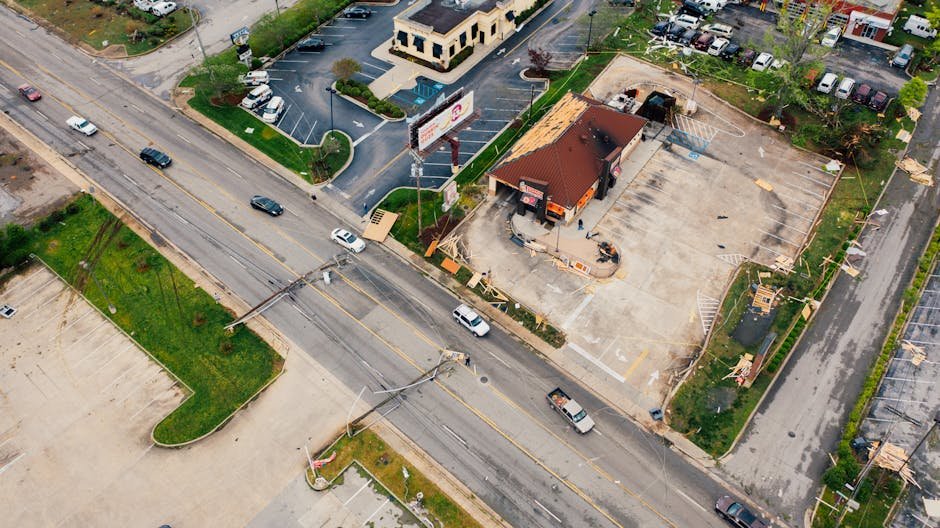
Severe Storm Damage and Wind Blow-Off
Asphalt shingles are highly susceptible to uplift during severe coastal storms. High winds can strip away entire sections of roofing, exposing the underlayment to heavy precipitation. Delaware sits directly in the path of aggressive Nor’easters and summer convective storms that routinely produce wind gusts exceeding 50 mph. When winds reach these speeds, they create a pressure differential that can lift even properly installed shingles, tearing them from their fasteners.
If you live in Kent County, securing immediate assistance from professional Dover, DE emergency roofers prevents water from cascading into your attic and ceiling joists. Once the protective shingle barrier is gone, the underlying felt or synthetic underlayment can only resist water for a very limited time before saturating and failing.
Structural Compromise and Fallen Debris
Fallen tree limbs and heavy debris can cause immediate structural sagging or complete roof collapse. These situations present severe safety hazards and require immediate evacuation and professional structural stabilization. In Delaware’s older neighborhoods, mature oak and maple trees pose a constant threat during high-wind events.
According to emergency safety protocols outlined by FEMA, homeowners should never attempt to inspect a structurally compromised roof from the inside or outside during an active storm. Structural damage can weaken the load-bearing rafters, making the entire roof deck unstable. If a tree has impacted your home, evacuate the immediate area, call 911 if there is an active utility or fire hazard, and then contact a certified 24 hour roofer in Delaware to secure the structure.
5 Proven Ways to Find a Reliable Emergency Roofer
When water is actively dripping into your living room, you do not have hours to research contractors. You need a systematic, reliable way to filter out “storm chasers” and find an authentic local professional.
Using these five proven strategies will guide you directly to a qualified professional who can handle Emergency Roof Repair Services safely and effectively.
1. Search for a Certified 24 Hour Roofer in Delaware Near You
Local proximity dictates how quickly a contractor can arrive at your home. Focus your search on established contractors with physical offices in New Castle, Kent, or Sussex County to ensure rapid dispatch.
Out-of-state contractors often flood storm-affected areas after major weather events. While they may promise quick fixes, they lack local offices, making it nearly impossible to enforce workmanship warranties if a leak recurs. By choosing a true Delaware roofer who is deeply embedded in the community, you ensure long-term accountability.
Local contractors also understand regional building codes and the specific weather patterns unique to the Delmarva Peninsula. You can learn more about local response protocols and regional safety steps in our Local Roof Emergency Guide or explore our network of roofing contractors Delaware to find a team situated near your neighborhood.
2. Verify 24/7 Dispatch and Response Times
True emergency roofers maintain dedicated dispatch lines that operate 24 hours a day, 365 days a year. Avoid companies that rely on automated voicemail systems during off-hours, as immediate containment is vital to minimizing interior water damage.
When calling a prospective roofing company, ask these direct questions:
- Do you have a live dispatcher on call right now, or will my message sit in an inbox until morning?
- What is your estimated dispatch time to my specific address?
- Do you have emergency crews already loaded with tarps and lumber ready to roll?
For residents in southern regions of the state, refer to our Emergency Roof Repair Milford Guide for localized response expectations and dispatch procedures. A reliable local partner should be able to provide a clear, realistic arrival window based on current road conditions and storm severity.
3. Check Local Reviews and Industry Credentials
Verify that the contractor holds active licensing, comprehensive liability insurance, and workers’ compensation coverage in the state of Delaware. Homeowners can cross-reference contractor credentials through professional trade organizations like the National Roofing Contractors Association (NRCA) to ensure compliance with national safety and installation standards.
In addition to verifying licenses, look for real-world customer experiences. Check platforms like THE BEST 10 ROOFING IN DOVER, DE – UPDATED 2026 – Yelp to see how local companies handle high-pressure emergency situations. Look specifically for reviews mentioning:
- Punctuality: Did the crew arrive when promised?
- Cleanliness: Did they clean up dangerous nails and debris from the yard?
- Communication: Did they explain the temporary fix clearly?
Working with certified professionals, such as those holding factory-direct credentials, ensures that any emergency repairs performed will not inadvertently void your existing manufacturer warranties. You can read more about local standards in our guide to roofers Dover Delaware.
4. Look for Comprehensive Material and System Expertise
Ensure the contractor has documented experience working with your specific roofing material, whether it is asphalt shingle, metal, flat roofing, EPDM, or TPO. Specialized material knowledge prevents improper temporary repairs that could void manufacturer warranties.
For example, a flat roof on a commercial building or residential porch requires completely different emergency sealing techniques than a steep-slope asphalt shingle roof. Applying standard asphalt plastic cement to a single-ply TPO or EPDM membrane can chemically damage the material, turning a simple patch job into an expensive replacement.
Whether you are looking for specialized residential repairs or commercial-grade solutions, verify that your chosen contractor offers a complete suite of roofing services tailored to your roof type. If you are located in Kent County, check out our resource on roofing Dover to learn about common local materials and regional structural preferences.
5. Confirm Insurance Documentation and Tarping Support
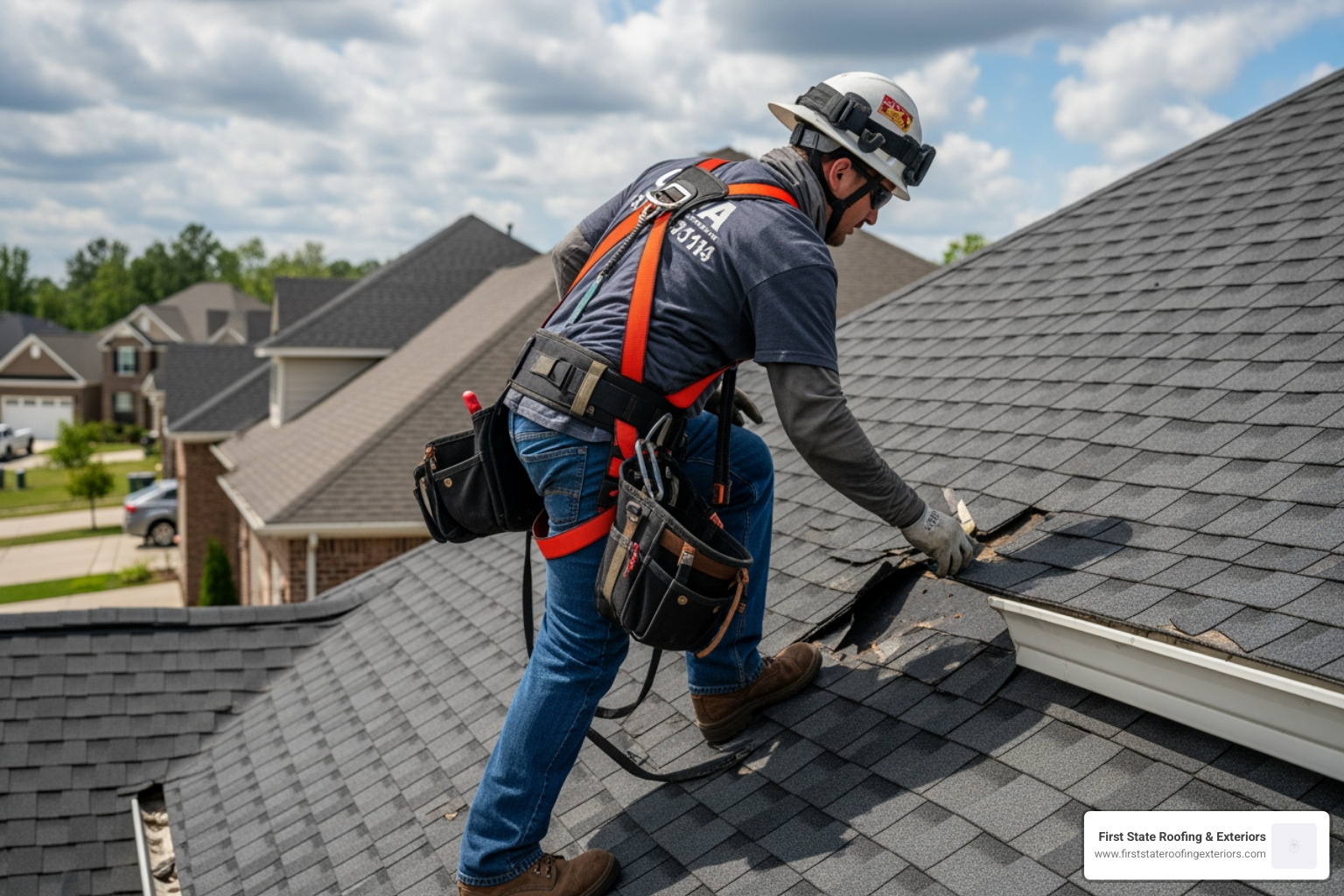
A reputable emergency roofer provides immediate temporary tarping to stop active leaks and compiles comprehensive photo documentation for your insurance carrier. This detailed evidence simplifies the claims process and ensures your adjuster has the exact data needed to approve your claim.
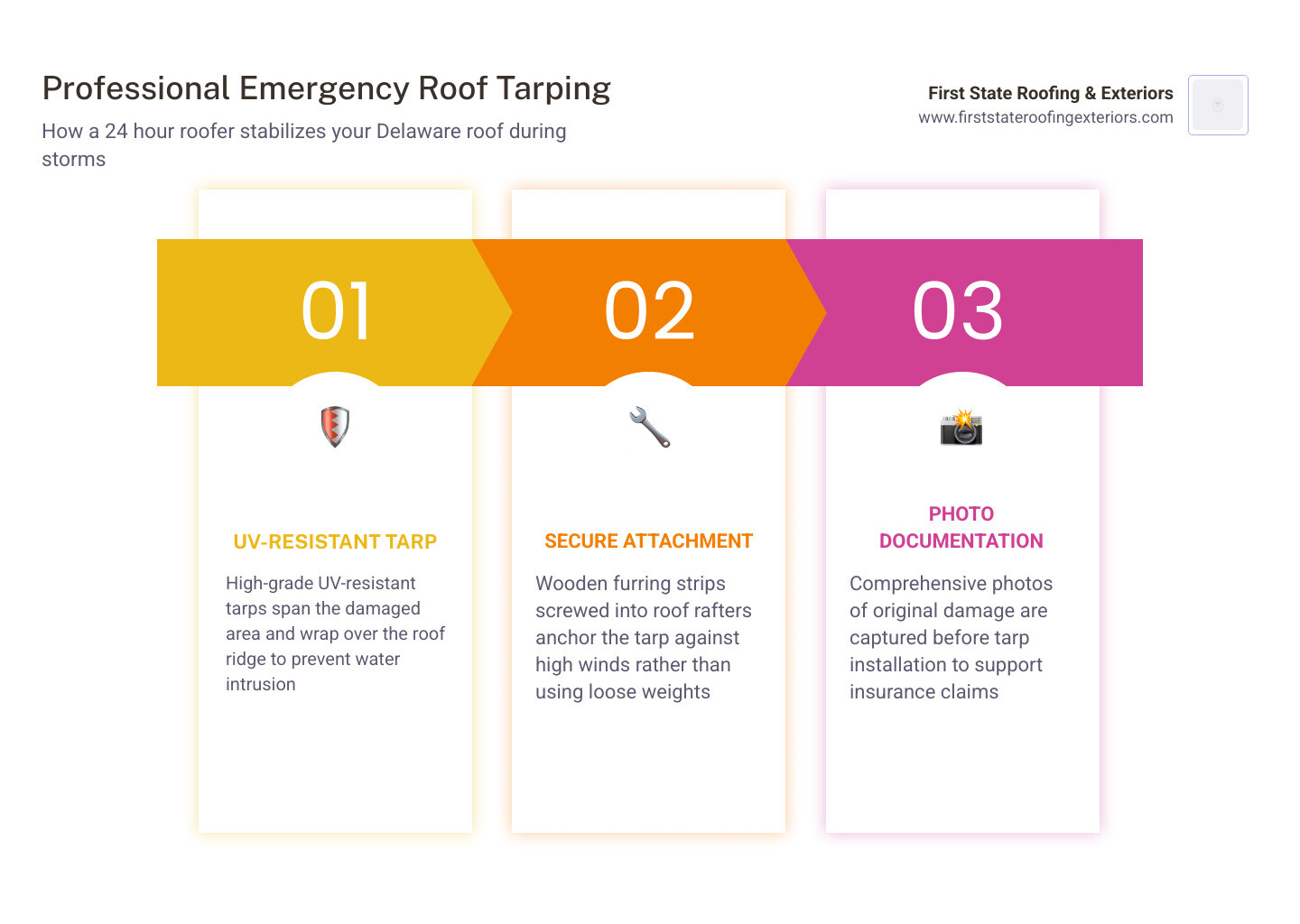
During a storm, the primary goal of a 24 hour roofer in Delaware is stabilization. This is typically achieved through professional tarping. A proper emergency tarping service involves:
- High-grade, UV-resistant tarps that span the damaged area and wrap over the roof ridge to prevent water from running underneath.
- Wooden furring strips screwed securely into the roof rafters (not just weighted down with sandbags or bricks) to prevent the tarp from blowing away in high winds.
- Comprehensive photo documentation of the damage before the tarp is installed. This is critical because insurance companies require proof of the original storm damage to approve permanent repairs.
Be sure to ask your contractor if they provide a dedicated emergency tarping service and if they will supply a complete digital photo package for your insurance claim.
What to Do Immediately After Discovering Roof Damage
Discovering a major leak or structural puncture can be incredibly stressful, but taking structured, calm steps will protect your property and simplify your upcoming insurance claim.
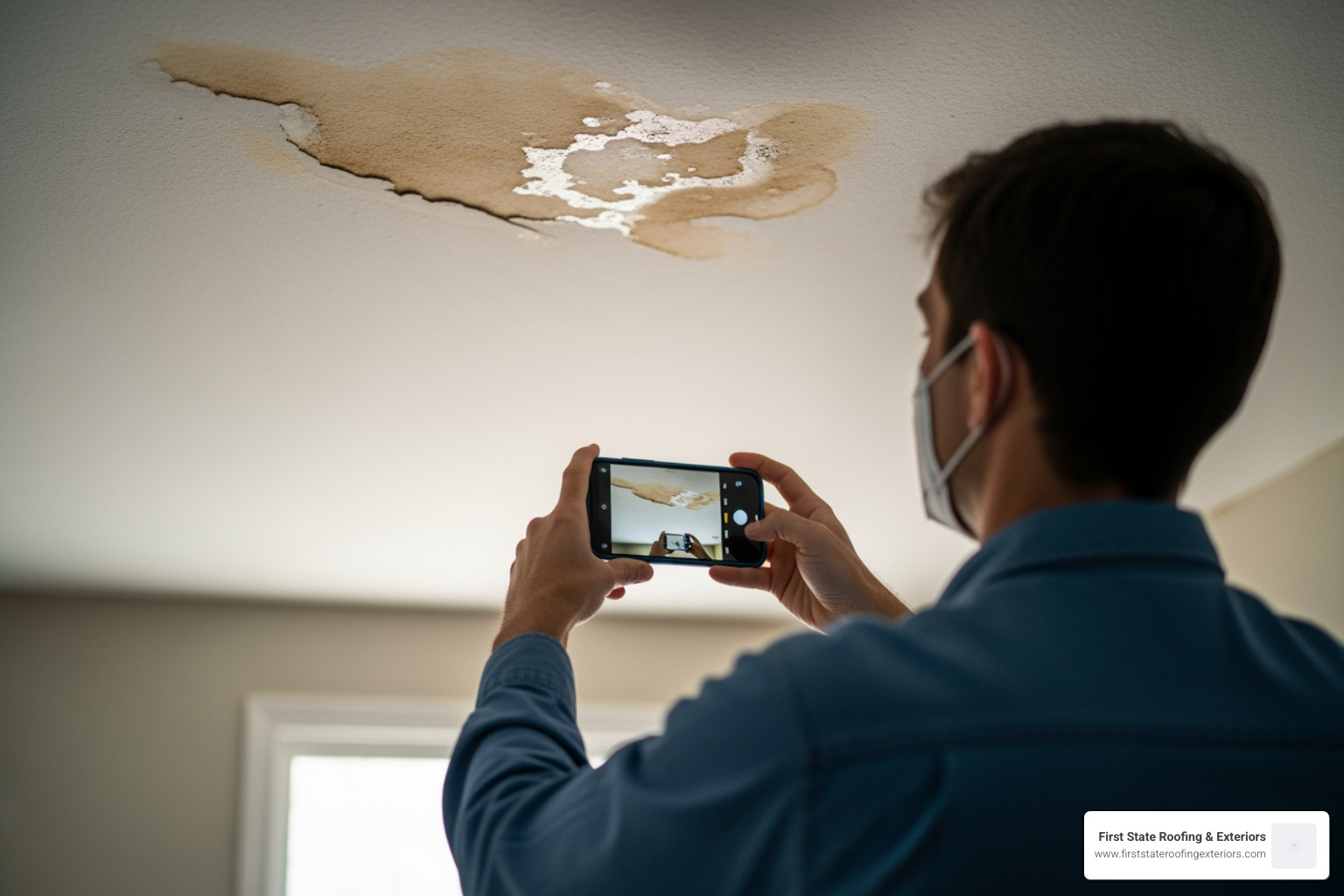
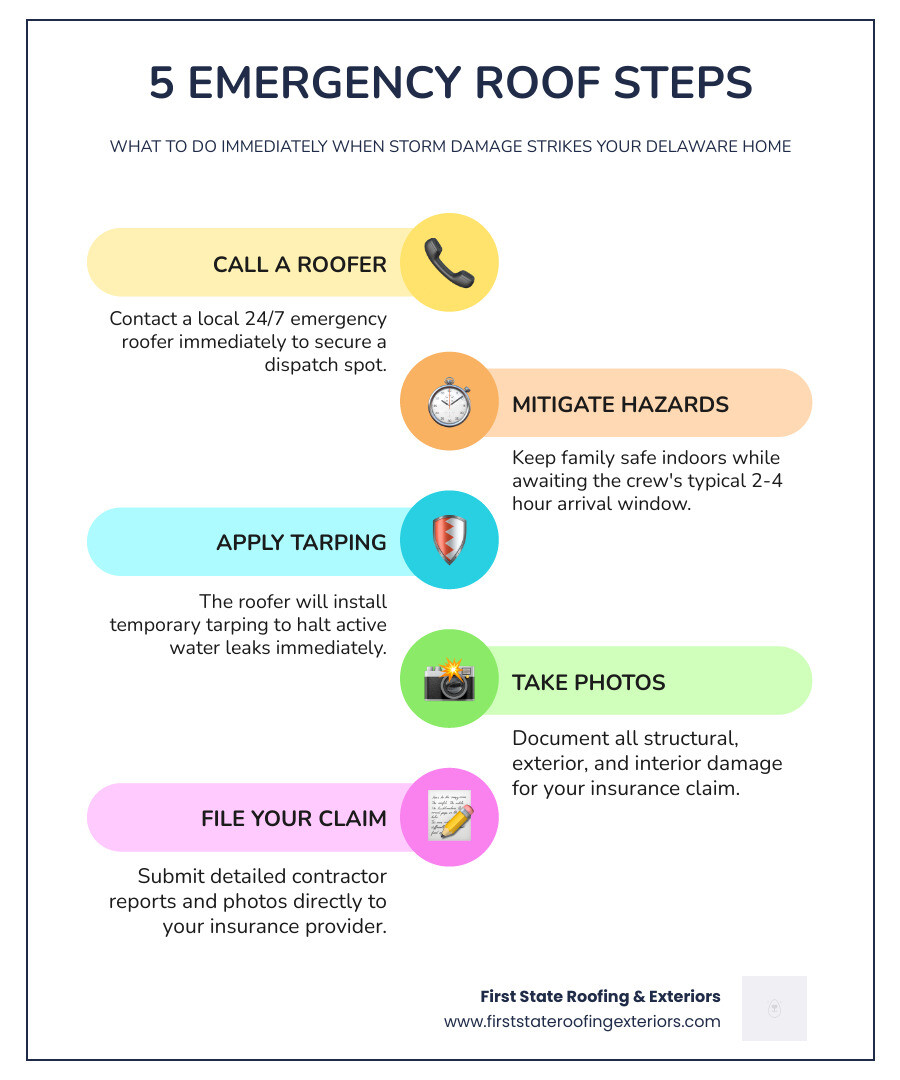
If you discover roof damage, follow this immediate action plan:
- Prioritize Safety First: If there is structural sagging, a ceiling bulge holding water, or water leaking near electrical fixtures or outlets, turn off the power at your main breaker panel and evacuate the immediate area.
- Contain the Water: Place buckets, plastic bins, or trash cans under active drips. Move furniture, electronics, and valuable items out of the room or cover them with plastic sheeting.
- Pinpoint the Leak Safely: Do not climb onto your roof during a storm. Instead, note the location of the leak inside your home and take high-resolution photos and videos of the active water intrusion, water-stained drywall, and dripping ceilings.
- Document Exterior Damage: Once it is safe to go outside, take photos of the roof from ground level using your phone or binoculars. Look for missing shingles, exposed underlayment, damaged flashing, or fallen tree limbs.
- Call a Professional: Contact a certified local contractor to dispatch an emergency crew. For more detailed instructions on managing the first 60 minutes of a roofing crisis, read our Local Roof Emergency Guide.
When to Call a 24 Hour Roofer in Delaware
Perform a visual inspection from ground level only. Place buckets under active interior leaks, move valuables away from affected areas, and contact a professional immediately to schedule emergency tarping and mitigation steps.
If you notice any of the following signs, do not wait until morning to call for help:
- Water pooling on your ceiling, causing the drywall to sag or bow.
- Water running down interior walls or pooling near electrical outlets.
- Large sections of shingles or metal panels completely missing, leaving bare wood exposed to ongoing rain.
- A tree limb or heavy debris resting on your roof deck.
If you are located in the state capital or surrounding areas, our Emergency Roof Repair Dover DE Guide provides direct, step-by-step instructions on handling local storms and securing rapid response.
Frequently Asked Questions About Delaware Emergency Roofing
How quickly can an emergency roofer respond in Delaware?
An emergency roofer typically responds within 2 to 4 hours, depending on current weather conditions, road safety, and local dispatch density across New Castle, Kent, and Sussex counties. During widespread storm events, response times can vary, but reputable 24/7 contractors prioritize active water leaks and structural hazards to stabilize properties as quickly as physically possible.
Can emergency roof repairs be performed during an active storm?
Permanent repairs cannot be performed safely during an active storm because wet surfaces make roofs incredibly slick, and high winds pose severe fall hazards. However, emergency crews can apply temporary tarping and secure exposed areas once high winds subside to a safe threshold, preventing further interior water damage until permanent repairs can be scheduled.
How do emergency roofers handle insurance claims?
Professional emergency roofers document all storm damage with high-resolution photos, write detailed damage assessments, and coordinate directly with your insurance adjuster to streamline the claims process. They provide the necessary paperwork, itemized mitigation estimates, and proof of temporary repairs to ensure your insurance carrier has everything required to process your claim smoothly.
Conclusion
When severe weather threatens your home, First State Roofing & Exteriors provides rapid, reliable, and professional emergency support. Our local experts are available 24/7 to protect your property with immediate tarping, structural stabilization, and comprehensive insurance documentation.
Do not let a minor leak turn into a major structural restoration. First State Roofing & Exteriors provides free estimates to help you protect your home. Call us today at (302) 222-4065 for a free inspection and to schedule professional emergency roof repair services.