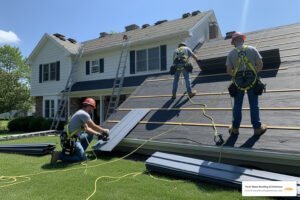
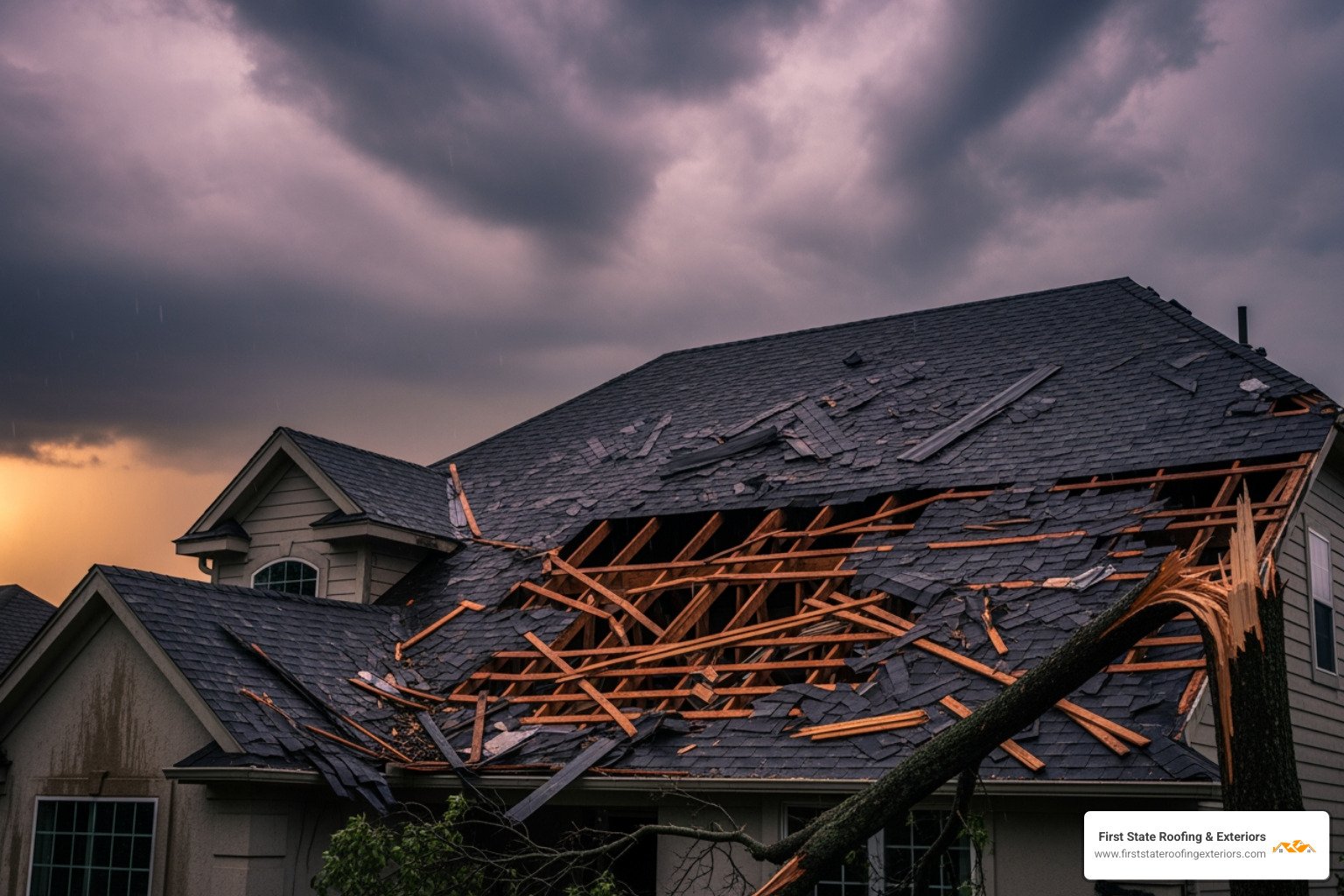
Why Dover Residents Need to Understand Storm Damage Repair
Experiencing the aftermath of severe weather can be overwhelming, especially when you’re facing significant storm damage Dover DE. Kent and Sussex County, DE’s coastal location makes the region vulnerable to everything from tropical storms to unexpected tornadoes. As local experts in exterior restoration, we understand the urgency and precision required to secure your property and guide you through recovery. This guide provides a clear roadmap for Dover residents, detailing everything from immediate safety measures to navigating the insurance and repair process.
If you’re dealing with storm damage, here’s what you need to know right now:
- Safety first: Check for downed power lines and avoid structural hazards before entering damaged areas.
- Document everything: Take photos and videos of all damage before making temporary repairs.
- Contact your insurance: File your claim within 24-48 hours to start the process.
- Get professional help: A thorough inspection reveals hidden damage that could worsen over time.
- Act quickly: Temporary repairs prevent additional water intrusion and secondary damage.
On August 4, 2020, an EF2 tornado tore through Dover with 96 mph winds, ripping sections off William Henry Middle School’s roof and damaging homes across the city. This wasn’t an isolated incident—Dover faces regular threats that can compromise your home’s exterior in minutes. Understanding how to respond can save you thousands and prevent long-term structural problems. Our team has responded to countless emergency calls after severe weather, and we know exactly what local homeowners need to protect their investment.
Need immediate assistance? We offer free estimates. Call us at (302) 222-4065 for a free inspection and get expert guidance on your next steps.

Key terms for storm damage Dover DE:
Understanding Dover’s Severe Weather: A Look Back at Major Storms
Dover, Kent and Sussex County, DE, is no stranger to the wrath of Mother Nature. Its geographic location makes it susceptible to a range of severe weather phenomena, from tropical systems bringing heavy rains and high winds to localized tornadoes that can cause catastrophic damage in minutes. Understanding these events helps us appreciate the importance of preparedness and prompt action when storm damage Dover DE occurs.
One of the most significant recent events to impact Dover was Tropical Storm Isaias on August 4, 2020. This storm brought with it not just heavy rains and strong winds, but also a confirmed tornado that tracked right through Kent County, leaving a path of destruction in its wake.
The National Weather Service confirmed that an EF2 tornado, with a width of 500 yards and a length of 14.89 miles, touched down in Kent County. This powerful tornado tracked through the south side of Dover, causing extensive damage. It started near Lebanon and continued its destructive journey north towards Smyrna, impacting several key areas within Dover.
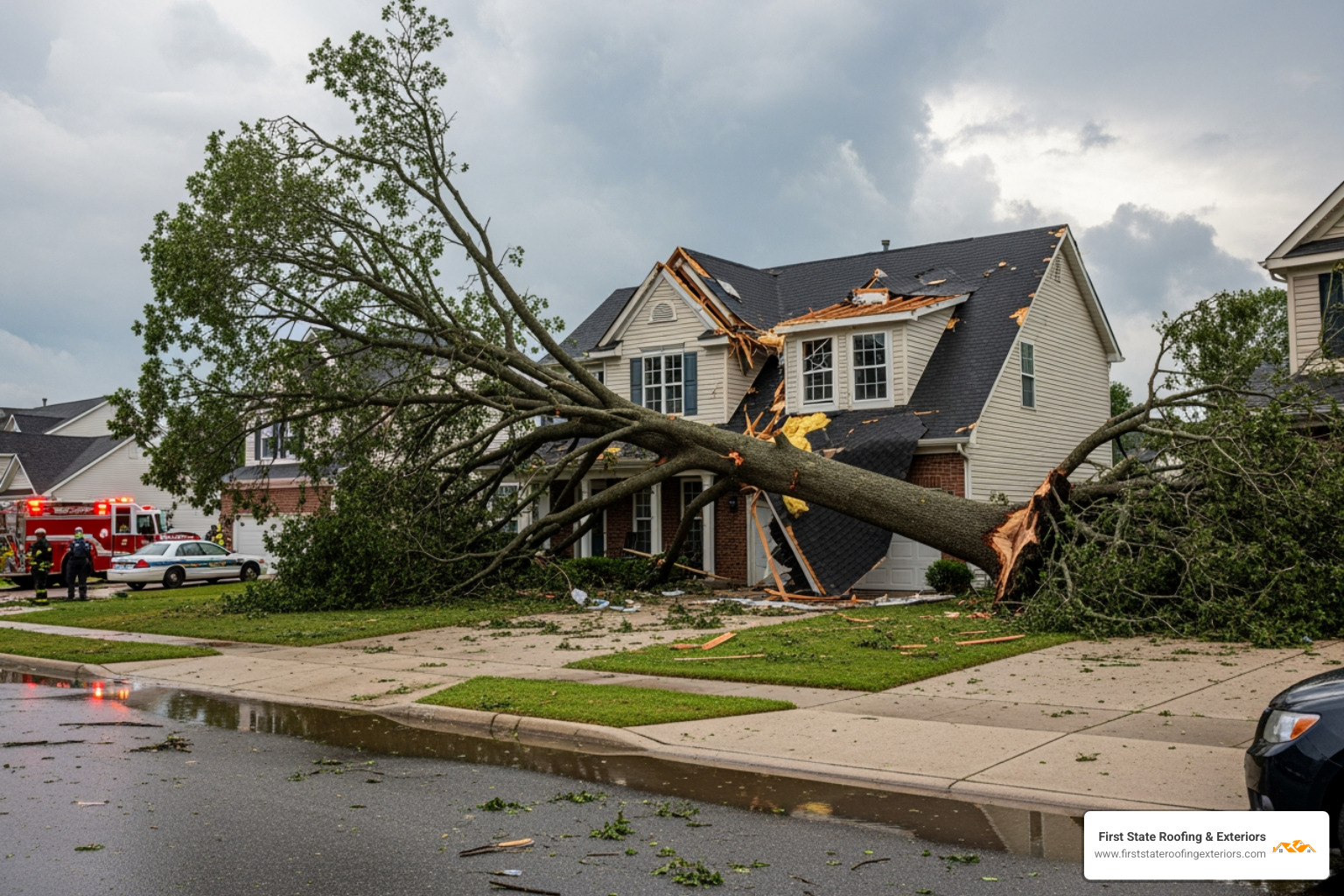
The immediate aftermath was sobering. The tornado caused significant tree damage, with many large trees toppled or snapped, some falling onto homes and cars. Social media images from the time showed snapped power poles and numerous limbs down on Route 8 at Bennington Street in Dover, highlighting the widespread nature of the destruction. A staggering 96 mph wind gust was even measured on Route 1 just north of Smyrna as the tornadic circulation passed by, underscoring the intensity of the winds.
Public infrastructure and commercial properties were not spared. William Henry Middle School in Dover suffered severe roof damage, with sections of its roof completely blown off. Adjacent to the school, a warehouse had metal walls torn off, and several tractor-trailers were flipped onto their sides, a stark reminder of the tornado’s power. Residential areas, including homes on Westview Terrace and apartments at The Greens at Cedar Chase, also reported significant damage from fallen trees and high winds.
In response to the widespread destruction and power outages, Dover Mayor Robin Christiansen promptly declared a ‘State of Emergency.’ This declaration was crucial for mobilizing resources and coordinating the efforts of city services, including police, fire, and electric departments, to address the immediate aftermath. Traffic was severely impacted throughout the city due to downed trees and power lines, making travel hazardous and hindering initial recovery efforts.
This event serves as a powerful reminder of the potential for severe storm damage Dover DE. The combination of high winds, heavy rain, and the unexpected occurrence of tornadoes can turn a calm day into a disaster zone in moments. For more detailed data on the 2020 Kent County tornado, you can visit the NOAA Storm Events Database.
Immediate Steps to Take After a Storm Hits Your Dover Home
When a storm passes, and the immediate danger subsides, the sight of damage can be overwhelming. Knowing what to do in the first few hours and days is critical for your safety, the integrity of your property, and a smooth recovery process. As local experts who have seen the aftermath of countless storms in Dover, we recommend the following immediate steps:
- Prioritize Safety Above All Else: Before you even think about assessing damage, ensure your family’s safety. Check for downed power lines, which are extremely dangerous and should never be approached. If you suspect structural damage to your home, do not enter until it has been deemed safe by professionals. Heed all local advisories issued by the Dover Police Department or city officials. During the 2020 tornado, Mayor Robin Christiansen urged residents to stay in their homes and avoid unnecessary travel, a standard and vital directive after severe weather.
- Avoid Non-Essential Travel: With downed trees, power lines, and potential flooding, roads can be hazardous or impassable. Staying off the roads allows emergency crews to work more efficiently and reduces the risk of further accidents. If your vehicle is parked on the street under a downed tree and it’s safe to move, do so to assist cleanup efforts.
- Document All Damage Thoroughly: This is perhaps the most crucial step for your insurance claim. Before you make any repairs or clean anything up, take extensive photos and videos of all damage. Capture different angles, close-ups, and wide shots that show the full extent of the destruction, both inside and outside your home. This visual evidence will be invaluable when filing your claim.
- Make Temporary, Emergency Repairs: While you shouldn’t undertake major repairs before insurance assessment, you can and should make temporary fixes to prevent further damage. For instance, if your roof has a hole, cover it with a tarp. If a window is broken, board it up. These “mitigation” efforts are often required by insurance policies to prevent secondary damage like water intrusion or theft. Keep all receipts for materials used in these temporary repairs.
- Contact Your Insurance Agent Promptly: The sooner you notify your insurance company, the better. Many policies have specific timelines for filing claims. Provide them with your documentation (photos, videos) and a clear description of the damage. They will guide you on the next steps, including scheduling an adjuster to inspect your property.
- Stay Informed: Even after the storm, ongoing weather alerts or advisories may be in effect. Monitor local news, weather channels, and official city communications for updates on power restoration, road closures, and recovery efforts. The Kent and Sussex County, DE Emergency Management Agency (DEMA) is an excellent resource for staying informed during and after severe weather.
Taking these immediate steps can significantly streamline the recovery process after storm damage Dover DE, helping you protect your property and steer the path to restoration more effectively.
How to Assess Your Property for Common Types of Storm Damage
After the initial shock of a storm wears off, conducting a thorough assessment of your property is vital. While some damage is obvious, much of it can be subtle or hidden, leading to long-term problems if not identified and addressed. We recommend a systematic approach, starting with the exterior and then moving to the interior.
How to Spot Wind and Hail Damage on Your Roof
Your roof is often the first line of defense against severe weather, making it highly susceptible to damage from high winds and hail. Even if you don’t see obvious holes, subtle signs can indicate significant issues.
- Missing or Creased Shingles: High winds can lift and tear shingles right off your roof. Look for bare spots where shingles are completely gone, or for shingles that are creased, bent, or flapping loosely. These areas are vulnerable to water penetration.
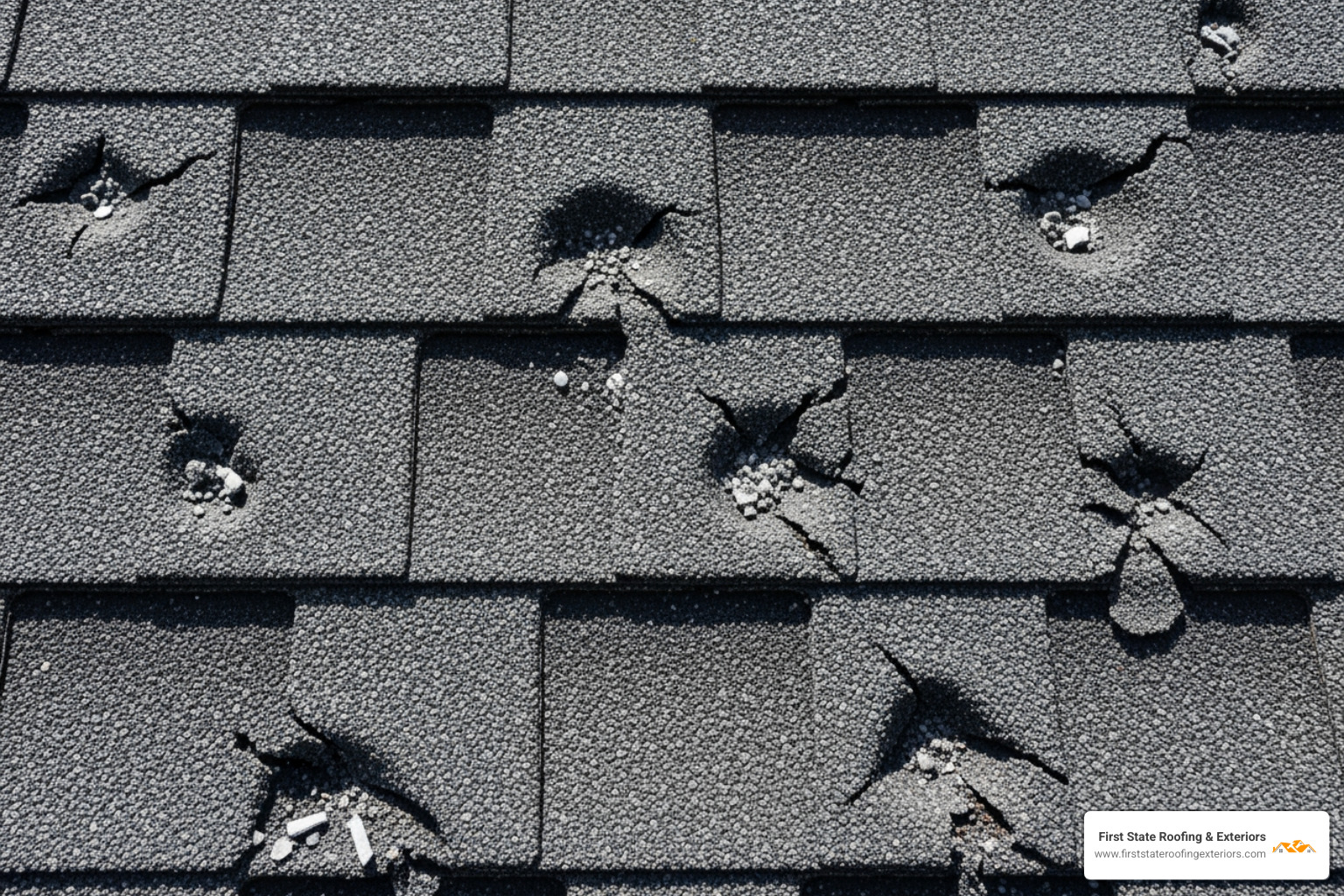
- Granule Loss: Asphalt shingles are covered in protective granules. Hail impact or strong winds can dislodge these granules, often accumulating in your gutters. This loss exposes the asphalt matting to UV rays, accelerating its deterioration and reducing the shingle’s lifespan.
- Damaged Flashing: Flashing around chimneys, skylights, vents, and valleys can be bent, torn, or dislodged by wind, creating direct pathways for water to enter your home.
- Bruised or Cracked Shingles: Hailstones can cause circular “bruises” or cracks on shingles that might not be immediately visible from the ground. Over time, these impacts weaken the shingle, leading to leaks.
- Leaks in the Attic: If water has already found its way in, you might notice water stains on your attic ceiling or insulation. This is a clear sign of roof damage that needs immediate attention.
Even minor-looking damage can compromise your roof’s integrity. If you suspect any roof damage, especially after strong winds or hailstorms, it’s crucial to get a professional inspection. A trained expert can identify these subtle signs of damage and determine the best course of action, whether it’s a simple repair or a more extensive solution.
Siding, Window, and Gutter Damage Assessment
Beyond the roof, other exterior components of your home are also vulnerable to storm damage.
- Siding: High winds can crack, warp, or detach vinyl siding panels. Aluminum siding might show dents or punctures from flying debris. Even brick or stucco can suffer cracks or spalling from extreme weather. Look for loose panels, cracks, holes, or areas where siding has been completely ripped off.
- Windows: Strong winds can shatter windows or compromise their seals. Check for broken glass, cracked panes, or bent frames. Even if the glass is intact, look for signs of compromised seals, such as fogging between double panes, which can lead to energy inefficiency.
- Gutters and Downspouts: These systems are designed to channel water away from your home, but they are often vulnerable to wind and heavy rain. Look for gutters that are dented, detached from the fascia, or clogged with storm debris. Damaged downspouts can lead to water pooling around your foundation, causing further issues.
Signs of Water Intrusion from storm damage Dover DE
Water is one of the most insidious forms of storm damage, often causing more long-term problems than visible structural issues. Even if your roof or siding appears intact, water can find its way into your home.
- Water Stains on Ceilings and Walls: Discoloration on your ceilings or upper walls is a tell-tale sign of a roof leak. These stains can appear as yellow, brown, or dark rings.
- Peeling Paint or Wallpaper: Water intrusion can cause paint to bubble, peel, or flake off walls and ceilings. Wallpaper may also begin to lift or detach.
- Musty Odors: A persistent musty or damp smell, especially in confined spaces like attics, basements, or crawl spaces, indicates the presence of moisture and potential mold growth.
- Damp Insulation: If your insulation feels wet or damp to the touch, it has likely been compromised by water. Wet insulation loses its effectiveness and can become a breeding ground for mold.
- Warped Wood Floors or Trim: Water absorbed by wood can cause it to swell, warp, buckle, or rot. Look for uneven floorboards or distorted window and door frames.
- Basement or Crawl Space Flooding: Heavy rains can overwhelm drainage systems, leading to water accumulation in basements or crawl spaces. This can cause significant structural damage and create an unhealthy environment.
Identifying these signs early can prevent more extensive and costly repairs down the line. If you notice any of these indicators of storm damage Dover DE, act quickly.
Navigating Repairs and Insurance for storm damage Dover DE
Dealing with the physical damage to your home is only half the battle; navigating the insurance claim process can be equally daunting. Our goal is to help you through both, ensuring your home is restored efficiently and effectively.
The Importance of a Professional Inspection
After a storm, a professional inspection is not just a recommendation; it’s a necessity. While you can assess visible damage, a trained eye can spot the subtle signs of hidden damage that an untrained homeowner might miss.
Our experienced contractors perform a thorough damage assessment, carefully checking every aspect of your exterior. This includes not only obvious issues like missing shingles or broken siding but also identifying underlying problems such as compromised decking, flashing damage, or structural weaknesses that could lead to future leaks or failures. We’ve honed our skills over 20 years, understanding the specific types of storm damage prevalent in the Dover climate.
A detailed repair estimate based on this comprehensive inspection is crucial for your insurance claim. It ensures that all necessary repairs are included, preventing you from paying out-of-pocket for issues that should have been covered. By identifying hidden issues early, we help prevent future problems and ensure your home is fully restored to its pre-storm condition, or even better. For expert assistance, you can always find our trusted roofers in Dover, Kent and Sussex County, DE.
Filing Your Insurance Claim Smoothly
The insurance claim process can feel like a maze, but with the right approach and support, it can be steerd smoothly.
- Provide Detailed Documentation: As mentioned earlier, your thorough photos and videos are your best friends here. Supplement these with any police reports, weather reports (like the NOAA data for the 2020 tornado), and a detailed list of all damaged items.
- Keep All Receipts: Any expenses incurred due to the storm—temporary repairs, emergency services, or even living expenses if your home is uninhabitable—should be carefully documented with receipts.
- Understand Your Deductible: Familiarize yourself with your policy’s deductible. This is the amount you’re responsible for paying before your insurance coverage kicks in.
- Communicate with Your Adjuster: Maintain clear and consistent communication with your insurance adjuster. Be polite, provide all requested information promptly, and ask questions if anything is unclear.
- The Role of a Restoration Contractor: This is where we come in. As experienced storm restoration contractors, we work directly with your insurance company. We speak their language, ensuring that the damage assessment is accurate and that your claim covers all necessary repairs. We provide detailed estimates, help you understand the scope of work, and advocate on your behalf to secure the maximum coverage possible for your storm damage Dover DE repairs. Our team is dedicated to getting you the most out of your insurance claim, making the process as stress-free as possible.
Proactive Measures: Fortifying Your Home Against Future Storms
While we can’t stop severe weather, we can certainly prepare for it. Taking proactive measures to fortify your home can significantly reduce the extent of storm damage Dover DE and offer you greater peace of mind.
- Routine Maintenance is Key: Regular inspections and maintenance of your roof, gutters, siding, and windows can identify weaknesses before a storm hits. Small cracks or loose elements can become major liabilities in high winds or heavy rain.
- Gutter Cleaning: Clogged gutters can lead to water overflowing and pooling around your foundation, causing basement flooding or foundation damage. Ensure your gutters are clear of debris, especially before a predicted storm.
- Tree Trimming: Overhanging branches are a major cause of roof damage during storms. Regularly trim trees close to your home to remove dead or weak limbs that could fall. This was a significant factor in the 2020 Isaias tornado, which caused widespread tree damage across Dover.
- Securing Outdoor Furniture and Objects: High winds can turn everyday outdoor items into dangerous projectiles. Before a storm, secure or bring inside patio furniture, grills, trash cans, and any other loose items.
- Installing Storm Doors or Windows: For added protection, consider installing impact-resistant windows or storm doors. These can withstand higher wind speeds and impacts from debris, offering an extra layer of defense for your home’s openings.
- Review Your Insurance Policy: Understand what your homeowner’s insurance covers and what it doesn’t. Consider flood insurance, as standard policies often don’t cover flood damage.
The Kent and Sussex County, DE Emergency Management Agency (DEMA) consistently provides excellent guidance on preparedness. You can learn how to prepare for severe weather from DEMA, including signing up for emergency alerts and developing a family emergency plan.
When it comes to roofing, material choices can also play a significant role in storm resilience. For example, impact-resistant shingles are designed to withstand hail and high winds better than standard options.
| Feature | Impact-Resistant Shingles | Standard Shingles |
|---|---|---|
| Durability | Designed to resist hail and wind damage, often Class 4 | More susceptible to cracking, bruising, and granule loss |
| Longevity | Typically have a longer lifespan due to improved resilience | Shorter lifespan, more prone to weather-related degradation |
| Cost | Higher upfront cost | Lower upfront cost |
| Insurance Savings | May qualify for insurance premium discounts | Less likely to receive discounts |
| Warranty | Often come with extended or specialized warranties | Standard manufacturer warranties |
| Protection | Superior protection against severe weather | Basic protection against typical weather conditions |
Investing in such upgrades can provide long-term benefits, not just in protection but potentially in insurance savings too.
Get Expert Help with Your Dover Storm Damage Restoration
When disaster strikes, you need a reliable local partner. First State Roofing & Exteriors provides comprehensive storm damage restoration, from initial inspection to final repairs. As a family-owned Kent and Sussex County, DE-based company, we pride ourselves on being local experts dedicated to protecting homes and businesses with integrity, transparency, and 24/7 availability. We help you steer the complexities of insurance claims and restore your property with high-quality materials and expert workmanship. Don’t wait for damage to worsen. We offer free estimates and provide emergency roof repair services to secure your home quickly. Call us at (302) 222-4065 for a free inspection and let our team restore your peace of mind.