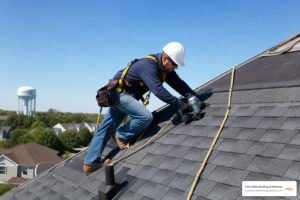
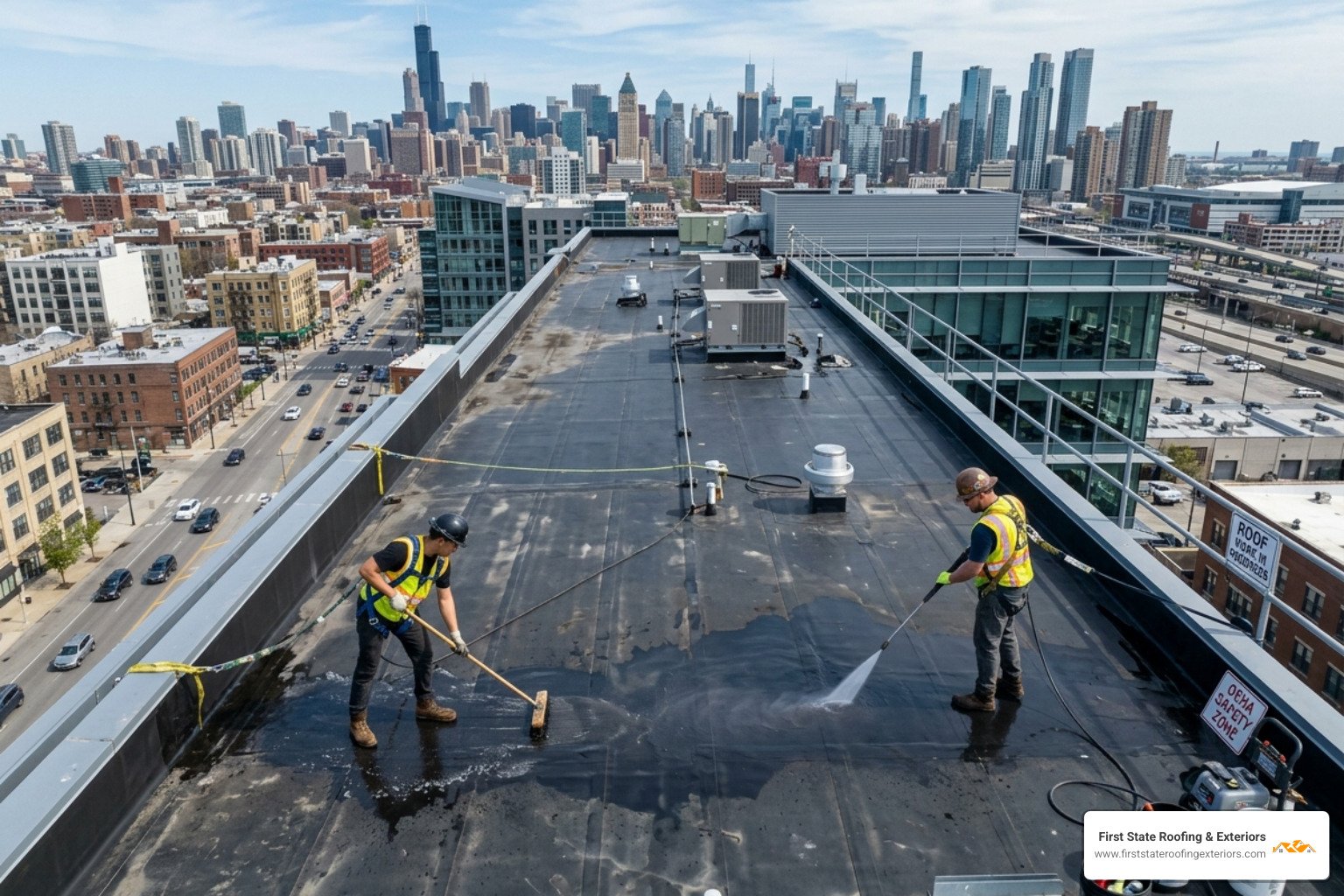
Why Regular EPDM Roof Maintenance is Essential
EPDM roof maintenance is one of the most cost-effective things you can do to protect your property — and it’s simpler than most owners expect. Here’s a quick overview of what proper care looks like:
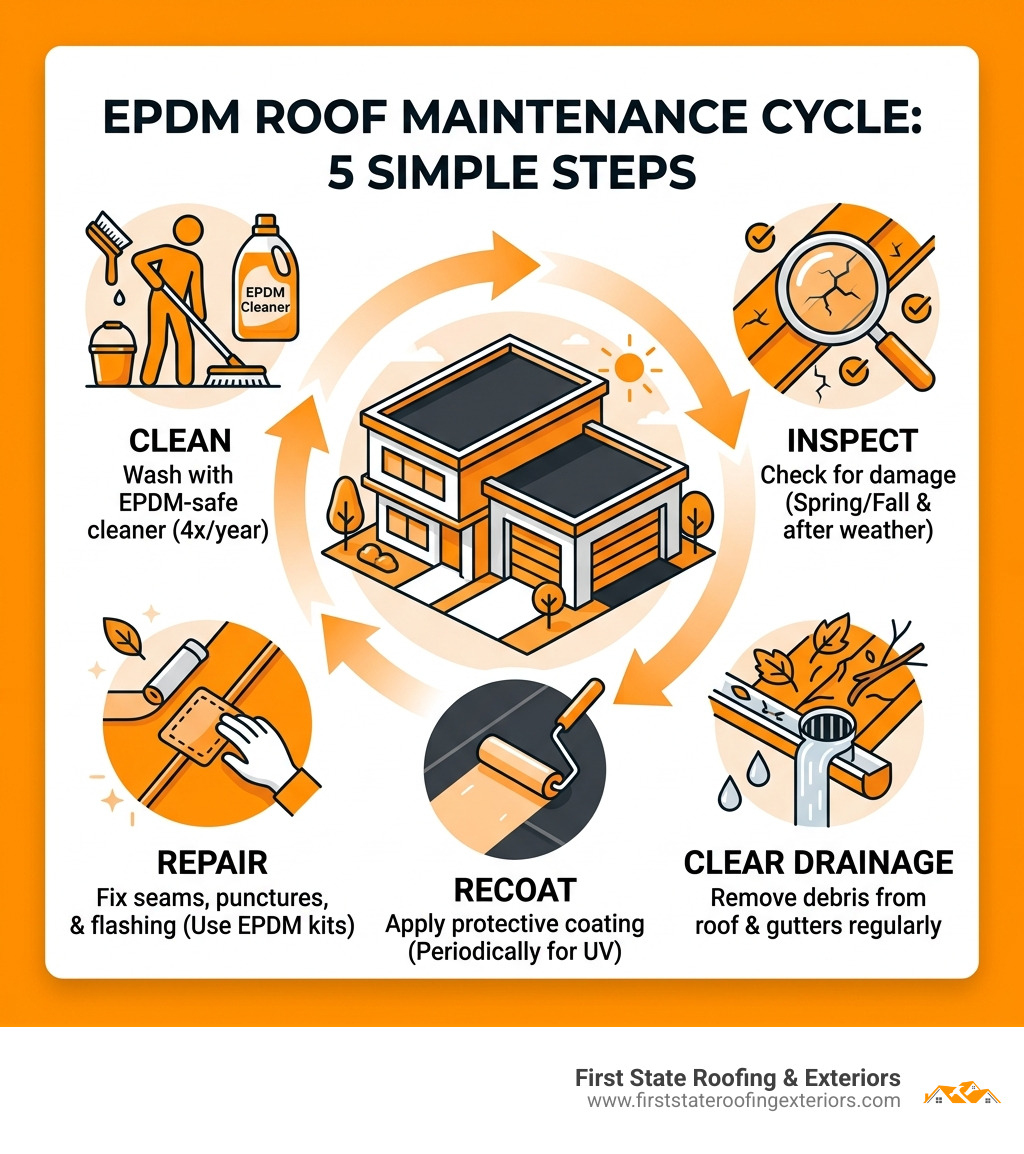
5 Core EPDM Roof Maintenance Steps:
- Clean the surface at least 4 times per year using EPDM-safe, non-petroleum cleaners
- Inspect for damage twice a year (spring and fall) and after any severe weather
- Clear debris and gutters regularly to prevent ponding water and membrane damage
- Repair seams, punctures, and flashing promptly using EPDM-compatible patch kits and sealants
- Apply a protective coating periodically for UV protection and extended lifespan
With this routine in place, an EPDM roof can last anywhere from 25 to 50 years.
Your EPDM roof is doing quiet, thankless work every single day. It handles the sun, rain, snow, and everything in between — without much fuss. That’s exactly why rubber roofing systems have become a go-to choice for flat and low-slope structures across Kent and Sussex County, DE and beyond.
But here’s the truth: even the toughest roofing material needs attention. Small issues — a lifted seam, a slow-draining spot, a minor puncture — can quietly turn into expensive structural problems if they go unchecked. The good news is that a basic, consistent maintenance routine is all it takes to keep most of those problems from ever starting.
I’m Richard McCain, Owner and President of First State Roofing & Exteriors, and with over 20 years of hands-on roofing experience across Kent and Sussex County, DE — including countless EPDM roof maintenance inspections and repairs — I’ve seen how a little proactive care can add decades to a roof’s life. In this guide, I’ll walk you through exactly what to do, how often to do it, and when to call in a professional.
Ethylene Propylene Diene Monomer (EPDM) is a high-performance synthetic rubber that offers incredible durability. However, the lifespan of your roof is directly tied to how well you care for it. While EPDM can technically last up to 50 years, neglecting it can lead to a premature “death” of the system in as little as 15 or 20 years.
Regular epdm roof maintenance is essential for three primary reasons:
- Lifespan Extension: EPDM is designed to withstand UV rays and extreme temperatures, but environmental pollutants can break down the membrane over time. Consistent cleaning and minor repairs prevent small cracks from becoming full-blown leaks.
- Warranty Compliance: Many manufacturers, such as Carlisle SynTec, provide material warranties (often around 12 years). However, these warranties frequently require proof of roof maintenance to remain valid. Neglecting your roof could mean losing your financial protection if a failure occurs.
- Energy Efficiency: A well-maintained roof stays reflective. When dirt and “chalk” (the white or gray dust that forms on aging rubber) build up, the roof absorbs more heat. This forces your HVAC system to work harder, driving up energy costs.
According to How to Keep Your EPDM Rubber Roof in Tip-Top Shape, proactive care is the only way to ensure your investment pays off over the long haul. By catching a separated seam early, you avoid the $15,000+ cost of a total tear-off and replacement.
Cleaning and Inspection Schedule for Rubber Roofs
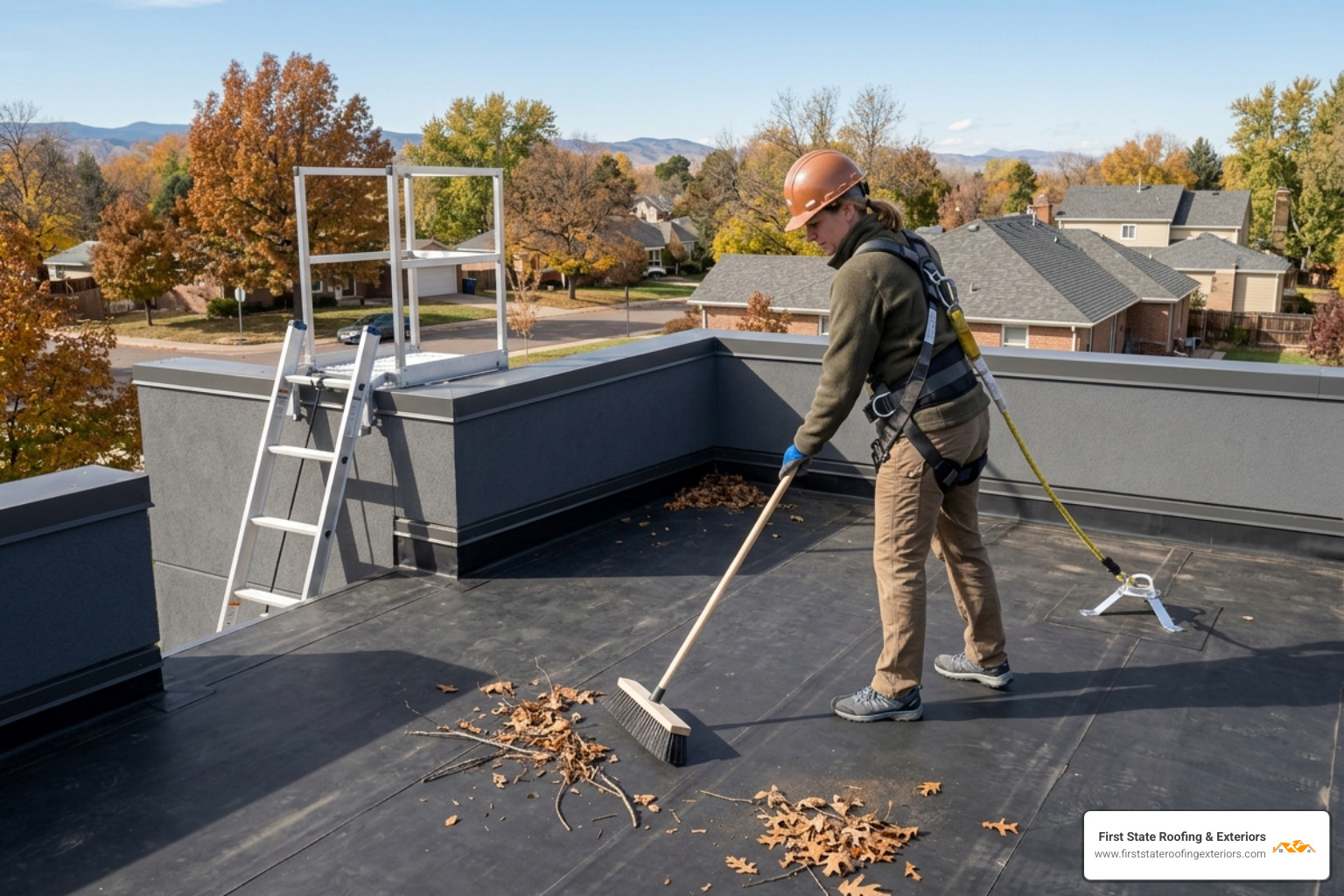
Consistency is the secret sauce of roofing longevity. You shouldn’t wait for a drip in your living room or warehouse to think about your roof. Instead, follow a structured schedule.
We recommend cleaning your EPDM roof at least four times annually. This frequency prevents the buildup of organic matter like tree sap, bird droppings, and environmental pollutants that can slowly eat away at the rubber. For residents near epdm roofs seaford, this schedule is particularly important due to the local humidity and pollen counts.
In addition to quarterly cleaning, you should perform a detailed inspection at least twice a year — once in the spring and once in the fall.
Seasonal EPDM Roof Maintenance Checklist
- Spring Inspection: After a Kent and Sussex County, DE winter, check for damage caused by freeze-thaw cycles. Ice can expand in small crevices, pulling seams apart or damaging flashing around vents.
- Autumn Debris Removal: This is the most critical time for drainage. Falling leaves and branches can clog gutters and internal drains, leading to “ponding water.”
- Post-Storm Checks: Always do a quick visual check after severe wind or hail. EPDM is impact-resistant, but sharp debris blown by high winds can cause punctures.
- Ice Dam Prevention: In late fall, ensure all drainage paths are clear. If water cannot escape the roof before it freezes, you risk creating ice dams that put immense weight and pressure on your seams.
Safe Cleaning Methods and Products to Avoid
Not all cleaning products are created equal. In fact, using the wrong chemical on an EPDM roof is often worse than not cleaning it at all. EPDM is a petroleum-based product, and it reacts poorly to other petroleum-based substances.
The “Never Use” List
If a product contains petroleum distillates, keep it far away from your roof. These chemicals cause the rubber to swell, warp, and eventually lose its structural integrity. You should also avoid:
- Citric-based cleaners: These can deteriorate the membrane over time.
- Harsh abrasives or stiff brushes: These can thin the membrane or cause micro-scratches.
- High-pressure power washers: A power washer used at close range can strip the surface of the rubber or force water under the seams.
The Safe Way to Clean
For a safe and effective clean, we suggest using a mild, non-abrasive soap (like Dawn dish soap) or a dedicated EPDM cleaner recommended by experts like EPDM Roofing Experts in DE & MD – Coastal Home Roofing.
| Cleaner Type | Safe for EPDM? | Why? |
|---|---|---|
| Mild Dish Soap | Yes | Non-reactive and breaks down dirt/grease. |
| Specialized EPDM Cleaner | Yes | Formulated specifically for synthetic rubber. |
| Petroleum Solvents | NO | Causes swelling, bubbling, and membrane failure. |
| Citric Cleaners | NO | Can break down the chemical bonds of the rubber. |
| Bleach (Diluted) | Limited | Only for severe mold; must be rinsed immediately. |
Pro Tip: When cleaning, work in small 2’x2′ or 3’x3′ sections. Wet the area, apply your cleaner, scrub gently with a medium-bristle brush, and rinse thoroughly. Always work backward toward your ladder or roof exit so you aren’t walking on a slippery, wet surface.
Identifying and Repairing Common EPDM Issues
Even with the best cleaning routine, wear and tear will eventually happen. Being able to spot the early warning signs of damage is what separates a “quick fix” from a “major headache.”
When you are performing your biannual inspection, look for these common issues:
- Membrane Shrinkage: Over decades, EPDM can naturally shrink. This pulls the membrane away from the edges and walls, putting stress on the flashing.
- Seam Failure: 90% of leaks occur at the seams. Look for “fish-mouthing” (where the edges of the seam lift and look like an open fish mouth).
- Punctures and Tears: Usually caused by fallen branches, dropped tools, or heavy foot traffic.
- Ponding Water: If water stays on the roof for more than 48 hours after a rain, you have a drainage issue. This standing water accelerates the aging of the seams.
If you find a leak or a soft spot, don’t panic. EPDM is uniquely repairable. Unlike other materials that become brittle with age, EPDM stays flexible. You can often perform an epdm roof repair on a 20-year-old roof that is just as effective as a repair on a brand-new one. For more complex structural issues, you may need professional roof repair to ensure the substrate remains dry.
Repairing Punctures and Seams
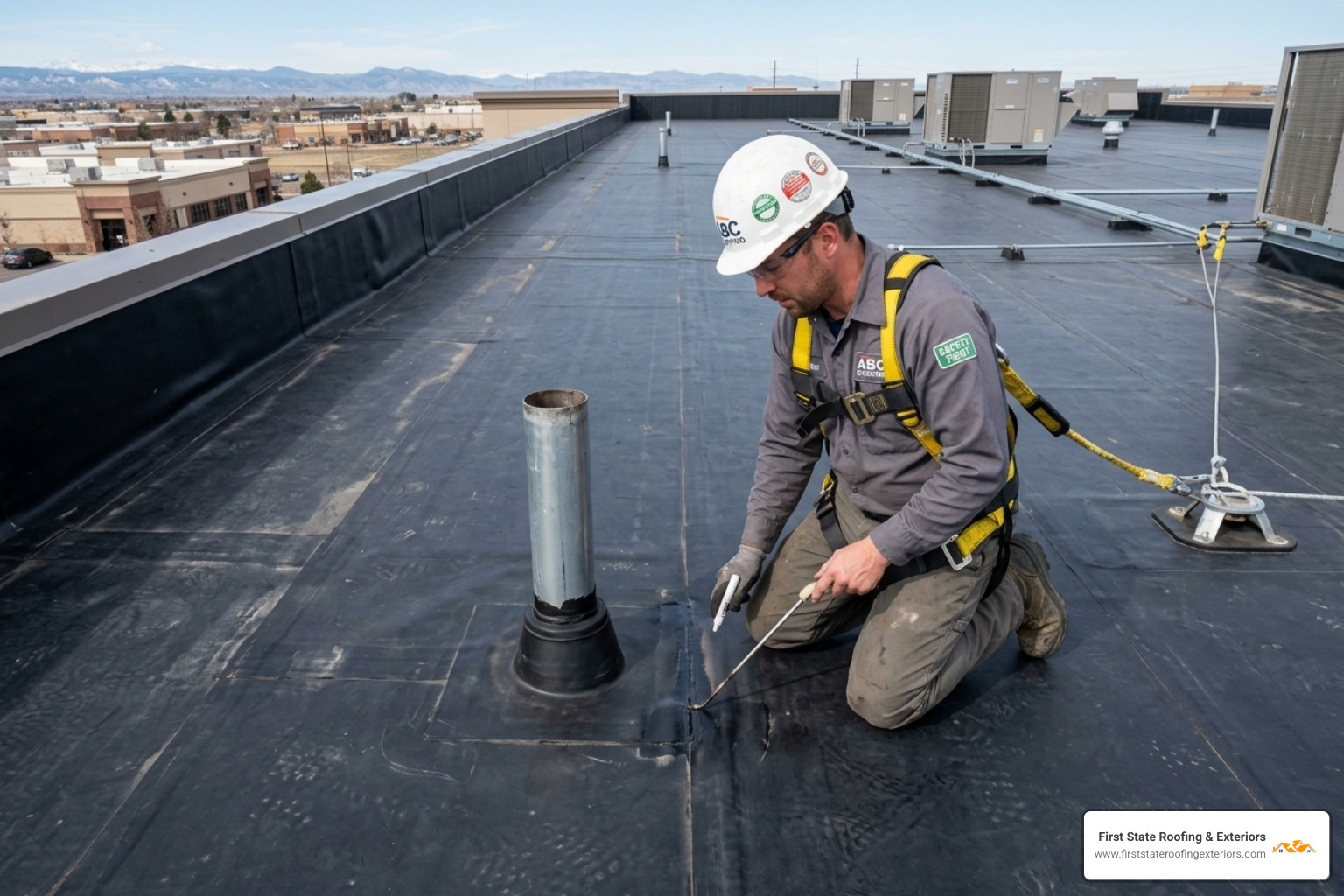
For small punctures (smaller than a nickel), a DIY repair is often possible using a standard EPDM patch kit.
- Clean and Prep: Scrub the area with an EPDM-safe cleaner and ensure it is bone-dry.
- Apply Primer: This is the most important step. The primer “activates” the rubber so the patch can bond at a molecular level.
- Apply the Patch: Use an oversized patch (at least 2 inches beyond the damage in all directions).
- Bond with a Roller: Use a small hand roller to press the patch firmly from the center outward. This removes air bubbles and ensures a tight seal.
Professional EPDM Roof Maintenance and Climate Factors
Kent and Sussex County, DE’s climate presents unique challenges for epdm roof maintenance. We experience high humidity, salt air in coastal areas, and significant freeze-thaw cycles in the winter. These factors cause your building to expand and contract.
EPDM is excellent at handling this “thermal shock” because it can stretch up to 500% without snapping. However, the adhesives and tapes used at the seams are not always as flexible. Over time, the constant shifting can cause those seams to weaken.
Professional roof inspections often involve advanced technology that the average property owner doesn’t have. For example, we use infrared moisture scanning to detect water trapped under the membrane. This allows us to find leaks before they are visible from the inside, saving you thousands in potential structural damage.
When to Call a Professional for EPDM Roof Maintenance
While cleaning and clearing gutters are great DIY tasks, some things require a pro:
- Large-scale Shrinkage: If the membrane is pulling away from the parapet walls, it requires mechanical tensioning or new flashing.
- Structural Ponding: If your roof is sagging and holding water, you may need a tapered insulation system to create a proper slope.
- Warranty-Certified Repairs: If your roof is under warranty, DIY repairs might void it. Always check your paperwork.
- Safety Equipment: Working on a flat roof can be dangerous, especially when wet. Professionals use OSHA-required safety harnesses and fall protection systems to ensure the job is done without accidents.
Frequently Asked Questions about EPDM Maintenance
How often should I clean my EPDM roof?
You should clean your EPDM roof at least four times per year. If your building is located under heavy tree cover or in an area with high industrial fallout, you may need to clean it more frequently to prevent staining and membrane degradation.
What chemicals will damage a rubber roof?
Anything containing petroleum distillates, mineral spirits, or citric acid should be avoided. These chemicals cause the rubber to swell and lose its bond to the adhesive. Always stick to mild soaps or manufacturer-approved EPDM cleaners.
How long does an EPDM roof last with proper care?
With a consistent epdm roof maintenance routine, an EPDM roof can easily last 25 to 30 years. High-quality installations that receive regular professional inspections and periodic protective coatings have been known to last up to 50 years.
Conclusion
Maintaining your EPDM roof doesn’t have to be a chore, but it does have to be a priority. By following a simple schedule of cleaning, inspecting, and repairing minor issues, you can protect your building and your wallet for decades to come.
At First State Roofing & Exteriors, we are your local Kent and Sussex County, DE experts. As a family-owned company, we pride ourselves on transparency and integrity. Whether you need a simple Roof Maintenance check-up or a comprehensive repair, we are here to help 24/7.
Don’t wait for a leak to find you! We offer free estimates to all our neighbors in Dover, Milford, and throughout Kent and Sussex County, DE.
Call us today at (302) 222-4065 for a free inspection and keep your roof in tip-top shape!