
Hear from Our Customers

When your roof is in good shape, you stop thinking about it — and that’s the point. No water stains creeping across the ceiling after a nor’easter. No emergency call on a Tuesday night because a shingle let go in the wind. Just a home that holds up the way it’s supposed to.
For Huntley residents, that matters more than it might somewhere else. The homes in the Kent Acres corridor were built in the 1960s and 1970s, many of them originally as housing for Dover Air Force Base families. They’re solid structures, but a roof from that era — or even one replaced in the 1990s — is at or past the end of its useful life for standard asphalt shingles.
Delaware’s climate doesn’t make that any easier. You’re dealing with freeze-thaw cycles through the winter, humidity that drives algae growth on north-facing surfaces, and storm systems that track straight up through the Delaware Bay corridor.
A properly installed roof with the right materials for this climate changes the picture entirely. Algae-resistant shingles hold up better in the conditions you actually face here in Huntley. Correct underlayment and flashing keep wind-driven rain from finding its way in during the kind of nor’easters that hit central Kent County hard. And when the work is done right the first time, you’re not revisiting the problem in three years.
We’ve been working throughout Kent and Sussex counties for over 22 years. That’s not a number pulled from a brochure — it’s the difference between a contractor who knows how unincorporated Kent County permitting works and one who figures it out on your job.
Huntley sits outside Dover city limits, which means your permits run through Kent County, not the City of Dover. That distinction trips up plenty of homeowners who assume otherwise, and it’s exactly the kind of thing that gets skipped by out-of-town contractors who show up after a storm and disappear before the ink dries. We handle the permitting process from start to finish, so your roof is code-compliant and your home sale or insurance coverage isn’t compromised down the road.
We’re licensed through the Delaware Division of Professional Regulation, BBB accredited, and carry full General Liability and Workers’ Compensation insurance. No subcontracting. The team that gives you the estimate is the team on your roof.
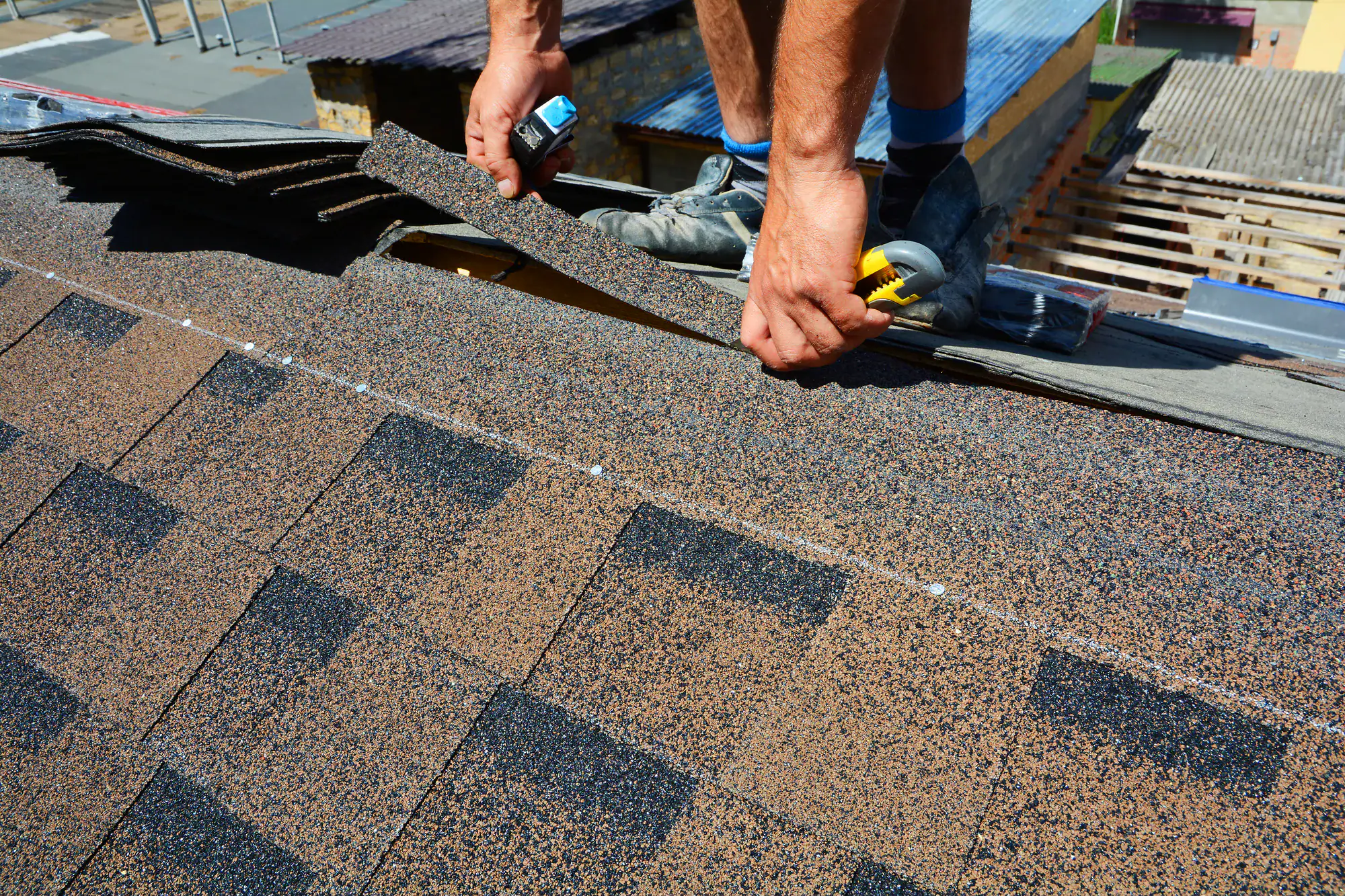
It starts with a free roof inspection. Someone from our team comes out, gets on the roof, and gives you a documented assessment of what’s actually going on up there — not a vague “looks okay” or an instant replacement pitch. If you’ve got a 1970s-era home in the Kent Acres area and you’re not sure whether you’re looking at a repair or a full replacement, that inspection is where you get a real answer.
If work is needed, you’ll get a written estimate with the scope spelled out clearly — materials, labor, timeline. For jobs in unincorporated Kent County, we pull the necessary permits before work begins. That step protects you. It ensures the work meets Delaware code requirements and that there’s a documented record if you ever sell the home or file an insurance claim.
Once the job is underway, our crew works efficiently and cleans up completely when they’re done. If storm damage is involved, we work directly with your insurance provider to document the damage and navigate the claims process — which, for most homeowners, is the most confusing part of the whole experience. You shouldn’t have to become an expert in insurance adjusting just because a storm came through.

Ready to get started?
We handle the full range of residential roofing — replacements, repairs, inspections, maintenance, and 24/7 emergency response for active damage. On the commercial side, that extends to EPDM and TPO flat roofing systems. Beyond the roof itself, we also install and repair siding, gutters, and windows, which means if your home needs more than just a new roof, you’re not coordinating three separate contractors.
For Huntley homeowners specifically, a few things come up consistently. The 1960s and 1970s homes in this corridor often have inadequate attic ventilation by current standards, which accelerates shingle wear and increases ice dam risk during Delaware’s freeze-thaw winters. That’s something a thorough inspection will flag, and it’s worth addressing during a replacement rather than after.
Algae growth is also a persistent issue on older roofs in central Kent County — the humidity and annual rainfall create ideal conditions for it. Algae-resistant shingles are a straightforward fix that holds up over time.
We offer financing for larger projects, which matters in a market where a full roof replacement is a significant line item for most households. Free estimates remove the barrier to getting started, and our insurance claims assistance means you’re not navigating that process alone if a storm is what brought you here.

The honest answer is that it depends on a few things — the age of the roof, the extent of the damage, and what the underlying structure looks like once someone gets up there and actually inspects it. A roof that’s 25 to 30 years old and showing widespread granule loss, cracked shingles, or failing sealant strips is generally past the point where repairs make economic sense. You’d be putting money into a system that’s already at the end of its life.
On the other hand, a roof that’s 12 to 15 years old with isolated storm damage — a section of missing shingles from a nor’easter, for example — is often a strong candidate for targeted repair rather than full replacement. The key is getting a documented inspection from someone who will give you a straight answer rather than defaulting to the most expensive option. We offer free inspections specifically because that assessment is where the conversation needs to start, not with a sales pitch.
For homes in the Kent Acres and Huntley corridor, where much of the housing stock dates to the 1960s and 1970s, the replacement conversation comes up more often than not. Many of these roofs are on their second or third cycle, and a proper inspection will tell you exactly where you stand.
In most cases, yes — storm damage caused by wind, hail, or falling debris is covered under a standard homeowner’s insurance policy. What gets complicated is the documentation and claims process. Insurance companies require evidence that the damage was caused by a specific weather event, not by general wear and aging. That distinction matters, and it’s where a lot of homeowners run into friction with their adjuster.
Delaware sees its share of nor’easters, tropical storm remnants, and severe thunderstorms, and central Kent County is squarely in the path of systems that track up through the Delaware Bay corridor. When one of those storms causes roof damage in Huntley, having a contractor who can document the damage thoroughly — photos, written assessment, material specifications — makes a real difference in how the claim goes.
We work directly with homeowners’ insurance providers to help navigate that process. That’s not a standard offering from every roofing contractor, and it’s worth asking about before you hire anyone. If you’re unsure whether your damage qualifies as a claim, a free inspection is the right first step to find out.
For most residential homes in Huntley and the Kent Acres area, architectural asphalt shingles are the practical choice — they’re durable, cost-effective, and available in algae-resistant formulations that matter in Delaware’s humid climate. Gloeocapsa magma, the algae that causes dark streaking on roofs, thrives in the moisture-heavy conditions of central Kent County. Standard shingles will show that staining within a few years; algae-resistant shingles are treated to resist it from the start.
Beyond shingles, the underlayment and ventilation system matter just as much as the visible surface. Delaware’s winters bring repeated freeze-thaw cycles that crack shingles and weaken sealant strips over time. Proper attic ventilation — which many of the older homes in this corridor lack — reduces the temperature differential that causes ice dams to form along eaves in winter. Addressing ventilation during a roof replacement, rather than as a separate project later, is almost always the smarter move.
Metal roofing is also an option for homeowners looking for a longer lifespan — metal roofs can last up to 50 years and hold up well against wind. The right choice depends on your home’s structure, your budget, and how long you plan to stay in the house.
Yes, roofing work in Huntley requires a permit — but because Huntley is an unincorporated community in Kent County rather than within Dover city limits, that permit comes from Kent County, not the City of Dover. This is a distinction that trips up a lot of homeowners, and it’s something out-of-town contractors sometimes skip entirely, which creates problems down the road when you go to sell the home or file an insurance claim.
A licensed contractor operating in Kent County knows this process and handles it as a standard part of the job. We pull all required permits before work begins. That documentation protects you — it confirms the work was done to code, and it gives you a paper trail that matters if a buyer’s inspector or your insurance company asks about the roof’s history.
If you’re getting quotes from multiple contractors and one of them doesn’t mention permits or suggests you don’t need one for a full replacement, that’s a red flag worth taking seriously. The permit process exists to protect homeowners, not to complicate the contractor’s job.
For a standard single-family home, the physical installation of a new roof is typically completed in one day. That’s assuming the crew has the right size and the materials are staged in advance — both of which are standard practice for an experienced contractor. What takes longer is the front end: the inspection, the written estimate, permit approval from Kent County, and material ordering. From the time you schedule an inspection to the day work begins, you’re usually looking at a week or two depending on scheduling and permit processing time.
If your project involves storm damage and an insurance claim, the timeline extends somewhat because you’re waiting on the adjuster’s assessment before finalizing the scope of work. We work directly with insurance providers to keep that process moving, but it does add time to the overall schedule.
Weather is always a factor in Delaware, particularly in the spring and fall when storm systems move through frequently. A reputable contractor will schedule around the forecast rather than push through in conditions that compromise the installation. If timing is a concern — especially if you have active damage — our 24/7 emergency service can stabilize the roof while the full replacement is being scheduled.
Storm chasers are a well-documented problem in the roofing industry, and communities adjacent to Dover Air Force Base — including Huntley and the broader Kent Acres corridor — are not immune. After a significant storm moves through central Kent County, out-of-town contractors show up quickly, often going door to door with low bids and pressure to sign contracts on the spot. Some are legitimate. Many are not licensed in Delaware, carry inadequate insurance, and use subcontracted labor with no accountability to you once the job is done.
The practical risk is this: if an unlicensed contractor does work on your home without pulling the required Kent County permits, you may face code violations, insurance complications, or a second repair bill when the workmanship fails. And because these contractors are often registered in another state or operating under a temporary LLC, there’s no one to call when something goes wrong in year two.
The way to protect yourself is straightforward. Ask for proof of Delaware licensing through the Division of Professional Regulation. Ask for a certificate of insurance showing General Liability and Workers’ Compensation coverage. Ask whether they pull permits for Kent County jobs. A contractor who has operated in this area for over 22 years — and who has their name attached to every job — answers those questions without hesitation.
Other Services we provide in Huntley