
Hear from Our Customers
If you’ve got a flat or low-slope section on your home — over the garage, a rear addition, a sunroom — and it’s been giving you trouble for more than one season, the patch-and-wait approach isn’t working. The real problem usually isn’t the leak you can see. It’s the water traveling along the deck before it ever shows up inside, and the longer that goes on, the more it costs to fix.
Huntley’s housing stock tells a specific story. Most homes in this area were built in the 1960s and 1970s, originally as base housing for Dover Air Force Base. That means a lot of flat roof sections that are now 50 or 60 years old, running on systems that were never meant to last this long. When a membrane finally gives out on a home like that, you’re not just replacing a surface — you’re dealing with decades of deferred stress underneath it.
Delaware gets around 45 inches of rain a year, and Kent County’s flat terrain means water doesn’t have much help moving off your roof. When drainage is even slightly off — clogged scuppers, a low spot in the deck, an undersized outlet — water sits. And water that sits for more than 48 hours starts doing real damage to whatever membrane is underneath it. Getting the drainage right is just as important as picking the right material, and that’s something a lot of contractors skip over.
We’re based in Smyrna — about 15 to 20 miles up Route 13 from Huntley. That’s the same county, the same climate, and the same kind of housing stock. Our team has been working on Kent County roofs for over 22 years, which means we’ve seen what Delaware winters do to modified bitumen seams and what a wet spring does to a flat section that wasn’t draining right to begin with.
Every job is handled by our own certified crew. No subcontracting, no third parties showing up on your roof that you’ve never met. The same people you talk to during the estimate are the people doing the work. That matters more than it sounds, especially in a neighborhood like Huntley where word travels fast and a bad job is hard to hide.
We’re BBB accredited, consistently rated 5.0 out of 5 across 63-plus verified reviews. Customers come back to the same themes — showed up when we said we would, explained what was happening, left the property clean. That’s the standard every job is held to.
It starts with a free estimate and a real look at what you’re working with. Not a five-minute walk-around — an actual assessment of the membrane condition, the deck underneath it, and how the drainage is set up. On homes in the Kent Acres area, where a lot of the flat sections are original to the 1960s or 1970s construction, that deck inspection matters. Water that’s been sitting under an aging membrane for years can compromise the substrate in ways that won’t show up until we pull the old system off.
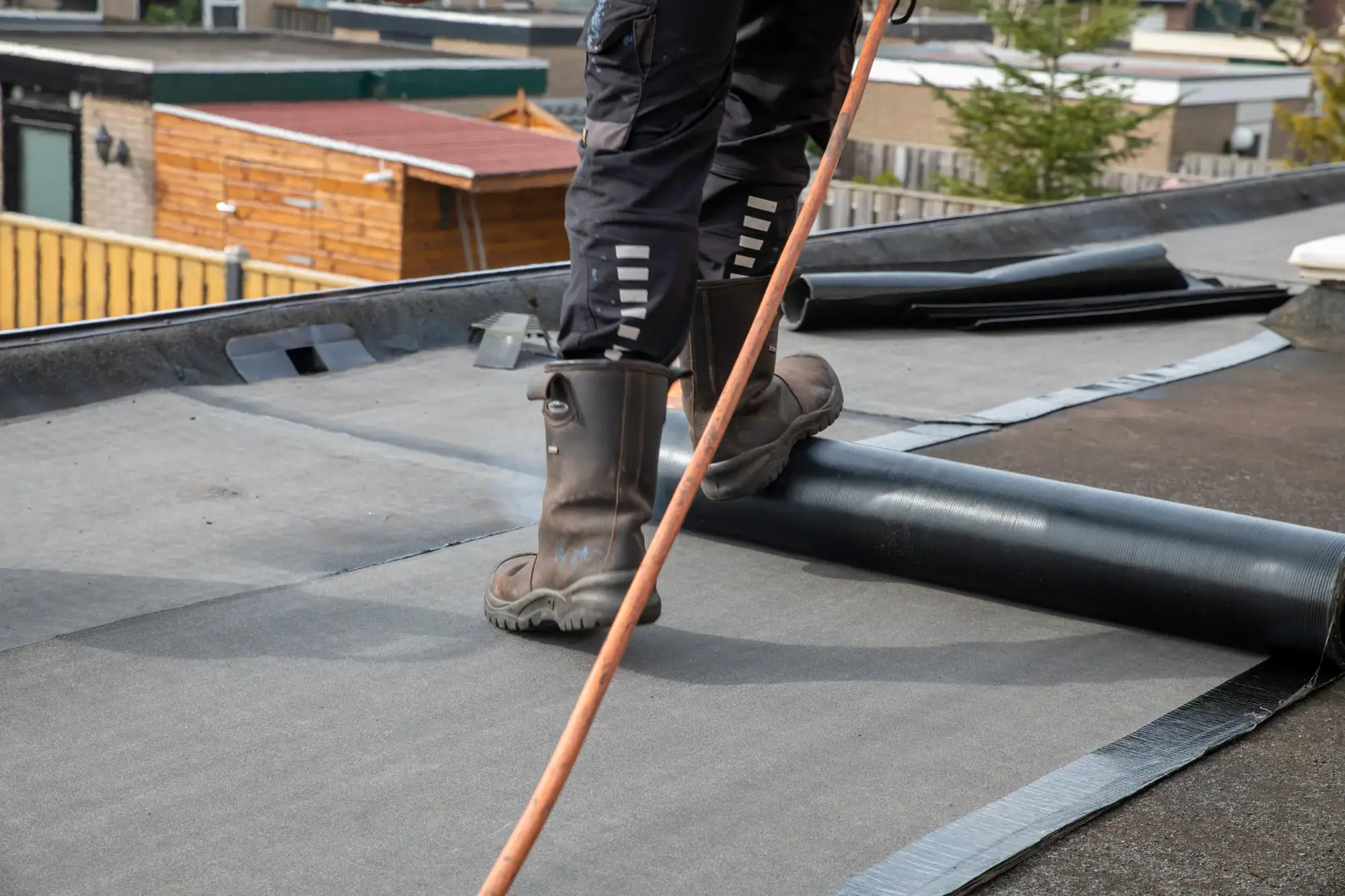
Once the scope is clear, the old membrane comes off completely. A proper flat roof job doesn’t go over what’s already there — it starts fresh. The deck gets inspected and repaired where needed, insulation is addressed, and then the new membrane goes down. Whether that’s TPO, EPDM rubber roofing, or modified bitumen depends on the building, the budget, and what’s going to perform best given how the roof is oriented and how much sun and rain it takes on through the year.
Because this is Kent County, a building permit is required for a full roof replacement. We handle that as part of the job — you don’t need to figure out the Kent County Office of Inspections and Enforcement process on your own. When the work is done, the site gets cleaned up completely. No nails in the driveway, no debris left behind.

Ready to get started?
TPO roofing membrane is the most widely installed flat roof system right now, and for good reason. It reflects up to 84% of solar load, which translates to lower cooling costs during Delaware’s hot, humid summers — a real benefit if you’re replacing a dark-surface modified bitumen system that’s been absorbing heat for decades. TPO seams are heat-welded, which makes them more resistant to the kind of moisture intrusion that Delaware’s rainfall and humidity levels push on flat roofs year-round.
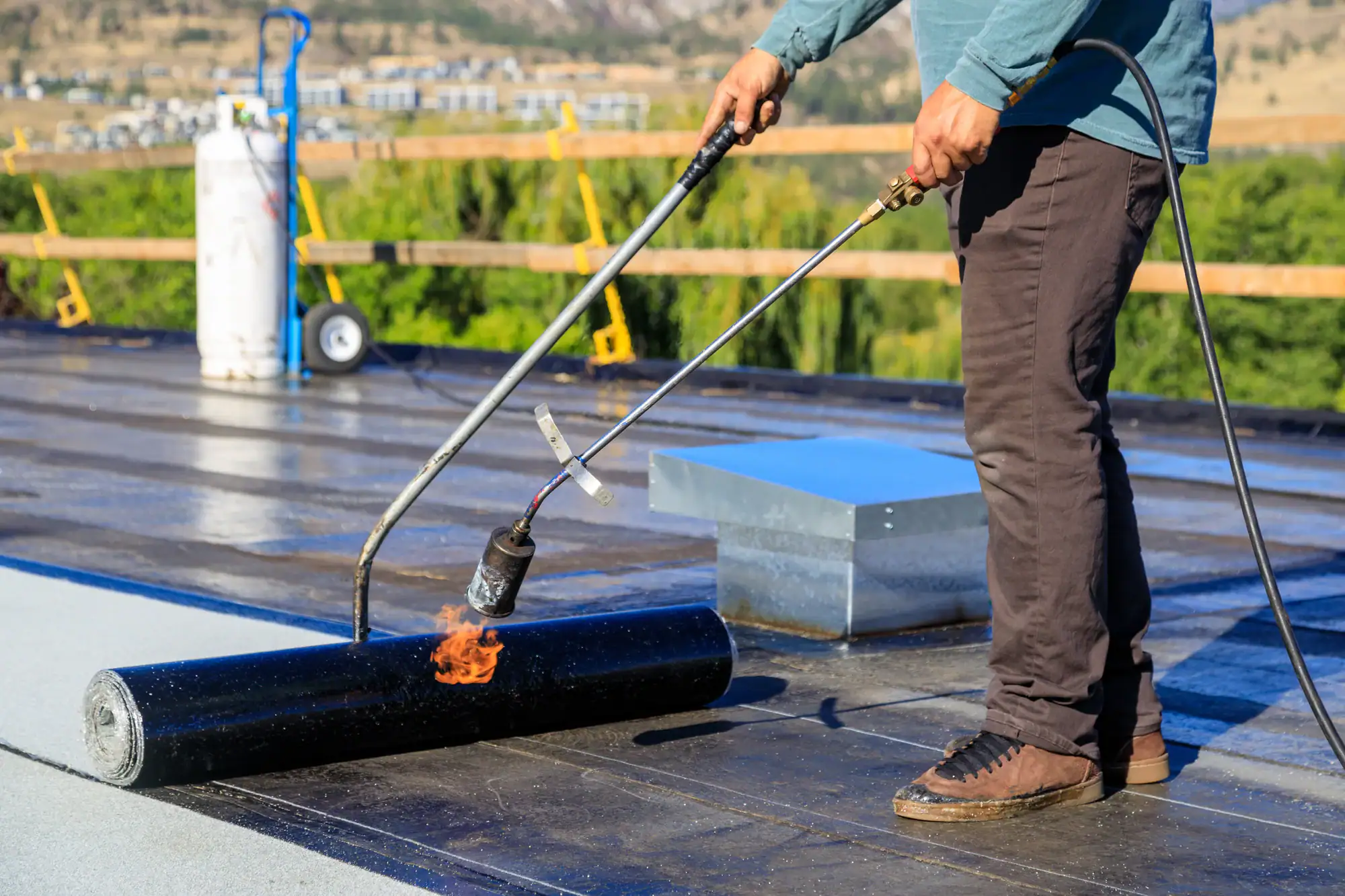
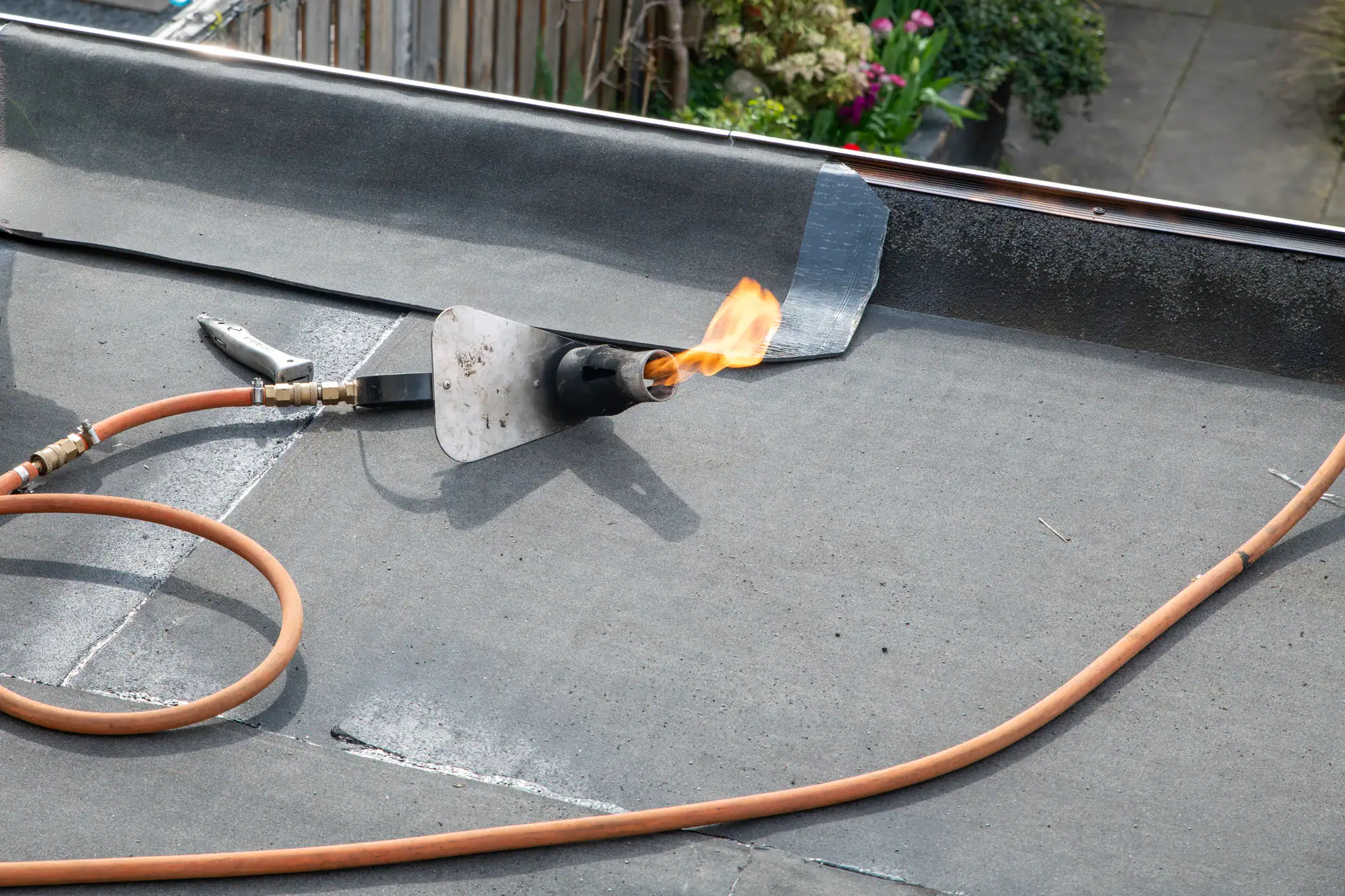
EPDM rubber roofing has been around longer and has a strong track record in climates like Delaware’s, where temperatures cross the freezing point repeatedly through the winter. Its flexibility holds up through freeze-thaw cycling in a way that stiffer systems sometimes don’t, and it’s well-suited to the low-slope sections common on Huntley’s ranch-style homes. Modified bitumen — sometimes called torch-down roofing — is still a solid option for certain applications, particularly on smaller flat sections where a multi-ply system makes sense.
If storm damage is part of the picture, we offer insurance claims assistance. We can help you document the damage, work through the adjuster process, and make sure the scope of work reflects what actually needs to be done — not just what a quick patch would cover. Financing is also available for homeowners who need to move forward now but want flexibility on the payment side.

Yes — if you’re doing a full flat roof replacement in Huntley, you need a building permit. Huntley sits within unincorporated Kent County, which means permitting goes through the Kent County Office of Inspections and Enforcement at 555 Bay Road in Dover, not through Dover city’s permitting office. That’s a distinction worth knowing, because the two programs are separate and the process is different depending on which side of the city line your property falls on.
Kent County has adopted the 2018 International Residential Code as its residential building standard, and full membrane replacements fall under that requirement. Minor repairs — replacing less than 25% of roof sheathing — generally don’t require a permit, but a full tear-off and re-roof does. When we handle a job in Huntley, permit coordination is part of the process. You don’t need to navigate that on your own.
The honest answer is that you usually can’t tell just by looking at the surface. A membrane can look intact and still be failing at the seams, around penetrations, or at the flashing where the roof meets a wall. Water is patient — it finds the smallest gap and travels along the deck before it ever shows up as a stain on your ceiling. By the time you see it inside, the damage is already somewhere else.
For homes in the Kent Acres and Huntley area, where a lot of the flat roof sections date back to the 1960s and 1970s, the age of the system is a major factor. Modified bitumen and early EPDM systems installed in that era have long exceeded their expected service life. If your system is more than 20 years old and you’ve had more than one leak event, repair is often just delaying the inevitable. A proper inspection — one that looks at the deck condition, not just the membrane surface — will tell you what you’re actually dealing with.
All three of the main single-ply systems — TPO, EPDM, and PVC — can perform well in Delaware when they’re installed correctly. The real differentiator is matching the material to the specific conditions of your roof. Delaware’s climate throws a lot at flat roofs: around 45 inches of rain annually, humid summers that push UV degradation on aging membranes, and winters with enough freeze-thaw cycling to stress seams and flashings on systems that weren’t installed with that movement in mind.
TPO tends to be the strongest choice for energy efficiency, especially if you’re replacing a dark-surface system on a south- or west-facing roof section that takes a lot of sun. Its heat-welded seams also hold up well in wet climates. EPDM is the more flexible option and handles temperature swings particularly well — it’s been the standard for decades and has a long track record in Mid-Atlantic conditions. Modified bitumen is still a sound choice for smaller flat sections or multi-ply applications. The right call depends on your specific roof geometry, drainage setup, and budget.
Yes, and sooner than most people think. The industry threshold is 48 hours — if water is still standing on your flat roof two days after it rains, that’s ponding water, and it’s doing damage. It accelerates membrane degradation, promotes mold and algae growth on the surface, adds structural load to the deck, and can void the manufacturer warranty on newer membrane systems.
In Kent County, where the terrain is flat and drainage doesn’t happen naturally the way it does on a sloped lot, this is a common issue — especially on older Huntley homes where the original drainage outlets may be undersized, clogged, or positioned in a way that leaves low spots in the field of the roof. The fix isn’t always a full replacement. Sometimes it’s a drainage correction, a tapered insulation system to create positive slope, or clearing and repositioning outlets. But ignoring it and hoping it evaporates isn’t a strategy — Delaware gets enough rain that the next event is never far off.
It depends on the material and how well it’s been maintained. EPDM rubber roofing typically lasts 20 to 30 years when it’s properly installed and the drainage is functioning. TPO membranes generally run 15 to 25 years. Modified bitumen systems — the torch-down type common on older homes — typically last 15 to 20 years, sometimes longer with a quality two-ply installation and regular maintenance.
For homes in the Huntley and Kent Acres area that were built in the 1960s and 1970s, the math is pretty straightforward: if the flat roof section hasn’t been replaced in the last 20 years, it’s either already past its service life or getting close. Delaware’s rainfall and humidity put consistent pressure on flat roof membranes, and systems that are aging don’t get more forgiving over time. Annual inspections help — catching a failing seam or a clogged drain before it becomes a full interior water event is always cheaper than dealing with the damage after the fact.
Yes. Insurance claims assistance is a core part of what we offer, not an add-on. Delaware’s storm seasons — spring and summer thunderstorms, occasional tropical remnants tracking up the coast — regularly cause wind and hail damage to flat roof membranes in the Kent County area. The problem most homeowners run into is that flat roof damage isn’t always obvious from the ground, and insurance adjusters don’t always catch everything during a quick inspection.
We can help you document the damage thoroughly before the adjuster visit, walk through the scope of what needs to be done, and make sure the claim reflects the actual repair — not a minimal patch that leaves underlying issues unaddressed. If you’ve already had an adjuster out and you’re not sure the estimate covers everything, it’s worth having a second set of eyes on it before you sign off. Getting the scope right the first time matters, because reopening a closed claim is significantly harder than getting it right upfront.
Other Services we provide in Huntley