Your Roof Is Costing You Money Right Now — Here’s What to Do About It
Roof maintenance is one of the most important — and most overlooked — responsibilities of homeownership. By the time a leak shows up on your ceiling, the damage underneath has often been building for months.
Quick answer: What does roof maintenance involve?
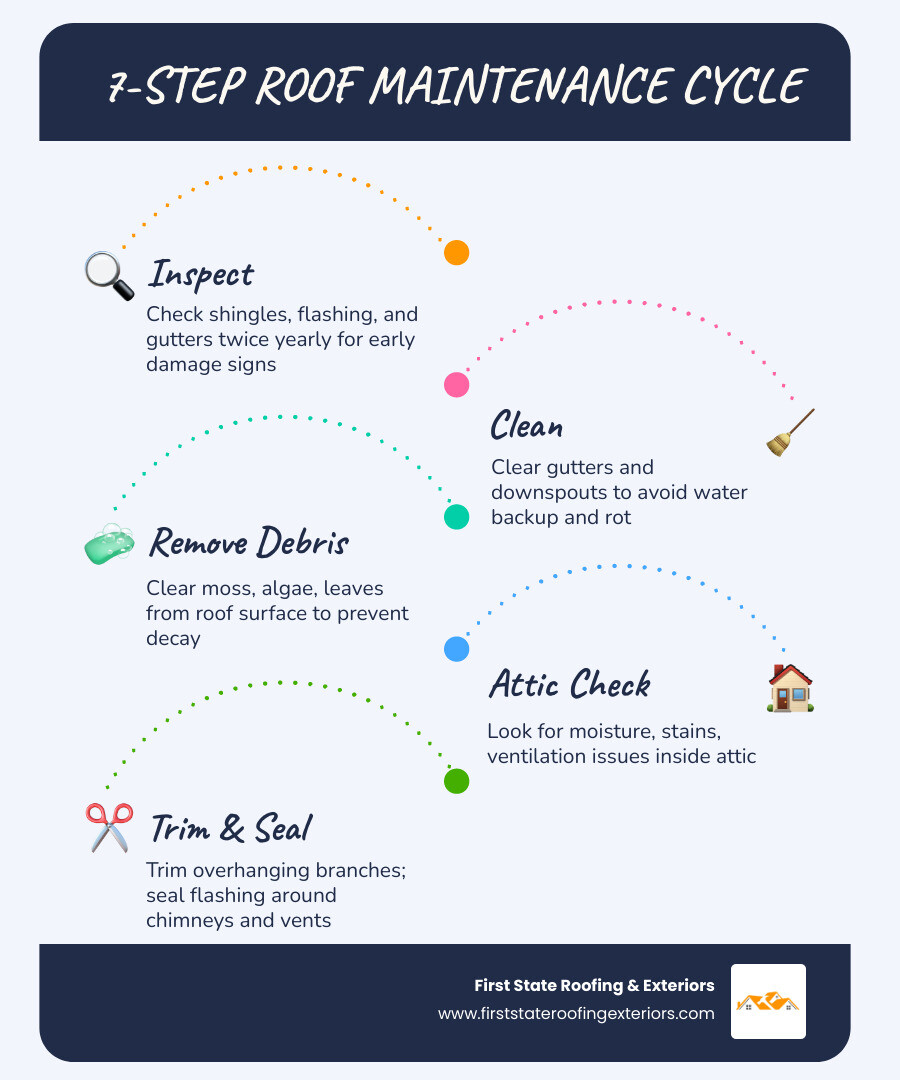
- Inspect shingles, flashing, and gutters twice a year (spring and fall)
- Clean gutters and downspouts to prevent water backup
- Remove debris, moss, and algae from the roof surface
- Check the attic for moisture, stains, or poor ventilation
- Trim tree branches to at least 10 feet from the roofline
- Seal or repair flashing around chimneys, vents, and skylights
- Schedule a professional inspection annually — or after any major storm
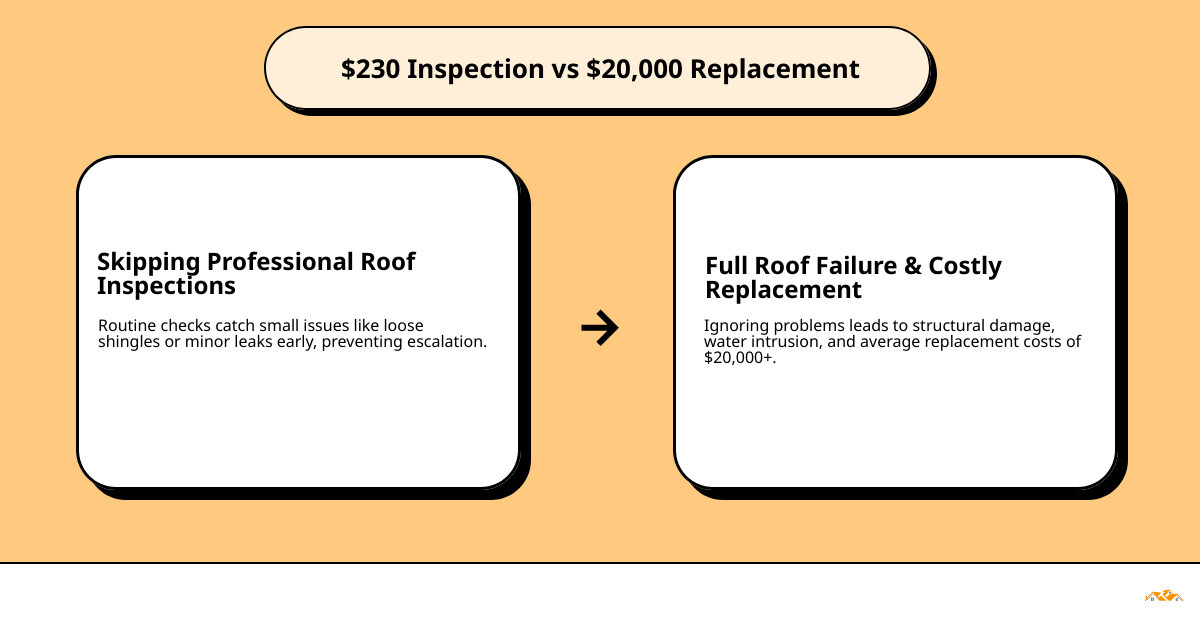
A single ignored crack can turn a $250 repair into a $12,000–$20,000 full replacement. That’s not an exaggeration — it’s a pattern that Kent and Sussex County, DE roofing professionals see play out every season.
The good news? Most roof problems are preventable with a simple, consistent routine. This guide walks you through exactly what to do — and when to call in a pro.
I’m Richard McCain, Owner and President of First State Roofing & Exteriors, with over 20 years of hands-on experience in roof maintenance, repair, and full exterior renovations across Kent and Sussex County, DE. In that time, I’ve seen how a proactive maintenance habit is the single biggest factor separating a roof that lasts 28 years from one that fails at 18.
Why Regular Roof Maintenance is a Financial Strategy

Think of your roof as a financial asset rather than just a pile of shingles. In May 2026, the cost of building materials continues to fluctuate, making the preservation of your current roof more valuable than ever. Roof maintenance is the mechanism that allows a roof to reach its full rated lifespan. Without it, environmental stressors like UV radiation and freeze-thaw cycles will cut that life short.
Maintaining your roof provides three primary financial benefits:
- ROI (Return on Investment): Every $1 spent on proactive maintenance saves an estimated $5 to $10 in emergency repairs.
- Warranty Protection: Most manufacturers require documented annual professional inspections to keep your 30-to-50-year warranty valid. Skipping these can void a claim worth over $15,000.
- Insurance Compliance: In the event of storm damage, insurance adjusters look for signs of “neglect.” If they find clogged gutters or long-term moss growth, they may deny your claim.
According to Roof Maintenance Best Practices for US Homeowners | National Roof Authority, consistent upkeep is the number one factor determining how long a system lasts.
Seasonal Roof Maintenance Frequency
In Kent and Sussex County, DE, our weather is a mixed bag of coastal winds, humidity, and winter freezes. We recommend a biannual schedule:
- Spring: Check for damage caused by winter ice and heavy winds.
- Fall: Prepare the system for snow and ensure drainage is clear.
- Post-Storm: Always perform a visual check after high-wind events or hailstorms.
Regular roof inspections are your first line of defense against the “silent” damage that occurs between seasons.
Preventing Expensive Replacements
The math is simple but startling. A minor flashing leak might cost $250 to re-seal. If ignored, that water infiltrates the decking, leads to mold in the attic, and rots the rafters. By the time you see a brown spot on your living room ceiling, you could be looking at a $20,000 full roof replacement.
As noted in the Roof Maintenance Guide: Inspection, Tasks, and Lifespan, a well-maintained asphalt roof can last up to 30 years, whereas a neglected one often fails by year 18.
The Essential Roof Maintenance Checklist: 7 Quick Tips
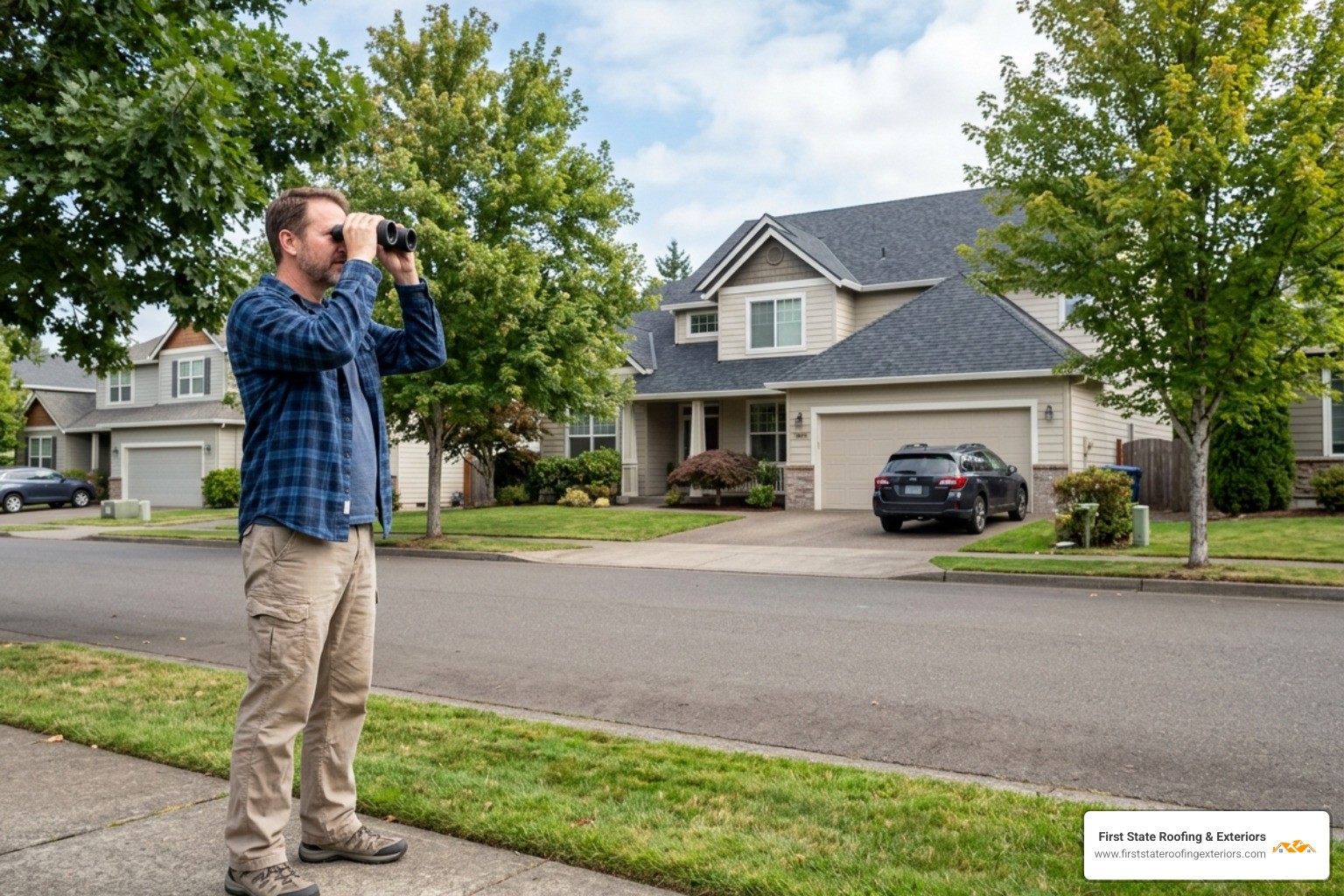
You don’t need to be a professional contractor to keep an eye on your home. Follow these seven tips to stay ahead of the curve.
1. Safe Inspection Techniques
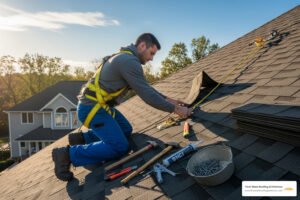
Safety is our absolute priority. Falls are the leading cause of jobsite fatalities even among trained professionals. You don’t actually need to get on the roof to inspect it.
- Binocular Inspection: Stand across the street and use binoculars to look for cracked, curling, or missing shingles.
- Drone Technology: If you have a drone, use it to get high-resolution photos of valleys and chimneys.
- Ladder Safety: If you must use a ladder, ensure it is on level ground and always have a spotter.
For more technical issues, professional roof leak detection services use specialized tools to find problems the naked eye might miss.
2. Cleaning Gutters and Removing Debris
Clogged gutters are the primary cause of wood rot along the roofline. When water can’t flow through the downspouts, it backs up under the shingles and saturates the fascia board.
- Frequency: Clean them at least twice a year—more if you have heavy tree cover.
- Pitch Check: Ensure gutters are pitched at a minimum of 1/4 inch per 10 linear feet toward the downspouts.
- Debris Removal: Use a soft broom or leaf blower to clear leaves and “helicopter” seeds from the roof surface.
If your gutters are sagging or pulling away, you may need gutter repair to prevent water from cascading down your siding.
3. Tree Pruning and Vegetation Management
Overhanging branches are “highways” for rodents and pests to enter your attic. Furthermore, branches rubbing against the roof act like sandpaper, stripping away the protective granules on asphalt shingles. Keep all vegetation trimmed at least 10 feet away from the roof surface.
4. Moss and Algae Treatment
In humid areas like Dover and Milford, DE, black streaks (algae) and green cushions (moss) are common. Moss is particularly dangerous because it lifts the edges of shingles, allowing wind-driven rain to get underneath. Use a 50/50 solution of water and bleach to gently treat these areas—never use a high-pressure power washer.
5. Flashing Assessment
Flashing is the thin metal (usually galvanized steel) installed around chimneys, vents, and valleys. It is the most common point of failure. Check for rust, loose nails, or cracked sealant.
6. Attic Moisture and Ventilation Check
The attic is the “crime scene” where roof problems leave their first clues. Check for daylight peeking through the boards or dark “tide marks” on the rafters.
7. Professional Annual Inspection
Once a year, have a pro get up there. We can spot subtle signs of wear, such as bimetallic corrosion on metal roofs or failing soil stack gaskets, that most homeowners would overlook.
Material-Specific Care for Asphalt, Metal, and Tile
Different materials have different “weak spots.”
| Material | Key Maintenance Task | Warning Sign |
|---|---|---|
| Asphalt Shingles | Granule management & moss removal | Bald spots, curling edges |
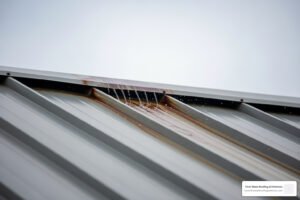
| Metal Roofing | Fastener tension & rust checks | Loose panels, orange staining |
| Tile / Slate | Replacing cracked/brittle pieces | Slipped tiles, debris in valleys |
| Cedar Shakes | Fire retardant & rot treatment | Split wood, fungal growth |
Asphalt Shingle Upkeep
Asphalt shingles rely on tiny granules to block UV rays. If you see a large amount of “sand” in your gutters, your shingles are reaching the end of their life. Modern shingles with StreakGuard technology help prevent algae, but they still require periodic roof repair for storm-damaged sections.
Metal and Tile Roof Preservation
Metal roofs are durable but suffer from thermal expansion. This movement can loosen fasteners over time. Tile and slate are incredibly long-lasting but very brittle; never walk on them, as you will likely crack the tiles and create new leaks.
Protecting the System: Flashing, Ventilation, and the Attic
A roof is a system, not just a covering. The flashing, ventilation, and insulation must all work together.
Interior Roof Maintenance and Attic Checks
Proper roof ventilation repair ensures that heat doesn’t build up in the summer and moisture doesn’t trap in the winter.
- Ventilation Ratio: You should have 1 square foot of ventilation for every 150 square feet of attic floor space.
- Insulation: In northern zones, R-49 to R-60 insulation is the standard to keep your home’s heat from escaping into the roof deck.
If you see light shining through the roof deck in the attic, you need an immediate roof flashing repair or shingle fix.
Preventing Ice Dams in Cold Climates
Ice dams happen when heat from your house melts the snow on the roof, which then refreezes at the cold eaves. This creates a dam that forces liquid water under your shingles.
- The Fix: Ensure your soffit vents are not blocked by insulation. This keeps the roof deck at a uniform, cold temperature.
- Symptoms: If you see large icicles forming only on certain parts of your gutters, you likely have a leaky roof fix or insulation issue waiting to happen.
When to Call a Professional for Roof Maintenance
While DIY checks are great, some things require an expert. If you are uncomfortable with heights, or if your roof has a steep pitch, call us. Professional contractors are familiar with hazards and can spot “silent” leaks.
Identifying Critical Damage Signs
Call for an emergency roof repair if you notice:
- Sagging ridgelines (indicates structural issues).
- Water stains on interior walls or ceilings.
- Large sections of missing shingles after a storm.
Professional Inspection Costs and Benefits
A professional roof inspection in Dover, DE typically costs about $230 on average. At First State Roofing & Exteriors, we offer these inspections for free to provide you with a detailed condition report that you can use for insurance or warranty claims. We follow NRCA standards to ensure every fastener and seal is checked. If we find hail damage, we can assist with storm damage repair documentation for your insurance provider.
Frequently Asked Questions about Roof Maintenance
How often should I clean my gutters?
At a minimum, twice a year—late spring and late fall. However, if your Kent and Sussex County, DE home is surrounded by maples or oaks, you may need to clear them quarterly to prevent water from backing up under your shingles.
Can I use a power washer on my shingles?
No! Never use a power washer on asphalt shingles. The high-pressure stream will strip away the protective granules, effectively “aging” your roof by 10 years in a single afternoon. Use a soft-wash chemical treatment instead.
Does skipping maintenance void my roof warranty?
Yes, it can. Most major shingle manufacturers (like Owens Corning or GAF) include clauses stating that the roof must be properly maintained. If a failure occurs because of moss growth or clogged gutters, they may legally deny your warranty claim.
Conclusion
At First State Roofing & Exteriors, we believe that a little bit of care goes a long way. As a family-owned Kent and Sussex County, DE business, we treat every roof as if it were protecting our own family. Whether you are in Dover, Milford, or anywhere across the First State, we are here to provide the integrity and transparency you deserve.
Don’t wait for a rainy day to find out your roof is failing. We provide 24/7 availability for emergencies and offer free, no-obligation estimates for all maintenance and repair work.
Schedule your professional roof maintenance today to protect your home’s value. Call us at (302) 222-4065 for a free inspection!