Most people don’t think about their roof until something goes wrong. A water stain appears on the ceiling, a corner of drywall starts to bubble, or a storm rolls through and suddenly you’re wondering how bad it actually is up there. That moment of uncertainty is exactly where this guide starts.
Roof waterproofing is one of those topics that sounds technical but is actually pretty straightforward once someone walks you through it. By the time you finish reading, you’ll understand what it is, how it works, what signs to watch for, and — maybe most usefully — whether you actually need full waterproofing or something simpler.
What Is Roof Waterproofing?
Roof waterproofing is the process of applying a protective system to your roof that prevents water from getting through. It sounds simple, and in concept it is — but the materials and methods involved are more sophisticated than most homeowners realize.
Here’s something worth knowing: your roof already has waterproofing built into it. Underlayment, flashing, ice and water shield — these are all waterproofing components installed during construction. The problem is that these systems age, crack, and degrade over time. UV exposure, temperature swings, heavy rain, and wind all take a toll. What was once a solid barrier can develop small gaps that let moisture in gradually, long before you see any visible damage inside.
Waterproofing — whether it’s a liquid-applied coating, a sheet membrane, or a bituminous system — is how you restore or reinforce that barrier before a small vulnerability becomes a serious problem.
Best Roof Repair for Leaks: Which Waterproofing Method Actually Works?
There’s no single answer here, because the right waterproofing method depends on your roof type, its age, and where the vulnerability is. That said, understanding the main options helps you have a more informed conversation with any contractor.
Liquid-applied membranes — including polyurethane, silicone, and acrylic coatings — are applied directly to the roof surface and cure into a seamless, flexible barrier. They’re particularly useful for roofs with complex shapes, penetrations, or areas where water tends to pool. Silicone coatings are among the most durable options available, with lifespans that can exceed 25 years under the right conditions. Acrylic coatings are more affordable but typically need reapplication around the 10-year mark.
Sheet membranes — TPO, PVC, and EPDM rubber — are factory-manufactured materials that are mechanically fastened, adhered, or heat-welded to the roof deck. These are the standard for flat and low-slope commercial roofs, and they’re what you’ll find on most commercial buildings across Kent County. They’re extremely effective when installed correctly, creating a continuous waterproof layer across the entire surface.
Bituminous systems — including modified bitumen — have been used in roofing for decades and remain one of the most reliable options available. They work by layering asphalt-based materials to create a thick, durable barrier, and they’re particularly well-suited to roofs that take a beating from temperature extremes.
One thing that separates a good waterproofing job from a bad one is surface preparation. Applying any coating over a dirty, damaged, or structurally compromised surface is a shortcut that leads to early failure. The correct sequence is always: inspect, repair what needs repairing, prep the surface thoroughly, then apply the waterproofing system. Skipping steps one or two is how contractors produce work that fails within a few years.
Professional installation also matters more than most people expect. Studies have shown that professionally applied waterproofing systems last 30 to 50 percent longer than DIY applications — not because the product is different, but because preparation, application thickness, and curing conditions are controlled correctly.
Roof Restoration vs. Full Replacement: How to Know Which One You Need
This is the question most homeowners are actually trying to answer when they search for roof waterproofing. You’ve noticed something — a stain, a soft spot, a shingle that looks off — and now you’re trying to figure out whether you’re looking at a manageable fix or a full replacement.
Here’s a practical way to think about it. Waterproofing and roof restoration make the most sense when your roof still has solid structural integrity — meaning the decking is sound, the framing is intact, and the problems are at the surface level. If your roof has roughly 5 to 15 years of structural life remaining, waterproofing is often the right move. It protects what’s still working, extends the roof’s useful life, and costs significantly less than replacement. Average waterproofing costs run between $500 and $2,500 for most residential applications — a fraction of what a full replacement typically runs.
Full replacement becomes the right answer when the underlying structure is compromised. Rotted decking, widespread sheathing damage, or a roof that’s simply at the end of its designed lifespan can’t be saved by a coating on top. Waterproofing over a structurally failing roof is like painting over rust — it might look fine temporarily, but the problem underneath keeps getting worse.
The honest answer is that you can’t always tell from the ground which situation you’re in. A proper inspection — one that goes beyond a visual check and actually assesses the condition of the decking and underlying layers — is the only reliable way to know. That’s why a free estimate from a qualified contractor is worth taking advantage of before making any decision.
One more thing worth saying: waiting rarely helps. Water doesn’t stay in one place. A small infiltration point that’s letting in a trickle today can spread laterally through insulation, into decking, and eventually into framing. The repair bill grows with the delay, and in the worst cases, what started as a waterproofing question becomes a mold remediation and structural repair job.
Water Leak Roof Repair in Kent County, DE: Why Local Conditions Make This More Urgent
Kent County gets around 45 inches of rain per year. The U.S. average is 38 inches. That gap might not sound dramatic, but it means every roof in Dover, Smyrna, Harrington, and Felton is under sustained moisture pressure that most of the country simply doesn’t face at the same level.
Add in the humidity — Kent County has a humid subtropical climate — and you’ve got conditions that accelerate the aging of roofing materials, promote mold and algae growth, and make even minor waterproofing gaps more consequential. The county also sits close enough to the Delaware Bay and Atlantic coast to catch the full force of nor’easters and Atlantic storm systems from June through November. These aren’t once-in-a-decade events. They’re a regular part of life here, which is why staying ahead of waterproofing issues isn’t optional — it’s essential.
Signs Your Kent County Roof Needs Waterproofing Attention
Some signs are obvious. A water stain on your ceiling, dripping during a storm, or visible daylight through your attic are all clear signals that something has already failed. But most waterproofing problems give you earlier warning signs if you know what to look for.
Granule loss on asphalt shingles — those small, sand-like particles you might notice in your gutters — is one of the first indicators that your shingles are aging and losing their protective layer. Once the granules go, the underlying asphalt is exposed to UV and moisture, and degradation accelerates.
Blistering or bubbling on a flat or low-slope roof surface suggests moisture is already trapped beneath the membrane. This is common on commercial roofs across Kent County and on flat-roofed sections of older homes throughout the region. It doesn’t always mean the roof is leaking into the building yet — but it means the waterproofing layer is compromised and the clock is running.
Cracked or missing flashing around chimneys, skylights, vents, and roof edges is another early warning sign. Flashing is one of the most critical waterproofing components on any roof, and it’s also one of the first to fail — particularly after the freeze-thaw cycling that Kent County sees in January and February. Water gets into a micro-crack, freezes, expands, and widens the gap. By spring, what was a hairline crack can be a meaningful entry point.
After any significant storm — a nor’easter, a tropical system, or even a heavy summer thunderstorm — it’s worth getting your roof checked even if you don’t see obvious damage from the ground. Storm damage often shows up in ways that aren’t visible without getting up there, and catching it early is almost always cheaper than letting it develop.
We work directly with insurance providers when storm damage is involved, which takes a lot of the paperwork pressure off homeowners who aren’t sure how to navigate a claim. If your roof takes a hit during storm season, that’s something worth knowing before you assume you’re on your own.
What to Expect From a Professional Roof Waterproofing Job
If you’ve never had waterproofing work done, it helps to know what the process actually looks like — both so you know what to expect and so you can recognize when a contractor is cutting corners.
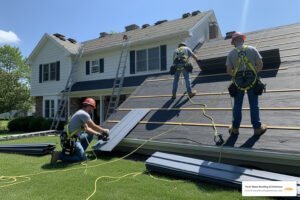
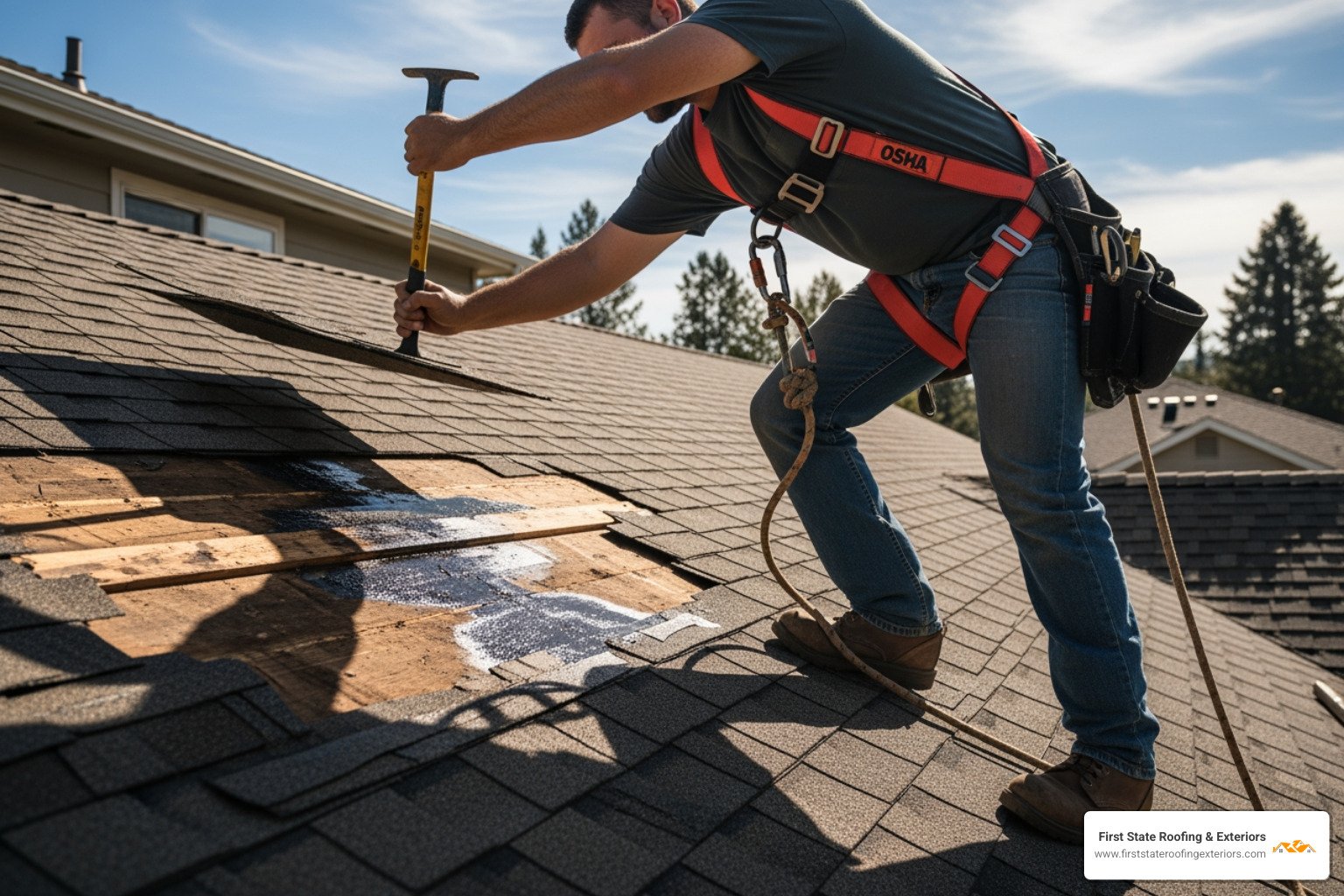
A professional waterproofing job starts with a thorough inspection. Not a quick walk-around, but an actual assessment of the roof surface, the flashing, the penetrations, and where possible, the condition of the decking below. Any existing damage — cracked areas, failed seams, compromised flashing — needs to be repaired before waterproofing is applied. Applying a coating over damaged material is one of the most common shortcuts in the industry, and it’s one of the main reasons waterproofing jobs fail ahead of schedule.
Surface preparation comes next. The roof needs to be clean, dry, and free of old coatings that might interfere with adhesion. This step takes time, and some contractors try to rush it. It matters more than most homeowners realize — a coating applied to a dirty or damp surface simply won’t bond the way it’s designed to.
The application itself varies by method. Liquid coatings are typically rolled or sprayed on in multiple passes to achieve the correct thickness. Sheet membranes are carefully measured, cut, and adhered or heat-welded to create a continuous surface. Either way, the goal is a seamless barrier with no gaps at edges, seams, or penetrations — because water will find any opening it can.
When the job is done right, the system should be backed by a warranty. We’re authorized installers for GAF, Owens Corning, TAMKO, CertainTeed, and Atlas Pro, which means the warranties we offer are backed by the manufacturers — not just our word. For homeowners in Kent County who’ve dealt with the aftermath of storm season or a bad winter, that kind of documented coverage matters.
We also offer financing for homeowners who want to address a waterproofing issue now rather than waiting until the problem grows. Delaying a $500 to $2,500 waterproofing job because of timing can turn into a far more expensive repair later — and financing makes it easier to act when the time is right, not just when the budget lines up perfectly.
Ready to Protect Your Roof? Here’s Where to Start
Roof waterproofing isn’t complicated once you understand what it is and what it’s doing. It’s a protective system — one that your roof already has in some form, and one that needs attention as it ages, especially in a climate like Kent County’s where 45 inches of rain a year is just the baseline.
The most useful thing you can do right now is get an honest assessment of where your roof stands. Not a sales pitch — an actual inspection that tells you whether your waterproofing is still performing, where the vulnerabilities are, and what makes sense to do about them.
First State Roofing & Exteriors Co. has been doing exactly that for homeowners and businesses across Dover, Smyrna, Harrington, Felton, and the rest of Kent County for over 22 years. If you have questions or want to schedule a free estimate, reach out — no pressure, no surprises.