
Hear from Our Customers
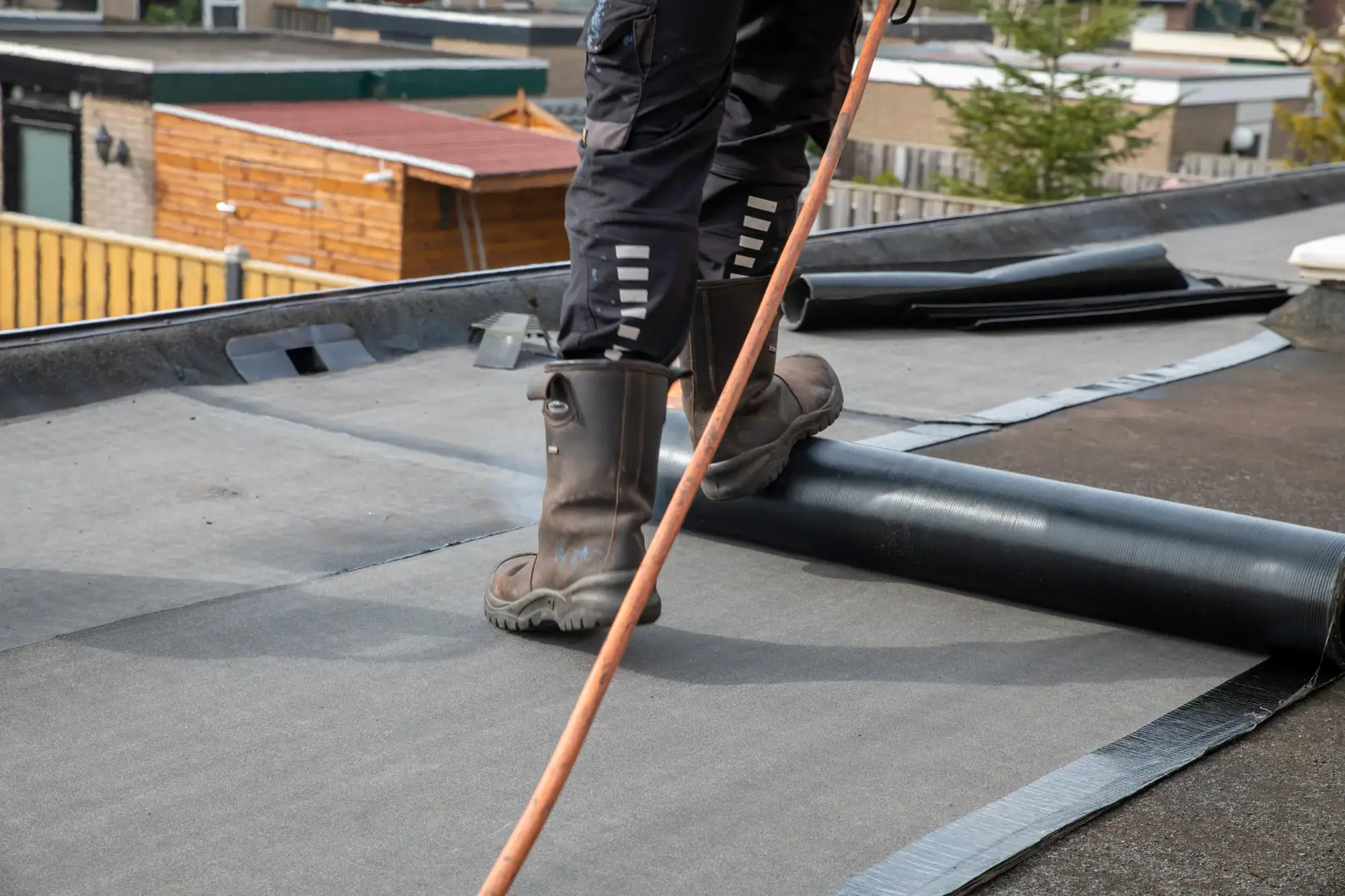
Living at the end of Route 6 on the Delaware Bay isn’t like living in a typical Delaware neighborhood. The salt air is constant. The humidity doesn’t let up. And when a nor’easter pushes water toward the Woodland Beach shoreline, your roof isn’t just dealing with rain coming down — it’s dealing with wind-driven moisture, debris impact, and the kind of sustained pressure that exposes every weak seam and questionable flashing detail a contractor left behind.
A properly installed flat roof membrane handles all of that. When the drainage is designed right, when the seams are heat-welded or fully adhered, and when the flashing at every penetration is done correctly, you stop worrying every time a storm warning goes up. You know what’s over your head is solid.
The other side of that is peace of mind that actually holds. Woodland Beach has been evacuated during coastal storms. Route 6 has flooded. When conditions get bad enough that you can’t get back to your property, the last thing you want to be thinking about is whether the crew who put your roof on knew what they were doing. Getting it right the first time matters more here than almost anywhere else in Kent County.
First State Roofing & Exteriors Co. is based in Smyrna — about eight to ten miles west of Woodland Beach via Route 6. That proximity isn’t accidental. When you’re in a community this isolated, surrounded by the Woodland Beach Wildlife Area on three sides and the Delaware Bay on the fourth, proximity matters. We can get to you. We know the area. And we’re not a storm-chasing crew that showed up after the last big coastal event and will be gone before the next one.
We’ve been doing this in Delaware for over 22 years. Every project is handled by our own certified team — no subcontracting, no handing your job off to a crew you’ve never met. What you see when we show up is who does the work.
We’re BBB Accredited with a 5.0 out of 5 rating from more than 63 verified reviews. Customers consistently mention our communication, clean worksites, and the fact that we follow through. In a small bay community where word travels fast, that track record is what we’re built on.
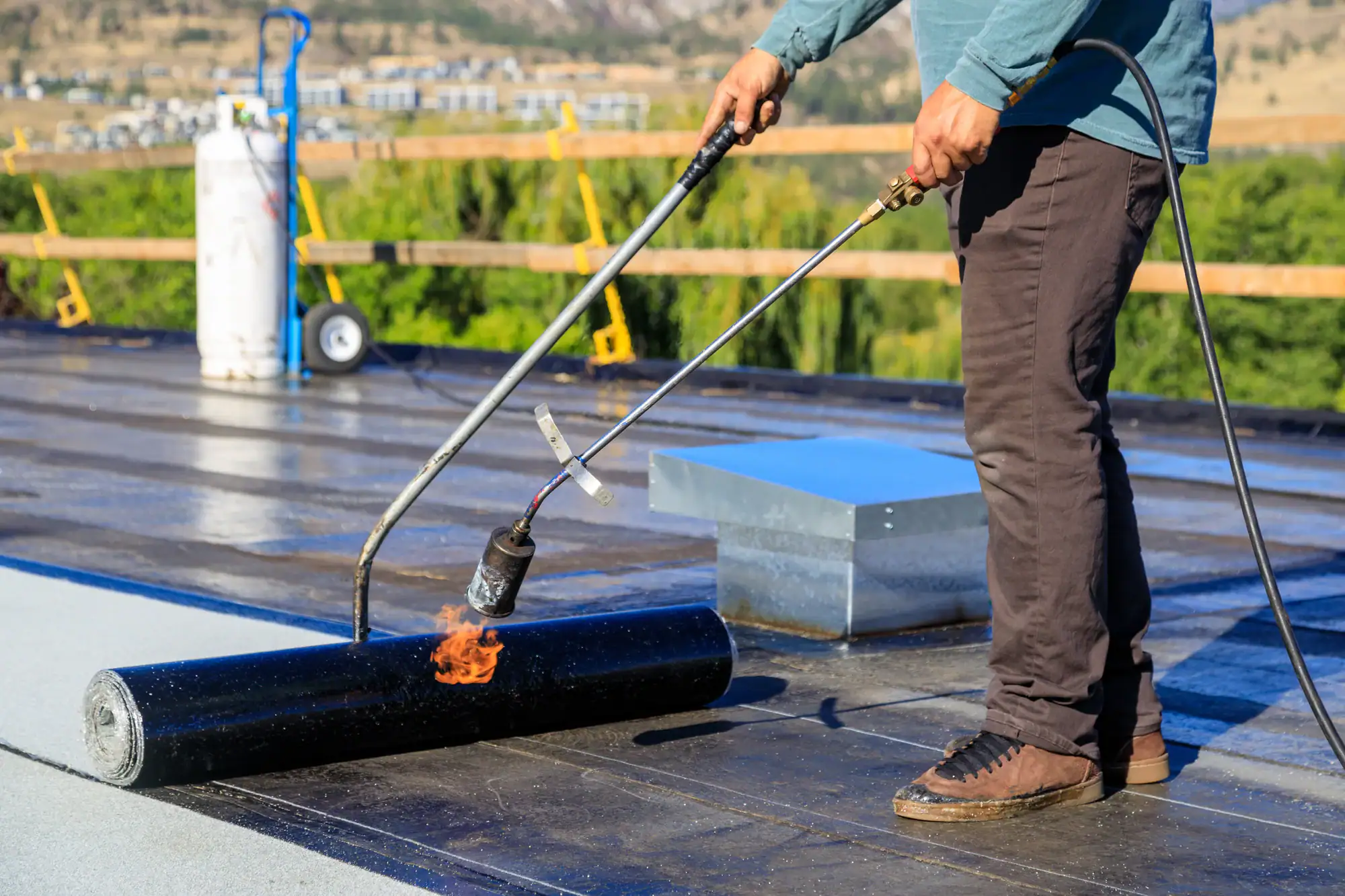
It starts with a free estimate. We come out, get on the roof, and give you an honest read on what you’re dealing with. For homes in Woodland Beach, that inspection looks specifically at how salt air and moisture exposure have affected the existing membrane, whether there’s any deck damage underneath, and how your drainage is set up.
Ponding water — water that sits on a flat roof for more than 48 hours — is the single most common cause of premature membrane failure, and it’s especially problematic in a low-lying coastal community where the ground itself stays saturated after a storm.
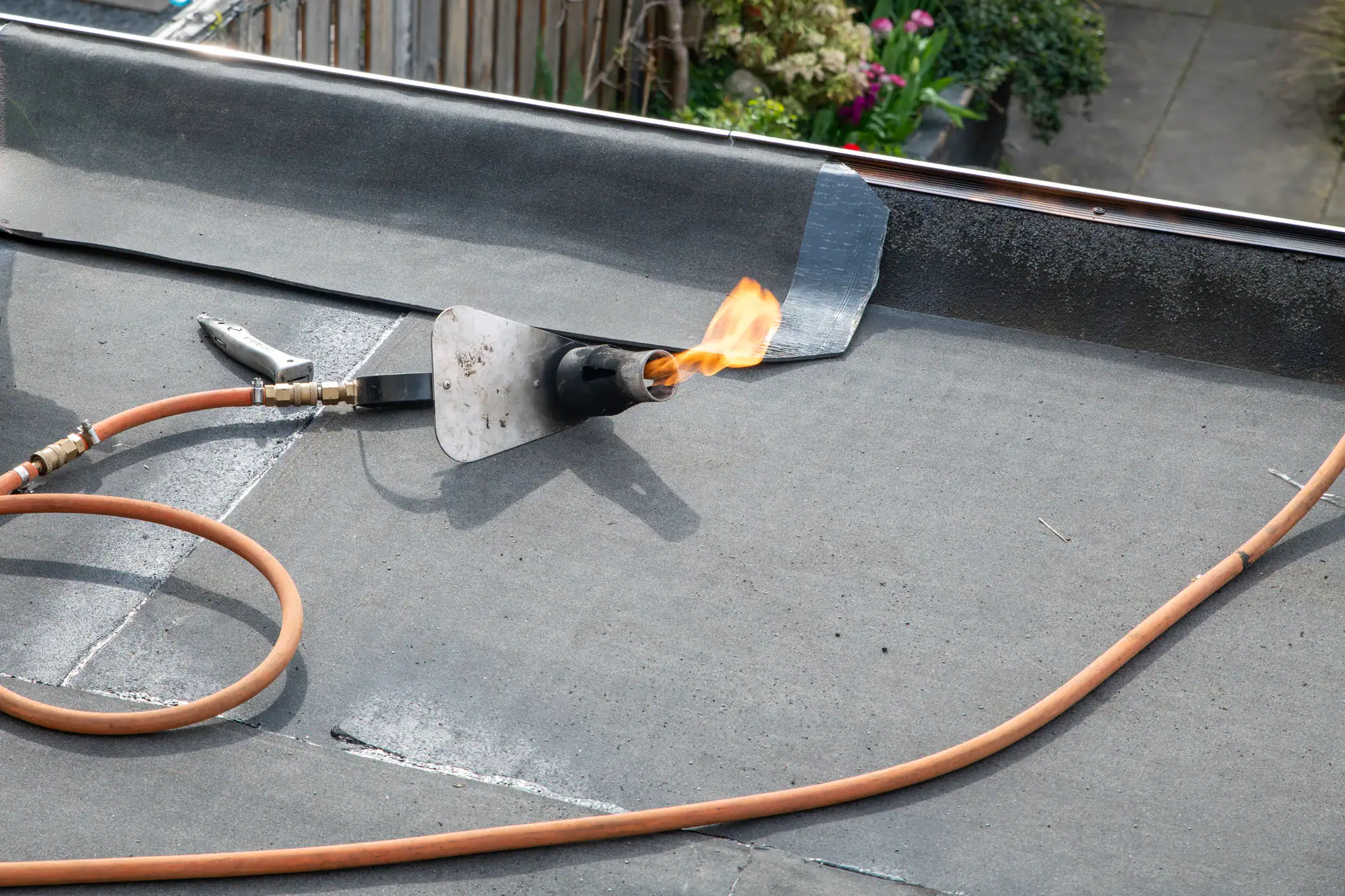
If a full replacement is warranted, we tear off the existing membrane down to the deck, inspect and repair any damaged substrate, install the appropriate insulation layer, and then apply the new membrane system. The membrane choice — TPO, EPDM rubber roofing, or modified bitumen — depends on your specific building, your budget, and what performs best given your exposure to the bay.
TPO reflects a significant portion of solar heat load, which matters in Delaware’s humid summers. EPDM’s flexibility holds up through freeze-thaw cycling, which matters in Delaware winters when moisture-saturated coastal structures take a harder hit than inland homes.
Because Woodland Beach falls under Kent County jurisdiction, full roof replacements typically require a building permit through the county. We handle the process clearly so there are no surprises on that front, and we make sure the work meets code before we consider the job done.

Ready to get started?
Woodland Beach homes aren’t average Delaware properties, and the roofing work here shouldn’t be treated like it is. Most of the housing stock in this community was built in the 20th century, post-resort era, in a coastal environment that’s been hard on structures since the first buildings went up after the Hurricane of 1878 leveled the original resort. Many of these homes have flat or low-slope sections — on additions, screened porches, garages, and outbuildings — that have been patched over the years rather than properly assessed and replaced.
Salt air corrodes metal flashings faster than inland conditions. UV exposure degrades mineral surfaces on modified bitumen roofing systems. High humidity keeps everything wetter, longer.
We install TPO roofing membrane, EPDM rubber roofing, modified bitumen (torch down roofing), and PVC roofing membrane systems for both residential and commercial properties. We also handle roof repairs, emergency roof repair when a storm causes sudden damage, gutter systems, siding, and windows. And if the damage was caused by a coastal storm and you’re navigating an insurance claim, we help with that too — documenting the damage, working with adjusters, and making sure the scope of work is accurate so you’re not left with a lowballed patch when what you actually need is a proper replacement.
Financing is available for those who want to move forward with a full system replacement without taking the entire cost upfront. Every job starts with a free estimate, no obligation.

The honest answer is that it depends on your specific building and what’s already there, but for a coastal bay-front community like Woodland Beach, a few things tip the scales. TPO roofing membrane is a strong choice for its energy efficiency — it reflects a significant portion of solar heat load, which helps with cooling costs during Delaware’s humid summers — and its heat-welded seams create a watertight bond that holds up well under wind-driven rain. EPDM rubber roofing is the other top contender. It’s been used on millions of structures worldwide, and its flexibility makes it particularly durable through the freeze-thaw cycling that hits moisture-saturated coastal structures harder than inland properties.
Modified bitumen is a proven option too, especially on low-slope sections of older homes, but the mineral surface granules can erode faster in a salt-air, high-UV coastal environment, which shortens the service life compared to what you’d see inland. When we come out for a free estimate, we’ll tell you what we actually recommend for your specific situation — not just what’s easiest to install.
Industry lifespan ranges for flat roof systems are typically quoted as 20 to 30 years for EPDM, 15 to 25 years for TPO, and 15 to 20 years for modified bitumen. Those ranges assume correct installation, functional drainage, and regular maintenance. In a coastal environment like Woodland Beach — where salt air, persistent humidity, UV exposure, and storm surge risk are all in play — you’re working against more stressors than an inland property faces.
That doesn’t mean your roof can’t hit the top of those ranges. It means the quality of the original installation and the consistency of maintenance matter more here than they would in Dover or Harrington. A membrane installed with properly heat-welded seams, correct flashing at all penetrations, and a drainage system designed to handle heavy rain events will last significantly longer than one where those details were rushed or skipped. Annual inspections — ideally twice a year given the coastal exposure — are the single most effective thing you can do to catch small problems before they become structural ones.
Yes, and it’s one of the most commonly dismissed problems we see. The industry threshold is 48 hours — if water is still sitting on your flat roof two days after a rain event, that’s ponding water, and it’s a problem worth addressing. In a low-lying coastal community like Woodland Beach, where the ground stays saturated longer after storms and drainage can be slower, this shows up more often than it does on elevated inland properties.
Here’s why it matters: standing water accelerates membrane degradation, promotes mold and algae growth on the roof surface, adds structural load over time, and can void manufacturer warranties on the membrane system. In winter, water that hasn’t drained properly freezes and expands inside any small seam gap or flashing crack, making it bigger. What starts as a minor drainage issue becomes a seam failure, which becomes a leak, which becomes deck damage. The fix at the drainage stage is a fraction of what the fix looks like two or three years later. If you’ve noticed water sitting on your roof after storms, that’s worth a professional look before the next nor’easter comes up the bay.
It depends on your policy and how the damage occurred. Most standard homeowner’s insurance policies cover sudden, storm-related damage — wind damage, flying debris, membrane punctures from a storm event. What they typically don’t cover is damage that resulted from deferred maintenance or pre-existing deterioration, even if a storm was the trigger that made it visible.
For Woodland Beach specifically, this matters because the National Weather Service monitors the community as a coastal flood-vulnerable location, and the area has documented history of storm surge events. If your roof sustains damage during a coastal storm, the way the claim is documented makes a significant difference in what you receive. We help homeowners through this process — assessing the damage, documenting it properly, and working with insurance adjusters to make sure the scope of the repair or replacement reflects what actually needs to be done. We’ve seen plenty of situations where a homeowner accepted a lowballed patch estimate from an insurer when the correct answer was a full membrane replacement. Getting the documentation right from the start protects you.
TPO and EPDM are both single-ply membrane systems, but they have meaningfully different performance profiles. TPO is a white or light-colored membrane that reflects solar heat, which makes it a strong choice for buildings where summer cooling costs are a concern. Its seams are heat-welded, which creates a continuous watertight bond — one of the strongest seam methods available. It’s also the fastest-growing flat roofing membrane in the commercial market right now, largely because of its energy efficiency and durability.
EPDM is a black rubber membrane that’s been in use for decades — there’s more than 20 billion square feet of it installed worldwide, which tells you something about its track record. It’s particularly valued for its flexibility, which holds up well through temperature swings and freeze-thaw cycling. For a bay-front community like Woodland Beach where structures stay wetter and temperature cycling is part of every winter, EPDM’s flexibility is a genuine performance advantage. The right choice between the two comes down to your building’s specific profile, your existing system, and your priorities. That’s exactly the kind of conversation we have during a free estimate — we’re not going to push one system over another if the other one is actually the better fit for your roof.
This is a real concern in a community this isolated, and it’s worth taking seriously. Woodland Beach is at the end of Route 6 with no other road in or out. Contractors who aren’t committed to the job — or who subcontract to crews with no accountability to you — are a bigger problem here than they’d be in a town with easier access and more options nearby. If a crew does poor work and you’re dealing with a leak six months later, getting someone back out to Woodland Beach to make it right is not as simple as it would be in Smyrna or Dover.
The things to verify before hiring anyone: confirm they’re licensed and insured in Delaware, check that they have a verifiable physical address and a track record of reviews with specific details rather than generic praise, ask directly whether they subcontract any of the work, and get everything in writing before a single piece of material goes on your roof. We’re BBB Accredited, carry a 5.0 out of 5 rating from more than 63 verified reviews, have been in business for over 22 years in Delaware, and do not subcontract. We’re also based in Smyrna, which means we’re as close to Woodland Beach as any established roofing contractor you’ll find in Kent County.
Other Services we provide in Woodland Beach