
Hear from Our Customers
When your flat roof is done right, you stop watching the ceiling every time it rains. That’s not a small thing — especially out here in rural Kent County, where a leaking roof on a workshop, outbuilding, or flat-roofed addition can sit unnoticed long enough to rot the deck underneath.
The difference between a repair that lasts and one that fails in two seasons usually comes down to how well the drainage was designed in the first place. Delaware has the lowest mean elevation of any state in the country. That flat landscape doesn’t do your roof any favors. Without proper slope, correctly placed drains, and a membrane that can handle standing water, ponding becomes routine — and ponding is the single fastest way to shorten a flat roof’s life.
A properly installed TPO, EPDM, or modified bitumen system accounts for all of that from day one, not as an afterthought. What you get on the other side of a quality flat roof installation is simple: you stop losing sleep over it. Your structure stays dry, your deck stays solid, and you’re not calling us back out six months later because a seam failed. That’s what this work is supposed to deliver, and that’s what we’ve been delivering across Kent County for over 22 years.
We’re based in Smyrna — the closest commercial hub to Whigville and the surrounding rural communities in this part of Kent County. That proximity isn’t just a convenience. It means the crew showing up at your property knows this area, knows the roads, and has a reputation here that we’re not willing to risk on sloppy work.
Every project is handled by our own certified team. No subcontracting, no unknown third parties, no handoffs. The people you talk to are the people doing the work. That matters a lot when you’re a rural property owner in Whigville who doesn’t have a dozen neighbors to call for a referral — you need to know exactly who’s on your roof.
With over 22 years of experience, BBB accreditation, and a consistent 5-star rating from verified Delaware customers, we’ve built the kind of track record that speaks for itself. We serve both residential and commercial clients, offer free estimates, and can help you navigate an insurance claim if storm damage is part of the picture.
It starts with a real inspection — not a quick walk-around, but an honest look at the membrane, the seams, the flashings, and the deck underneath. On older rural properties in unincorporated Kent County around Whigville, that deck inspection matters more than most people expect. Water has a way of traveling along the deck before it ever shows up as a stain on your ceiling, and by the time you notice the leak inside, there’s often more damage than the surface suggests.
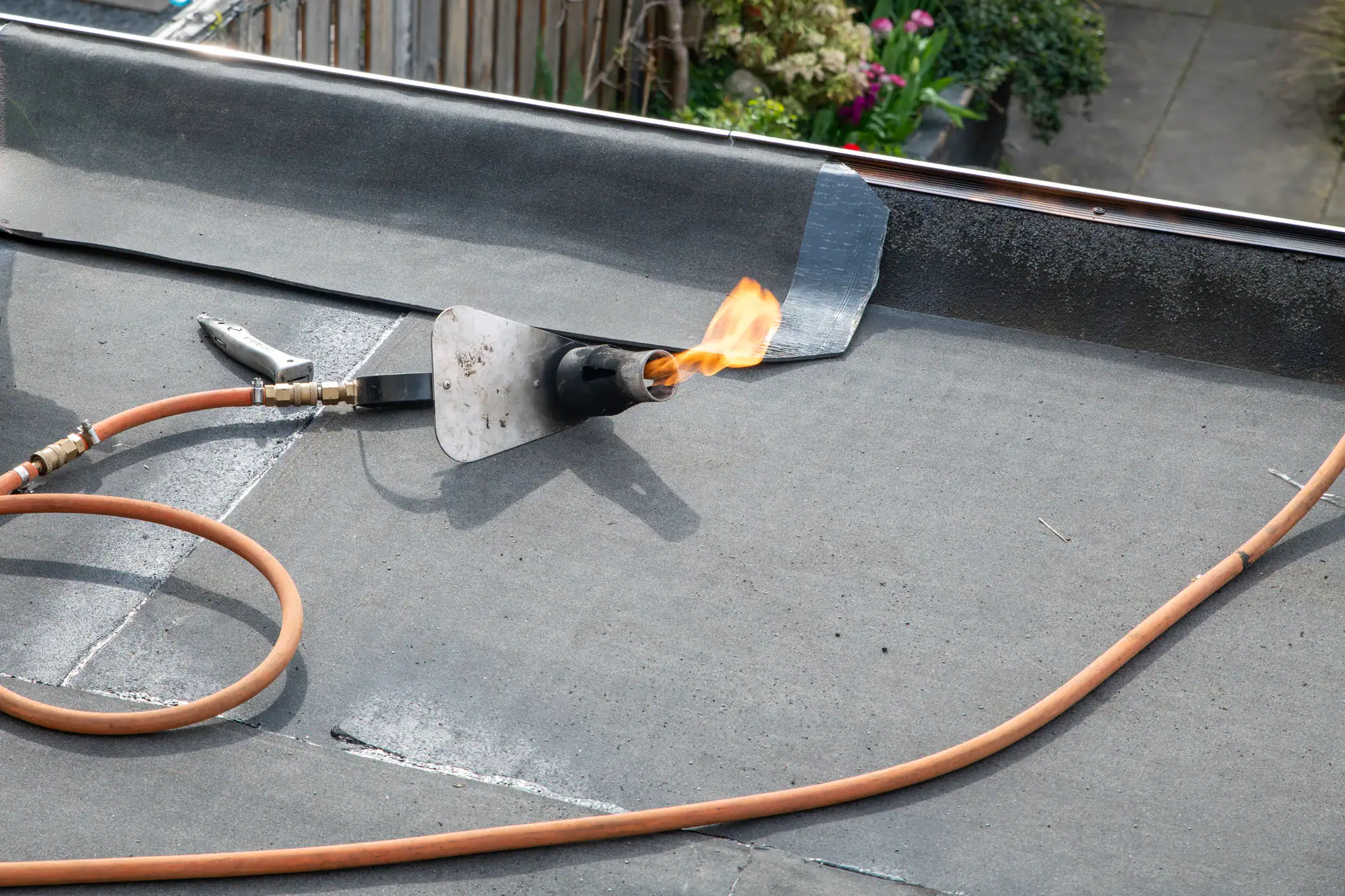
Once the scope is clear, you’ll get a written estimate that explains what’s being done and why. If it’s a full replacement, that means a complete tear-off of the old membrane, deck repair where needed, proper insulation, and installation of the new system — whether that’s TPO, EPDM, modified bitumen, or PVC. Every penetration gets properly flashed. Drainage gets checked and corrected. Nothing gets skipped to hit a lower price point.
Because Whigville sits in unincorporated Kent County, permits for full replacements are handled through Kent County’s Office of Planning Services and Code Enforcement — not a municipal building department. We’re familiar with that process and can walk you through what’s required. Once the work is done, the site gets cleaned up completely. No debris left behind, no nails in the driveway.

Ready to get started?
Not every flat roof in rural Kent County is the same job. A large agricultural outbuilding has different demands than a flat-roofed addition on a farmhouse, and the right membrane depends on the building’s use, its size, its current drainage setup, and how much direct sun exposure it gets. We install and repair all major flat roof membrane systems and will tell you honestly which one makes sense for your situation.
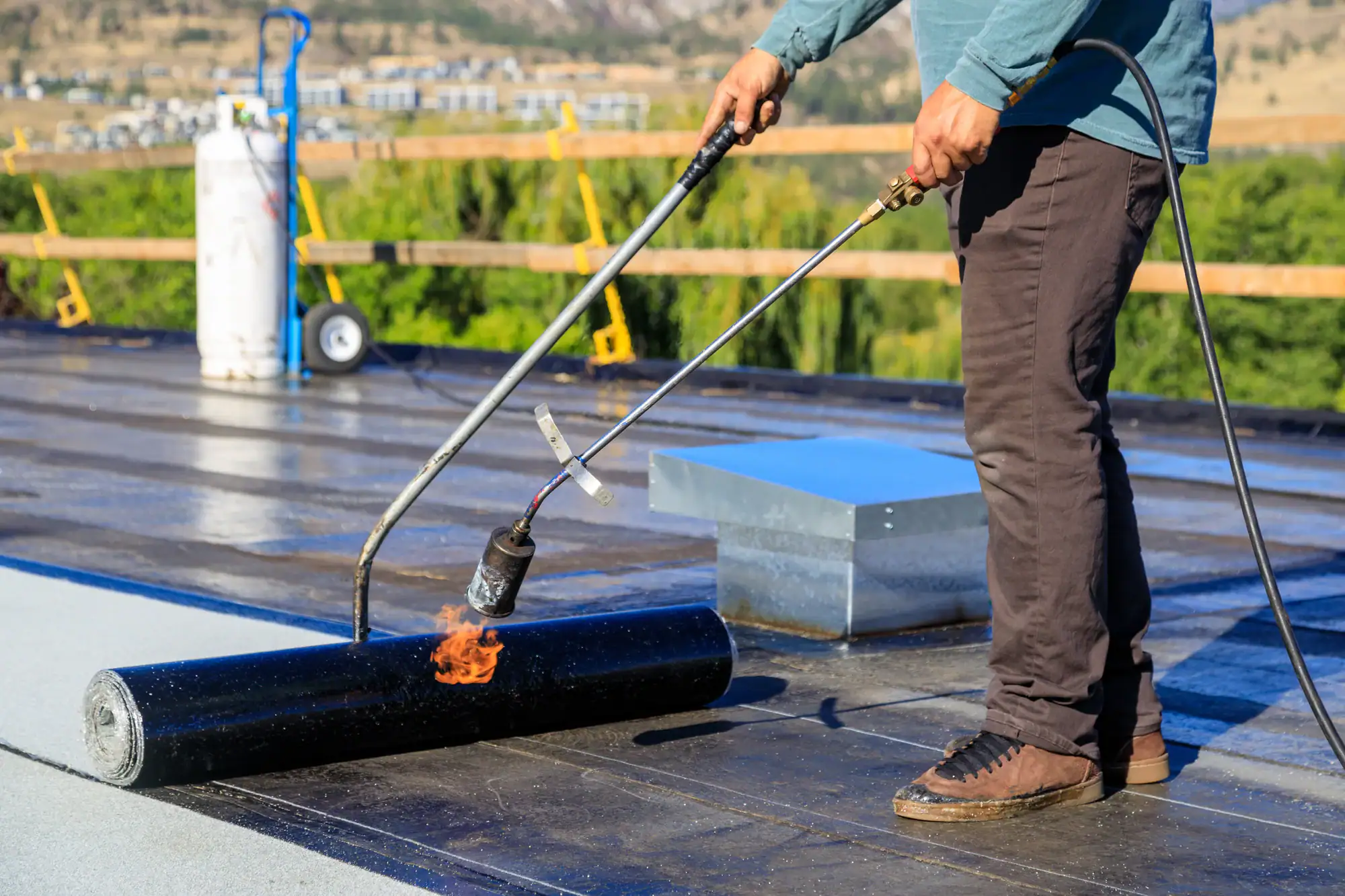
TPO roofing membrane is the most popular choice for commercial and low-slope applications right now — it reflects a significant portion of solar load, which helps with cooling costs during Delaware’s humid summers, and its heat-welded seams hold up well over time. EPDM rubber roofing material is a proven long-term option, particularly on structures that see a lot of temperature swings, like unheated outbuildings and farm shops that go from freezing winters to hot summers. Modified bitumen, sometimes called torch down roofing, is a durable choice for residential flat roofs and additions, and PVC roofing membrane performs well in environments with chemical exposure or rooftop grease — relevant for any agricultural or commercial kitchen applications in the area.
If you’re dealing with storm damage, we also assist with insurance claims — helping you document the damage, work with your adjuster, and make sure the scope of work reflects what actually needs to be done. Financing is available if cost is a concern, and every job starts with a free estimate.

For unheated outbuildings and agricultural structures in rural Kent County, EPDM rubber roofing is often the strongest choice. It handles temperature swings exceptionally well — the kind of freeze-thaw cycling that hits an unheated farm shop or equipment shed harder than a conditioned living space. EPDM is flexible enough to expand and contract without cracking at the seams, and it has a proven lifespan of 20 to 30 years when properly installed and maintained.
That said, the right answer depends on the specific structure. A large flat-roofed commercial outbuilding with significant sun exposure might benefit more from TPO’s reflective properties, which can meaningfully reduce heat buildup inside the building during Delaware’s humid summers. We’ll assess your specific building — its size, use, drainage situation, and exposure — before recommending a system, rather than defaulting to whatever’s easiest to install.
The honest answer is that you often can’t tell from the ground, and even a walk on the roof won’t always reveal what’s happening underneath the membrane. A small crack or blister on the surface can look minor while the deck underneath has been absorbing water for months. That’s especially true on older properties in Whigville and rural Kent County, where a flat-roofed addition or outbuilding may not get inspected regularly.
A few signs that lean toward replacement rather than repair: the membrane is more than 15 to 20 years old, there are multiple leak points showing up in different areas, the roof surface has widespread blistering or granule loss, or there’s any soft or spongy feeling when you walk on it — which indicates deck damage beneath. A single isolated leak with an otherwise sound membrane is often a legitimate repair candidate.
The only way to know for certain is a proper inspection that includes checking the deck, not just the surface. We offer free estimates that include an honest assessment of whether repair or replacement makes more sense for your specific roof — without any pressure to go bigger than you need to.
Yes, and it’s worth taking seriously sooner rather than later. The industry threshold is 48 hours — if water is still sitting on your roof two days after a rainstorm, that’s considered ponding and it’s a problem. In Delaware, where the terrain is almost entirely flat and rainfall averages around 45 inches a year, this is a more common issue than in areas where the landscape naturally helps water drain away from structures.
Ponding water accelerates membrane degradation significantly. It adds weight to the roof structure, promotes algae and mold growth, and creates freeze-thaw stress during winter months when that standing water turns to ice and expands. Over time, it can cause the deck to deflect — meaning the roof actually sags slightly, which makes the ponding worse and creates a cycle that’s expensive to break.
The root cause is almost always a drainage issue: clogged drains, inadequate slope, or a membrane that has shifted or sagged. All of these are fixable, but the longer ponding goes unaddressed, the more damage accumulates underneath. If you’re seeing water sit on your roof after rain, it’s worth getting an inspection before the next heavy storm season hits.
Lifespan varies by material, but here are the realistic ranges for the systems most commonly installed on properties in this part of Kent County. EPDM rubber roofing typically lasts 20 to 30 years. TPO roofing membrane runs 15 to 25 years. Modified bitumen, or torch down roofing, generally falls in the 15 to 20 year range. PVC roofing membrane is comparable to TPO at 20 to 25 years.
Those numbers assume correct installation, functioning drainage, and at least basic annual maintenance — clearing drains, checking seams and flashings, and catching small issues before they become large ones. Delaware’s climate is harder on flat roofs than many people realize. The combination of high annual rainfall, coastal humidity, and freeze-thaw cycling in winter puts consistent stress on membrane seams and flashings year-round.
Roofs that fall short of those lifespan ranges almost always have one thing in common: a drainage problem that was never fully resolved, or installation shortcuts that weren’t obvious until a few seasons in. A properly installed system by an experienced contractor, with drainage designed for Delaware’s flat terrain, will consistently reach the higher end of those ranges.
Yes, and this is a service that genuinely matters for property owners in rural Kent County. Nor’easters, summer thunderstorms, and tropical storm remnants periodically hit the Delmarva Peninsula hard, and flat roofs — particularly on outbuildings and low-slope additions — are vulnerable to wind-driven rain, debris impact, and membrane uplift during severe weather.
The insurance claims process can be confusing, especially when you’re dealing with an adjuster who may not fully understand the scope of damage to a flat roof system. We help property owners document the damage properly, communicate with adjusters, and make sure the repair or replacement scope reflects what actually needs to be done — not a lowballed patch that leaves underlying damage unaddressed.
If you’ve had recent storm damage and aren’t sure whether to file a claim or pay out of pocket, a free estimate from us will give you a clear picture of what’s involved. That information makes it a lot easier to have an informed conversation with your insurance company before committing to anything.
Whigville is an unincorporated community, which means there’s no local town building department — permits and code enforcement for unincorporated areas of Kent County are handled through Kent County’s Office of Planning Services and Code Enforcement. For a full roof replacement, a building permit is generally required. For repairs, it typically is not, though it’s worth confirming based on the scope of work.
Delaware does not have a statewide roofing-specific license requirement, but contractors working on larger projects are required to be registered with the Delaware Division of Revenue and carry proper business licensing. What matters most from your end is making sure whoever you hire is licensed, insured, and pulling the appropriate permits for the work being done — unpermitted work can create complications if you sell the property or file an insurance claim later.
We’re fully licensed and insured, handle the permitting process as part of the job, and can explain exactly what’s required for your specific project in Kent County before any work begins. You won’t be left to figure out the paperwork on your own.
Other Services we provide in Whigville