
Hear from Our Customers
A flat roof that was installed correctly and maintained properly is not a liability — it’s one of the most dependable roofing systems available. What changes after a quality installation is simple: you stop guessing. No more checking the ceiling after every rainstorm. No more wondering whether that soft spot near the drain is getting worse. You know the membrane is sealed, the drainage is working, and the system was built to handle what Delaware’s weather actually delivers.
Dover gets around 45 inches of rain every year, and the city sits on some of the flattest, lowest-elevation land in the state along the St. Jones River basin. That geography matters more than most people realize. When a flat roof in Dover has drainage that wasn’t designed right, there’s no slope to save it — water sits, and sitting water is the fastest way to shorten the life of any membrane. We engineer installations that account for this from the start, not as an afterthought.
For Dover’s commercial and government properties along Dupont Highway, or for homeowners in neighborhoods like Kent Acres and Rodney Village, the outcome is the same: a roof that performs through Delaware’s humid summers, freeze-thaw winters, and nor’easter seasons without becoming a recurring problem you have to manage around your schedule.
We’re based in Smyrna — about 15 miles north of Dover on US 13 — and have been serving Kent County for over two decades. That’s two decades of working through Delaware’s specific weather patterns, building stock, and permit requirements, including the ones that apply to Dover’s own city building department.
Dover isn’t a small town with a handful of residential roofs. It’s Delaware’s capital city, with government buildings near the Capitol Complex, institutional facilities, commercial properties along the Dupont Highway corridor, and military-adjacent housing around Dover Air Force Base. We serve both residential and commercial clients, and that dual capability matters in a market like Dover where the roofing needs are genuinely varied.
The team that shows up is the team that does the work — no subcontractors, no handoffs. That’s been our model for 22 years, and it’s why the reviews consistently say the same things: professional, responsive, clean, and straightforward.
It starts with a free estimate. Someone from our crew comes out, looks at the roof, and gives you a clear picture of what’s actually going on — not a vague verbal quote, but a written assessment you can use to make a real decision. If you’ve already gotten other estimates and they don’t add up, that’s worth talking through too.
Once you decide to move forward, the permitting question gets handled. Dover is an incorporated city with its own building department, and roofing permits are required when you’re replacing more than 25 percent of roof sheathing or switching material types — say, going from an aging modified bitumen system to TPO or EPDM. We’re fully licensed and insured, and the permitting process is part of the job, not something you have to figure out on your own.
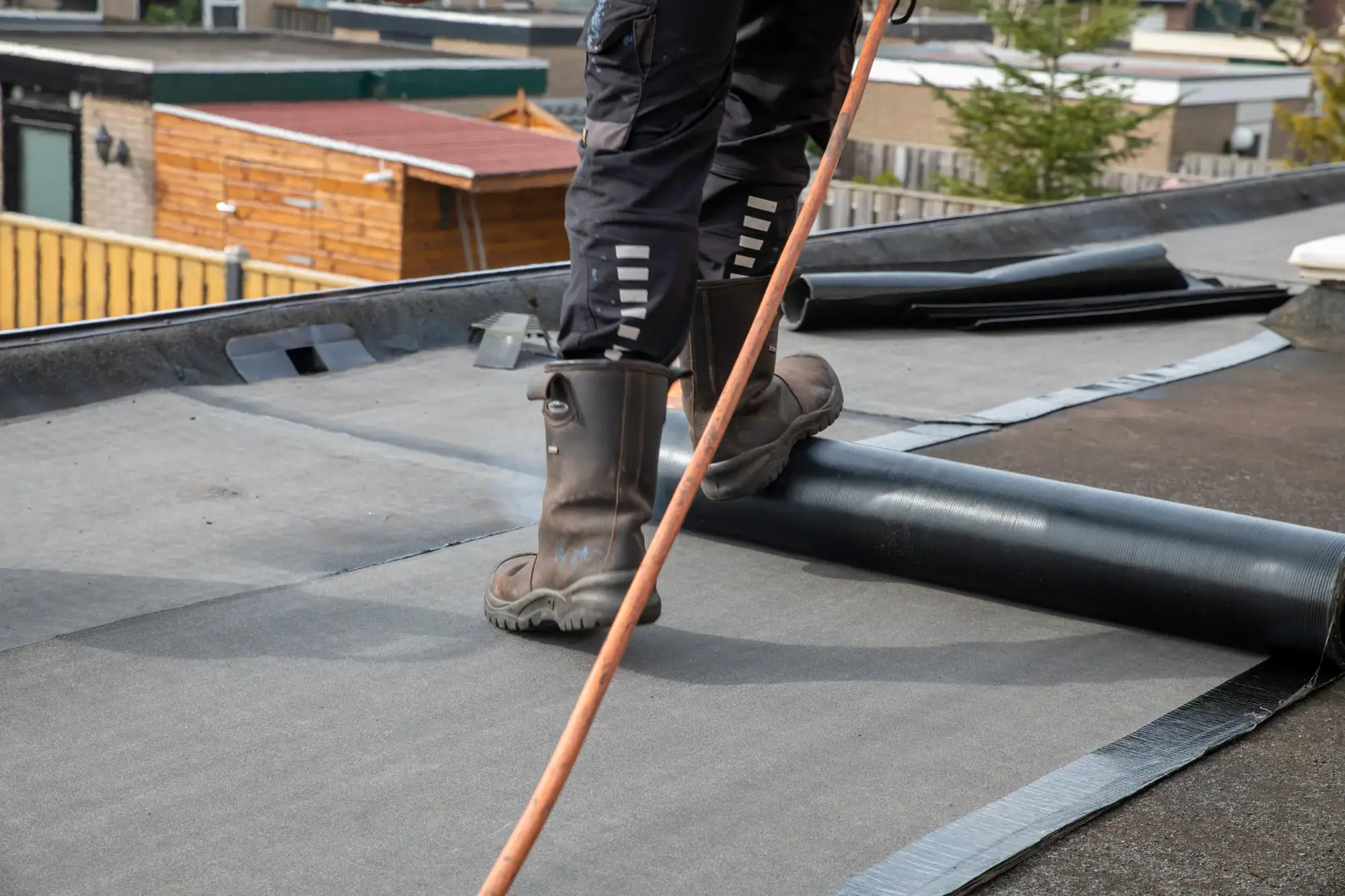
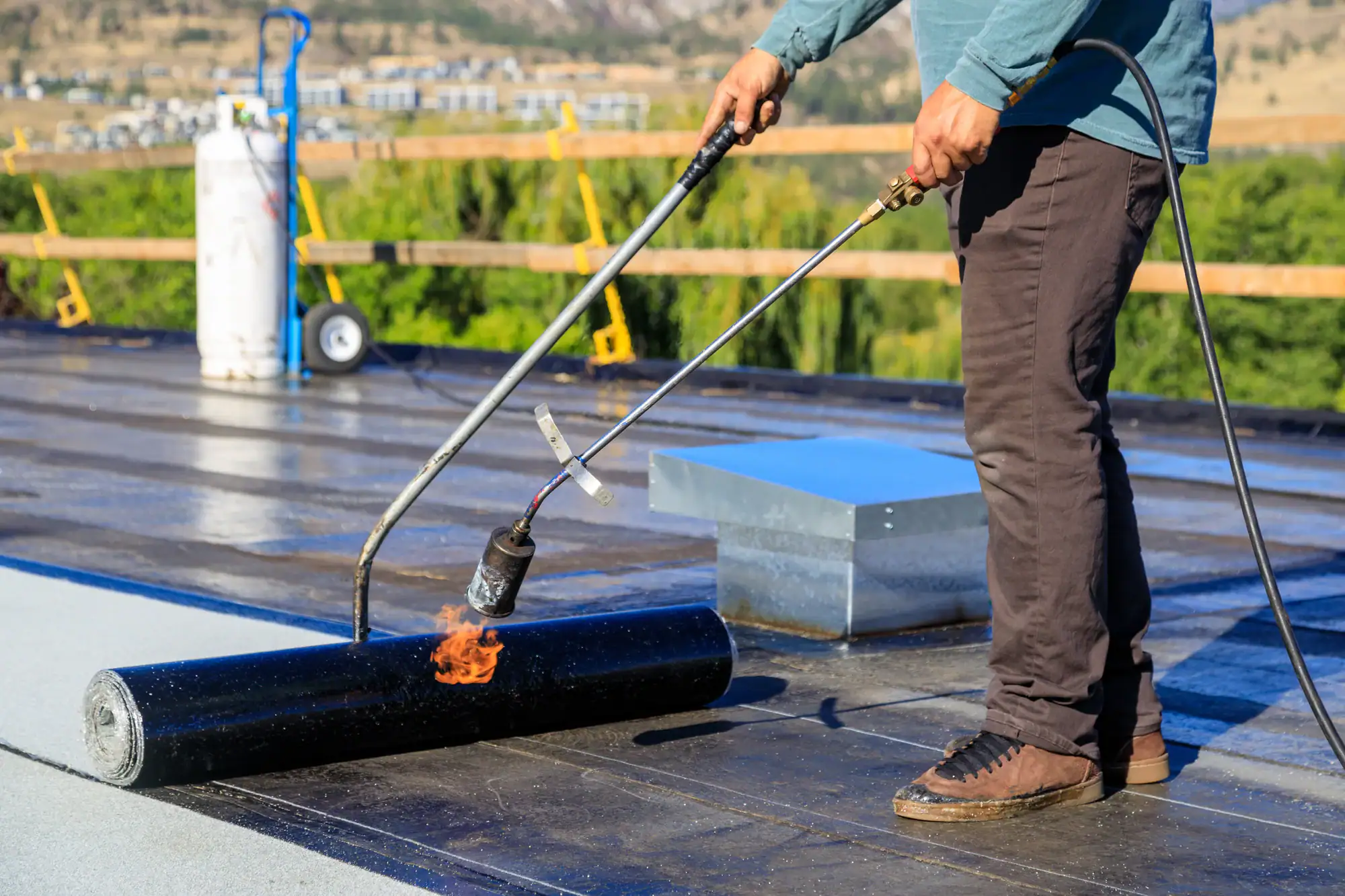
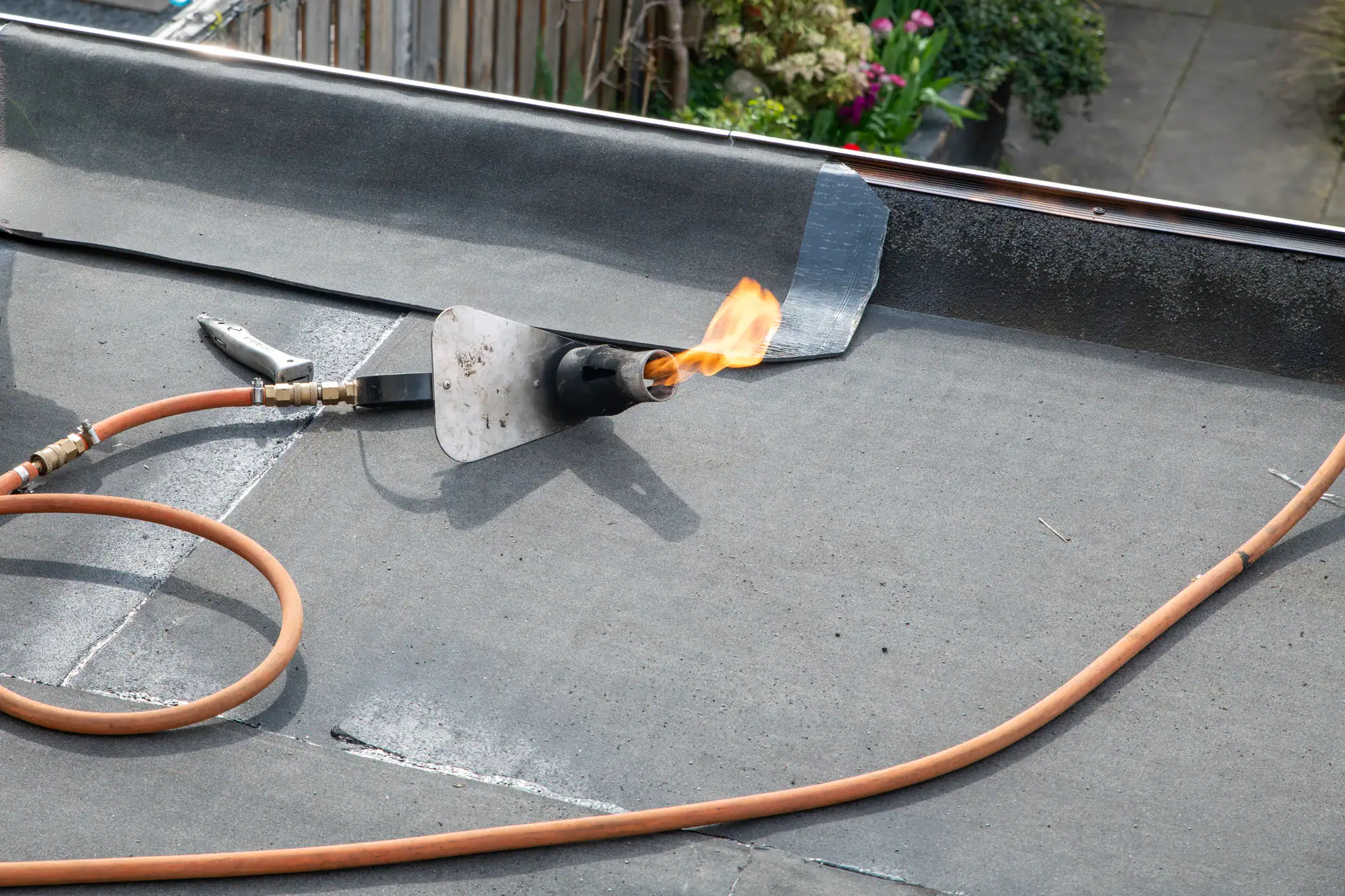
The installation itself starts with a full tear-off of the existing membrane, followed by a deck inspection. If there’s damage underneath — rotted sheathing, compromised insulation, areas where ponding water has done its work — we address that before anything new goes down. Then comes the membrane installation: heat-welded or fully adhered, with proper flashing at every penetration and perimeter edge.
Fall tends to be the busiest season for this work in Dover, with property managers and commercial owners scheduling replacements before winter sets in. If you’re dealing with active damage after a storm, we also offer emergency repair to stop the bleeding while a full scope gets sorted out.

Ready to get started?
Not every flat roof system is the right fit for every building, and Dover’s property mix makes that especially relevant. The city has older commercial buildings along the US 13 corridor that may still be running on aging modified bitumen — torch-down systems that were installed 15 or 20 years ago and are approaching the end of their useful life. It has mid-century institutional buildings, government facilities near the Capitol, and residential homes in neighborhoods like Kent Acres and Rodney Village with flat sections over garages or additions. Each one has different needs.
TPO roofing membrane is the most common choice for Dover’s commercial properties right now, and for good reason. It reflects up to 84 percent of solar load, which matters for large buildings managing HVAC costs through Delaware’s humid summers. The seams are heat-welded, which makes them more resistant to the kind of moisture intrusion that 45 inches of annual rainfall can cause.
EPDM rubber roofing is a strong option for buildings that experience significant thermal movement — its flexibility holds up well through Delaware’s freeze-thaw winters, and it has a proven track record with lifespans reaching 20 to 30 years when installed correctly. Modified bitumen, or torch-down roofing, remains a viable choice for certain applications, particularly on smaller residential flat sections where the budget and scope don’t call for a full membrane system upgrade.
We also assist with insurance claims for storm damage — a relevant service in Dover, where hail and high winds hit the commercial corridor every storm season. If you’ve got damage and an adjuster is involved, having a contractor who can document the scope correctly makes a real difference in what you actually recover.

Yes, in most cases. Dover is an incorporated city with its own building department, which means roofing projects within city limits go through Dover’s permitting process — not Kent County’s. A permit is generally required when you’re replacing more than 25 percent of the roof sheathing, or when you’re changing the material type entirely, such as switching from an older modified bitumen system to a TPO or EPDM membrane.
This matters more than people often realize. An unpermitted roofing job can create problems at resale, complicate insurance claims, and in some cases void the manufacturer’s warranty on the new membrane. When you work with us, the permitting process is handled as part of the project — not something you have to chase down separately. If you’re unsure whether your specific job requires a permit, the free estimate conversation is a good place to start sorting that out.
The honest answer is that it depends on how much of the membrane is compromised and what condition the deck underneath is in. A roof that has localized damage — a failed seam near a penetration, a small area of membrane that’s cracked or lifted — is often a good repair candidate if the rest of the system is in reasonable shape. But if the membrane is approaching the end of its lifespan, if there’s widespread cracking or blistering, or if water has been sitting on the roof long enough to damage the insulation or deck below, repair starts to become a short-term fix on a long-term problem.
In Dover, the flat terrain along the St. Jones River basin means ponding water is a more common issue than in communities with more natural slope. Water that sits for more than 48 hours after a rainstorm is doing damage — to the membrane surface, to the seams, and eventually to the structure below. If you’ve noticed water pooling on your roof or water stains appearing on interior ceilings, a professional inspection is the right first step. That’s what the free estimate is for — to give you an honest read on where things stand, not to push you toward the most expensive option.
Delaware’s climate puts a few specific demands on flat roof membranes. You’ve got humid summers that stress seams and adhesives, freeze-thaw cycling in winter that causes materials to expand and contract repeatedly, and around 45 inches of annual rainfall that doesn’t let up. No single material is perfect for every situation, but here’s how the main options break down in this environment.
TPO is the most popular choice for commercial properties right now, largely because its heat-welded seams hold up well against moisture intrusion and its reflective surface helps manage heat load during Delaware summers. EPDM rubber roofing is the go-to for buildings that experience significant thermal movement — its flexibility means it handles freeze-thaw cycles better than more rigid systems, and it has a long track record with lifespans of 20 to 30 years when properly installed. Modified bitumen is a reasonable option for smaller residential flat sections, though older torch-down systems on Dover’s commercial strip properties are increasingly reaching end-of-life and being replaced with TPO or EPDM. The right call depends on your building type, budget, and what’s already there — that’s the conversation to have during an estimate.
Ponding water — defined in the roofing industry as water that remains standing more than 48 hours after rain — is the most common flat roof failure driver, and Dover’s geography makes it a particular concern. The city sits on low, flat terrain along the St. Jones River basin with very little natural slope to help water move off structures. When a flat roof’s drainage system is undersized, clogged, or was never designed properly in the first place, water has nowhere to go.
The damage compounds over time. Standing water accelerates the degradation of the membrane surface, promotes algae and mold growth, adds significant structural load (water weighs over 5 pounds per square foot), and in winter, that pooled water freezes and creates ice that stresses seams and edges. It can also void manufacturer warranties — most membrane manufacturers specify that ponding water conditions are excluded from coverage. If you’re seeing water pool on your roof after rain and it’s still there two days later, that’s not a cosmetic issue. It’s a drainage problem that will eventually become a structural one, and it’s worth having someone look at before the next storm season hits.
Yes, and it’s a service we use regularly in Dover. The city sees its share of high-wind events, hailstorms, and heavy rain from nor’easters and tropical remnants every year. After a storm, the claims process can feel overwhelming — especially when you’re not sure how to document the damage in a way that accurately reflects what needs to be repaired or replaced.
We assist Dover property owners and commercial managers with the insurance claims process, from documenting the damage to working through the scope of repairs with adjusters. This matters because a lowballed claim that only covers a patch repair may leave the underlying membrane damage unaddressed — which means you’re dealing with the same problem again in a year or two. Having a contractor involved early who can clearly communicate what the storm actually did to the roof, and what a correct repair or replacement actually requires, helps ensure the claim reflects the real scope of the work. If you’ve recently had storm damage and haven’t filed yet, the free estimate is a good starting point for understanding what you’re working with.
For most residential flat roof sections — a garage roof, an addition, or a low-slope section of a home in Kent Acres or Rodney Village — the installation itself typically runs one to two days once materials are on site and permits are in order. Larger commercial properties along the Dupont Highway corridor or near the Capitol Complex can take longer depending on the square footage, the number of roof penetrations, and the condition of the deck once the old membrane is removed.
The permitting step is worth factoring into your timeline. Dover’s city building department processes permit applications before work can begin, and turnaround times vary depending on the time of year. Fall is the busiest season for roofing in Dover, with commercial property managers and building owners scheduling replacements before winter. If you’re working against a deadline — a lease renewal, a property sale, or a PCS move timeline if you’re connected to Dover Air Force Base — it’s worth starting the estimate and permitting conversation as early as possible. Emergency repair is available for active leaks that can’t wait, which can buy time while the full project scope gets worked out.
Other Services we provide in Dover