Why Finding the Right Fiberglass Roofer Matters
When you search for fiberglass roofers near me, you are looking for specialized contractors who install and repair Glass Reinforced Plastic (GRP) roofing systems—a seamless, durable solution that protects your home for 30 years or more. For homeowners across Kent and Sussex County, DE, finding trusted local roofing services ensures your investment is protected for decades to come. These local experts can deliver watertight, long-lasting protection customized to Kent and Sussex County, DE’s unique weather challenges.
Quick Answer: How to Find Quality Fiberglass Roofers Near You
- Search locally – Use “fiberglass roofers Dover DE” or “fiberglass roofers Smyrna DE” for area-specific results
- Verify credentials – Check for state licensing, insurance, and manufacturer certifications like GAF Master Elite
- Read reviews – Look for ratings of 4.8+ out of 5 and detailed customer testimonials
- Ask for references – Request addresses of completed projects in your area
- Get multiple quotes – Compare pricing, warranties, and project timelines
Fiberglass roofing systems offer superior durability because they create a seamless, joint-free surface that eliminates the weak points found in traditional roofing materials. Unlike asphalt shingles that can lift in high winds or metal roofs that can corrode over time, properly installed fiberglass forms a watertight seal that resists Kent and Sussex County, DE’s harsh weather—from summer storms to winter freeze-thaw cycles.
The key to success isn’t just the material—it’s the installer. According to industry data, fiberglass roofs can last 30 years or more when installed by qualified professionals, but improper installation can lead to premature failure, costly repairs, and voided warranties. That’s why choosing an experienced, local contractor who understands your area’s specific climate challenges is critical.
The quality difference shows in the numbers. Most fiberglass roof repairs cost between $200-$400 and can be completed in a single day when caught early. However, poorly installed roofs may require complete replacement—a much larger investment that could have been avoided with proper workmanship from the start.
I’m Richard McCain, owner of First State Roofing & Exteriors, and in my 20+ years serving Kent and Sussex County, DE homeowners, I’ve seen how critical it is to connect with skilled fiberglass roofers near me who truly understand local conditions and deliver quality craftsmanship. This guide will walk you through everything you need to know to make an informed decision and protect your home for decades to come.
Ready to get started? First State Roofing & Exteriors gives free estimates. Call (302) 222-4065 for a free inspection with experienced professionals who put your home first.
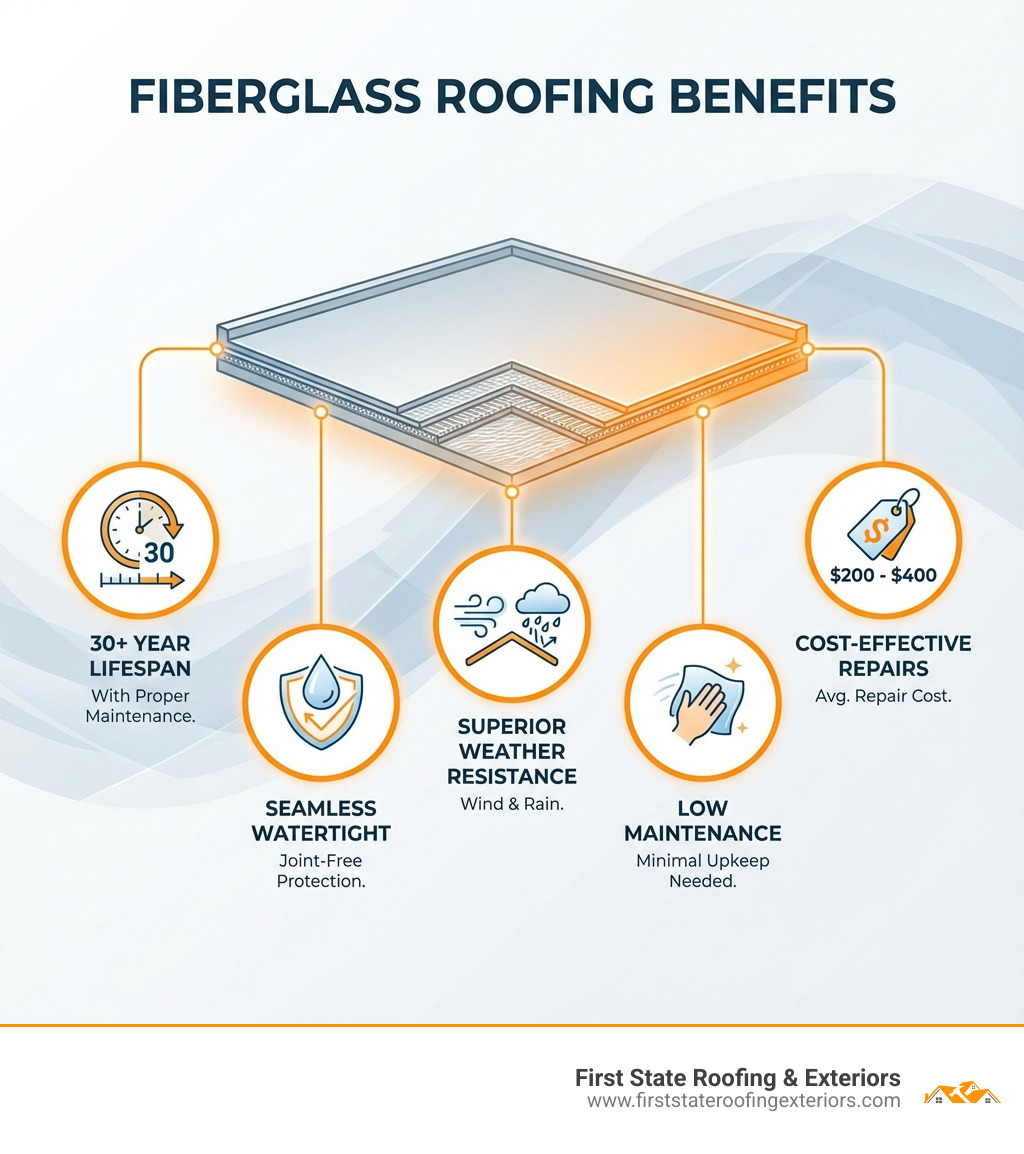
The Best Benefits of a Fiberglass Roof
When considering a new roof or a replacement, understanding the advantages of different materials is key. Fiberglass roofing, also known as Glass Reinforced Plastic (GRP) roofing, stands out for several compelling reasons, offering a robust and long-lasting solution for your Kent and Sussex County, DE home.
Durability
Fiberglass roofing is exceptionally durable, making it a top contender for protecting your property. It’s constructed from a polymer plastic matrix reinforced with glass fibers, creating a material that is both strong and resilient. The primary benefit here is the creation of a seamless, joint-free surface. Unlike traditional roofing materials that have multiple seams where water can penetrate, a properly installed GRP roof forms a single, continuous membrane. This inherent design eliminates weak points, providing a superior watertight seal that can withstand the elements for decades.
Lifespan
One of the most attractive benefits of fiberglass roofing is its impressive lifespan. With proper installation and occasional maintenance, a fiberglass roof can easily last for 30 years or more. Some sources even suggest a lifespan of up to 50 years with diligent care. This significantly outlasts many traditional roofing materials, offering homeowners a long-term investment. A key component to this longevity is the ‘gel-coat’—a protective layer applied during installation. Reapplying a fresh coat of gel-coat halfway through its lifespan can extend the roof’s durability by another 20 years, pushing its total life expectancy even further.
Weather Resistance
Kent and Sussex County, DE weather can be unpredictable, from humid summers to harsh winters with freezing rain and snow. Fiberglass roofing is built to resist these challenges. It’s highly resistant to corrosion and rust, common issues with some metal roofing options, and can withstand high winds and heavy rain without compromise. The material is also UV stable, meaning it resists degradation from prolonged sun exposure, preventing cracking and premature aging. This superior weather resistance ensures your home remains protected year-round, giving you peace of mind.
Low Maintenance
Beyond its durability and lifespan, fiberglass roofing is remarkably low maintenance. Once properly installed, it requires minimal upkeep. Its smooth, non-porous surface makes it easy to clean, typically only needing occasional washing to remove dirt or debris. Furthermore, fiberglass naturally inhibits the growth of moss and algae, which can be persistent problems for other roofing types, saving you time and effort on routine cleaning and treatment. This “set it and forget it” aspect makes fiberglass an appealing choice for busy homeowners.
Is It Time for a Repair? Common Fiberglass Roof Problems
Even the most durable fiberglass roof can encounter issues over its long lifespan, especially if installation was less than perfect or if it’s faced extreme conditions. Recognizing the signs of trouble early can save you significant time and money. For any significant damage, we encourage you to consider professional roof replacement services to ensure the longevity and safety of your home.
Visible Damage
- Cracks or Crazing on the Surface: These are often the most obvious signs of wear. Fine, hairline cracks (crazing) can appear over time due to UV exposure or thermal expansion and contraction. Larger cracks can result from impact or structural movement. These cracks compromise the watertight seal and need immediate attention.
- Blisters or Bubbles: These can form when moisture is trapped beneath the fiberglass laminate during installation or if there’s a manufacturing defect. Over time, these can rupture, creating entry points for water.
- Punctures or Holes from Impact: Falling branches, dropped tools, or even heavy foot traffic can cause localized punctures or holes, directly compromising the roof’s integrity.
Leaks and Water Stains
The most alarming sign of a roofing problem is, of course, a leak.
- Unexplained Damp Patches on Interior Ceilings: If you notice discoloration or dampness on your ceilings, especially after rain, it’s a clear indicator of a leak.
- Water Stains on Walls: Leaks aren’t always directly overhead; water can travel along beams and rafters before manifesting as a stain on a wall.
- Musty Odors in Upper Rooms: Persistent dampness can lead to mold and mildew growth, producing a distinct musty smell, even if a visible leak hasn’t yet appeared. A common leak area for GRP roofs is flashings into an abutting wall. If not sealed properly or applied to dusty brickwork, a small gap can form, allowing water run-off to enter the roofing structure.
Topcoat Deterioration
The gel-coat (topcoat) is crucial for UV protection and aesthetics.
- Flaking or Peeling Gel-Coat: This indicates the topcoat is failing and exposing the fiberglass laminate underneath to the elements, accelerating degradation.
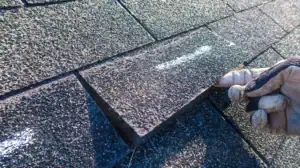
- A Chalky Residue When Touched: This is a sign of UV degradation, where the gel-coat is breaking down.
- Significant Color Fading: While some fading is normal over decades, rapid or severe color loss can also point to a failing topcoat.
Structural Red Flags
These issues often point to deeper problems that require professional assessment.
- Sagging or Dipping Areas of the Roof: This could indicate an issue with the underlying deck or inadequate support, leading to water pooling.
- Gaps Forming at Flashings or Wall Abutments: Flashings are critical for sealing the edges of the roof where it meets walls or other structures. Gaps here are prime entry points for water.
- Issues from Expansion and Contraction: While fiberglass is designed to handle some thermal movement, extreme conditions or improper installation can lead to stress, causing cracks or delamination. Ensuring the installation factors in expansion and contraction is vital, as is reinforcing joints and trims correctly.
Most fiberglass roof repairs can be performed in one day, unless the roof is severely damaged, which may require more than one visit. Fibreglass roofs are not any more or less difficult to repair than other types of roofs; each requires a specific technique that a repair technician can determine. Leaks are typically repaired by adding a sealer after careful cleaning and scraping of the old sealer to create a watertight seal. If you need your fiberglass roof repaired immediately, many companies perform emergency repairs. Mention the need for emergency repairs when filling out a quote form, but be aware that contractors may charge premium rates for work outside normal business hours.
Your Guide to Finding and Vetting Fiberglass Roofers Near Me
Finding a reputable fiberglass roofer near me in Dover DE or Smyrna DE is a crucial step in ensuring your roofing project is a success. We understand you want someone reliable, skilled, and trustworthy.
How to Find Reputable Fiberglass Roofers Near Me
- Online Search: Start with a targeted search. Phrases like “fiberglass roofing Dover DE,” “fiberglass roof repair Smyrna DE,” or simply “fiberglass roofers near me” on Google Maps or other search engines will yield local results. Check local directories and review sites for companies operating in your area.
- Ask for Referrals: Word-of-mouth is still one of the most powerful tools. Ask neighbors, friends, family, or local community groups for recommendations. A personal endorsement often comes with valuable insights into a contractor’s work ethic and quality.
Vetting Your List of Potential Contractors
Once you have a list, it’s time to vet them thoroughly. This process is about ensuring you hire professionals who are competent, reliable, and adhere to industry best practices.
- Check Credentials:
- Verify State Licensing and Full Insurance Coverage: This is non-negotiable. A licensed contractor adheres to state regulations, and comprehensive insurance protects both you and their workers in case of accidents or damage.
- Look for Manufacturer Certifications: Certifications like GAF Master Elite status indicate a contractor has met rigorous standards set by leading manufacturers. This often means they’re highly trained, use quality materials, and can offer improved warranties.
- Read Reviews: Online reviews offer a window into a contractor’s reputation.
- Look for Consistently High Ratings: A strong track record is often indicated by an average rating of 4.8 out of 5 stars or higher across multiple platforms.
- Read Detailed Testimonials: Don’t just look at the star rating. Read what customers say about communication, professionalism, cleanliness, and the quality of the finished work. Look for patterns in positive and negative feedback.
- Ask to See a Portfolio of Past Work: A reputable roofer should be proud to show you examples of their fiberglass roofing projects, ideally in your local area.
Key Questions to Ask Before You Hire
Before committing to any fiberglass roofers near me, prepare a list of questions. Their answers will help you gauge their expertise, professionalism, and suitability for your project.
- How many years of experience do you have with fiberglass roofing? Experience matters, especially with specialized materials like fiberglass. Look for contractors with a proven history in GRP installations.
- Can you provide local references and addresses of past projects? This allows you to see their work and speak to previous clients.
- What warranty do you offer on your workmanship and the materials? A strong warranty shows confidence in their work and the materials they use. Understand the terms and duration of both.
- What is your process for protecting my property during installation? Professional roofers will take steps to protect your landscaping, siding, and other property features from debris and damage.
- Do you handle permits and debris removal? A full-service contractor will manage all necessary permits and ensure a thorough cleanup after the project is complete.
Understanding Costs, Timelines, and the DIY Question
When planning your fiberglass roofing project, understanding the financial investment, the expected timeline, and whether you can tackle any part of it yourself are critical considerations.
Factors Influencing Cost
The cost of fiberglass roof installation or repair isn’t a one-size-fits-all figure. Several factors play a significant role:
- Roof Size and Complexity: Larger roofs naturally require more materials and labor. Complex roof designs with multiple angles, skylights, or chimneys will also increase the cost due to the intricate work involved.
- Accessibility: If your roof is difficult to access, requiring special equipment or extensive safety measures, this can add to the overall price.
- Quality of Materials (Resin, Topcoat): Like any product, there’s a range of quality for fiberglass resins and topcoats. Higher-grade materials offer better durability and aesthetics but come at a premium.
- Extent of Prep Work Needed: If the existing roof deck needs extensive repairs, cleaning, or modification before the fiberglass can be applied, this will impact the total cost.
Typical Repair vs. Installation Costs
- Minor Repairs: For fiberglass roof repairs in Dover DE or Smyrna DE, most minor issues can be addressed relatively quickly. These repairs often cost between $250 and $500 and can typically be completed in one day, unless the damage is severe. These smaller fixes are crucial for maintaining the roof’s integrity and extending its life.
- Full Installation/Replacement: A complete fiberglass roof installation or replacement is a larger investment. These projects are typically priced per square foot and can vary widely based on the factors mentioned above. While the initial outlay might be higher than some traditional materials, the superior lifespan and low maintenance of fiberglass often make it a more cost-effective choice in the long run.
The Dangers of DIY
While a DIY project might seem like a way to save money, fiberglass roofing requires professional installation for several compelling reasons:
- Fiberglass Work Requires Specific Skills and Safety Gear: Working with fiberglass resins involves precise mixing ratios, proper application techniques, and specialized safety equipment. Incorrect mixing can lead to a brittle or improperly cured roof, while exposure to fiberglass dust or chemicals can cause severe skin rashes and respiratory issues.
- Risk of Improper Mixing or Application Leading to Failure: A poorly installed fiberglass roof will fail prematurely, leading to leaks, delamination, and costly repairs that far outweigh any initial savings from a DIY attempt. Professionals ensure the material is applied correctly for optimal performance and longevity.
- Professional Installation Ensures Warranty Validity: Most fiberglass material manufacturers and reputable roofing contractors offer warranties on their products and workmanship. These warranties are typically voided if the installation is not performed by a certified professional.
While a properly placed tarp can help redirect water temporarily during an active leak, professional repair is always recommended to fix the root cause and ensure lasting protection.
How Fiberglass Compares to Other Common Roofing Materials
Choosing the right roofing material for your home in Kent and Sussex County, DE involves weighing various factors, including cost, lifespan, maintenance, and how well it stands up to our local weather. Let’s see how fiberglass roofing stacks up against other popular options.
| Material | Lifespan | Average Cost (Initial) | Maintenance Needs | Weather Resistance |
|---|---|---|---|---|
| Fiberglass (GRP) | 30-50+ years | Moderate to High | Very Low | Excellent (watertight, UV, corrosion, wind) |
| Asphalt Shingles | 15-30 years | Low to Moderate | Moderate (inspections, repairs) | Good (can lift in high winds, less UV resistant) |
| Metal Roofing | 40-70+ years | High | Low | Excellent (wind, fire, some denting) |
Fiberglass vs. Asphalt Shingles
Asphalt shingles are a very common and affordable choice for many homes. However, fiberglass offers distinct advantages:
- Lifespan: Fiberglass boasts a much longer lifespan (30-50+ years) compared to asphalt shingles (15-30 years). This means fewer replacements over the life of your home.
- Waterproofing: Fiberglass creates a seamless, watertight membrane, offering superior protection against leaks. Asphalt shingles, with their many overlaps, are more susceptible to water penetration, especially in heavy rains or ice dams.
- Maintenance: Fiberglass requires very little maintenance, often just an occasional cleaning. Asphalt shingles may need more frequent inspections for curled, cracked, or missing shingles.
- Aesthetics: While asphalt shingles come in various colors, fiberglass offers a smooth, modern aesthetic that can be customized with different topcoat colors.
Fiberglass vs. Metal Roofing
Metal roofs are known for their durability and longevity, similar to fiberglass, but they have different characteristics:
- Durability & Lifespan: Both are highly durable, with metal roofs often lasting 40-70+ years and fiberglass 30-50+ years.
- Seamless vs. Panelled: Fiberglass provides a truly seamless surface, eliminating the joints that metal panels have. This can be an advantage for absolute watertightness.
- Noise: Metal roofs can be noisy during heavy rain or hail, while fiberglass offers a quieter surface.
- Aesthetics: Metal roofs offer a distinct, often industrial or modern look. Fiberglass can blend more seamlessly with various architectural styles, particularly for flat or low-slope applications.
Fiberglass vs. EPDM (Rubber) Roofing
EPDM is another popular choice for flat or low-slope roofs, offering flexibility.
- Rigidity and Puncture Resistance: Fiberglass is more rigid and has greater puncture resistance than EPDM, making it ideal for flat roofs that might experience occasional foot traffic or need to support equipment.
- Seams: While EPDM typically comes in large sheets to minimize seams, fiberglass creates a completely seamless system when properly installed.
- Repairability: Both are repairable, but fiberglass can be patched and recoated effectively.
What Maintenance is Required for a Fiberglass Roof?
One of the standout benefits of fiberglass roofing is its low maintenance requirements. However, “low maintenance” doesn’t mean “no maintenance.” A little proactive care can significantly extend the life of your fiberglass roof, ensuring it performs optimally for decades.
Regular Checks and Cleaning
We recommend performing visual inspections of your fiberglass roof at least once or twice a year, ideally in the spring and fall. Look for any signs of:
- Debris Accumulation: Clear away leaves, branches, and other debris that can accumulate and trap moisture.
- Surface Integrity: Check for any new cracks, blisters, or signs of topcoat deterioration (like flaking or chalkiness).
- Drainage: Ensure gutters and downspouts are clear and functioning correctly to prevent water from pooling on the roof.
- Flashings: Pay close attention to the areas where the fiberglass meets walls, skylights, or other protrusions. These are common points where issues can arise if seals degrade.
Routine cleaning is generally simple. A soft brush or pressure washer (used carefully on a low setting) can remove dirt, grime, and any superficial mildew. The smooth surface of fiberglass naturally resists moss and algae growth, but occasional cleaning will keep it looking its best.
Addressing Minor Issues Promptly
If you do notice any minor cracks or small areas of damage during your inspections, it’s crucial to address them promptly. Small repairs, such as applying a specialized sealant or patch, are much easier and less costly to fix than allowing them to worsen into major leaks. Most fiberglass roof repairs can be completed in a day for a few hundred dollars if caught early.
The Role of Gel-Coat and Professional Inspections
As mentioned earlier, the ‘gel-coat’ is a vital protective layer. While it’s incredibly durable, it can eventually show signs of wear, especially after 20-25 years. Applying a fresh coat of gel-coat halfway through its lifespan can extend the roof’s life by another two decades.
For this reason, we recommend periodic professional inspections, perhaps every 5-10 years. A qualified fiberglass roofer near me can assess the condition of your roof, identify any potential issues that might not be obvious to the untrained eye, and advise on whether a gel-coat refresh or any other preventative maintenance is needed. This proactive approach ensures your fiberglass roof continues to perform as intended, protecting your home for its full expected lifespan, which, with proper maintenance, can reach 50 years or more.
Lifespan of a Fiberglass Roof
The lifespan of a fiberglass roof is one of its most compelling advantages, often making it a superior long-term investment compared to many other roofing materials. When installed correctly by experienced fiberglass roofers near me and maintained reasonably, you can expect exceptional longevity.
Decades of Protection
A professionally installed fiberglass roof has a life expectancy of at least 30 years. However, this is often a conservative estimate, as a well-maintained GRP system can last for 50 years or more. This impressive durability is a testament to the material’s inherent strength and resistance to degradation from weather and UV exposure.
The Impact of Gel-Coat
A key factor in achieving the maximum lifespan for a fiberglass roof is the integrity of its ‘gel-coat’—the protective top layer. This coat provides UV protection and contributes significantly to the roof’s aesthetic appeal and resistance to the elements. If the gel-coat shows signs of wear or degradation after 20-25 years, a fresh application can dramatically extend the roof’s life. By recoating the roof with a new gel-coat halfway through its lifespan, you can add another 20 years of robust protection, effectively pushing the total lifespan towards that 50-year mark.
Why Professional Installation is Key
It’s crucial to emphasize that these impressive lifespan figures are contingent on professional installation. Improper mixing of resins, inadequate surface preparation, or poor application techniques can severely compromise the roof’s integrity and drastically shorten its lifespan. That’s why choosing qualified fiberglass roofers near me is paramount to realizing the full benefits and longevity that fiberglass roofing offers.
Conclusion: Secure Your Home with a Local Fiberglass Roofing Expert
We’ve covered a lot of ground today, from the exceptional benefits of fiberglass roofing to recognizing when it needs attention, and most importantly, how to find the right fiberglass roofers near me in Dover DE or Smyrna DE.
To recap, fiberglass roofing is a durable, long-lasting, and low-maintenance choice for your home, offering a seamless, watertight barrier that can protect your property for 30 to 50 years with proper care. It stands up remarkably well against Kent and Sussex County, DE’s varied weather, outperforming many traditional materials in terms of longevity and resistance to leaks. While minor repairs are typically quick and affordable, the success of your project—whether installation or repair—depends entirely on hiring a skilled, reputable, and local professional. Attempting DIY fiberglass work is risky and can lead to costly failures and voided warranties.
As a family-owned business with deep roots in Kent and Sussex County, DE, First State Roofing & Exteriors is dedicated to providing transparent, high-quality service with integrity. We believe in protecting and enhancing your home with craftsmanship that lasts.
First State Roofing & Exteriors gives free estimates. For a trusted roofer in Seaford, DE and the surrounding areas, call us today at (302) 222-4065 for a free inspection. Find out why we are the preferred roofer near you for all your exterior needs.