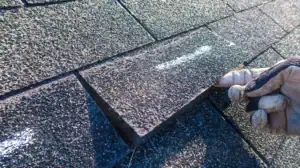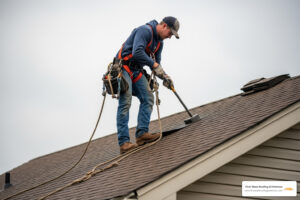

A nor’easter just came through. Maybe it was a tropical storm remnant pushing up the coast. Either way, you’ve got water coming in, shingles on the lawn, or a ceiling stain that wasn’t there yesterday — and you’re not sure what to do first.
That moment of uncertainty is exactly when mistakes happen. Homeowners call the wrong contractor, skip the documentation their insurance company needs, or assume the damage is minor enough to wait. None of those choices end well.
Here’s a clear-headed look at what actually needs to happen first — and why getting it right in Kent County specifically requires a little more caution than you might expect.
What to Do Immediately After Storm Roof Damage in Kent County, DE
The first thing to understand is that your goal in the first hour isn’t to fix the roof — it’s to stop the damage from getting worse. Kent County averages 45 inches of rain annually, well above the national average, and the coastal humidity here means moisture moves fast once it gets inside a structure. A small leak left unaddressed for 48 hours can work its way into insulation, wall framing, and flooring in ways that cost far more to fix than the roof damage itself.
Start inside the house. If water is actively coming in, move furniture, valuables, and electronics out of the affected area. Use buckets or towels to manage what you can. Then take photos and video of everything — the ceiling, the walls, any visible damage from the attic if you can safely access it. That documentation is not just for your peace of mind; your insurance company will ask for it, and having timestamped photos taken immediately after the storm is one of the most valuable things you can do for your claim.
Do not climb onto the roof yourself. A wet, wind-damaged roof is genuinely dangerous, and the risk of making the damage worse — or getting hurt — isn’t worth it.
Should You Call Your Insurance Company or a Roofer First?
This is one of the most common questions we hear after a storm, and the answer might surprise you: call a trusted local roofing contractor first.
Most homeowners assume the insurance company should be the first call. It feels like the responsible move. But here’s the practical reality — your insurer is going to send an adjuster, and that adjuster’s job is to assess the damage as it exists when they arrive. If you haven’t had a professional document the full extent of the damage beforehand, you’re going into that assessment without your own record of what happened.
We can do two things simultaneously: perform emergency stabilization to stop the damage from spreading, and document everything in a way that supports your insurance claim. That documentation — photos, written assessments, material notes — is exactly what adjusters use to determine payout amounts. Going in without it often means the claim gets undervalued.
There’s also a timing issue worth knowing about. Most homeowners insurance policies include a requirement to mitigate damage — meaning you’re expected to take reasonable steps to prevent further loss after an incident. If you wait several days before addressing a known roof breach, your insurer may use that delay as grounds to reduce what they’ll cover. Emergency tarping, for example, is typically a reimbursable expense when done promptly and documented correctly.
Once we’ve assessed and stabilized the damage, then call your insurance company with your documentation in hand. You’ll be in a much stronger position. We work directly with insurance providers on storm damage claims and can walk you through the process from the first call to final repair — that’s a service we’ve been providing across Kent County for over 22 years, and it makes a real difference in how claims resolve.
How to Spot Storm-Chaser Contractors in Kent County Before It’s Too Late
After every significant weather event in Kent County — whether it’s a nor’easter coming off the Atlantic or a tropical storm remnant pushing through Dover — out-of-state roofing contractors show up. They drive through neighborhoods, knock on doors, and offer free inspections. They’re friendly. They move fast. And some of them will cause you serious problems.
This isn’t a rare occurrence or an exaggeration. It’s a well-documented pattern in the mid-Atlantic storm corridor, and Kent County sees it reliably after major weather events. The tactics vary, but the common thread is pressure: sign today, deposit required upfront, deal expires soon. Some of these contractors have been documented intentionally damaging roofs during their “inspection” to manufacture repair needs. Others take a deposit, do substandard work, and are unreachable when problems surface weeks later.
The contractors who show up at your door the morning after a storm are almost never the ones you want on your roof.
Here’s what to verify before you let anyone onto your property. Delaware doesn’t issue a traditional state roofing license — contractors are required to obtain a Construction Contractors Certificate through the Delaware Department of Labor, but the bar for legal operation is lower than most homeowners assume. That means the credential check falls on you. Ask for proof of workers’ compensation insurance, a Delaware business registration, and verifiable local reviews. A Smyrna or Dover address with years of Google reviews and BBB accreditation is a very different thing from a contractor who appeared in your neighborhood this week.
We’ve been based in Smyrna for over two decades. Our reviews on Google and Facebook are public, our BBB accreditation through the Milford chapter is verifiable, and we’re not going anywhere after the job is done. That’s the difference between a local contractor and a storm chaser — and in a post-storm market, it’s the most important distinction you can make.
Flat Roof Repair and Chimney Flashing: The Two Emergency Repairs Kent County Homeowners Overlook
Not all emergency roof repairs look the same. Blown-off shingles are obvious — you can see them in the yard. But two of the most common sources of serious post-storm water intrusion in Kent County are easy to miss until they’ve already caused significant damage: flat roof failures and chimney flashing leaks.
Kent County has a substantial inventory of older homes in Dover and surrounding communities, many of which include flat or low-slope roof sections — over garages, additions, or commercial-style structures. It also has plenty of chimneys, and chimney flashing is one of the most failure-prone areas on any roof, especially after wind events.
How to Know If Your Flat Roof Needs Emergency Repair
Flat roofs fail differently than pitched shingle roofs, and the warning signs aren’t always dramatic. After a heavy rain event, the most telling indicator is ponding water — water that remains on the roof surface more than 48 hours after precipitation ends. That’s a sign the drainage is compromised or the membrane has begun to fail, and in Kent County’s climate, it compounds quickly.
Other signs to watch for include visible bubbling or blistering in the membrane surface, soft spots when the roof is accessed, water stains on interior ceilings directly below the roof deck, and any visible tears, punctures, or separation at seams or edges. Wind can lift membrane edges in ways that aren’t visible from the ground, so a professional inspection after a significant storm is worth doing even if nothing obvious is showing inside the building.
Flat roof repair requires a different skill set than shingle work. The two dominant commercial-grade membrane systems — TPO and EPDM — each have specific repair protocols, and improper patching of either can void manufacturer warranties and create secondary failure points. We’re certified in both systems, which matters when the roof over a commercial property or a Kent County home addition needs more than a temporary fix.
The cost of flat roof repair varies depending on the extent of membrane damage, the system type, and whether the underlying deck has been compromised by moisture infiltration. What we can tell you is that catching it early — before water has worked its way into the decking — is the difference between a manageable repair and a full membrane replacement. If you’re not sure whether your flat roof came through the last storm intact, a documented inspection is the right first step.
Chimney Flashing Repair: Why It’s One of the Most Common Sources of Roof Leaks
Chimney flashing is the metal barrier that seals the joint between your chimney and the roof surface around it. It’s one of the most vulnerable points on any roof, and it’s one of the first things to fail in high-wind events — which makes it a frequent culprit in post-storm leaks that homeowners don’t immediately connect to the storm.
The problem is that flashing failures often don’t show up as obvious leaks right away. Water enters at the chimney, travels along the roof deck or down through the wall cavity, and shows up as a stain on a ceiling or wall several feet away from the actual entry point. Homeowners spend time looking for a shingle problem when the real issue is the flashing — and by the time the stain appears, the moisture has usually been sitting in the structure for a while.
Flashing repair costs nationally range from around $200 to $850 for repair work, with full flashing replacement running higher depending on chimney size and material. The more relevant number, though, is what water damage restoration costs when a flashing failure goes unaddressed — the national average for water damage restoration is $3,864, with serious cases reaching significantly higher. Chimney flashing repair is almost never the expensive option by comparison.
After a wind event in Kent County, it’s worth having your chimney flashing inspected even if you don’t see an obvious leak. Step flashing — the individual pieces that layer up along the roofline — can be lifted or bent by wind without being visibly dislodged from the ground. Continuous flashing along the front of the chimney is similarly vulnerable. A qualified contractor can identify flashing issues before they become water damage issues, and that inspection is a much smaller cost than the alternative.
Emergency Roof Repair in Kent County, DE: The Short Version
When roof damage happens, the homeowners who come out of it best are the ones who moved quickly, documented everything, and called a contractor they could actually verify. The ones who struggle are usually the ones who waited, skipped the documentation, or opened the door to the wrong crew.
Kent County’s weather is not gentle. Forty-five inches of rain a year, nor’easters off the Atlantic, and freeze-thaw cycles through the winter mean your roof works harder here than in most of the country. When something goes wrong, it tends to go wrong fast — and the coastal humidity doesn’t give you much time before a small breach becomes a bigger problem.
If you’re dealing with storm damage right now, or you want a documented inspection before the next weather event hits, First State Roofing & Exteriors Co. is based in Smyrna and has been serving Dover, Milford, Harrington, Felton, Greenwood, and the surrounding Kent County communities for over 22 years. Reach out for a free estimate — we’ll tell you exactly what you’re dealing with and help you navigate the insurance process from there.