A storm moves through Dover, Smyrna, or anywhere else in Kent County, and the next morning everything looks mostly fine. Maybe a shingle or two is off. Maybe nothing obvious at all. And yet, a few weeks later, there’s a water stain on the ceiling — or worse, a neighbor mentions their contractor found significant damage on a house that looked identical to yours.
This is how storm damage works in Delaware. It hides. And by the time it shows itself, the damage has usually gotten bigger, the repair costs have climbed, and your insurance claim window may be closing.
Here’s what you actually need to know — and what to do, in order.
Hail Damage to Your Roof: Why It’s Hard to See and Costs More Over Time
Hail damage roof claims are among the most commonly filed — and most commonly underpaid — in the country. In 2024, NOAA recorded over 5,300 hail events across the U.S. Wind and hail together now account for more than half of all residential insurance claims by value. That’s not a fringe risk. That’s the main event.
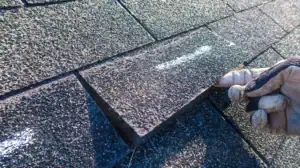
The problem is that hail damage often isn’t visible from the ground. What it actually does is knock granules loose from the surface of your shingles, leaving the underlying mat exposed and vulnerable. Over time — especially in a climate like Kent County’s, where you’re averaging around 45 inches of rain a year — that exposed area becomes a slow leak, then a fast one.
An insurance adjuster who spends 20 minutes on your roof may not catch all of it. That’s not always negligence — hail bruising is subtle, and adjusters are working fast across a lot of properties after a major weather event.
How to Document Hail Damage Before You Call Your Insurer
The single most valuable thing you can do after a hail event in Kent County is document everything before you call your insurance company — not after. Once you file, the clock starts, and the adjuster’s assessment becomes the baseline. If you walk into that process without your own documentation, you’re relying entirely on what the adjuster finds in a single visit.
Start from the ground and work outward. Photograph your gutters — hail leaves visible dents in aluminum gutters and downspouts, and those dents are some of the clearest early evidence of a significant impact event. Check your window screens, your AC unit, any painted metal surfaces. If hail was large enough to mark those, it almost certainly marked your shingles.
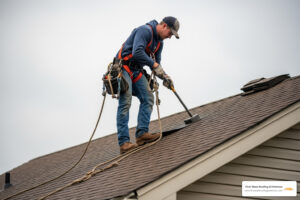
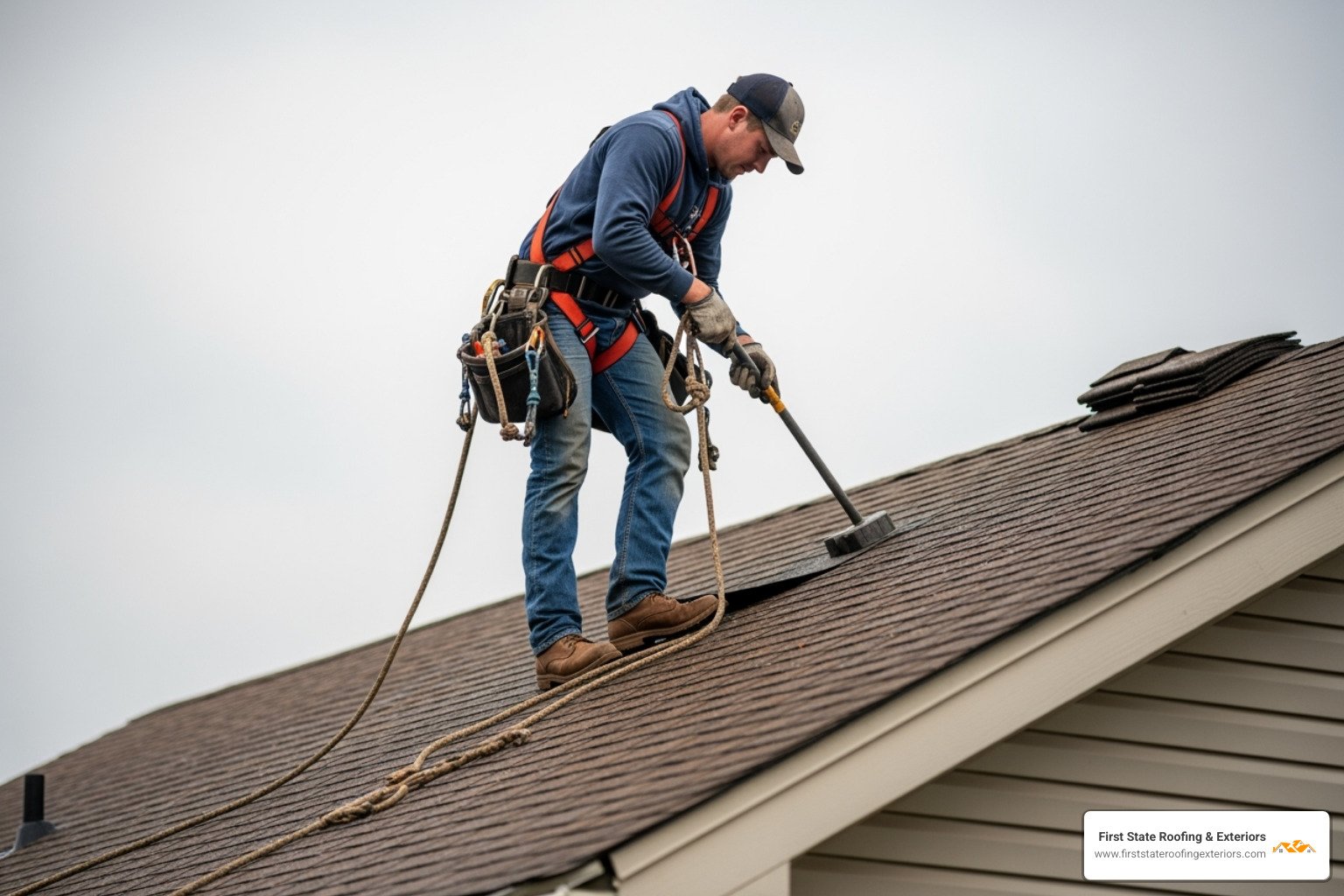
Don’t climb on the roof yourself. Beyond the safety risk, an untrained eye often can’t distinguish storm damage from normal wear — and if you accidentally create new damage while inspecting, it complicates the claim. A professional inspection from a certified roofing contractor gives you documented findings that carry weight when the adjuster arrives.
Delaware’s winters bring freeze-thaw cycles from roughly January through March, and any small opening created by a storm — a cracked shingle, a lifted seal strip — can expand significantly during that period as water freezes and thaws inside the gap. A storm that happens in November and goes uninspected until spring can cause two or three times the original damage. Filing promptly, with solid documentation, is almost always in your financial interest.
If you have photos of your roof from before the storm — even casual ones taken from a ladder during gutter cleaning — save them. Pre-storm documentation is one of the most powerful tools in a disputed claim.
Should You Have a Roofing Contractor Present When the Adjuster Comes?
Yes. And this is one of the most underused options available to homeowners filing a storm damage roof insurance claim in Kent County.
Your insurance adjuster works for — or is hired by — your insurance company. That doesn’t make them dishonest, but it does mean their job is to assess damage from the insurer’s perspective. They may not flag every damaged component. They may not know that a particular shingle pattern indicates widespread seal failure rather than isolated impact. They’re often working quickly and covering a lot of ground after a significant weather event.
Having an experienced roofing contractor on the roof during that visit changes the dynamic. A contractor who knows what adjusters look for — and knows how to point out what’s easy to miss — can make a real difference in what gets included in the initial scope. That scope determines your payout. Getting it right the first time is far easier than filing a supplemental claim afterward, though supplemental claims are possible when additional damage is found during installation.
There’s also a practical issue with RCV versus ACV policies that’s worth understanding before you file. Replacement Cost Value policies pay for what it actually costs to replace your roof today, minus your deductible. Actual Cash Value policies account for depreciation — meaning a 15-year-old roof may only receive a fraction of the replacement cost. Many homeowners in Kent County don’t know which type of policy they have until they’re already in the middle of a claim. Reviewing your policy before the adjuster arrives — and understanding what your deductible covers — puts you in a much stronger position.
Some policies also carry separate wind and hail deductibles that are higher than the standard deductible. This is more common than people expect and can significantly affect what you receive. It’s worth a phone call to your agent before you assume you know the number.
Wind Damage Roof Claims: What’s Different and What to Watch For
Wind damage roof claims work a little differently than hail claims, and the documentation challenges are distinct. Hail leaves physical marks. Wind damage is often about what moved — and what broke — rather than what’s visibly dented or cracked.
High winds can lift shingles just enough to break the factory seal along the bottom edge without tearing the shingle off entirely. From the ground, the roof looks intact. But that broken seal is now an open invitation for wind-driven rain to get underneath — and in coastal Kent County, where storms regularly push moisture horizontally, that’s a significant vulnerability.
Flashing damage is another common wind casualty that adjusters sometimes undercount. The metal flashing around chimneys, skylights, and roof penetrations can shift or separate under sustained wind pressure, creating gaps that don’t look dramatic but allow water in consistently.
How Wind Damage Claims Get Denied — and How to Avoid It
Wind damage claims are denied more often than homeowners expect, and the reasons tend to cluster around a few common issues. Understanding them in advance gives you a much better shot at a successful outcome.
The most frequent denial reason is that the insurer classifies the damage as pre-existing wear rather than storm-related. A roof with aging, curling shingles that takes wind damage during a storm is in a gray zone — the insurer may argue that the shingles were already compromised and the storm simply finished what time started. This is why the condition of your roof before a storm matters, and why keeping records of past repairs and inspections is genuinely useful.
The second common reason is insufficient documentation. If you file a claim based on a few photos taken from the driveway and a general description of the storm, you’re giving the adjuster very little to work with. A professional inspection report with specific findings — lifted shingles at identified locations, broken seal strips, flashing displacement — gives the claim a factual foundation that’s much harder to dismiss.
There’s also the question of timing. Most homeowners insurance policies require you to report damage within a reasonable period after the storm. Delaware doesn’t have a single statewide standard for this, and policies vary, but waiting months before filing — especially if the damage has visibly worsened — gives the insurer grounds to question whether the delay contributed to additional loss. File promptly, even if you’re not sure yet whether the damage meets your deductible threshold.
If your claim is denied or underpaid, you have options. You can request a re-inspection, submit additional documentation, or in more complex cases, consult a public adjuster who works on your behalf rather than the insurer’s. That’s a separate process, but it’s available — and knowing it exists is useful if the first outcome isn’t what you expected.
Roof Restoration After a Storm: What It Includes and What Insurance Covers
Roof restoration is the term that covers the full process of returning a storm-damaged roof to sound, functional condition — and depending on the extent of the damage, it can mean targeted repair or complete replacement. The distinction matters for your insurance claim, because the scope of work directly affects what the insurer is being asked to pay.
In Kent County, where a significant portion of the housing stock dates back to the 1970s through 1990s, many roofs that sustain storm damage are already approaching or past the typical lifespan for asphalt shingles. When that’s the case, a comprehensive roof restoration — full replacement with new materials — often makes more financial sense than patching a roof that will need replacement within a few years anyway. And in some cases, the insurance payout for widespread damage may actually cover most of the replacement cost.
Storms in Delaware don’t usually damage just one thing. A significant hail event or a sustained Nor’easter can affect your roof, your siding, your gutters, and your windows — often at the same time. When each of those gets assessed and documented by a single contractor who can speak to the full scope of damage, the insurance claim is cleaner and more complete than when you’re coordinating four separate inspections with four separate reports.
For homeowners whose insurance payout falls short — whether due to an ACV policy, a high deductible, or a partial settlement — financing is a practical option that keeps the repair from being delayed. A leaking roof that waits weeks or months for funds to come together causes secondary damage that often isn’t covered by insurance, because insurers expect homeowners to take reasonable steps to prevent further loss after the initial event. Addressing it promptly, even with financing as a bridge, is almost always the better outcome.
When a contractor is an authorized installer for major manufacturers — GAF, Owens Corning, TAMKO, CertainTeed, Atlas Pro — the replacement system qualifies for manufacturer-backed warranties. That’s a meaningful long-term benefit that a repair-only approach or a non-certified installer can’t provide.
What Kent County Homeowners Should Do After the Next Storm
The pattern that costs homeowners the most money is also the most common one: wait, hope it’s nothing, and deal with it later. In Delaware’s climate — with its wet winters, freeze-thaw cycles, and storm seasons that run from spring thunderstorms through fall tropical remnants — later almost always means more damage and a harder claim.
The smarter move is a professional inspection as soon as it’s safe to do one, documentation before you call your insurer, and a contractor who will show up when the adjuster does. That combination doesn’t guarantee a perfect outcome, but it gives you the best possible shot at a fair one.
If you’re in Kent County and you’ve had a storm come through recently — or you’re just not sure whether your roof came through the last one cleanly — we at First State Roofing & Exteriors Co. offer free roof inspections and work directly with homeowners through every step of the insurance claim process. Reach out and let’s take a look before the next rain makes the decision for you.