Common Causes of Siding Damage in Kent and Sussex County, DE
No matter how durable your siding is, the Mid-Atlantic elements will eventually take their toll. Let’s dive deep into why siding fails, how much repairs actually cost, and how to choose the right path for your home.
Kent and Sussex County, DE’s geographical position puts homes in a unique climate crosshair. We experience everything from brutal coastal storms to sweltering summer humidity, each of which attacks your home’s exterior in different ways. Understanding these environmental threats is the first step toward effective delaware siding repair.
Coastal Storm Winds
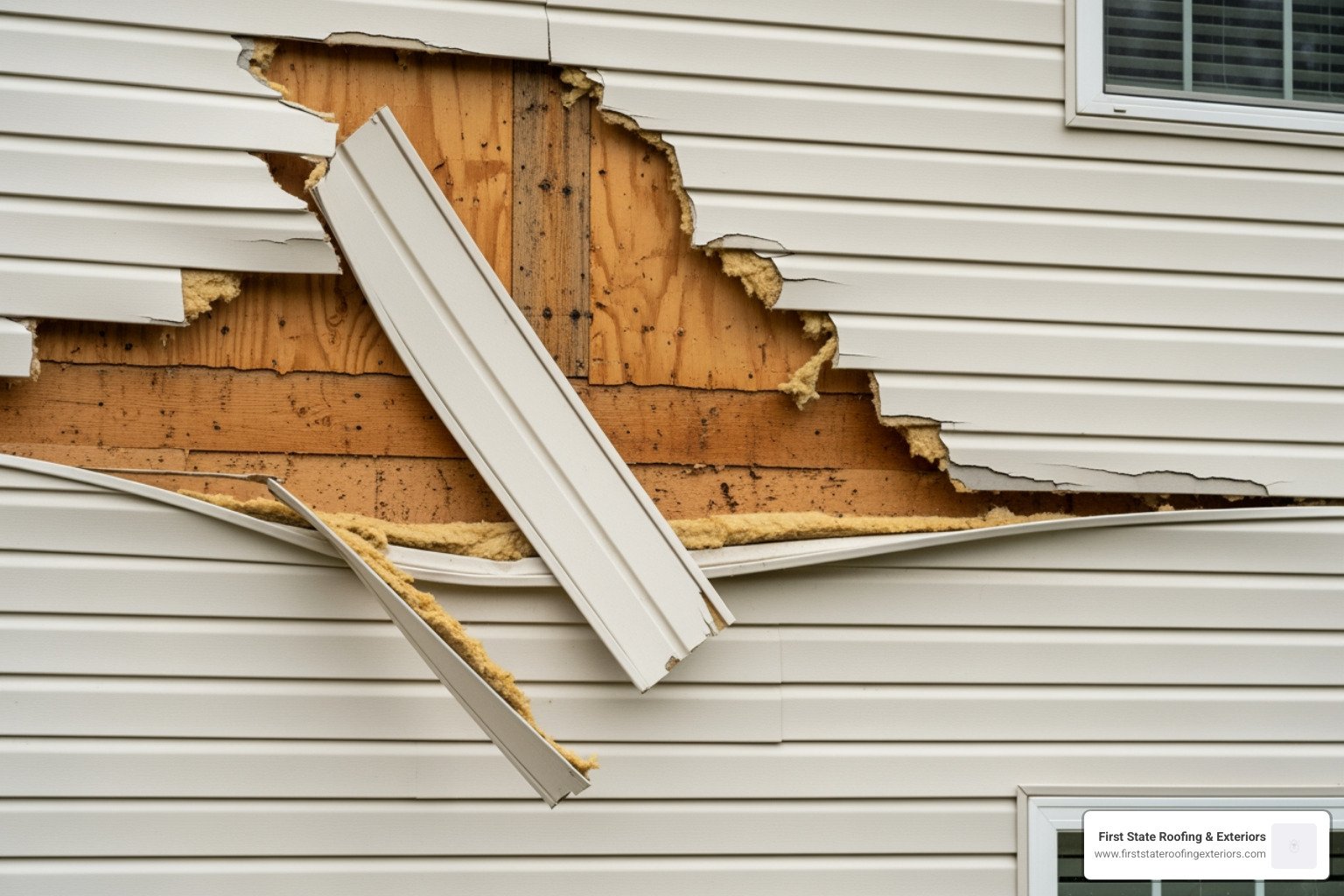
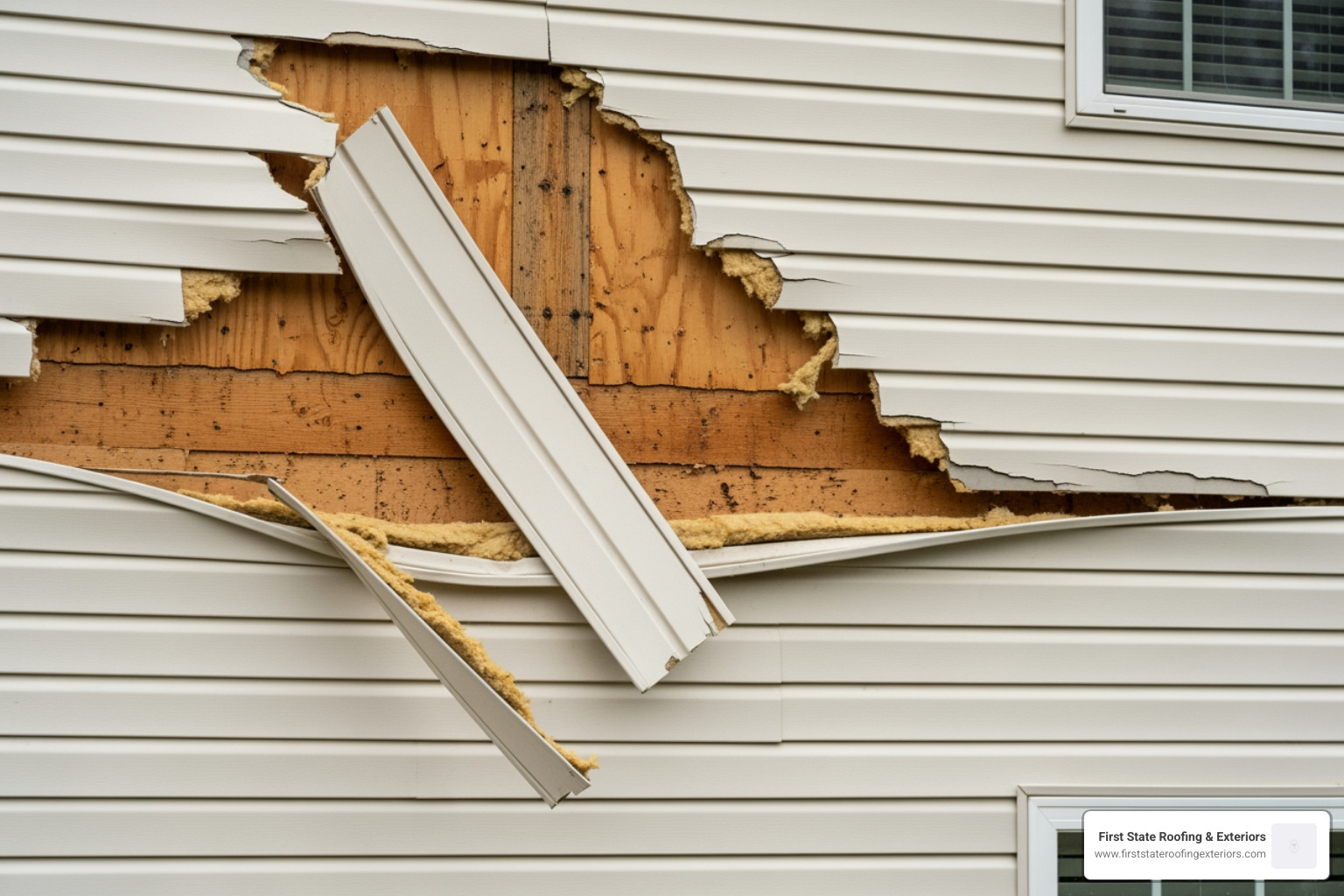
High-velocity winds from coastal storms and severe Nor’easters are a primary driver of sudden siding damage. When heavy winds hit your home, they create pressure differentials that can get underneath loose siding panels. This wind uplift can easily crack, bend, or completely rip vinyl and metal panels off their tracks, leaving your home’s underlying sheathing exposed to the elements.
High Humidity & Moisture
Kent and Sussex County, DE’s summers are notoriously humid. This constant moisture in the air creates a breeding ground for organic growth. Shaded or north-facing walls are particularly susceptible to mold, mildew, and algae. If moisture penetrates behind the siding panels, it can lead to wood rot in the plywood sheathing or wall studs, compromising your home’s structural integrity.
To prevent these issues from escalating, check out our detailed guide on exterior siding repair to see how we restore compromised structures.
Temperature Swings
Living in Kent and Sussex County, DE means experiencing dramatic seasonal temperature swings. Siding materials, especially vinyl, naturally expand in the summer heat and contract during freezing winter nights. If the siding was nailed too tightly during installation, this constant movement causes the panels to buckle, warp, or crack under the physical stress.
UV Exposure
Years of intense sunlight will degrade almost any exterior material. UV radiation breaks down the chemical bonds in vinyl siding, making it brittle and highly prone to cracking from minor impacts (like a stray baseball or flying lawn debris). UV rays also cause noticeable fading, making it difficult to match colors during localized repairs.
You can read more about keeping your home protected year-round in our guide on siding exterior maintenance.
Pest Infestation
Wooden siding is a primary target for pests like termites, carpenter bees, and woodpeckers. Termites chew through wood from the inside out, often leaving the surface looking fine while the interior is completely hollowed. Woodpeckers will drill holes in search of insects, creating entry points for water and other pests.
Siding Repair vs. Replacement: How to Choose
When you notice damage on your home, you might wonder whether a quick patch-up is enough or if you need a complete overhaul.
** Siding should be repaired if the damage is localized to less than 20% of the home’s exterior and the underlying moisture barrier remains completely intact. However, if you observe widespread warping, soft spots indicating structural wood rot, or mold spreading inside your home’s walls, a full siding replacement is necessary.**
To help you make the right decision, use this quick reference table:
| Repair Indicators | Full Replacement Signs |
|---|---|
| Localized cracks or small holes | Widespread warping or buckling across multiple walls |
| A few loose panels after a storm | Soft spots or crumbling wood beneath the siding |
| Minor surface mold or mildew | Interior water stains or peeling paint on drywall |
| Siding age under 15 years | Persistent mold growth that returns after cleaning |
| Siding profile is still manufactured | Siding is over 20–25 years old and brittle |
If your siding has reached the end of its lifespan, investing in a durable upgrade is often the smartest financial move. You can explore the longevity and benefits of premium materials in our fiber cement siding complete guide. For older homes built in previous decades, we also outline safe, cost-effective options in our article on replacing asbestos siding shingles without breaking the bank.
Best Siding Materials for Kent and Sussex County, DE’s Climate
Choosing the right material for your home involves balancing upfront cost, aesthetic preference, and long-term durability against local weather conditions.
Vinyl Siding
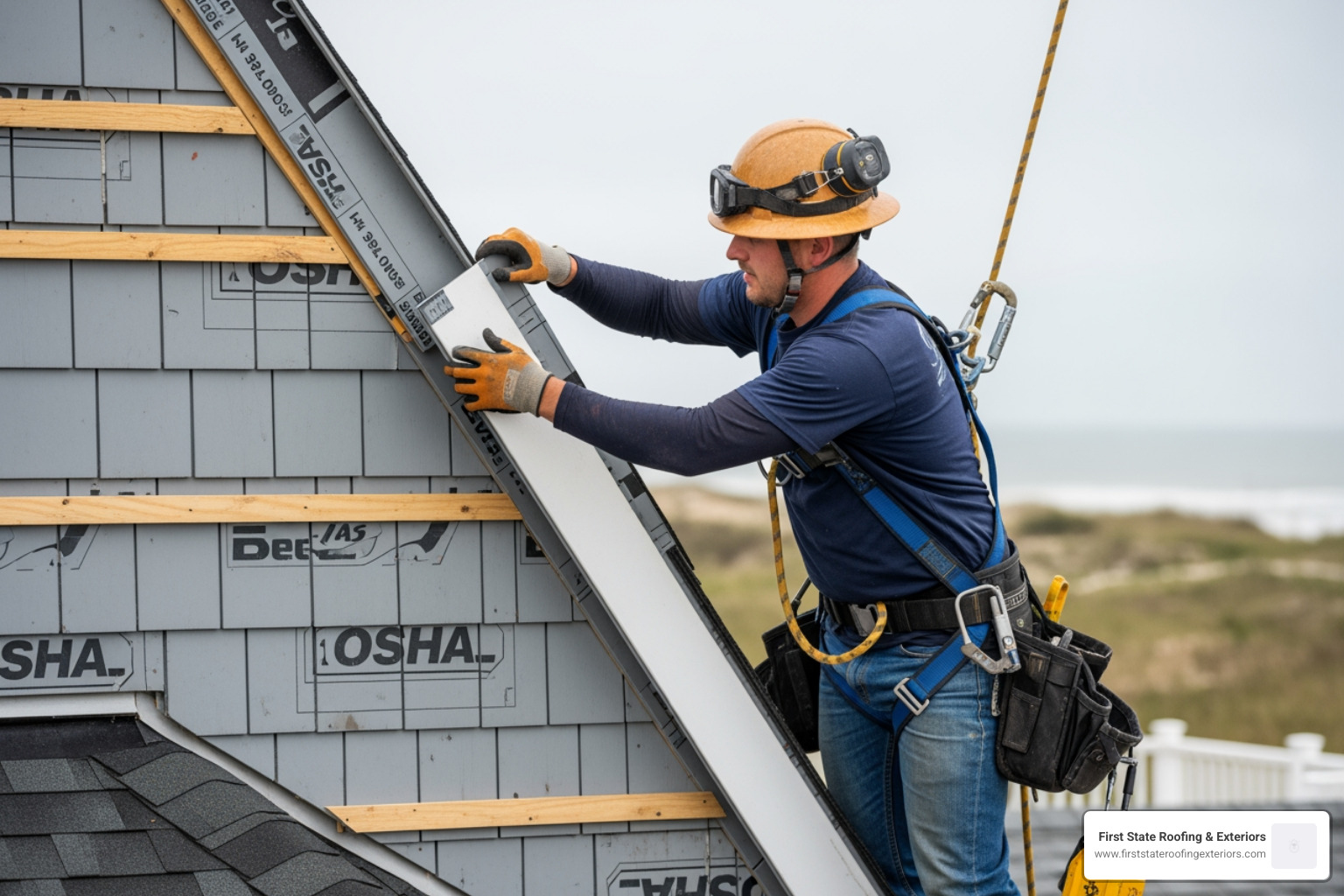
Vinyl siding remains the most popular choice for Kent and Sussex County, DE homeowners due to its affordability, versatility, and low maintenance requirements. It doesn’t require painting and resists moisture rot. However, vinyl can become brittle in extreme cold and is more susceptible to high-wind damage than heavier materials. Learn more about your styling options on our vinyl siding page.
Fiber Cement (James Hardie)
Fiber cement is widely considered the gold standard for Mid-Atlantic weather. Made from a blend of cement, sand, and wood fibers, it offers unmatched resistance to rotting, warping, high winds, and fire. It mimics the classic look of real wood without the high maintenance. Discover why this material is a favorite among local homeowners by visiting our fiber cement siding page.
Metal Siding
Steel and aluminum siding are incredibly durable, fire-resistant, and offer a modern, clean aesthetic. Metal siding is highly resistant to coastal winds and pest infestations. However, aluminum can dent easily from hail or physical impacts, and the installation requires specialized expertise. Check out our metal siding installation complete guide to see if this material fits your home’s architecture.
Wood Siding
Wood offers an unmatched, timeless beauty and excellent insulation value. However, in Kent and Sussex County, DE’s humid climate, wood requires constant upkeep. Homeowners must repaint or reseal it every few years to protect it from rot, moisture, and pest damage.
A Complete Guide to Kent and Sussex County, DE Siding Repair Costs
Understanding the financial side of home maintenance helps you budget effectively. Siding repair costs vary widely depending on the material and the extent of the damage.
- Single Panel Repair Cost: Repairing one piece of siding usually costs somewhere between $100 and $300, depending on the type of siding and how easy it is to access.
- Full Installation Cost: The average cost to install siding is usually somewhere between $5 and $15 per square foot, depending on the material, size of the home, and complexity of installation.
To dive deeper into what goes into these pricing structures and why quality work is worth the investment, read our breakdown on why siding cost seems expensive and the truth behind the numbers. If you are considering a larger project, you can also view our siding installation service page for more details.
Factors Influencing Kent and Sussex County, DE Siding Repair Pricing
- Labor Rates: Labor rates can vary slightly across New Castle, Kent, and Sussex counties. Areas with higher living costs or high demand after major coastal storms may see temporary increases in labor pricing.
- Material Availability: If your siding is older, finding a matching profile or color can be difficult. Custom orders or sourcing discontinued lines can drive up material costs.
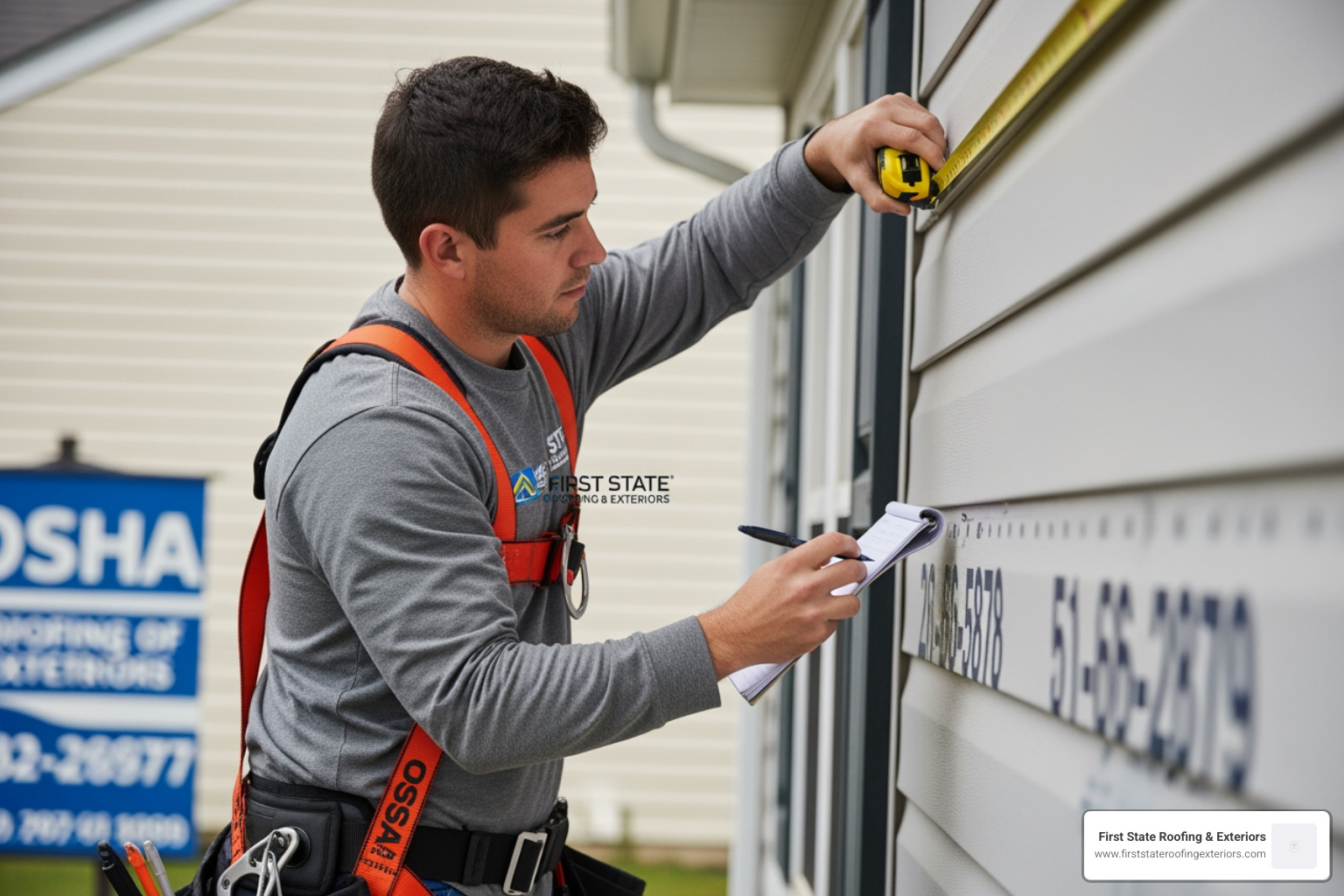
- Accessibility & Height: Multi-story homes or homes with complex architectural features (like dormers, turrets, or tight spaces between neighboring houses) require specialized scaffolding and safety gear, which increases labor hours. If you live in Kent County, you can find more localized information on our siding repair Smyrna page.
Regional Differences: Kent and Sussex County, DE, OH vs. Wilmington, DE Siding Repair
It is common for online searches to confuse Kent and Sussex County, DE, Ohio with the state of Kent and Sussex County, DE. However, the siding needs and regulations for these two regions are vastly different.
Kent and Sussex County, DE, Ohio experiences a landlocked, Midwestern climate characterized by heavy winter snows and dry summer heat. Siding repairs there focus heavily on freeze-thaw cracking and thermal insulation.
In contrast, Wilmington, Kent and Sussex County, DE and coastal cities like Lewes or Dover deal with maritime weather, high salt spray, coastal winds, and intense humidity. This requires materials and installation techniques designed to prevent wind lift and moisture intrusion. Additionally, all repairs in our state must strictly adhere to the Kent and Sussex County, DE State Regulations and local municipal building codes, which govern wind resistance ratings and moisture barriers.
How to Choose a Kent and Sussex County, DE Siding Contractor
Siding is your home’s protective armor. Hiring an uncertified or uninsured contractor can result in poor installation, which leads to hidden water leaks and voided manufacturer warranties.
When vetting local companies, always verify that they hold a valid Kent and Sussex County, DE business license, carry comprehensive general liability and workers’ compensation insurance, and have a physical local office.
If you are looking for trusted local experts in Kent County, we invite you to connect with our Dover, DE siding and roofing experts to schedule a consultation.
Vetting Local Kent and Sussex County, DE Siding Repair Companies
To ensure you are working with a reputable company, check their standing with the Better Business Bureau (BBB). Look for companies that have an A+ rating and a long history of positive reviews from local homeowners. Additionally, ask if they offer workmanship guarantees on top of the manufacturer’s material warranty. A trustworthy contractor stands behind their labor.
For comparison and local reviews, you can check directories like The Best 10 Siding in Dover, DE on Yelp to read feedback from other property owners in your community.
Steps to Schedule Your Kent and Sussex County, DE Siding Repair Inspection
- Request a Free Estimate: Contact a reputable local contractor to set up an appointment.
- On-Site Physical Assessment: The contractor should perform a hands-on inspection, checking for soft wood, moisture behind panels, and loose trim.
- Insurance Documentation: If the damage was caused by a storm, ensure the contractor documents the damage thoroughly with photos to support your homeowner’s insurance claim.
- Review the Detailed Quote: Ensure the estimate breaks down labor, material costs, and expected timelines before signing.
Frequently Asked Questions About Kent and Sussex County, DE Siding Repair
Can damaged siding be repaired without replacing the entire wall?
** Yes, localized damage to vinyl, wood, or fiber cement siding can be repaired by replacing individual panels or shingles. This targeted approach saves homeowners thousands of dollars compared to a full wall replacement.**
Our repair technicians use specialized tools to unzip damaged vinyl panels or carefully cut out cracked fiber cement boards, sliding new, perfectly matched pieces into place without disturbing the surrounding exterior.
What is the Kent and Sussex County, DE right to repair?
** The “right to repair” in a property context refers to local municipal codes and insurance regulations that allow homeowners to make necessary structural repairs to maintain safety and property values without facing unnecessary bureaucratic delays.**
Under Kent and Sussex County, DE law, homeowners generally have the right to repair their property, including siding, without unnecessary restrictions, ensuring you can quickly address storm damage or wear to protect your investment.
How does damaged siding affect home energy efficiency?
** Damaged siding directly compromises your home’s thermal envelope, allowing outdoor air to bypass insulation. This results in drafts, increased HVAC strain, and up to a 15% increase in monthly utility bills.**
When wind and moisture get behind cracked or loose panels, they degrade the house wrap and wall insulation. Repairing these gaps restores the airtight seal, keeping your home warmer in the winter, cooler in the summer, and cheaper to run.
Conclusion
Your siding does more than just make your home look beautiful—it is a vital shield protecting your family and your investment from Kent and Sussex County, DE’s unpredictable weather. Delaying a minor delaware siding repair can lead to rot, mold, and expensive structural damage.
At First State Roofing & Exteriors, we are proud to be local, family-owned exterior experts. We are dedicated to protecting Kent and Sussex County, DE homes with honest communication, superior craftsmanship, and 24/7 availability when storm emergencies strike.
To explore how we can restore your home’s exterior protection, visit our exteriors siding services page.
Don’t wait for a small leak to become a massive headache. First State Roofing & Exteriors gives free estimates. Call us today at (302) 222-4065 for a free inspection!