Identifying Common Causes and Warning Signs of Damage
Commercial roof repairs are a critical investment for any Delaware business owner who wants to protect their property, operations, and bottom line. If you need a quick answer, here’s what you need to know:
Quick Guide: Commercial Roof Repairs at a Glance
| Topic | Key Fact |
|---|---|
| Most common cause of leaks | Flashing failures (40% of all commercial roof leaks) |
| Minor repair cost range | $400 – $1,500 (5–20 sq ft) |
| Moderate repair cost range | $1,500 – $5,000 (50–200 sq ft) |
| Extensive repair cost range | $5,000 – $25,000+ |
| Maintenance benefit | Extends roof life by 30–50% |
| Repair vs. replace threshold | Replace when repairs exceed 50% of replacement cost |
| How long repairs last | 5–15 years with proper execution |
A neglected commercial roof doesn’t just leak — it threatens inventory, disrupts daily operations, and can lead to costly structural damage that compounds fast. The difference between a $1,000 patch and a $50,000 restoration often comes down to how quickly a problem is identified and addressed.
At First State Roofing & Exteriors, we’ve seen how early intervention saves Delaware business owners significant money and stress.
I’m Richard McCain, Owner and President of First State Roofing & Exteriors, and with over 20 years of hands-on experience managing commercial roof repairs across Delaware, I’ve built this guide to help you make confident, informed decisions about your property. Let’s walk through everything you need to know — from spotting early warning signs to choosing the right repair method for your specific roof type.
Relevant articles related to commercial roof repairs:
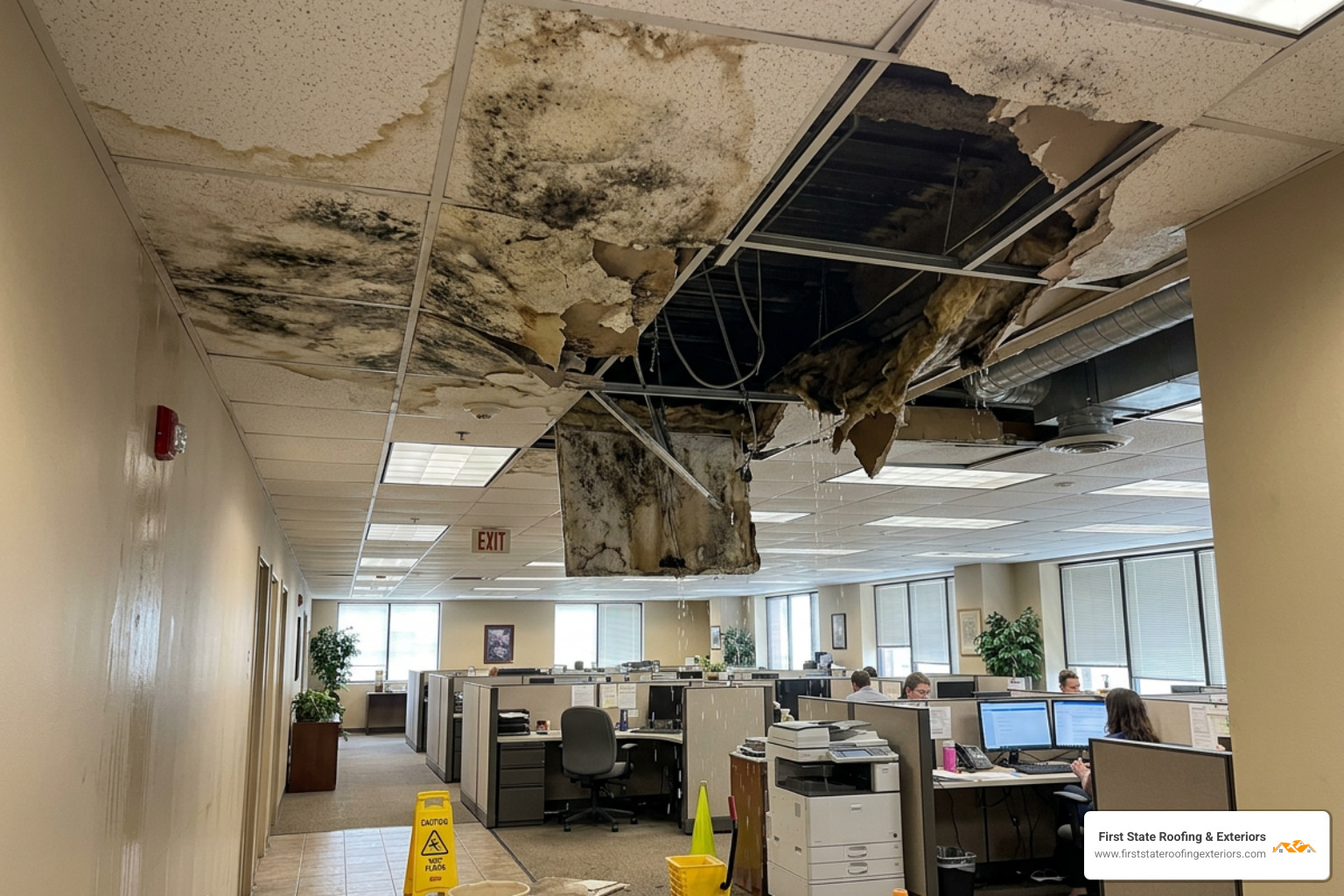
When a roof fails, it rarely happens all at once. Usually, it’s a slow progression of small issues that eventually breach the interior. For property managers in Dover or Milford, understanding these triggers is the first step in maintaining an energy-efficient workspace.
Primary Causes of Commercial Leaks
Water intrusion is the primary enemy of any commercial structure. Based on industry data, the culprits are remarkably consistent:
- Flashing Failures (40%): This is the leading cause of leaks. Flashing is the material used to seal edges, perimeters, and penetrations (like HVAC units or vents). When it pulls away or cracks, water has a direct path inside.
- Membrane Damage (30%): Punctures from dropped tools, heavy foot traffic, or wind-blown debris can create small tears that allow water to seep into the insulation.
- Inadequate Drainage and Ponding Water (20%): If water remains on a flat roof for more than 48 hours after a rainstorm, it is considered “ponding.” This adds immense weight and accelerates the chemical breakdown of the roofing membrane.
- Storm Damage (10%): Delaware weather can be unpredictable. High winds can lift membrane seams or blow off shingles and slates, leaving the underlayment exposed.
Key Warning Signs for Property Managers
You don’t always need to climb a ladder to know you have a problem. Keep an eye out for these red flags:
- Musty Odors: A persistent damp smell in the upper floors often indicates mold growth hidden within the ceiling or wall cavities.
- Sagging Areas: If you notice dips in the roofline from the ground or soft spots while walking the roof, it could indicate structural deck damage or saturated insulation.
- Blistering Membranes: Bubbles or “blisters” in the roof surface mean air or moisture is trapped between the layers.
- Loose Fasteners: If screws or plates are backing out, the wind uplift resistance of your roof is compromised.
If you spot any of these signs, contacting professional Delaware roofing experts immediately can prevent a minor leak from becoming a catastrophic failure.
Specialized Methods for commercial roof repairs
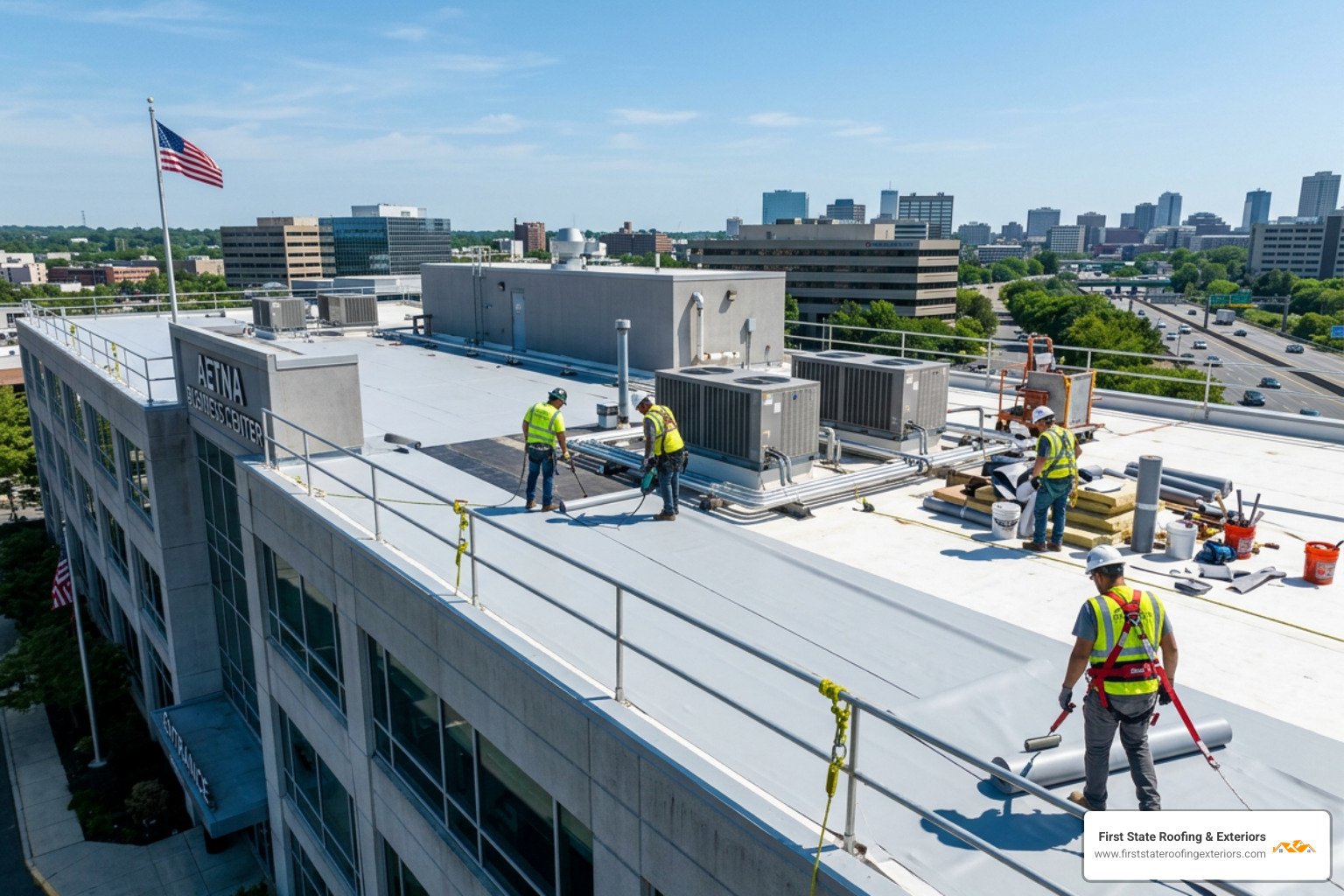
Not all roofs are created equal, and neither are the methods used to fix them. As a leading commercial roofing contractor in Seaford, DE, we utilize specific techniques tailored to the material of your building.
Repairing Single-Ply Membranes (TPO & PVC)
Thermoplastic Polyolefin (TPO) and Polyvinyl Chloride (PVC) are popular for their reflectivity and durability. However, they require specialized equipment for permanent repairs.
- Heat-Welding: Unlike residential roofs that use shingles and nails, TPO and PVC seams are fused together using hot-air welders. We create 900-degree bonds that are physically stronger than the surrounding membrane.
- Puncture Patches: For small holes, we cut a round patch of the same material (usually 6 inches larger than the damage) and heat-weld it to the surface after a thorough cleaning with specialized primers.
- Manufacturer Certification: It is vital to use a contractor certified by the manufacturer. Using the wrong adhesive or DIY “goop” can actually melt the membrane and void your warranty.
EPDM and Rubber Roof Restoration
EPDM (Ethylene Propylene Diene Terpolymer) is a synthetic rubber known for its flexibility. Because it is “thermoset” (it doesn’t melt with heat), repairs rely on high-quality adhesives.
- Surface Preparation: EPDM accumulates carbon “soot” over time. We must scrub the area with a specific cleaner before any repair can take place.
- Adhesive Tape and Primers: We use heavy-duty seam tapes and primers to bond patches to the existing roof.
- 6-Inch Patch Overlap: To ensure a watertight seal, any patch must extend at least 6 inches in every direction from the breach.
Repair vs. Replacement: Making the Right Investment
One of the most difficult questions for a business owner is: Is it time to patch it again, or do I need a whole new roof? While we always aim for the most cost-effective solution, there is a point where commercial roof repairs become a “throwing good money after bad” scenario.
When to Choose Localized Repair
Repair is typically the best path forward if:
- The damage is localized: Issues are confined to a specific area (like one HVAC unit or a single corner).
- The roof is young: If the system is less than 15 years old and generally in good health.
- The cost is manageable: Repairs cost less than 25-30% of the total replacement value.
- Moisture is minimal: A moisture survey shows that the underlying insulation is still dry.
Indicators for Full Roof Replacement
You should consider the commercial roof replacement cost in 2025 if:
- Recurring Leaks: You are calling a roofer out every time it rains.
- Widespread Deterioration: More than 25% of the roof surface shows signs of failure.
- Saturated Insulation: Once the insulation under the membrane gets wet, it loses its R-value and can lead to deck rot.
- The 75% Rule: If the roof has reached 75-80% of its expected lifespan, any major repair is likely a short-term fix for a long-term problem.
The Financial Impact of Roofing Issues in Delaware
Budgeting for commercial roof repairs in Dover or Milford requires an understanding of local market rates. While every job is unique, we can provide general ranges based on the scale of the damage.
Typical Cost Ranges for Repairs
- Minor Patches ($400 – $1,500): This usually covers fixing 1 or 2 small leaks, patching a few punctures, or resealing a single pipe boot.
- Moderate Repairs ($1,500 – $5,000): This involves more extensive work, such as repairing 50 to 200 square feet of membrane, fixing failed flashings around a large HVAC curb, or addressing minor ponding issues.
- Extensive Damage ($5,000 – $25,000+): These are major projects that might include replacing large sections of saturated insulation, structural deck repairs, or applying a restorative coating to an entire roof section.
If you are specifically looking for commercial roof repair in Dover, DE, emergency services often carry a 25-50% premium due to the immediate mobilization of crews and equipment.
Factors Influencing Local Estimates
Several variables can change your quote:
- Accessibility: A single-story warehouse is much cheaper to repair than a five-story office building that requires cranes or specialized lifts.
- Material Type: Specialized materials like slate or high-end metal roofing require more labor-intensive techniques than a standard flat roof.
- Weather Conditions: Repairs performed in extreme cold or during active rainstorms require extra steps to ensure the patches bond correctly.
- Permit Requirements: Major structural work or large-scale restorations often require local building permits, which add to the administrative cost.
Preventive Maintenance: Extending Your Roof’s Lifespan
The most expensive roof is the one that is ignored. Proactive maintenance is the single most effective way to lower your total cost of ownership. In fact, a consistent maintenance plan can extend a roof’s life by 30% to 50%. Check out our local commercial roofing guide for more details on long-term care.
Quarterly Professional Inspections
We recommend a professional walk-through four times a year. During these visits, we focus on:
- Predictable Failure Zones: We check every seam, flashing, and penetration for the first signs of separation.
- Thermal Imaging: We use infrared cameras to detect moisture trapped under the membrane that isn’t visible to the naked eye.
- Drainage Maintenance: We ensure all scuppers, drains, and gutters are clear of debris to prevent ponding.
Monthly In-House Visual Checks
Your facility manager can perform simple checks between our professional visits:
- Clear Clogged Drains: Remove leaves, trash, or bird nests from drainage points.
- Check for Debris: High winds can toss branches or loose equipment panels onto the roof, which can puncture the membrane.
- Monitor Standing Water: If you see “lake” forming on your roof days after a rain, call us immediately.
Frequently Asked Questions about Commercial Roofing
How much do commercial roof repairs cost?
Typical commercial roof repairs range from $500 to $5,000 for localized issues. Major restorations, which might involve coatings or large-scale membrane replacement, can cost between $10,000 and $50,000 depending on the building’s footprint and the severity of the underlying damage.
How long do professional repairs last?
When executed by certified technicians using manufacturer-approved materials, a repair should last between 5 and 15 years. If the repair involves a high-quality silicone or acrylic coating, you can often extend the functional life of the entire membrane by an additional 10 to 20 years.
Can I perform commercial roof repairs myself?
While facility managers can certainly handle emergency tarping to stop an active leak, permanent repairs should be left to professionals. Single-ply membranes require specific heat-welding or chemical bonding agents that are not available at hardware stores. Furthermore, DIY repairs often void manufacturer warranties and can lead to more expensive damage if the wrong materials are used.
Conclusion
Your commercial roof is the first line of defense for your business assets. At First State Roofing & Exteriors, we take that responsibility seriously. As a family-owned Delaware business, we pride ourselves on integrity, transparency, and being there when you need us most with our 24/7 emergency availability.
Whether you need a minor patch or a comprehensive commercial roofing service, we have the local expertise to get the job done right the first time.
Don’t wait for a small drip to become a major disruption. First State Roofing & Exteriors provides free estimates and detailed inspections to give you total peace of mind.
Call us today at (302) 222-4065 for a free inspection.