Protecting Your Business From the Top Down
Finding the right local commercial roofer is critical when your business property needs protection from the elements. Your roof serves as the first line of defense, and commercial roofing complexity requires specialized expertise that differs significantly from residential work. Partner with a trusted commercial roofing contractor in Delaware to get clear options, code-compliant solutions, and honest guidance from day one.
Key factors when hiring a local commercial roofer:
- Experience: Look for contractors with 10+ years in commercial roofing
- Insurance: Verify $10+ million general liability coverage
- Licensing: Confirm proper state licensing and certifications
- Materials: Ensure expertise in TPO, EPDM, and metal roofing systems
- Local knowledge: Choose contractors familiar with Delaware building codes
- Warranties: Get both material and workmanship guarantees
Commercial roofing disasters often result from ignoring small problems or hiring inexperienced contractors. The average commercial company has 10 to 50 employees, while residential contractors typically have fewer than 10 – highlighting the specialized nature of commercial work.
When your operations are at risk and you’re searching for trusted contractors, asset protection and business continuity depend on making the right choice. Professional roofing services ensure your investment remains secure for decades.
I’m Richard McCain, owner of First State Roofing & Exteriors with over 20 years of hands-on experience in commercial roofing across Delaware. As a licensed contractor specializing in business-grade roofing systems, I understand the unique challenges of finding a reliable local commercial roofer who delivers quality results on time and within budget.
We provide free estimates. For expert commercial roofing solutions, call (302) 222-4065 to schedule your free inspection.
Commercial Roofing Systems Explained: Materials, Lifespan, and Costs
When you’re working with a local commercial roofer, understanding your material options makes all the difference. Commercial roofing systems are built tough – they need to protect large buildings, handle heavy foot traffic, and withstand decades of weather without missing a beat.
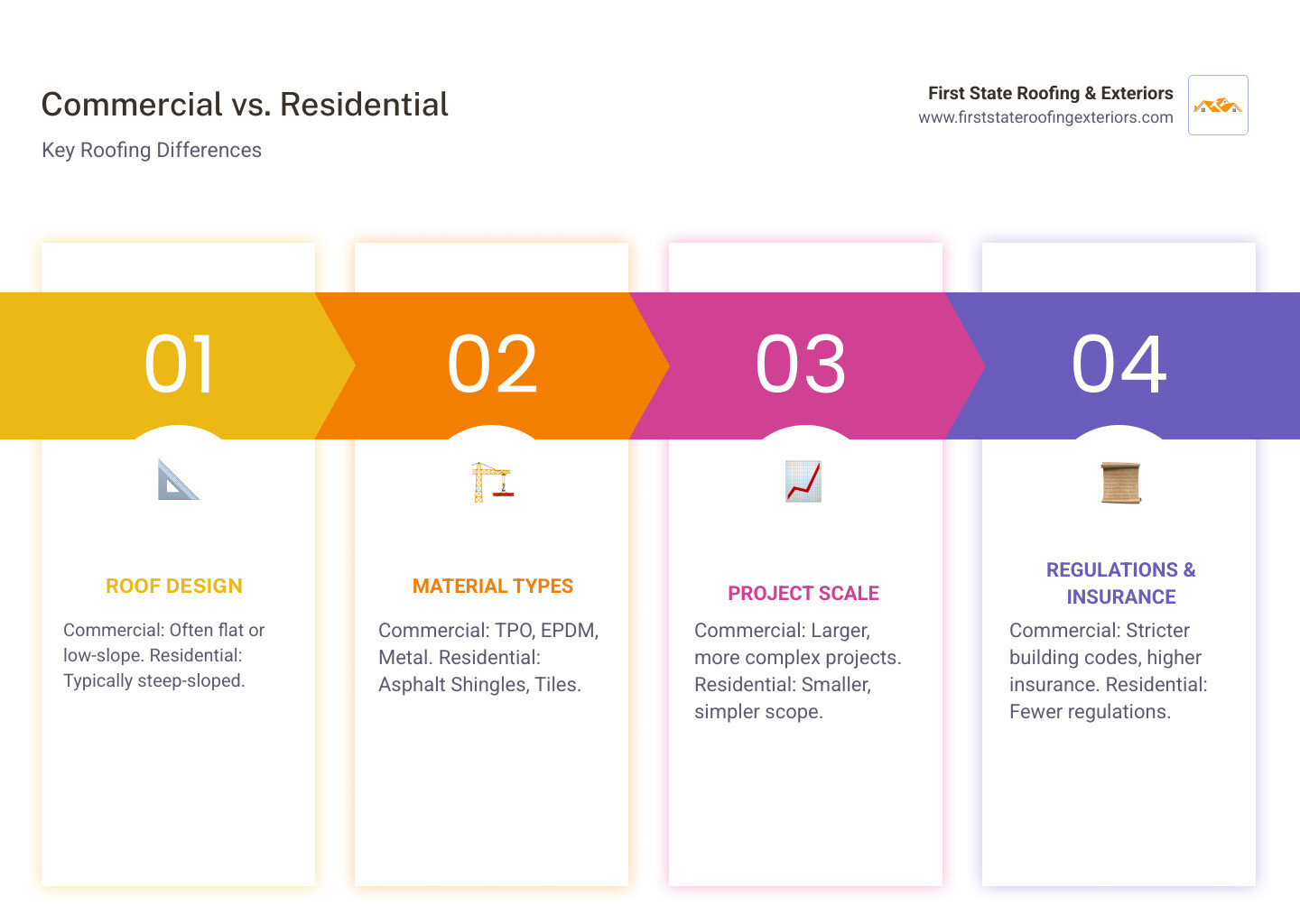
Unlike residential roofs with their steep slopes and shingles, commercial roofs are typically flat or low-slope. This creates unique challenges that require specialized materials and expertise. The good news? You have several excellent options, each with its own sweet spot for different buildings and budgets. Professional commercial roofing services can help you steer these choices and find the perfect fit for your property.
Common Commercial Roofing Materials
Choosing the right roofing material isn’t just about upfront costs – it’s about finding the system that’ll serve your business best for decades to come. Let’s walk through the most popular options and what makes each one special.
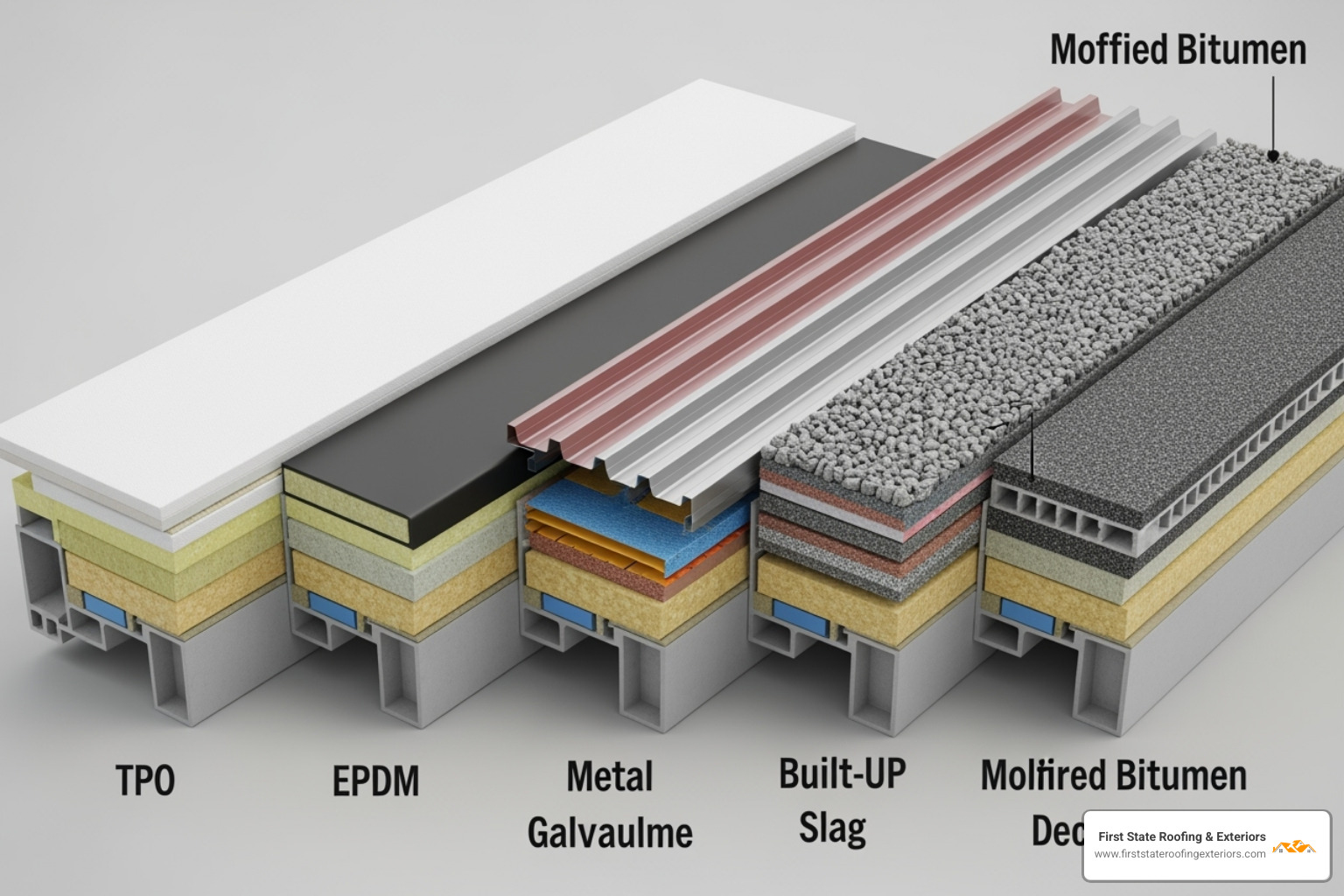
TPO (Thermoplastic Polyolefin) has become the darling of the commercial roofing world, and for good reason. This single-ply membrane comes in white, gray, or black, but that bright white version is where the magic happens. It reflects sunlight like nobody’s business, which means your air conditioning won’t work overtime during those scorching summer months. TPO roofs are also surprisingly tough – they resist punctures, chemicals, and UV rays while staying flexible in cold weather.
EPDM (Ethylene Propylene Diene Terpolymer) might have a mouthful of a name, but most folks just call it rubber roofing. This black membrane has been protecting commercial buildings for over 50 years, and there’s a reason it’s still going strong. EPDM laughs at extreme weather, from blazing heat to freezing cold, and it’s incredibly low-maintenance once installed. It’s perfect for businesses that want a set-it-and-forget-it solution.
Metal Roofing brings both beauty and brawn to the table. These systems can last 40 to 70 years – sometimes even longer with proper care. They’re fire-resistant, wind-resistant, and many contain recycled materials, making them an eco-friendly choice. Plus, metal panels look fantastic on modern commercial buildings and can be engineered for excellent energy performance in Delaware’s climate.
Built-Up Roofing (BUR) is the granddaddy of commercial roofing systems. This multi-layer approach alternates bitumen (asphalt) with reinforcing fabrics, then tops everything off with aggregate or coating. Think of it as the lasagna of roofing – all those layers create incredible waterproofing and UV protection. It’s been protecting buildings for over a century, so you know it works.
Modified Bitumen takes the best parts of traditional built-up roofing and gives them a modern twist. The polymer modifiers make these systems more flexible and durable than their older cousins. Installation options are versatile too – they can be torch-applied, self-adhered, or hot-applied, depending on your building’s needs and local fire codes.
Lifespan and Cost Comparison
Here’s where the rubber meets the road – or in this case, where your investment meets reality. Understanding both upfront costs and long-term value helps you make the smartest choice for your business.
Commercial Roofing System Comparison
| Roofing System | Typical Lifespan | Average Cost Per Sq Ft | Pros | Cons |
|---|---|---|---|---|
| TPO | 25-35 years | $5.00 – $9.00 | Energy-efficient (especially white), durable, puncture-resistant, easy to install. | Can be prone to shrinking/cracking in extreme cold, some quality variations among manufacturers. |
| EPDM | 25-35 years | $4.00 – $8.00 | Highly durable, flexible, excellent weather resistance, low maintenance, relatively inexpensive. | Primarily black (absorbs heat), less aesthetically versatile, can be punctured if not properly protected. |
| Metal | 40-70+ years | $7.00 – $12.00 | Exceptional longevity, fire-resistant, sustainable, can be highly energy-efficient, great aesthetics. | Higher upfront cost, can be noisy during rain/hail, requires specialized installation. |
| Built-Up (BUR) | 20-30 years | $4.00 – $8.00 | Time-tested, excellent waterproofing, fire-resistant, good UV protection. | Heavy, longer installation time, can be messy, less flexible than single-ply. |
| Modified Bitumen | 20-30 years | $3.50 – $7.50 | Improved flexibility, good waterproofing, tear-resistant, easy to repair. | Can be prone to cracking in very cold weather, some installation methods involve open flames. |
Note: Costs are approximate and can vary significantly based on location, roof complexity, existing roof condition, and specific contractor.
The sweet spot for most commercial roofing systems falls in that 25-35 year range for TPO and EPDM membranes. Compare that to residential asphalt shingles at 20-25 years, and you can see why commercial systems are built differently. They need to be – commercial buildings can’t afford the downtime and disruption that comes with frequent roof replacements.
Energy efficiency deserves special attention here. Those white TPO membranes can slash your cooling costs significantly, especially in Delaware’s humid summers. The initial investment often pays for itself through lower utility bills over the roof’s lifetime.
Durability varies by material, but proper installation matters just as much as your material choice. A poorly installed premium system will always underperform a well-installed budget option. That’s why finding an experienced local commercial roofer who knows these systems inside and out is crucial.
Maintenance needs also factor into your total cost of ownership. EPDM systems need very little attention once they’re up, while metal roofs might need occasional coating touch-ups. Built-up systems require more regular inspections but are often easier to repair when issues arise.
Ready to explore which system makes sense for your property? Call (302) 222-4065 to schedule your free inspection and get a free estimate custom to your specific building and budget.
How to Choose the Best Local Commercial Roofer for Your Business
Selecting the right contractor is the most critical step in protecting your commercial asset. Your business can’t afford interruptions from poor workmanship or unreliable contractors, which is why finding a qualified local commercial roofer for your Commercial Roofing Services requires careful vetting.
The stakes are higher with commercial roofing than residential projects. You’re dealing with larger investments, more complex systems, and potential business disruptions that could cost thousands in lost revenue. That’s why we always tell our clients: take time to choose wisely upfront, and you’ll save headaches later.
Verify Experience, Licensing, and Insurance
When evaluating potential contractors, start with the fundamentals that separate true professionals from fly-by-night operators.
Local knowledge makes a huge difference in commercial roofing success. A local commercial roofer understands regional weather patterns, building codes, and permit requirements that out-of-town contractors often miss. Here in Delaware, we know how coastal humidity affects membrane adhesion and which materials perform best in our climate zones. We’ve worked everywhere from Dover to Seaford, and that experience shows in every project.
Years in business tell a story about reliability and quality. Look for contractors with at least 10 years of commercial roofing experience. Ask to see their portfolio of completed projects, especially buildings similar to yours in size and complexity. Customer testimonials from other business owners provide valuable insights into their professionalism and reliability.
State licensing requirements vary significantly across the country. While some states have minimal requirements, others like California require specific credentials such as the C-39 Roofing Contractor license for projects over $500. Always verify your contractor’s licensing status through your state’s licensing board.
Insurance coverage is non-negotiable for commercial projects. Your contractor should carry general liability insurance of at least $10 million for commercial work – significantly higher than the $1-2 million typical for residential contractors. They also need workers’ compensation coverage to protect you from liability if crew members are injured on your property.
Professional certifications add another layer of credibility. Many reputable contractors hold manufacturer certifications for installing TPO, EPDM, or metal roofing systems. Membership in organizations like the National Roofing Contractors Association (NRCA) and NRCA certificates demonstrate commitment to ongoing education and industry standards.
Ask About Warranties and Get Detailed Proposals
Once you’ve verified credentials, focus on the specifics of their service offerings and contract terms.
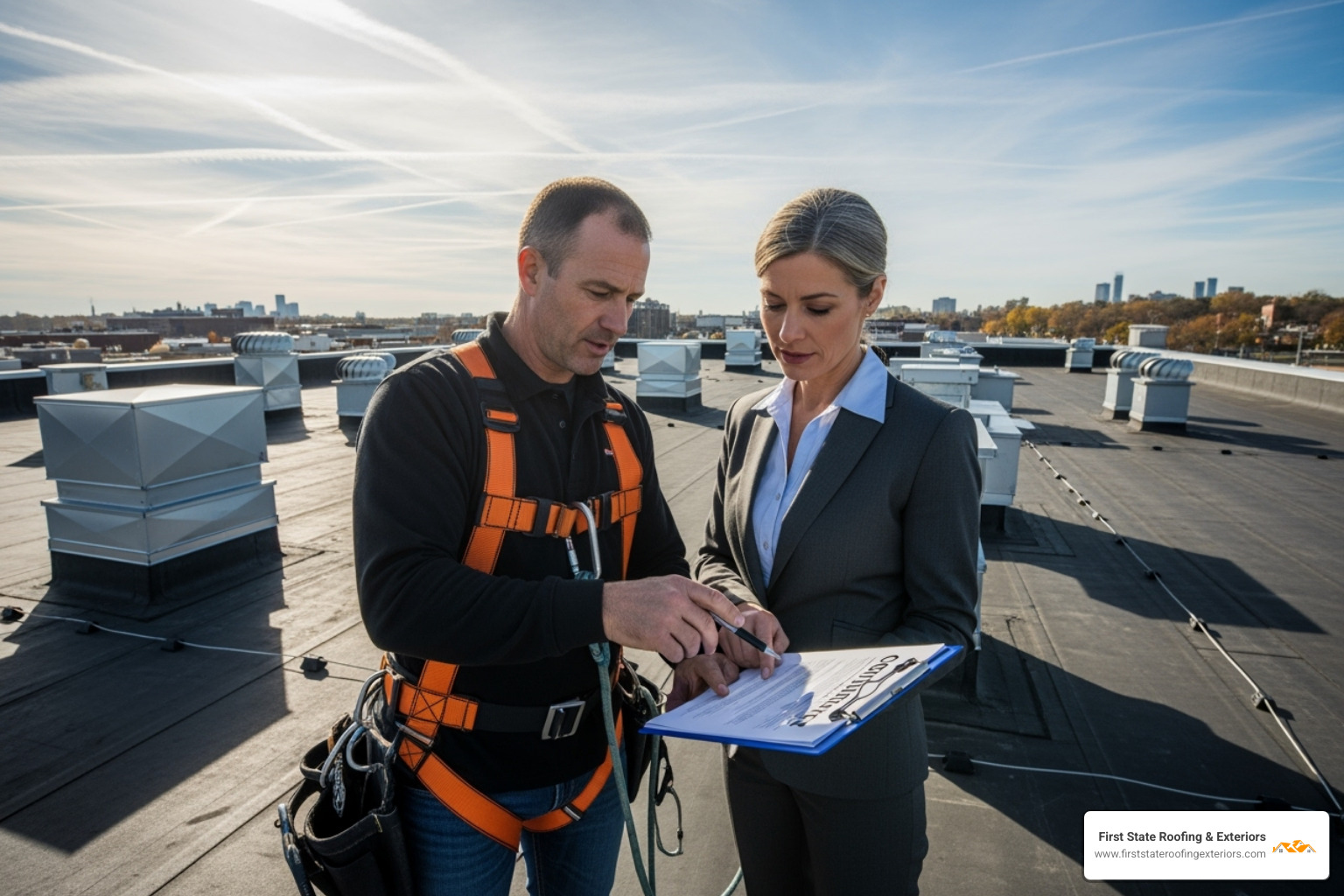
Understanding warranty coverage protects your investment long-term. Manufacturer warranties typically cover roofing materials for 5-30 years depending on the product, while workmanship warranties from your contractor cover installation quality. We stand behind our installations with comprehensive workmanship warranties because we’re confident in our craftsmanship. Always get warranty terms in writing and understand exactly what’s covered.
Itemized quotes separate professional contractors from those cutting corners. Demand detailed proposals that break down material costs, labor, permits, debris removal, and contingencies. Vague estimates often hide surprise costs that appear later in the project.
Your proposal should include material specifications listing exact brands and product lines, project timelines with realistic start and completion dates, and clear payment terms that protect both parties. Most reputable contractors request reasonable deposits with progress payments tied to completion milestones.
Lien waivers protect your business from subcontractors or suppliers placing liens on your property if the general contractor doesn’t pay them. Any professional contractor should provide these documents as work progresses.
Getting multiple quotes helps you compare not just prices, but also proposed solutions, warranty terms, and overall professionalism. Three quotes typically provide enough perspective to make an informed decision.
The lowest bid isn’t always the best value. Focus on contractors who demonstrate expertise, provide comprehensive warranties, and have proven track records with commercial projects like yours.
For a free commercial roofing consultation and detailed proposal, call (302) 222-4065 to schedule your free inspection with our experienced team.
The Commercial Roofing Project: From First Call to Final Inspection
Understanding the process helps you manage expectations and ensures a smooth project from start to finish. When you work with a trusted local commercial roofer, you gain peace of mind knowing every step is handled professionally. From the initial signs of trouble to the final walkthrough, we guide our clients through each phase with clear communication and expert care.
Signs Your Commercial Roof Needs Attention
Your commercial roof sends warning signals long before major problems develop. Learning to recognize these early indicators can save your business thousands of dollars and prevent operational disruptions.
Water stains or active leaks are the most obvious red flags. Even small stains on ceilings or walls indicate water penetration that can quickly escalate into extensive damage to insulation, structural components, and valuable interior assets. Don’t wait – water damage spreads fast.
Ponding water presents a serious concern for flat or low-slope commercial roofs. When water remains standing for more than 48 hours after rainfall, it gradually degrades roofing materials and puts unnecessary stress on your roof structure. This standing water can also become a breeding ground for mosquitoes and other pests.
Look for visible membrane damage during routine property inspections. Cracks, tears, punctures, or blistering on single-ply membranes like TPO and EPDM signal material fatigue. Built-up roofing systems may show alligatoring – that distinctive cracking pattern that resembles reptile skin.
Increased energy bills often surprise business owners, but they’re frequently linked to compromised roofing systems. When your roof’s insulation degrades or the membrane loses its reflective properties, your HVAC system works overtime to maintain comfortable temperatures.
Even without obvious damage, an aging roof approaching 20-35 years deserves professional attention. Proactive planning for roof repair or replacement prevents emergency situations and allows you to budget appropriately.
The Step-by-Step Project Workflow
When you choose us as your local commercial roofer, you’ll experience a streamlined process designed to minimize disruption to your business operations.
Our initial consultation focuses on understanding your specific needs, concerns, and budget constraints. We listen carefully to your goals and examine your property’s unique requirements. This conversation sets the foundation for everything that follows.
During our thorough inspection, our experts conduct a comprehensive assessment of your existing roof system. We identify damage, structural issues, and potential problem areas using advanced tools and techniques. For large commercial properties, we often employ drone technology to safely examine hard-to-reach areas and provide detailed photographic documentation.
Your detailed proposal presents our findings in clear, understandable terms. This comprehensive document outlines recommended solutions, specific materials, realistic timelines, and transparent costs. We ensure you understand every aspect before moving forward – no surprises, no hidden fees.
Site preparation prioritizes safety and protection. Before any work begins, we secure the area to safeguard your employees, customers, and property. We protect surrounding landscaping and establish clear safety protocols for the duration of the project.
When old roof removal becomes necessary for full replacements, our experienced crew works efficiently and responsibly. We carefully strip away existing materials and dispose of debris according to local regulations and environmental best practices.
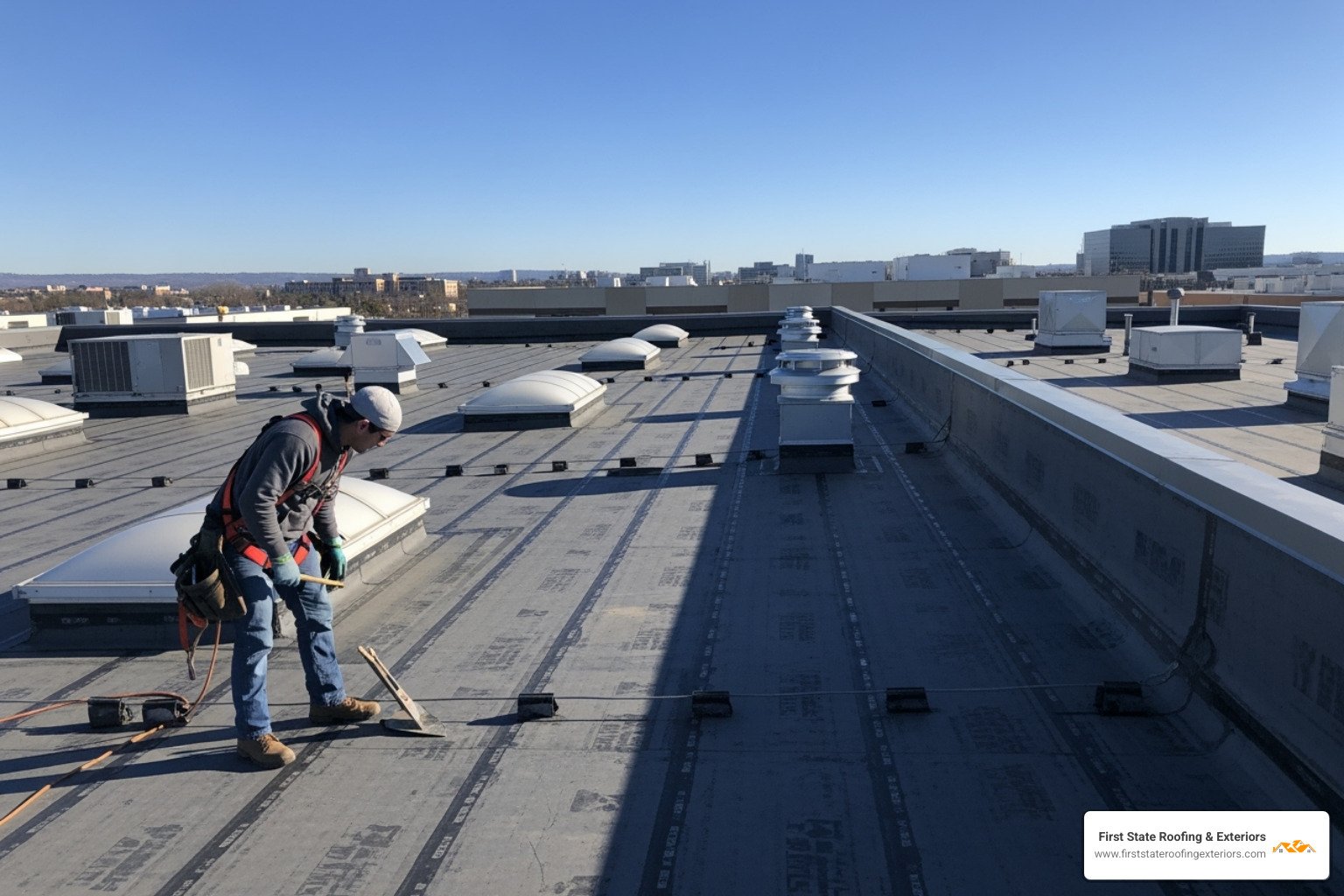
Our new roof installation phase showcases our expertise and commitment to quality. Our experienced crew, equipped with proper safety harnesses and specialized equipment, installs your chosen commercial roofing system according to manufacturer specifications and local building codes. Whether we’re working on a retail outlet or industrial warehouse, we deliver consistent, high-quality roof installation craftsmanship on every project.
Final inspection and cleanup conclude your project professionally. We conduct rigorous quality checks to ensure our work meets both our high standards and your complete satisfaction. Our thorough cleanup process leaves your property spotless and ready for normal operations.
The Importance of Proactive Roof Maintenance
Your commercial roof represents a significant investment that deserves ongoing protection. Like any valuable business asset, regular care maximizes performance and extends useful life far beyond initial expectations.
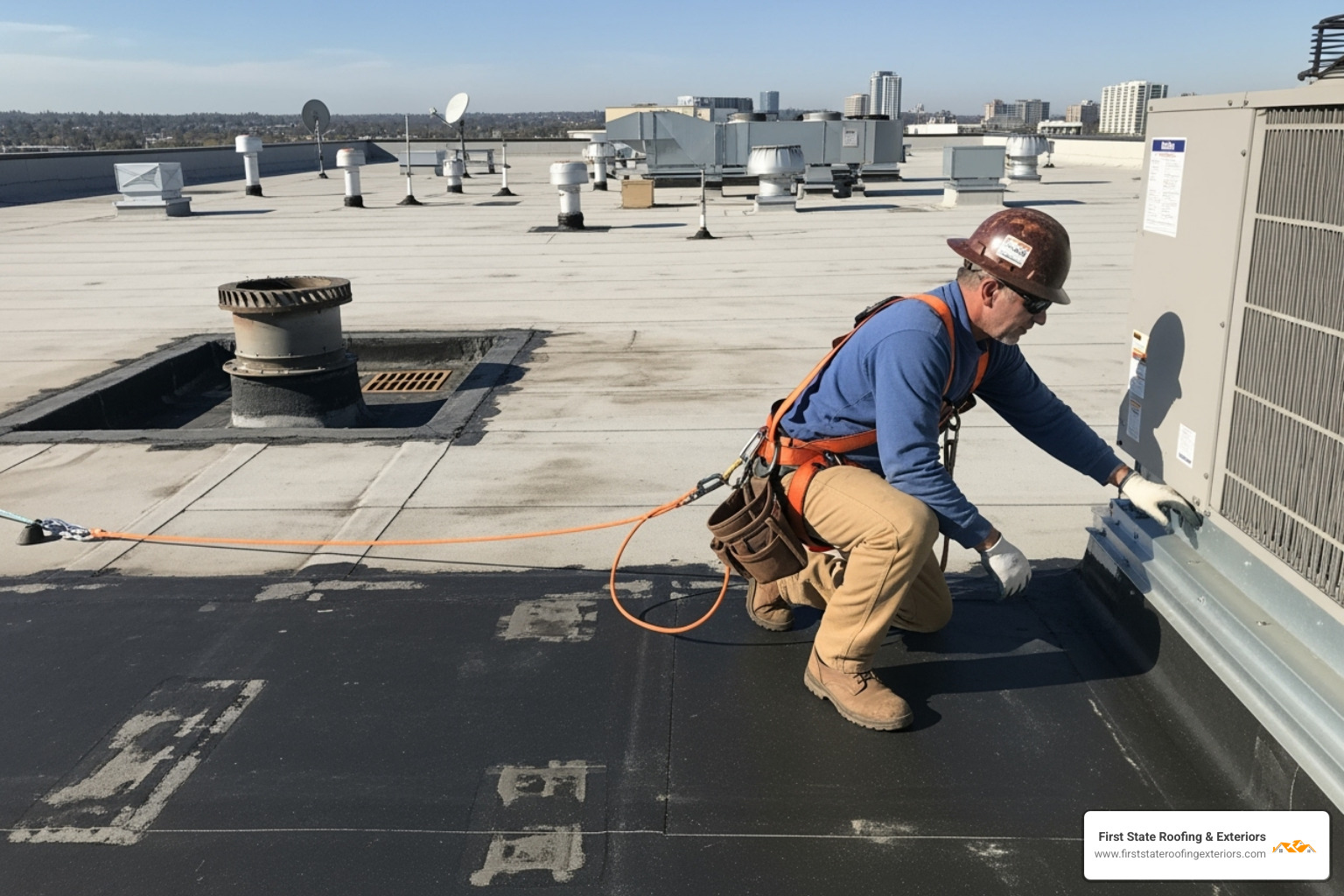
Extending roof lifespan through consistent maintenance often pushes performance well beyond typical estimates. Bi-annual inspections and prompt minor repairs can add years to your roof’s service life, translating into substantial long-term savings for your business.
Preventing major damage starts with addressing small issues before they escalate. Clogged drains, minor punctures, or loose seams might seem insignificant, but neglecting them leads to expensive emergency repairs and potential business interruptions. Early intervention costs pennies compared to major reconstruction.
Protecting your investment goes beyond the roof itself. Your commercial roof safeguards your entire operation – inventory, equipment, employees, and customers. Regular roof maintenance ensures this critical protection remains intact.
Energy savings result directly from well-maintained roofing systems. Intact insulation, properly functioning drainage, and undamaged membranes contribute significantly to your building’s energy efficiency. Lower heating and cooling costs add up quickly over time.
Warranty compliance requires documentation of regular maintenance for most manufacturer warranties to remain valid. Neglecting this responsibility could void your warranty coverage, leaving you financially exposed if material defects develop later.
We offer customized commercial roof maintenance plans tailored to your specific building and budget needs. These programs provide peace of mind while protecting your bottom line through preventive care and early problem detection. We provide free estimates for all our services; call (302) 222-4065 for a free inspection.
Frequently Asked Questions about Commercial Roofing
Business owners often feel overwhelmed when facing commercial roofing decisions. These are the questions we hear most frequently from property owners who want to make informed choices about protecting their investments.
How does commercial roofing differ from residential roofing?
The differences between commercial and residential roofing go far beyond just size – they’re fundamentally different in almost every aspect.
Structural design creates the most obvious distinction. Commercial buildings typically feature flat or low-slope roofs, while residential properties have steep-pitched roofs. This fundamental difference completely changes the materials, installation methods, and drainage systems required.
Material selection reflects these structural differences. Your local commercial roofer works with specialized membranes like TPO, EPDM, PVC, and Built-Up Roofing systems. These materials are engineered to handle standing water and extreme weather conditions that would destroy traditional residential materials like asphalt shingles or clay tiles.
Project complexity increases dramatically with commercial work. We’re not just installing a roof – we’re integrating with complex HVAC systems, multiple penetrations for equipment, sophisticated drainage systems, and sometimes green roof components. The average commercial roofing company employs 10 to 50 people, compared to fewer than 10 for residential contractors, highlighting the specialized expertise required.
Building codes and regulations are much stricter for commercial properties. Fire ratings, energy efficiency standards, and structural requirements all exceed residential standards. Commercial projects often require engineered drawings and multiple inspections throughout the process.
Insurance requirements reflect the higher stakes involved. While residential roofers typically carry $1-2 million in general liability coverage, commercial contractors need $10 million or more due to the scale and potential risks of these projects.
What is the typical lifespan of different commercial roofing systems?
Understanding roof longevity helps you plan maintenance budgets and replacement schedules. Different materials offer varying lifespans, but proper installation and maintenance significantly impact these numbers.
TPO and EPDM systems typically last 25 to 35 years with proper care. These single-ply membranes have proven themselves reliable across diverse climates and building types. We’ve seen well-maintained systems exceed 40 years in ideal conditions.
Elastomeric roofing offers similar durability, often reaching 30 years with minimal maintenance requirements. The flexibility of these systems helps them withstand thermal cycling and building movement.
Metal roofing systems are the longevity champions, frequently lasting 40 to 70 years. Some commercial metal roofs installed in the 1960s are still performing well today. The higher upfront investment pays dividends over decades of reliable service.
Built-Up Roofing (BUR) and Modified Bitumen systems typically serve commercial buildings for 20 to 30 years. These time-tested multi-layer systems have protected countless businesses for over a century.
These are estimates based on average conditions. Regular inspections and prompt repairs can extend any system’s life well beyond these ranges. Neglect, however, can cut these lifespans dramatically short.
What are the key considerations for energy efficiency?
Energy efficiency directly impacts your bottom line through reduced utility costs and improved occupant comfort. Your roof plays a crucial role in your building’s thermal performance.
Cool roof technology offers the most immediate impact. White TPO membranes and light-colored PVC systems reflect sunlight rather than absorbing it, keeping your building cooler. This simple color choice can reduce cooling costs by 10-20% in hot climates.
Reflective coatings can transform existing dark roofs into energy-efficient surfaces. These specialized coatings reflect up to 90% of solar radiation, often paying for themselves within a few years through reduced energy bills.
Proper insulation with adequate R-values creates the thermal barrier your building needs. The right insulation thickness depends on your climate zone and building use, but upgrading insulation during roof replacement often provides excellent returns on investment.
Reduced HVAC load means your heating and cooling systems work less, last longer, and consume less energy. An energy-efficient roof system can extend HVAC equipment life by reducing thermal stress on these expensive systems.
Tax credits and rebates are often available for energy-efficient commercial roofing improvements. Many utility companies offer rebates for cool roof installations, and federal tax credits may apply to qualifying improvements.
The initial investment in energy-efficient roofing typically pays for itself through utility savings, making it both environmentally and financially smart. We provide free estimates. Call (302) 222-4065 to discuss energy-efficient options for your commercial property and schedule your free inspection.
Your Trusted Partner for Commercial Roofing in Delaware
When it comes to protecting your business investment, choosing a qualified, insured, and experienced local commercial roofer isn’t just a decision—it’s a partnership that safeguards your company’s future. The right contractor becomes an extension of your team, understanding that your business can’t afford downtime or surprises.
At First State Roofing & Exteriors, we’ve spent over two decades building relationships with Delaware business owners who value transparency, quality craftsmanship, and reliable service. From the busy commercial districts of Greenwood DE to the growing business community in Harrington DE, we’ve seen how the right roofing solution can transform a company’s operational efficiency and peace of mind.
What sets us apart as your local commercial roofer isn’t just our technical expertise—it’s our commitment to treating your business like our own. We understand that every day your roof isn’t performing optimally is a day your business faces unnecessary risk. That’s why we offer 24/7 availability for emergencies and maintain transparent communication throughout every project.
Our comprehensive approach includes:
- Understanding your unique needs through detailed consultations
- Providing honest assessments backed by decades of experience
- Using only premium materials from trusted manufacturers
- Delivering on-time, on-budget results with minimal disruption to your operations
- Standing behind our work with robust warranties and ongoing support
Your commercial roof is more than just protection from the elements; it’s the foundation of your business continuity. We provide free estimates. Call (302) 222-4065 to schedule your free inspection today and discuss the best path forward for your facility.