What You Need to Know About Commercial Roof Replacement
Commercial roof replacement is one of the largest maintenance investments a property owner will make — and getting it right protects your building, your tenants, and your bottom line. As a premier Kent and Sussex County, DE roofing company, we help property owners navigate these complex decisions with transparency and expertise. If you’re evaluating your options right now, here’s a quick summary:
At a glance — commercial roof replacement essentials:
| Factor | Key Detail |
|---|---|
| Average cost | $4 – $15 per square foot |
| Typical lifespan | 20 – 30 years (with proper maintenance) |
| Replace vs. repair threshold | Replace if repair cost exceeds 50% of replacement cost |
| Most common materials | TPO, EPDM, PVC, Metal, Modified Bitumen, BUR |
| Project timeline | Days to several weeks depending on roof size |
| Signs you need replacement | Recurring leaks, membrane failure, sagging, age over 20 years |
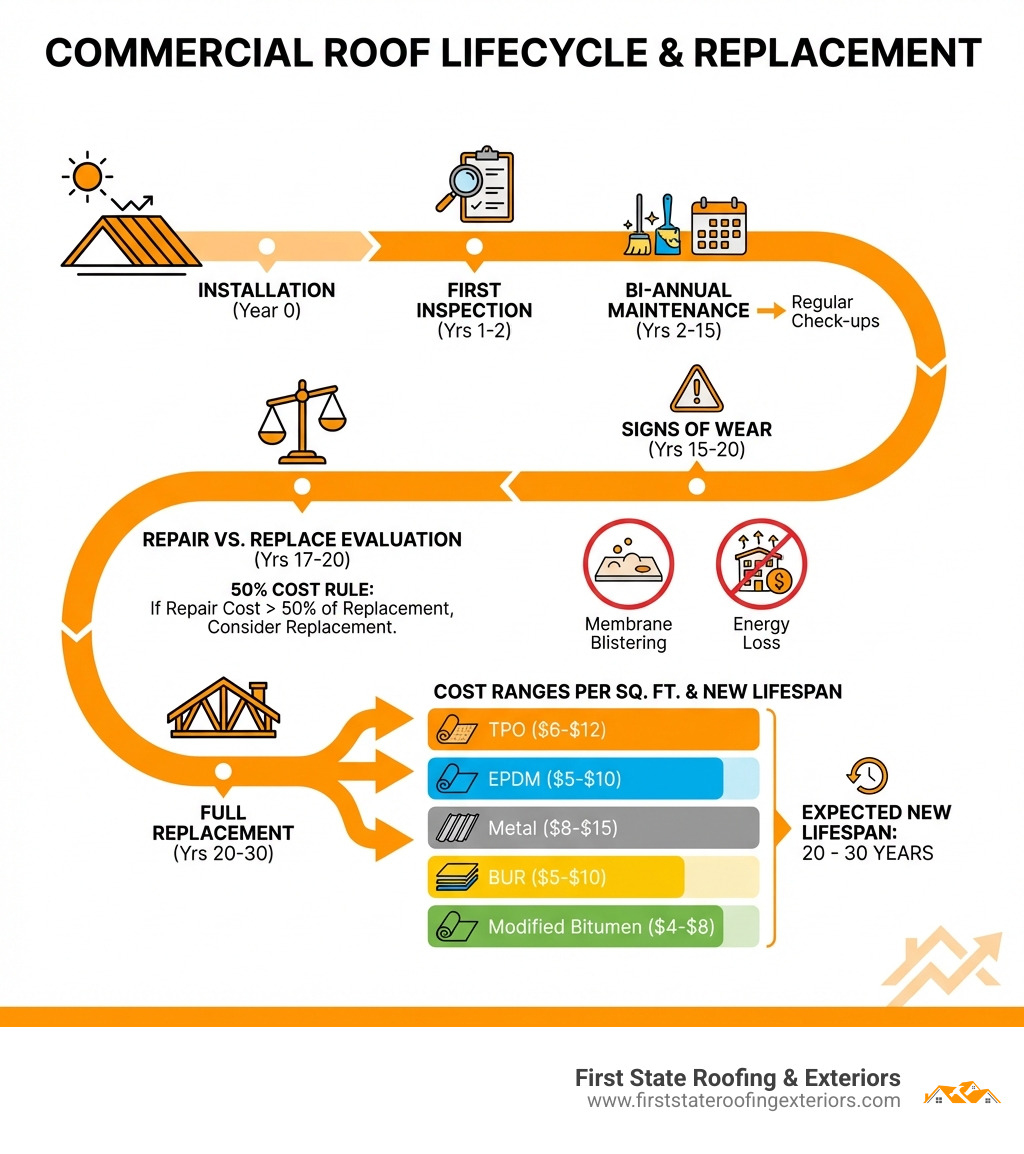
Most commercial roofs last between 20 and 30 years. But age alone isn’t the only trigger. Widespread membrane failure, structural damage, or repair bills that keep climbing are all strong signals that a full replacement — not another patch — is the smarter long-term move.
At First State Roofing & Exteriors, we help Kent and Sussex County, DE property owners cut through the confusion and make confident, cost-effective decisions about their roofing systems.
I’m Richard McCain, Owner and President of First State Roofing & Exteriors, and over more than 20 years leading commercial and residential roofing projects across Kent and Sussex County, DE, I’ve overseen hundreds of commercial roof replacements on everything from retail centers to industrial facilities. That hands-on experience shapes every recommendation in this guide, so you get practical answers — not guesswork.
Terms related to commercial roof replacement:
When to Invest in a Commercial Roof Replacement
Knowing when to pull the trigger on a full commercial roof replacement instead of opting for another repair is a critical financial decision. We often see property managers in Dover and Milford struggling with this choice. The most reliable industry standard is the “50% Rule”: if the cost of a single repair exceeds 50% of the cost of a full replacement, it is time to replace the system.
Another vital metric we use is the “25% Rule.” If more than 25% of your commercial roof surface is compromised by moisture, saturation, or physical damage, the structural integrity of the entire system is likely failing. In these cases, localized patches are essentially Band-Aids on a wound that requires surgery. Continuing to repair a roof that has reached this level of failure often becomes a “money pit” that yields no long-term return on investment.
Environmental factors in Kent and Sussex County, DE, such as coastal humidity and seasonal storms, can accelerate aging. If your roof has faced significant weather events, you may need to review our storm damage roof repair resources to see if insurance-backed replacement is an option. A new roof offers peace of mind, improved safety, and a fresh warranty that repairs simply cannot provide.
Identifying Critical Failure Points
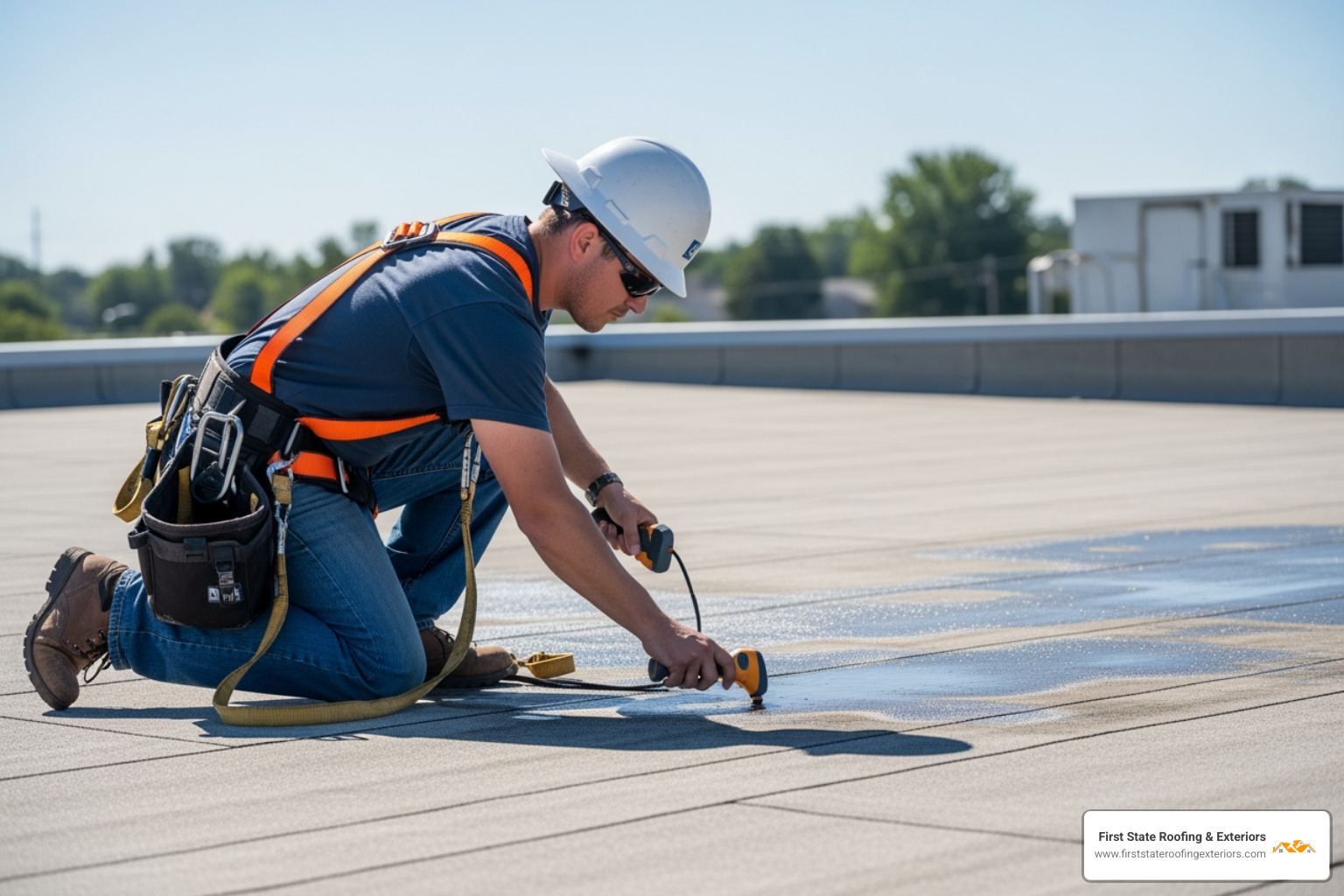
Before we recommend a full commercial roof replacement, we look for specific early signs that a system is failing. These aren’t just minor leaks; they are systemic failures.
- Membrane Blisters and Bubbling: This indicates that moisture has become trapped between the membrane and the insulation. As the sun heats the roof, the moisture turns to vapor, expanding and pulling the membrane away from the substrate.
- Scrim Exposure: On TPO or PVC roofs, the “scrim” is the internal reinforcing fabric. If the top weathering layer has eroded to the point where you see this fabric, the roof is no longer waterproof.
- Sagging Rafters and Decking: If you notice areas where water is pooling (ponding water) and the roof surface seems to dip, it could indicate structural rot.
- Dry Rot and Mold: For buildings in Kent and Sussex County, DE, humidity can lead to dry rot in the wooden components of the roof structure if leaks are left unaddressed.
If you are seeing these signs, especially in older buildings, you might first look into commercial roof repair in Dover for an assessment, but be prepared for a replacement recommendation if the damage is widespread.
Comparing Commercial Roofing Materials and Systems
Selecting the right material is the most significant factor in determining the future performance and cost of your building. There is no one-size-fits-all solution; the best material for a warehouse in Milford might differ from an office building in Dover.
| System Type | Avg. Lifespan | Cost Per Sq. Ft. | Energy Efficiency |
|---|---|---|---|
| TPO (Thermoplastic Polyolefin) | 20 – 30 Years | $6 – $12 | Excellent (Highly Reflective) |
| EPDM (Rubber) | 20 – 25 Years | $5 – $10 | Moderate (Absorbs Heat) |
| PVC (Polyvinyl Chloride) | 20 – 30 Years | $8 – $13 | Excellent (Chemical Resistant) |
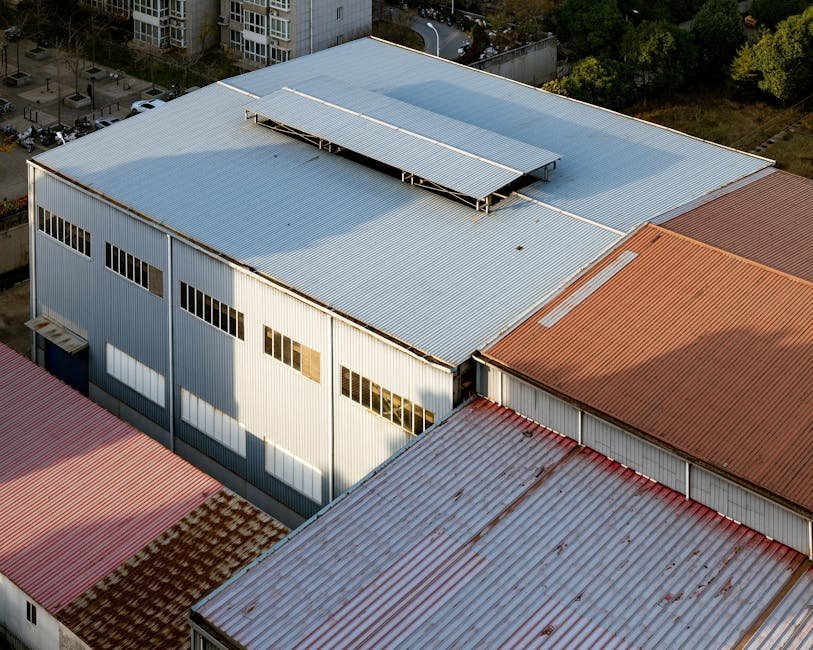
| Metal Roofing | 40 – 70 Years | $8 – $15 | Good (Reflective Coatings) |
| Modified Bitumen | 15 – 20 Years | $4 – $8 | Low to Moderate |
| Built-Up Roofing (BUR) | 20 – 30 Years | $5 – $10 | Low (Heavy) |
For a deeper dive into these options, you can consult industry standards for commercial roofing systems. Each system has unique pros and cons. For example, BUR is incredibly durable against foot traffic but is very heavy and difficult to install. Conversely, single-ply membranes are lightweight and cost-effective but can be prone to punctures if not properly maintained. If you’re leaning toward a modern membrane, our TPO roof replacement guide provides specific insights into why this is a Kent and Sussex County, DE favorite.
Advantages of Single-Ply Membranes
Single-ply membranes like TPO and PVC have become the industry standard for commercial roof replacement. Their primary advantage lies in their installation method: heat-welded seams. Unlike older systems that rely on tapes or adhesives, heat-welding creates a monolithic (single-piece) surface where the seams are actually stronger than the membrane itself.
These materials are also highly reflective. A white TPO roof can reflect up to 80% of solar radiation, significantly lowering the “heat island” effect and reducing cooling costs. In fact, many property owners find that the energy savings from a new TPO system can offset the installation costs in under five years. For more details on these systems, view our dedicated page on TPO roofs.
Long-Term Value of Metal Roofing
While the upfront cost of metal is higher, its longevity is unmatched. A well-installed metal roof can last between 40 and 70 years, effectively outlasting two or three membrane roof cycles. Metal is also fire-resistant and highly sustainable, as most metal roofing contains a high percentage of recycled content and is 100% recyclable at the end of its life. For Kent and Sussex County, DE businesses looking for a “set it and forget it” solution, metal is often the best long-term value.
Understanding Commercial Roof Replacement Costs per Square Foot
The cost of a commercial roof replacement typically ranges from $4 to $15 per square foot. However, this is a broad range because every building presents unique challenges. On a 20,000-square-foot building, that could mean a difference of $200,000 depending on your choices and the building’s condition.
Current market trends show that material volatility remains a factor in 2025. We recommend checking our updated roof replacement cost guide 2025 for the most recent pricing data. Generally, flat roofs are cheaper to install than sloped roofs, but the complexity of the project — such as the number of HVAC units, vents, and skylights — will drive up labor costs.
Factors Influencing the Total Investment
Several “hidden” variables can impact your final estimate:
- Building Height: Buildings over two stories require specialized equipment like cranes or high-reach lifts, increasing mobilization costs.
- Roof Accessibility: If our crews cannot easily stage materials or park equipment near the building, labor hours will increase.
- Existing Layer Removal: Kent and Sussex County, DE building codes often limit the number of roof layers allowed. If we have to “tear off” two or three old layers, disposal fees and labor will rise.
- Insulation R-Value: Modern energy codes often require higher R-value (thickness) for insulation during a replacement, which adds to the material cost but saves money on utilities.
- Drainage Upgrades: If your old roof suffered from ponding water, we may need to install tapered insulation to create a positive slope toward drains.
The Step-by-Step Commercial Roof Replacement Process
A successful commercial roof replacement is a highly coordinated event. We follow a rigorous 9-step process to ensure minimal disruption to your business operations.
- Initial Assessment: We conduct a thorough inspection, including core samples to check for moisture in the underlying insulation.
- Planning and Permits: We secure all necessary Kent and Sussex County, DE building permits and create a safety and staging plan.
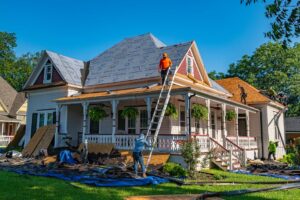
- Tear-Off and Disposal: The old roofing material is removed and hauled away to a recycling or disposal facility.
- Substrate Repair: We inspect the roof deck (wood, metal, or concrete) for damage and perform necessary structural repairs.
- Insulation Installation: New insulation boards are mechanically fastened or adhered to the deck.
- System Installation: The new membrane (TPO, EPDM, etc.) or metal panels are installed according to manufacturer specifications.
- Flashing and Detailing: We seal all “penetrations” like pipes, HVAC curbs, and walls with specialized flashing.
- Quality Assurance: We perform moisture testing and seam checks to ensure the system is watertight.
- Final Cleanup and Inspection: The site is restored, and a final walkthrough is conducted for warranty activation.
For a more granular look at these stages, read our guide from tear-off to top-off.
Ensuring Quality and Compliance
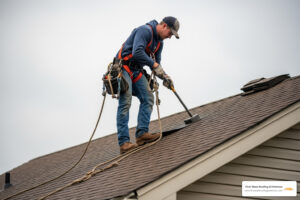
Safety is our top priority. Our crews adhere to strict OSHA protocols, including the use of proper safety harnesses and perimeter warnings. We also ensure that every commercial roof replacement we perform meets or exceeds local Kent and Sussex County, DE building codes. This compliance is essential for your insurance coverage and for maintaining the validity of your manufacturer’s warranty.
Frequently Asked Questions about Commercial Roof Replacement
How long does a commercial roof replacement take?
The timeline for a commercial roof replacement depends on the size of the building and the complexity of the roof.
- Small Retail/Office (Under 10,000 sq. ft.): 3 – 7 days.
- Medium Warehouse (10,000 – 50,000 sq. ft.): 2 – 3 weeks.
- Large Industrial (50,000+ sq. ft.): 1 month or more.
Weather is the biggest variable in Kent and Sussex County, DE. We cannot install most membranes during rain or extreme cold, so we plan our projects around clear weather windows to keep your building dry.
Can my business stay open during a commercial roof replacement?
In almost all cases, yes. We specialize in “operational continuity.” We use safety barriers to protect entrances, schedule the noisiest tasks (like tear-off) for early morning or after hours, and phase the project so that only one section of the building is under construction at a time. We communicate daily with property managers to ensure that tenants are aware of the schedule.
What is the difference between reroofing and replacement?
“Reroofing” (or an overlay) involves installing a new roof system directly over the existing one. It is cheaper because it eliminates tear-off costs. However, it is only an option if the existing roof is in relatively good shape and has only one layer. A full commercial roof replacement involves removing everything down to the deck. Replacement is generally the better long-term investment because it allows us to find and fix hidden structural rot and ensures the new manufacturer’s warranty is fully enforceable.
Conclusion
At First State Roofing & Exteriors, we understand that a commercial roof replacement is more than just a construction project; it’s a strategic business decision. As Kent and Sussex County, DE local experts, we bring integrity, transparency, and 24/7 availability to every job site. Whether you are in Dover, Milford, or anywhere else in the First State, we are here to ensure your building remains a safe and efficient asset for decades to come.
Don’t wait for a catastrophic leak to start your planning. For more information on our professional roof replacement services, explore our full range of solutions online.
Ready to protect your investment? We provide free estimates and comprehensive site assessments. Call us at tel:+13022224065 today to schedule your professional inspection and get a transparent, no-obligation quote for your property.