
Hear from Our Customers
When your siding is doing its job, you stop worrying about what’s happening behind the walls. No moisture creeping in behind a cracked panel. No mold working its way through the framing of a cottage that’s been on the Bay since the mid-1900s.
You get a home that looks right, seals tight, and doesn’t surprise you with a repair bill every spring when you come back to check on things. For Tolchester homeowners — whether you’re here year-round or coming down from the Baltimore side for the season — that peace of mind is worth more than the curb appeal alone.
The Chesapeake Bay doesn’t give you a pass just because your siding is a few years old. Salt air accelerates everything: paint failure, caulk breakdown, panel warping. The homes along Tolchester Estates that face open water to the west get hit the hardest, and the damage compounds fast when it goes unaddressed between seasons.
New siding, installed correctly with a proper moisture barrier and weatherproof seams, stops that cycle. It also adds real value — nationally, vinyl siding replacement recoups around 80% of project cost at resale, and fiber cement comes in even higher at roughly 88%. For a property with a median value around $319,000 in this area, that’s not a trivial number.
First State Roofing & Exteriors Co. is based in Smyrna, Delaware — close enough to the upper Bay corridor that the conditions Tolchester homeowners deal with aren’t new to us. We’ve been working in Delaware’s coastal and Bay-adjacent communities for over two decades, and the freeze-thaw cycles, humidity, salt air, and nor’easter damage we see in Kent County look a lot like what we handle across the Delaware Bay shoreline every season.
Melissa and Richard McCain own and operate this company. It’s not a franchise, not a multi-state operation with rotating crews. When you call, you’re reaching people who have been doing this work in this region for 22 years, hold a BBB accreditation with an A+ rating, and have built a 5.0 out of 5 star rating across 63+ verified reviews.
We handle everything in-house. No subcontractors show up at your Tolchester property unannounced. The crew that starts your job finishes it.
It starts with a free consultation and a thorough inspection of your existing siding. This step matters more on Bay-area properties than almost anywhere else, because what’s visible on the surface rarely tells the full story. Older homes in Tolchester — many of which started as resort cottages built in the early-to-mid 1900s — can have decades of moisture intrusion hiding behind original or aging cladding.
We look at what’s there before we talk about what comes next, so the scope you agree to is the scope that actually needs to happen. From there, we walk you through material options based on your home’s specific exposure. A house facing open water on the western shoreline has different needs than one set back from the Bay.
Vinyl and fiber cement both perform well in coastal environments, and we’ll explain the tradeoffs clearly — thickness, UV resistance, wind load ratings, and what each material actually does in a salt air environment over time. Once you approve the plan, we handle permitting through Kent County’s Planning Commission so you don’t have to navigate that process yourself.
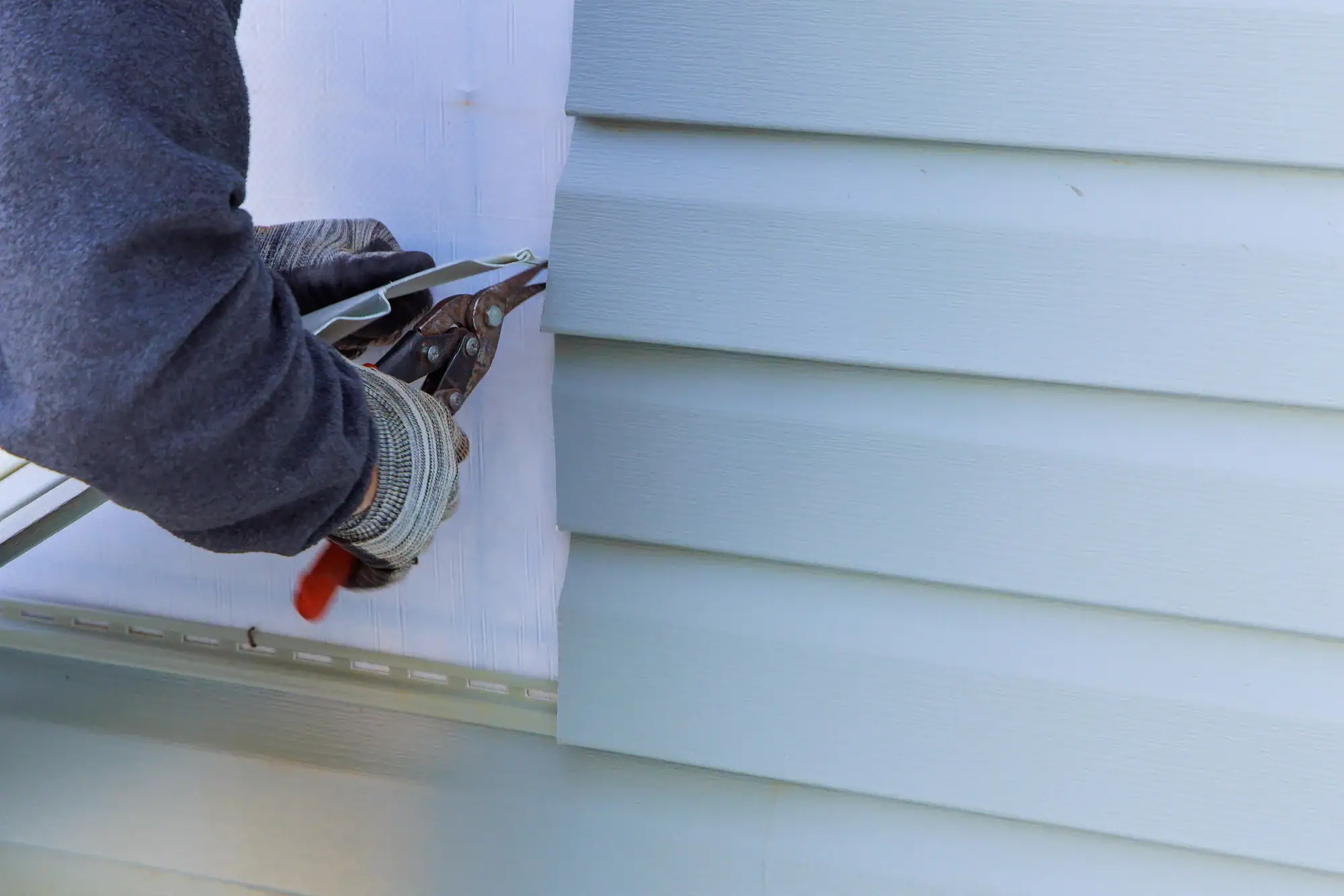
Most siding installations run two to five days. Our crew manages the full removal, moisture barrier installation, new siding, trim work, and sealing — and the site is cleaned up completely before we leave. If your property is storm-damaged and you’re working through an insurance claim, we assist with that process too.
Ready to get started?
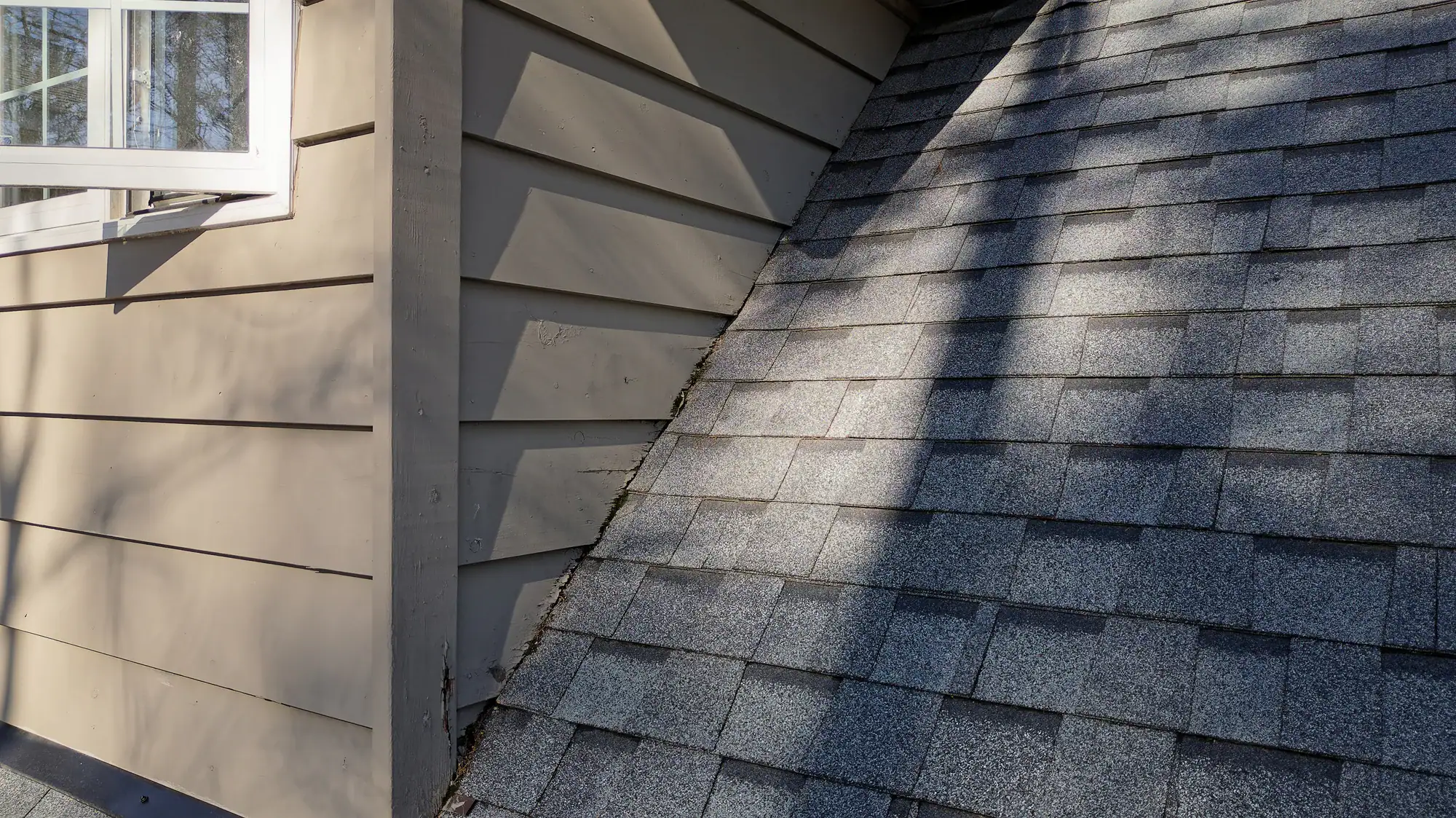
Every siding project starts with full removal of the old material. We don’t layer new siding over old — that approach skips the inspection of what’s underneath, and in a community like Tolchester where homes have been absorbing Bay weather for generations, what’s underneath matters. Removing the old siding lets us check the sheathing, look for rot or pest damage, and address anything structural before it becomes a much larger problem.
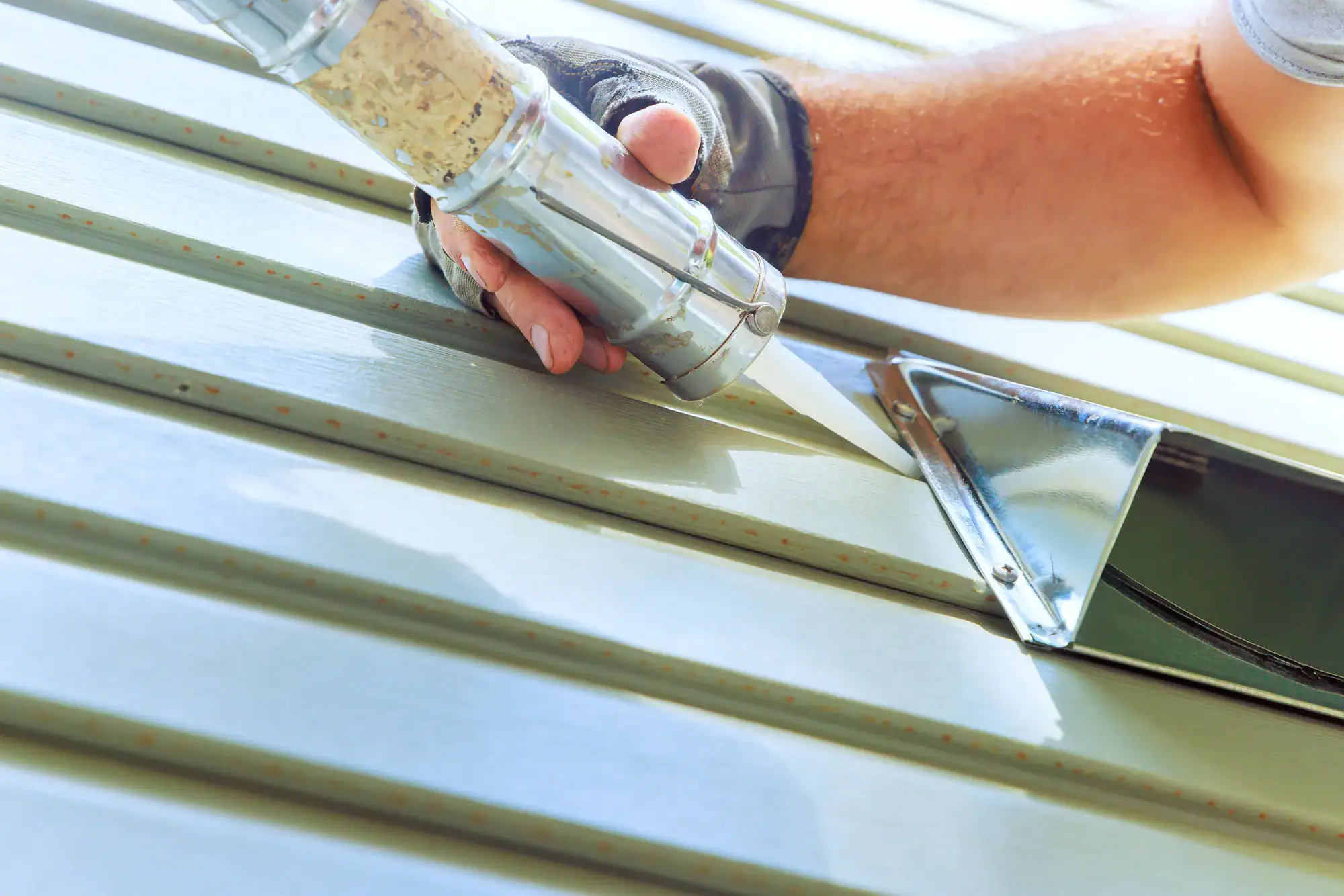
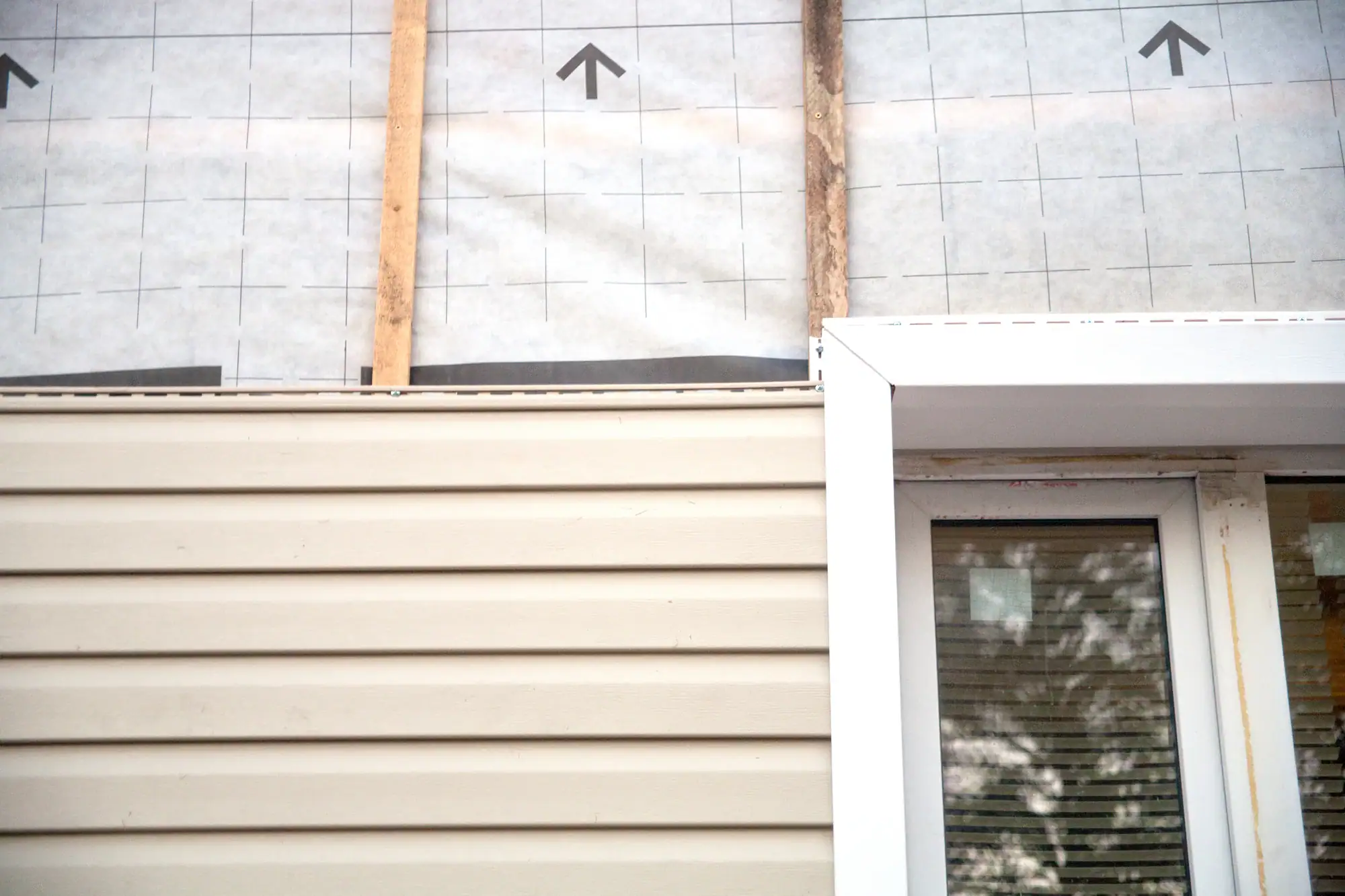
After removal, we install a moisture barrier before a single panel goes up. In a direct Chesapeake Bay environment, that barrier is the difference between siding that lasts and siding that fails early. We then install your chosen material — vinyl or fiber cement — with weatherproof seams, proper trim work, and sealed penetrations throughout.
Vinyl is the most popular choice for coastal Maryland homes because it won’t rot, holds up to wind-driven rain, and requires minimal maintenance. Fiber cement is the longer-term play, with a lifespan of up to 50 years and near-immunity to moisture and salt air damage.
For Tolchester and the broader Kent County area, we also handle all required permitting through the county’s Planning Commission. Financing is available if the project scope makes upfront payment a barrier. If a nor’easter or storm has already done damage, we work directly with your homeowner’s insurance to help move the claim forward — not just replace the panels and hand you a bill.

It shortens the lifespan of most materials if the original installation wasn’t built for that environment. Salt air is corrosive — it breaks down paint, degrades caulk, and accelerates the kind of surface cracking that lets moisture in behind the panels. On a home that faces open water to the west, the way most properties along Tolchester Beach do, you’re dealing with prevailing winds coming off 27 miles of open Bay.
That’s sustained exposure, not occasional weather. Vinyl siding holds up well in this environment because it doesn’t absorb moisture and won’t rot. But the quality of the vinyl matters — thinner panels with lower wind load ratings fail faster when nor’easters push through the Bay corridor. Fiber cement is even more durable in salt air conditions and can last up to 50 years when properly installed. The key in either case is a proper moisture barrier underneath and tight, sealed seams at every joint and penetration.
For homes that started as seasonal resort properties — which describes a lot of the housing stock in Tolchester Estates and the surrounding area — the right material depends on a few things: how much direct water exposure the home has, whether it’s occupied year-round or seasonally, and what condition the underlying structure is in once the old siding comes off.
Vinyl is the most practical choice for most of these homes. It’s moisture-resistant, requires almost no maintenance, and performs well in the humidity and wind conditions along the western Eastern Shore. If the home has significant architectural detail or you’re planning to hold it long-term, fiber cement is worth the additional investment — it’s dimensionally stable in temperature swings, doesn’t warp in heat or cold, and handles salt air without degrading the way wood does. Either way, we do a full inspection before recommending anything, because the condition of what’s already there shapes the decision as much as the material options do.
Yes, in most cases you do. Tolchester is an unincorporated community in Kent County, which means building permits fall under the jurisdiction of the Kent County Planning Commission rather than a municipal government. Exterior siding work typically requires a building permit before work begins, and the permit process involves submitting project details and scheduling inspections at the appropriate stages.
We handle this as part of every project. You don’t have to figure out the county’s requirements, submit paperwork, or schedule inspections on your own. It’s also worth knowing that skipping the permit isn’t just a legal risk; it can create real problems when you go to sell the property, since unpermitted work often surfaces during a buyer’s home inspection and can complicate or kill a sale. Doing it right from the beginning protects you both during the project and down the road.
This is one of the more common situations we run into with properties in communities like Tolchester, where a significant number of homes are second residences or vacation properties. When a home sits unoccupied through fall and winter, small siding issues — a cracked panel, a gap at a corner trim, a failed caulk seam — can allow water intrusion to progress for an entire season without anyone noticing.
By the time you’re back in the spring, what started as a manageable repair has sometimes turned into rot behind the walls or mold in the framing. The honest answer is that you often can’t tell from the outside how far damage has progressed. That’s exactly why the free inspection we do at the start of every project matters — we look at what’s visible, but we’re also checking for soft spots, discoloration, and other signs that moisture has already gotten behind the surface. If there’s structural damage underneath, we find it before the new siding goes up, not after.
It often can be, yes. Homeowner’s insurance policies typically cover sudden and accidental damage from storms — wind, hail, and falling debris are common covered perils. For Tolchester and the broader Kent County coastline, nor’easters are the most frequent culprit. These storms track up the Chesapeake Bay and hit western-facing homes with sustained high winds and horizontal rain that can crack panels, pull siding away from the wall, and force water behind the exterior envelope.
The tricky part is navigating the claims process — documenting the damage correctly, understanding what your policy covers versus what falls under a deductible, and making sure the scope of the repair is accurately represented to the adjuster. We assist with insurance claims as part of the service. We’re not an insurance company, but we’ve been through this process enough times to help you document the damage thoroughly and work through the claim without leaving money on the table.
Most siding installations run two to five days, depending on the size of the home and the material being installed. For a typical single-family home in the Tolchester area, two to three days is common for vinyl. Fiber cement takes a bit longer due to the weight and cutting requirements of the material, but it’s rarely a week-long project on a standard residential property.
For second-home owners who are coordinating a project around their time at the property, this matters. You’re not looking at a contractor who shows up for a day, disappears for a week, and comes back when it’s convenient for them. We work with in-house crews only — no subcontractors — which means the schedule we give you is the schedule we keep. We also leave the site clean at the end of every workday, so if you’re staying at the property during the project, you’re not dealing with a construction zone every morning.
Other Services we provide in Tolchester