
Hear from Our Customers
A flat roof that’s been installed correctly — with the right membrane, proper drainage, and clean flashing details — stops being something you worry about. No more water stains appearing on the ceiling after a nor’easter rolls up the bay. No more wondering whether that soft spot near the edge is getting worse while the property sits empty over the winter.
For homeowners in Tolchester Estates, that peace of mind carries extra weight. Many properties here are used seasonally, which means a slow leak can quietly do weeks of damage before anyone notices. The right flat roof system, installed by people who actually know what they’re doing, cuts that risk down significantly. You’re not just fixing a roof — you’re protecting a property you’ve invested in.
The Chesapeake Bay environment is genuinely hard on roofing materials. Salt air, open-water wind, persistent humidity, and freeze-thaw cycling through Kent County winters all stress membrane seams in ways that don’t apply to inland properties. When the installation is done right — with a system matched to those specific conditions — your roof can hold up for 20 to 30 years depending on the material. When it isn’t, you’ll know about it much sooner.
We’ve been doing this work for over 22 years across the Delmarva Peninsula, including waterfront communities along the upper Chesapeake Bay corridor like Tolchester. That’s not a number dropped in to sound impressive — it means we’ve worked through enough Mid-Atlantic storm seasons, enough coastal humidity, and enough freeze-thaw winters to know what flat roofing systems actually need to perform here.
Every project is handled by our own certified crew. No subcontracting, no unknown third parties showing up on your property. The team you speak with is the team that does the work, which matters a great deal when you’re managing a property in Tolchester and you’re not always on-site to see what’s happening.
We’re BBB accredited, consistently rated 5.0 out of 5 across 63-plus verified reviews, and fully licensed and insured. We also help with insurance claims for storm damage — something that comes up more than you’d think in a community that sits directly in the path of bay weather systems.
It starts with a free estimate. Someone from our team comes out, looks at what you actually have, and gives you a clear written scope of work — what needs to happen, what materials make sense for your specific roof, and what it’s going to cost. No verbal quotes that shift later, no pressure to sign on the spot.
From there, the work begins with a proper tear-off of the existing membrane and a full inspection of the deck underneath. This step matters more than most people realize. Water that’s been sitting under a failing membrane can compromise the decking, and skipping that inspection is how contractors set themselves up to come back in three years. Once the deck is confirmed solid and any damaged sections are repaired, the insulation layer goes down, followed by the membrane itself — whether that’s TPO, EPDM, modified bitumen, or PVC, depending on what fits your building and your budget.
In Kent County, significant roofing work typically requires a permit through the Department of Planning, Housing and Zoning. We handle that side of the process so you’re not left navigating paperwork on your own. Timing matters here too — spring and fall are the most popular windows for flat roof work in Tolchester, especially for second-home properties being opened or closed for the season. If you’re working toward a specific deadline, that’s worth mentioning upfront so scheduling can be planned around it.

Ready to get started?
Not every flat roof system is the right fit for every building, and that’s especially true in a waterfront community like Tolchester. The combination of bay wind, salt air, and high humidity narrows the field quickly.
TPO membranes are a strong choice for many properties here — the heat-welded seams resist wind uplift, and the material’s high solar reflectance helps manage cooling costs during Tolchester’s humid summers. For properties with more complex roof geometry, penetrations, or sections that have been added over the years as part of a renovation, EPDM rubber roofing is often the better call. It’s flexible, proven over decades, and handles the freeze-thaw cycling of Kent County winters without losing integrity at the seams.
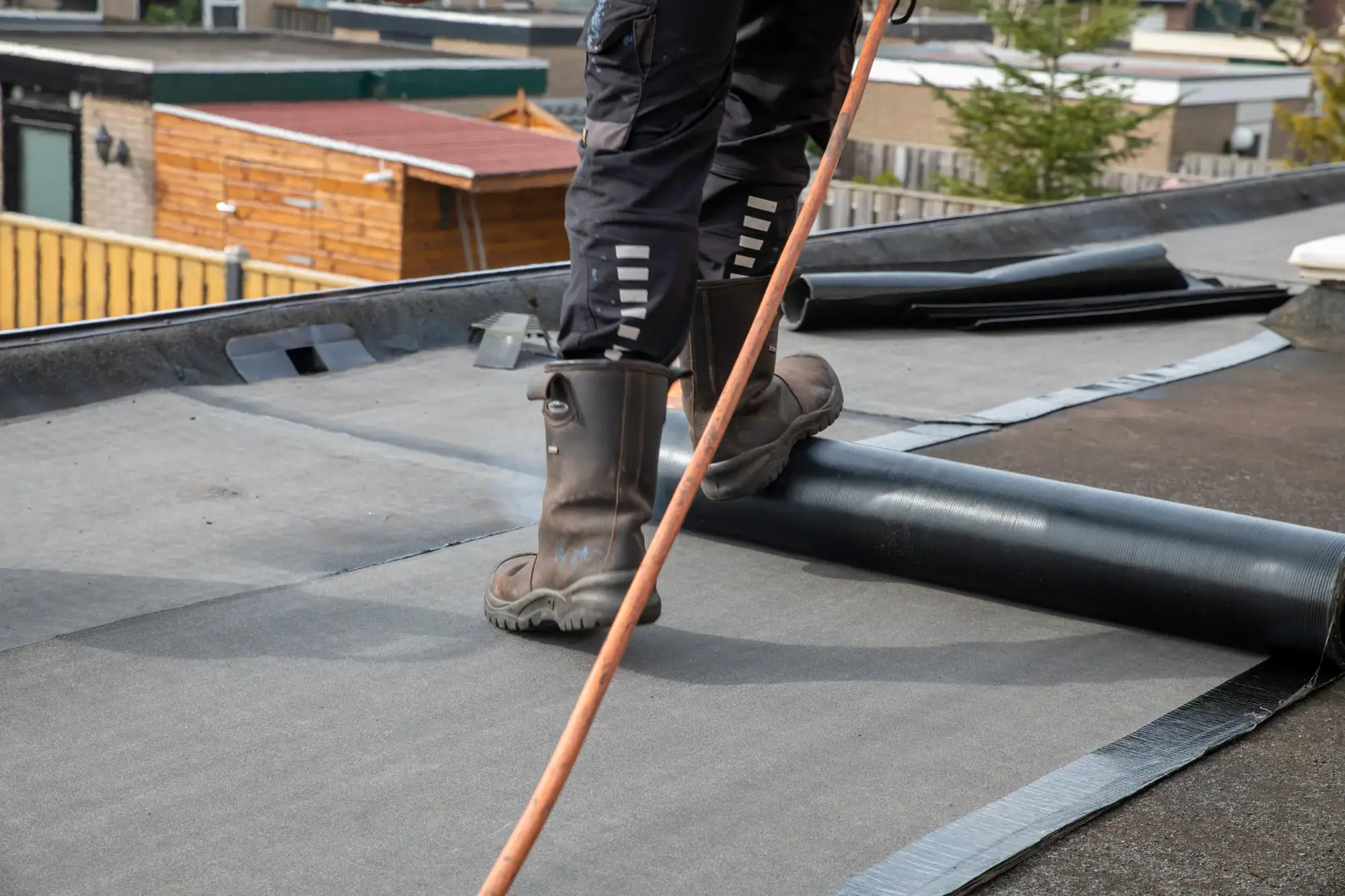
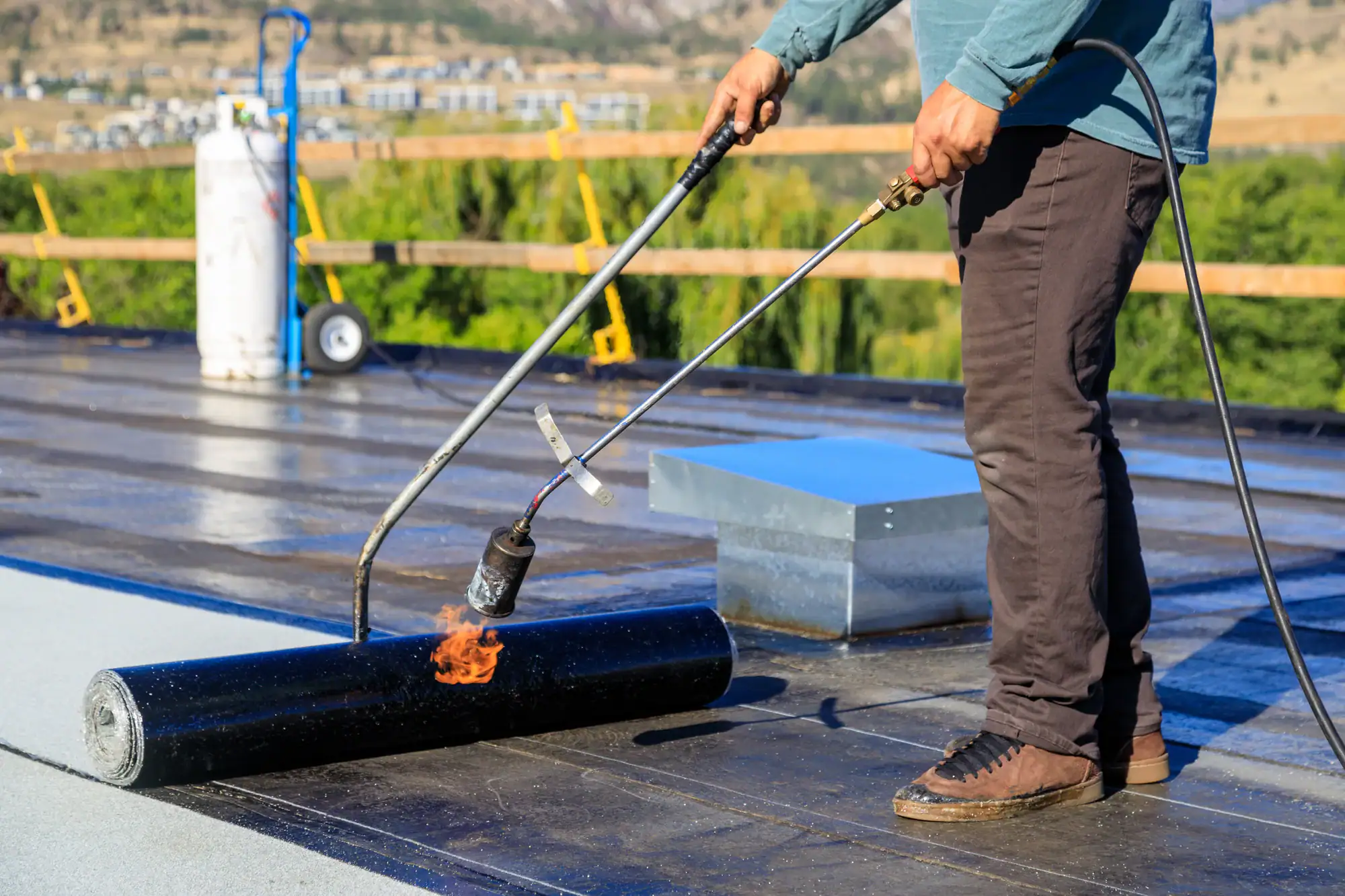
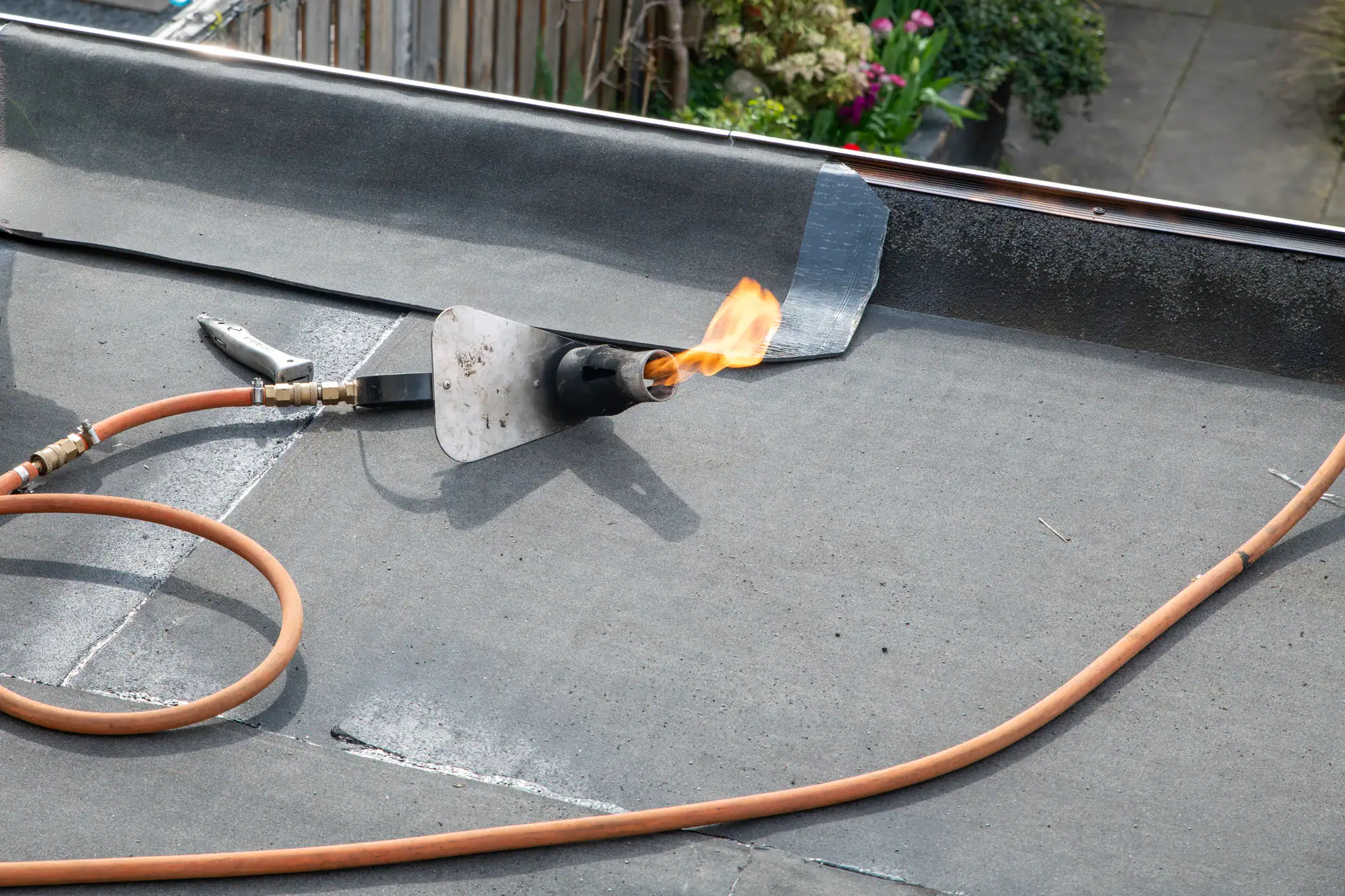
Modified bitumen, sometimes called torch-down roofing, is another option that comes up frequently on older properties in Tolchester Estates — particularly on smaller flat sections over additions, porches, and outbuildings where a full membrane system may be more than the section warrants. We work with all of these systems and can walk you through which one makes sense for your specific situation.
Beyond material selection, the work also covers proper drainage design, flashing at all penetrations and perimeters, and a full inspection of the deck before anything goes down. We offer emergency roof repair if you’re dealing with an active leak, and financing is available if the scope of the project is larger than you were expecting. Free estimates are always the starting point — no obligation, just a clear picture of what the work actually involves.

The honest answer is that you usually can’t tell from the inside of the house, and that’s the problem. A water stain on the ceiling tells you there’s a leak, but it doesn’t tell you where the membrane failed, how long it’s been happening, or whether the decking underneath has been compromised. A proper inspection from the roof surface — and sometimes from underneath — is the only way to get a real answer.
In Tolchester specifically, the seasonal occupancy pattern makes this more complicated. If the property sat vacant over the winter, a leak that started in November might not show up visibly until you open the place in April. By then, what could have been a straightforward membrane repair may have turned into a situation involving damaged decking or insulation. The general rule of thumb is this: if the membrane is past 15 to 20 years old, if you’re seeing blistering or cracking on the surface, or if water has been standing on the roof for more than 48 hours after rain, it’s worth having someone take a look before you decide whether repair or replacement makes more sense.
The bay environment creates a specific set of stressors — salt air, persistent humidity, open-water wind exposure, and freeze-thaw cycling through the winter months. Not every membrane handles all of those equally well.
TPO is a strong performer for larger, simpler roof surfaces. Its heat-welded seams hold up against wind uplift better than adhesive-bonded systems, and its reflective surface helps with cooling costs during the humid summer months. EPDM rubber roofing is often the better choice for roofs with more penetrations, irregular shapes, or sections that have been modified over the years — it’s flexible, it handles temperature swings well, and it has a long track record of durability in Mid-Atlantic climates. Modified bitumen works well on smaller sections, particularly on additions and outbuildings, though it’s more vulnerable to freeze-thaw cycling over time if the surface granules wear down. The right answer depends on your specific roof — its size, slope, age, and what’s already on it — which is why a site visit is always the first step.
Generally, yes. In Kent County, Maryland, roofing work that goes beyond minor repairs typically requires a building permit, which is administered by the Kent County Department of Planning, Housing and Zoning in Chestertown. The permit process exists to ensure the work meets Maryland’s building code requirements, which cover things like structural load, drainage design, and material standards.
At the contractor level, anyone performing home improvement work in Maryland — including roofing — is required to hold a Maryland Home Improvement Commission license, commonly referred to as an MHIC license. This is a state-level credential that you can verify independently, and it’s a meaningful filter for weeding out unlicensed operators. If a contractor can’t provide their MHIC number when asked, that’s a red flag worth taking seriously. We handle the permit coordination as part of the project, so you’re not left managing that process on your own while also trying to manage a property in Tolchester.
Yes, and it’s one of the more valuable things we can do for you in this area. Tolchester sits in the path of nor’easters, tropical systems, and summer thunderstorms that track up the Chesapeake Bay, and storm damage claims on flat roofs are more common here than in more sheltered inland communities. The problem most homeowners run into is that insurance adjusters don’t always scope the full extent of the damage — they may approve a patch when what’s actually needed is a membrane replacement, or they may miss decking damage that’s only visible once the old membrane comes off.
We provide insurance claims assistance, which means we help you document the damage properly, communicate with your adjuster, and make sure the scope of work reflects what actually happened to the roof — not just what was visible from the ground. For second-home property owners in Tolchester Estates who may not be on-site when a storm hits, having a contractor who can handle that coordination and keep you informed remotely is genuinely useful.
Lifespan depends heavily on the material and the quality of the installation. EPDM rubber roofing typically lasts 20 to 30 years when installed correctly and maintained. TPO membranes generally fall in the 15 to 25 year range. Modified bitumen runs about 15 to 20 years under normal conditions, though that can shorten in environments with significant freeze-thaw cycling — which is relevant in Kent County.
What shortens that timeline more than anything else is poor drainage and deferred maintenance. Ponding water — water that stands on the roof surface for more than 48 hours after rain — is the single biggest accelerator of membrane failure. It adds structural load, promotes algae and mold growth, stresses seams, and in winter it freezes and expands in ways that open up gaps. In Tolchester, where properties are sometimes unoccupied for months at a time, drainage problems can go unnoticed until they’ve already done significant damage. Annual inspections, especially before and after the winter vacancy period, are the most cost-effective way to extend the life of a flat roof in this environment.
Start with the basics: confirm they hold a current MHIC license, that they carry liability insurance and workers’ compensation, and that they have verifiable reviews from real customers — not just a handful of generic five-star ratings with no detail. In a small community like Tolchester, word travels fast, and a contractor with a consistent track record of honest communication and clean work is worth more than the lowest bid you can find.
Beyond credentials, pay attention to how they communicate during the estimate process. Do they explain what they found and why they’re recommending a specific material? Do they give you a written scope of work, or just a number? A contractor who takes the time to walk you through the condition of your deck, your drainage situation, and why a particular membrane makes sense for a bay-adjacent property in Kent County is showing you something real about how they work. Also ask directly whether they subcontract — some regional contractors send out crews you’ve never met. We use our own certified crew on every job, which matters when you’re not always on-site to see the work firsthand.
Other Services we provide in Tolchester