Why Regulations Matter for Your New Roof Investment
New residential roofing is one of the biggest investments you’ll make as a homeowner. But it’s not just about picking shingles you like—it’s about making sure your project meets all the legal requirements that keep your home safe, your insurance valid, and your investment protected. Working with a professional Delaware roofing company is the best way to ensure every detail is handled correctly.
Here’s what you need to know about new residential roofing regulations:
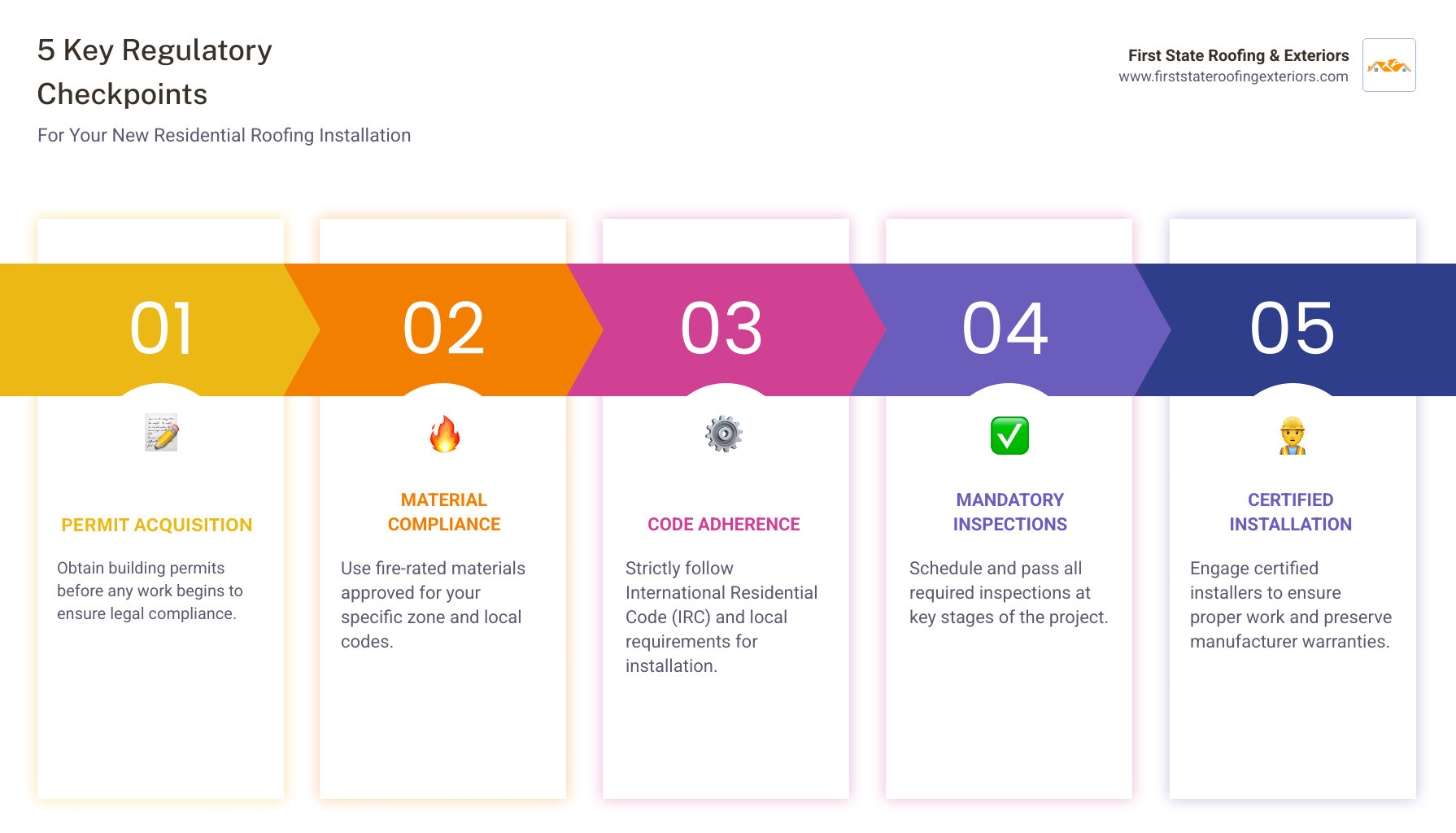
- Building permits are required for almost all roof replacements in Delaware
- Local building codes dictate materials, installation methods, and structural requirements
- Fire, wind, and impact ratings determine which materials are allowed in your area
- Proper installation procedures must be followed to maintain manufacturer warranties
- Inspections are mandatory at key stages of the project
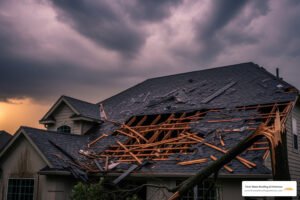
- Non-compliance can void insurance coverage and create liability issues
Missing even one regulatory requirement can cost you thousands in repairs, void your warranty, or create serious problems when you try to sell your home. Delaware homeowners face specific challenges with coastal weather, historic building stock, and evolving energy codes.
Understanding these regulations before you start your roof replacement protects you from costly mistakes. It ensures your contractor does the job right the first time. And it gives you peace of mind that your new roof will stand up to Delaware’s storms, pass inspections, and last for decades.
At First State Roofing & Exteriors, we’ve spent over 20 years helping Delaware homeowners steer the complex regulations around new residential roofing. Our team ensures every project meets code, passes inspection, and delivers the quality your family deserves.
Know your new residential roofing terms:
Understanding the Foundation: Building Codes and Permits
Before any nail is hammered or shingle laid for your new residential roofing project, the journey begins with understanding the local building codes and securing the necessary permits. This isn’t just bureaucratic red tape; it’s the blueprint for a safe, compliant, and long-lasting roof.
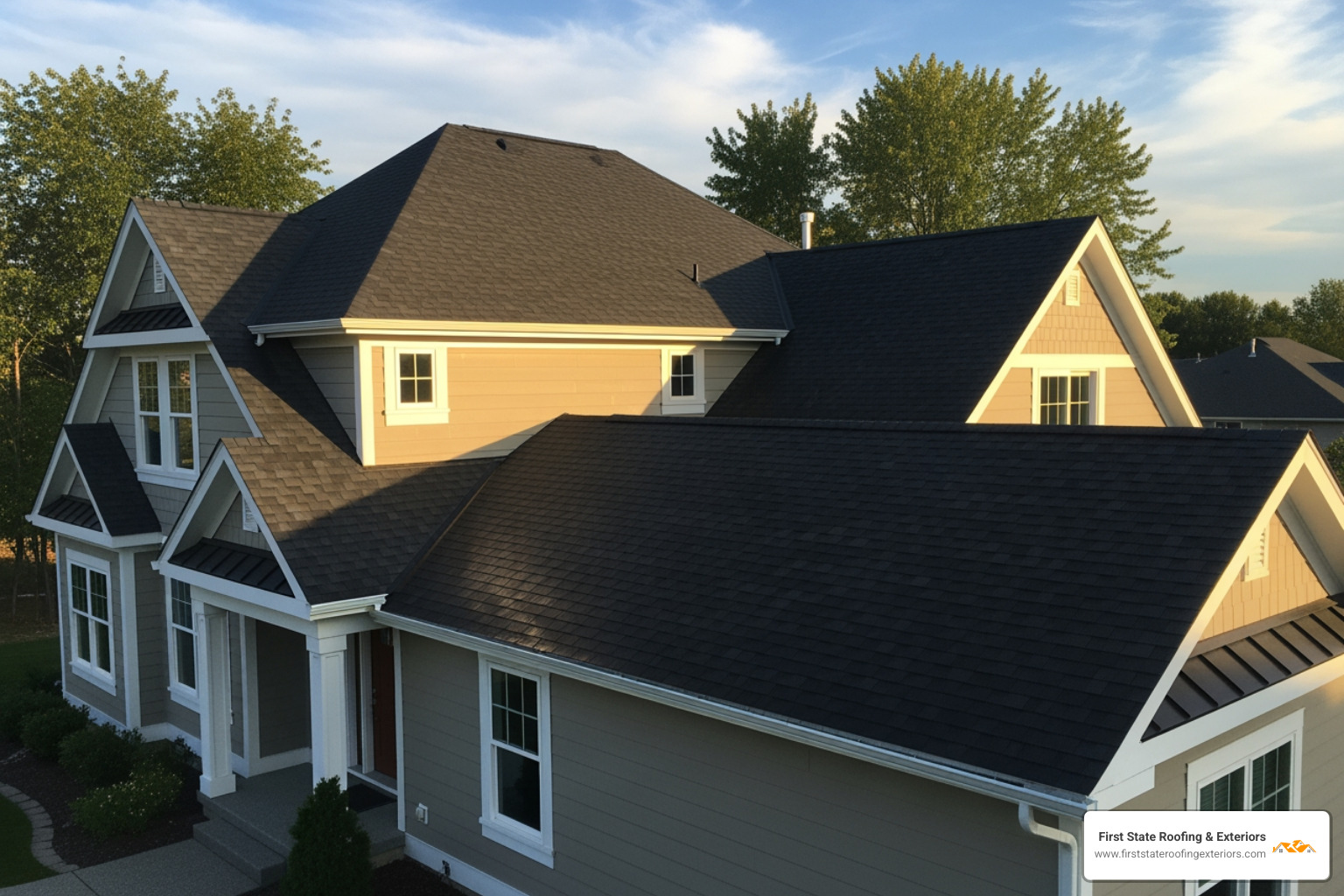
In Delaware, like most places, residential construction projects, including new roofs, are governed by the International Residential Code (IRC), often with local amendments. Cities like Dover and Smyrna will have their own specific additions or interpretations of these codes. A permit application process typically involves submitting plans, and once approved, an inspection schedule will be outlined. Failing to obtain a permit or adhere to the inspection schedule can lead to significant consequences, including fines, project delays, and even requiring the removal of newly installed work.
The first step for any homeowner considering a new roof is to confirm the specific requirements with their local municipal building department. A reputable contractor, like us, will handle this process for you, ensuring all paperwork is filed correctly and permits are secured before work commences. This crucial initial step sets the stage for a smooth and compliant new residential roofing installation. For more on selecting the right partner, check out our hiring a roofer guide.
Why Following Local Roofing Codes is Non-Negotiable
Following local roofing codes is absolutely essential for several critical reasons:
- Code Compliance: Codes ensure your roof meets minimum safety and structural standards, protecting your family and home from hazards. They dictate everything from the type of materials allowed to the methods used for installation.
- Homeowner Liability: If your roof is installed without permits or deviates from code, you, as the homeowner, could be held liable for any damages or injuries that result. This is a risk no one wants to take.
- Insurance Coverage Validity: Many insurance policies explicitly state that coverage may be voided if work is done without proper permits or fails to meet local codes. Imagine a storm hits your home in Dover or Smyrna, and your new roof fails, only for your claim to be denied because of a code violation – a nightmare scenario we help our clients avoid.
- Future Home Resale Value: When it comes time to sell your home, a non-compliant roof can be a major red flag for potential buyers and home inspectors. It can lead to significant delays, force you to redo the roof at your own expense, or reduce your home’s market value.
Working with experienced Roofing Contractors Delaware who are intimately familiar with local codes in Dover and Smyrna is your best defense against these pitfalls.
Going Beyond the Code with FORTIFIED Standards
While local building codes set minimum standards, some homeowners in Delaware are choosing to go above and beyond with FORTIFIED standards. This isn’t just about meeting code; it’s about building a more resilient home, especially important in areas prone to severe weather.
FORTIFIED is a voluntary, science-backed resilient construction and re-roofing standard developed by the Insurance Institute for Business & Home Safety (IBHS). It focuses on making homes stronger against hurricanes, high winds, and hail. For a new residential roofing project, meeting FORTIFIED standards means:
- Improved Protection: Your roof will be engineered to withstand much higher wind speeds and impacts than standard code requirements. This is particularly valuable for homes in coastal Delaware.
- Insurance Discounts: In many states, homes with FORTIFIED designations qualify for significant insurance premium discounts. This can lead to substantial long-term savings.
- Tax Incentives: Some regions offer tax incentives for homeowners who invest in FORTIFIED upgrades.
- Peace of Mind: Knowing your home has an extra layer of protection against Mother Nature is invaluable.
The FORTIFIED Roof designation requires specific material specifications and installation details, including stronger roof deck attachment, a sealed roof deck, and impact-resistant materials. For a detailed breakdown, you can review the FORTIFIED Roof™ checklist. We can help you understand if a FORTIFIED roof is the right choice for your home and guide you through the process.
Material Matters: How Regulations Impact Your Roofing Choices
The type of material you choose for your new residential roofing isn’t just about curb appeal; it’s heavily influenced by regulations concerning fire resistance, wind uplift, impact resistance, and even energy efficiency. These codes ensure that the materials used are appropriate for your climate and provide adequate protection. Our team works with a variety of roofing types to meet these diverse needs.
When considering materials, you’ll encounter various ratings:
- Fire Resistance Ratings: Most residential roofs require a Class A fire rating, indicating the highest level of protection against external fire exposure. This is crucial for preventing the spread of fire.
- Wind Uplift Standards: Materials must meet specific wind resistance standards, like ASTM D3161 (Class F) or ASTM D7158 (Class H), to ensure they can withstand high winds without detaching. With Delaware’s occasional strong winds, this is a critical factor.
- Impact Resistance: For areas prone to hail, materials with a UL 2218 Class 4 impact resistance rating offer superior protection against damage. This rating signifies the material’s ability to resist the impact of steel balls dropped from varying heights, mimicking hail.
- Weight Restrictions: Heavier materials like slate or concrete tiles may require additional structural reinforcement, which must comply with local building codes.
- Energy Efficiency Codes: Increasingly, codes mandate certain levels of energy performance, encouraging materials that reflect solar heat or provide better insulation.
Choosing Compliant Materials for Your New Residential Roofing
Let’s look at how common new residential roofing materials stack up against these regulations and what’s trending for 2026:
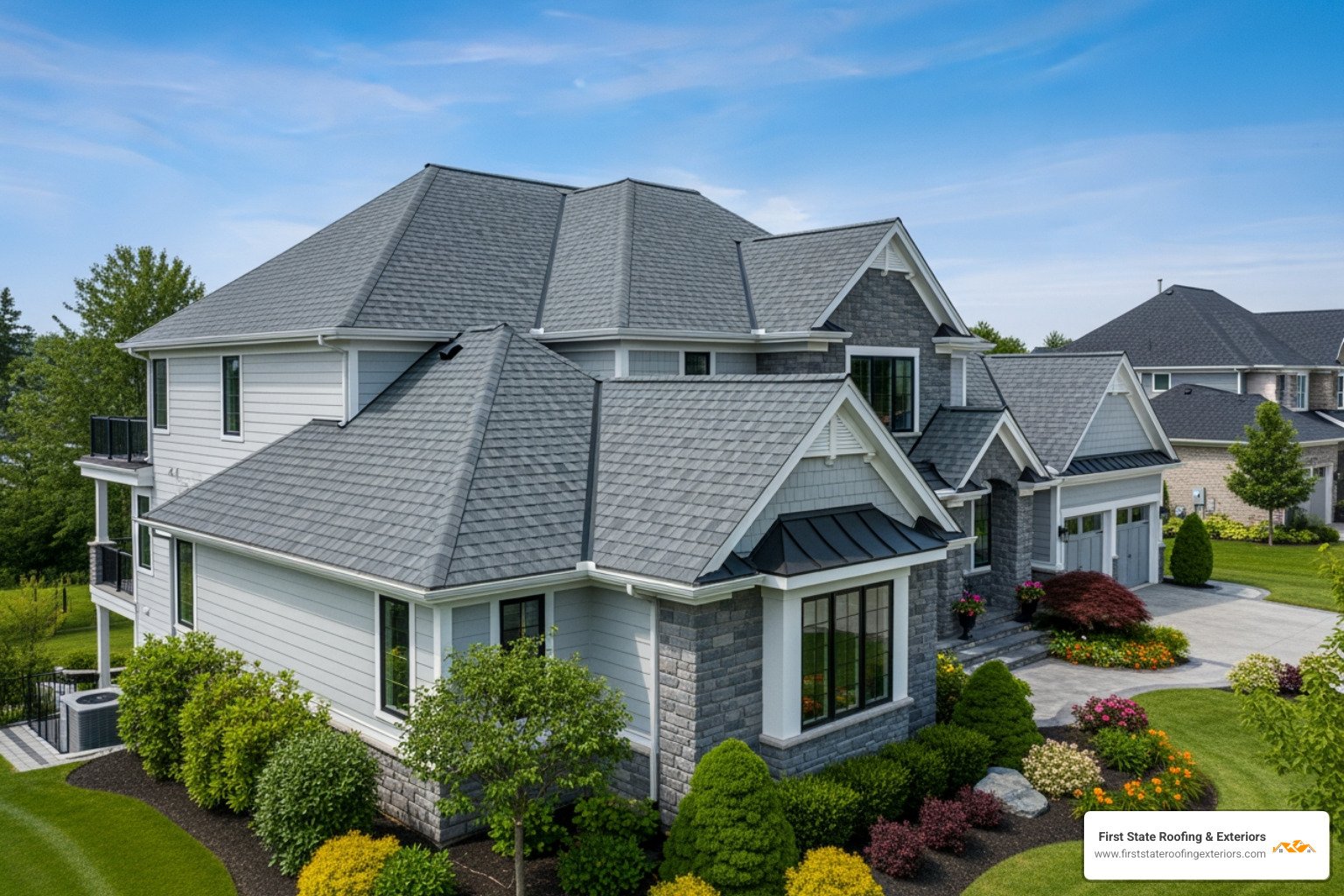
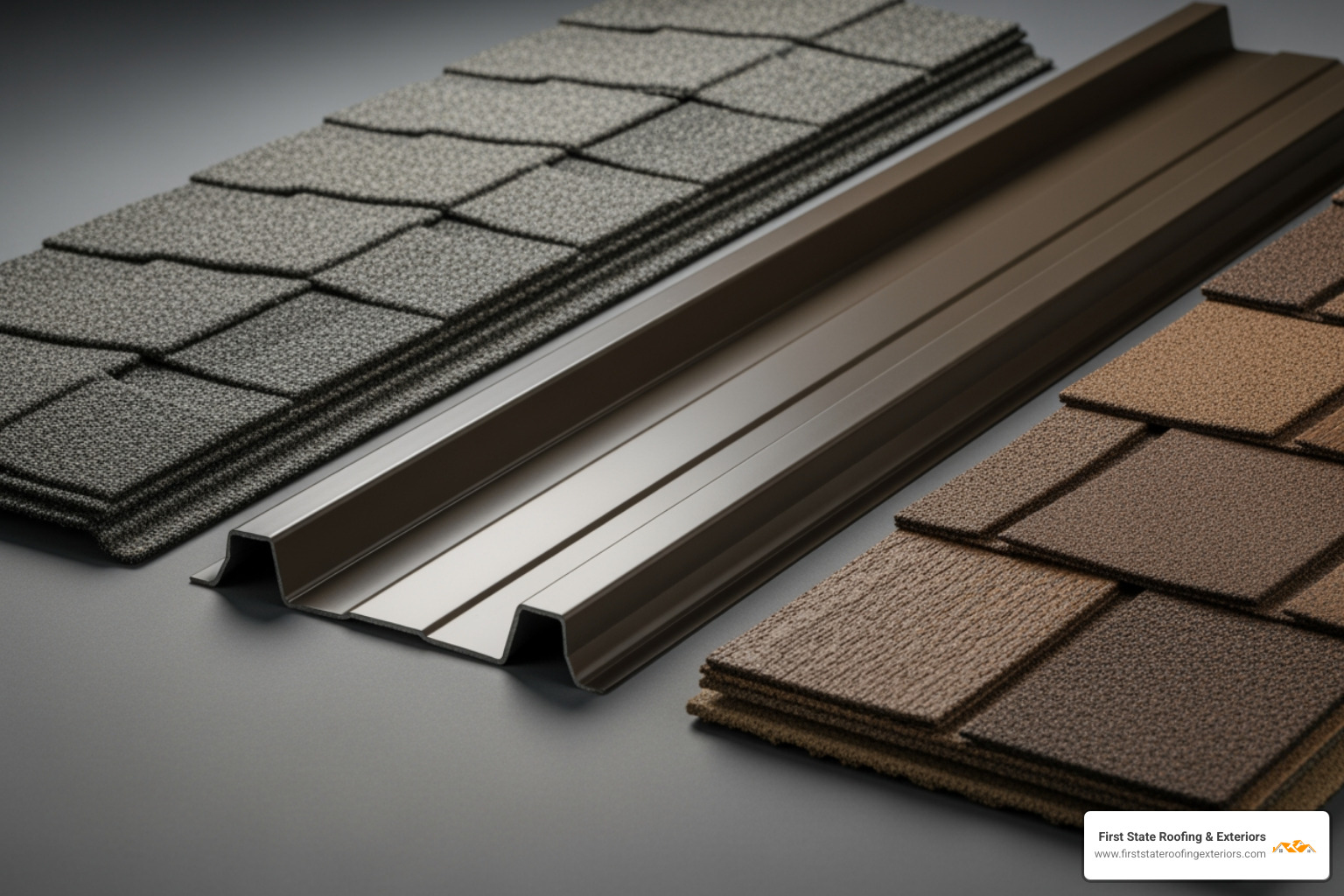
- Asphalt Shingles: Still America’s #1 selling shingle brand, asphalt shingles are popular for their attractive appearance, durability, ease of installation, and relative affordability. They typically last 15-30 years, with higher-end architectural shingles extending to 25-30 years. Architectural shingles are currently the most popular type of asphalt shingle, offering improved aesthetics and durability. They meet Class A fire ratings and various wind resistance standards.
- Metal Roofs: Gaining significant popularity, metal roofs are celebrated for their durability (lasting 50 years or more), energy efficiency, and resistance to fire, wind, and hail. Innovations like GAF TimberSteel™ premium metal shingles offer the durability of metal with captivating aesthetics at a more affordable price point, often mimicking traditional shingle looks. Metal roofs can significantly reduce cooling costs by reflecting solar radiation, making them an excellent choice for Cool Roofs.
- Composite Shingles: Often made from recycled materials like rubber or plastic, composite shingles are a “game-changer.” They mimic the look of natural slate or wood shakes but offer improved durability and longevity, lasting 40-50 years with minimal maintenance. They often boast excellent impact resistance and are environmentally friendly, reducing landfill waste.
- Slate and Tile: Clay and slate tiles offer unparalleled longevity, often lasting over 100 years. They are naturally resistant to fire, wind, sun, snow, and hail. While beautiful and incredibly durable, their significant weight requires a robust roof structure, which must meet specific weight-bearing codes. Slate, in particular, is an incredible option for combining durability and beauty, though it comes with higher initial costs and installation complexity.
Our average cost for a roof replacement in Dover and Smyrna, DE, reflects the national average of around $8,314, with a typical range of $5,500-$11,000, but can vary greatly depending on material choice. For instance, in a nearby Delaware city, asphalt shingles average $8,000 – $13,500, while metal roofs range from $14,000 – $22,000, and slate can be $22,000 – $40,000+. These figures highlight the cost implications of choosing different materials for your new residential roofing project.
The Role of a Complete Roofing System
Modern new residential roofing isn’t just about the top layer of shingles; it’s about a complete system where all components work together. Manufacturers like GAF emphasize this “system approach” for optimal performance and warranty coverage.
A complete roofing system typically includes:
- Shingles: The visible protective layer.
- Leak Barriers: Self-adhering membranes applied to vulnerable areas like eaves, valleys, and around penetrations to prevent leaks from wind-driven rain and ice dams.
- Roof Deck Protection: An underlayment laid over the entire roof deck to shield it from moisture before shingles are installed.
- Starter Strip Shingles: Applied at the eaves and rakes to provide a clean edge and guard against shingle blow-offs.
- Attic Ventilation: Components like ridge vents and soffit vents to allow heat and moisture to escape the attic, crucial for roof longevity and energy efficiency.
- Ridge Cap Shingles: The finishing touch at the roof’s peaks and hips, designed to protect against leaks and provide a uniform aesthetic.
Manufacturer compatibility is key here. Using all components from the same manufacturer ensures they are designed to work seamlessly and often qualifies your new residential roofing project for improved warranties. Skipping components or mixing brands can void your warranty, leaving you exposed. For a deeper dive into system components, refer to the GAF residential product guide.
The Anatomy of a Compliant New Residential Roofing Installation
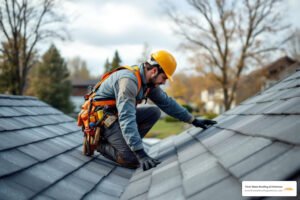
Even the best materials won’t perform if they’re not installed correctly. Regulations heavily dictate the installation process for new residential roofing, ensuring structural integrity and weather resistance. We follow these guidelines carefully. For a full breakdown of the process, see our Roof Installation Complete Guide.
A compliant installation starts with a thorough roof tear-off, removing all old roofing materials. This allows for a critical roof deck inspection, where we check for any water damage, rot, or soft spots. Any compromised sections are replaced. For FORTIFIED standards, roof decks must meet minimum thickness requirements (e.g., 7/16 inch) and are often re-nailed with 8d ring-shank nails at 4 inches on center for improved wind resistance.
Next comes the underlayment installation. Options include flashing tape over sheathing seams with synthetic underlayment, a two-layer felt system, or a self-adhered membrane, depending on code and desired resilience. Drip edge placement is crucial; it’s secured along the eaves and rakes to guide water away from the fascia and into the gutters. Proper drip edge installation prevents water from seeping under the roof edge. Finally, flashing details around chimneys, skylights, and vents are carefully installed to create watertight seals.
Ventilation: A Critical and Regulated Component
Attic ventilation is not just a good idea; it’s a regulated component of a healthy and compliant new residential roofing system. Proper ventilation is key to:
- Managing Attic Heat and Moisture: In Delaware’s humid summers, excessive heat and moisture can build up in the attic, leading to premature aging of shingles, mold growth, and increased energy bills.
- Preventing Ice Dams: In colder months, poor ventilation can cause uneven roof temperatures, leading to ice dams that can force melting snow under your shingles, causing leaks.
- Roof Longevity: A well-ventilated attic helps maintain a consistent temperature, which extends the lifespan of your shingles.
Building codes often specify a minimum “net free area” for ventilation, ensuring a balance between intake (soffit vents) and exhaust (ridge vents). We carefully calculate these requirements for each home to ensure optimal airflow. For more insights into this vital system, explore our Attic Ventilation Repair Complete Guide.
Fastening and Securing Your Roof
The way your shingles are fastened is critical for the durability and wind resistance of your new residential roofing. Regulations dictate specific shingle nailing patterns, nail type and length, and increased requirements for high-wind zone installations.
For instance, asphalt shingles in high-wind installations often require six nails per shingle, rather than the standard four, to meet ASTM D3161 (Class F) or ASTM D7158 (Class H) wind ratings. The nails must be of a specific length to penetrate through the shingle and the roof deck, securing it firmly. Starter strips also play a role, adhered along the eaves and rakes to resist wind uplift. Adhering to these precise fastening guidelines is non-negotiable for a compliant and resilient roof.
Warranties and Manufacturer Requirements: Your Final Layer of Protection
A new roof is a significant investment, and understanding its warranties is your final layer of protection. For new residential roofing, you’ll typically encounter two main types of warranties:
- Manufacturer Warranties: These cover defects in the roofing materials themselves. For leading brands like GAF, you can expect Lifetime Limited Warranties on shingles when installed as part of a complete system. These often include specific coverages like algae resistance (e.g., GAF’s StainGuard Plus™ Algae Protection, which can last 25-30 years) and wind speed coverage (e.g., GAF’s WindProven™ Limited Wind Warranty offering 15-year protection with no maximum wind speed limitation when specific components are used).
- Contractor Warranties: These cover the quality of the installation. A reputable contractor will offer a workmanship warranty, typically for several years, ensuring that if issues arise due to installation errors, they will be corrected.
It’s important to differentiate between these and understand what each covers. Some manufacturer warranties are transferable to a new homeowner, which can be a valuable selling point. For detailed information on our services, visit our Roof Replacement page.
How to Avoid Voiding Your Roofing Warranty
Manufacturer warranties for new residential roofing are robust but come with conditions. To ensure your warranty remains valid, it’s crucial to:
- Use a Complete System: As discussed, using all components from a single manufacturer (e.g., GAF shingles with GAF leak barriers, underlayment, and vents) is often a requirement for their improved warranties. Mixing and matching components can void coverage.
- Certified Installers: Many premium warranties require installation by a manufacturer-certified contractor. These contractors undergo specific training and meet strict quality standards, ensuring the roof is installed according to the manufacturer’s precise specifications.
- Proper Maintenance Records: While roofs are low-maintenance, keeping records of routine inspections and any minor repairs can support a warranty claim if needed.
- Prohibited Alterations: Making unauthorized alterations to your roof, such as installing unapproved solar panels or satellite dishes without proper flashing, can void your warranty. Always consult with your contractor or the manufacturer before making any changes.
The terms and conditions for these warranties are detailed, and it’s always wise to review them carefully. You can find examples of such terms in documents like the Contractor Terms of Use. Our team ensures that every new residential roofing project we undertake adheres to these strict requirements, protecting your investment for decades to come.
Frequently Asked Questions about Roofing Regulations
Do I always need a permit for a new roof in Delaware?
Yes, a permit is almost always required for a complete roof replacement in Delaware. This ensures the project meets local safety and building codes in cities like Dover and Smyrna. Minor repairs may not require a permit, but it’s crucial to check with your local municipal office before any work begins, as regulations can vary by county and city. It’s always better to ask than to face penalties later.
Can I install a new roof over my old shingles?
While some local codes may permit one layer of “roof-over,” it is rarely the recommended or compliant practice for new residential roofing. Most regulations and all manufacturer best practices require a full tear-off of old materials. This allows for a thorough inspection of the roof deck for rot or damage, ensuring the new roof has a solid foundation. A full tear-off also prevents issues like trapped moisture, uneven surfaces, and voided warranties.
How do I know if my contractor is following the regulations for my new residential roofing project?
A reputable contractor will pull all necessary permits, schedule inspections, and be transparent about the materials and methods they use. Ask to see their license and insurance, request a detailed contract that specifies compliance with local codes, and look for certifications from major manufacturers (e.g., GAF Master Elite). They should be able to clearly explain the process and answer any questions you have about regulations in Dover or Smyrna.
Conclusion
Navigating the regulations for a new residential roofing project doesn’t have to be overwhelming. By understanding the key requirements for permits, materials, and installation, you can ensure your investment is protected for the long haul. For homeowners in Delaware, partnering with a knowledgeable local expert is the surest way to a compliant, high-quality roof. First State Roofing & Exteriors is a family-owned company dedicated to guiding you through every step of the process with integrity and transparency. We give free estimates. Ready to start your project the right way? Call us today at (302) 222-4065 for a free inspection for your roof replacement.