Identifying Common Types of Residential Storm Damage
Storm damage repair is the process of assessing, stabilizing, and restoring a home after severe weather — and knowing the right steps can save you thousands of dollars and weeks of stress. As a trusted local roofing company, First State Roofing & Exteriors understands that if you’ve just come through a storm and need quick answers, safety and speed matter most.
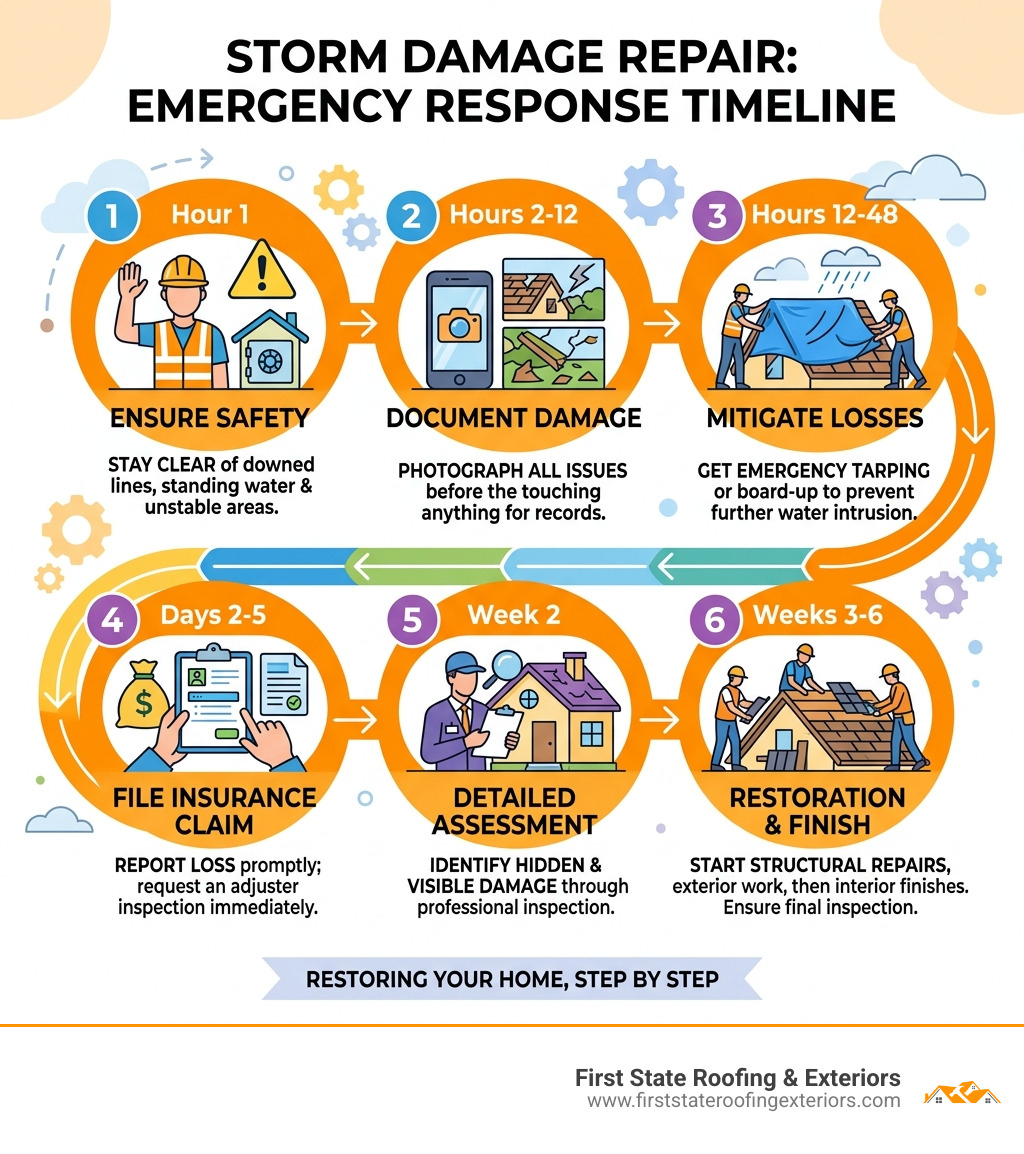
The storm damage repair process, step by step:
- Ensure safety first — stay away from downed power lines, standing water, and unstable structures
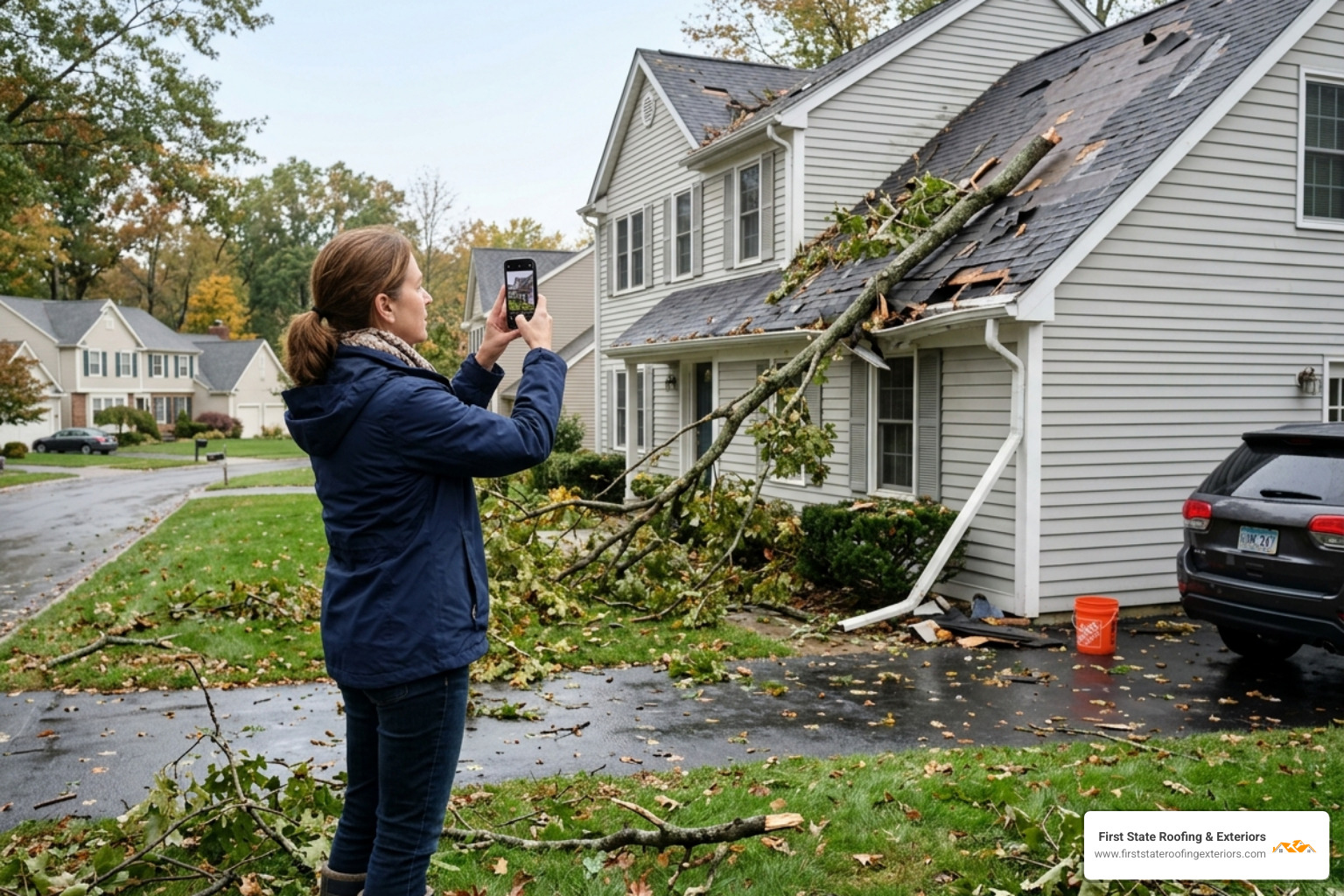
- Document everything — photograph all damage before touching anything
- Call a licensed contractor — get emergency tarping or board-up within 24 hours to prevent water intrusion
- File your insurance claim — report the loss promptly and request an adjuster inspection
- Get a professional assessment — a licensed roofer identifies both visible and hidden damage
- Begin restoration — structural repairs first, then exterior, then interior finishes
- Final inspection — ensure all work meets local building codes before sign-off
When severe weather hits Kent and Sussex County, DE, the clock starts immediately. Mold can begin growing within 24 to 48 hours of water exposure. Unaddressed structural breaches compound repair costs fast. The difference between a manageable repair and a catastrophic loss often comes down to how quickly — and how correctly — you respond.
This guide walks you through the entire storm damage repair process, from the moment the storm clears to the final inspection. Whether you’re dealing with missing shingles, water intrusion, or structural damage, you’ll find clear, actionable guidance here.
I’m Richard McCain, Owner and President of First State Roofing & Exteriors, a family-run Kent and Sussex County, DE contractor with over 20 years of hands-on experience in storm damage repair and exterior restoration. I’ve guided hundreds of Kent and Sussex County, DE homeowners through the insurance and restoration process, and I’ll give you the same straightforward advice here that I give my own customers. We offer free inspections and free estimates, with no pressure. Call us today at (302) 222-4065 for a free inspection.
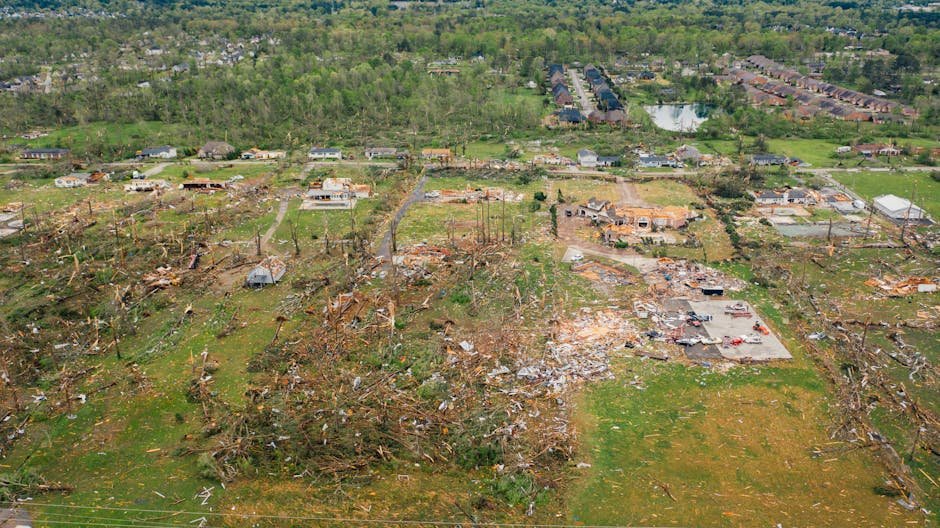
In our two decades serving Kent and Sussex County, DE, we’ve seen that storms don’t play favorites. Whether it’s a coastal gale in Milford or a severe thunderstorm in Dover, the damage usually falls into a few specific categories. Understanding these helps you communicate better with your insurance company and your contractor.
| Damage Category | Signs to Look For | Impact Level |
|---|---|---|
| Wind Uplift | Shingles peeled back, creased, or missing entirely. | High (Leads to leaks) |
| Hail Impact | Dents in gutters, cracked siding, or “bruised” shingles. | Moderate (Shortens roof life) |
| Water Intrusion | Ceiling stains, damp insulation, or peeling paint. | Critical (Mold risk) |
| Structural Impact | Fallen tree limbs on the roof, sagging rafters. | Severe (Safety hazard) |
Assessing Functional vs. Cosmetic Damage
One of the biggest hurdles in storm damage repair is the debate over “cosmetic” versus “functional” damage.
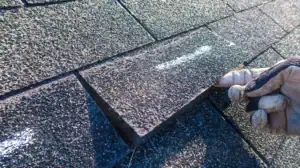
Functional damage means the material can no longer do its job. For example, Roof Hail Damage often fractures the fiberglass mat inside a shingle. You might not see a hole, but that shingle is now a sponge instead of a shield.
Cosmetic damage refers to surface-level issues like minor scratches on siding or small dents in metal flashing that don’t cause leaks. However, in Kent and Sussex County, DE’s humid climate, even “cosmetic” cracks in vinyl siding can allow moisture to seep behind the panels, leading to rot.
Key indicators of functional failure include:
- Impact Resistance Loss: Large hail bruises shingles, knocking off the protective granules that shield the roof from UV rays.
- Weatherproofing Failure: If wind has stripped away shingles, your underlayment is now the only thing protecting your home. It isn’t designed for long-term exposure.
- Structural Integrity: High-velocity winds can create a “lift” effect that actually loosens the nails holding your roof decking to the rafters. This requires an emergency roof repair specialist to secure the home’s skeleton.
Immediate Steps for Emergency Storm Damage Repair
When the wind stops howling, your first priority is stabilization. You don’t need a permanent fix in the first hour, but you do need to stop the bleeding.
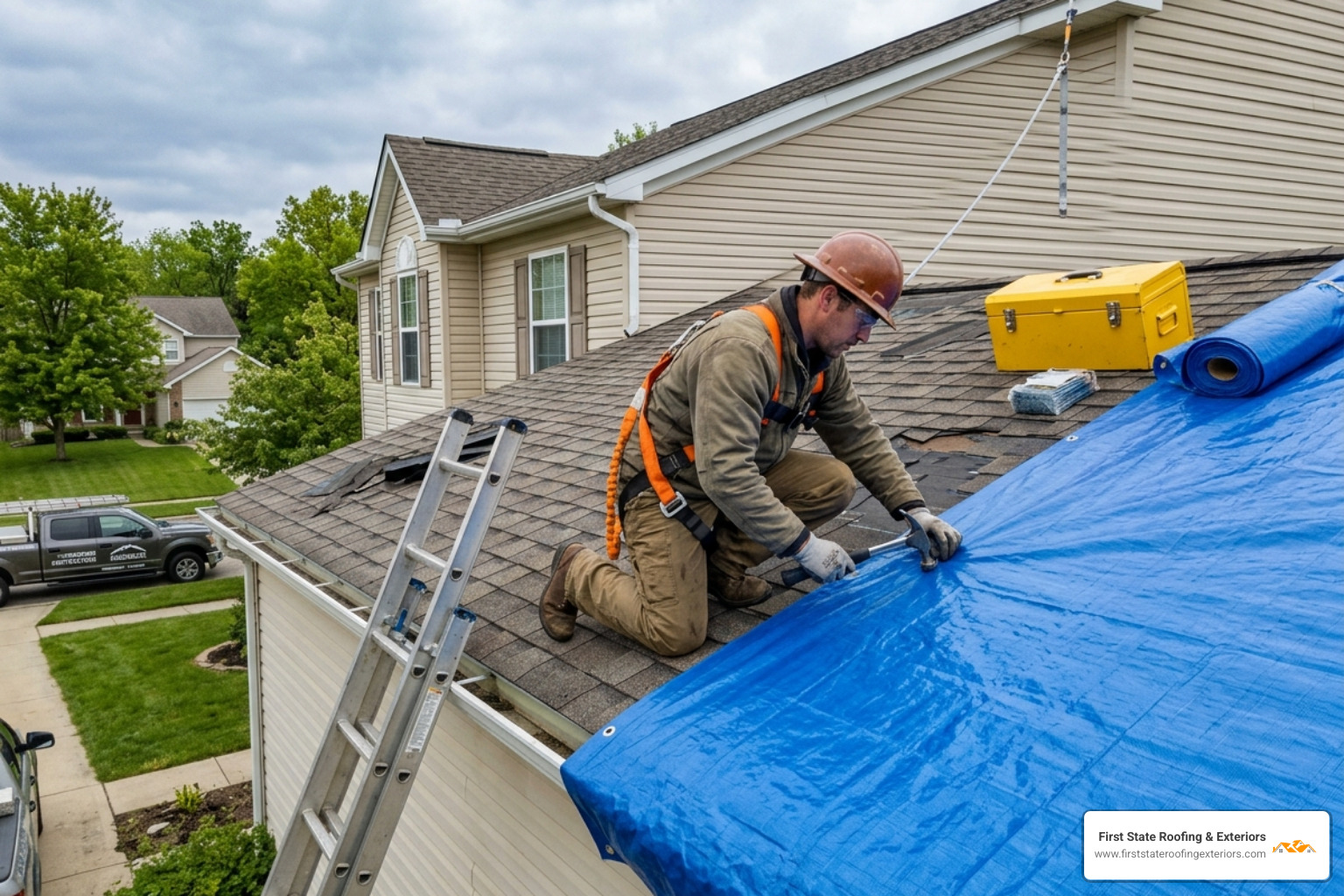
If you have a hole in your roof or a shattered window, you need an emergency tarping service immediately. This is a temporary measure that buys you time to navigate the insurance process without the next rainstorm ruining your living room furniture.
In areas like Dover, we provide an Emergency Roof Repair Dover DE Guide to help residents act fast. Your immediate checklist should be:
- Check Utilities: If you suspect structural damage, shut off gas and electricity to affected areas.
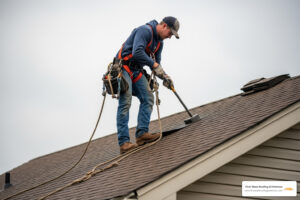
- Clear Immediate Debris: Remove branches from walkways, but never climb a ladder to clear a roof yourself after a storm.
- Seal the Envelope: Use plywood for windows and heavy-duty tarps for the roof.
Preventing Secondary Issues Like Mold Growth
The “secondary” damage after a storm is often more expensive than the initial hit. In Kent and Sussex County, DE, where the relative humidity is frequently high, moisture is the enemy.
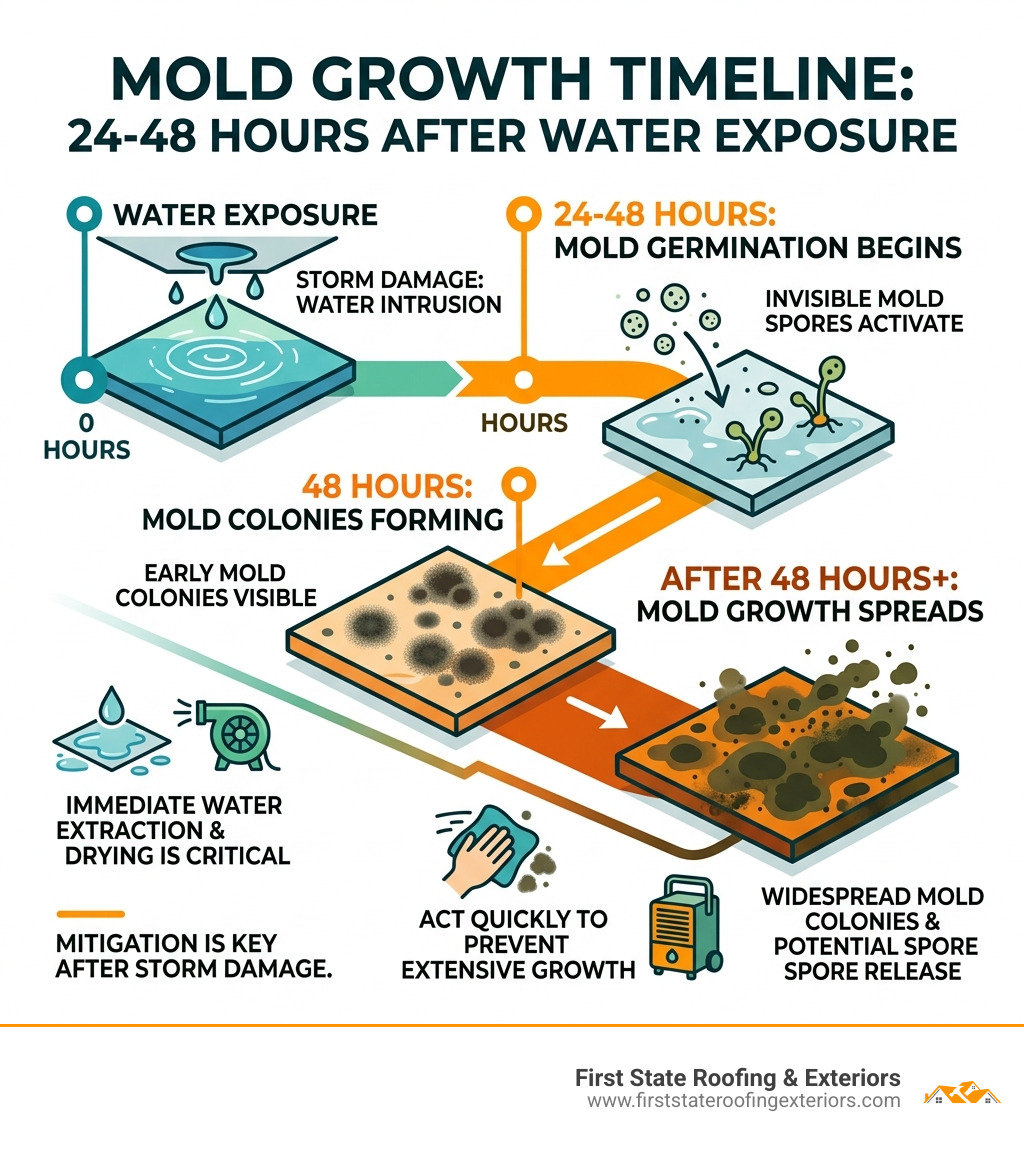
- Fact: Mold can begin growing within 24-48 hours of water exposure. According to EPA guidance on mold cleanup and moisture control, unmitigated moisture from storm intrusion can produce visible colonies in as little as 48 to 72 hours.
- Action: We use professional moisture mapping tools to find water hidden behind your drywall. High-volume air movers and industrial dehumidifiers are essential to pull moisture out of the air and structural wood before spores take root.
If your home has been breached, we often recommend an antimicrobial treatment as part of the storm damage repair to ensure your indoor air quality remains safe for your family.
Navigating the Insurance Claim and Restoration Process
Filing a claim can feel like learning a second language. Most homeowners find the process difficult because it involves strict timelines and specific documentation requirements.
When you start, refer to our Storm Damage Roof Repair Complete Guide for a deep dive into the paperwork. The most important thing to remember is that you have the right to choose your own contractor. You do not have to use the “preferred provider” the insurance company suggests—you want someone who works for you.
We also offer Insurance Financing options to help cover deductibles or upgrades that your insurance might not fully fund, ensuring you don’t have to settle for “cheap” materials when your home’s safety is on the line.
The Role of Documentation in Storm Damage Repair Claims
Without proof, your claim is just a story. To get the full value of your policy, you need a mountain of evidence.
- Photo Evidence: Take photos of everything. Not just the roof, but your gutters, siding, windows, and even your air conditioning unit (hail can wreck the cooling fins).
- Date of Loss: Be precise. We correlate your damage with local National Weather Service data to prove the storm occurred on the date you claimed.
- Professional Estimates: We provide detailed line-item bids using Xactimate, the same software used by adjusters. This ensures we’re speaking the same language as your insurance company regarding material costs and labor rates.
Why Licensed Contractors are Essential for Storm Damage Repair
After a big storm in Milford or Smyrna, you’ll see trucks with out-of-state plates roaming the neighborhoods. These “storm chasers” often disappear as fast as they arrive.
Hiring a local, licensed, and insured team for your storm damage repair is the only way to ensure your warranty is worth more than the paper it’s printed on. We follow all local building codes and handle the permit process for you, which is required for any major roofing or structural work in Kent and Sussex County, DE.
Risks of Hiring Unlicensed Post-Storm Solicitors
It might be tempting to hire the guy who knocks on your door offering a “free roof” or promising to “waive your deductible.” Be careful.
- Insurance Fraud: In many states, it is illegal for a contractor to pay or “cover” a homeowner’s insurance deductible. Engaging in this can get your claim denied and land you in legal trouble.
- Voided Warranties: If a roof isn’t installed to the manufacturer’s exact specifications—which unlicensed crews often skip to save time—the shingle warranty is void the moment they leave your driveway.
- Legal Liability: If an unlicensed worker falls off your roof, you could be held liable for their medical bills through your homeowners’ insurance. We carry full general liability and workers’ compensation to protect our customers from this risk.
Frequently Asked Questions about Storm Restoration
How long does the storm damage restoration process typically take?
The timeline for storm damage repair depends on the complexity. We usually have emergency stabilization (like tarping) done within 24 hours. The full restoration—including insurance adjustments, material orders, and construction—typically takes 2 to 6 weeks. If there is a major catastrophe affecting the whole region, material lead times can stretch slightly longer, but we keep you updated every step of the way.
Does homeowners insurance cover all types of storm damage?
Most standard policies cover wind and hail. However, “flood” (water rising from the ground) is almost never covered by a standard policy; you need separate NFIP flood insurance for that. Also, insurance won’t pay for “maintenance” issues. If your roof was already 30 years old and rotting before the storm hit, they may only pay for a portion of the repair.
How can I prepare my property to minimize future storm damage?
Preparation is the best defense. We recommend:
- Regular Gutter Cleaning: Prevents water from backing up under your shingles (ice dams).
- Tree Maintenance: Trim limbs that hang over your roof.
- Impact-Resistant Materials: When it’s time for a roof replacement, consider Class 4 shingles or metal roofing, which are designed to withstand 130+ mph winds and large hail.
Conclusion
At First State Roofing & Exteriors, we believe that storm damage repair should be about more than just fixing a leak; it’s about restoring your peace of mind. As a family-owned Kent and Sussex County, DE company, we live in the same communities we serve. We know the local weather patterns, we know the local building codes, and we know how to stand up for our neighbors during the insurance process.
Don’t let a storm compromise the safety of your home. Whether you’re in Dover, Milford, or anywhere in the First State, we are here to help 24/7.
Ready to get started? We provide free estimates and thorough, honest inspections. Call us at (302) 222-4065 for a free inspection or schedule your free storm damage repair inspection today to ensure your home is protected for the next season.