Why Getting a New Roof Is One of Your Home’s Most Critical Investments
Getting a new roof is a major decision that directly impacts your home’s protection, energy efficiency, and resale value. For most Delaware homeowners, it’s one of the largest investments they’ll make in their property. This guide walks you through every step of protecting your Delaware home with a new roof, from spotting warning signs to choosing a trustworthy contractor.
Quick Answer: Key Things to Consider When Getting a New Roof
- Timing – Replace when shingles are 20+ years old, curling, or missing granules.
- Materials – Asphalt shingles ($6,000–$13,000), metal ($14,000–$25,000), or premium options.
- Cost Factors – Roof size, pitch, complexity, tear-off needs, and hidden deck damage.
- Contractor Selection – Choose a local, licensed, insured contractor with strong references and written warranties.
- Process – A typical replacement takes 1–4 days from tear-off to final inspection.
- Warranties – Understand both manufacturer (materials) and workmanship (installation) coverage.
- Best Season – Late spring through early fall offers optimal installation conditions.
The national average cost for a roof replacement ranges from $5,855 to $13,116. A typical asphalt shingle roof lasts 20 to 25 years, while metal roofs can protect your home for 40 to 80 years. Knowing when to replace can save you from costly interior water damage and ensure decades of reliable protection.
Beyond stopping leaks, a new roof improves curb appeal, can reduce cooling costs by up to 15% with reflective materials, and provides a high return on investment.
I’m Richard McCain, owner of First State Roofing & Exteriors. With over 20 years of experience and thousands of successful roof replacements across Delaware, I know that an informed homeowner is a confident one. Getting a new roof doesn’t have to be stressful when you work with a contractor who prioritizes transparency and quality.
We offer free estimates and professional inspections throughout Delaware. Call (302) 222-4065 today to schedule your free roof inspection and get expert guidance.
Getting a new roof helpful reading:
Is It Time for a New Roof? Key Warning Signs
An asphalt shingle roof typically lasts 20 to 25 years. Knowing the signs of failure can save you from costly interior damage. Homeowners in Dover and Smyrna can catch issues early by looking for these common indicators:
Signs That Indicate a Roof Needs Replacement:
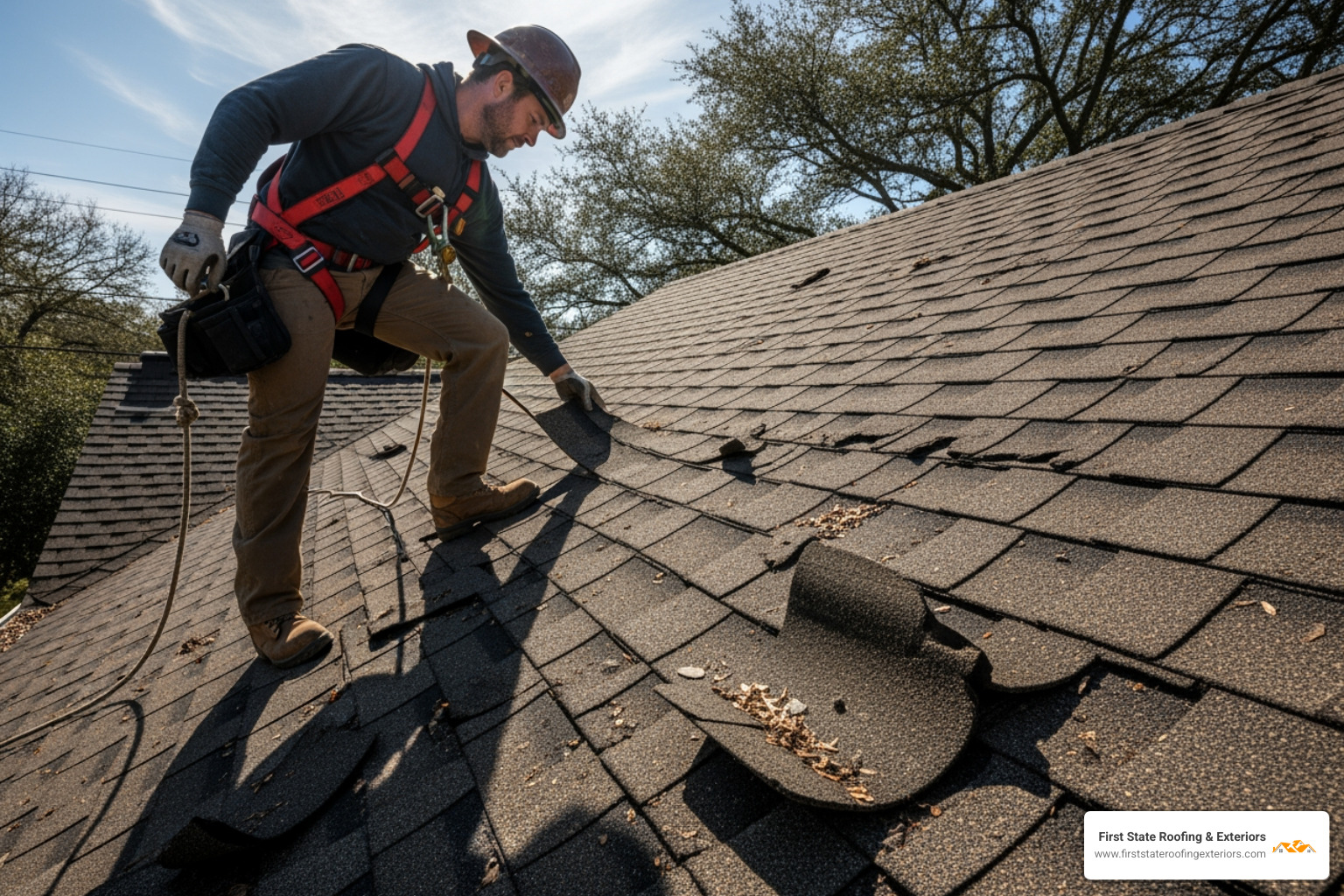
- Curling, Cupping, or Cracked Shingles: Shingles that are curling or cracked are failing to divert rainwater, increasing leak risk. As noted by Structure Tech on identifying cracked shingles, these areas allow moisture to reach the roof deck underneath.
- Missing Shingles: Strong winds in our Delaware climate can blow shingles off, exposing the underlayment and deck to rapid deterioration.
- Granules in Gutters: Finding excessive shingle granules in gutters means your asphalt shingles are at the end of their life. These granules protect against UV rays; without them, shingles degrade quickly.
- Water Stains on Ceilings or Walls: This is a clear sign of a roof leak. Even faint discoloration can indicate water intrusion that needs immediate attention.
- Sagging Roof Deck: A sagging or uneven roof points to a serious structural issue, often from water damage, and requires immediate professional assessment.
- Visible Light from the Attic: On a sunny day, go into your attic. If you see light coming through the roof boards, you have direct vulnerabilities.
- Roof Age Over 20 Years: If your asphalt roof is over 20 years old, it’s wise to plan for a replacement, even without obvious leaks. Many neighboring homes built at the same time will likely need new roofs too.
Roof Repair vs. Replacement
Can you fix it, or do you need a whole new roof? Minor issues like a few damaged shingles or a small, isolated leak can often be resolved with a targeted repair, typically costing between $382 and $1,829. This can extend the life of an otherwise sound roof.
However, if your roof has widespread damage, multiple leaks, or is over 20-25 years old, a full replacement is the more cost-effective long-term solution. Constantly patching an old roof can lead to a cycle of repairs that eventually costs more than a replacement. A new roof addresses all underlying issues, comes with a comprehensive warranty, and eliminates the guesswork of future leaks. While insurance may cover storm damage repairs, it typically doesn’t cover replacement due to age or wear and tear.
Decoding Materials and Costs
The national average for a roof replacement is $5,855 to $13,116. In Delaware, homeowners can expect to pay anywhere from $5,000 to $15,000, depending on materials and home specifics. Materials typically account for about 55% of the total project cost in a full tear-off replacement.
Common Roofing Materials: Lifespan, Pros, and Cons
Choosing the right material is a balance of aesthetics, budget, and desired longevity. Here’s a comparison of popular options:
| Material Type | Average Lifespan | Typical Cost Range (Installed) | Key Benefits |
|---|---|---|---|
| Asphalt Shingles | 20-30 years | $6,000 – $13,000 | Most common and affordable; Wide variety of colors and styles; Easy to install and repair. Architectural shingles offer improved durability and aesthetic appeal. |
| Metal Roofs | 40-80 years | $14,000 – $25,000 | Exceptional durability; Fire-resistant; Energy-efficient (reflects solar heat); Withstands harsh weather; Made from recycled materials. |
| Cedar Shake | 30-40 years | $14,000 – $25,000 | Natural, rustic aesthetic; Good insulation properties; Environmentally friendly. Requires periodic maintenance (cleaning, repairs) to maximize lifespan. |
| Slate Roofing | 75-150+ years | $25,000 – $50,000+ | Best durability and longevity; Luxurious, distinctive appearance; Fireproof; Impervious to rot and insects. Very heavy, requiring strong roof decking, and expensive to install. |
- Asphalt Shingles: The top choice for affordability and versatility. Standard shingles last about 20 years, while architectural shingles can last 30+ years and mimic the look of premium materials.
- Metal Roofs: Gaining popularity for their durability and modern look, metal roofing in Delaware can last 40–80 years. They are resistant to leaks, wind, and fire.
- Cedar Shake: Offering a natural look, cedar shake roofing provides good insulation and lasts 30-40 years but requires more maintenance.
- Slate Roofing: The pinnacle of roofing, slate roofing can last over 100 years. It’s beautiful and durable but also heavy and expensive.
What Factors Influence Your Roof Replacement Cost?
The cost of getting a new roof depends on several key factors:
- Roof Size: Larger roofs require more materials and labor. Costs are often quoted per “square” (100 sq. ft.).
- Roof Pitch (Steepness): Steeper roofs require more safety measures and labor time, increasing costs.
- Complexity: Dormers, skylights, and chimneys add complexity, requiring more precise cutting and flashing, which raises labor and material costs.
- Material Choice: Asphalt is the most budget-friendly, while metal, cedar, and slate are premium investments.
- Labor Rates: Labor typically accounts for 25%–35% of the total cost and varies by region.
- Full Tear-Off vs. Overlay: A full tear-off is more labor-intensive but is the recommended method for quality and longevity.
- Permits & Disposal: Building permits and debris disposal fees are typically included in an estimate.
- Hidden Costs: A tear-off may reveal rotten roof decking that needs replacement, adding to the cost. For a deeper dive, see our Average Cost to Tear Off and Replace Roof guide.
The Step-by-Step Process of Getting a New Roof
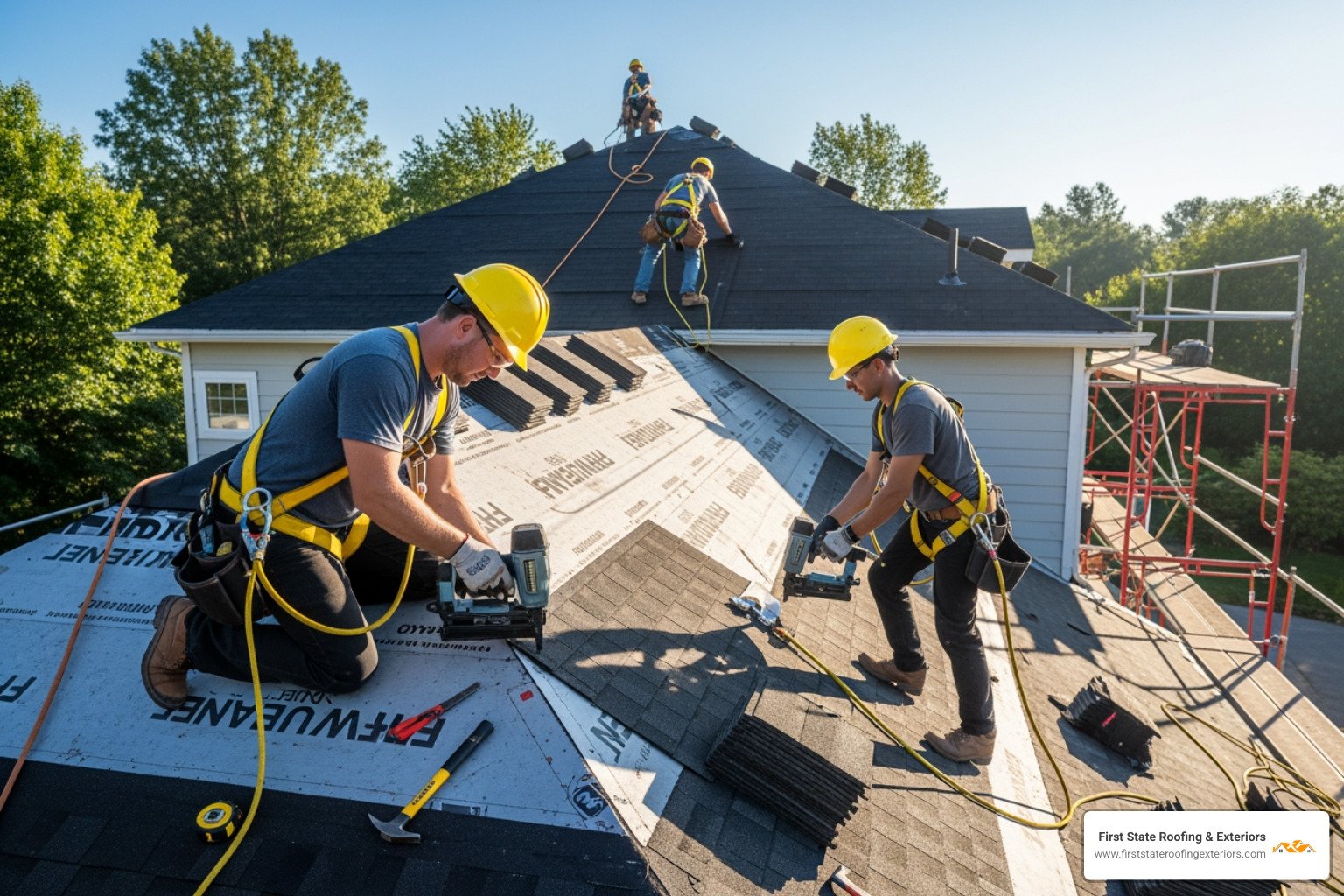
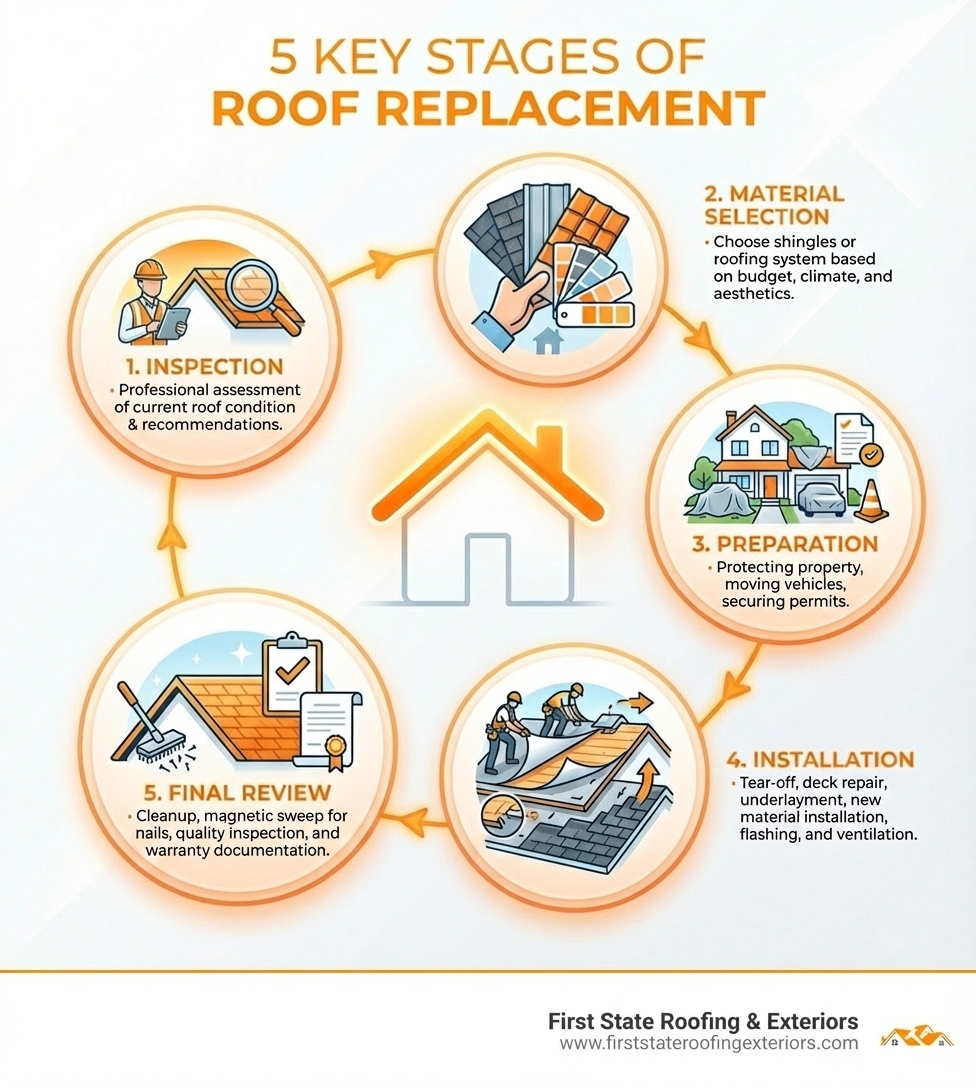
A professional roof replacement is a well-orchestrated process that typically takes 1-4 days for an average-sized home. Understanding the steps helps you know what to expect.
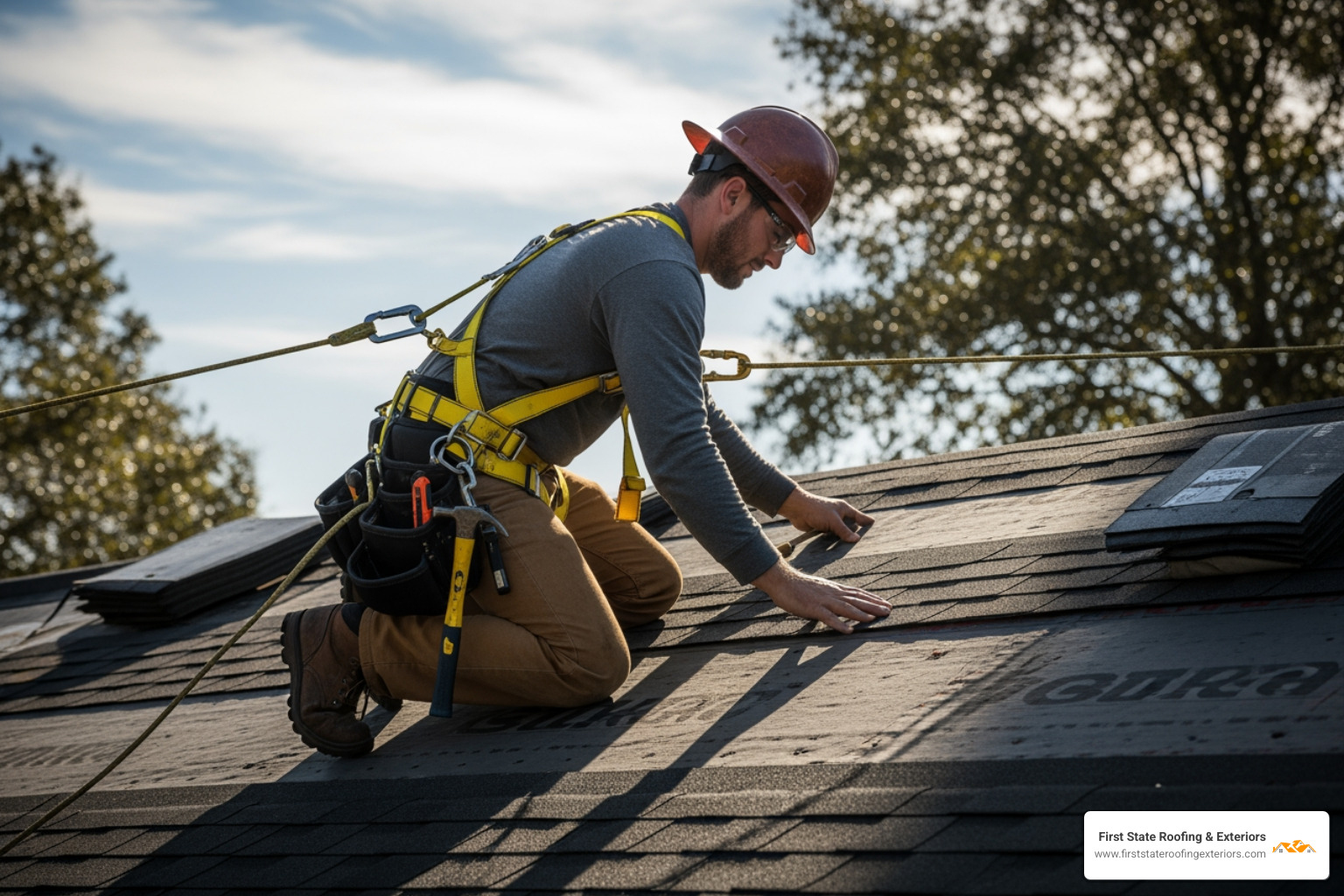
Reroofing (Overlay) vs. Full Replacement
When getting a new roof, you’ll decide between an overlay or a full replacement (tear-off).
-
Reroofing (Overlay): This involves installing new shingles over existing ones. It’s faster and cheaper but only possible if you have one existing layer and a sound roof deck. Downsides include the inability to inspect the deck for damage and a potentially shorter lifespan for the new roof.
-
Full Replacement (Tear-Off): This superior method involves stripping all old materials down to the roof deck. While more expensive, a full tear-off allows for a thorough inspection and repair of the deck, provides a flat surface for new materials, and ensures full warranty compliance. For these reasons, a full roof replacement is almost always the recommended path for long-term performance.
From Tear-Off to Final Inspection
Here’s what a typical roof replacement process looks like:
- Property Preparation: Our crew protects your landscaping, siding, and windows with tarps and moves patio furniture to a safe location.
- Tear-Off: Old shingles, underlayment, and flashing are removed down to the bare roof deck.
- Deck Inspection & Repair: The exposed decking is inspected for rot or damage. Any compromised sections are replaced to ensure a solid foundation.
- Underlayment & Flashing: A protective ice and water shield is applied to vulnerable areas like eaves and valleys. Then, a high-quality synthetic underlayment is installed across the entire deck. A new drip edge is secured to direct water away from the fascia.
- New Material Installation: Your chosen roofing material (shingles, metal, etc.) is installed according to manufacturer specifications for optimal performance.
- Ventilation & Ridge Caps: Ridge vents are installed at the roof’s peak for proper attic ventilation, followed by ridge caps to seal the system.
- Cleanup: All debris is removed, and we use magnetic sweepers to collect stray nails from your yard and driveway.
- Final Inspection: A supervisor conducts a final walk-through to ensure the job meets our quality standards and you are completely satisfied.
Preparing Your Home for Getting a New Roof
To help ensure a smooth project, you can take a few preparatory steps:
- Clear the Driveway: Move vehicles to provide space for our crew and equipment.
- Protect Valuables: Cover or move items in your attic to protect them from dust and debris.
- Secure Wall Hangings: Vibrations can cause items to fall. Remove pictures and mirrors from walls, especially on the top floor.
- Inform Neighbors: A quick heads-up about the noise and activity is always appreciated.
- Plan for Noise: Roofing is loud. Consider making alternative arrangements if you work from home.
- Pet Safety: Keep pets indoors and away from the work zone for their safety.
- Satellite Dishes: Discuss the removal and reinstallation of any roof-mounted dishes with your contractor beforehand.
Hiring a Contractor and Understanding Your Warranty
Choosing the right contractor is the most critical decision when getting a new roof. The quality of the installation is just as important as the materials for ensuring your roof’s longevity and performance.
How to Choose a Reputable Roofing Contractor
Use these criteria to find a trustworthy professional:
- Local and Established: A local company, like First State Roofing & Exteriors, has a physical presence in areas like Dover and Smyrna, understands local codes, and is accountable. Beware of “storm chasers” who disappear after a job.
- Licensed and Insured: Verify the contractor holds a Delaware license and carries both liability insurance and worker’s compensation to protect you from accidents.
- Reviews and References: Check Google, Yelp, and the BBB. Ask for recent client references to see their work firsthand.
- Detailed Written Estimates: Get at least three itemized estimates to compare materials, labor, and warranty details. Don’t base your decision on price alone.
- No High-Pressure Tactics: A reputable contractor provides a clear estimate and gives you time to decide without pressure.
- Comprehensive Contract: Always get a written contract detailing the scope of work, materials, timeline, payment schedule, and warranty. Never sign a blank contract.
For more tips, consult our Hiring a Roofer Guide.
Understanding Roofing Warranties
When getting a new roof, you’ll typically receive two warranties:
- Manufacturer’s Warranty: This covers defects in the roofing materials. For asphalt shingles, these are often called “lifetime” but are usually prorated, meaning coverage decreases over time. Improper installation can void this warranty.
- Contractor’s Workmanship Warranty: This covers the quality of the installation itself. A reputable contractor will offer a warranty of at least 12 months, with many offering longer terms (5, 10, or even 25 years). This is crucial, as most roof failures are due to installation errors.
A 50-year shingle warranty is worthless if the roof is installed improperly. Always get written copies of both warranties and understand their terms.
Maximizing the Value of Your New Roof
Getting a new roof is an opportunity to improve your home’s value, curb appeal, and energy performance.
The Best Time of Year for a Replacement
For Delaware homeowners, late spring to early fall (May through September) is the ideal time for a roof replacement. This period offers moderate temperatures for asphalt shingles to seal properly and fewer rain delays. However, a skilled crew can perform a quality replacement year-round, and the off-season may offer better pricing due to lower demand.
Upgrades and Long-Term Benefits
Investing in a new roof provides benefits far beyond just keeping your home dry:
- Energy Efficiency: A new cool roof with reflective shingles can reduce cooling costs by up to 15% by absorbing less heat. The Cool Roof Rating Council rates products for their solar reflectance.
- Solar Panels: The most cost-effective time to install solar panels is during a roof replacement. A federal tax credit for solar roofs offers a 30% savings on the project cost through 2025.
- Increased Home Value: A new roof is a major selling point that boosts curb appeal and signals to buyers that the home is well-maintained, offering a high return on investment.
- Structural Protection: A sound roof is your home’s primary defense against water intrusion, protecting the entire structure from costly water damage, mold, and rot.
- Peace of Mind: Knowing your home is protected by a professionally installed roofing system with solid warranties provides invaluable peace of mind.
- Improved Ventilation: Upgrading attic ventilation during a replacement helps regulate temperatures, extends your roof’s life, and reduces energy bills.
- New Gutters: Replacing gutters with your roof ensures proper water drainage and improves your home’s exterior appearance.
Conclusion
Getting a new roof is a significant undertaking, but with proper research and a trusted partner, it can be a smooth and rewarding process. By understanding the signs of failure, evaluating materials, and carefully selecting a qualified local contractor, you ensure your home is protected for decades. A new roof improves curb appeal, boosts energy efficiency, and provides the ultimate defense against the elements, securing your investment and giving you peace of mind.
If you’re in Dover, Smyrna, or anywhere in Delaware, the expert team at First State Roofing & Exteriors is here to help. We offer transparent guidance and superior workmanship, dedicated to protecting and enhancing homes with integrity. Our company gives free estimates, so for a no-obligation assessment, call us today at (302) 222-4065 to schedule your free inspection.