
Hear from Our Customers
The Dover area sees roughly 45 inches of rain a year, and the southeastern corridor where Woods Manor East sits has logged 39 severe weather warnings and 37 Doppler-detected hail events in just the past 12 months. For homes with flat or low-slope roof sections — garages, additions, sunrooms — that kind of weather frequency isn’t abstract. It’s the reason a membrane that looked fine last spring might be silently failing right now.
What changes after a proper flat roof repair or replacement isn’t just the roof itself. It’s the ceiling that stops showing water stains. It’s the interior wall that stops swelling. It’s the peace of mind that comes from knowing your home isn’t slowly absorbing damage every time it rains. That matters especially here, where the housing stock in the Woods Manor area includes a lot of postwar-era construction — homes with original flat sections that are reaching or well past their design lifespan.
Whether you’re a long-term homeowner, a military family that just settled into the area near Dover AFB, or a landlord managing a rental in the neighborhood, the outcome is the same: a flat roof system that’s correctly installed, properly drained, and built to last through Delaware’s climate — not just until the next big storm.
We’re based in Smyrna — about 15 miles north of Dover on US-13 — and have been serving Kent County homeowners and commercial property owners for over 22 years. That’s not a marketing number. It means we’ve worked through Delaware’s weather cycles, seen what happens to flat roofs in the southeastern Dover corridor after a harsh winter, and built a reputation that holds up under scrutiny.
Every job is handled by our own certified crew. No subcontracting, no third parties showing up at your door that you’ve never met. The team you talk to is the team that does the work — and that accountability shows up consistently in our reviews.
With a 5.0 out of 5 rating from over 63 verified reviews, a BBB accreditation, and a service area that covers Kent County including the Dover corridor and neighborhoods like Highland Acres, Laurel Bend, and Rodric Village, we’re a contractor with a real local track record — not a storm chaser passing through.
It starts with a free estimate. Someone from our team comes out to your property in Woods Manor East, takes a proper look at the flat roof section in question, and tells you what we’re actually seeing — not a vague verbal assessment, but a clear picture of the condition, what’s causing the problem, and what the right fix looks like. If you’ve had water intrusion, we’ll trace the source rather than just address the visible damage.
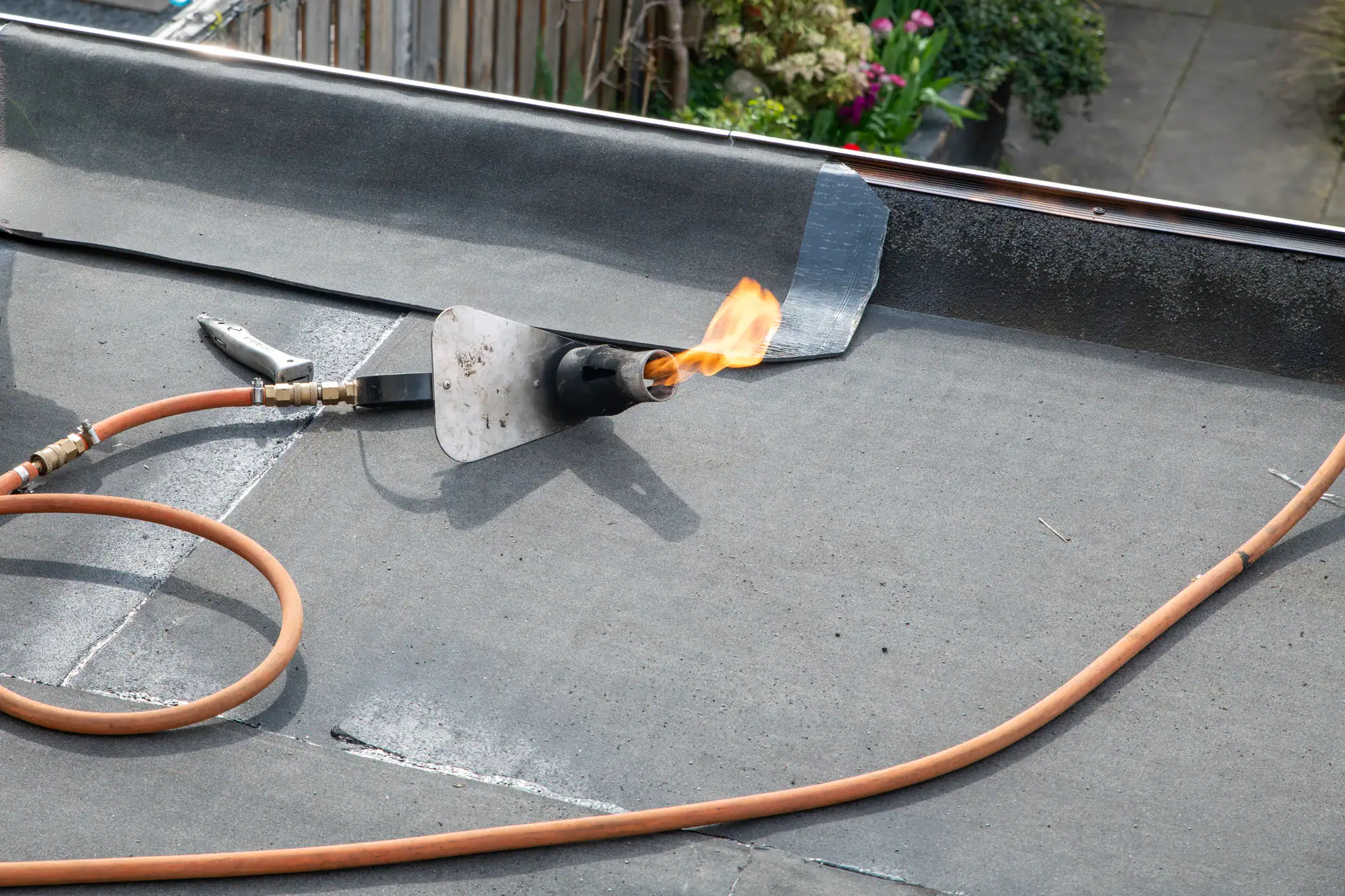
From there, a full replacement typically begins with a complete tear-off of the existing membrane. The deck gets inspected for rot, soft spots, or structural issues before anything new goes down. This step matters more than most homeowners realize — especially in older Dover-area homes where the original decking may have absorbed years of moisture before anyone noticed. Insulation is assessed, drainage is evaluated, and the new membrane is installed with properly sealed seams and flashing at every penetration and perimeter edge.
Because Woods Manor East falls within Dover city limits, roof replacements require a building permit through the city’s inspections and code enforcement process. We handle that as part of the job. When the work is done, the site is cleaned up completely — no nails in the driveway, no debris left behind. That’s not a bonus, it’s just how we operate.

Ready to get started?
Not every flat roof is the same, and not every membrane material makes sense for every building. We work with the full range of flat and low-slope roofing systems — TPO, EPDM rubber roofing, modified bitumen (torch-down), and PVC — and can walk you through which one fits your property, your budget, and the specific demands of Delaware’s climate.
TPO is the fastest-growing flat roofing membrane on the market right now, and for good reason. It reflects up to 84% of solar load, which matters during Dover’s humid summers when flat roof surfaces absorb heat and drive up cooling costs. It’s a strong choice for commercial properties along the Dover corridor and for residential flat sections that get significant sun exposure. EPDM rubber roofing has one of the longest track records in the industry — over 20 billion square feet installed worldwide — and its flexibility makes it well-suited to Delaware’s freeze-thaw winters, which stress rigid materials and compromise seams over time.
For older homes in the Woods Manor area with original modified bitumen systems, we can assess whether a repair is realistic or whether a full replacement with a more durable membrane makes more long-term sense. If you’ve got storm damage and an open insurance claim, we’ll help you document it and work through the process — something a lot of contractors in the Dover area simply don’t offer. Financing is also available, so a full membrane replacement doesn’t have to wait until you’ve saved every dollar upfront.

The honest answer is that you usually can’t tell just by looking from the ground — and that’s the problem with flat roofs. Unlike a pitched shingle roof where missing or curled shingles are visible from the street, flat membrane systems fail in ways that aren’t obvious until water is already getting through. The signs worth paying attention to are interior water stains on ceilings or walls, bubbling or blistering on the membrane surface, visible cracks or separating seams, and water that pools and sits for more than 48 hours after rain.
In the southeastern Dover corridor, where a lot of the housing stock dates back to the postwar era through the 1970s, many flat sections — especially on garages and home additions — are running on original or near-original systems. If your home in Woods Manor East is in that age range and you haven’t had the flat section professionally inspected recently, that’s reason enough to schedule a free estimate. A quick assessment from us will tell you whether you’re looking at a targeted repair or a full replacement, without any pressure to commit to either.
These are the three most common flat roofing systems you’ll encounter in the Dover area, and they each have a different performance profile. TPO is a single-ply membrane known for its energy efficiency — it reflects a significant portion of solar heat, which helps reduce cooling costs during Delaware’s hot, humid summers. It’s heat-welded at the seams, which creates a strong, watertight bond when installed correctly. EPDM is a rubber membrane that’s been around for decades and has an exceptional track record for longevity and flexibility. Its ability to handle temperature swings without cracking makes it a solid choice for Delaware’s freeze-thaw winters.
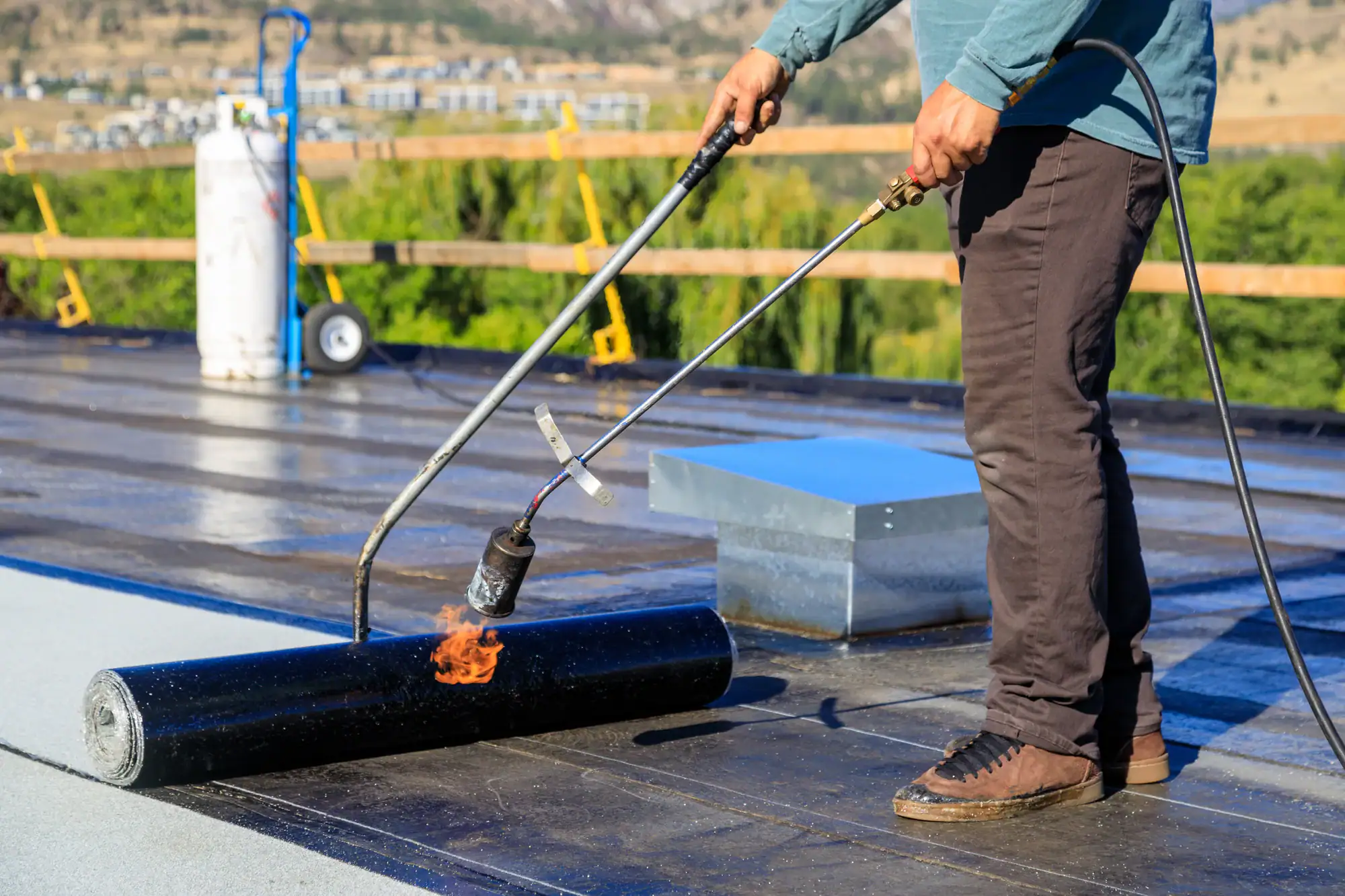
Modified bitumen, sometimes called torch-down roofing, is an asphalt-based system that’s been common on residential flat sections and low-slope additions for a long time. It’s durable and relatively straightforward to repair, but older modified bitumen systems in the Woods Manor area that have gone through many years of Delaware weather cycles may be approaching the end of their useful life. The right choice between these systems depends on your building’s size, slope, drainage setup, sun exposure, and budget — all things we’ll walk you through during a free estimate.
It does, and the data backs it up. The Dover area has seen 39 severe weather warnings and 37 Doppler-detected hail events in just the past 12 months. Hail damage to flat membrane roofing is especially tricky because it often doesn’t look like much from the ground — small punctures and compromised seams that let water in gradually rather than all at once. By the time you see a stain on your ceiling, the water has usually been traveling along the deck for a while.
Beyond storm events, Delaware’s climate creates ongoing stress for flat roofs in general. About 45 inches of rain falls annually in Kent County, and that moisture has to go somewhere. If your flat roof’s drainage isn’t functioning correctly — clogged drains, inadequate slope, or low spots that hold water — that standing water accelerates membrane breakdown, promotes mold growth underneath the surface, and adds structural load during winter freezes. The freeze-thaw cycling Delaware gets each winter is particularly hard on modified bitumen and EPDM seams that have already seen some wear. Regular inspection and maintenance is the most cost-effective way to stay ahead of it.
Yes, a building permit is required for roof replacement in Dover. Because Woods Manor East falls within Dover city limits, any full flat roof replacement — not just a minor patch repair — needs to go through the City of Dover’s inspections and code enforcement process before work begins. Delaware follows the International Building Code and International Residential Code frameworks, and Dover enforces local inspections on top of state requirements. If the replacement involves structural deck work, changes to insulation, or drainage modifications, there may be additional inspection stages involved.
We handle the permitting process as part of the job. You don’t need to navigate city offices or figure out which forms apply to your project — that’s part of what you’re getting when you hire a licensed, established contractor rather than someone who skips that step to save time. Skipping permits isn’t just a code violation; it can create problems when you sell the home or file an insurance claim. Working with us protects you long after the job is done.
It depends on how long that water is sitting there. The industry standard for concern is water that’s still standing 48 hours after a rain event. If it drains within that window, your drainage system is likely functioning adequately. If it’s still there two days later, that’s ponding water — and it’s worth taking seriously, especially in a climate like Dover’s where rain events are frequent and winter freezes follow.
Ponding water accelerates membrane degradation faster than almost anything else. It adds weight to the roof structure, promotes algae and mold growth on and beneath the membrane, and when temperatures drop, that standing water freezes and expands — which stresses seams and can cause cracking in materials that weren’t designed to handle that kind of pressure repeatedly. In older flat roof sections common in the Woods Manor area, a drainage issue that’s been ignored for a few seasons can turn a manageable repair into a full replacement conversation. Getting a professional eye on it early is almost always the cheaper path.
Yes, and this is genuinely one of the more useful things we offer. Navigating a roofing insurance claim — especially for flat roof damage that isn’t always visible or obvious — is a process that trips up a lot of homeowners. The Dover area’s frequent severe weather means this situation comes up regularly, and a contractor who knows how to document damage correctly, communicate with adjusters, and scope the job in a way that reflects the actual condition of the roof makes a real difference in the outcome of your claim.
This is especially relevant for homeowners in the southeastern Dover corridor who may be newer to the area or managing a property while dealing with other demands — including military families near Dover AFB who haven’t been through a storm damage claim before. We work with you through the process from documentation to completion, so you’re not left trying to figure out what your adjuster needs or whether the repair scope you’re being offered actually covers what’s damaged. Getting the claim right the first time is worth the extra step of working with a contractor who knows how to support it.
Other Services we provide in Woods Manor East