
Hear from Our Customers
Townhome living in The Hamlet comes with a roofing reality that a lot of homeowners don’t find out about until water shows up on the ceiling. The flat or low-slope sections over your garage, rear addition, or covered entryway aren’t protected by shingles — they rely entirely on a membrane system to stay watertight. When that membrane starts to fail, it doesn’t announce itself loudly. It just quietly lets water in, and by the time you notice it inside, the damage has usually been building for a while.
Dover sits in a weather corridor that doesn’t go easy on flat roofs. Nor’easters roll in off Delaware Bay, tropical storm remnants push heavy rainfall through the area in late summer, and the freeze-thaw cycles that hit every winter work their way into any seam or surface crack that’s already compromised. A flat roof section on a Forest Creek Drive or Village Drive townhome takes the full force of that weather with no slope to help shed the water — which means drainage design and membrane condition aren’t optional maintenance items. They’re the difference between a dry home and a costly interior repair.
Getting ahead of it means a free inspection now instead of an emergency call later. When you know what condition your membrane is actually in, you can make a real decision — repair, replace, or keep an eye on it — rather than waiting for the roof to make that decision for you.
We’re based in Smyrna — about 15 miles up the SR 1 corridor from Dover — and Kent County is core service territory, not a stretch of the map. Our team has been working through Delaware’s weather patterns for over 22 years, which means we’ve seen what nor’easters do to EPDM seams, what a clogged drain does to a modified bitumen section after a heavy summer storm, and what happens when a membrane that was installed during original construction finally hits the end of its service life.
Every project is handled by our own certified crew — no subcontractors, no unfamiliar faces showing up at your door. That matters in a townhome community like The Hamlet, where shared driveways and close-proximity neighbors mean a disorganized job site isn’t just inconvenient, it’s a problem. We’re BBB accredited, carry a 5.0 out of 5 rating across 63-plus verified reviews, and the themes that come up consistently — clean worksites, clear communication, showing up when we said we would — are exactly what townhome owners in this neighborhood tend to care about most.
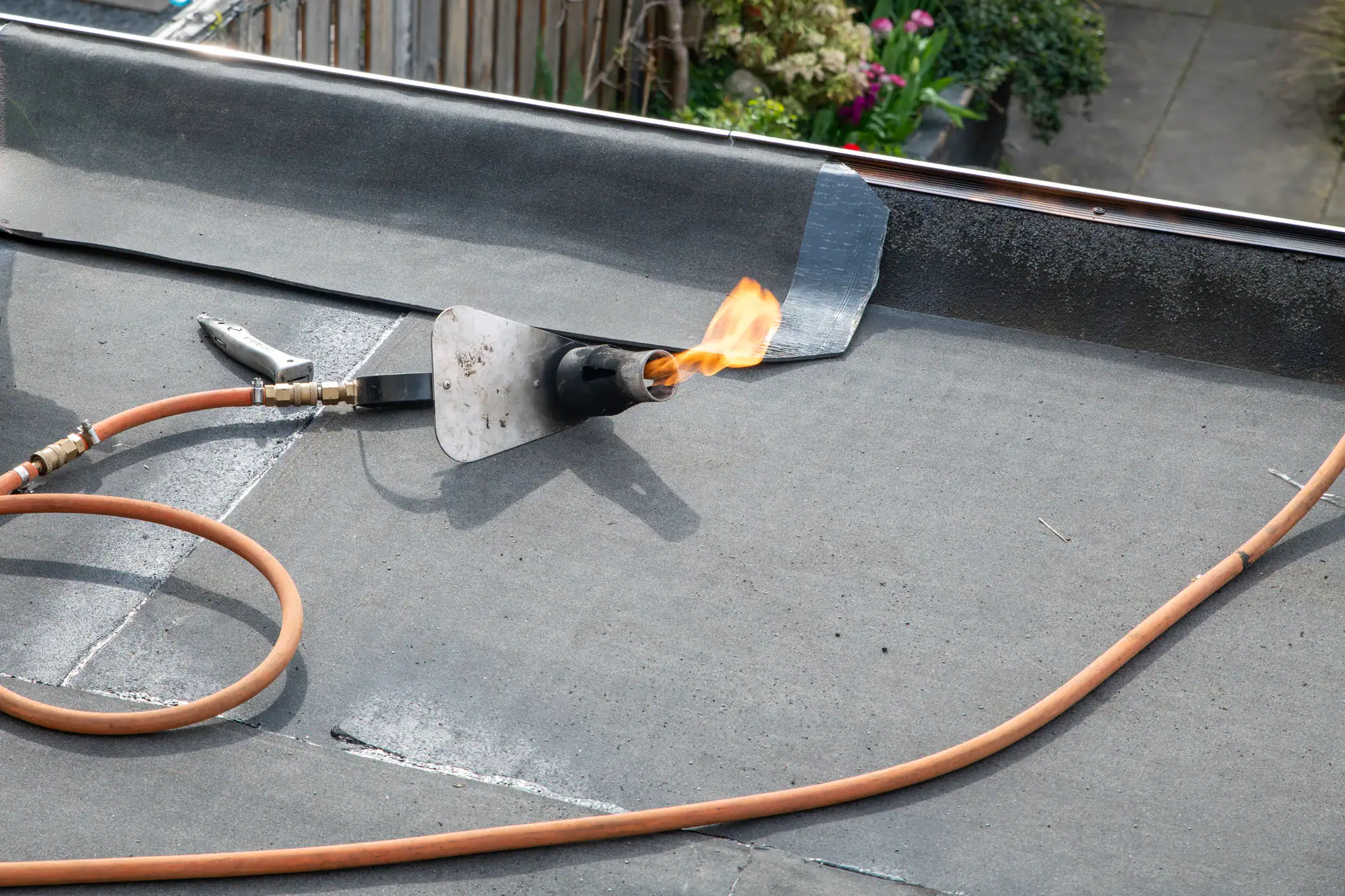
It starts with a free inspection. A member of our crew comes out, walks the flat and low-slope sections of your roof, checks the membrane condition, looks at the drainage outlets and flashing details, and gives you an honest read on what’s going on. No pressure, no upsell — just a clear picture of where your roof stands. For The Hamlet’s established townhome stock, this step often reveals that an original modified bitumen torch-down section is well past its expected 15-to-20-year service window, which is useful information to have before the next storm season.
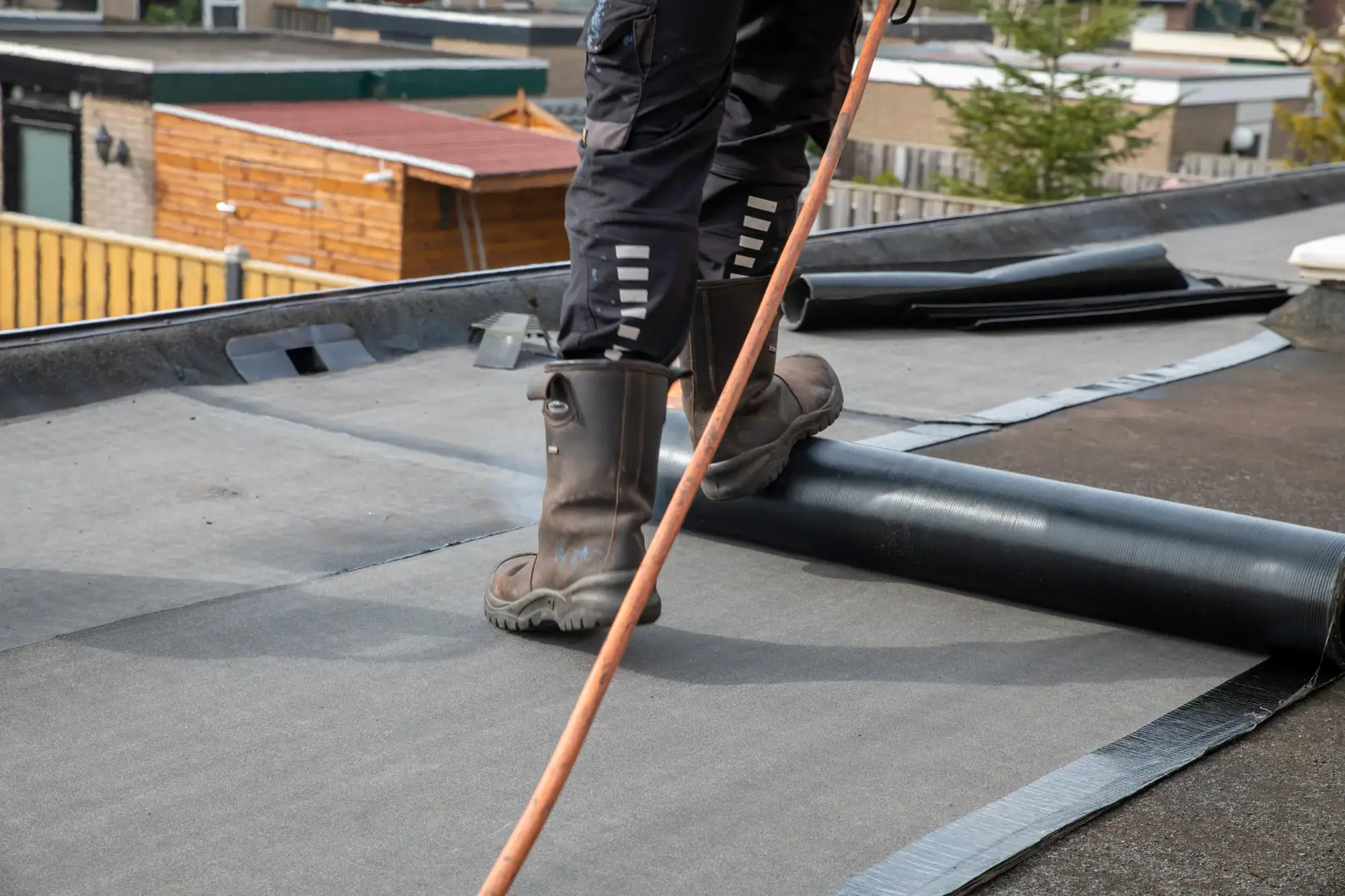
If work is needed, the process is straightforward. On a replacement job, that means removing the existing membrane down to the deck, inspecting the deck for any soft spots or water damage that accumulated underneath, addressing those before anything new goes on top, and then installing the right membrane system for your specific situation — whether that’s TPO for its energy efficiency and heat-welded seams, EPDM for its flexibility through Delaware’s freeze-thaw cycles, or modified bitumen where it fits the scope. Flashing at every penetration and along the perimeter gets done properly, because that’s where most flat roof failures actually start.
For work within Dover city limits, roofing replacements typically require a building permit through the City of Dover’s Building Inspections department. We handle the permit coordination so you don’t have to navigate it yourself. If your section of The Hamlet also falls under HOA guidelines that govern exterior work, we can help you work through those requirements before the job starts.

Ready to get started?
Not every flat roof section in The Hamlet needs the same solution, and a contractor who only knows one membrane system is going to recommend that system regardless of whether it’s actually the right fit. We work with the full range — TPO, EPDM, modified bitumen, and PVC — which means the recommendation you get is based on your roof’s actual conditions, not what happens to be easiest to install.
TPO is a strong choice for Dover’s humid summers. It reflects a significant portion of solar load, which can reduce the heat buildup on low-slope sections and take some pressure off your cooling system during the hottest months. It’s also installed with heat-welded seams, which creates a continuous bond that holds up well against the sustained rainfall events Dover sees from nor’easters and tropical storm remnants. EPDM rubber roofing has a long track record — more than 20 billion square feet installed worldwide — and its flexibility makes it particularly well-suited to the freeze-thaw cycling that Delaware winters bring. For townhomes in The Hamlet where the flat section has complex geometry or multiple penetrations, EPDM’s adaptability is a real practical advantage.
Modified bitumen torch-down remains a reliable option in the right context, and for homeowners who have an existing mod-bit system that needs repair rather than full replacement, we can assess whether targeted repair makes sense or whether the membrane has reached the point where replacement is the more cost-effective path. Financing is available for larger scopes, so budget doesn’t have to be the reason a necessary job gets pushed off another season.

Most townhomes in The Hamlet do have at least one flat or low-slope roof section — typically over the garage, a rear addition, a covered entryway, or a bay window projection. These sections are built into the original architecture of attached townhome construction, and they use membrane roofing systems rather than shingles. Because they’re not always visible from the ground and don’t show obvious wear the way shingles do, they tend to get overlooked during routine maintenance conversations.
The best way to know for certain is a professional inspection. We can identify the membrane type, assess its current condition, check the drainage outlets and flashing details, and tell you whether you’re looking at a roof that has years of service life remaining or one that’s approaching the end of its expected window. For The Hamlet’s established housing stock, where original construction may date back several decades, that inspection is often the first time a homeowner has a clear picture of what’s actually on that section of their roof.
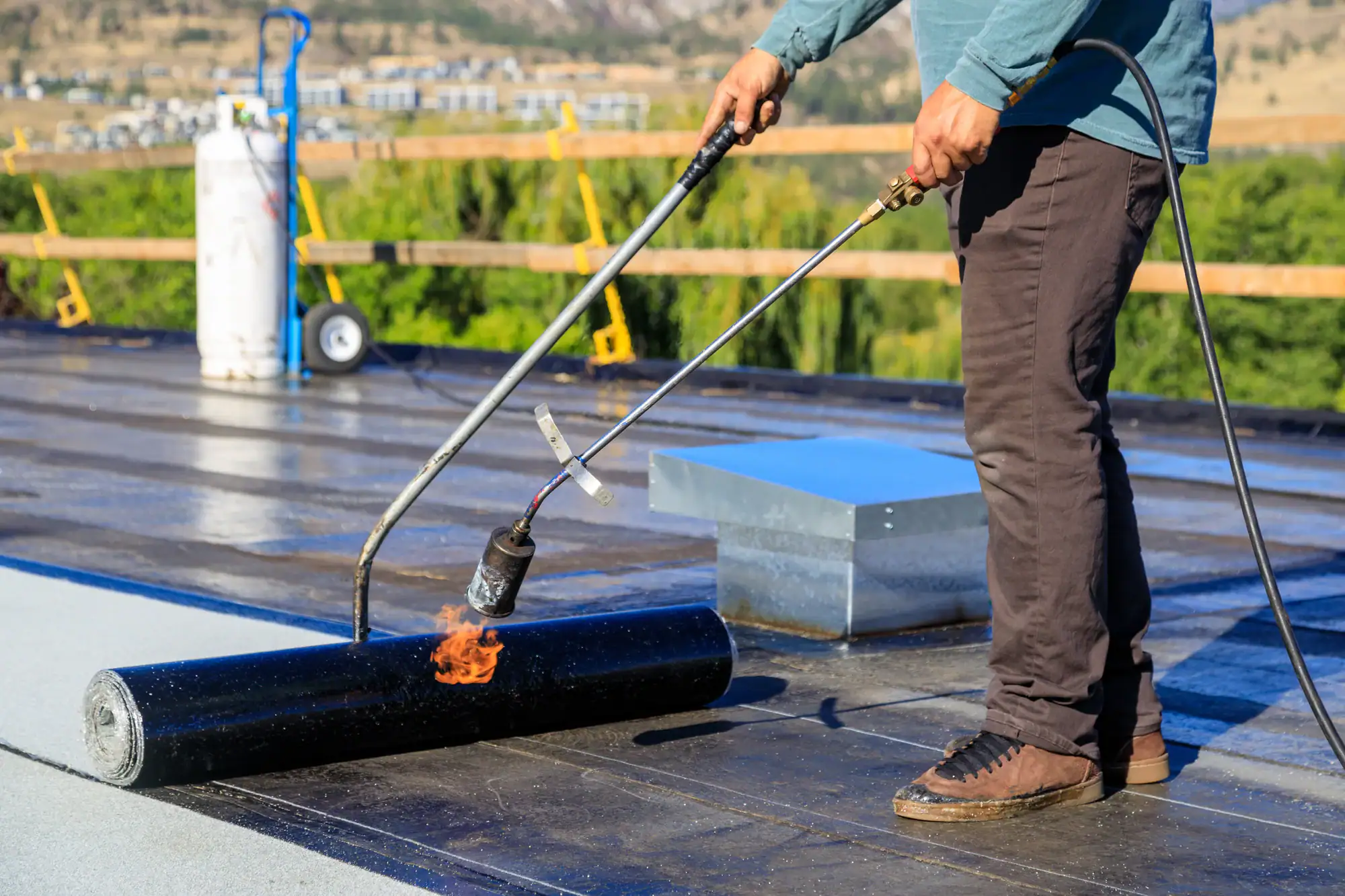
These are the three most common flat roof membrane systems, and they each perform differently. TPO is a single-ply thermoplastic membrane that’s installed with heat-welded seams, which creates a strong, continuous bond. It reflects a significant portion of solar load, making it a practical choice for Dover’s humid summers where heat buildup on low-slope sections can affect interior comfort. It’s currently the fastest-growing flat roofing material in the commercial market and is increasingly used on residential flat sections as well.
EPDM is a rubber roofing membrane with a long proven track record — it’s flexible, handles freeze-thaw cycling well, and can last 20 to 30 years with proper maintenance. That flexibility matters in Delaware’s winters, where temperature swings stress seams and surface materials on less adaptable membranes. Modified bitumen, sometimes called torch-down roofing, is a multi-layer asphalt-based system that was the standard for townhome construction through much of the 1980s and 1990s. It performs well when properly installed but has a typical service life of 15 to 20 years, meaning many original installations in The Hamlet and other established Dover communities are at or past that window. The right choice depends on your specific roof, budget, and how long you plan to stay in the home.
The industry standard threshold is 48 hours. If water is still sitting on your flat roof section more than two days after a rainfall event, that’s ponding water, and it’s worth taking seriously. Dover receives around 45 inches of rain per year, and the heavy rainfall events that come with nor’easters and summer thunderstorms can dump significant water onto a flat section in a short period of time. If the drainage outlets are functioning properly and the roof has adequate slope toward them, that water should clear. When it doesn’t, it usually means a drainage problem, a sagging section of the deck, or clogged outlets.
Ponding water accelerates membrane degradation, adds structural load to the roof deck, and creates conditions that promote mold and algae growth. In winter, water that’s sitting on the surface when temperatures drop will freeze and expand, which puts stress on seams and any existing surface cracks. Over time, what starts as a drainage issue becomes a membrane failure and then an interior leak. If you’re seeing water sitting on your flat section after storms, a free inspection will tell you whether it’s a drainage fix or something that needs more attention.
Generally, yes. Roofing replacement work within Dover city limits typically requires a building permit from the City of Dover’s Building Inspections department. The permit process ensures the work complies with the Delaware Building Code, which follows the International Building Code with state-specific amendments. Simple repairs — patching a small section of membrane, for example — may not trigger a permit requirement, but a full tear-off and membrane replacement usually does.
This is one of the practical reasons to work with a contractor who already knows Dover’s process rather than one who’s unfamiliar with the area. We handle permit coordination as part of the job, so you’re not left trying to navigate the City of Dover’s Building Inspections process on your own. If your townhome section in The Hamlet also falls under HOA guidelines that govern exterior work, it’s worth confirming those requirements before the job starts — we can help you work through that step as well.
We offer emergency roof repair, which is specifically relevant for Dover-area homeowners after the kind of weather events the region sees regularly. Nor’easters, tropical storm remnants, and strong summer thunderstorms can all reveal a flat roof failure that wasn’t obvious before the storm hit. When water is actively getting into your home, waiting for a routine appointment window isn’t an option.
The practical reality of emergency flat roof situations is that the goal of the first visit is to stop the water intrusion and prevent further interior damage — not necessarily to complete a full replacement in one trip. A temporary repair or targeted emergency patch buys time to properly assess the full scope and schedule the right permanent fix. Because we’re based in Smyrna and serve Kent County as core territory, response to The Hamlet and the broader Dover area is a short drive up SR 1, not a two-hour mobilization from out of state.
It depends on the cause of the damage. Most standard homeowner’s insurance policies cover sudden, storm-related damage — wind damage from a nor’easter, impact damage from a falling branch, or hail damage that compromises the membrane. What policies typically don’t cover is damage that resulted from deferred maintenance or gradual deterioration. If an adjuster determines that your membrane was already at the end of its service life and the leak was the result of age rather than a specific storm event, the claim may be denied or significantly reduced.
This is where having a contractor who understands the insurance claims process makes a real difference. We assist homeowners with storm damage documentation and work with adjusters to make sure the scope of damage is accurately represented. Dover’s documented history of storm activity — including events like Tropical Storm Isaias in 2020 — means storm damage claims are a real and recurring scenario for homeowners in this area. Getting the documentation right from the start is what separates a fair settlement from a lowballed patch estimate that doesn’t actually solve the problem.
Other Services we provide in The Hamlet