
Hear from Our Customers
A flat roof in Slaughter Beach isn’t the same job as one in Dover or Harrington. The salt air coming off the bay every single day works on metal flashings, seam adhesives, and membrane edges in ways that inland roofs never experience. When a roof is installed without accounting for that environment, the problems show up fast: seams that lift, flashings that corrode, and edges that let water in long before the membrane itself would have failed.
When the work is done right for Slaughter Beach’s specific conditions, you stop chasing leaks. You stop wondering what a nor’easter did to your roof while you weren’t there. A properly installed TPO or EPDM membrane with fully heat-welded seams and corrosion-resistant components holds up through Delaware Bay storm seasons — not just for a year or two, but for decades.
For seasonal owners especially, that peace of mind is real. If your Slaughter Beach property sits empty from October through April, you need a roof that doesn’t require you to be present to protect it. The right installation, with proper drainage and sealed penetrations, means you’re not walking into a water-damaged interior on Memorial Day weekend.
First State Roofing & Exteriors Co. has been working across Kent and Sussex counties for over 22 years. We’ve worked through the nor’easters, the tropical storm remnants, and the high-tide flooding events that regularly affect Delaware Bay communities like Slaughter Beach. We know what those conditions do to flat roof membranes, and we know how to install systems that hold up through them.
Every project we take on is handled by our own crew — no subcontractors, no third parties you didn’t agree to. For Slaughter Beach property owners who aren’t always on-site to oversee work, that matters. The team you talk to is the team on your roof.
We’re BBB accredited, fully licensed and insured, and hold a 5.0 rating from over 63 verified reviews. Our customers consistently call out our communication, clean worksites, and follow-through. That reputation means something in a small coastal community where word travels fast.
It starts with a free estimate and a real look at what you’re working with. We assess the existing membrane, check for ponding water issues, inspect the deck underneath, and look at every penetration and flashing detail — because in a coastal environment like Slaughter Beach, those details are where failures start. We’ll tell you straight whether you need a full replacement or whether targeted repairs will do the job.
Before any work begins, we handle the permitting. Roofing work in Slaughter Beach requires a Town of Slaughter Beach building permit and a Sussex County building permit, and depending on the scope and location of the project, DNREC approval may be required as well. We manage that process from start to finish, so you’re not navigating a multi-agency permitting stack on your own.
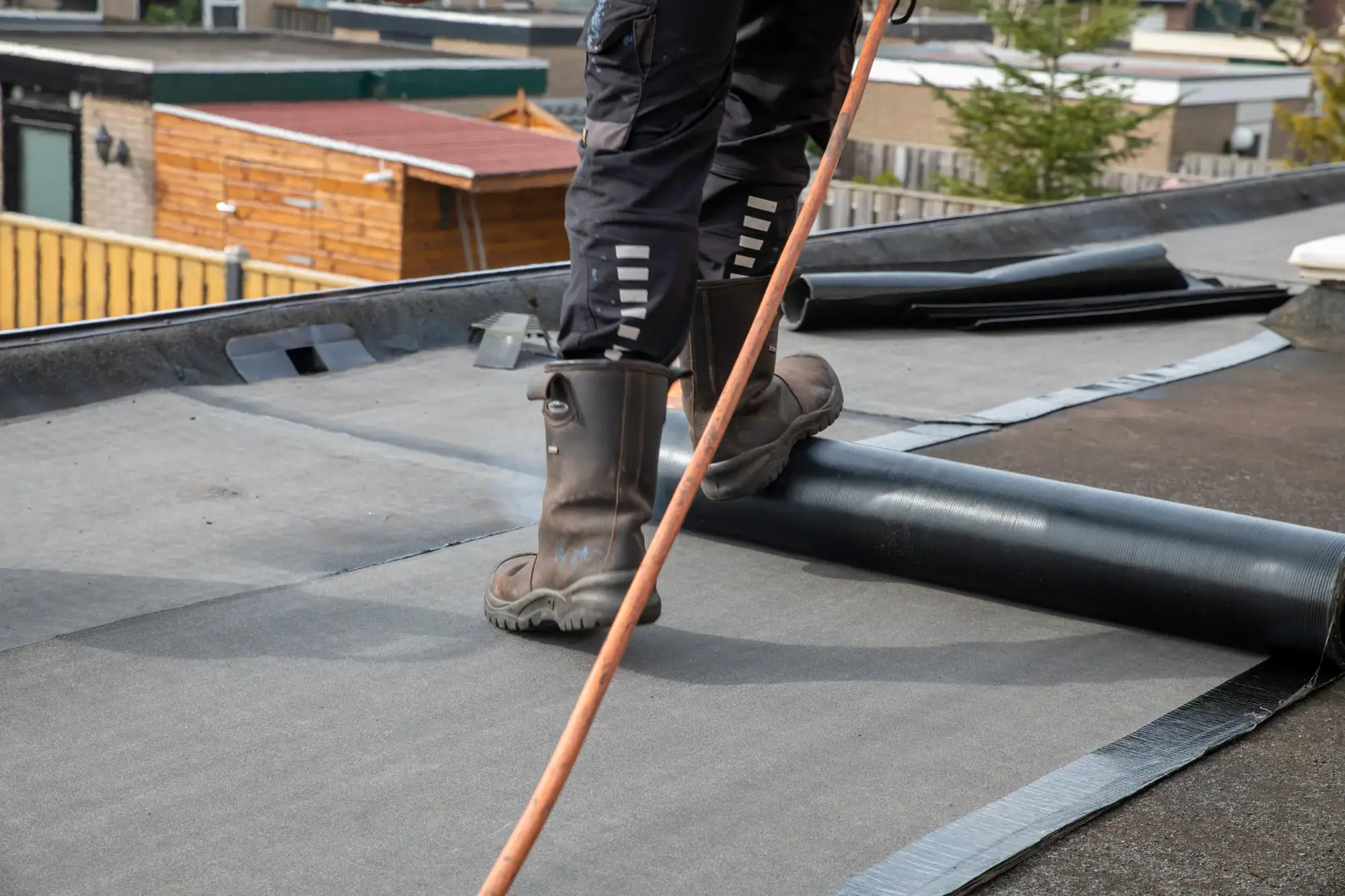
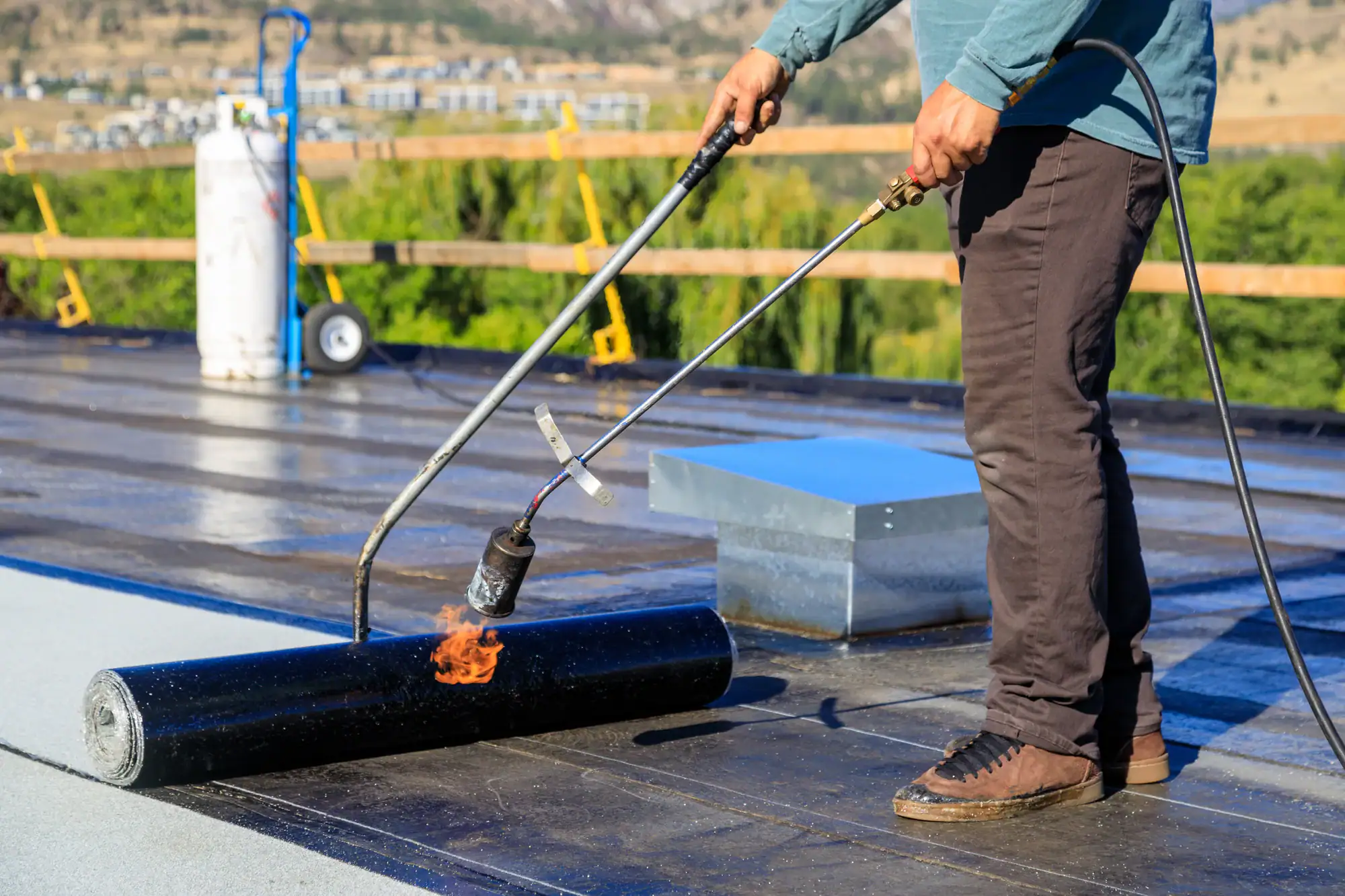
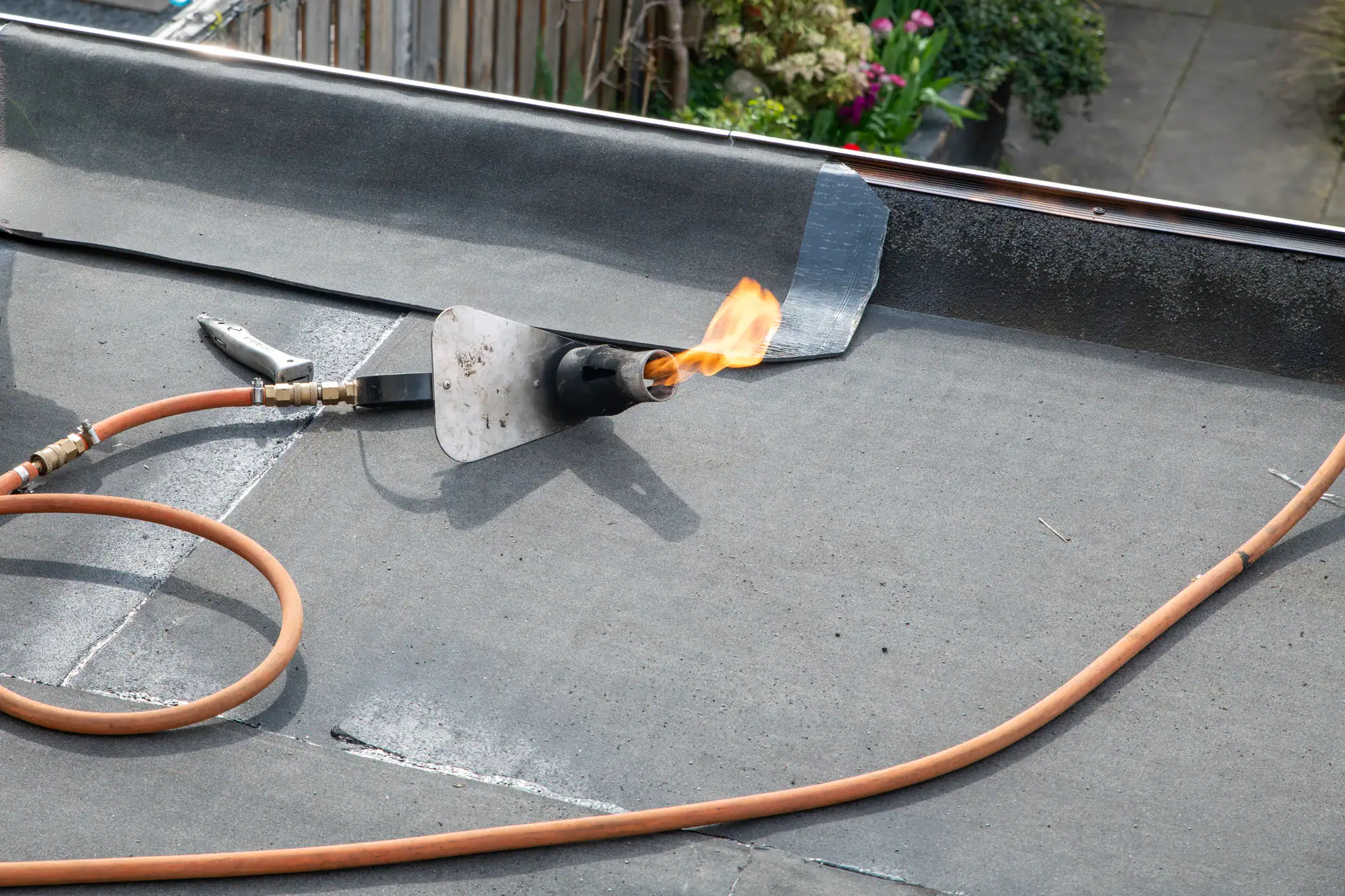
Once we’re on the job, we do a full tear-off of the existing membrane, inspect and repair the deck where needed, install proper insulation, and lay the new membrane — whether that’s TPO, EPDM, modified bitumen, or PVC — with the seam and flashing details that coastal exposure demands. We clean up completely when we’re done. If you’re a seasonal owner coordinating from out of town, we’ll communicate every step clearly so you know exactly where things stand.

Ready to get started?
Not every flat roof material performs the same way in Slaughter Beach’s environment, and the choice matters more here than it does inland. TPO roofing membrane is one of the most popular options for good reason — it reflects up to 84% of solar load, which cuts cooling costs during Delaware Bay’s humid summers, and its heat-welded seams create a continuous, watertight bond that holds up well against wind uplift and lateral moisture pressure from storm surge. For properties with significant sun exposure along Bay Avenue, it’s often the strongest long-term choice.
EPDM rubber roofing material has one of the longest track records in the industry — more than 20 billion square feet installed worldwide — and its flexibility makes it particularly well-suited to Delaware’s freeze-thaw cycling in winter months. It also handles the chemical exposure that salt air introduces better than some other systems. For older Slaughter Beach cottages and bungalows with existing torch down roofing or modified bitumen roof systems, we can often repair or overlay rather than do a full replacement, depending on the condition of the deck underneath.
We also work with PVC roofing membrane for applications where chemical resistance or high-traffic durability is a priority. Whatever the right material is for your specific building, we’ll walk you through the reasoning — not just hand you a quote and hope you sign. If your roof damage is storm-related, we can also help you document the claim and work through the insurance process, which is something a lot of Slaughter Beach property owners end up needing after a serious nor’easter comes through.

Yes, and it’s one of the more underappreciated factors in coastal roofing. Salt air doesn’t attack the membrane itself as aggressively as it attacks the metal components — flashings, drip edges, fasteners, and termination bars. When those corrode, they stop holding the membrane edge securely, and that’s when water finds its way in. It also affects adhesive-based seam systems over time, which is one reason heat-welded TPO seams are often the better call for properties directly on the bay like those in Slaughter Beach.
The other factor is that salt air combines with moisture almost constantly in Slaughter Beach. You’re not dealing with a dry environment that occasionally gets wet — you’re dealing with persistent humidity and salt exposure year-round. That changes how you specify materials and how you detail the edges and penetrations. A contractor who primarily works inland may not account for that. We do, because we’ve been working through Delaware’s coastal conditions for over two decades.
Slaughter Beach has a more layered permitting process than most inland Delaware communities. You’ll need a Town of Slaughter Beach building permit, administered through the town’s Building Official and Flood Zone Manager, and a separate Sussex County building permit. For work in the beach area — which covers most of the town — DNREC approval is also required before the town will issue its permit. If your project is seaward of the DNREC Building Line, that triggers an additional coastal construction permit through DNREC.
It sounds like a lot, and it is more involved than a standard inland job. But it’s also not something you should try to navigate alone or hand off to a contractor who isn’t familiar with Delaware’s coastal zone requirements. We manage the permitting process from start to finish — we know what each agency needs, how to submit correctly, and how to avoid the delays that come from missing a step. You focus on the property; we handle the paperwork.
The honest answer is that you usually can’t tell from the ground, and sometimes you can’t even tell from a surface inspection of the membrane. The real question is what’s happening underneath — specifically, whether the roof deck has absorbed moisture and started to deteriorate. A membrane that looks rough on top might still have years of life left if the deck is solid. Conversely, a membrane that looks okay on the surface might be sitting on a deck that’s been wet for a season and is starting to lose structural integrity.
For Slaughter Beach properties, this is especially relevant for seasonal owners. If your roof took a hit during a winter nor’easter and you weren’t there to catch it early, water may have been sitting in the system for months by the time you return in spring. That changes the calculus significantly — what might have been a straightforward membrane repair in October could be a full replacement conversation by May. A proper inspection, including a check for ponding water patterns and deck deflection, gives you an honest answer before you commit to anything. That’s what our free estimate includes.
There’s no single right answer — it depends on your building, your budget, and what’s already there. For new installations and full replacements on Delaware Bay properties, TPO and EPDM are the two systems we most often recommend, and for different reasons. TPO’s heat-welded seams create a strong, continuous bond that resists the wind uplift that coastal storms generate, and its solar reflectance helps manage cooling costs during humid Delaware Bay summers. It’s the faster-growing option in the market for good reason.
EPDM rubber roofing has a longer installed track record and performs exceptionally well through Delaware’s freeze-thaw cycling in winter. It’s also more forgiving in terms of chemical exposure from salt air over time. For older Slaughter Beach properties with existing modified bitumen or torch down roofing systems, we’ll assess whether the existing membrane and deck can support a repair or overlay before recommending a full tear-off — because sometimes that’s the right call, and sometimes it isn’t. We’ll tell you which situation you’re in.
Ponding water — water that sits on a flat roof for more than 48 hours after rain — is one of the most common and most damaging flat roof problems, and it’s something we check for specifically on every inspection. When water pools consistently in the same spot, it accelerates membrane degradation, promotes algae and mold growth, adds structural load to the deck, and can void manufacturer warranties if left unaddressed. In a climate that gets around 45 inches of rainfall per year, drainage design isn’t optional — it’s fundamental.
In Slaughter Beach specifically, the issue is compounded by storm surge and high-tide flooding events. DNREC has formally documented that the town currently experiences frequent flooding of streets and property during high tides — not just during major storms. When water reaches roof level or gets driven under perimeter flashings by wind, any existing drainage weakness becomes a much bigger problem. Proper slope-to-drain design, functioning drain outlets, and sealed perimeter details are the things that separate a flat roof that handles Delaware Bay weather from one that doesn’t.
Yes, and it’s something we do regularly for property owners in coastal Sussex County communities like Slaughter Beach. After a serious nor’easter or storm surge event, the insurance claims process can be genuinely confusing — especially if you’re a seasonal owner who wasn’t present when the damage occurred and is now trying to document something that happened weeks ago. Adjusters work from what’s documented, and an underdocumented claim often results in a settlement that covers a patch when what you actually need is a full membrane replacement.
We help you document the damage correctly — photos, scope descriptions, material specifications — and we work alongside your adjuster to make sure the repair or replacement is scoped accurately. We’re not here to inflate a claim, but we are here to make sure you’re not left holding costs that should have been covered. For Slaughter Beach property owners dealing with a roof that took storm damage, getting the claim right from the start saves a lot of frustration and out-of-pocket expense down the road. Reach out for a free estimate and we’ll start there.
Other Services we provide in Slaughter Beach