
Hear from Our Customers
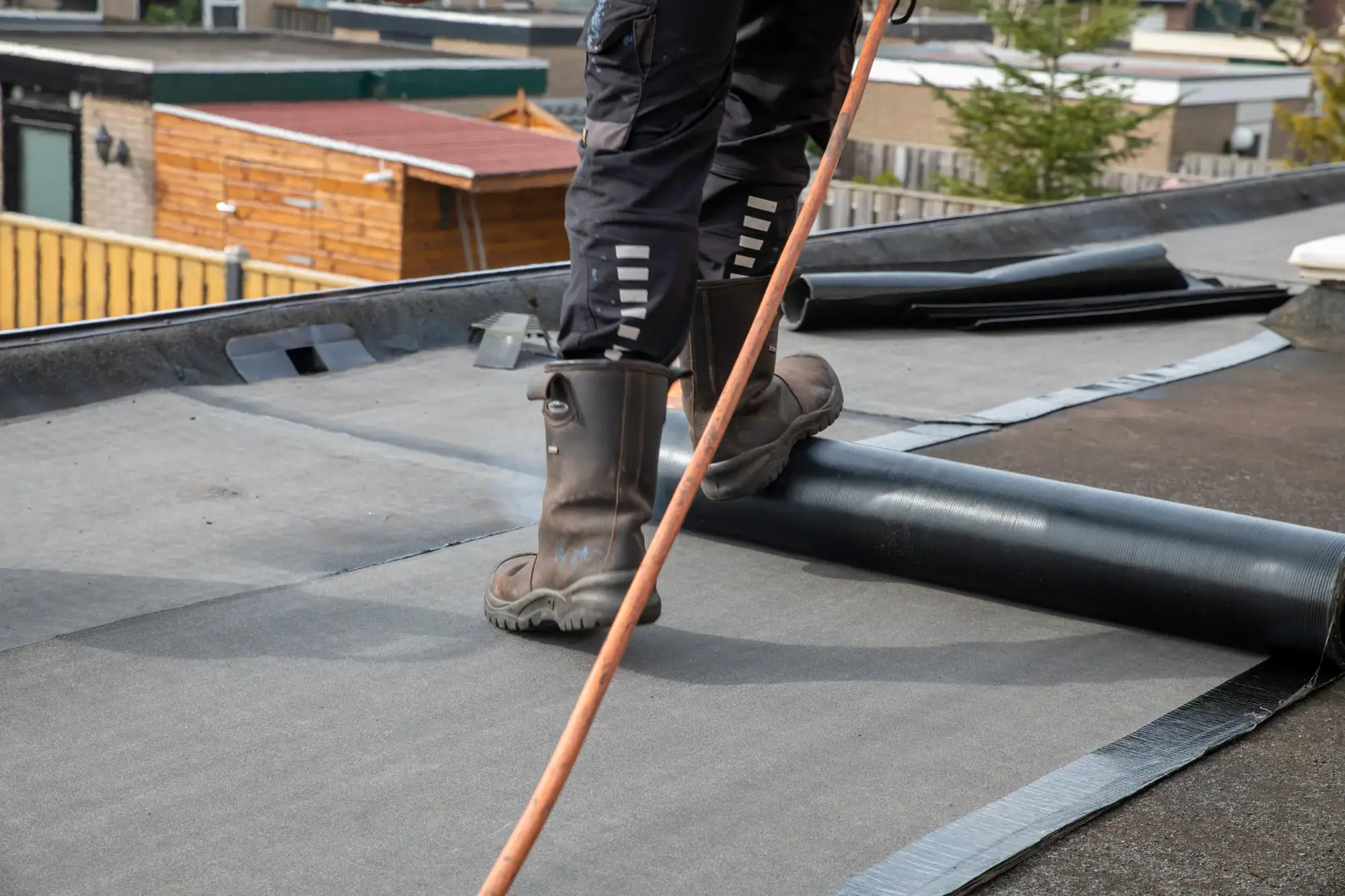
The communities around Rodric Village — Rising Sun-Lebanon, Highland Acres, Anneville, Fairfield Farms — share more than zip codes. They sit on terrain where the ground doesn’t drain quickly and neither does a poorly installed flat roof. When we install a membrane system correctly here, with the right slope, the right drainage placement, and the right material for this climate, you stop patching and start protecting.
Delaware’s weather isn’t gentle on flat roofs. The roughly 45 inches of annual rainfall, combined with humid summers and a winter that freezes and thaws repeatedly rather than staying cold, puts real stress on seams, flashings, and membrane surfaces. A TPO membrane reflects up to 84% of solar load, which cuts your cooling costs during those hot Kent County summers. EPDM rubber stays flexible through freeze-thaw cycles that would crack a less resilient system.
What changes after a properly installed flat roof isn’t just the absence of leaks. It’s not watching the ceiling every time it rains. It’s not calling around after every nor’easter wondering if this is the one that finally did it. That peace of mind is the actual outcome — and it starts with a contractor who understands the specific drainage demands of Rodric Village and this part of Delaware, not just flat roofs in general.
We’re based in Smyrna, about 15 to 20 miles north of Rodric Village on US Route 13. Kent County is our primary service area — not an afterthought, not a stretch of our coverage map. We’ve been working roofs throughout this corridor, including Rodric Village and the surrounding communities, for over two decades.
Every project is handled by our own certified crew. No subcontractors show up to do the work after someone else sold you the job. The team you meet during the estimate is the team that installs your roof and stands behind it. That matters in a small community where word travels fast and a bad job doesn’t stay quiet.
We’re BBB accredited, carry a 5.0 out of 5 rating across 63 or more verified reviews, and are fully licensed and insured. We also assist with insurance claims for storm damage — which is genuinely useful when you’re dealing with an adjuster who has every incentive to minimize the scope of what needs to be done.
It starts with a free estimate. Someone from our team comes out to look at the roof, assess the membrane condition, check the drainage, and inspect the deck underneath. In the communities around Rodric Village, that deck inspection matters more than people realize — older homes from the 1960s and 70s that are common in this corridor often have flat-roofed garages or additions that haven’t been properly evaluated in years. What looks like a membrane problem on the surface is sometimes a deck problem underneath, and you want to know that before any new material goes down.
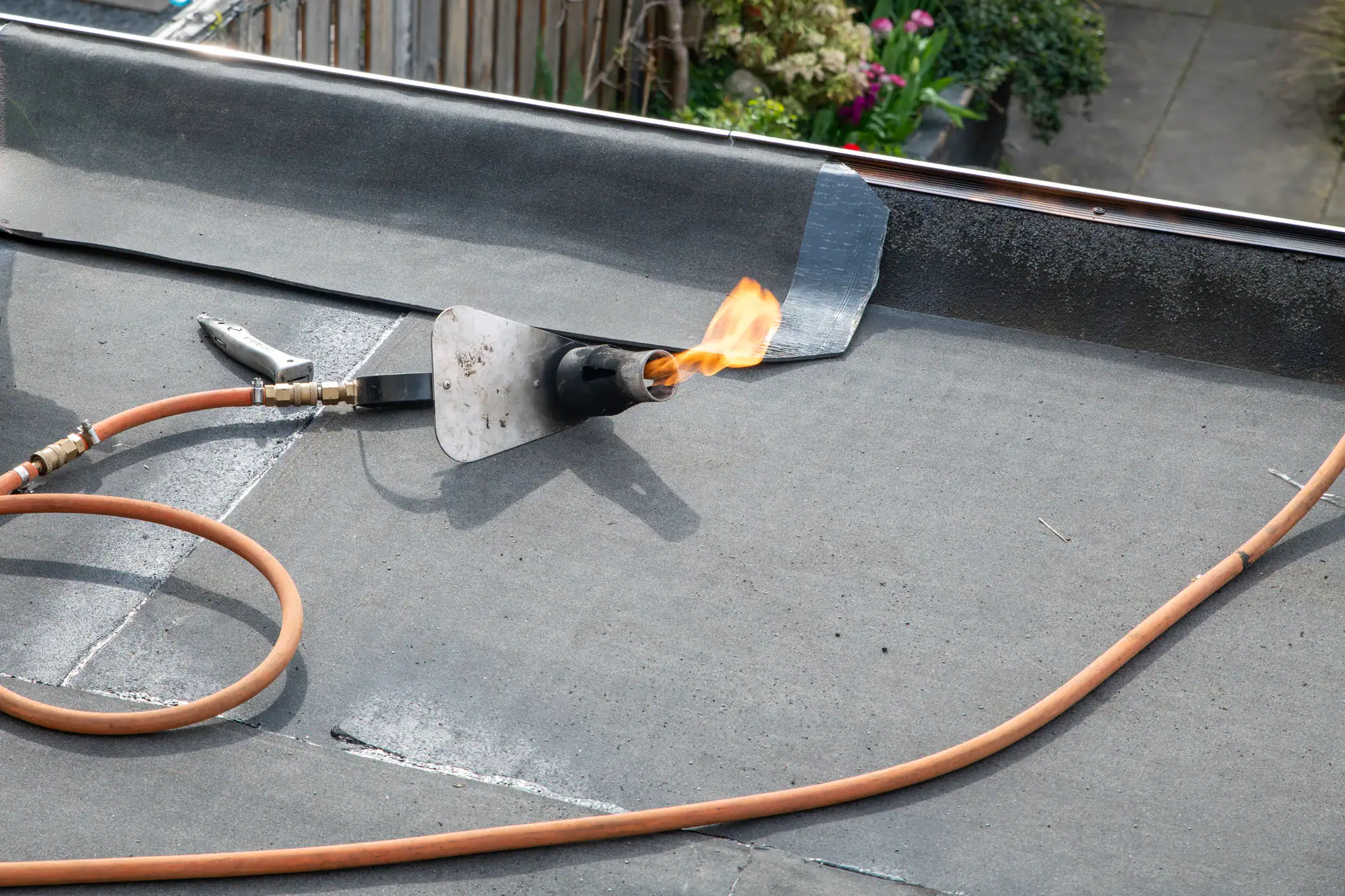
Once the scope is clear, you get a written estimate that explains what’s being done and why. If a full replacement is warranted, the existing membrane comes off, the deck gets inspected and repaired where needed, insulation is evaluated, and the new membrane system goes down with heat-welded or fully adhered seams and properly installed flashing at every penetration and edge. Drainage is set up to move water off the roof before it has a chance to pond — because in flat, low-elevation Kent County, ponding isn’t just an aesthetic issue.
Water sitting on a flat roof for more than 48 hours accelerates membrane breakdown, promotes mold growth, and adds structural load. Because Rodric Village is in unincorporated Kent County rather than an incorporated municipality, permits for roofing work are handled through Kent County’s Department of Planning Services. We’re familiar with that process and can walk you through what’s required for your specific project.

Ready to get started?
We install the full range of flat and low-slope roofing systems — TPO, EPDM rubber roofing, modified bitumen (torch-down), and PVC membrane. Each one has a different performance profile, and the right choice depends on your building, your budget, and what your roof actually deals with day to day.
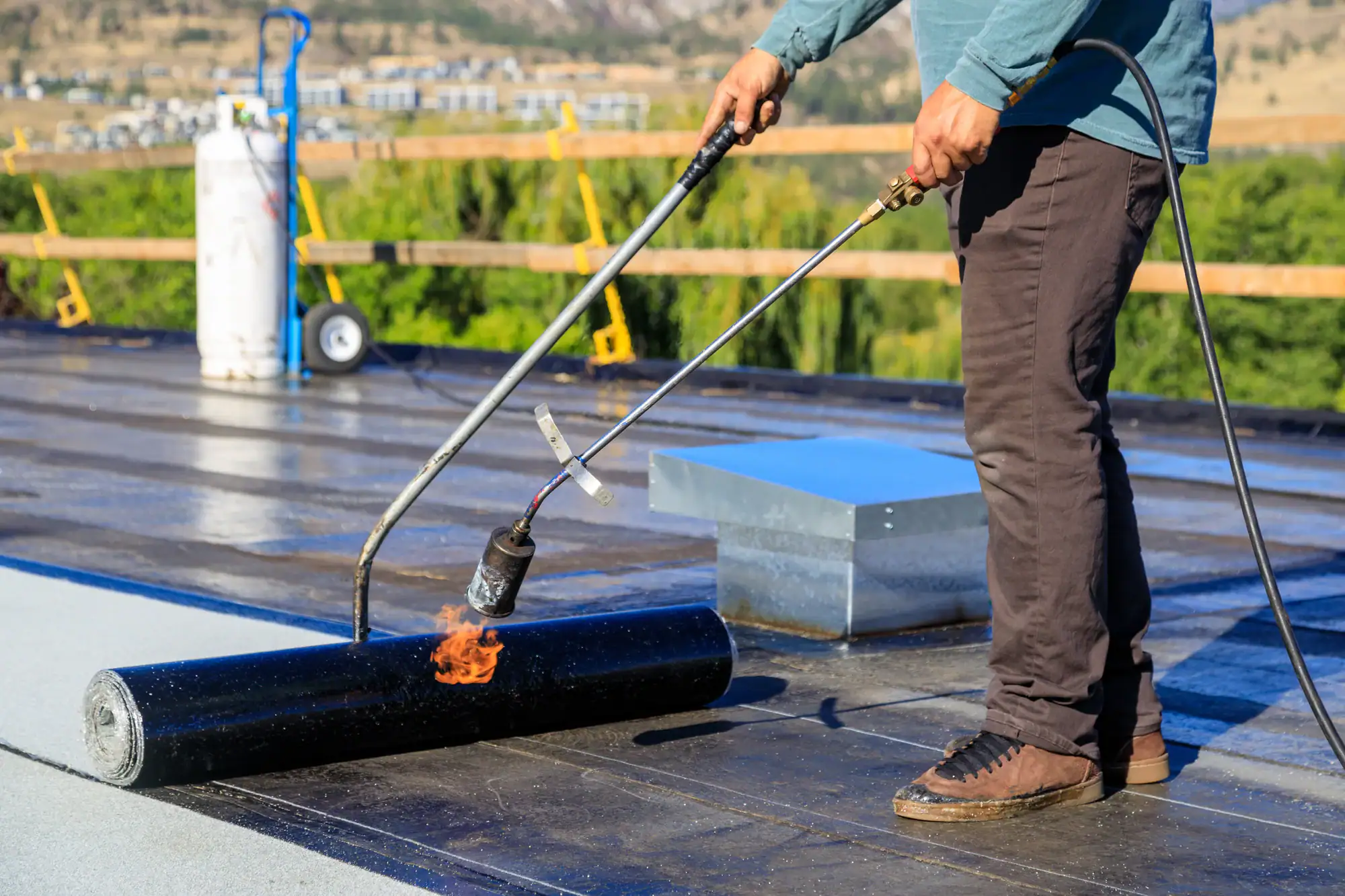
TPO is the most popular commercial flat roofing membrane right now, and for good reason. Its heat-welded seams create a strong, watertight bond, and its high solar reflectance is a real benefit during Delaware’s hot, humid summers. EPDM rubber roofing has been around for decades and has more than 20 billion square feet installed worldwide — it’s proven technology that handles freeze-thaw cycling well, which is exactly what Kent County winters deliver. Modified bitumen, sometimes called torch-down roofing, is a durable multi-layer system that works well on residential flat roofs and additions. PVC membrane offers strong chemical resistance and long-term performance for the right applications.
Beyond material selection, we also handle roof waterproofing, emergency flat roof repair, siding, gutters, windows, and skylights. If storm damage is part of the picture, we provide insurance claims assistance to help you document the damage and work through the process with your adjuster. Financing is available for larger projects. Free estimates are standard — no commitment required to find out exactly what your roof needs.

This is the question most homeowners in the Rodric Village area are really asking when they call. The honest answer is that it depends on a few things: the age of the membrane, the condition of the deck underneath, and whether the drainage is working the way it should.
A repair makes sense when the membrane is still in reasonably good shape and the issue is localized — a failed seam, a damaged flashing at a pipe penetration, a small area of membrane that’s lifted or cracked. A replacement makes more sense when the membrane is past its design life, when repairs have been piling up year after year, or when an inspection reveals that water has been getting under the membrane and compromising the deck. In older homes throughout the Kent County corridor — many built in the 1960s and 70s — flat-roofed garages and additions are often well past the 15 to 20 year lifespan of the original system. At that point, another patch usually isn’t the answer. A free estimate from us will give you a straight read on which situation you’re actually in.
There’s no single right answer, but there are clear reasons to lean toward certain systems based on what Delaware weather actually does to a flat roof over time.
TPO is a strong choice for buildings where energy efficiency matters — its high solar reflectance reduces heat absorption during Kent County’s humid summers, which can meaningfully lower cooling costs. Its heat-welded seams also create a stronger bond than adhesive-only systems, which is an advantage in a high-rainfall environment. EPDM rubber roofing handles freeze-thaw cycling well, which is relevant here because Delaware winters tend to oscillate above and below freezing rather than staying consistently cold. That repeated expansion and contraction is hard on rigid systems but EPDM stays flexible. Modified bitumen is a proven option for residential flat roofs and additions, particularly where a multi-layer system is appropriate. The best choice for your specific roof depends on its geometry, drainage situation, and what you’re trying to accomplish — which is exactly what a free estimate is designed to figure out.
Yes — and it’s one of the most commonly misunderstood flat roof issues. The industry standard for concern is water that’s still standing on the roof more than 48 hours after rain stops. At that point, it’s not just a drainage inconvenience. It’s actively working against your roof.
Ponding water accelerates membrane degradation, promotes algae and mold growth, adds structural load to the roof deck, and in winter, that standing water freezes and expands — widening any small gaps in seams or flashings and turning minor issues into significant ones. In Rodric Village, where the surrounding terrain is flat coastal plain and Delaware averages around 45 inches of rain a year, drainage isn’t something you can afford to treat as an afterthought. A properly installed flat roof is designed with enough slope to move water toward drains or scuppers before it has a chance to sit. If your roof is ponding consistently, it’s worth having someone look at whether the drainage is functioning correctly and whether the membrane is still intact where the water is collecting.
Because Rodric Village is in unincorporated Kent County rather than an incorporated town or city, building permits for roofing work are handled through Kent County’s Department of Planning Services — not a local municipal building department. That’s different from what homeowners in Dover, Camden, or Wyoming would deal with, and it’s worth understanding before work starts.
Whether a permit is required depends on the scope of the project. A full roof replacement that involves structural changes or significant alterations to the roof deck typically requires a permit. A straightforward like-for-like membrane replacement may qualify for a simplified process. Delaware does not have a statewide roofing contractor license requirement, but contractors working on larger jobs are required to be registered with the Delaware Division of Revenue and carry appropriate liability insurance. Working with a properly credentialed contractor like us — who is licensed, insured, and familiar with Kent County’s permitting process — means you’re not navigating that paperwork alone, and your project will hold up to scrutiny if you’re filing an insurance claim alongside it.
Yes, and this is one of the more underappreciated parts of what we do. After a storm — whether it’s a nor’easter, a severe summer thunderstorm, or a tropical remnant that moves through the Dover corridor — the damage to a flat roof isn’t always obvious from the ground. Membrane punctures, flashing failures, and seam separations can let water in without any visible exterior sign until it shows up as a stain on a ceiling or wall.
When you file a claim, the adjuster’s job is to assess the damage and determine what’s covered. That assessment doesn’t always align with what actually needs to be done to restore the roof to its proper condition. We help homeowners and property owners in the Rodric Village area document the damage thoroughly, communicate the scope of necessary repairs clearly, and work through the claims process so the outcome reflects the actual condition of the roof — not a minimized estimate. If you’re not sure whether damage is covered, the free estimate is still the right starting point. You’ll at least know what you’re dealing with before the adjuster shows up.
We do. A full flat roof replacement is a real expense, and in a community like Rodric Village where the surrounding Kent County area skews working- and middle-class, it’s not always something a homeowner can absorb all at once — especially when the roof failed unexpectedly after a storm or a winter that was harder than usual.
Financing options make it possible to move forward with the right material and the right installation rather than defaulting to the cheapest bid available right now. That distinction matters more with flat roofs than most people realize. A low bid almost always means something was cut — thinner membrane, skipped deck prep, inadequate flashing at penetrations, no meaningful warranty. The cost of redoing a flat roof that was done wrong is significantly higher than doing it right the first time. Spreading the cost of a quality installation over time is a straightforward way to protect your property without overextending your budget. Reach out to us for a free estimate and ask about the financing options available for your project.
Other Services we provide in Rodric Village