
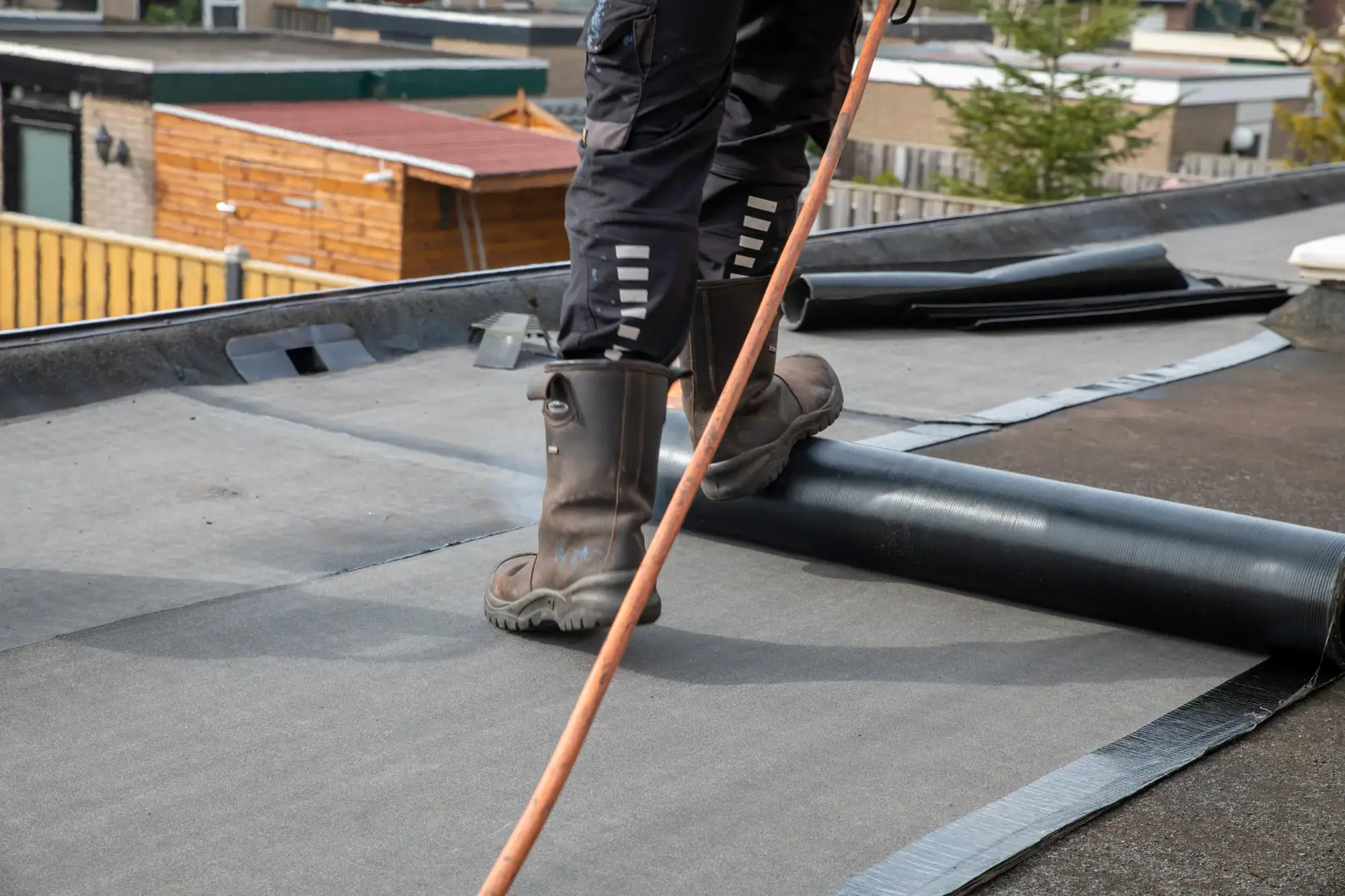
Hear from Our Customers
Most flat roof problems in Rodney Village don’t start dramatic. They start as a soft spot on the ceiling, a water stain above the garage, or a puddle that takes a few days to dry up after a storm. By the time it’s obvious, the damage has usually already spread beneath the surface. Getting ahead of it — even with a basic inspection — is almost always the cheaper move.
The housing stock in Rodney Village was built largely in the 1950s, 1960s, and 1970s, originally developed to house Dover Air Force Base families. Ranch-style homes from that era routinely include flat or low-slope sections over garages, rear additions, carports, and sunrooms. Those sections have a finite lifespan. EPDM rubber membranes last 20 to 30 years under good conditions. Modified bitumen systems — common on homes of that vintage — run 15 to 20 years. If your home is more than 40 years old and you’ve never had that flat section professionally inspected, there’s a real chance you’re overdue.
Delaware gets around 45 inches of rain a year. Add in the freeze-thaw cycling that hits Kent County every winter and the summer humidity that never really lets up, and you’ve got a climate that puts consistent stress on aging membranes. A flat roof that was holding up fine three years ago may not be doing the same job today. Knowing where things stand costs nothing — that’s what our free estimate is for.
We’re based in Smyrna — about 15 to 20 miles north of Rodney Village along U.S. Route 13, the same highway that runs along the eastern edge of your neighborhood. This isn’t a national company with a local phone number. We’re a Delaware-rooted operation that has been working on homes and commercial properties across Kent County for over 22 years.
One thing that sets us apart from a lot of contractors you’ll find online: we don’t outsource. The crew that shows up to do the work is our crew — licensed, insured, and accountable. No unknown subcontractors on your roof, no one passing the job off after the estimate is signed. That matters in a neighborhood like Rodney Village, where a bad roofing decision can cost a homeowner a significant chunk of their property’s value.
We’re BBB accredited and hold a consistent 5.0 out of 5 rating from more than 63 verified reviews. Customers regularly mention the same things: clear communication, clean worksites, and a team that shows up when we say we will. That kind of track record doesn’t happen by accident.
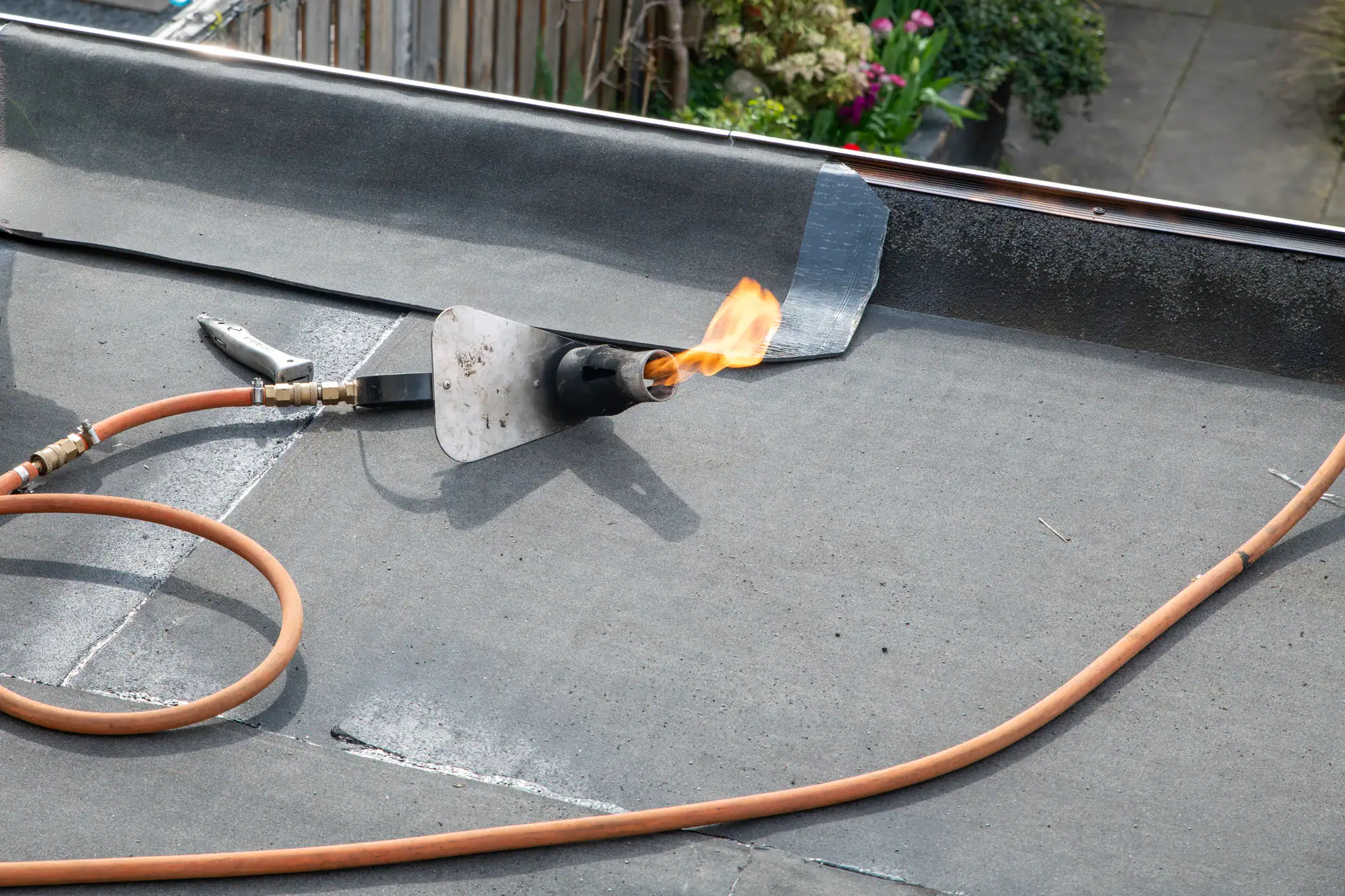
It starts with a free estimate. Someone from our team comes out, gets on the roof, and takes a real look — not a drive-by assessment. On homes in Rodney Village, that usually means checking the condition of the existing membrane, looking at how water is draining (or not draining), inspecting the flashing around any penetrations, and assessing whether the deck beneath the membrane has taken on moisture damage. You get a clear picture of what’s actually going on before any decision is made.
If the work moves forward, the process typically starts with a full tear-off of the existing membrane. Skipping that step — laying new material over old — is one of the most common shortcuts in the industry and one of the fastest ways to end up with the same problem two years later. Once the old material is removed, the deck gets inspected and any damaged sections are repaired before the new membrane goes down. Because Rodney Village is unincorporated and governed directly by Kent County, building permits for roofing work are handled through the Kent County Levy Court — there’s no additional municipal approval layer required, which keeps the process straightforward.
Material selection happens based on your specific situation. A garage flat section on a 1960s ranch home might call for a different system than a commercial property on the Route 13 corridor. TPO, EPDM, modified bitumen, and PVC all have different performance profiles, and the right choice depends on the building, the budget, and what the roof actually needs to do. That recommendation gets explained clearly — not pushed.

Ready to get started?
Flat roofing isn’t one material or one method. In Rodney Village, the mix of older residential homes and commercial properties along the U.S. Route 13 corridor means the right solution varies depending on what you’re working with.
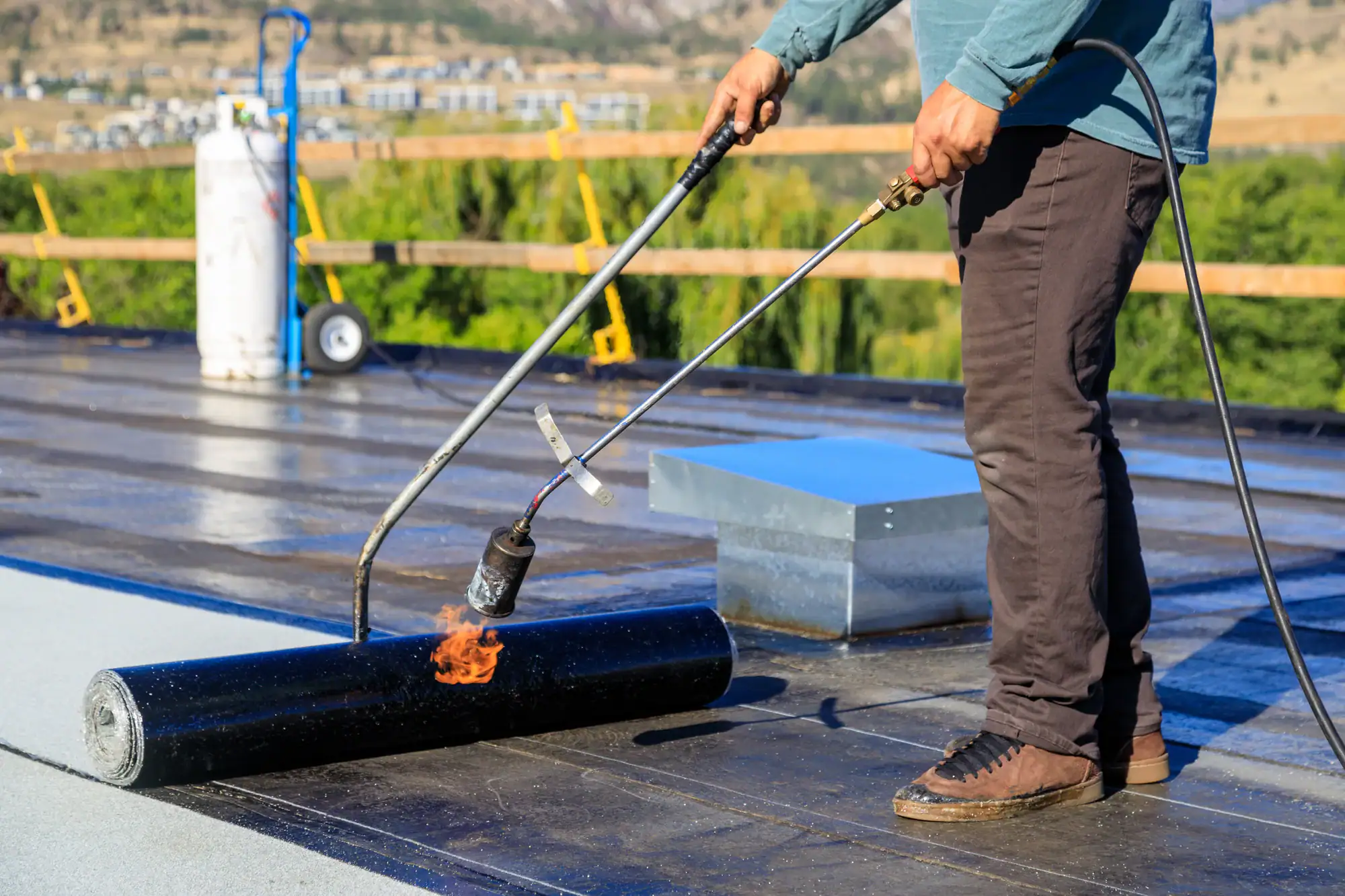
For residential properties — especially the ranch-style homes off Dupont Highway that were built for Dover AFB families — modified bitumen (torch-down) is often the existing system and a solid replacement option. It performs well on low-slope sections and handles Delaware’s temperature swings reliably. EPDM rubber roofing is another strong choice for residential flat sections: it’s flexible enough to handle freeze-thaw cycling, has a lifespan of 20 to 30 years, and holds up well in high-humidity conditions. For homeowners who want a long-term solution without a lot of ongoing maintenance, it’s one of the more cost-effective options over time.
On the commercial side — think the Rodney Village Shopping Center and the broader Route 13 strip — TPO membrane is often the right call. It reflects up to 84% of solar load, which makes a real difference on HVAC costs for retail and commercial tenants. Heat-welded seams mean fewer leak points. PVC membrane is another commercial option when chemical resistance or premium longevity is a priority. We install all of these systems and can work through insurance claims for storm-related damage — which, in a community that sees 45 inches of annual rainfall and the occasional severe storm, is a service worth knowing about. Financing is also available for projects where the upfront cost is a concern.

Yes, in most cases — but the process is simpler here than in many nearby communities. Because Rodney Village is an unincorporated census-designated place with no municipal government, building permits for roofing work are issued directly through Kent County’s Levy Court, specifically through the Office of Inspections and Enforcement. You don’t need a separate approval from a town or borough government before the county permit can be issued — a step that’s actually required in some incorporated towns nearby.
A permit is generally required when you’re replacing more than 25% of the roof sheathing or when you’re changing the roof material type — for example, switching from a modified bitumen system to a TPO or EPDM membrane. Kent County operates under the 2018 International Building Code and International Residential Code, adopted in 2020. We handle the permitting process as part of the job, so you’re not left figuring that out on your own.
The honest answer is that you usually can’t tell just by looking at it from the ground — and even a basic visual inspection from the roof surface doesn’t always reveal what’s happening underneath. Membrane damage, deck rot, and failed flashing can all be invisible until they’ve caused significant water intrusion inside the structure. That’s why a professional assessment matters, especially on older homes.
For Rodney Village homeowners with ranch-style or raised ranch homes built in the 1960s and 1970s, the flat sections over garages, additions, and carports are the most common problem areas. If the existing membrane is original or has never been replaced, it’s almost certainly past its expected lifespan. Signs that point toward full replacement rather than repair include widespread membrane cracking or blistering, multiple leak locations, soft spots in the decking, or standing water that doesn’t drain within 48 hours after rain. A repair might be the right call for an isolated puncture or a failed seam — but if the membrane is deteriorating broadly, patching it is usually a short-term fix that delays a larger expense rather than avoiding one. We’ll tell you which situation you’re actually in, not which one is more profitable to recommend.
Delaware’s climate puts a specific kind of stress on flat roofs — high annual rainfall (around 45 inches), humid summers, and freeze-thaw cycling through the winter. Each of those factors matters when choosing a membrane system.
EPDM rubber roofing is one of the most widely used materials in this climate for a reason. Its flexibility means it handles temperature swings well — it expands and contracts without cracking the way more rigid materials can. It also has an excellent track record for longevity, with a lifespan of 20 to 30 years when properly installed and maintained. TPO membrane is a strong choice for commercial properties or residential flat sections where energy efficiency is a priority — its high solar reflectance reduces heat absorption, which matters in Delaware’s humid summers. Modified bitumen (torch-down) is a proven option for low-slope residential applications and is often the system already in place on Rodney Village’s older homes. It performs reliably in Mid-Atlantic conditions when installed correctly. The right choice for your specific roof depends on the slope, the building use, the existing system, and your budget — which is exactly what the free estimate is designed to sort out.
Ponding water — meaning water that’s still standing on the roof surface 48 hours after rain — is not something to ignore. It’s the industry-defined threshold for concern, and it’s one of the most common flat roof issues in older neighborhoods like Rodney Village where the original drainage design may be 50 or 60 years old.
The problem with standing water isn’t just that it looks bad. Over time, it accelerates membrane degradation, adds structural load to the roof deck, promotes mold and algae growth, and can void manufacturer warranties on newer membrane systems. In winter, water that ponds and then freezes creates freeze-thaw stress that damages seams and flashing — exactly the kind of incremental damage that’s invisible until it becomes a leak. The most common causes are clogged or undersized drains, sagging in the roof deck from years of load, and inadequate slope built into the original design. Some of these are fixable with targeted repairs; others point toward a more comprehensive solution. Either way, getting it assessed before the next heavy rain is the right move.
Yes — and this is one of the more valuable things we can do for you, especially after a significant storm. The insurance claims process for roof damage can be confusing: adjusters are working from their own assessment, the scope of damage isn’t always obvious from a surface inspection, and a lowballed settlement can leave you paying out of pocket for work that should have been covered.
We provide insurance claims assistance as part of what we do. That means helping you document the damage properly, communicating with the adjuster, and making sure the scope of the work is accurately represented — not undersold. For Rodney Village homeowners, where median home values sit around $167,200, a fair insurance settlement versus a lowballed one can represent a meaningful difference in what comes out of your pocket. Delaware sees its share of severe storms, and the older membrane systems on homes in this neighborhood are more vulnerable to storm damage than newer installations. If you’ve had a recent weather event and aren’t sure whether your roof sustained damage, the free estimate is a good place to start before you contact your insurer.
The cost of flat roof replacement depends on a few key variables: the size of the roof section, the material you choose, the condition of the existing deck, and whether any structural repairs are needed before the new membrane goes down. We don’t publish set prices because every job is different — but we do offer free estimates, so you get a real number based on your actual roof rather than a ballpark that shifts once someone gets up there.
What’s worth understanding is what drives the difference between a low bid and a fair one. A contractor who skips the tear-off, lays new membrane over old material, and cuts corners on flashing detail will quote you less upfront. That roof will also fail faster, often within a few years, leaving you with the same cost plus the damage that happened in the meantime. For homeowners in Rodney Village who are weighing a tight budget against a long-term investment, financing is available through us — which makes it possible to get the job done right without depleting savings or delaying work until a manageable problem becomes a structural one. The free estimate is the right first step regardless of where you land on budget.
Other Services we provide in Rodney Village