
Hear from Our Customers
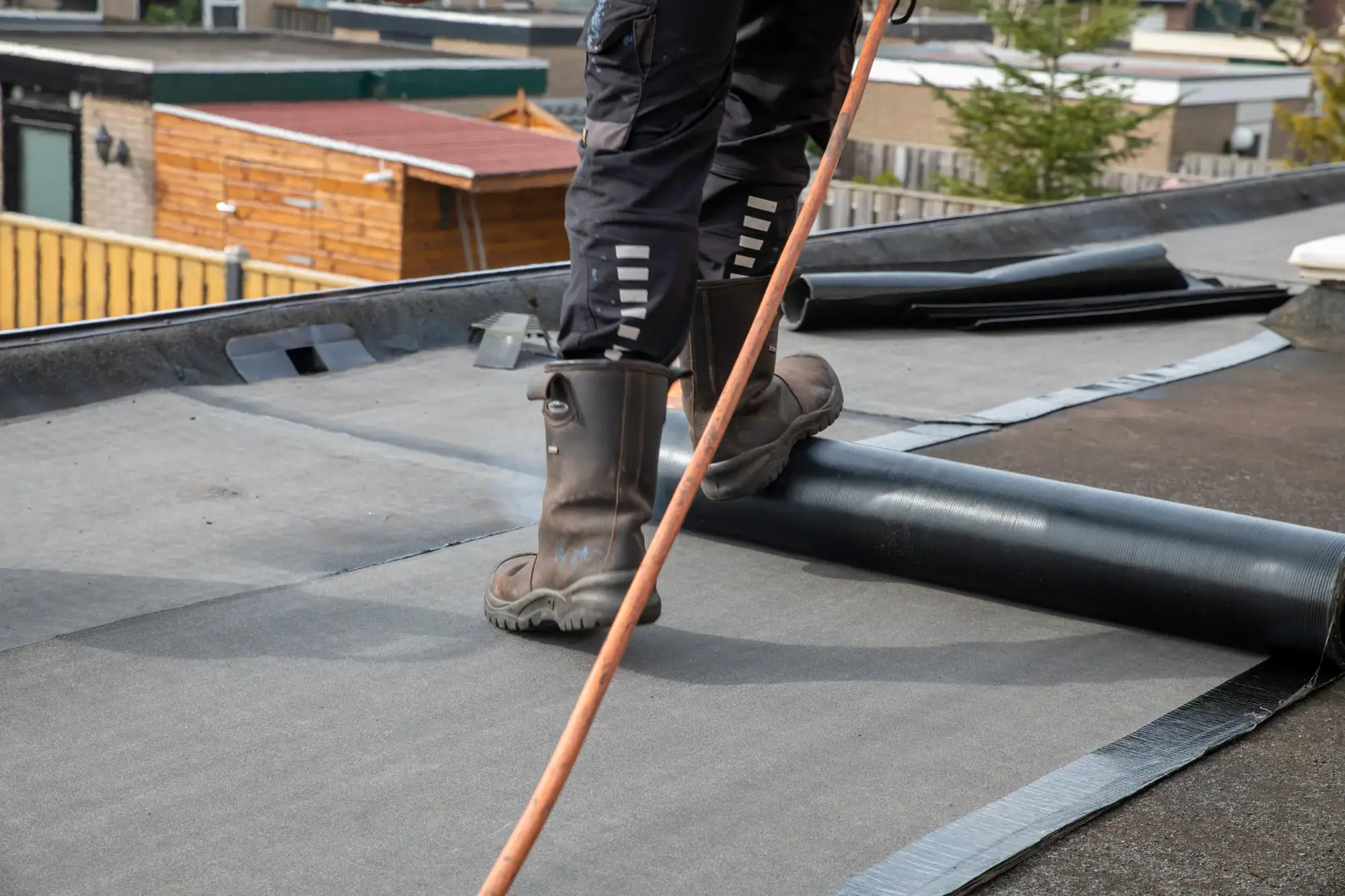
Most flat roof failures in Rock Hall aren’t random bad luck. They’re the result of a membrane system that wasn’t designed with this environment in mind — the constant Bay humidity, the wind-driven rain off the water, the freeze-thaw cycling that stresses seams every winter.
When a flat roof is installed correctly for Rock Hall’s specific conditions, it stops being a source of stress and starts doing its job quietly for years. That means no more water stains showing up on ceilings after a nor’easter, no more wondering whether last night’s storm did something you can’t see yet. For marina operators, B&B owners, and waterfront business owners in Rock Hall, it means your building stays operational when the season is at its peak and you can’t afford downtime.
Rock Hall averages 44 to 48 inches of rain per year — well above the national average — and your flat roof carries that load every single year. Getting the right membrane system matched to your specific building and its Bay-front exposure makes a real difference in how long that roof performs.
TPO reflects up to 84% of solar load, which matters for marina amenity buildings running HVAC through a humid Chesapeake summer. EPDM rubber stays flexible through cold snaps and freeze-thaw cycles, which matters for a waterfront property sitting empty over winter. The right call depends on your building — and that’s exactly what a proper assessment is for.
We’ve been working across the Delmarva Peninsula and upper Chesapeake Bay region for over 22 years. That’s not a number for a brochure — it means our team has worked through the specific conditions that buildings in Rock Hall and this part of Maryland actually face. Salt air. Coastal humidity. Storm surges that hit Rock Hall harder than anywhere else in Kent County. That context shapes how we assess and install every job.
Every project is handled by our own certified crew. No subcontractors, no third parties you didn’t agree to, no surprises about who’s on your roof. In a town like Rock Hall — where word travels fast and reputation is everything — that kind of accountability isn’t optional. It’s the baseline.
We serve both residential and commercial clients, which matters here because Rock Hall’s building stock is genuinely mixed. Whether it’s a waterfront home near Rock Hall Harbor, a marina office building, or a B&B along the Chesapeake Scenic Byway corridor, our team has handled the full range of flat and low-slope roofing needs this area brings.
It starts with a free estimate and a real look at what’s going on. Not a quick glance from the ground — an actual assessment of the membrane condition, the drainage situation, the flashing at every penetration and perimeter edge, and the deck underneath.
In Rock Hall, that inspection matters more than most places because Bay-front exposure accelerates wear in ways that aren’t always visible until you’re up there. Salt air attacks adhesive seams. Wind-driven rain finds gaps that wouldn’t be an issue five miles inland. Once the scope is clear, we select the right membrane system based on your building type, exposure, and budget.
A commercial marina structure has different needs than a residential addition or a waterfront B&B. If you’re dealing with storm damage and need to work through an insurance claim, we help you document what’s there and navigate the process correctly — so the scope reflects the real damage, not a lowballed patch estimate.
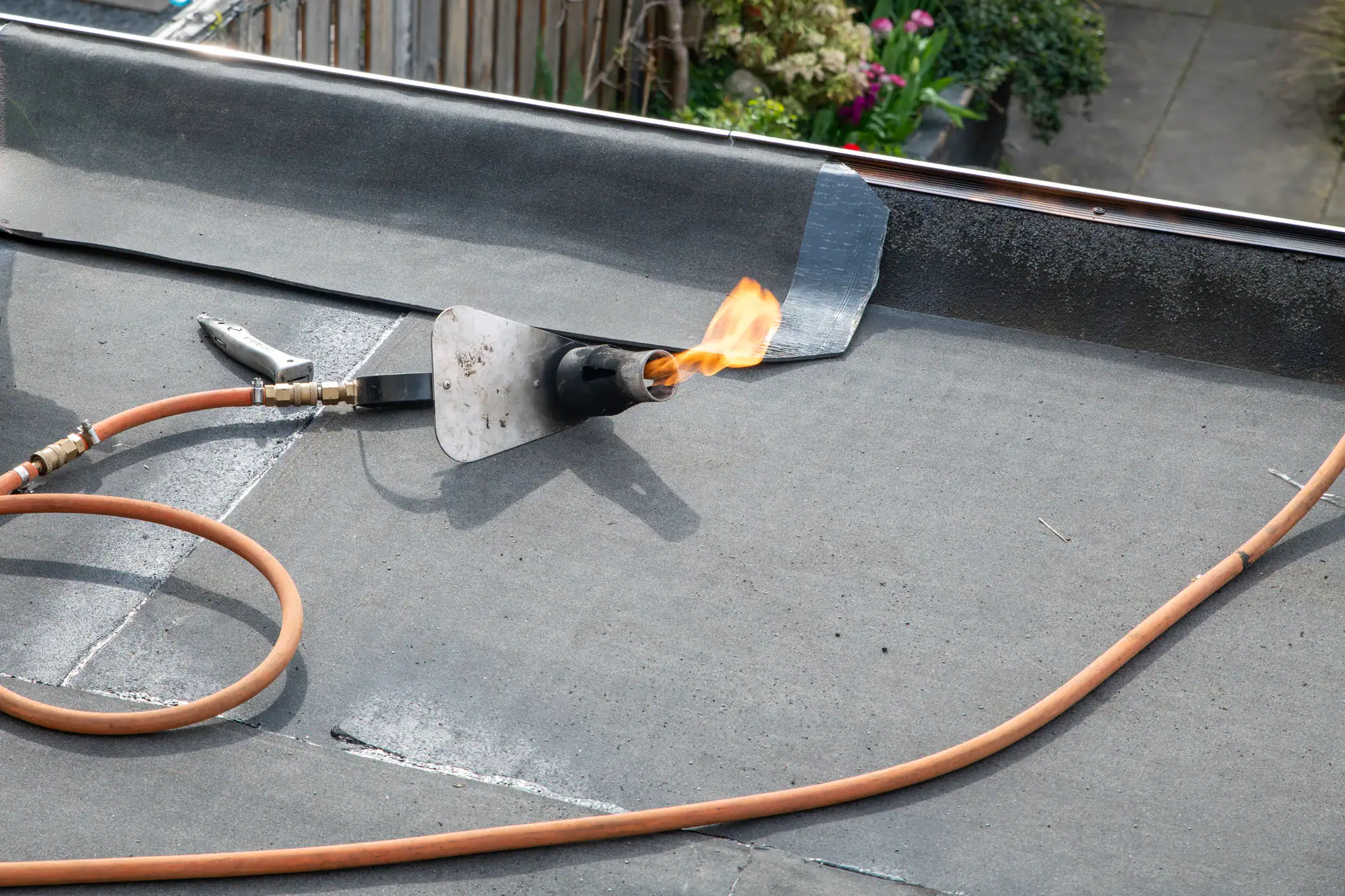
The installation itself follows a full process: existing membrane removed, deck inspected and repaired where needed, insulation layer set, membrane installed with properly heat-welded or fully adhered seams, and flashing detailed at every edge and penetration. Kent County, Maryland requires building permits for roof replacements, and we handle that as part of the job. When the work is done, the worksite is cleaned up completely — no debris, no fasteners left behind.

Ready to get started?
Rock Hall’s building stock is unlike any other town in this region. You’ve got year-round homes, seasonal vacation properties, working marinas, boatyard service buildings, waterfront restaurants, and B&Bs — and a significant portion of them use flat or low-slope roofing systems.
We install and repair the full range of commercial and residential flat roof systems, so whatever your building type, there’s a material match that makes sense for it. TPO roofing membrane is the most common choice for commercial structures with high summer cooling loads — its solar reflectance directly reduces HVAC costs, which matters for marina amenity buildings and waterfront hospitality properties running through a Chesapeake Bay summer.
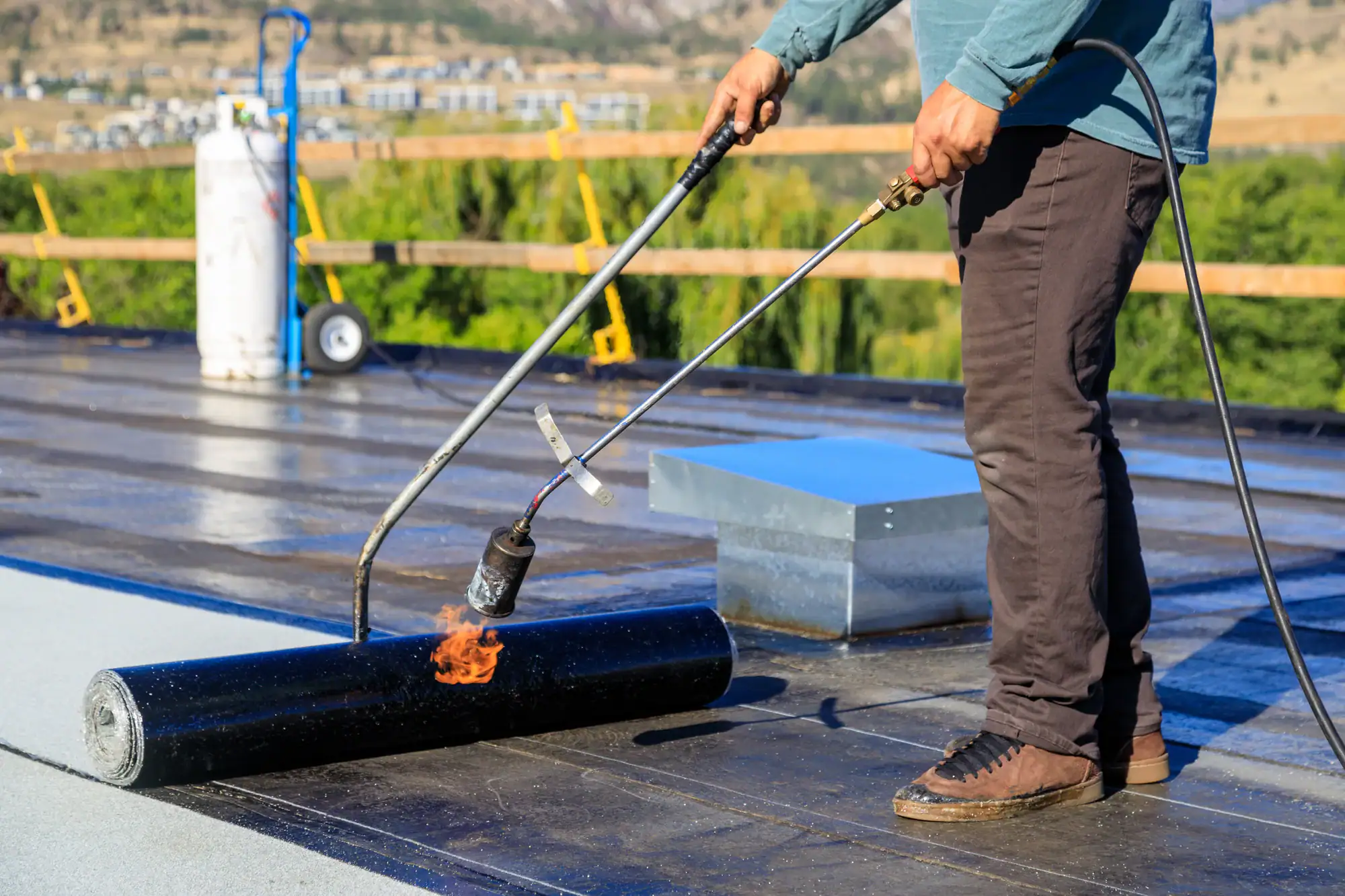
EPDM rubber membrane is the proven long-haul option for buildings that need flexibility through freeze-thaw winters and resistance to the kind of ponding water stress that comes with Rock Hall’s above-average rainfall. Modified bitumen, also called torch-down roofing, is a reliable option for lower-slope residential applications and smaller commercial structures. PVC roofing membrane rounds out the options for property owners who need a chemically resistant, seam-strong system.
Beyond material selection, our service includes roof waterproofing details that are specific to this environment — proper drainage design, flashing at every penetration, and seam integrity that holds up under Bay wind and rain. For seasonal property owners who aren’t on-site year-round, we provide clear documentation of the work completed. Emergency roof repair is available when a storm doesn’t wait for a scheduled appointment. Financing options are also available so the right fix doesn’t get deferred into a bigger problem.

Rock Hall sits directly on the open Chesapeake Bay, fully exposed to prevailing Bay winds from the southwest. That creates a weathering environment that’s genuinely more aggressive than what you’d find even a few miles inland toward Chestertown. Salt-laden air attacks adhesive seams and metal flashings faster than in non-coastal locations. Near-constant high humidity — the kind that comes with living on a peninsula surrounded by water — accelerates the degradation of roofing membranes that might perform for decades in a drier environment.
What that means practically is that material selection, seam quality, and flashing details matter more here than they do in most places. A membrane roof that’s installed correctly for Rock Hall’s Bay-front conditions will outperform a generic installation by years. An inspection that accounts for salt air exposure and drainage performance under 44 to 48 inches of annual rainfall gives you a much more accurate picture of what your roof actually needs than a standard checklist approach. That local context is what separates a contractor who knows Rock Hall from one who’s working off a template.
The honest answer is that you usually can’t tell from the inside or the ground. A water stain on your ceiling tells you there’s a leak — it doesn’t tell you where the membrane failed, how far water has traveled along the deck, or whether the deck itself has been compromised. Flat roof leaks are notoriously difficult to trace because water enters at one point and moves before it shows up where you notice it.
The clearest indicators that you’re looking at replacement rather than repair are membrane age, widespread seam failure, significant ponding water damage, or a deck that’s been wet long enough to lose structural integrity. For Rock Hall properties — especially those that sit empty through winter or are used seasonally — spring is when a lot of this damage gets discovered. A roof that survived the summer may have taken on freeze-thaw stress over winter that only becomes visible when temperatures rise. A proper assessment looks at the full picture: membrane condition, drainage performance, flashing integrity, and what’s underneath.
Ponding water — water that’s still standing 48 hours after rain stops — is not normal and it does cause real damage over time. It’s actually the most common flat roof failure mode, and it’s especially relevant in Rock Hall given the town’s above-average rainfall and the drainage challenges that come with low-slope roofing systems on waterfront buildings.
Standing water adds weight load to the roof deck, which can cause gradual deflection that makes the ponding worse over time. It accelerates membrane degradation, promotes algae and mold growth, and in winter it freezes and thaws in ways that stress seams and flashings. On an EPDM or modified bitumen roof, repeated freeze-thaw cycling in ponded areas can cause cracking and seam separation that wouldn’t happen on a properly drained surface. Many manufacturer warranties are also voided by documented ponding water conditions, which means a drainage problem can cost you both a roof and a warranty claim.
There’s no single answer that fits every Rock Hall building, which is part of why material selection matters so much here. For commercial structures — marina offices, boat storage buildings, waterfront restaurants — TPO roofing membrane is generally the strongest choice. It offers excellent solar reflectance, heat-welded seams that hold up under wind and water, and strong performance in the warm, humid summers that define the Chesapeake Bay season. If energy efficiency is a priority for a building running HVAC through the summer, TPO’s ability to reflect up to 84% of solar load is a meaningful real-world benefit.
For residential properties and smaller structures, EPDM rubber membrane is a proven long-term option. Its flexibility in cold temperatures makes it well-suited to Rock Hall’s winter freeze-thaw cycles, and its lifespan of 20 to 30 years with proper maintenance makes it a strong value over time. Modified bitumen, or torch-down roofing, is a reliable option for lower-slope residential roofs and older commercial structures where a more traditional system makes sense. PVC membrane is worth considering for any application where chemical resistance and seam strength are the top priorities. The right recommendation comes from looking at your specific building, its exposure, and how it’s used — not from defaulting to one product for every job.
Rock Hall has a documented history of storm damage — Hurricane Isabel caused more flooding here than anywhere else in Kent County, and more recently a January 2024 winter storm was specifically reported as hitting Rock Hall hardest in the county. If your flat roof took damage from a storm event, the insurance claims process is something you shouldn’t have to navigate alone.
The way it works is straightforward. After a storm, the damage needs to be documented thoroughly before any repairs begin — photos, written assessment, and a clear scope of what failed and why. That documentation is what your adjuster uses to determine the claim value. If the scope is incomplete or the damage is underestimated, you may receive a settlement that only covers a surface patch while underlying deck damage or failed flashings go unaddressed. We help property owners document storm damage correctly, communicate with adjusters, and scope the repair or replacement in a way that reflects what actually needs to be done. The goal is to make sure the claim covers the real work — not the minimum the adjuster can justify.
Yes. Roof replacements in Rock Hall fall under Kent County, Maryland’s building permit requirements. Rock Hall is within Kent County’s permitting jurisdiction, and the county enforces Maryland’s adopted International Building Code and International Residential Code for construction work including roofing. That means a permit is required before a full roof replacement begins, and the work needs to meet Maryland’s adopted code standards — including requirements for ice and water shield, flashing installation, and energy code compliance under the International Energy Conservation Code for re-roofing projects.
This is worth knowing because not every contractor handles permitting as a standard part of the job. When it’s skipped — either because the contractor doesn’t mention it or the homeowner doesn’t know to ask — it can create problems at resale, void insurance coverage, or result in work that doesn’t meet code. We handle the permitting process as part of the project, so you’re not left managing county paperwork on top of everything else. It also means the finished roof is documented, code-compliant, and properly on record — which matters if you’re ever selling a waterfront property in Rock Hall where buyers and their inspectors will be looking closely at what’s been done.
Other Services we provide in Rock Hall