
Hear from Our Customers
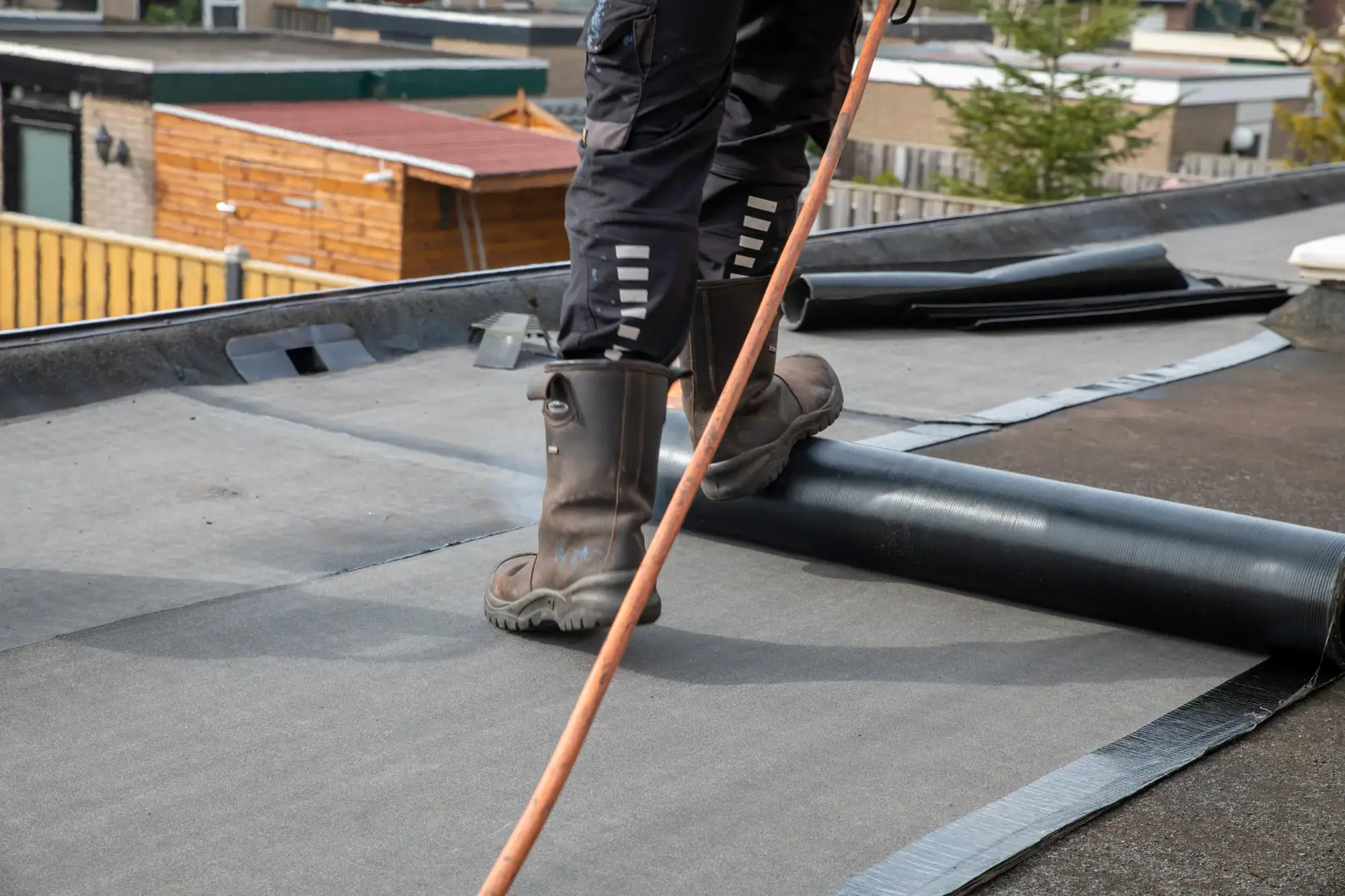
A flat roof doesn’t announce its failure the way a pitched roof does. There’s no missing shingle to spot from the driveway. What happens instead is quieter — a membrane that’s been degrading for years finally lets moisture through, and by the time you see a water stain on your ceiling, the deck underneath has often already taken damage.
In Riverview, where most homes were built between the 1990s and early 2000s, that timeline is now. EPDM rubber membranes are rated for 20 to 30 years. Modified bitumen runs 15 to 20. If your garage, addition, sunroom, or low-slope section was original to the build, the math isn’t in your favor.
What makes Riverview’s situation more specific than the general industry numbers suggest is the water. McGinnis Pond sits in the northern half of the community, and Andrews Lake adds to the ambient moisture that homes here deal with year-round. Properties near either water feature experience higher humidity, slower evaporation off flat surfaces, and more biological growth pressure on membrane material — all of which accelerate wear. A flat roof that might last 25 years in a drier inland location can show meaningful degradation in 18 to 20 years when it’s sitting in that kind of environment.
Getting ahead of it now — with a free inspection and an honest assessment — is a fraction of the cost of dealing with a failed membrane that’s been leaking into your structure for a season or two.
We’re based in Smyrna, roughly 20 miles north of Riverview on U.S. Route 13. That’s not a technicality — it means the crew that shows up at your home in Harrison Knoll or Riverview Estates is a Kent County crew, not a Wilmington-area company making a two-hour round trip. We know the climate, the building stock, and the permit process for unincorporated Kent County because we’ve been working in it for over 22 years.
We’re fully licensed, insured, and BBB accredited, with a 5.0 out of 5 rating across more than 63 verified reviews. What customers consistently mention isn’t just the quality of the work — it’s the communication, the clean worksites, and the fact that the job runs on schedule. We don’t subcontract. The team you talk to is the team that does the work, start to finish. In a market where fly-by-night contractors are common — especially after storm season — that kind of accountability matters.
It starts with a free estimate. Someone from our team comes out, gets on the roof, and gives you a real assessment — not a vague verbal quote designed to get you to sign something. We’ll look at the membrane condition, check the drainage, inspect the flashing at every penetration and perimeter edge, and tell you honestly whether you’re looking at a repair or a full replacement.
For Riverview homes near McGinnis Pond or Andrews Lake, that drainage evaluation is especially important, because standing water — anything sitting on a flat surface for more than 48 hours — is the single fastest way to shorten a membrane’s life and void a manufacturer warranty.
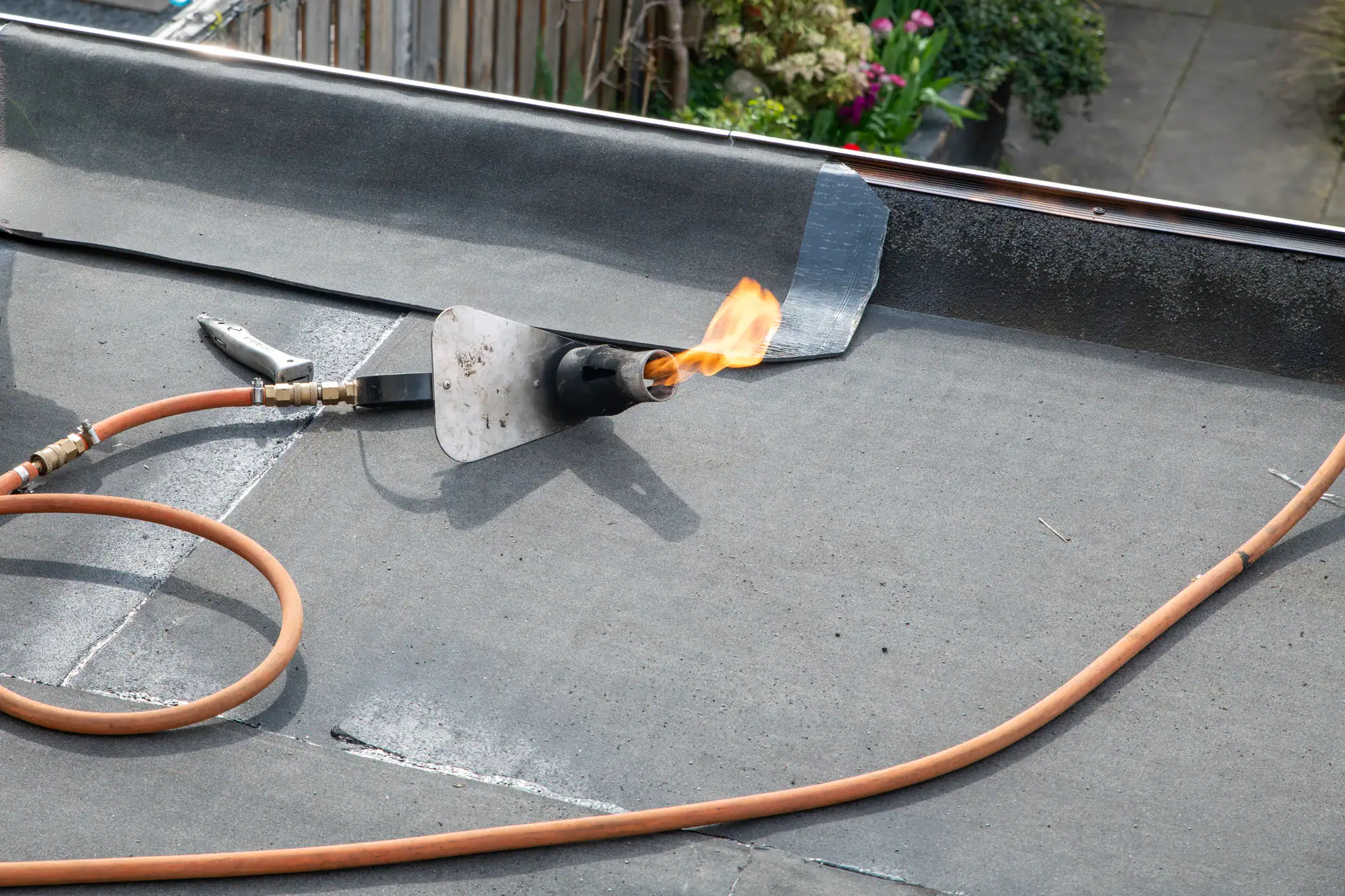
If replacement is the right call, the process begins with a full tear-off of the existing membrane. The deck gets inspected and any damaged sections are repaired before anything new goes down. Then comes the insulation layer, followed by the membrane installation — whether that’s TPO, EPDM rubber roofing, modified bitumen torch-down, or PVC, depending on what’s right for your specific roof and budget. Seams are heat-welded or properly adhered, and all flashing is set correctly at every transition point.
Because Riverview is an unincorporated CDP, permits for roofing work fall under Kent County jurisdiction. We handle that process as part of managing the project — you don’t have to figure out the county’s building and code compliance requirements on your own. When the job is done, the site gets cleaned up completely. No nails in the driveway, no debris left on the property.

Ready to get started?
The right flat roofing membrane depends on the building, the budget, and the environment it’s going into. For Riverview homeowners, that environment includes Central Delaware’s roughly 45 inches of annual rainfall, freeze-thaw cycling through the winter months, and the elevated humidity that comes with living near McGinnis Pond or Andrews Lake. Each membrane system handles those conditions a little differently, and we cover all of them.
TPO roofing membrane is currently the most widely installed flat roofing system for a reason. It reflects a high percentage of solar load — which matters during Delaware’s humid summers — and its heat-welded seams create a strong, continuous bond that holds up well through freeze-thaw cycles. It’s a strong fit for both residential flat sections and commercial structures along the Route 13 corridor near Riverview.
EPDM rubber roofing has one of the longest track records in the industry, with a lifespan of 20 to 30 years and excellent flexibility in cold temperatures. For homeowners in Riverview Estates or Otter Run whose original rubber roof is approaching the end of its rated life, EPDM replacement is often the most straightforward and cost-effective path.
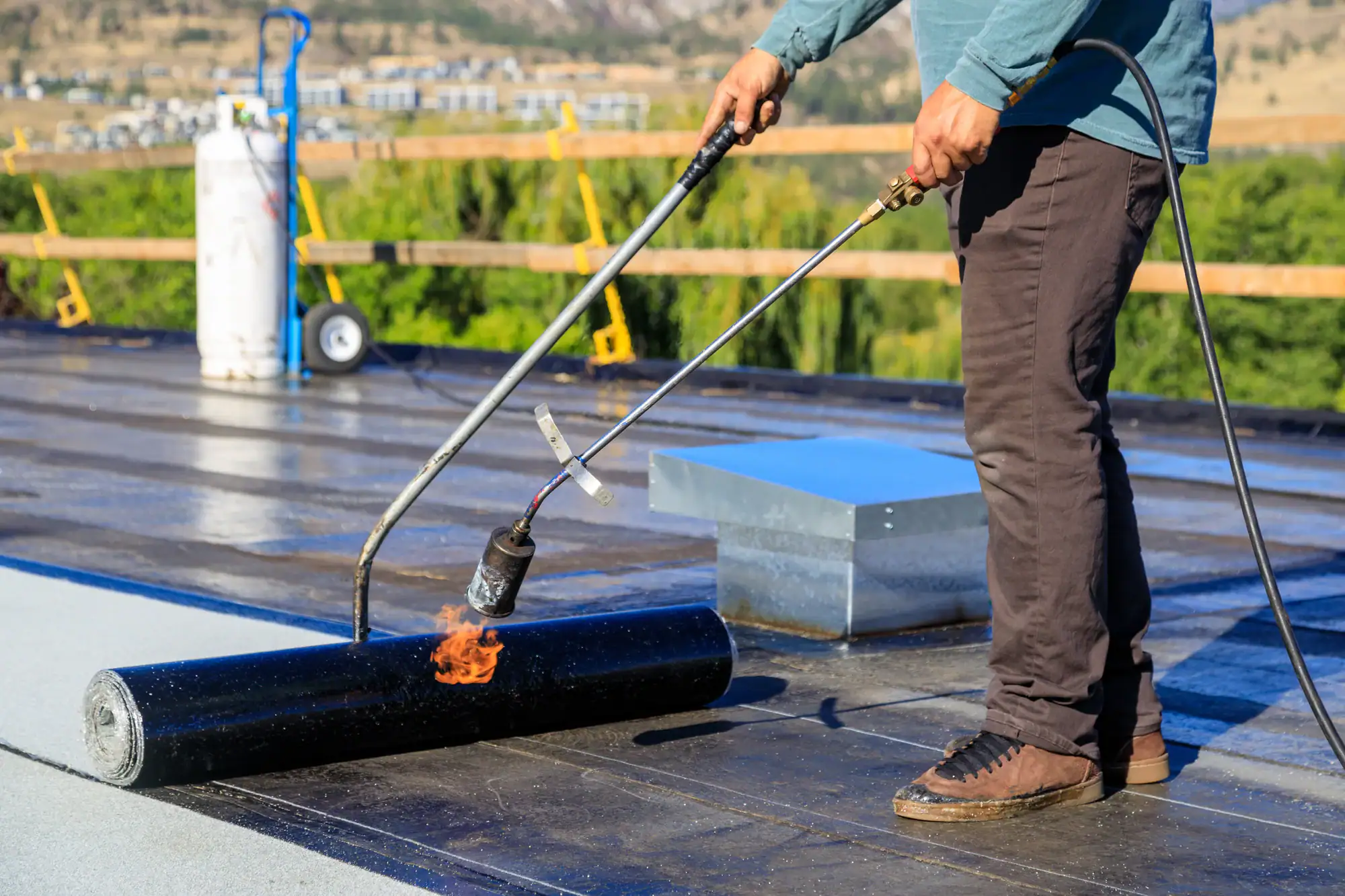
Modified bitumen — sometimes called torch-down roofing — is a durable option for lower-slope applications and is commonly found on garage additions and sunroom roofs in the 1990s-era homes that make up much of Riverview’s housing stock.
PVC roofing membrane rounds out the options for applications where chemical resistance or specific drainage design requirements are a factor.
We also handle insurance claims assistance for storm damage — which is relevant in Riverview given that Delaware’s hurricane season runs from June through November and nor’easter events can deliver significant rainfall that stresses aging flat roof systems. If you’ve had storm damage and aren’t sure how to navigate the claim, we can help you document it and work through the process correctly. Financing is also available for homeowners who want to protect their property without covering the full cost of replacement in a single payment.

The honest answer is that you usually can’t tell from the ground, and even from the roof surface it takes a trained eye to assess what’s actually going on underneath the membrane. Visible cracking, bubbling, or surface granule loss are signs of age, but the more important indicators are what’s happening at the seams and flashing points — that’s where most flat roofs fail first. If water has already been getting under the membrane, the deck material below may have softened or rotted, which changes the scope of the job significantly.
For Riverview homes built in the 1990s and early 2000s, the age of the system alone is enough to warrant a professional inspection, even if you haven’t seen any interior signs of a leak yet. A membrane that’s 25 or 30 years old may still look passable on the surface while failing underneath. A free estimate from us will give you a clear answer — what’s actually there, what condition it’s in, and whether repair or replacement makes more sense for your specific situation.
Delaware’s climate puts flat roofs through a real range of conditions — roughly 45 inches of rain per year, hot and humid summers, and winters with enough freeze-thaw cycling to stress seams and adhesive bonds. No single membrane is perfect for every situation, but a few patterns hold up well here.
TPO roofing membrane performs well in Central Delaware because its heat-welded seams create a strong continuous bond that doesn’t rely on adhesives that can soften in summer heat or stiffen in winter cold. Its solar reflectance also helps manage heat load during humid Delaware summers.
EPDM rubber roofing is an excellent choice for homeowners replacing an original rubber roof — it’s flexible in cold temperatures, has a long rated lifespan, and handles the kind of sustained moisture exposure that properties near McGinnis Pond or Andrews Lake deal with regularly.
Modified bitumen is a solid option for lower-slope applications like garage additions. The right choice depends on your specific roof configuration, and we’ll walk you through the options based on what actually fits your building.
The industry threshold is 48 hours. If water is still sitting on your flat roof more than two days after a rain event, that’s ponding water — and it’s a problem worth taking seriously. Ponding accelerates membrane degradation, adds structural load to the deck, promotes algae and mold growth on the membrane surface, and can void manufacturer warranties if it becomes a chronic condition.
In Riverview, the combination of heavy rainfall events — Central Delaware regularly sees intense spring and fall precipitation, and the area sits in the path of nor’easters and remnant tropical systems through hurricane season — and the elevated ambient humidity near McGinnis Pond and Andrews Lake makes drainage design especially important. A flat roof with even a minor drainage issue will pond more frequently here than in a drier location. If you’ve noticed water sitting on your roof after rain, that’s worth having looked at before it becomes a structural issue. It may be something as simple as a clogged drain outlet, or it may indicate that the roof’s slope and drainage design need to be addressed during a replacement.
It depends on the cause. Most standard homeowners insurance policies in Delaware cover sudden storm damage — wind, hail, and water intrusion caused by a specific weather event. What they typically don’t cover is damage that results from deferred maintenance or gradual deterioration, which is why the distinction between storm damage and age-related failure matters when you’re filing a claim.
After a nor’easter or a heavy storm during Delaware’s hurricane season, the documentation you submit to the adjuster makes a significant difference in the outcome. We help Riverview homeowners through that process — identifying storm-related damage, documenting it correctly, and making sure the scope of the claim reflects what actually needs to be done rather than a minimal patch estimate. If you’ve had a storm event and you’re not sure whether you have a valid claim or how to approach it, getting a professional assessment before you contact your insurer is usually the right first step.
For a typical residential flat roof replacement — a garage, addition, or low-slope section on a Riverview home — the installation itself usually takes one to three days depending on the size of the roof and the membrane system being installed. The full tear-off, deck inspection, any necessary deck repairs, insulation, and membrane installation can all happen within that window when the crew is on-site and the weather cooperates.
The bigger variable is scheduling around Central Delaware’s weather patterns. Fall is generally the best window for flat roof replacement in this area — temperatures are moderate, rainfall is lower than spring, and you’re getting the work done before winter freeze-thaw cycles put additional stress on any vulnerable sections. We manage the project from start to finish with our own crew, which means there’s no coordination gap between a general contractor and a subcontractor. The timeline we give you at the estimate is the timeline we work to, and the site gets cleaned up completely at the end of each workday.
Yes — and this is one of the practical advantages of working with a contractor that’s actually based in Kent County rather than one dispatching crews from Wilmington or another region. Because Riverview is an unincorporated census-designated place, building permits for roofing work fall under Kent County’s jurisdiction rather than a municipal permit office. That means homeowners deal with Kent County’s building and code compliance department, not a local town hall, and the process is a little different than it would be in an incorporated municipality like Dover or Milford.
We handle the permit process as part of managing the project. You don’t need to figure out the county’s requirements, submit paperwork, or track down inspections on your own. Delaware has adopted the International Residential Code framework, which governs membrane specifications, insulation requirements, and drainage design — all of which factor into how a replacement is scoped and installed. Having a contractor who understands those requirements from the inside, and has been working in Kent County for over 22 years, removes a friction point that catches a lot of homeowners off guard when they hire an out-of-area company that’s less familiar with how the local process works.
Other Services we provide in Riverview