
Hear from Our Customers
When a flat roof is done right, you stop thinking about it. No water stains on the ceiling after a heavy rain. No soft spots on the deck. No standing water sitting on the membrane for days after a storm. That’s what a properly installed flat roof delivers — and it matters more here than most people realize.
Pearson Grove sits at a low elevation in a county that gets around 45 inches of rain every year. That combination puts real pressure on flat and low-slope roofing systems. Poor drainage design is not just an inconvenience in this environment — it’s the single fastest way to shorten a membrane’s life.
Water that sits for more than 48 hours starts working against the roof at every level: it degrades the membrane, adds structural load, promotes mold growth, and in winter, it freezes and expands inside any seam or flashing that isn’t perfectly sealed. Then there’s the housing stock. Homes in the 19938 ZIP code were mostly built in the 1990s. That puts a lot of flat roof sections — garages, additions, low-slope rear dormers — squarely in the window where EPDM rubber roofing and modified bitumen systems from that era are aging out. Getting ahead of it now is almost always less expensive than waiting for a failure to force the decision.
We’re headquartered in Smyrna — a straight shot from Pearson Grove along DE-300. That’s not a marketing point. It means the crew that shows up to your property already knows northern Kent County’s weather patterns, the way moisture moves through this low-elevation landscape, and what flat roof systems hold up here over the long run.
We’ve been doing this in Delaware for over 22 years. That kind of track record in a trade full of here-today contractors means something. Every project is handled by our own crew — no subcontracting, no handoffs to someone you’ve never met. The team that walks your roof is the team that does the work.
We’re BBB accredited, fully licensed and insured, and consistently rated 5.0 out of 5 across 63 or more verified reviews. Customers keep mentioning the same things: the crew shows up on time, the worksite stays clean, and the job gets explained clearly without pressure.
It starts with a free estimate. We come out, walk the roof, and give you a straight assessment of what you’re dealing with — whether that’s a repair, a full membrane replacement, or something in between. No vague verbal quotes. You get a clear written scope so you can make a real decision.
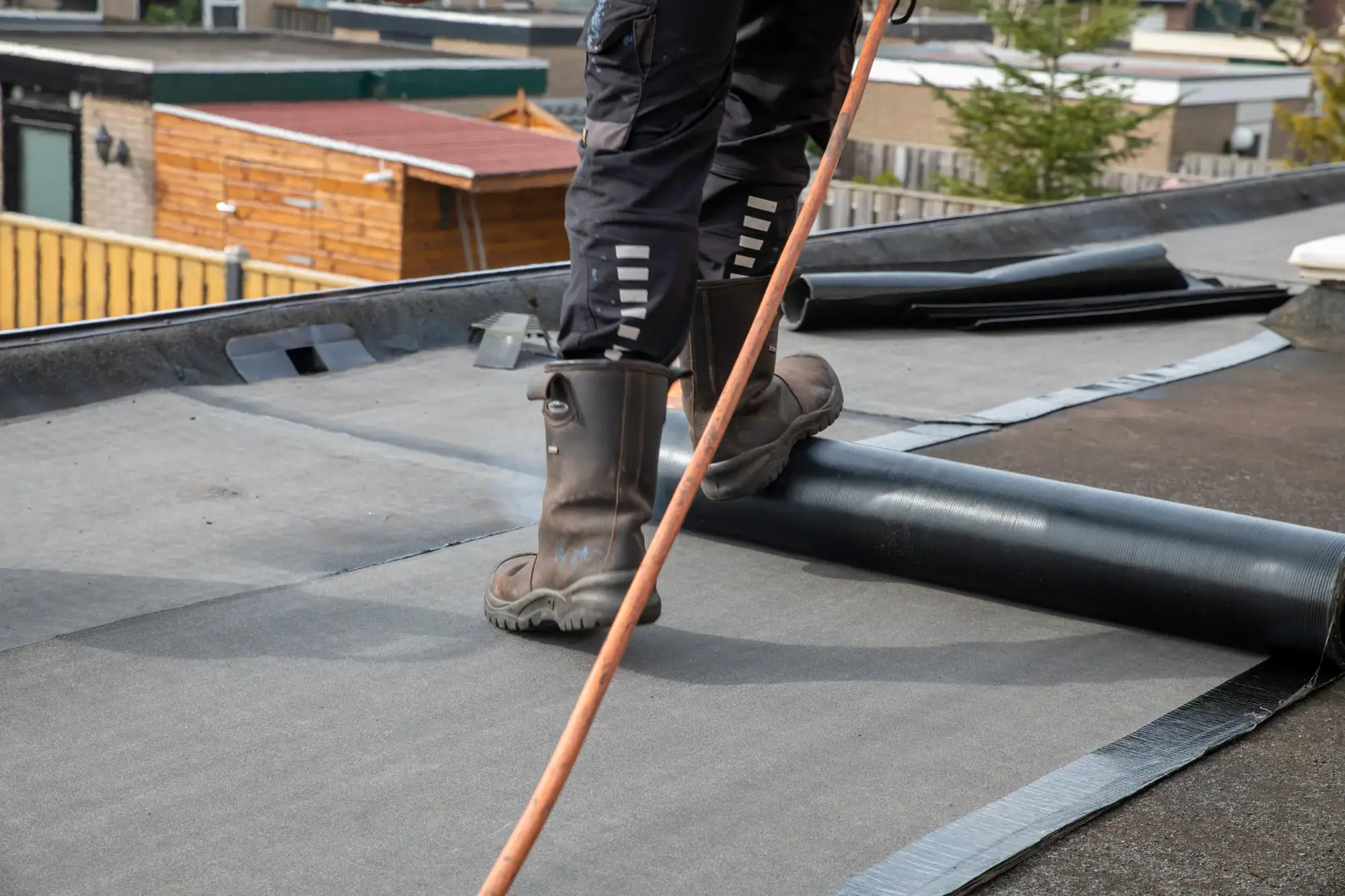
If the job moves forward, the first step is tear-off. The old membrane comes off, the deck gets inspected, and any damaged sheathing gets addressed before anything new goes down. This is where a lot of contractors cut corners, and it’s exactly where the quality of a flat roof job is actually determined.
In Kent County, where roofing permit requirements kick in when more than 25 percent of the sheathing needs replacement or when you’re changing material types, this inspection step also tells you whether a permit is needed — and we handle that process correctly from the start. Once the deck is solid, the right membrane goes on. For a Pearson Grove property, that conversation usually comes down to what the structure is, how it drains, and what it’s been through.
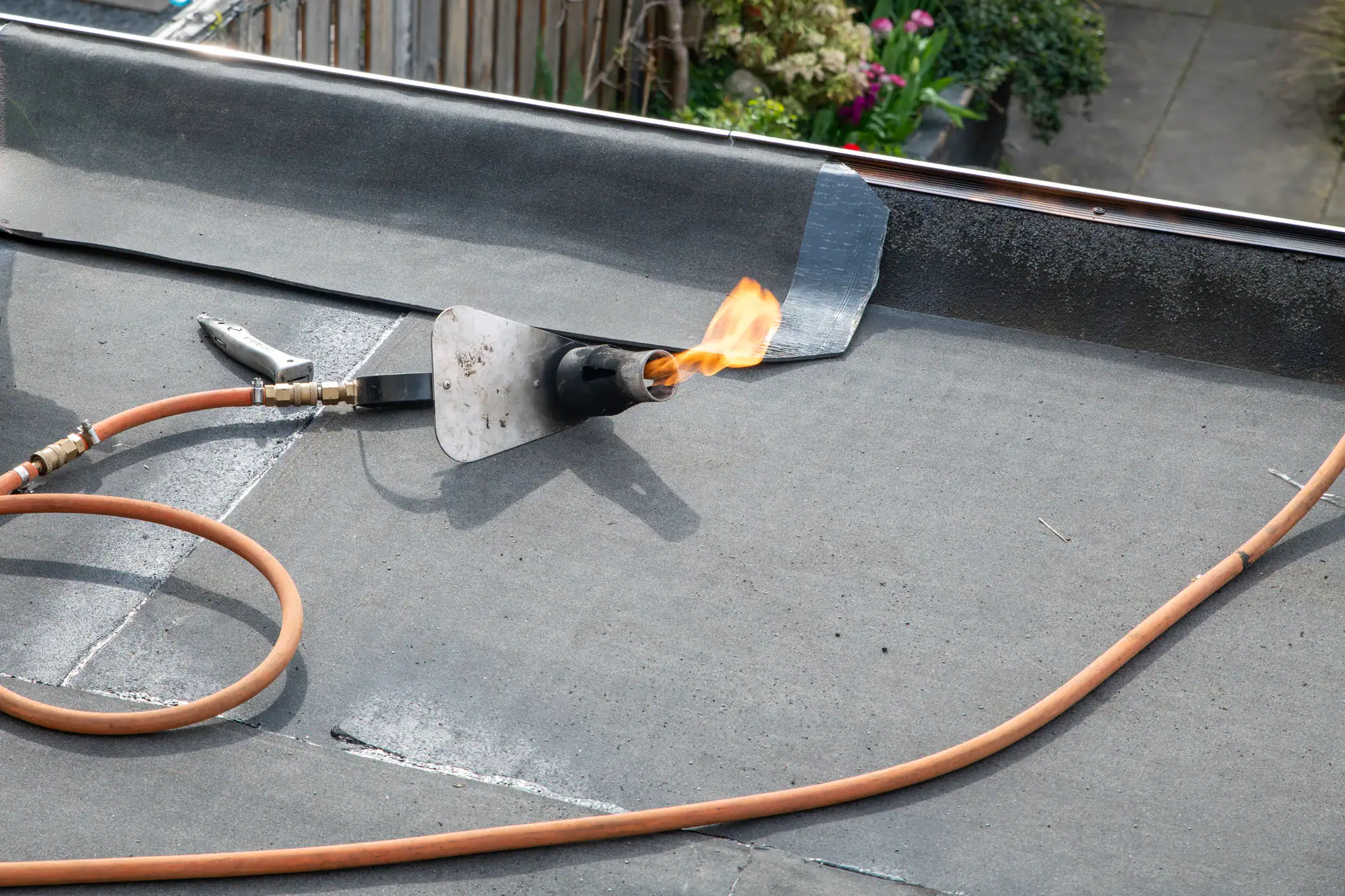
TPO, EPDM, modified bitumen — each has a different performance profile in Delaware’s climate, and the recommendation should match your specific situation. After installation, all penetrations and perimeter flashings get sealed properly, because that’s where leaks almost always start.

Ready to get started?
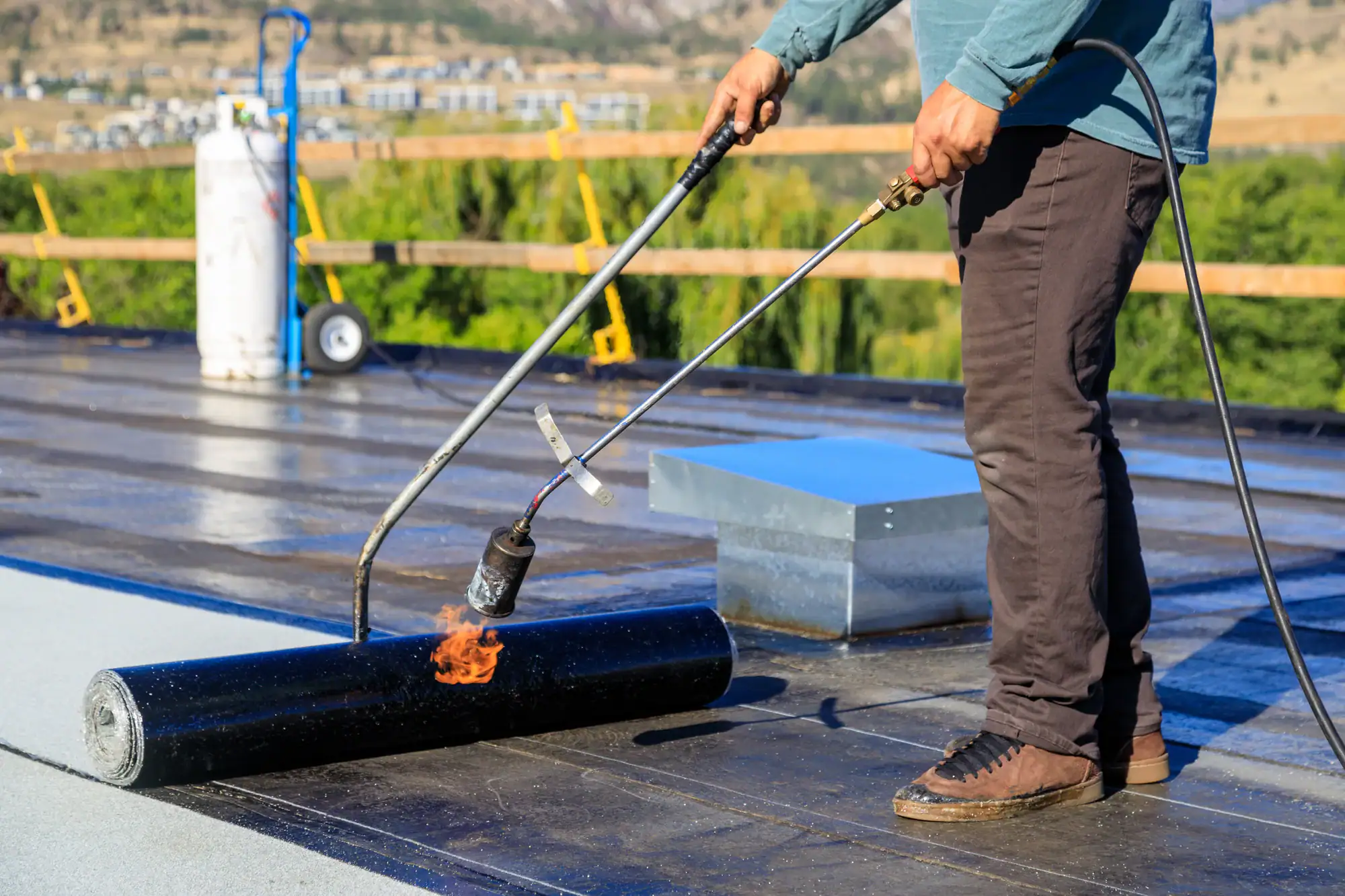
Not every flat roof is the same, and not every material is right for every building. We work with the full range of flat roofing systems — TPO roofing membrane, EPDM rubber roofing, modified bitumen (torch-down roofing), and PVC roofing membrane — and the recommendation you get is based on your actual building, not on whatever happens to be easiest to install.
For a lot of properties in the Pearson Grove area, that conversation starts with what’s already on the roof. Many homes and outbuildings in this part of northern Kent County have original 1990s-era modified bitumen or early rubber roofing material that has simply reached the end of its service life.
EPDM rubber roof membrane is often the right replacement choice for residential applications — it’s flexible enough to handle Delaware’s freeze-thaw winters, durable enough to last 20 to 30 years with proper maintenance, and it performs well on secondary structures like detached garages and workshops that are common on rural properties in this area. TPO roofing membrane tends to be the stronger choice for commercial applications or for any flat roof where energy efficiency is a priority — it reflects a significant portion of solar heat load, which matters when you have HVAC equipment sitting on the roof.
If you have storm damage and need to work through an insurance claim, we handle that process alongside you. Financing is also available for larger replacement projects, and free estimates are the starting point for every job.

The honest answer is that you usually can’t tell from the ground, and even a surface-level inspection can miss what’s happening underneath the membrane. The most reliable way to know is to have someone walk the roof and check for soft spots in the deck, pooling water that isn’t draining within 48 hours, cracked or lifting membrane edges, and failed flashings around any penetrations or perimeter walls.
For homes in the Pearson Grove area built in the 1990s, the age of the system is itself a meaningful data point. A modified bitumen or rubber roof from that era is now 25 to 35 years old — which puts it at or past the typical service window for those materials. If the membrane is showing widespread cracking, granule loss, or seam separation, repair is usually just buying time. A full replacement with a modern TPO or EPDM system will outperform repeated patching in almost every case, and it comes with a warranty that a patchwork repair never will.
Delaware’s climate is genuinely demanding on flat roofing systems. You’re dealing with around 45 inches of annual rainfall, high summer humidity, UV exposure, and freeze-thaw cycling through the winter months. Each of those stresses affects different materials in different ways, so the right answer depends on what your building needs most.
EPDM rubber roofing membrane is one of the most proven options in this climate. It’s been installed in Mid-Atlantic conditions for decades and handles freeze-thaw cycling well because of its natural flexibility — it expands and contracts without cracking the way stiffer materials can. TPO roofing membrane is the better choice when energy efficiency is a priority, particularly for commercial flat roofs with HVAC equipment, because it reflects a significant portion of solar heat load. Modified bitumen is still a solid option for certain applications, but older torch-down systems from the 1990s are aging out across most of Kent County and are increasingly being replaced with longer-lasting membrane systems.
Ponding water is the industry’s defined threshold for concern, and it’s not something to leave alone. The standard is straightforward: if water is still sitting on your flat roof more than 48 hours after rain stops, you have a drainage problem that’s actively shortening the life of your membrane.
In a low-elevation area like Pearson Grove, where the surrounding landscape doesn’t provide a lot of natural grade-driven drainage relief, this is a more common issue than it is in higher-elevation communities. Standing water adds weight to the structure, accelerates membrane degradation, promotes mold and algae growth, and in winter it freezes — expanding into any seam or flashing gap and widening it with every freeze-thaw cycle. Over time, it can also cause the roof deck to sag, which makes the drainage problem progressively worse. The fix isn’t always a full replacement. Sometimes it’s a drain that needs clearing, a low spot in the membrane that needs addressing, or a drainage layout that needs to be redesigned. Getting it looked at early is almost always the less expensive path.
It depends on the scope of the work. In Kent County, a building permit is required when the job involves replacing more than 25 percent of the roof sheathing or when you’re changing the material type — for example, going from a modified bitumen system to a TPO or EPDM membrane. If neither of those conditions applies, a permit may not be required, but that determination should always be confirmed before work starts.
For most full membrane replacements on older properties in the Pearson Grove area, there’s a reasonable chance that at least some sheathing replacement will be needed once the old membrane comes off and the deck gets inspected. That’s one of the reasons the tear-off and deck inspection step matters so much — it tells you what you’re actually working with before anything new goes down. We handle the permit process correctly from the start, so you’re not left managing that on your own or finding out after the fact that something was missed.
Yes, and it’s one of the more valuable things we can do for you in this situation. Kent County sees regular storm activity — nor’easters in the fall and winter, and summer convective storms that bring hail and high winds. Flat roofs are particularly vulnerable to wind uplift at membrane edges and around penetrations like HVAC units and vents, and the damage isn’t always visible from the ground.
When a storm damages your flat roof, the insurance process can feel just as overwhelming as the damage itself. We help homeowners and property owners document the damage properly, work through the process with the adjuster, and scope the repair or replacement accurately — so the claim reflects what actually needs to be done rather than a lowballed patch estimate that leaves real damage unaddressed. Starting with a free inspection and estimate gives you a clear picture of what you’re dealing with before you engage with your insurer, which puts you in a much stronger position from the start.
The cost of a flat roof replacement varies based on the size of the roof, the membrane system being installed, the condition of the existing deck, and the scope of any drainage or flashing work that needs to happen. We don’t publish set prices because every job is different — but every job starts with a free estimate that gives you a clear, written number before you commit to anything.
For homeowners in the Pearson Grove area who are facing a full membrane replacement on a property they’ve owned for decades, the upfront cost can feel like a significant decision. Financing is available through First State Roofing & Exteriors Co., which means you don’t have to choose between protecting your property now and managing your budget. Deferring a failing flat roof almost always leads to higher costs later — water that gets under a failing membrane reaches the deck, the insulation layer, and eventually the interior, and each of those repairs adds to the total. Addressing it with a properly installed replacement, on a payment schedule that works for you, is almost always the more economical path over time.
Other Services we provide in Pearson Grove