
Hear from Our Customers
When a flat roof is doing its job, you don’t think about it. No water stains on the ceiling, no soft spots on the deck, no emergency calls after a hard rain. That’s what a properly installed and maintained membrane roof actually delivers — and it’s the only outcome worth settling for.
Millington sits at the head of navigation on the Chester River, which sounds like a historical footnote until you think about what that means for your roof. Low-lying ground, persistently high ambient humidity, and a watershed that sees MD 291 and MD 313 closed by flooding in significant storm years. That moisture environment is relentless, and a flat roof membrane that performs fine in a drier inland location will show its weaknesses here faster than you’d expect.
The same goes for the building stock in and around Millington. Whether you’re dealing with a flat-roofed addition on a residential property, a small commercial building along Sassafras Street, or an agricultural outbuilding on a surrounding farm, the stakes when a flat roof fails are real — water intrusion, structural damage, and disrupted operations. Getting the right membrane matched to the right building, installed correctly the first time, means you’re not revisiting this problem in three years.
We’re headquartered in Smyrna, DE — connected to Millington by a direct route along DE 6, which crosses the state line and becomes MD 291 right into town. That’s not a stretch of our service area map. That’s a genuine regional connection, and it matters because the Upper Eastern Shore of Maryland and coastal Delaware share the same climate realities: roughly 45 inches of annual rainfall, Chesapeake Bay humidity, and freeze-thaw cycling through winter months.
Over 22 years, our team has worked through every version of that weather. We’re BBB Accredited, maintain a consistent 5.0 out of 5 rating from more than 63 verified reviews, and operate with our own crew on every job — no outsourcing, no subcontractors showing up unannounced, no handoffs. The person you talk to is connected to the team that does the work.
It starts with a free estimate — no pressure, no obligation, just a clear look at what’s going on with your roof and an honest assessment of what it needs. For flat roofs, that means evaluating the existing membrane, checking the deck condition underneath, looking at drainage design, and identifying any areas where water may already be sitting longer than 48 hours after rain. That ponding threshold matters because standing water accelerates membrane breakdown faster than almost anything else, and it’s often the first sign that a drainage issue is compounding a membrane problem.
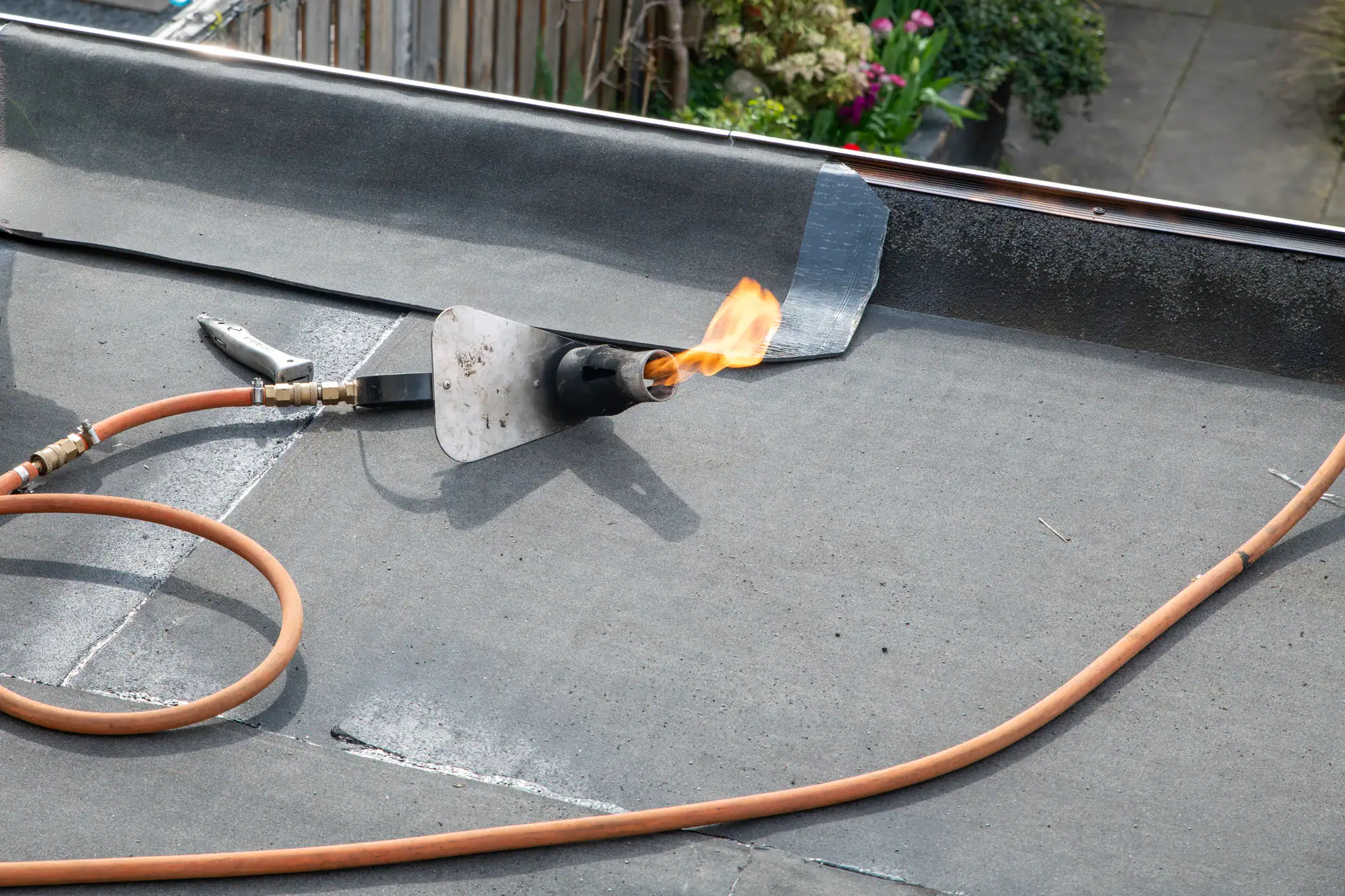
Once the scope is clear, the material conversation happens. In Millington’s moisture-heavy environment, the choice between TPO, EPDM rubber roofing, modified bitumen, and PVC isn’t just about price — it’s about how each membrane performs under the specific conditions your building faces. TPO’s heat-welded seams and high solar reflectance make it a strong choice for commercial applications. EPDM’s flexibility holds up well through the freeze-thaw cycles that hit the Upper Eastern Shore every winter. Modified bitumen works effectively on lower-slope residential applications. The recommendation you get is based on your building, not on what’s easiest to install.
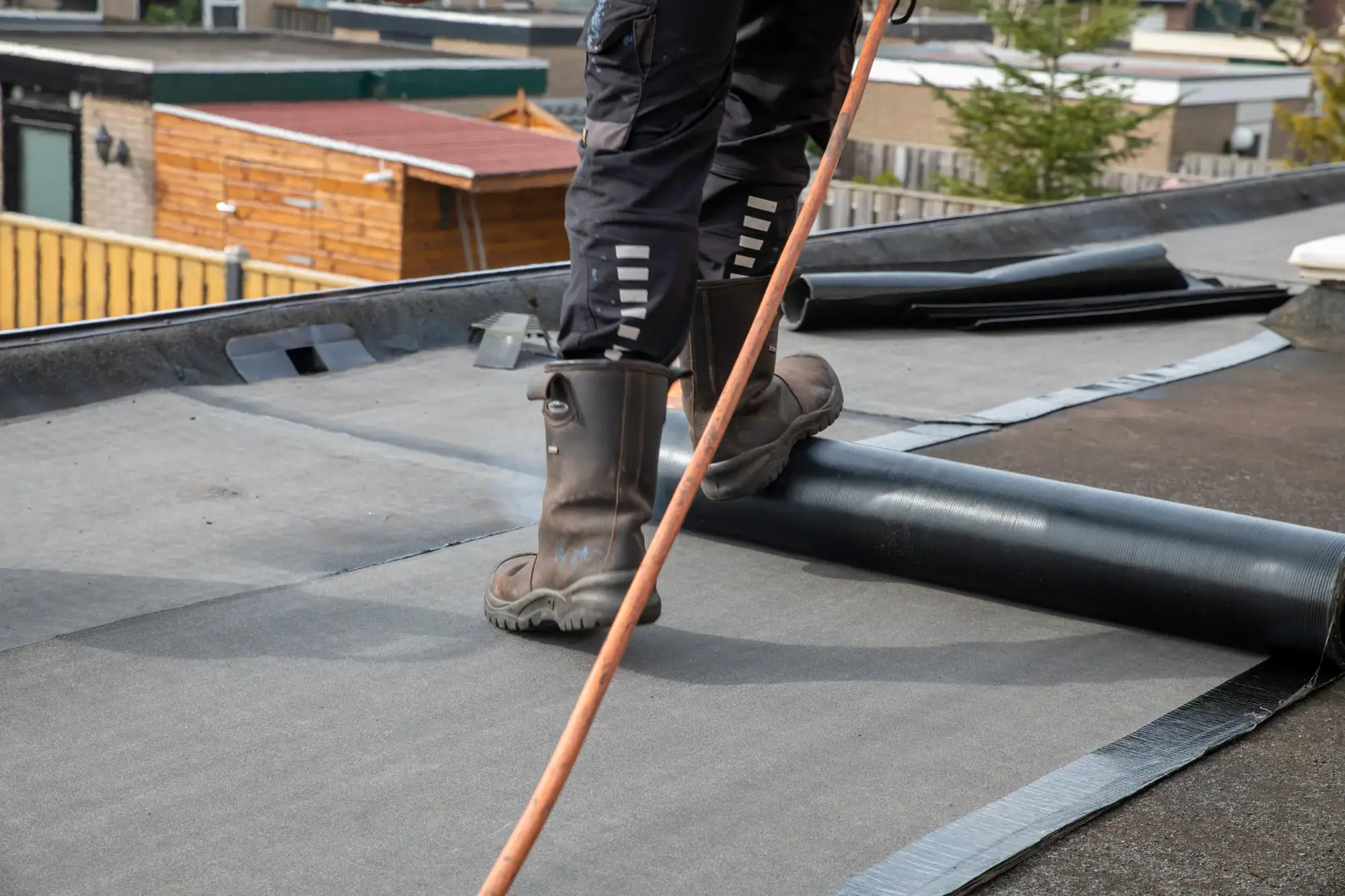
From there, the job runs start to finish with the same crew. Existing membrane comes off, the deck gets inspected and repaired where needed, insulation and the new membrane go down in sequence, and all flashings at penetrations and perimeters are finished properly. Because this is Maryland, roofing work requires permits — we handle that process, so you’re not navigating Kent County or Queen Anne’s County requirements on your own.

Ready to get started?
Flat roofing isn’t one product — it’s a category that includes several distinct membrane systems, each with different performance profiles. We install and repair all of them, which means the recommendation you receive is based on what actually fits your situation rather than what we happen to carry.
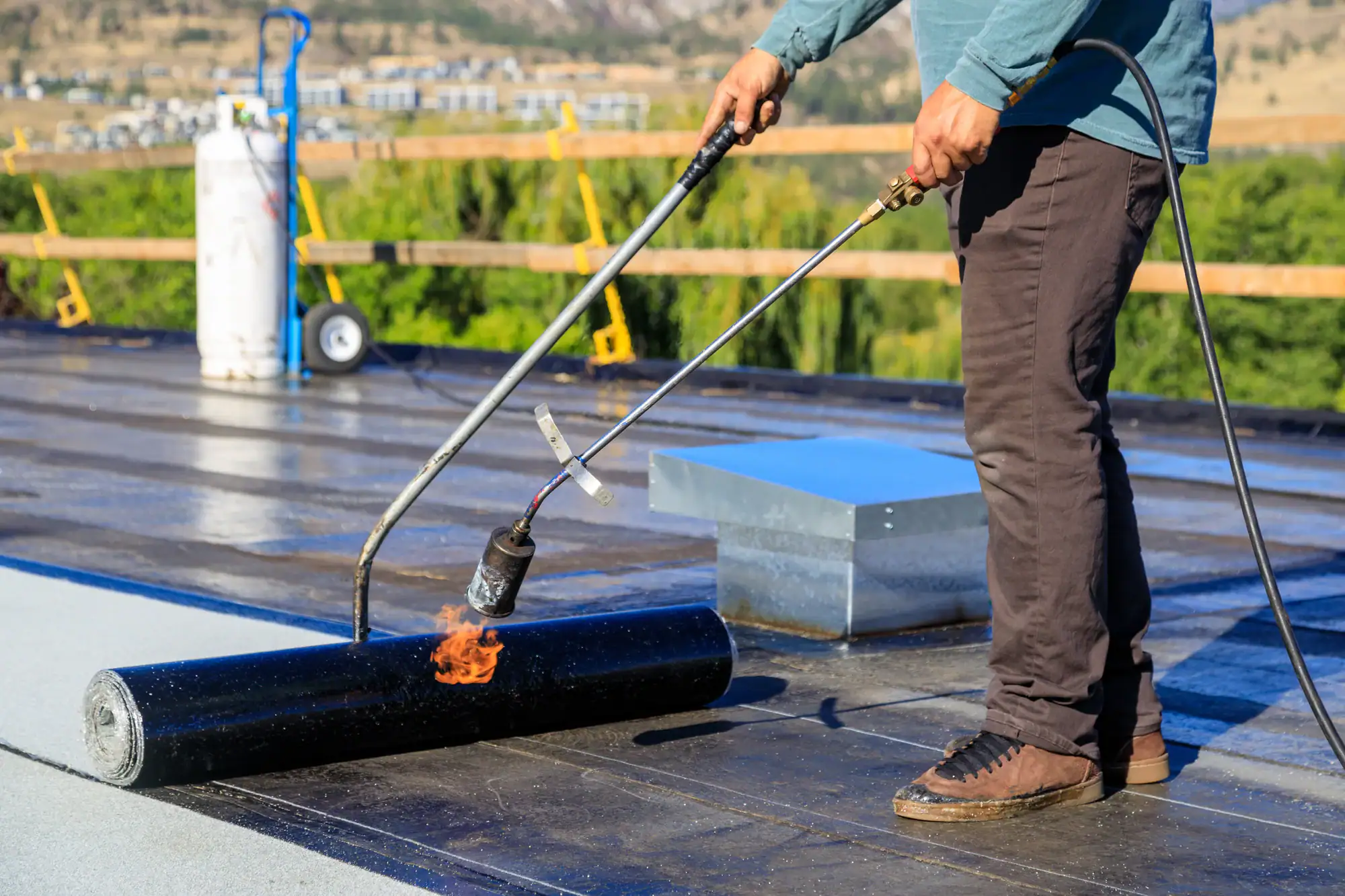
TPO roofing membrane is the fastest-growing flat roof system in commercial applications for a reason. Its heat-welded seams create a continuous, watertight bond, and its reflective surface can deflect a significant portion of solar load — a real benefit for commercial buildings along the US 301 corridor that are running HVAC year-round. EPDM rubber roofing has one of the longest track records in the industry, with lifespans reaching 20 to 30 years when installed and maintained correctly. Its flexibility makes it particularly well-suited to the temperature swings that define winters on Maryland’s Eastern Shore. Modified bitumen, sometimes called torch down roofing, is a layered system that performs reliably on residential low-slope applications and offers strong waterproofing protection in high-rainfall environments like Millington’s Chester River watershed.
For property owners dealing with storm damage — and the Chester River watershed does see significant storm events — we provide insurance claims assistance. That means helping you document the damage thoroughly, understanding what your adjuster is looking for, and making sure the repair scope is captured accurately so you’re not left with a lowballed settlement that doesn’t cover what actually needs to be fixed. We work with both residential and commercial property owners through this process. Financing is available for larger projects, and emergency roof repair services are on the table when waiting isn’t an option.

This is a fair and important question, and it’s worth understanding before you hire anyone. Maryland requires roofing contractors performing residential home improvement work to hold a valid Maryland Home Improvement Commission (MHIC) license — this is separate from Delaware’s licensing framework, which operates differently. If you’re hiring a contractor based in Delaware to work on a residential property in Millington, you should ask directly whether they hold an active MHIC license or are working through a licensed Maryland contractor.
For commercial roofing work, the licensing requirements differ and are governed by Kent County and Queen Anne’s County building codes, which have adopted the International Building Code with local amendments. In either case, any legitimate contractor working in Millington should be able to answer the licensing question clearly and without hesitation. If they can’t, that’s a signal worth paying attention to. We encourage every Millington property owner to verify licensure directly — transparency on this point is part of how we operate.
Millington’s position at the head of the Chester River means elevated ambient humidity year-round, significant annual rainfall — roughly 44 to 46 inches — and Mid-Atlantic freeze-thaw cycling through winter. Those conditions don’t favor every flat roof material equally, and the honest answer is that the best material depends on the specific building as much as the climate.
That said, EPDM rubber roofing tends to perform particularly well in environments with significant temperature swings because of its flexibility — it expands and contracts without cracking or losing its seal at seams. TPO is a strong choice for commercial buildings where energy efficiency matters, since its reflective surface reduces solar heat gain during Millington’s humid summers. Modified bitumen is a reliable option for residential low-slope applications and holds up well in high-rainfall conditions when properly installed with correct drainage. We look at your specific building — its slope, drainage design, deck condition, and use — before recommending a material, not just default to whatever we stock most of.
The honest answer is that you usually can’t tell from the inside of the building. Water stains on a ceiling are a sign that something is wrong, but the leak point on a flat roof is rarely directly above where the water shows up inside — water travels along the deck before it finds a way through. That’s why a surface-level inspection from the ground tells you very little.
A proper assessment looks at the membrane condition — blistering, cracking, or surface erosion on modified bitumen; seam separation or punctures on TPO or EPDM — and checks the deck underneath for soft spots, rot, or structural deflection. It also evaluates drainage. If water is ponding on your flat roof for more than 48 hours after rain, that’s a problem regardless of the membrane’s age, because standing water accelerates degradation and adds structural load. In many cases, a roof that looks like it needs full replacement only needs targeted repairs and a drainage correction. In other cases, a roof that looks intact from the surface has a deck in poor condition underneath. The only way to know is an honest inspection by someone who isn’t incentivized to oversell the scope.
We don’t publish set price lists because flat roof replacement costs vary significantly based on the size of the roof, the membrane system selected, the condition of the existing deck, and the complexity of the drainage and flashing work involved. A small residential flat-roofed addition is a very different job from a commercial building roof in terms of material volume, equipment, and labor hours.
What you should expect from us is a written estimate that breaks down the scope clearly — what’s being removed, what’s being installed, what deck repairs are included, and what the warranty terms are on both materials and workmanship. Vague verbal quotes that change at the job site are a red flag. We provide free estimates with no obligation, which means you can get a clear number in writing and compare it accurately against other bids. Financing is available for larger projects, which is worth knowing before you assume a full replacement is out of reach.
Lifespan depends heavily on the material and how well the roof is maintained, but here are realistic ranges to work with. EPDM rubber roofing typically lasts 20 to 30 years with proper maintenance. TPO membrane systems generally run 15 to 25 years. Modified bitumen, also called torch down roofing, typically reaches 15 to 20 years. These are industry-standard figures, and they assume correct installation, functioning drainage, and periodic inspection.
In Millington’s environment specifically, two factors tend to shorten lifespans when they’re not addressed: ponding water and freeze-thaw cycling. Water that sits on a flat roof for extended periods — more than 48 hours — breaks down membrane materials faster than normal weathering does, and it adds weight that can cause structural deflection over time. Freeze-thaw cycles stress seams and flashings, particularly on older modified bitumen surfaces where the mineral granule layer has worn down. Annual inspections, clearing drains before winter, and catching small seam issues before they open up are the most reliable ways to get the full expected lifespan out of any flat roof system in this region.
Yes, and it’s a service that matters in this area. The Chester River watershed sees real storm events — significant enough that MD 291 and MD 313, the two main roads through Millington, have been closed by flooding in documented storm years. When a storm damages a flat roof, the insurance claims process can be one of the more stressful parts of the whole situation, especially if you’re not sure what damage is covered or how to document it properly.
We provide insurance claims assistance as part of our service offering. That means helping you document the damage thoroughly, understanding what your adjuster is looking for, and making sure the repair scope is captured accurately so you’re not left with a lowballed settlement that doesn’t cover what actually needs to be fixed. We work with both residential and commercial property owners through this process. If you’ve had a storm come through and you’re not sure what your roof sustained, a free inspection is the right starting point — it gives you a clear picture of the damage before any conversations with your insurance company begin.
Other Services we provide in Millington