
Hear from Our Customers
When your flat roof is done right, you stop thinking about it. No water stains showing up on the ceiling after a storm rolls in off the Bay. No wondering whether that pooled water is going to be a problem when temperatures drop and the freeze-thaw cycle kicks in. You just have a roof that does its job — quietly, reliably, season after season.
That matters more in Little Creek than it does in a lot of other places. The salt air and sustained coastal humidity along Route 9 and the Bayshore corridor aren’t just weather — they’re active stress on flat roof membranes, seams, and metal flashings. A membrane that might last 20-plus years in an inland Delaware town can show seam stress and flashing deterioration significantly sooner here if the wrong material was chosen or the installation cut corners.
Getting this right means your property is protected through nor’easters, summer humidity, and whatever else Delaware Bay weather throws at the Bayshore. It means you’re not calling someone for emergency repairs two winters from now. And it means the investment you make today actually pays off over the long run — not just until the next big storm.
First State Roofing & Exteriors Co. is based in Smyrna — right up Route 9 from Little Creek. That’s not a coincidence or a marketing line. It means the crew that shows up at your property travels the same Bayshore corridor road you drive every day, and we’ve been working in this specific coastal Kent County environment for over two decades. We know what the humidity does to membrane seams out here. We know what a nor’easter looks like from this side of the Bay.
Every project is handled by our own certified crew — no subcontractors, no strangers on your roof. The team you talk to is the team that does the work, and we’re accountable for every detail from the first inspection to the final cleanup. In a community as close-knit as Little Creek, that kind of accountability isn’t optional — it’s the baseline.
We’re BBB Accredited, fully licensed and insured, and carry a 5.0 rating from over 63 verified reviews. Those reviews come from real Kent County homeowners who had the same questions you’re probably asking right now.
It starts with a free estimate — no pressure, no obligation. We come out to your property, take a real look at the roof, assess the membrane condition, check the drainage, and look at the deck underneath for any signs of moisture damage that a surface inspection alone would miss. In Little Creek’s coastal environment, that deck inspection matters more than most people expect. Salt air and sustained humidity don’t just affect the membrane — they can work their way into the substrate over time, and catching that early changes the scope and cost of the job significantly.
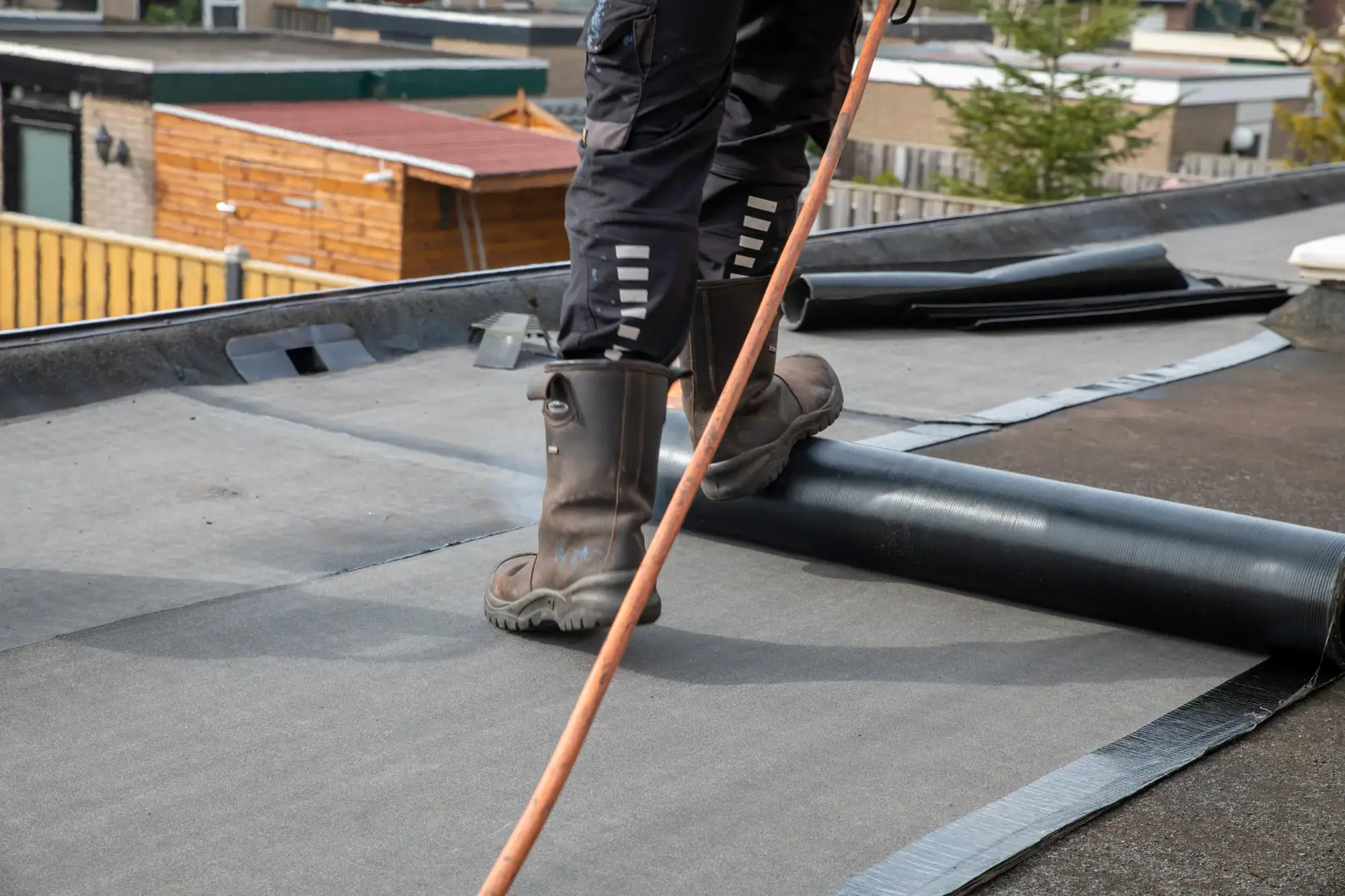
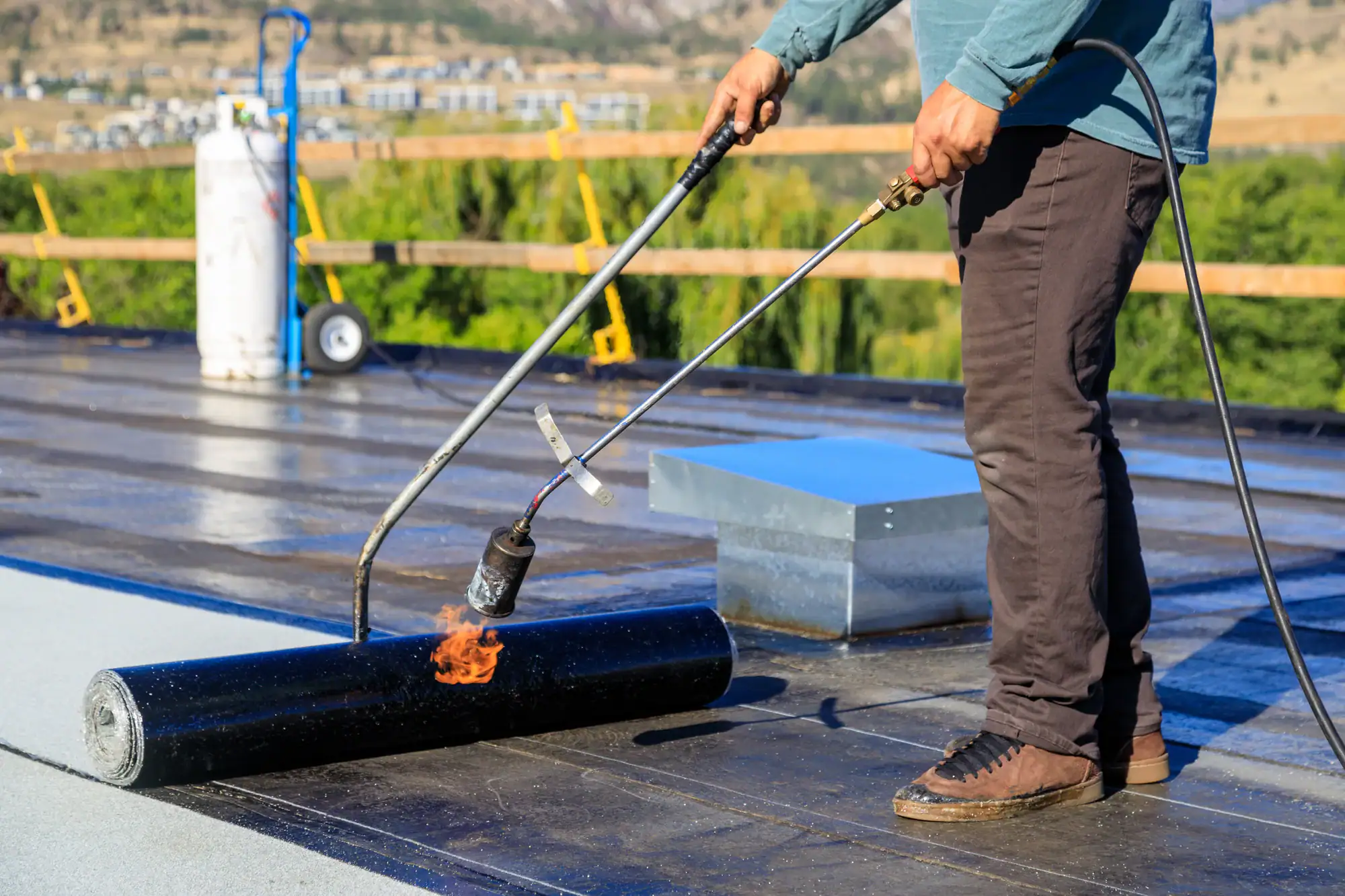
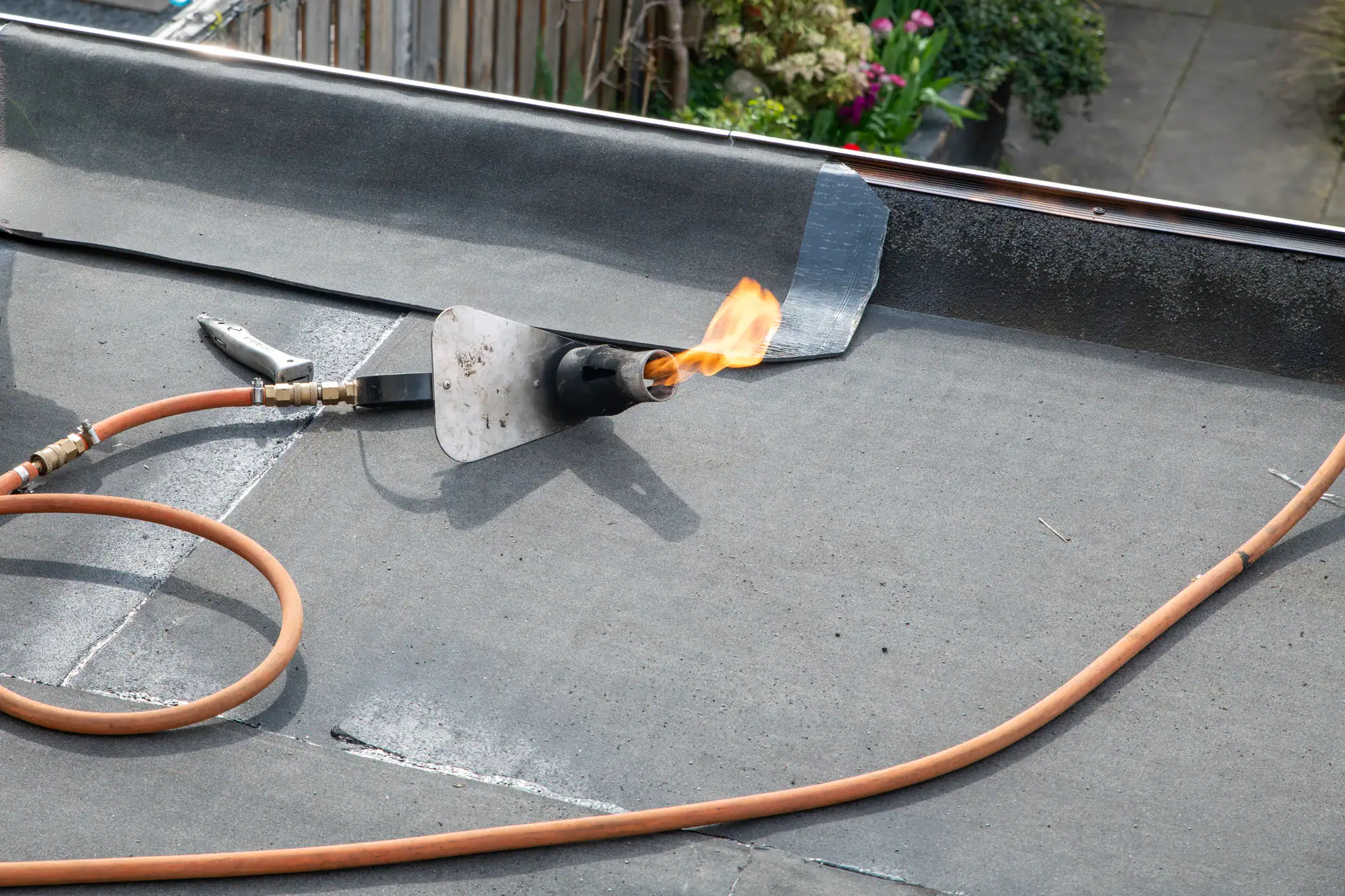
From there, we walk you through your options. Depending on your building, your budget, and how the roof is currently performing, that might mean a targeted repair, a full membrane replacement with TPO or EPDM rubber roofing, or a modified bitumen torch-down system for the right application. We explain what each option involves and what it costs — in writing, not vague verbal estimates that shift when the work starts.
Once you’re ready to move forward, we handle everything. In Kent County, a permit is required when you’re replacing more than 25% of roof sheathing or changing the roof material type — we manage that process so you don’t have to. The job is done by our own crew, cleaned up completely, and backed by both our workmanship warranty and the manufacturer’s material warranty. You’ll know exactly what’s covered before we start.

Ready to get started?
Not every flat roof membrane performs the same way in every environment, and Little Creek’s position along the Delaware Bayshore makes material selection a real decision — not just a price comparison. TPO roofing membrane reflects up to 84% of solar load, which makes it a strong choice for commercial property owners and low-slope residential applications where summer heat and HVAC costs are a factor. It’s also heat-welded at the seams, which creates a stronger, more water-tight bond than adhesive-based systems — relevant when you’re dealing with the kind of wind exposure that comes with an open Bayshore corridor location.
EPDM rubber roofing material has one of the longest track records of any flat roof system available — over 20 billion square feet installed worldwide — and its flexibility makes it particularly well-suited to Delaware’s freeze-thaw cycles. For older homes along Route 9 and the surrounding area, where an aging modified bitumen or torch-down system may be reaching the end of its service life, EPDM is often the right replacement choice. Modified bitumen remains a solid mid-range option for the right applications, and PVC roofing membrane is available for situations where chemical resistance is a priority.
We also handle roof waterproofing, emergency flat roof repair, and insurance claims assistance for storm damage — which matters in a Bayshore community where a serious weather event can move fast and leave you navigating an adjuster’s estimate on your own. Financing is available if you need it, and the free estimate is always the starting point.

The honest answer depends on your specific building and budget, but the Bayshore environment does narrow the field. Salt air and sustained coastal humidity are harder on adhesive-based seams and metal flashings than most people realize, so membrane systems with heat-welded seams — like TPO — tend to perform more reliably in this corridor over time. EPDM rubber roofing is also a strong choice because of its flexibility and chemical resistance, which helps it hold up through Delaware’s freeze-thaw cycles without the seam stress that can develop in more rigid systems.
What we’d steer most Little Creek homeowners away from is making a material decision based purely on upfront cost without accounting for the local environment. A membrane that’s priced lower but not well-suited to coastal humidity and wind exposure can cost significantly more in repairs within a few years. When we come out for a free estimate, part of what we assess is which system makes the most sense for your specific building, its exposure, and how long you’re planning to be in the property.
This is one of the most common questions we get, and the answer isn’t always obvious from the inside of your house. A water stain on the ceiling tells you there’s a problem — it doesn’t tell you whether the membrane has a localized failure that can be patched or whether the deck underneath has sustained moisture damage that makes a full tear-off the right call. Those are two very different jobs, and conflating them in either direction costs you money.
The factors that typically push a flat roof toward replacement rather than repair include membrane age (most systems have a 15-to-25-year lifespan depending on the material), widespread seam deterioration, ponding water that has been standing for more than 48 hours after rain, and any signs of deck deflection or soft spots when you walk the surface. In Little Creek’s coastal environment, salt air and humidity can accelerate membrane aging, so a system that’s 12 to 15 years old here may be closer to end-of-life than the same system would be in an inland Delaware town. A proper inspection — not just a surface look — is the only way to know for certain.
Some water sitting on a flat roof immediately after heavy rain is normal — flat roofs don’t shed water the way a pitched roof does, so there’s always a brief period where water is moving toward the drains. The industry threshold for concern is water that’s still standing 48 hours after the rain stops. At that point, it’s no longer draining properly, and that’s a problem worth addressing.
Ponding water accelerates membrane degradation, adds structural load to the deck, promotes mold and algae growth, and can void manufacturer warranties if it’s a chronic condition. In Little Creek specifically, the combination of coastal humidity and freeze-thaw cycling in winter makes ponding more damaging than it would be in a drier climate — water that sits on the membrane and then freezes creates mechanical stress that breaks down the surface faster. The cause is usually a drainage issue: clogged drains, a low spot in the deck, or inadequate slope built into the original installation. We assess drainage as part of every inspection, because fixing the membrane without fixing the drainage just delays the next problem.
Yes, in most cases involving a full replacement. Kent County requires a building permit when you’re replacing more than 25% of the roof sheathing or when you’re changing the roof material type — for example, going from a modified bitumen system to TPO or EPDM. If you’re doing a minor repair that doesn’t involve sheathing replacement or a material change, you may fall under the exemption, but it’s worth confirming before work starts rather than after.
We handle the permit process as part of the job. You don’t need to navigate the Kent County building department on your own or figure out which category your project falls into — that’s part of what we manage from start to finish. It’s one of the reasons we don’t subcontract: when the same crew handles every phase of the project, permit documentation and inspection coordination are straightforward rather than a logistical mess. If your property has any historic designation — there are several National Register-listed structures in and around Little Creek — we can also help you think through whether that affects your material options before we get into the permit stage.
Most residential flat roof replacements are completed in one to two days, depending on the size of the section, the condition of the deck underneath, and the membrane system being installed. Commercial jobs or larger low-slope sections take longer, but we give you a realistic timeline before work starts — not an optimistic estimate that slips once the job is underway.
The disruption is generally minimal for residential properties. The crew works during normal business hours, the work is contained to the roof itself, and cleanup is thorough — no nails left in driveways, no debris left behind. For Little Creek homeowners who commute toward Dover or the surrounding area, the work is typically done and the crew is cleared out before you’re back in the evening. If you’re a property owner with a tighter schedule or specific access requirements, let us know upfront and we’ll plan around it. The goal is to get the job done correctly without making your week harder than it needs to be.
Yes — storm damage assistance is one of the core things we do, not an afterthought. The Bayshore corridor around Little Creek sees real weather: nor’easters, summer thunderstorms, and the kind of wind events that can compromise a flat roof membrane at the edges and penetrations faster than most people expect. When that happens, you’re often dealing with an insurance claim at the same time you’re trying to stop the damage from spreading, and those two things together can feel overwhelming.
We offer emergency flat roof repair to address active leaks and prevent further damage while a full repair or replacement is being scheduled. On the insurance side, we help you document the damage properly, work with your adjuster, and make sure the scope of the claim reflects what actually needs to be done — not a lowballed patch estimate that leaves you with ongoing problems. Homeowners who try to navigate storm damage claims alone often end up undercompensated. Having someone in your corner who understands both the roofing work and the claims process makes a real difference in the outcome. Start with a free estimate and we’ll walk you through what you’re looking at.
Other Services we provide in Little Creek