
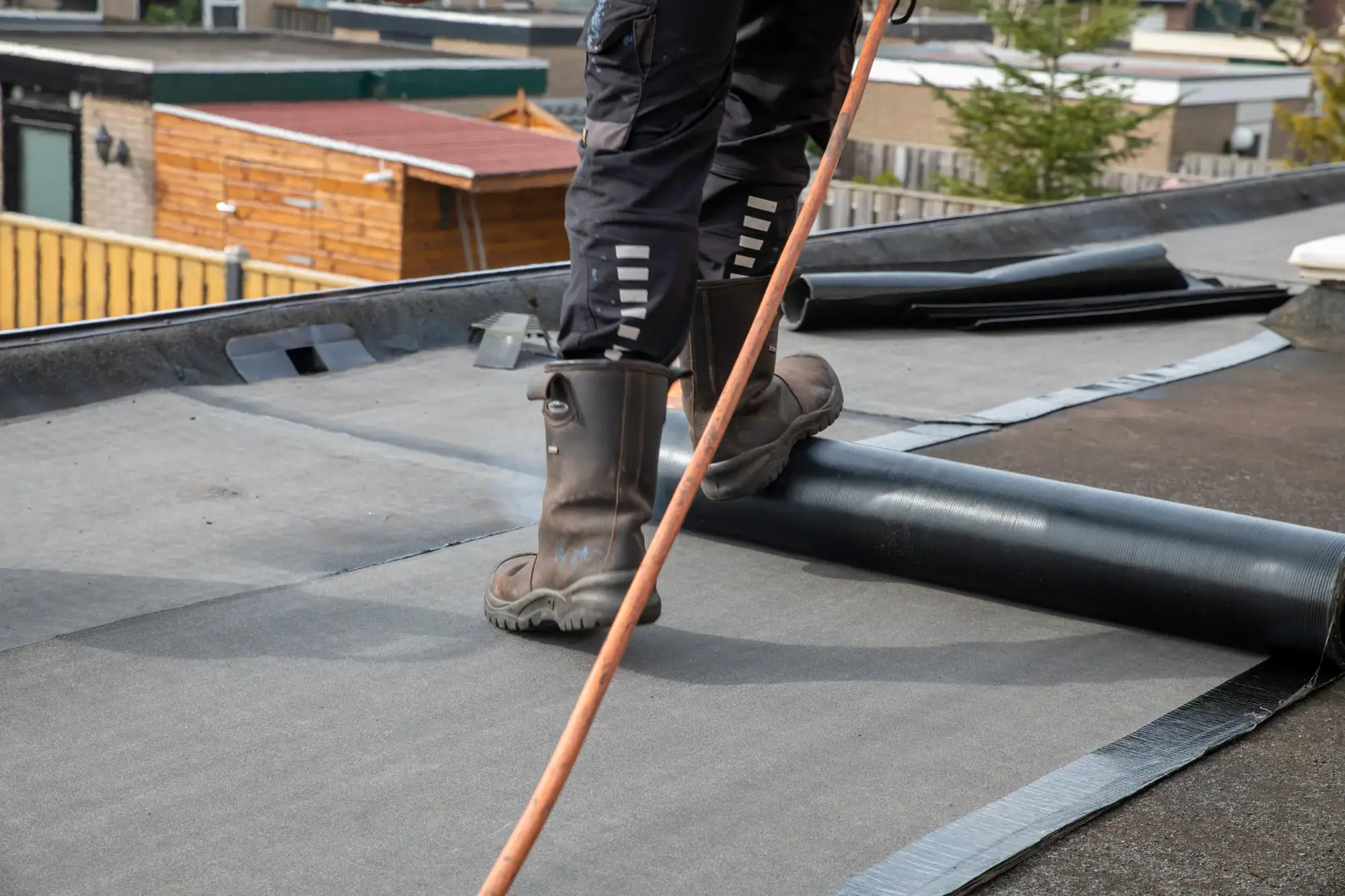
Hear from Our Customers
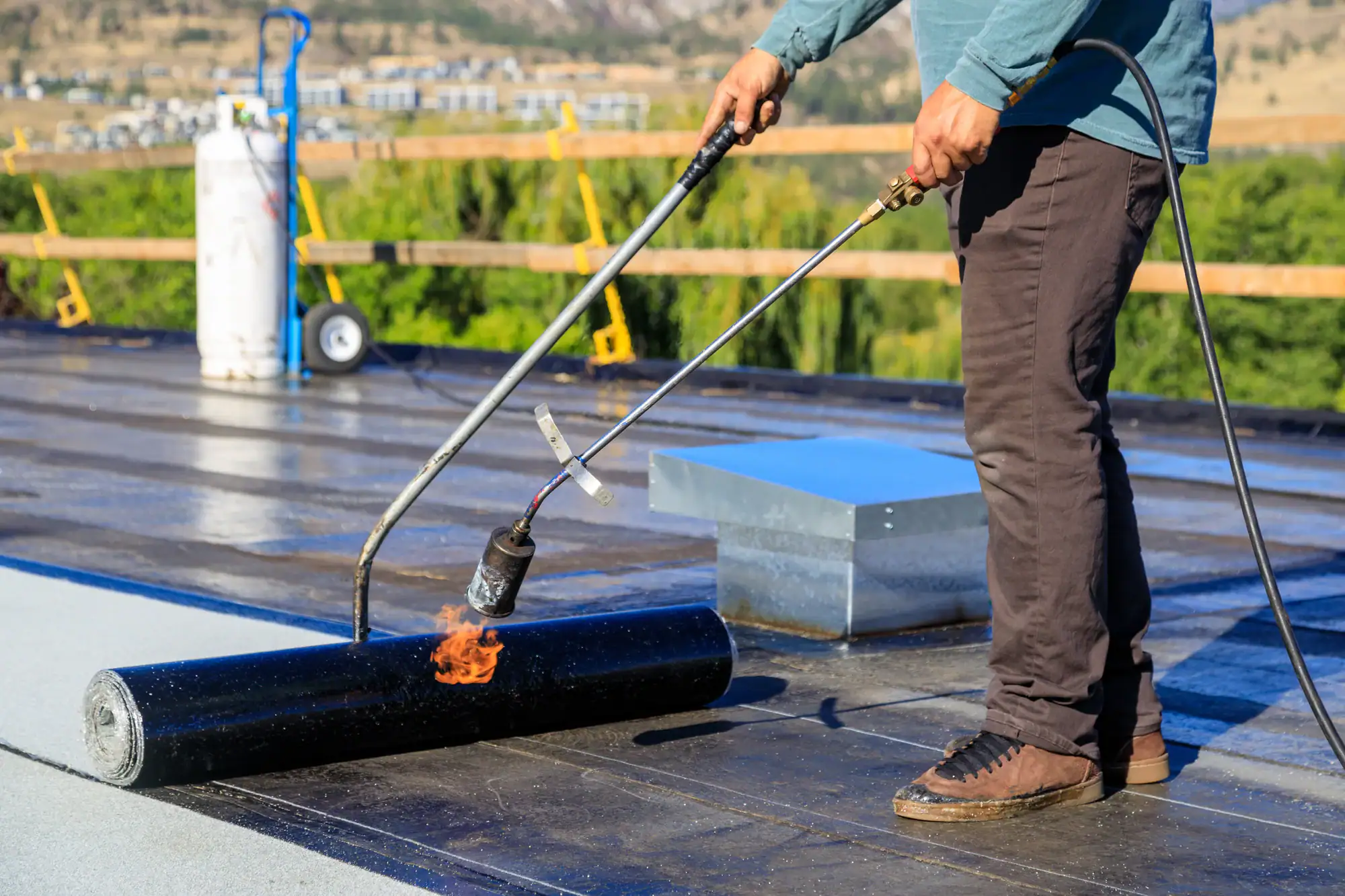
When a flat roof is done right, you stop thinking about it. No more water stains spreading across the ceiling of your garage addition. No more wondering whether that pooling water after a rainstorm is a problem or just something you have to live with. The answer is that it’s a problem — water sitting on a flat roof for more than 48 hours starts working against the membrane every single time.
Lincoln gets around 45 inches of rain a year, and northern Sussex County catches its fair share of nor’easters and late-summer tropical systems. The March 2026 storm alone dropped over a foot of heavy, wet snow across parts of Sussex and Kent counties. That kind of weight and moisture cycling puts real stress on flat roof membranes, especially on the mid-20th century ranch homes and garage additions that make up a big part of Lincoln’s residential core.
The right membrane — whether that’s TPO, EPDM rubber roofing, or modified bitumen — handles Delaware’s freeze-thaw winters and humid summers without cracking at the seams or failing at the flashings. Getting it installed correctly the first time means you’re not back on the phone with us two years from now.
We’ve been working across Kent and Sussex counties for over 22 years. That’s not a number dropped in to sound impressive — it means our team has been through Delaware’s weather cycles long enough to know what holds up and what doesn’t, and why certain materials that work fine in other climates fail faster here.
Lincoln sits just south of Milford on US 113, and it’s squarely within the service area we’ve covered for two decades. When a job comes in from the Lincoln area — whether it’s a flat-roofed garage on North Old State Road or a small commercial building on Dupont Boulevard — the crew that shows up is the same crew that does the work. No subcontracting, no handoffs to someone you’ve never met.
We’re BBB accredited, carry a 5.0 Google rating from over 60 verified reviews, and are fully licensed and insured. Those aren’t just checkboxes — in an unincorporated community like Lincoln where there’s no local building department to lean on, they’re the signals that actually tell you whether a contractor is worth trusting.
It starts with a free estimate. Someone from our team comes out, takes a real look at the roof, and gives you a written assessment of what’s going on and what it will take to fix it. No verbal ballpark figures that change when the invoice arrives. If there’s storm damage involved, that inspection also documents what an insurance adjuster needs to see — which matters a lot when you’re filing a claim after a nor’easter or a bad summer storm.
Once the scope is agreed on, we handle the permitting. Because Lincoln is unincorporated, roofing permits go through Sussex County rather than a local town office. That process is not complicated if you know how it works, but it can be a headache if you’ve never navigated county-level permitting before. We take that off your plate.
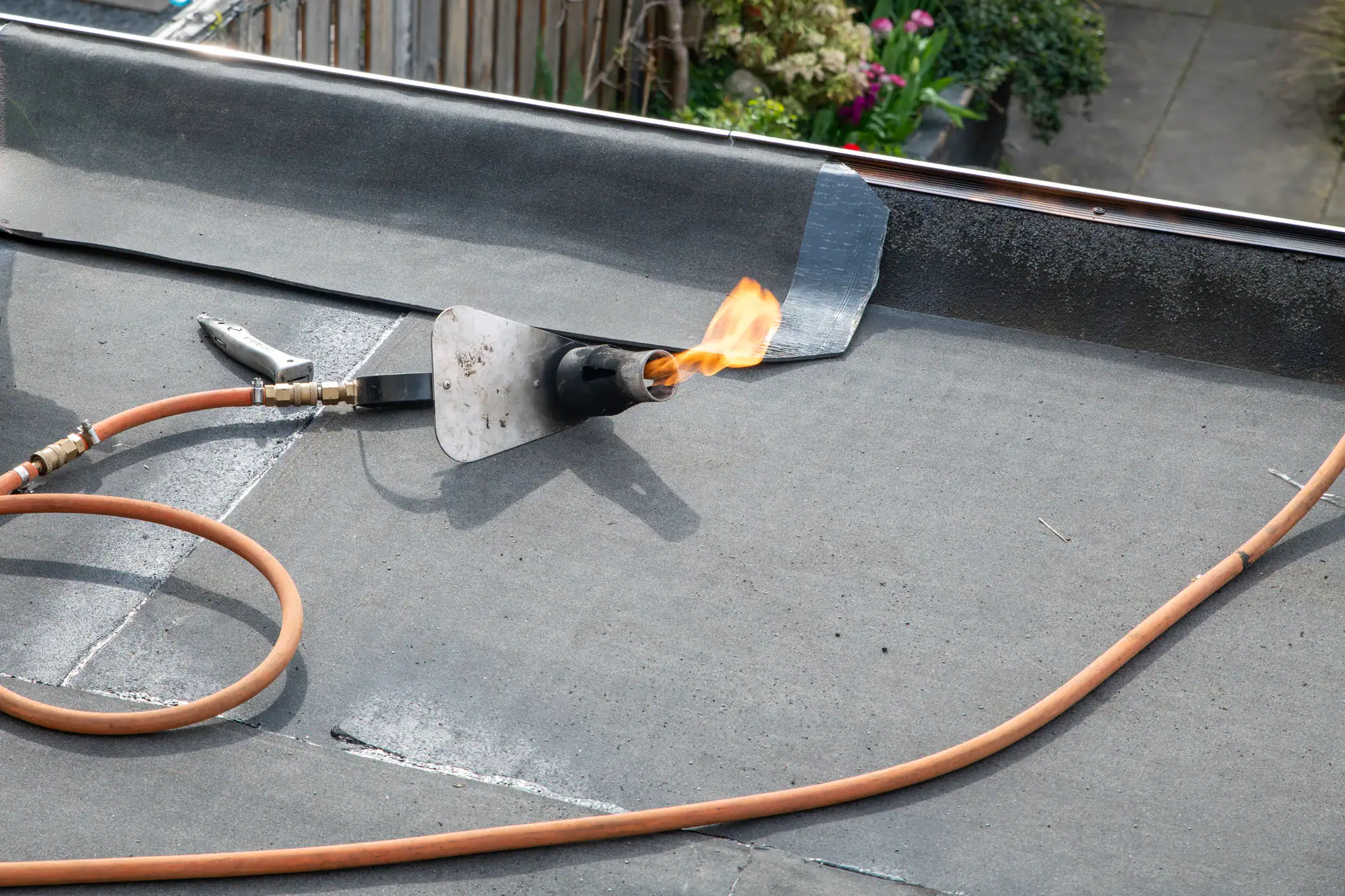
The installation itself follows a process that doesn’t cut corners on the parts that matter most: the existing membrane comes off, the deck gets inspected and repaired where needed, insulation is addressed, and the new membrane — TPO, EPDM, or modified bitumen depending on what fits your building — goes down with properly heat-welded or adhered seams and correctly installed flashing at every penetration and parapet edge. Those details are where flat roofs fail when they’re done cheaply. Fall is the best window to get this done before Delaware’s freeze-thaw season sets in, but we work year-round.

Ready to get started?
Not every flat roof is the same, and not every contractor knows every system. We work with the full range of flat and low-slope roofing membranes — TPO, EPDM rubber roofing, modified bitumen (torch-down), and PVC — which means the recommendation you get is based on what actually fits your building, not whatever we happen to stock.
For Lincoln’s older ranch homes and Cape Cod cottages with flat-roofed garage sections or rear additions, EPDM rubber roofing is often a strong fit — it’s flexible enough to handle Delaware’s freeze-thaw cycling without cracking, and it has a track record measured in decades rather than years. For commercial properties along the US 113 corridor, TPO is frequently the right call: it reflects a significant portion of solar load, which keeps HVAC costs down during Delaware’s humid summers, and its heat-welded seams hold up well under the kind of weather northern Sussex County regularly sees.
Modified bitumen is still the right answer for certain structures, particularly older buildings where the existing system is torch-down and a like-for-like replacement makes more sense than a full system change. Beyond the membrane itself, the scope of work includes deck inspection and repair, drainage assessment, flashing at all penetrations and edges, and cleanup. We also handle emergency roof repair when a leak can’t wait, assist with insurance claims for storm-damaged roofs, and offer financing for property owners who need to spread the cost of a full replacement.

Yes, a full roof replacement in Lincoln requires a building permit — but because Lincoln is an unincorporated community, that permit comes from Sussex County rather than a local town office. There is no Lincoln building department, no town hall to call, and no municipal inspector assigned to the area. Everything goes through the Sussex County Department of Planning and Zoning.
That process is straightforward if you’ve done it before, but for most homeowners it’s unfamiliar territory. We handle the permitting as part of the job. You won’t need to figure out the county application process, track down the right office, or schedule inspections on your own — our team manages it from start to finish so the work is done to code and properly documented.
The honest answer is that you usually can’t tell from the ground, and even a ceiling stain inside doesn’t always point directly to where the membrane has failed. Water enters at one spot and travels along the deck before it shows up as a visible leak — which means the damage is often broader than it looks.
A few things that typically push a flat roof toward replacement rather than repair: membrane that’s cracked, blistered, or shrinking away from the edges; seams that have separated and been patched more than once; ponding water that keeps returning in the same spot after every rain; or a system that’s simply reached the end of its expected lifespan. EPDM typically lasts 20 to 30 years, TPO 15 to 25, and modified bitumen 15 to 20. If your Lincoln home’s garage addition or rear flat-roofed section was part of the original mid-century construction, there’s a real chance it’s past that window. A proper inspection will tell you where things actually stand.
Both are single-ply membrane systems used on flat and low-slope roofs, but they perform differently and suit different situations. TPO is a white or light-colored membrane that reflects solar heat — up to 84% of solar load in some products — which makes it a strong choice for commercial buildings in Delaware’s humid summers where HVAC costs are a real concern. Its seams are heat-welded, which creates a very strong bond when installed correctly.
EPDM is a black rubber membrane that has been in use for decades and has an enormous installed base worldwide. It handles temperature flexibility extremely well, which matters in northern Sussex County where freeze-thaw cycling through the winter can stress less flexible materials. EPDM is often the better fit for residential flat roof sections — garage roofs, sunroom additions, low-slope rear extensions — because it performs reliably over a long service life without requiring the more specialized heat-welding equipment that TPO installation demands. The right choice depends on the building type, how much sun exposure the roof gets, your budget, and what the existing deck and drainage situation looks like.
Yes — and sooner rather than later. The industry standard is that water standing on a flat roof for more than 48 hours after a rainstorm is a problem that needs attention. Lincoln’s flat terrain, consistent with the low-lying Delmarva Peninsula, means properties here don’t have natural topographic slope helping water move off the roof. If drainage isn’t designed and maintained correctly, ponding becomes a recurring issue rather than an occasional one.
What ponding actually does to a membrane: it accelerates degradation at the surface, adds structural load that the roof deck wasn’t necessarily designed to carry continuously, promotes algae and mold growth, and in winter it freezes — expanding into any small seam gap or flashing edge and widening it. Over time, a roof that regularly holds standing water will fail significantly earlier than its expected lifespan. If you’re seeing the same low spots fill up after every rain, that’s a drainage problem as much as a membrane problem, and fixing just the membrane without addressing drainage will give you the same result again.
Yes, and it’s one of the more valuable things a roofing contractor can do for you after a storm. Sussex County sits in Delaware’s storm impact zone — nor’easters, tropical systems, and severe thunderstorms all hit this area regularly, and the damage they leave on flat roofs isn’t always obvious from a quick look. Membrane punctures, flashing displacement, and seam separation from heavy snow load or wind uplift can be easy to miss if you don’t know what you’re looking for.
We document storm damage in the format insurance adjusters need, help you understand what’s covered, and scope the repair or replacement correctly so you’re not accepting a lowballed patch estimate that leaves the underlying problem in place. If you’re dealing with a claim after a storm hit Lincoln, having a contractor who knows the documentation process makes a real difference in what you actually recover. We also offer emergency roof repair for situations where the damage can’t wait for a full claims process to run its course.
For a typical residential flat roof section — a garage addition, a sunroom roof, or a low-slope rear extension on one of Lincoln’s ranch-style homes — a full replacement usually takes one to two days once our crew is on-site and the materials are staged. Larger commercial jobs on the US 113 corridor take longer depending on the square footage and whether the existing system requires a full tear-off versus a recover.
What affects the timeline most is the condition of the deck underneath. If the inspection turns up significant rot or structural damage — which is genuinely possible on mid-century construction that’s been holding water for years — that adds time and scope to the job. The permitting process through Sussex County adds a few days on the front end, but that runs concurrently with material ordering so it doesn’t typically delay the start of work by much. Fall is the ideal window in Delaware — the weather is cooperative, the roof has time to cure and settle before freeze-thaw season, and you’re not scrambling after a winter storm has already done damage. That said, we work year-round, and emergency repairs don’t wait for ideal conditions.
Other Services we provide in Lincoln