
Hear from Our Customers
Most flat roof problems don’t announce themselves until water is already inside. A stain on the ceiling, a soft spot underfoot, a drain that’s been slow for months — these are the early signs that something is happening up there, and by the time they’re obvious, the damage has usually been building for a while. Getting ahead of it is almost always cheaper and less disruptive than waiting.
For homes in Lawndale, that timeline matters more than most people realize. Lawndale sits inland in northern Kent County, away from the temperature-moderating effect of the Delaware Bay. That means your flat roof goes through more pronounced freeze-thaw cycles than coastal communities do — the kind of repeated contraction and expansion that stresses seams, cracks aging modified bitumen surfaces, and quietly opens pathways for water to get in. Add Delaware’s roughly 45 inches of annual rainfall and the leaf and debris accumulation that comes with Lawndale’s wooded, agricultural surroundings, and a flat roof that isn’t draining properly becomes a real liability.
The good news is that a properly installed membrane roof — whether that’s TPO, EPDM, or a modern modified bitumen system — handles all of this well. The key word is properly. Material selection matters, drainage design matters, and the quality of the installation matters more than almost anything else. When those things are done right, a flat roof in this climate is not the liability people assume it is. It’s a reliable part of the structure that you simply don’t have to think about.
We’re headquartered in Smyrna — the same postal area that covers Lawndale. When you call for an estimate, you’re not waiting on a crew to drive in from Wilmington or somewhere out of state. Our team has been working on homes along this Route 13 corridor for over two decades, and we know what northern Kent County roofs are dealing with.
Every project is handled by our own certified professionals. No subcontracting, no handoffs to crews you’ve never met. The same people who assess your roof are the ones installing it, which means there’s actual accountability from start to finish — not just a warranty on paper.
We’re BBB accredited, fully licensed and insured, and we carry a 5.0 out of 5 rating across 63 or more verified reviews. Customers consistently mention professionalism, clean worksites, and clear communication — which, if you’ve dealt with contractors before, you know is not always a given.
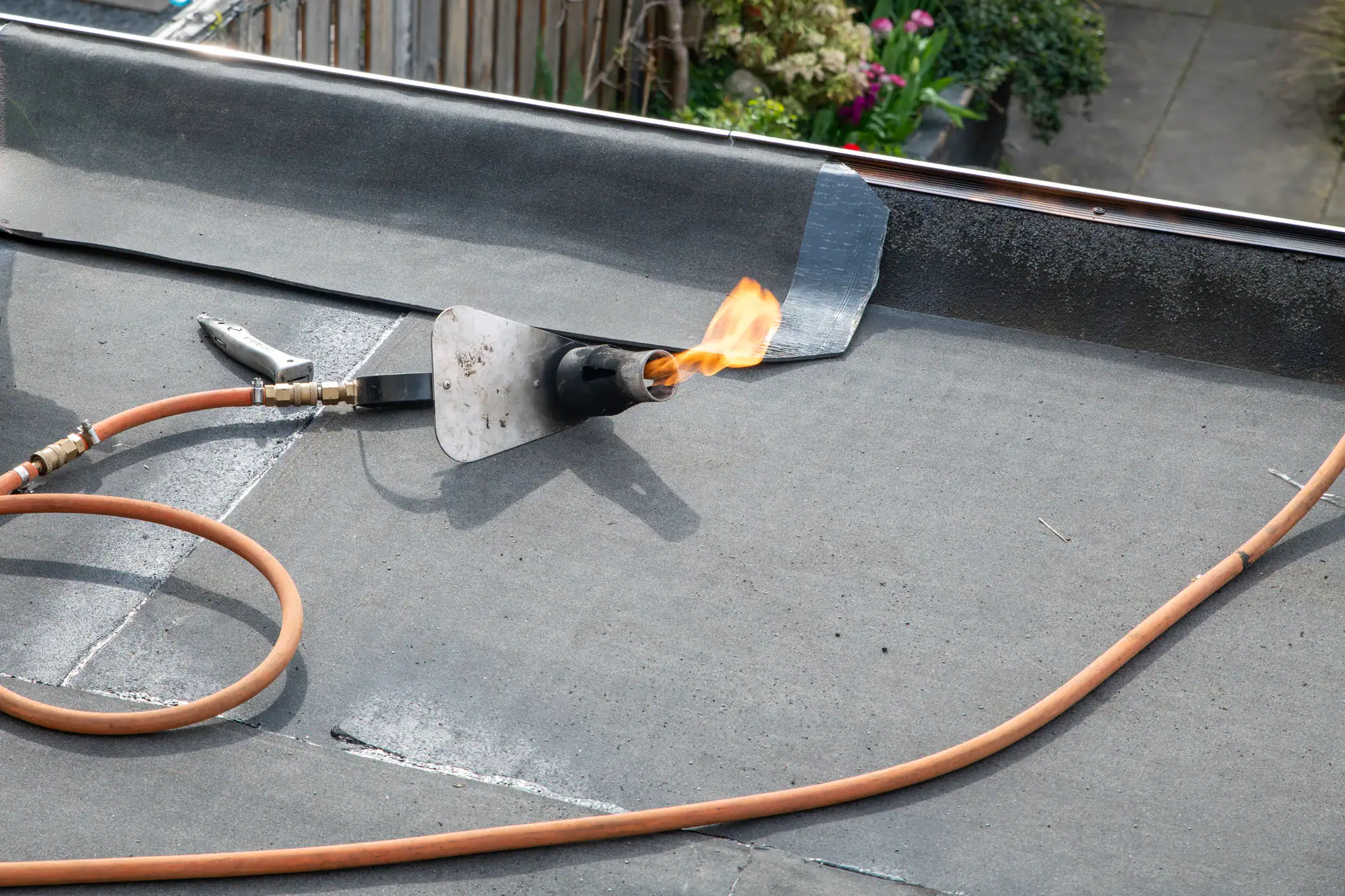
It starts with a free estimate. Someone comes out, gets on the roof, and takes a real look — not a quick visual from the driveway. For older homes in Lawndale, that inspection includes checking the deck beneath the membrane, because aging flat roof sections on additions, garages, and ranch-style structures sometimes have deck damage that isn’t visible from the surface. If there’s rot or structural softness underneath, that needs to be part of the conversation before anything else happens.
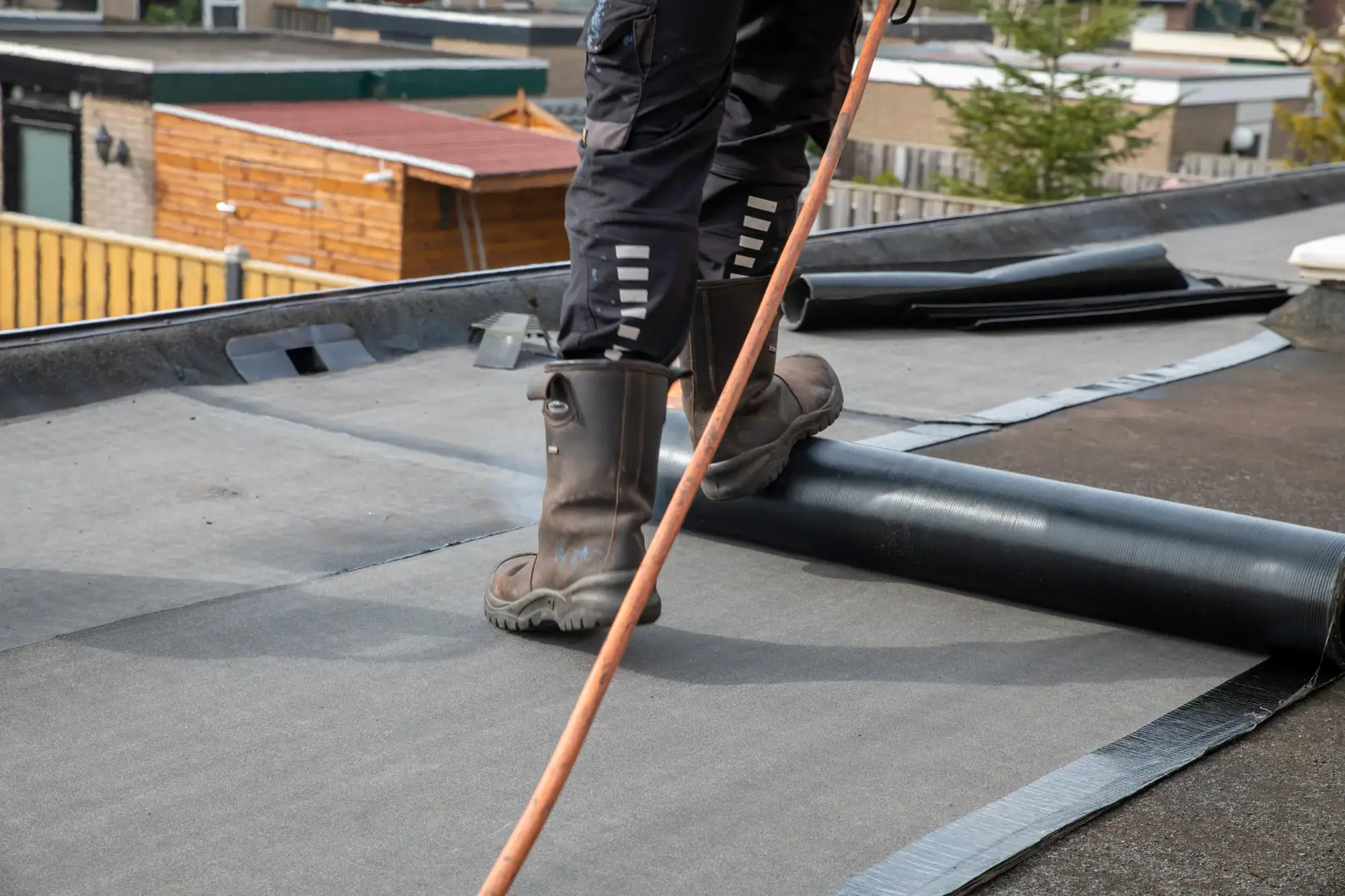
From there, you get a clear written estimate that breaks down what the job involves — tear-off of the existing membrane, deck inspection and any necessary repairs, insulation, new membrane installation, flashing at all penetrations and perimeter edges, and drainage assessment. Because Lawndale’s surrounding landscape brings more leaf and debris accumulation than a typical suburban setting, drainage design gets particular attention. A drain that clogs seasonally is a ponding water problem waiting to happen, and ponding water standing more than 48 hours is the point at which membrane damage accelerates.
Once the work is scheduled, we handle everything. Roofing work in Kent County’s unincorporated areas falls under county building permit requirements, and we manage that process. When the job is done, the site is cleaned up — no nails in the driveway, no debris left behind. If you have storm damage and need to work through an insurance claim, we can help with that too.

Ready to get started?
Flat roofing is not a one-size situation. TPO, EPDM, modified bitumen, and PVC are all legitimate systems — but they perform differently depending on the building, the exposure, and the climate. For a home in northern Kent County dealing with freeze-thaw cycling and high annual rainfall, the choice of membrane and how it’s installed makes a meaningful difference in how long it lasts and how it performs.
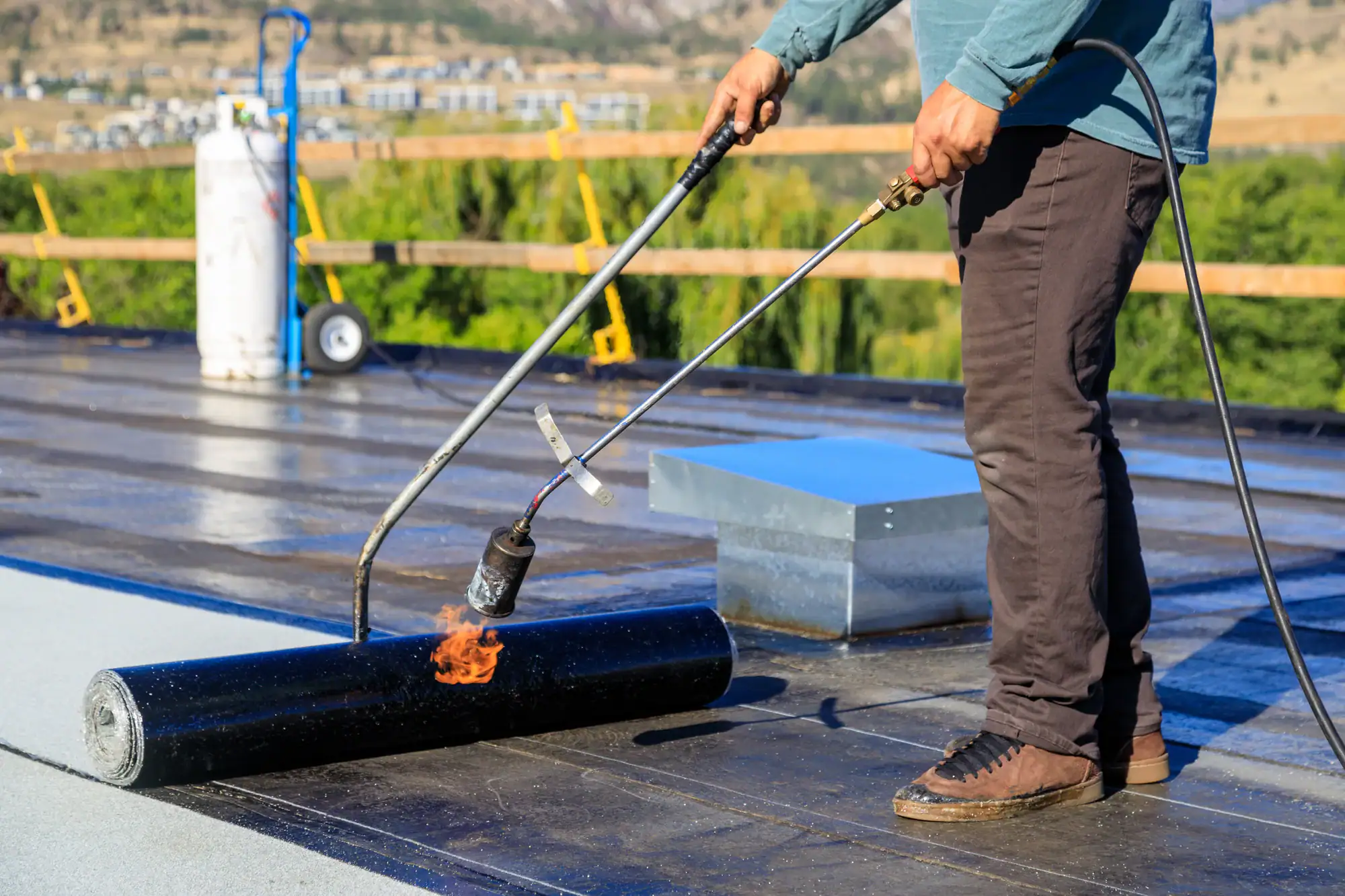
TPO roofing membrane is currently the most widely used flat roofing system in the country for good reason. Its heat-welded seams create a continuous, watertight bond, and its high solar reflectance — up to 84 percent of solar load — cuts cooling costs during Delaware’s hot, humid summers. EPDM rubber roofing material is the other major option, with a proven track record of 20 to 30 years of service life and excellent flexibility in cold temperatures, which matters during Lawndale’s inland winters. Modified bitumen, also called torch down roofing, is still a solid choice for certain applications, particularly on lower-slope residential sections, though older systems that have been in place for 15 or more years are often approaching the end of their useful life.
We work with all of these systems and can walk you through which one fits your specific roof, budget, and situation. If you’re not sure what you currently have or how old it is, that’s exactly what the free inspection is for. Financing is available for homeowners who want to move forward with a full replacement without putting the whole cost up front.

The honest answer is that you often can’t tell from the inside or even from a casual look at the surface. A ceiling stain tells you water got in, but it doesn’t tell you how long it’s been happening, how far it traveled before showing up, or whether the deck beneath the membrane has been compromised. That’s why a proper inspection — one that actually gets on the roof and checks the membrane, seams, flashing, and drainage — is the only reliable way to know what you’re dealing with.
For older homes in Lawndale, the age of the membrane is often the deciding factor. Modified bitumen systems typically last 15 to 20 years. EPDM runs 20 to 30 years. If you don’t know when your flat roof section was last replaced, and the home has been around for a while, there’s a reasonable chance it’s approaching or past that window. A repair makes sense when the membrane is otherwise in good condition and the damage is isolated. When the membrane is aging across the board, cracking, or showing widespread seam separation from years of freeze-thaw cycling, replacement is usually the better investment.
Both TPO and EPDM perform well in Delaware’s Mid-Atlantic climate, and the right choice depends on your specific situation. TPO is the more energy-efficient option — its reflective surface handles Delaware’s humid summers well and can reduce cooling costs meaningfully for flat-roofed structures with significant sun exposure. Its heat-welded seams also create a very strong, continuous waterproof bond, which matters given Delaware’s roughly 45 inches of annual rainfall.
EPDM rubber roofing material has a slight edge in cold-weather flexibility, which is relevant for homes in Lawndale. Because Lawndale sits inland in northern Kent County without the coastal temperature moderation of the Delaware Bay, freeze-thaw cycles here are more pronounced than in coastal communities. EPDM’s elasticity means it handles that expansion and contraction better than some other systems. For older homes with aging torch down roofing sections, either TPO or EPDM is typically a significant upgrade in both performance and longevity. The best way to decide is to have someone look at the specific roof and talk through the options — there’s no universal answer that works for every building.
Some water sitting on a flat roof immediately after heavy rain is normal — flat roofs are designed with minimal slope, so they drain more slowly than pitched roofs. The industry threshold that matters is 48 hours. If water is still standing on your roof more than two days after it rained, that’s ponding water, and it’s a problem worth taking seriously.
Ponding water accelerates membrane degradation, promotes mold and algae growth, adds structural load to the deck, and can void manufacturer warranties on the membrane itself. For homes in Lawndale’s rural-residential setting, clogged drains are one of the most common causes — leaves, organic debris, and agricultural dust from the surrounding landscape settle in drainage outlets faster than in more urbanized areas. A drain that’s partially blocked doesn’t have to be completely clogged to cause ponding; it just has to be slow enough that water sits long enough to do damage. Regular drainage inspection, especially in fall when debris accumulation peaks, is one of the most cost-effective things a flat roof owner can do.
It depends on the cause of the damage and the specifics of your policy. Most standard homeowner’s insurance policies in Delaware cover sudden, storm-related damage — wind, hail, falling debris — but they typically don’t cover damage that results from deferred maintenance or gradual deterioration. That distinction matters a lot in practice, because an adjuster assessing a flat roof after a storm may try to attribute damage to wear rather than the storm event, especially on an older membrane.
This is where having a contractor who understands the insurance claims process makes a real difference. We assist homeowners with storm damage claims — helping document the damage accurately, communicate with adjusters, and make sure the scope of the repair or replacement reflects what actually happened to the roof. Delaware’s spring storm season regularly brings the kind of wind and hail events that damage flat roofs, and getting the claim right the first time is a lot easier than disputing a lowballed settlement after the fact. If you’ve had a recent storm and you’re not sure whether your roof took damage, a free inspection is the right starting point.
For a typical residential flat roof section — a garage, an addition, or a low-slope area on a ranch-style home — most replacements are completed in one to two days once the crew is on site. Larger or more complex jobs take longer, particularly if the deck inspection reveals damage that needs to be repaired before the new membrane goes down. That’s not uncommon on older homes in communities like Lawndale, where flat roof sections may not have been touched in 15 or 20 years.
The scheduling timeline before work begins depends on the time of year. Fall is typically the busiest season for flat roof replacement in Delaware — homeowners who noticed issues during summer often want the job done before winter, and that demand compresses the schedule. If you’re dealing with an active leak or storm damage, emergency repair is available to stop the situation from getting worse while a full replacement is planned. The best approach is to get the inspection and estimate done as soon as possible so you know what you’re working with and can plan accordingly, rather than waiting until the problem forces the decision.
Price variation between flat roof estimates is one of the most frustrating parts of the process, and it’s almost never random. The difference usually comes down to what’s included — or what’s being left out. A low bid often means a thinner membrane, minimal deck preparation, shortcuts on flashing at penetrations and perimeter edges, or no meaningful warranty on the workmanship. Those shortcuts don’t show up as problems immediately, but they tend to show up within a few years, and by then the contractor may not be easy to find.
In Kent County, where a significant portion of homeowners are working with tighter budgets, the temptation to go with the lowest number is understandable. But a flat roof that fails early because of a cheap installation costs more in the long run — both in repair costs and in the disruption of dealing with a leak inside the home. When you’re comparing estimates, the useful questions are: what thickness of membrane is being specified, what does the deck preparation include, how are the seams being sealed, and what warranty covers the labor? A contractor who can answer those questions clearly and in writing is giving you something to compare. One who can’t is giving you a number.
Other Services we provide in Lawndale