
Hear from Our Customers
A flat roof that’s doing its job is invisible. You don’t think about it, you don’t worry about it after a rainstorm, and you’re not watching for water stains on your ceiling every time the sky opens up. That’s the baseline — and it’s completely achievable with the right contractor handling the work.
For homeowners in Hoars Addition, that matters more than it might in other parts of Kent County. A significant portion of homes here are manufactured or mobile units, and those structures almost always feature low-slope or near-flat rooflines covered with rubber membranes that age, crack, and separate at the seams over time. When that membrane starts to go, water doesn’t announce itself. It finds a seam, travels along the deck, and shows up inside the home weeks later — usually somewhere you weren’t expecting it, and usually after the damage has already spread.
Kent County sees roughly 45 inches of rainfall a year. That’s a lot of water for a flat roof to manage, especially one that’s been sitting on a manufactured home since the late 1990s without a professional assessment. Getting the right membrane installed — whether that’s EPDM rubber roofing, a TPO roofing membrane, or modified bitumen — means your roof is no longer the thing you’re quietly worried about every spring. It just works.
We’re based in Smyrna — about 6 miles north of Hoars Addition on US Route 13. That’s not a coincidence. The Cheswold corridor has been part of our service area for a long time, and we’ve worked on the exact type of homes that make up Hoars Addition: manufactured homes with aging rubber roof membranes, flat-roofed additions on single-family properties, and garages and outbuildings along the rural stretches of Kent County.
More than two decades in this business means something specific here. It means knowing that a 1990s manufactured home in this area likely has an EPDM membrane that’s never been replaced. It means recognizing the drainage issues that come with settled decks on older units. It means giving you a straight answer about whether you need a repair or a full replacement — not the answer that’s most profitable.
The crew that shows up to your property is our own certified team. No subcontractors, no handoffs. We’re BBB accredited, fully licensed and insured, and carry a 5.0-star rating from over 63 verified reviews. That track record is public — look it up before you call.
It starts with a free estimate. Someone from our team comes out to your property in Hoars Addition, gets eyes on the roof, and tells you what we actually see — not what’s easiest to sell. For manufactured homes and low-slope residential roofs in this area, that assessment almost always includes a look at the deck condition underneath the membrane, because that’s where the real story is.
A membrane can look rough on the surface but have a solid deck beneath it, or it can look passable while the deck underneath is already compromised. You need to know which situation you’re dealing with before anyone talks about materials or pricing.
Once the scope is clear, we walk you through the right material for your specific roof — whether that’s a rubber roofing material like EPDM, a TPO roofing membrane for better heat reflectance, or modified bitumen for a torch-down application on an older flat structure. Each system has a different lifespan, different installation method, and different performance profile in Kent County’s climate. Our recommendation is based on your building, not on what’s in stock.
If the job requires a permit through Kent County — which full replacements typically do for unincorporated areas like Hoars Addition — we handle that process as part of the project. Installation is done by the same crew that did the assessment. When the job is finished, the worksite is cleaned up, and we give you a clear explanation of the warranty terms before anyone leaves.

Ready to get started?
Flat roofing isn’t one-size-fits-all, and the housing stock in Hoars Addition makes that especially clear. Manufactured homes, older single-family properties with flat-roofed additions, and agricultural outbuildings along the rural stretches of Kent County — each of these structures has different requirements, different budget realities, and different exposure to the elements.
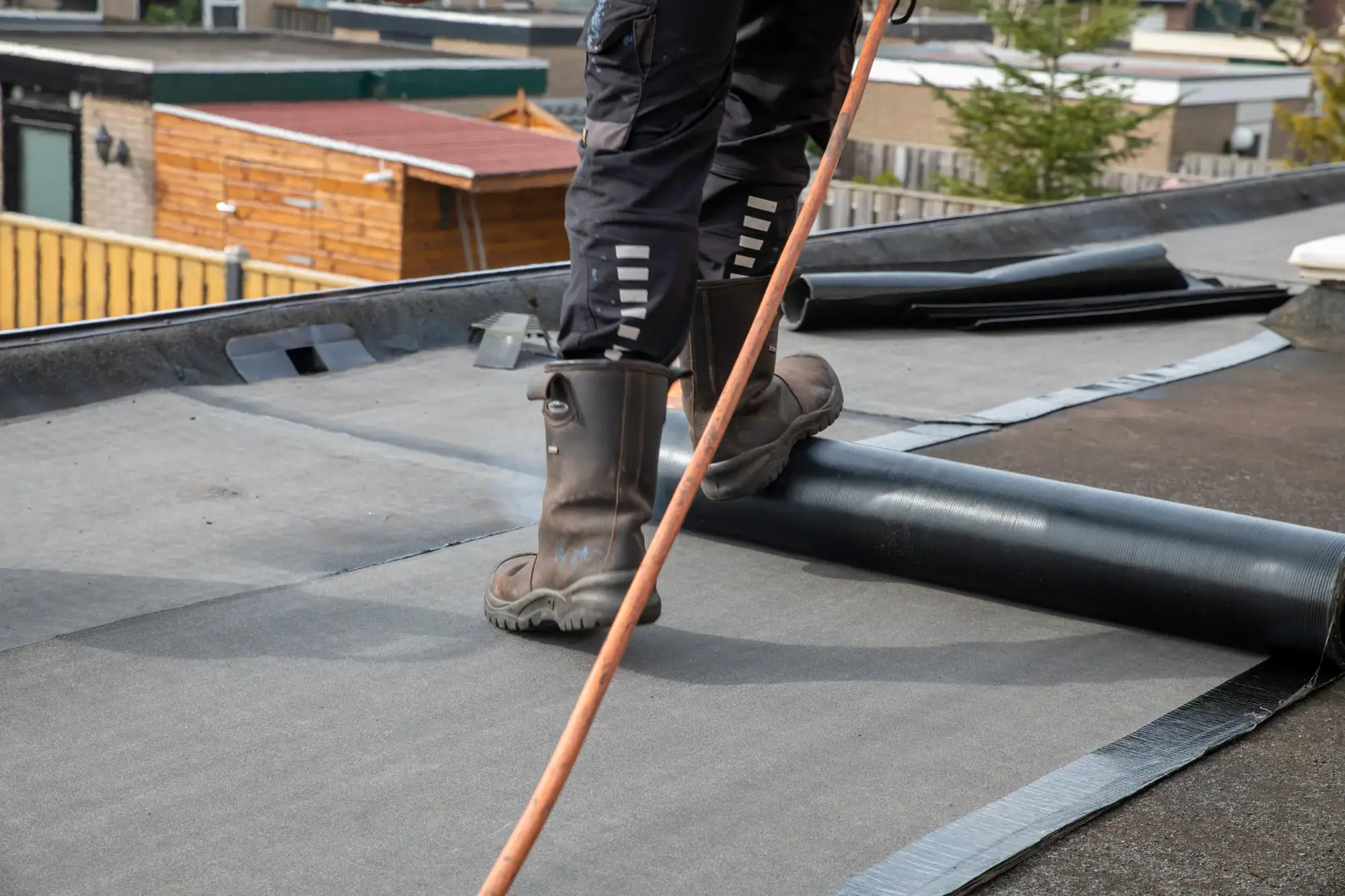
EPDM rubber roofing is the most common system on older manufactured homes in this area, and for good reason: it’s flexible, it handles Delaware’s freeze-thaw winters without cracking, and a properly installed membrane can last 20 to 30 years. TPO roofing membrane is increasingly the go-to for newer installations and re-roofing projects where energy efficiency matters — TPO reflects a significant portion of solar load, which makes a real difference during Kent County’s humid summers when cooling costs climb.
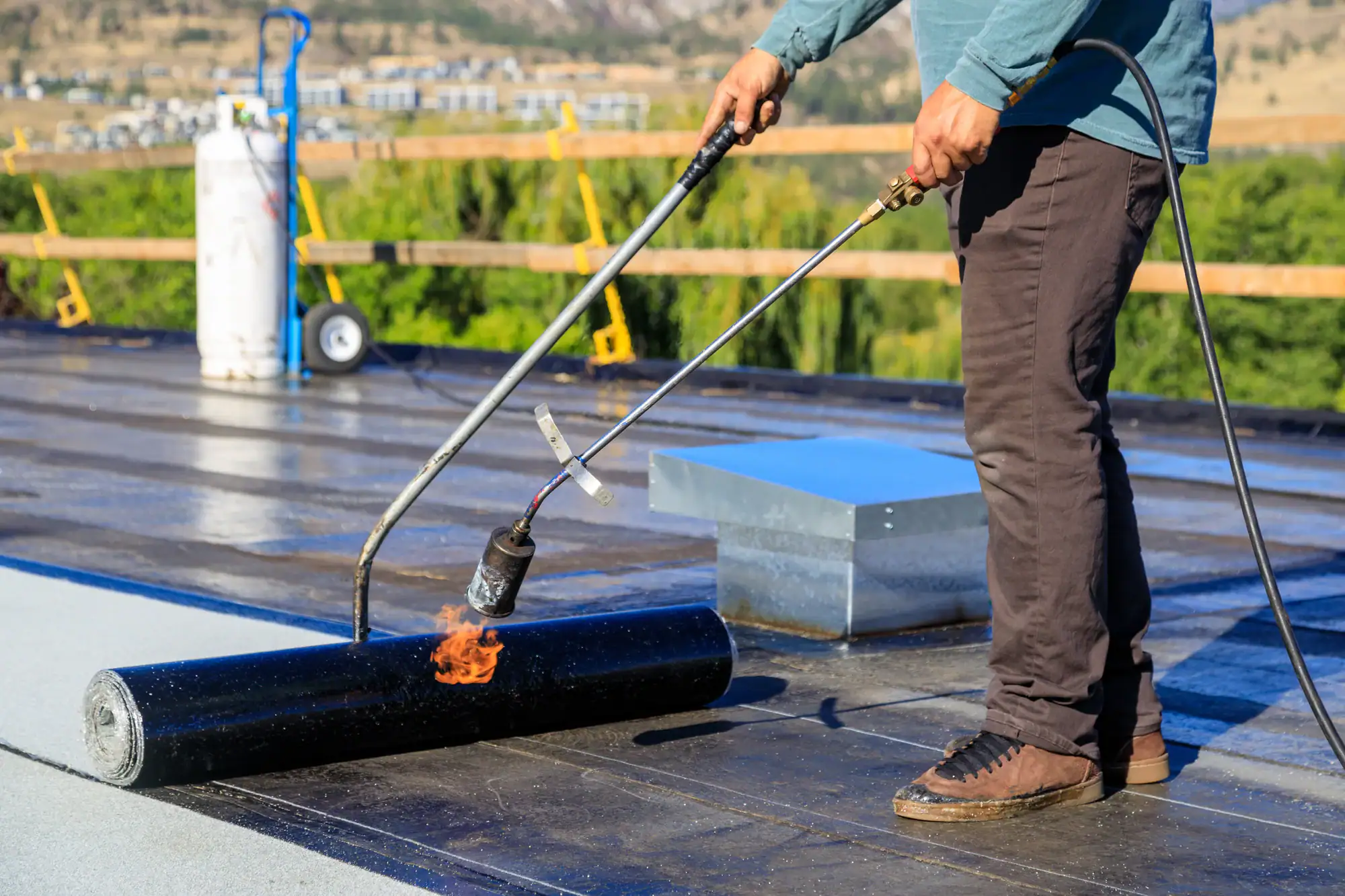
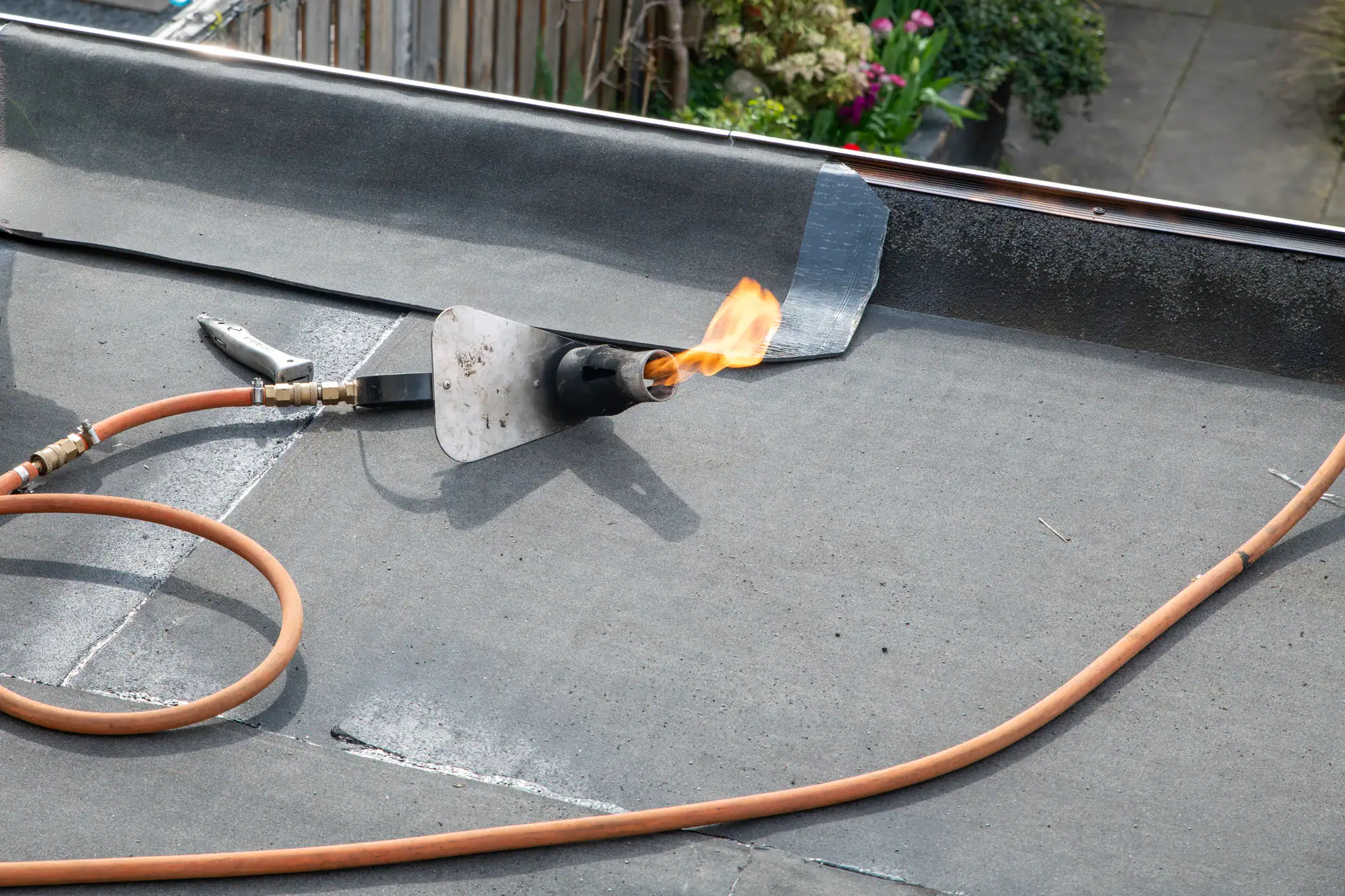
Modified bitumen, also called torch-down roofing, is still a solid choice for certain flat and low-slope applications, particularly on older structures where the existing system is a similar build. PVC roofing membrane rounds out the options for commercial properties and specific residential applications where chemical resistance or long-term performance is the priority.
We also handle roof waterproofing, storm damage repairs, and insurance claims assistance — which matters in a community where flat roofs on manufactured homes are particularly exposed to wind uplift and hail. If you’ve had storm damage and aren’t sure whether your insurance covers it, that’s part of the conversation too. Financing is available for qualified projects, and the free estimate is always the starting point.

This is the most common question from homeowners in Hoars Addition and the surrounding Cheswold area, and the honest answer is: you usually can’t tell from the ground. A rubber roof membrane that looks cracked or bubbled on the surface might still have years of life left if the deck underneath is solid. On the other hand, a membrane that looks passable might be sitting on a deck that’s already soft from years of water infiltration — and patching the surface won’t fix that.
The right answer comes from a proper inspection, not a visual guess from the driveway. During a free estimate, we assess both the membrane condition and the deck beneath it. If the deck is structurally sound and the membrane damage is isolated, a repair or partial re-cover is often the right call. If the deck is compromised or the membrane has reached the end of its service life — which for a manufactured home installed in the 1980s or 1990s is very possible — a full replacement is the more cost-effective long-term move. Getting that assessment done before the damage spreads is always cheaper than waiting.
In Kent County’s climate — roughly 45 inches of annual rainfall, humid summers, and genuine freeze-thaw cycling through the winter months — EPDM rubber roofing and TPO roofing membrane both perform well, but for different reasons.
EPDM has the longer proven track record. It’s flexible enough to handle temperature swings without cracking, and a properly installed system can last 20 to 30 years. It’s particularly well-suited for manufactured homes and low-slope residential applications where the membrane needs to move with the structure. TPO is the better choice when energy efficiency is a priority — its reflective surface handles Delaware’s summer heat load more effectively, which can reduce cooling costs on commercial properties or larger residential structures.
Modified bitumen is a durable option for certain applications, typically rated at 15 to 20 years, though older torch-down systems in this area are often well past that range and due for replacement. The right material depends on your specific building, your budget, and what the deck condition looks like when the old membrane comes off.
Standing water on a flat roof after rain is worth paying attention to. The industry threshold is 48 hours — if water is still sitting on your roof two days after a rainstorm, that’s the point where it starts to cause real problems. For flat roofs in Hoars Addition, this is a more common issue than most homeowners realize, particularly on older manufactured homes where the deck has settled over time and drainage outlets may be partially clogged or poorly positioned.
What ponding water actually does is accelerate membrane degradation. It adds weight to the structure, promotes mold and algae growth, and in winter it freezes — which creates mechanical stress on the membrane and seams that compounds over time. It can also void manufacturer warranties on newer membranes if the drainage issue isn’t corrected. The fix isn’t always a full roof replacement. Sometimes it’s clearing a drain, adding a secondary outlet, or addressing a low spot in the deck. But it does need to be looked at by someone who can assess the drainage design, not just the surface of the membrane.
It depends on the cause of the damage and the terms of your specific policy, but storm-related damage — wind uplift, hail impact, falling debris — is generally covered under standard homeowners insurance policies. For manufactured homes in Hoars Addition, this is particularly relevant because low-slope rooflines are more exposed to wind uplift than pitched roofs, and hail can do significant damage to an aging rubber membrane without leaving obvious visible evidence from the ground.
Where homeowners run into problems is in the documentation. Insurance adjusters work from the information they have, and if the damage isn’t clearly documented — photos, measurements, a professional damage assessment — the initial estimate from the insurer may not reflect the full scope of what needs to be repaired or replaced. We assist with the claims process: helping document the damage accurately, working with adjusters, and making sure the scope of work reflects what’s actually needed. If you’ve had a storm and aren’t sure whether to file a claim, a free estimate is a reasonable first step before you make that call.
For most residential flat roof replacements in Hoars Addition — including manufactured homes and single-family properties with low-slope additions — the installation itself typically takes one to three days once the job is scheduled and materials are on site. The timeline depends on the size of the roof, the membrane system being installed, and the condition of the deck underneath once the old membrane is removed.
The part that sometimes surprises homeowners is the pre-installation phase. Because Hoars Addition is in unincorporated Kent County, full roof replacements generally require a permit through Kent County’s Planning Services division. That process adds time before work can begin, and it’s something to factor into your planning — especially if you’re trying to get the job done before winter. Scheduling an estimate early in the fall gives you the best chance of getting the permit processed and the installation completed before freeze-thaw conditions arrive. We handle the permit coordination as part of the project, so you’re not navigating that process on your own.
The price difference between quotes usually comes down to what’s actually included — and what isn’t. A low quote often reflects a thinner membrane, minimal deck preparation, skipped flashing work at penetrations and edges, or no meaningful warranty on the labor. Those shortcuts aren’t visible when the job is done, but they show up within a few years when the roof starts failing in the same places it failed before.
In the Dover and Kent County market, this is a real issue. The area sees a steady stream of contractors offering patch work on manufactured home roofs at low prices — and some of those patches hold for a season before the underlying problems resurface. The variables that drive legitimate cost differences include membrane thickness (60-mil vs. 80-mil TPO, for example), whether a full tear-off is included or the new membrane is going over the old one, the extent of deck repair needed, and the warranty terms attached to both the material and the labor. When you’re comparing quotes, ask each contractor specifically what’s included in the deck preparation, what membrane thickness they’re using, and what the workmanship warranty covers. Those answers will tell you more than the bottom-line number.
Other Services we provide in Hoars Addition