
Hear from Our Customers
Sussex County doesn’t ease up. The Seaford area sees close to 45 inches of rain a year, severe thunderstorms that can drop several inches before noon, and nor’easters that push water into every weak point a flat roof has. If your membrane, flashing, or drainage isn’t right, you find out the hard way — usually with water on your ceiling.
When a flat roof is installed correctly, drains do their job, seams hold, and the membrane sheds water instead of collecting it. For the older homes along Green Briar Road — many built in the 1970s, 80s, and 90s — that often means replacing a modified bitumen or built-up system that’s quietly outlived its usefulness, frequently on a garage or rear addition that got overlooked when the pitched roof was redone years ago.
For the newer custom homes on Green Briar Way, the concern is different. These homes have architectural complexity — covered entries, low-slope transitions, portico roofs — that require a contractor who actually understands membrane systems, not just shingles. Either way, the outcome you’re looking for is the same: a flat roof that doesn’t become an emergency the next time a storm rolls through Seaford.
We’re a Delaware-based roofing company that’s been working across Kent and Sussex counties for over 22 years. That’s not a number pulled from a brochure — it means we’ve installed and repaired flat roofs through Delaware’s full range of seasons, watched membranes age in this specific climate, and built a reputation in this state that you can actually verify through the BBB and 63-plus Google reviews that consistently say the same things: showed up on time, explained the work clearly, left the property clean.
We serve Green Briar as part of our active Sussex County coverage, with a dedicated presence in the Seaford area. Every job is handled by our own certified crew — no subcontracting, no unknown third parties on your roof. If you’re on Green Briar Road or Green Briar Way, you’re getting the same team that earned those reviews, not whoever was available that week.
It starts with a free estimate. A member of our team comes out, gets on the roof, and gives you a real assessment — not a vague ballpark over the phone. For older Green Briar Road homes, that often means checking the deck beneath the existing membrane for water damage that’s been sitting undetected. A roof that looks manageable from the ground can have compromised decking underneath, and that affects both the scope and the timeline of the job. You’ll know what you’re dealing with before any work begins.
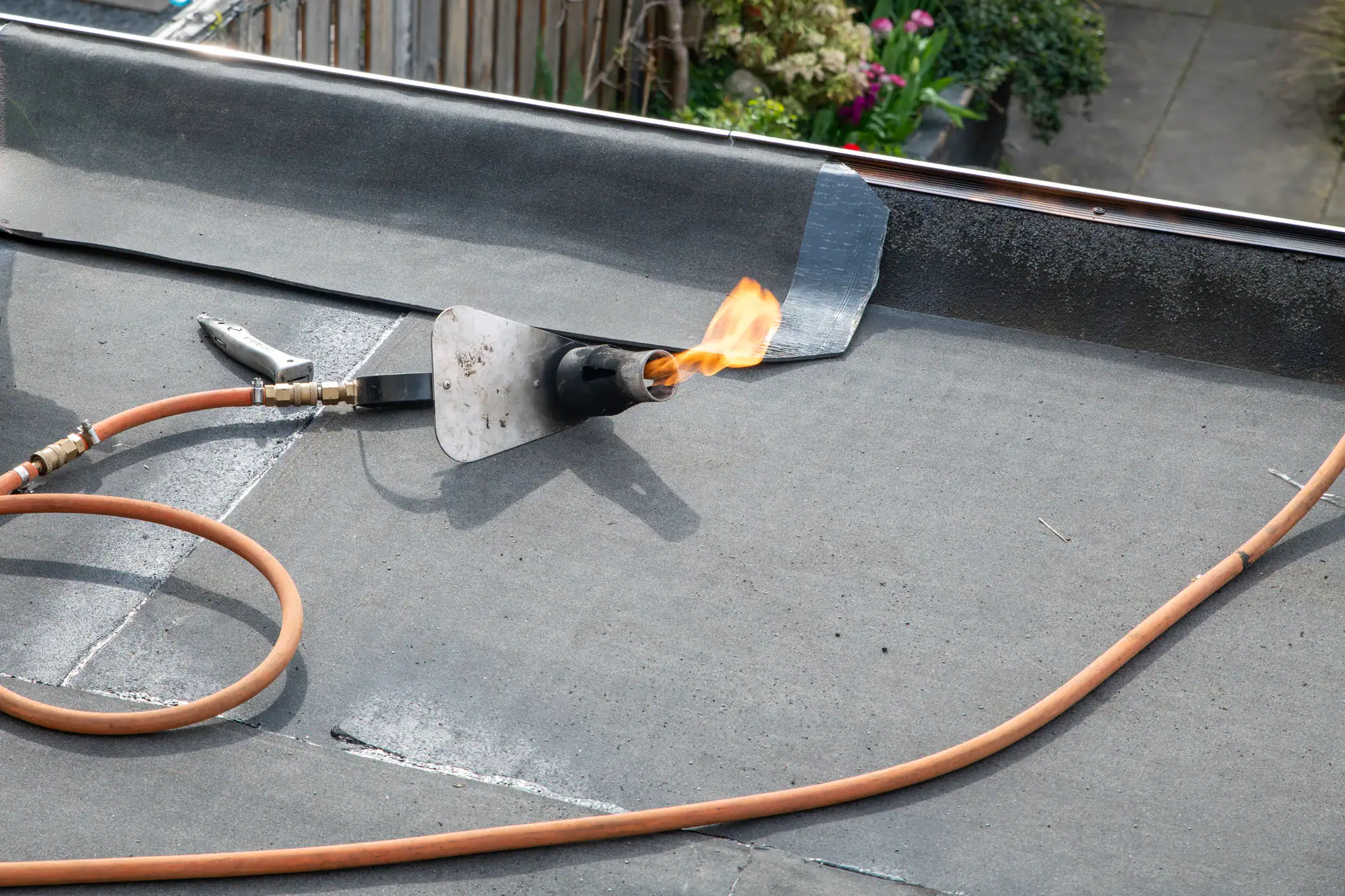
Once the scope is confirmed and you’re ready to move forward, we handle everything. Existing membrane comes off, the deck gets inspected and repaired where needed, insulation is assessed, and the new membrane — whether that’s TPO, EPDM, or modified bitumen — goes down with properly heat-welded or adhered seams and fully flashed penetrations and perimeters. Drainage is checked as part of the process, not treated as an afterthought.
Roofing work in Seaford typically requires a building permit, and we’re fully licensed and insured to handle that process. Fall is generally the best window for flat roof replacement in Sussex County — you want the job done before nor’easter season arrives — but we respond to emergency repairs year-round when a storm doesn’t wait for a convenient schedule.

Ready to get started?
We work with the full range of flat roof membrane systems — TPO, EPDM, modified bitumen (torch-down), and PVC — and the recommendation you get will be based on your specific building, not what happens to be on the truck.
TPO is the most widely installed flat roofing membrane in commercial applications right now, and for good reason. It reflects a significant portion of solar load, which matters in Sussex County’s humid summers, and its heat-welded seams create a continuous bond that holds up well under the kind of sustained rainfall Seaford sees during storm season. EPDM rubber roofing has a longer track record — over 20 billion square feet installed worldwide — and its flexibility makes it a strong performer through Delaware’s freeze-thaw cycles. For older Green Briar Road homes where the existing system is torch-down modified bitumen, a like-for-like replacement or an upgrade to a single-ply membrane are both on the table depending on the deck condition and drainage layout.
Beyond the membrane itself, we handle siding, gutters, windows, and skylights — so if a flat roof project uncovers related exterior issues, you don’t have to coordinate a second contractor. We also provide insurance claims assistance for storm damage, which is worth knowing if a Sussex County storm is what brought you here in the first place. Financing is available for homeowners who want to move forward without waiting, and the free estimate is always the starting point.

The honest answer is that you usually can’t tell from the ground, and sometimes you can’t tell from the surface of the roof either. Flat roofs fail in ways that aren’t always visible — water gets under the membrane at a seam or penetration point and travels along the deck before it shows up as a stain on your ceiling. By the time you notice it inside, there’s often deck damage that a surface patch won’t fix.
For older homes on Green Briar Road — particularly those built in the 1970s through the 1990s — the flat sections on garages and additions are frequently at or past the end of their expected service life. Modified bitumen and built-up systems from that era typically last 15 to 20 years under good conditions. If yours hasn’t been replaced, the question isn’t really repair or replace — it’s how much deck damage has accumulated. A proper inspection will tell you what you’re actually dealing with, which is why the free estimate matters. You get a real answer, not a guess.
There’s no single answer that applies to every building, but the climate in Sussex County does narrow it down. TPO performs well in areas with heavy rainfall and hot summers because it reflects solar heat and its seams are heat-welded into a continuous bond — meaning there are fewer points where sustained rain can work its way in. EPDM rubber roofing holds up well through freeze-thaw cycles, which matters for inland Sussex County homes like those in Green Briar that don’t get the same temperature moderation that coastal areas like Lewes or Rehoboth Beach experience.
Modified bitumen (torch-down) is still a solid option and a common choice for replacing existing mod-bit systems on older homes, particularly when the deck geometry and drainage layout are already set up for it. PVC is less common on residential jobs but comes up on commercial properties where chemical resistance is a factor. The recommendation you get from us will be based on your specific roof — its slope, drainage design, existing condition, and how it’s used — not a default material choice.
Most flat roof leaks come from one of three places: failed seams, compromised flashing around penetrations and edges, or drainage problems that let water sit on the membrane longer than it should. Ponding water — water that’s still standing more than 48 hours after a rain event — is the industry’s defined threshold for concern, and it’s a real issue in Sussex County where storms can dump several inches of rain in a short period. Water that sits accelerates membrane degradation, adds structural load, promotes mold growth, and can void manufacturer warranties.
The most effective prevention is proper installation from the start — correctly designed drainage, fully sealed seams, and properly flashed edges and penetrations. After that, annual inspections catch the small issues before they become large ones. A clogged drain or a minor seam separation caught early is a maintenance call. Left alone through a few Sussex County storm seasons, it becomes a deck replacement conversation.
Yes, and it’s worth knowing about before you need it. Sussex County has a documented history of severe thunderstorms and nor’easters that cause real damage to flat roof membranes — wind uplift at perimeter flashings, debris impact, and water infiltration through seams that were compromised by storm force. If your flat roof was damaged in a storm, the claims process can feel complicated, especially when an adjuster’s initial assessment doesn’t account for the full scope of what needs to be repaired or replaced.
We help homeowners document damage, work through the scope of the job with adjusters, and make sure the claim reflects what the roof actually needs — not just a surface patch that leaves underlying issues unaddressed. If a storm is what brought you to this page, getting a professional assessment before you accept an adjuster’s initial offer is usually the right move.
For a standard residential flat roof section — a garage, an addition, or a low-slope area over part of the home — most jobs are completed in one to two days once work begins. Larger commercial flat roofs or jobs with significant deck damage that needs to be repaired before the new membrane goes down can take longer, and that scope gets confirmed during the estimate so there are no surprises.
Weather is always a factor in Sussex County, particularly during spring and summer when afternoon thunderstorms can move through quickly. We schedule around the forecast and won’t install a membrane in conditions that would compromise the installation. Fall tends to be the most predictable window for flat roof work in this area — the storm frequency drops and temperatures are stable enough for proper membrane adhesion — but we work year-round and respond to emergency situations when a roof can’t wait for ideal conditions.
Yes, financing is available through First State Roofing & Exteriors Co. For homeowners on Green Briar Road dealing with an aging flat section on a garage or addition, a full membrane replacement is a real expense — and it often comes up unexpectedly, after a storm or a leak that makes it clear the roof can’t be patched again. Financing gives you the option to move forward with the right repair rather than a stopgap that delays the inevitable and potentially allows more deck damage to accumulate in the meantime.
The specifics of the financing terms are something to discuss directly with our team when you get your estimate. What’s worth knowing upfront is that the option exists, it’s designed to be competitive, and it’s not a reason to delay calling. The free estimate is the first step regardless — you find out exactly what the job involves and what it costs, and then you decide how you want to handle it. There’s no pressure attached to the estimate, and no obligation to move forward on the spot.
Other Services we provide in Green Briar