
Hear from Our Customers
Most flat roof problems in Chestnut Grove don’t start with a dramatic failure. They start quietly — a small soft spot in the membrane, a drain that’s been slow for two seasons, a seam that’s been separating since the last hard freeze. By the time there’s a stain on the ceiling, the deck underneath has usually been taking on moisture for a while. Getting ahead of that is the whole point.
Properties along Chestnut Grove Road average around 3.75 acres, and a lot of those lots include a garage, a workshop, or some kind of outbuilding with a flat or low-slope roof that nobody’s looked at in years. These secondary structures are often where flat roof failures quietly develop — because they’re not living spaces, the damage doesn’t announce itself until it’s significant. A proper inspection and, where needed, a membrane replacement on those structures gives you real protection across your whole property, not just the main house.
Kent County sees roughly 45 inches of rainfall a year, and the interior of the county — where Chestnut Grove sits — gets the full force of Delaware’s spring rain events and summer storms without the drainage advantages of higher or better-graded terrain. A correctly installed flat roof with proper drainage design handles that load without issue. One that’s been patched and deferred doesn’t. When the work is done right, you stop managing the problem and start forgetting it exists.
First State Roofing & Exteriors Co. is based in Smyrna — about 12 to 15 miles north of the Chestnut Grove Road area along the US-13 corridor. That’s not a coincidence. Kent County is our market, and Chestnut Grove is part of it. We’ve been working on homes and commercial properties throughout this area for over 22 years, and the housing stock here — older homes, large rural lots, a mix of modified bitumen and aging EPDM systems — is exactly what our crews deal with regularly.
We don’t subcontract. The team that shows up for your estimate is the same team that does the work. For property owners in a rural community like Chestnut Grove, where you’re particular about who comes onto your land, that matters. You know who’s there and you know who’s accountable if something isn’t right.
We’re BBB accredited, fully licensed and insured, and carry a 5.0 rating across 63-plus verified reviews. Those reviews consistently mention the same things: clear communication, clean worksites, and work that holds up. That’s the standard we hold every job to, whether it’s a full TPO replacement on a main house or a modified bitumen repair on a detached garage off Chestnut Grove Road.
It starts with a free estimate. We come out, get on the roof, and give you an honest read on what you’re dealing with — what material is up there, what condition it’s in, whether a repair makes sense or whether replacement is the more practical call given the age and scope of the damage. For a lot of Chestnut Grove properties with homes built in the 1970s or earlier, that conversation often includes a frank look at a modified bitumen system that has simply reached the end of its service life.
If the work moves forward, we pull the necessary permits through Kent County — Chestnut Grove is unincorporated, so permitting runs through the county rather than a municipal office, and we handle that process. Before any new membrane goes down, we do a full tear-off of the existing system and inspect the deck underneath. If there’s rotted or compromised decking, we address it before installation. Skipping that step is how you end up with a new membrane over a failing substrate.
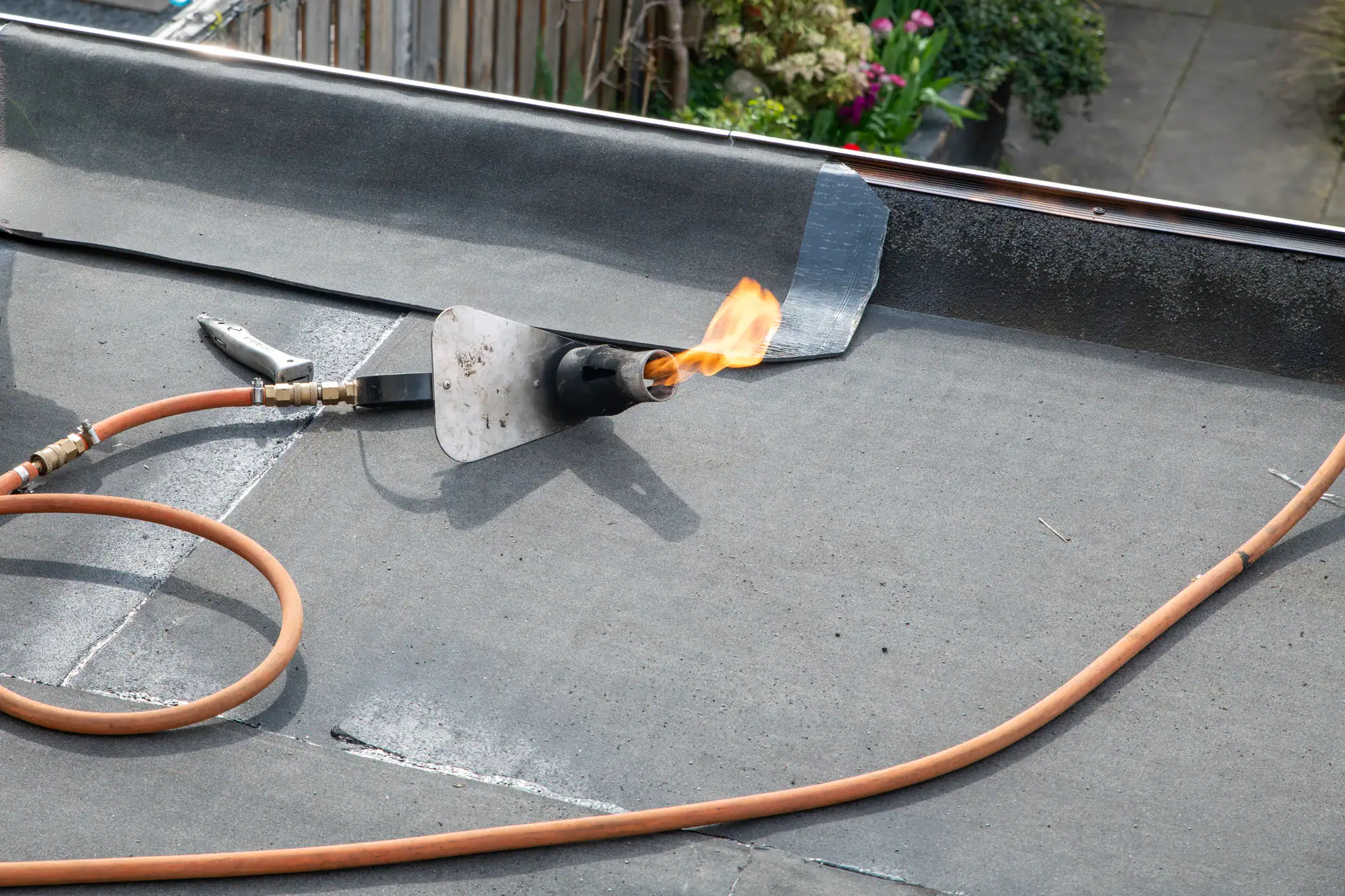
From there, the installation follows the system you’ve chosen — whether that’s TPO, EPDM, modified bitumen, or PVC — with proper insulation, heat-welded or adhered seams, and flashing at every penetration and perimeter edge. Delaware’s freeze-thaw winters put real stress on seam integrity, so that detail work isn’t optional. When the job is done, the site is cleaned up and we walk you through what was done and what to watch for going forward.

Ready to get started?
Not every flat roof is the same, and the right material for your Chestnut Grove property depends on the structure, the existing system, and what you’re trying to accomplish. We work with the full range of flat and low-slope roofing membranes, and we’ll tell you straight which one fits your situation.
TPO is the most widely installed flat roofing membrane in the country right now, and for good reason. It reflects a significant portion of solar load, which helps with cooling costs during Delaware’s humid summers, and the heat-welded seams create a strong, continuous bond that holds up well through seasonal temperature swings. For a main residence or a commercial structure in the Chestnut Grove area, TPO is often the right modern upgrade from an aging system.
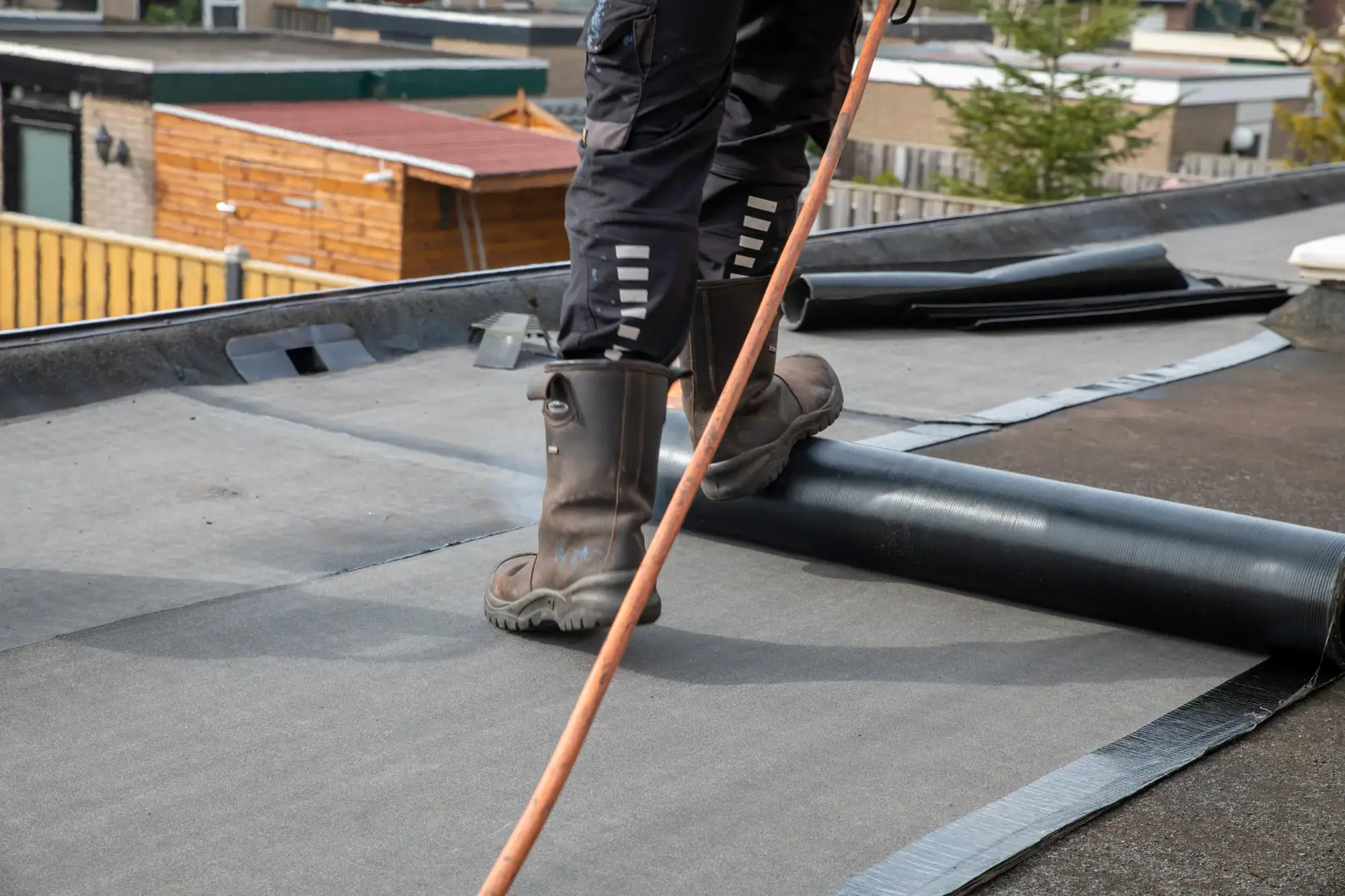
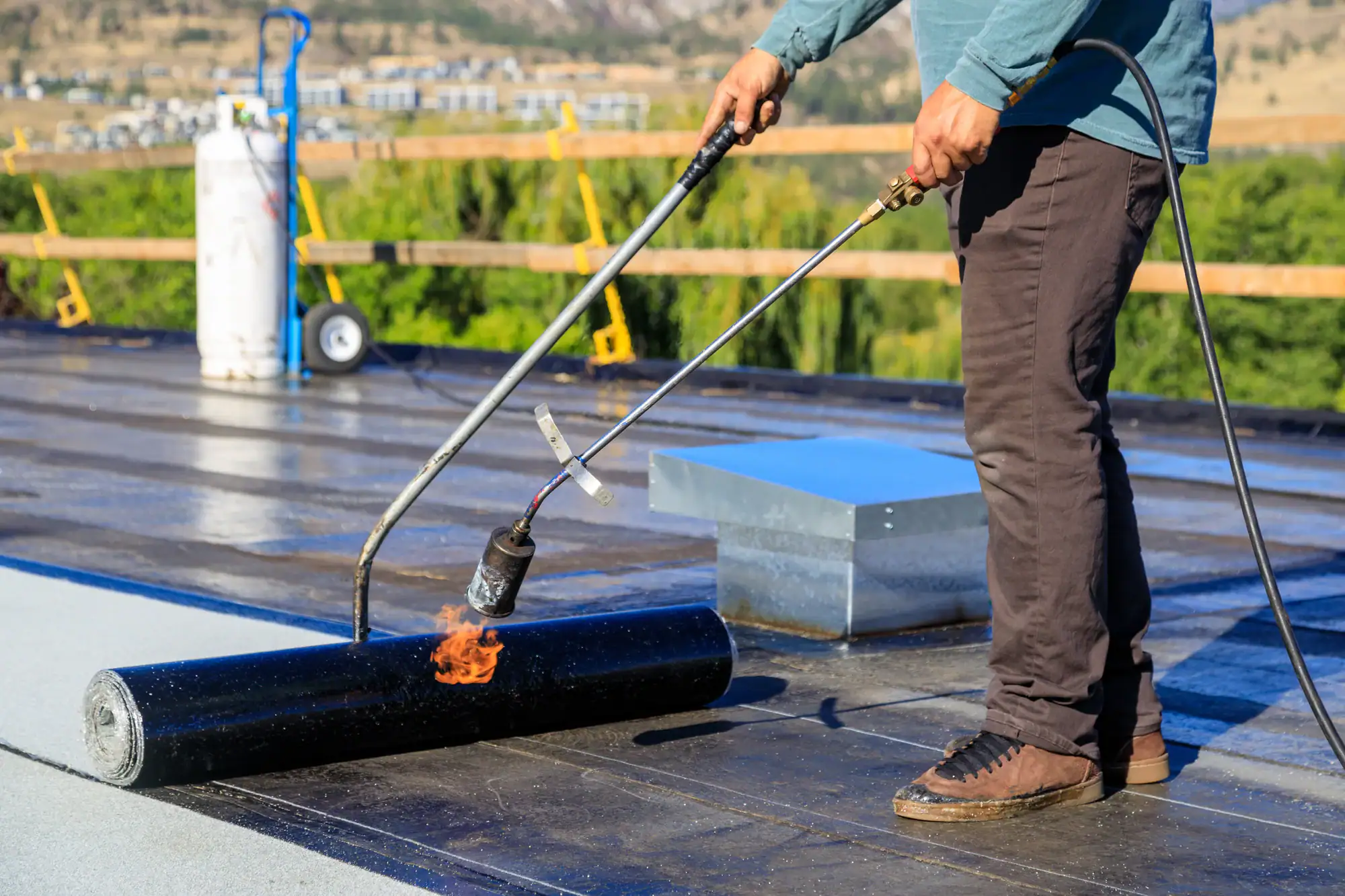
EPDM — the rubber membrane most people have heard called a rubber roof — has been around long enough to have a real track record. Lifespans of 20 to 30 years are common with proper installation and maintenance, and its flexibility makes it well-suited to the freeze-thaw cycling that interior Kent County properties experience through winter. Modified bitumen, sometimes called torch-down roofing, is what you’ll find on a lot of the older homes in Chestnut Grove — homes built in the 1970s and 1980s when it was the standard flat roof material. We repair and replace modified bitumen systems regularly, and we can tell you honestly whether what’s on your roof is worth repairing or whether a full replacement with a modern membrane is the better investment.
We also install PVC roofing membrane for applications where chemical resistance or high durability is a priority. Financing is available if the scope of the project is larger than you were expecting.

The honest answer is that you usually can’t tell from the ground — and that’s especially true on rural properties in Chestnut Grove where the roof isn’t visible from the driveway or the road. The condition of a flat membrane roof comes down to what’s happening at the seams, around penetrations and flashing, and whether the deck beneath the membrane has taken on moisture. A roof that’s been leaking slowly for a season or two can look fine from below while the decking underneath is already compromised.
The general rule is this: if the membrane is 15 to 20 years old or more and showing multiple areas of failure, repair is usually a short-term fix on a system that’s past its useful life. If the membrane is relatively young and the damage is isolated — a single seam failure, a flashing issue, a puncture — repair is often the right call. We’ll tell you which situation you’re in after we’ve actually looked at the roof, not before. That assessment is part of the free estimate.
These are the three most common flat roofing systems you’ll encounter on Delaware properties, and they perform differently in ways that matter for a Kent County climate. TPO is a white or light-colored membrane with heat-welded seams — it reflects solar heat well, which helps during Delaware’s humid summers, and the welded seams create a strong, continuous bond. It’s the fastest-growing flat roofing material in the market right now and a solid choice for replacements on both homes and commercial structures.
EPDM is the rubber membrane — black, flexible, and proven over decades. It handles freeze-thaw cycling well, which is relevant for Chestnut Grove’s winter temperature swings, and it has a long track record of 20 to 30 year lifespans when installed correctly. Modified bitumen, or torch-down roofing, is what you’ll find on a lot of the older homes in Chestnut Grove. It’s an asphalt-based membrane that was the standard for flat and low-slope roofs through much of the 1970s and 1980s. Each system has a legitimate use case — the right choice depends on your specific structure, budget, and goals.
Yes, and it’s worth taking seriously sooner rather than later. The industry standard threshold is 48 hours — if water is still standing on your flat roof more than two days after a rain event, that’s ponding water and it’s a problem. In Kent County, where spring rain events can be sustained and heavy, a drainage issue that might be marginal in a drier climate becomes a real liability.
Ponding water does several things over time. It accelerates the breakdown of the membrane surface, promotes mold and algae growth under and around seams, adds structural load to the roof deck, and in winter, it freezes and expands — which puts direct stress on membrane seams and flashing. On an older modified bitumen system like those common on Chestnut Grove properties, freeze-thaw cycling on standing water is one of the fastest ways to turn a manageable repair into a full replacement situation. The underlying cause is almost always a drainage issue — clogged drains, inadequate slope, or sagging in the deck — and that needs to be addressed as part of any repair, not just the membrane surface.
It depends on the cause of the damage. Delaware homeowner’s insurance policies typically cover sudden and accidental damage — wind damage, storm-related punctures, hail impact — but they generally exclude damage from wear, age, or deferred maintenance. For a Chestnut Grove property with a roof that’s 20 or 30 years old, an adjuster may attribute a portion of the damage to age and depreciation rather than the storm event, which affects the payout.
This is where having someone in your corner matters. First State Roofing & Exteriors Co. assists homeowners with insurance claims — that means helping you document the damage correctly, understanding what the adjuster is looking at, and making sure the scope of the claim reflects what actually needs to be done. A lowballed patch estimate on a roof that needs full replacement is a real outcome when homeowners navigate the claims process alone. We’ve worked with enough Kent County homeowners through this process to know where the gaps typically show up.
For a standard residential flat roof replacement, most jobs run one to three days from tear-off to completion. The variables that affect that timeline are the size of the roof, the condition of the deck underneath — if there’s rotted decking that needs to be replaced before the new membrane goes down, that adds time — and the specific system being installed. TPO and EPDM installations with heat-welded or fully adhered seams move efficiently when conditions are right.
Weather is always a factor in Delaware. We schedule flat roof work around the forecast and won’t install a new membrane in conditions that compromise the installation — wet decking under a new membrane is a problem that shows up months later, not immediately. For properties in Chestnut Grove, we also account for Kent County permitting timelines when scheduling, since work in unincorporated areas runs through the county rather than a municipal office. We’ll give you a realistic timeline at the estimate stage so you know what to expect.
Because water doesn’t distinguish between structures. A failing flat roof on a detached garage or workshop in Chestnut Grove causes the same damage it would on a main house — rotted decking, compromised structure, mold — it just does it more slowly and more quietly because nobody’s living under it. By the time the damage is visible from inside the building, the structural repair cost is often significantly higher than the roofing job would have been.
On rural properties with large lots, outbuildings are frequently the last thing homeowners think about when it comes to roofing. The main house gets attention; the garage roof gets deferred. But modified bitumen systems on detached structures from the 1970s and 1980s — which is common in Chestnut Grove — are well past their expected service life. A straightforward EPDM or TPO replacement on a garage or workshop is a reasonable investment that protects the structure and everything stored inside it. When we come out for an estimate, we can look at every structure on the property, not just the main roof, so you have a complete picture of what you’re working with.
Other Services we provide in Chestnut Grove