
Hear from Our Customers
Camden sits in the middle of Kent County, pulling in roughly 45 inches of rain a year. Add the nor’easters that roll through in the fall and the heavy convective storms that hit in summer, and you’re looking at conditions that expose every weak seam, every clogged drain, and every membrane that’s past its prime.
When a flat roof is installed correctly — right membrane for the building, proper drainage slope, flashed correctly at every edge and penetration — it stops being something you think about. That’s the outcome worth paying for. Not just a roof that doesn’t leak right now, but one that doesn’t leak two winters from now when freeze-thaw cycles start working on the seams.
For homeowners near Caesar Rodney High School who bought a mid-century home with a flat-roofed garage or addition, that peace of mind matters. For business owners running operations along the US Route 13 corridor, a roof failure means inventory risk and potential downtime. Either way, the right flat roof system — installed by people who know Delaware’s climate — is what gets you there.
We’re based in Smyrna, just up US Route 13 from Camden. That’s the same road that runs through the commercial strip on Camden’s eastern edge. When you call, you’re reaching our local team that has worked on roofs throughout Kent County for over two decades, not a national franchise routing your call to whoever’s available.
Every project is handled by our own crew. No subcontracting, no handoffs to unknown third parties. The people who assess your roof are the people who install it. That matters in a community like Camden-Wyoming, where reputation is built job by job.
We’re BBB Accredited, fully licensed and insured, and we maintain a consistent 5.0 out of 5 rating across 63-plus verified reviews. Our customers regularly mention the same things: clear communication, clean worksites, and no surprises on the final scope.
It starts with a free estimate. Someone from our team comes out, gets on the roof, and takes a real look — not a windshield assessment from the driveway. We’re checking the membrane condition, looking at drainage, inspecting the flashing around any penetrations, and checking the decking underneath for soft spots or moisture damage. You get a written estimate with a clear scope of work, not a vague verbal quote that changes later.
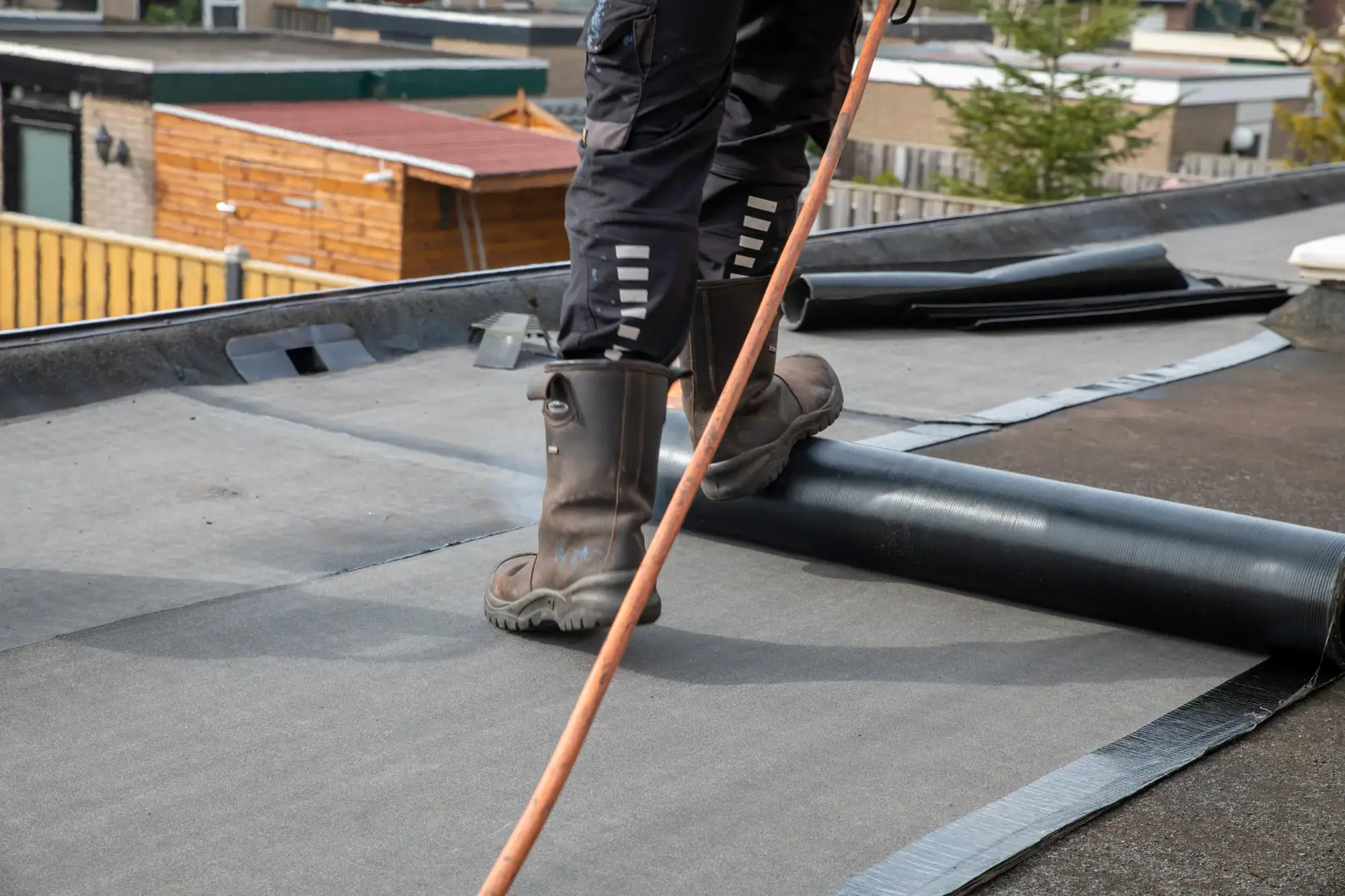
Once you move forward, the job begins with a full tear-off of the existing membrane down to the deck. This step matters more than most homeowners realize. Laying new membrane over a compromised deck or deteriorated insulation just delays the problem. The deck gets inspected, repaired where needed, and then the new insulation layer and membrane go down — whether that’s TPO, EPDM rubber roofing, or modified bitumen, depending on what’s right for your building.
In Camden, roofing permits are required when you’re replacing more than 25 percent of the roof sheathing or changing the membrane material type. We handle that process. After installation, all flashing is completed at edges and penetrations, drainage is confirmed, and the site is cleaned up before our crew leaves. If you’re dealing with storm damage, we can also help you document the scope for an insurance claim before work begins.

Ready to get started?
Not every flat roof is the same, and not every contractor works with all the major systems. We install TPO roofing membrane, EPDM rubber roofing, and modified bitumen — and the recommendation you get will be based on your specific building, not on which material happens to be easiest to run that week.
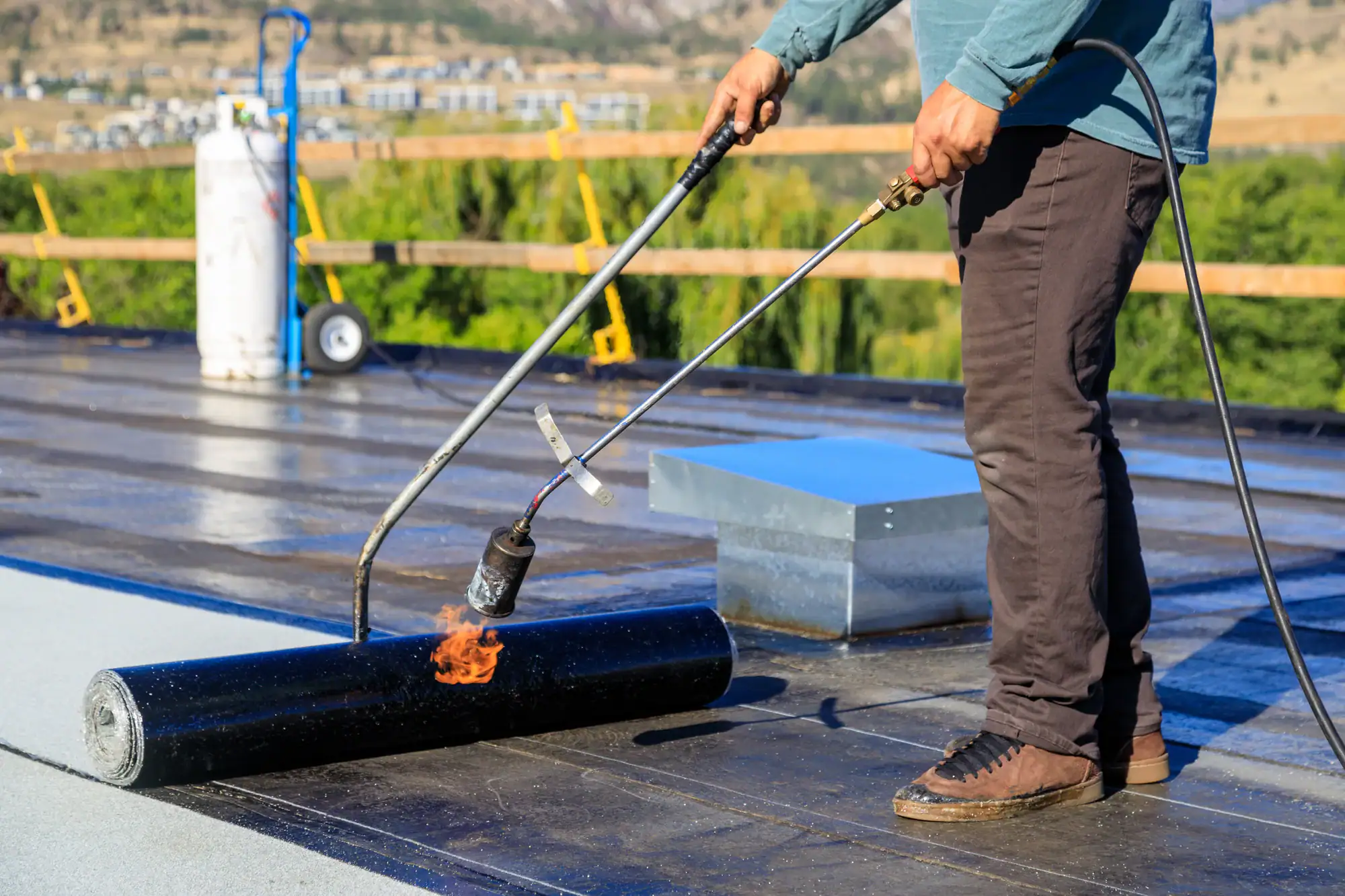
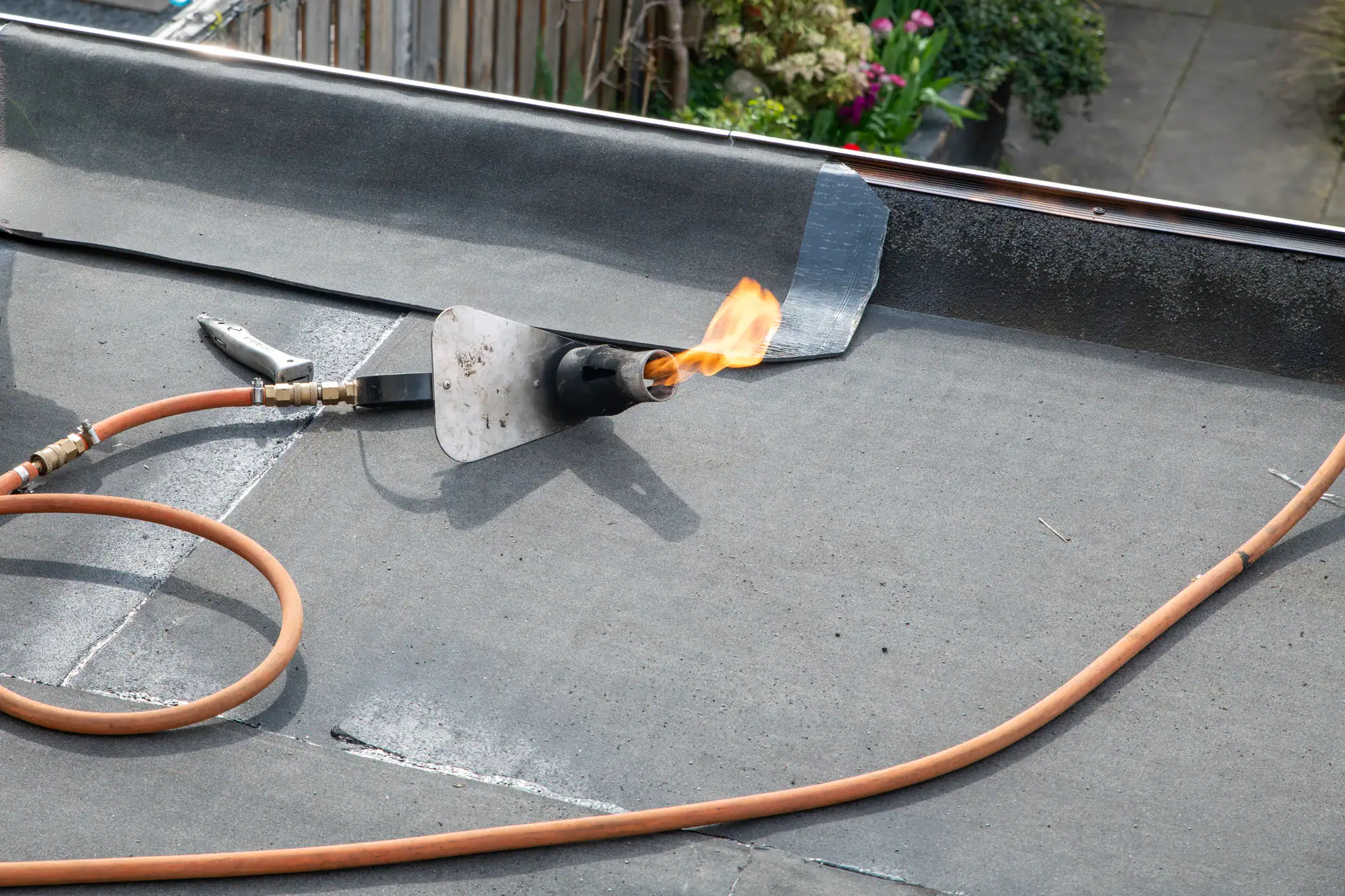
TPO is the most common choice for commercial buildings along the US Route 13 corridor in Camden. It reflects a high percentage of solar load, which helps with cooling costs during Delaware’s humid summers, and the heat-welded seams hold up well against the kind of wind-driven rain Kent County sees in storm season. For residential flat sections — a garage, a low-slope addition, a flat-roofed sunroom — EPDM rubber roofing is often the better fit. It’s flexible enough to handle the freeze-thaw cycles that hit central Delaware from January through March without cracking at the seams. Modified bitumen, sometimes called torch-down roofing, is still a solid option for certain residential and light commercial applications, particularly on older buildings where the existing system is mod-bit and a full material switch isn’t warranted.
Roof waterproofing is built into every installation through proper membrane selection, seam sealing, and flashing at every edge and penetration. If you have an existing flat roof that’s leaking but may not need full replacement, we can assess whether a targeted repair makes sense or whether the membrane has reached the point where replacement is the more cost-effective path.

The honest answer is that it depends on the age of the membrane, the extent of the damage, and what the deck looks like underneath. A flat roof with isolated membrane damage — a puncture, a failed seam near a drain, minor cracking around a flashing — can often be repaired effectively if the rest of the membrane is in reasonable condition and the deck is sound. But if the membrane is more than 15 to 20 years old, has widespread surface degradation, or if there’s moisture in the insulation layer, repairs tend to become a cycle of temporary fixes rather than a real solution.
In Camden, a lot of the mid-century homes near Camden-Wyoming Avenue have flat-roofed garages or additions that were built with modified bitumen systems in the 1980s and 1990s. Those systems are now 30 to 40 years old — well past their expected service life. If you bought one of those homes recently and you’re seeing water stains or soft spots, the roof likely needs replacement, not another patch. A free estimate from us will tell you exactly what you’re dealing with before you commit to anything.
For most residential applications in the Camden area — flat-roofed garages, low-slope additions, flat sections over porches or sunrooms — EPDM rubber roofing tends to perform well. It’s flexible, which matters when you’re dealing with the freeze-thaw cycling that happens in Kent County from late fall through early spring. EPDM also handles moisture exposure well, which is relevant given that central Delaware gets around 45 inches of rain per year.
For commercial buildings, TPO is typically the stronger choice. The heat-welded seams are more resistant to wind uplift than adhesive-bonded systems, and the reflective surface helps manage cooling costs during Delaware’s hot, humid summers — a real consideration for business owners running HVAC in buildings along the US Route 13 commercial corridor. Modified bitumen is still a viable option for certain buildings, particularly where the existing system is already mod-bit and the structure isn’t suited for a full membrane switch. The right answer depends on your specific building, and that’s exactly what a proper inspection is for.
Yes — if it’s standing for more than 48 hours after rain stops, it’s a problem worth addressing. Water that sits on a membrane long enough starts to degrade the surface, adds structural load the roof wasn’t designed to carry continuously, and creates the conditions for algae and mold growth. In colder months, that standing water freezes and expands, which puts direct stress on seams and any area where the membrane meets a flashing or penetration.
In Camden, this comes up often after the heavy summer thunderstorms and nor’easters that hit Kent County. Drains get clogged with debris, the roof surface develops low spots over time as the decking shifts slightly, and water starts pooling in areas it didn’t before. Sometimes the fix is as simple as clearing the drain and addressing a minor low spot. Other times, ponding water is a symptom of a drainage design issue that needs to be corrected as part of a larger repair or replacement. Either way, it’s not something to ignore and check again next season.
It depends on the cause of the damage. Most standard homeowner’s insurance policies in Delaware will cover flat roof damage caused by a sudden, identifiable event — a storm, high winds, hail, a falling tree branch. What they typically won’t cover is damage that results from deferred maintenance, age-related deterioration, or gradual wear. So if your flat roof has been slowly failing for years and finally starts leaking, the insurer is likely to deny the claim on the basis that the damage was foreseeable and preventable.
After a storm event — and Camden does see significant storm activity from both summer thunderstorms and fall nor’easters — the key is documenting the damage quickly and accurately before any temporary repairs are made. We can help with that process: assessing the damage, documenting what the storm caused versus what was pre-existing, and working with your adjuster to make sure the scope of the claim reflects the actual repair or replacement needed. Getting that documentation right at the start makes a real difference in the outcome of the claim.
Lifespan varies by material and how well the roof is maintained. EPDM rubber roofing typically lasts 20 to 30 years when installed correctly and inspected periodically. TPO membranes generally run 15 to 25 years. Modified bitumen systems fall in the 15 to 20-year range, though high-quality two-ply systems can push toward 25 years under good conditions. These are general ranges — the actual lifespan of any specific roof depends heavily on installation quality, drainage design, and whether small issues get addressed before they become large ones.
In the Camden area, the factors that tend to shorten flat roof life the most are poor drainage leading to ponding water, deferred maintenance on seams and flashings, and the cumulative effect of Delaware’s freeze-thaw cycles on older membrane systems. A roof that gets a basic inspection every year or two — clearing drains, checking seams, catching minor flashing issues early — will consistently outlast one that gets ignored until there’s an active leak. If you’re not sure how old your current flat roof is or what condition it’s in, a free inspection is the fastest way to get a straight answer.
Camden is a small, tight-knit community — the kind of place where a contractor’s reputation gets around quickly, in both directions. The most reliable indicators are verifiable: a consistent track record of Google reviews with specific details rather than generic praise, BBB Accreditation, confirmation that the company is licensed and insured, and a clear answer to the question of whether they subcontract the work or do it themselves. A contractor who can’t tell you plainly who will be on your roof is a contractor worth asking twice.
It also matters whether the contractor is actually local. A company based in Smyrna, just up US Route 13 from Camden, has real accountability in this market. We’re not a storm-chaser operation that shows up after a nor’easter and disappears. We have to stand behind the work because we’re a short drive away and our reputation in Kent County depends on it. We offer free written estimates with no pressure to sign on the spot — which is exactly the kind of process that lets you compare contractors fairly before making a decision.
Other Services we provide in Camden