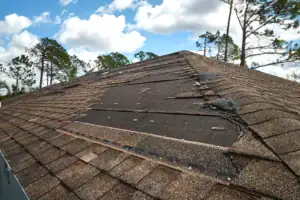
You noticed a water stain on the ceiling, or maybe a shingle went missing after that last storm. Now you’re trying to figure out who to call — and whether whoever shows up is going to give you an honest answer or talk you into a full replacement you may not need. That’s the real problem most Kent County homeowners face. Not the leak itself, but the uncertainty around it.
We’re here to cut through that. This post covers what a legitimate repair process actually looks like, how to tell a trustworthy contractor from one just chasing a bigger job, and what makes the difference between a repair that holds and one that sends you back to square one in six months.
Best Roof Repair for Leaks: What Actually Fixes the Problem
The best roof repair for leaks isn’t always the most dramatic one. In many cases, a well-diagnosed, properly executed targeted repair — addressing the actual source of the water intrusion — outlasts a rushed patch job by years. The key word is “diagnosed.”
A contractor who climbs up, spots a wet shingle, and calls it done hasn’t fixed your roof. They’ve treated a symptom. Water has a way of traveling. What looks like a leak above your bedroom might have entered the roof system three feet away, at a flashing joint, a pipe boot, or a cracked valley.
We start by tracing the water back to its origin — not just sealing whatever looks damaged from the outside. That’s the difference between a repair that holds and one that fails.
Why Most Roof Repairs Fail — and What to Demand Instead
Here’s the honest reason most roof repairs don’t hold: the contractor fixed what was visible and skipped the diagnostic work that would have revealed the actual problem. It’s faster, it’s cheaper for them, and most homeowners don’t know the difference until the water comes back.
A proper repair process starts with a thorough inspection — not a glance from the ladder, but a real evaluation of the decking, underlayment, flashing, and surrounding shingles. If the decking underneath is soft or rotted, a new shingle on top won’t save you. If the flashing around your chimney or skylight has failed, sealing one corner won’t stop the water from finding the next gap.
The repair has to address what’s actually failing, not just what’s visible. Materials matter too. A repair done with manufacturer-grade materials from brands like GAF or Owens Corning is going to perform differently than one done with whatever was left on the truck. Authorized installers of those brands have to meet installation standards to keep their certifications — which means they have a reason to do the job right, not just fast.
Kent County deals with some specific weather challenges that compound roof problems. Delaware averages around 45 inches of rainfall a year, and that’s before you account for the nor’easters that roll through in late fall, the freeze-thaw cycles in January and February, and the summer thunderstorms that can bring serious wind. A roof that’s been under that kind of sustained stress for 20 or 25 years has likely developed more than one weak point.
A good contractor will tell you that clearly. A less scrupulous one will either patch the one spot and leave, or use it as a reason to push you toward a full replacement. Neither of those is the right answer if targeted repairs can address the actual problems. The repair that holds is the one that follows the water to its source, uses quality materials installed correctly, and leaves you with a clear picture of the condition of the rest of your roof.
How to Know If You Need a Repair or a Full Replacement
This is the question most homeowners are really asking when they search for a contractor for roof repair. And it’s a fair one, because the answer has a significant impact on what you’re about to spend.
The honest answer is: it depends on the age of the roof, the extent of the damage, and where the failures are occurring. A 12-year-old roof with isolated storm damage around a chimney flashing is almost certainly a repair candidate. A 28-year-old roof with granule loss across the entire surface, soft spots in the decking, and multiple active leak points is probably approaching replacement territory — and we’ll tell you that clearly, with specifics, not just a number.
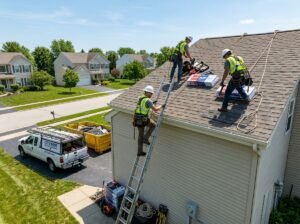
What you want to avoid is the contractor who walks your roof for five minutes and immediately tells you it needs to be replaced. That’s not a diagnosis — that’s a sales pitch. A legitimate inspection takes time. It involves getting on the roof, checking the decking, evaluating the flashing and penetrations, and looking at the overall condition of the shingles.
In Kent County and across Delaware, older housing stock is common — particularly in communities like Harrington, Felton, and Greenwood, where many homes were built decades ago and roofs are at or past their expected service life. In those cases, a contractor who recommends repair over replacement isn’t cutting corners — they’re giving you an honest assessment of what will actually solve your problem.
If you’re in a newer development in Smyrna or a mid-century home in Dover and you’ve had one isolated leak after a storm, there’s a good chance repair is exactly the right call. Don’t let anyone talk you out of that without showing you the evidence that says otherwise.
What to Look for When Hiring a Contractor for Roof Repair
Credentials matter, but not all of them equally. The ones worth paying attention to are the ones that require something — training, track record, ongoing accountability — not just a fee and a form.
GAF Master Elite certification, for example, is held by roughly 2% of roofing contractors in the country. It’s not handed out easily. It requires verified training, a proven installation record, and continued education. It also unlocks enhanced warranty options that standard contractors simply can’t offer.
When you’re hiring someone to fix your roof, that kind of third-party verification means something. Beyond certifications, you want to see a contractor who is licensed through the Delaware Division of Professional Regulation, carries full liability insurance, and has a verifiable local presence — not someone who rolled in from out of state after the last storm.
Red Flags to Watch for When Vetting Roof Repair Contractors
The roofing industry has a well-documented problem with bad actors, and it gets worse after major weather events. When a nor’easter moves through Kent County and leaves a trail of damaged roofs from Dover to Milford, door-knockers and out-of-town crews show up quickly. Some of them do decent work. Many of them don’t.
A few things that should stop you cold: any contractor who pressures you to sign something before you’ve had time to think, any offer to “waive” your insurance deductible (that’s insurance fraud, not a deal), and any request for a large cash payment upfront before work begins. Legitimate contractors provide written estimates, explain what they found in plain language, and don’t manufacture urgency to close a sale.
You should also be cautious about contractors who ask you to pull your own permits. Licensed contractors handle permits — that’s part of the job. If someone is pushing that task onto you, it’s worth asking why.
On the positive side, what you’re looking for is a contractor who takes the time to explain the diagnostic findings, provides a written estimate with clear line items, has verifiable reviews from local customers, and can produce proof of licensing and insurance without hesitation. The reviews are worth reading carefully — not just the star rating, but the actual language customers use. Phrases like “honest about what was needed” and “no pressure to replace” tell you more than a five-star average alone.
A contractor with deep roots in Kent County — someone who has been working in Dover, Smyrna, and the surrounding communities for years — has a reputation to protect here. That’s a meaningful difference from a crew that will be gone before you know whether the repair held.
Does Homeowners Insurance Cover Roof Repair in Delaware?
This is one of the most common questions homeowners ask, and the answer is more often yes than most people expect — with some important nuances.
Standard homeowners insurance policies in Delaware generally cover storm damage: wind, hail, falling debris, and damage caused by sudden weather events. What they typically don’t cover is wear and tear — the gradual deterioration that comes from a roof aging out of its useful life. So if a windstorm during a nor’easter tears off shingles or drives water in through damaged flashing, that’s likely a covered claim. If your roof has been slowly losing granules for a decade and finally starts leaking, that’s a different conversation.
The challenge for most homeowners is navigating the claims process while also trying to manage a contractor relationship. Insurance adjusters evaluate damage according to their own criteria, and what they document in their report directly affects what your claim covers. We work with insurance providers regularly and know how to document damage thoroughly and communicate with adjusters — which can make a real difference in how that process goes for you.
In Kent County, storm damage claims spike after major weather events, particularly in the late fall and early spring when nor’easters are most active. If you’ve had wind or hail damage, acting quickly matters — both because water intrusion compounds over time and because delays can complicate the claims timeline.
If you’re not sure whether your damage qualifies for a claim, a free inspection from a licensed, experienced contractor is the right starting point. You’ll get a clear picture of what’s actually happening with your roof, and you’ll have the documentation you need to have an informed conversation with your insurance company — rather than taking the adjuster’s word for it without any independent assessment of your own.
Finding a Roof Repair Contractor in Kent County You Can Actually Trust
A roof leak is stressful enough without wondering whether the contractor standing in your driveway is going to give you a straight answer. The good news is that the right contractor does exist — and they’re not hard to identify once you know what to look for: real credentials, a diagnostic process that traces problems to their source, transparent estimates, and a track record in the local community.
Kent County’s weather doesn’t take breaks. Between the rainfall, the freeze-thaw cycles, and the storm seasons, your roof is working hard year-round. When something goes wrong, you deserve a repair that actually addresses it — not a patch that buys a few months and sends you back to searching again.
If you’re dealing with a leak or want to know the real condition of your roof before the next storm season, First State Roofing & Exteriors Co. offers free estimates with no pressure and no obligation. Give us a call at (302) 222-4065 and we’ll give you an honest answer.