
A storm moves through Dover, Smyrna, or Milford, you hear hail hitting the windows, and then it’s over. You walk outside, look up at the roof, and nothing looks wrong. No missing shingles. No obvious holes. You go back inside and don’t think about it again.
That’s exactly how most hail damage goes unnoticed — until a water stain appears on the ceiling twelve months later.
The truth is that hail damage to asphalt shingles is mostly functional, not cosmetic. What it does to your roof isn’t always visible from the ground, but it absolutely affects how long your roof lasts and whether your insurance claim is still valid when you finally need it. Here’s what to actually look for — and why timing matters more than most people realize.
How to Identify Hail Damage on a Roof
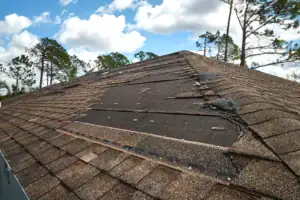
The most common sign of hail damage isn’t a hole or a crack — it’s granule loss. Those small, sand-like granules embedded in your shingles serve as a UV barrier and a first layer of weather protection. When hail strikes, it knocks granules loose, exposing the asphalt mat underneath. From the ground, your roof looks the same. But the protection is gone.
You’ll often spot the evidence in your gutters first. After a hailstorm, check for a buildup of granules collecting at the downspout outlet — it looks like coarse, dark sand. That’s your shingles shedding what they can’t afford to lose. On the roof surface itself, a trained eye looks for circular impact marks, soft spots in the shingle, and areas where the asphalt mat has a bruised or dull appearance compared to the surrounding material.
What Does Hail Damage Actually Look Like Up Close?
Up close, hail impact marks on asphalt shingles typically appear as small, dark circles or divots — sometimes with a slightly shiny center where the granules have been completely removed. The surrounding area may feel softer than the rest of the shingle when pressed, almost like a bruise on fruit. That softness indicates the asphalt mat beneath has been compromised, even if the shingle hasn’t cracked through.
Hailstones as small as one inch in diameter can cause this kind of damage. That’s roughly the size of a quarter. You don’t need golf-ball-sized hail to end up with a roof that’s been meaningfully weakened — and that’s a fact a lot of homeowners don’t know going into a storm season.
The damage also shows up in places people rarely think to check. Metal components — flashing around your chimney or skylights, the metal caps on ridge vents, gutters, and downspouts — dent on impact and those dents are some of the clearest evidence an adjuster or inspector can document. If your gutters have dings running along their length after a storm, your roof almost certainly took hits too. The same goes for any exposed A/C unit covers or outdoor furniture — hail leaves a consistent pattern across every surface it touches.
One thing that trips up a lot of Kent County homeowners: the damage often looks random. Unlike wind damage, which tends to follow a directional pattern, hail hits from multiple angles as it falls. So you might see impact marks on one side of a shingle tab and nothing on the adjacent one. That randomness is actually what inspectors use to distinguish hail damage from normal wear.
What you won’t see from the driveway is any of this. That’s not a limitation of homeowners — it’s just the nature of how hail damage presents. The marks are small, the color change is subtle, and the soft spots require physical contact to detect. A ground-level look tells you almost nothing useful.
Why Delaware’s Climate Makes Undetected Hail Damage Worse Over Time
Here’s where things get specific to Kent County. Delaware averages about 45 inches of rainfall per year — more than most of the country. When a shingle loses its granule coverage, that exposed asphalt mat is now absorbing moisture every time it rains. In a drier climate, the degradation is slower. In Kent County, it’s accelerated.
Then comes winter. The Mid-Atlantic freeze-thaw cycle does something that hail markets in the South or Southwest don’t deal with: water that seeps into a micro-crack during a rain event freezes overnight, expands, and widens that crack. By spring, what started as a minor impact mark from a July hailstorm has become a pathway for water to reach your roof’s underlayment. That’s when leaks start — and by that point, the repair scope has grown considerably.
Delaware averages around 30 thunderstorms per year, with the heaviest activity from May through August. Kent County specifically has experienced significant hail events — the worst in Delaware history hit the county in 2002. This isn’t a hypothetical risk for Dover, Smyrna, Harrington, or Milford homeowners. It’s a recurring seasonal reality.
The combination of regular storm exposure, high annual rainfall, and freeze-thaw winters creates a damage timeline that’s faster here than in many other parts of the country. A roof that could absorb a minor hail event in a drier, more temperate climate and show no real consequences might develop active leaks within one to two seasons in Kent County.
Roof Repair Guide: What to Do After a Hailstorm
The steps you take in the days and weeks after a hailstorm matter more than most people realize — both for the physical condition of your roof and for the insurance claim you may be entitled to file.
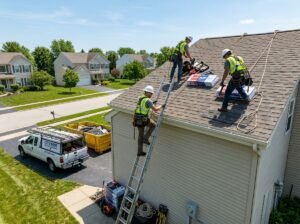
Start by not getting on the roof yourself. The NRCA is clear on this: damaged roofs are unstable surfaces, and a close inspection requires training to be useful anyway. What you can do safely is check your gutters for granule accumulation, look at your siding and any metal fixtures for denting, and note the date and approximate severity of the storm. That documentation matters later.
Then get a professional inspection scheduled — ideally before you contact your insurance company.
How the Hail Damage Insurance Claim Process Actually Works
Most homeowners insurance policies cover hail damage. Hail is classified as an “act of God” — an unavoidable weather event — which means filing a claim generally won’t trigger a rate increase the way an at-fault auto accident might. That said, individual policy terms vary, and it’s always worth confirming the specifics with your provider.
What a lot of people don’t know is that most policies include a “prompt notice” clause. This requires you to report hail damage within a set window — often 12 to 24 months of the storm event. Miss that window, and the insurer has grounds to deny the claim entirely, regardless of whether the damage is real and documented. Given how often hail damage goes unnoticed until a leak appears, that timeline can sneak up on you.
There’s also a meaningful difference between an ACV policy (actual cash value) and an RCV policy (replacement cost value). An ACV policy pays out the depreciated value of your roof based on its age — so if your roof is 15 years old, you may receive a fraction of what a replacement actually costs. An RCV policy covers the full cost of replacement with equivalent materials. Knowing which type of policy you have before you file changes how you approach the claim.
The other thing worth understanding: insurance adjusters are thorough, but they’re not infallible. They can miss subtle damage, underestimate the scope of repairs, or categorize damage as “cosmetic” rather than functional — a distinction that matters because some policies exclude cosmetic damage. Having an independent contractor inspect your roof before the adjuster’s visit means you have your own documentation, your own photos, and your own line-item scope of work. If the adjuster’s assessment comes in lower than expected, you’re not starting from zero.
One more thing to be aware of after any significant storm in Kent County: out-of-town contractors show up fast. They knock on doors, offer quick inspections, and pressure homeowners to sign contracts before a local company can even get on the schedule. Some of them do fine work. Many do not — and some disappear before warranty issues surface. A contractor with 20+ years of history in Delaware, a verifiable BBB record, and a physical office in Smyrna isn’t going anywhere. That’s the kind of accountability that actually protects you.
Water Leak Roof Repair: When Hail Damage Has Already Become a Leak
If you’re reading this because you’ve already spotted a water stain on the ceiling, the hail damage conversation has moved into water leak roof repair territory — and the approach shifts a little.
The first priority is stopping the intrusion. If the leak is active or a storm is imminent, emergency tarping can protect the interior while a full assessment is completed. From there, the inspection needs to determine not just where the water is entering, but how far it’s traveled — because water rarely leaks straight down. It moves along rafters, underlayment, and insulation before it ever shows up as a stain, which means the visible damage inside is often not directly below the actual entry point on the roof.
What makes hail-related leaks particularly tricky is the lag time. The impact happens in July. The granule loss and micro-cracking begin immediately. But the first visible leak might not appear until February, after freeze-thaw cycles have widened the compromised areas enough for water to push through. By that point, some homeowners assume the leak is unrelated to the summer storm — and that assumption can complicate an insurance claim significantly.
If you can connect the leak to a documented storm event, even a general one, and you’re still within your policy’s reporting window, the claim may still be viable. That’s where having a contractor who understands the insurance process — not just the roofing work — makes a real difference. We work directly with insurance providers and can meet with your adjuster on-site to make sure the full scope of damage is documented, including any interior consequences of the water intrusion.
It’s also worth knowing that hail doesn’t only damage the roof surface. Siding, gutters, and windows can all be affected in the same storm event, and manufacturer warranties on those components are typically voided if hail damage goes unrepaired. A comprehensive exterior inspection after a storm catches all of it in one visit rather than discovering issues piecemeal over the following months.
Best Roof Repair Services for Kent County Hail Damage
If you take one thing from this, make it this: the absence of visible damage from the ground is not the same as an undamaged roof. Hail damage is subtle, it compounds over time in Delaware’s climate, and the insurance window to address it is finite.
What you want from a roofing contractor in this situation is straightforward — local accountability, insurance claim experience, manufacturer-certified materials, and an honest assessment that tells you what you actually need, not the most expensive option available. That combination is harder to find than it should be, especially in the weeks after a significant storm when the market fills with unfamiliar names.
We’ve been doing this work in Kent County and across Delaware for over 20+ years. We offer free, no-obligation roof inspections, work directly with insurance providers throughout the claims process, and install materials from GAF, Owens Corning, TAMKO, CertainTeed, and Atlas Pro — manufacturers whose warranties are only available through certified installers. If a storm has come through your area and you’re not sure what you’re dealing with, a free inspection is the right first step. Contact First State Roofing & Exteriors Co. and find out exactly where things stand before the clock runs out on your options.