
Hear from Our Customers
Dutch Neck Crossroads sits right on the edge of Bombay Hook National Wildlife Refuge — nearly 16,000 acres of tidal salt marsh stretching along Delaware Bay. That proximity isn’t just geography. It means the air around your property carries more moisture, more of the time, than inland Kent County communities like Cheswold or Kenton.
Flat roof membranes in this corridor deal with sustained humidity loading that accelerates seam wear, flashing corrosion, and membrane degradation faster than most manufacturers’ standard timelines assume. When a flat roof is installed correctly for this environment — right membrane choice, proper drainage design, clean flashing at every edge and penetration — it stops being something you worry about. No water stains on ceilings. No bubbling membrane after a hard rain. No standing water sitting on the surface two days after a storm.
The properties along this stretch of Route 9 also tend to be older. Farmhouses, outbuildings, structures with flat or low-slope roof sections that may not have been touched in fifteen or twenty years. If that sounds familiar, the honest answer is that those roofs aren’t getting better on their own. Getting a clear picture of what you’re actually dealing with — from a contractor who knows this area — is the right first move.
We’re based in Smyrna — about 4.9 miles west of Dutch Neck Crossroads on the same Route 9 you’re on. That’s not a coincidence worth ignoring. When you call, you’re reaching a team that already works this corridor, knows the building stock along the Delaware Bayshore Byway, and doesn’t need to look up where you are on a map.
We’ve been doing this in Kent County for over 22 years. BBB accredited, consistently rated 5 stars across 63-plus verified reviews. What customers keep saying is that we show up when we say we will, explain what’s actually going on, and leave the property clean. That’s not a high bar — but it’s one a lot of contractors don’t clear.
Every project is handled by our own certified crew. No subcontracting, no unknown third parties showing up at your door. The people who assess your roof are the same people who do the work. In a rural area like Dutch Neck Crossroads, where your options are limited and contractor accountability matters more, that’s worth knowing upfront.
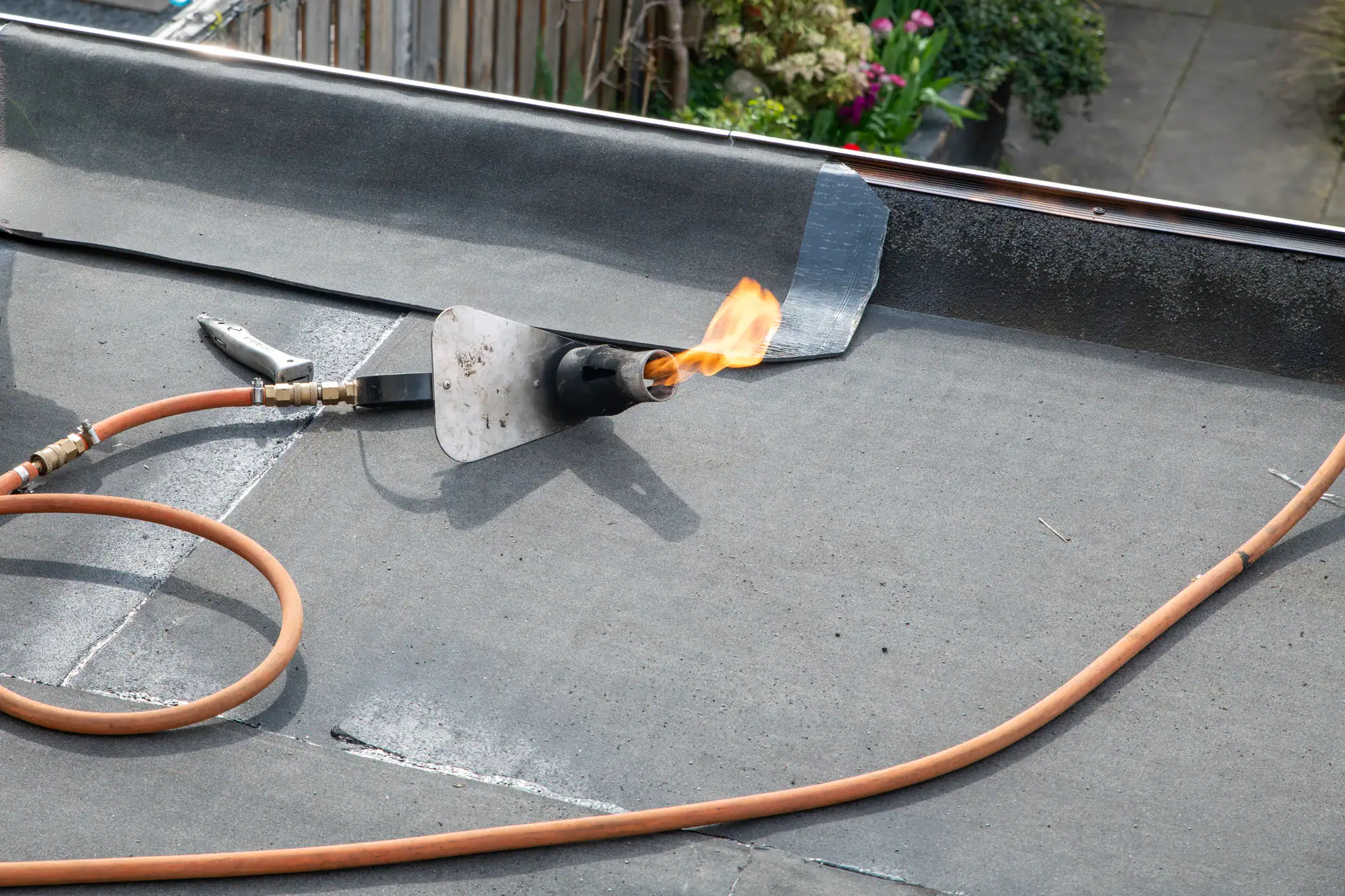
It starts with a free estimate. We come out to your property, get on the roof, and give you an honest read on what’s there. For older properties along the Route 9 corridor, that often means looking at a modified bitumen or built-up system that’s been in place for decades.
The assessment covers the membrane condition, the drainage layout, the flashing at every edge and penetration, and whether the decking underneath has taken on any moisture damage. You get a clear picture of what needs to happen — not a vague quote with room to expand later.
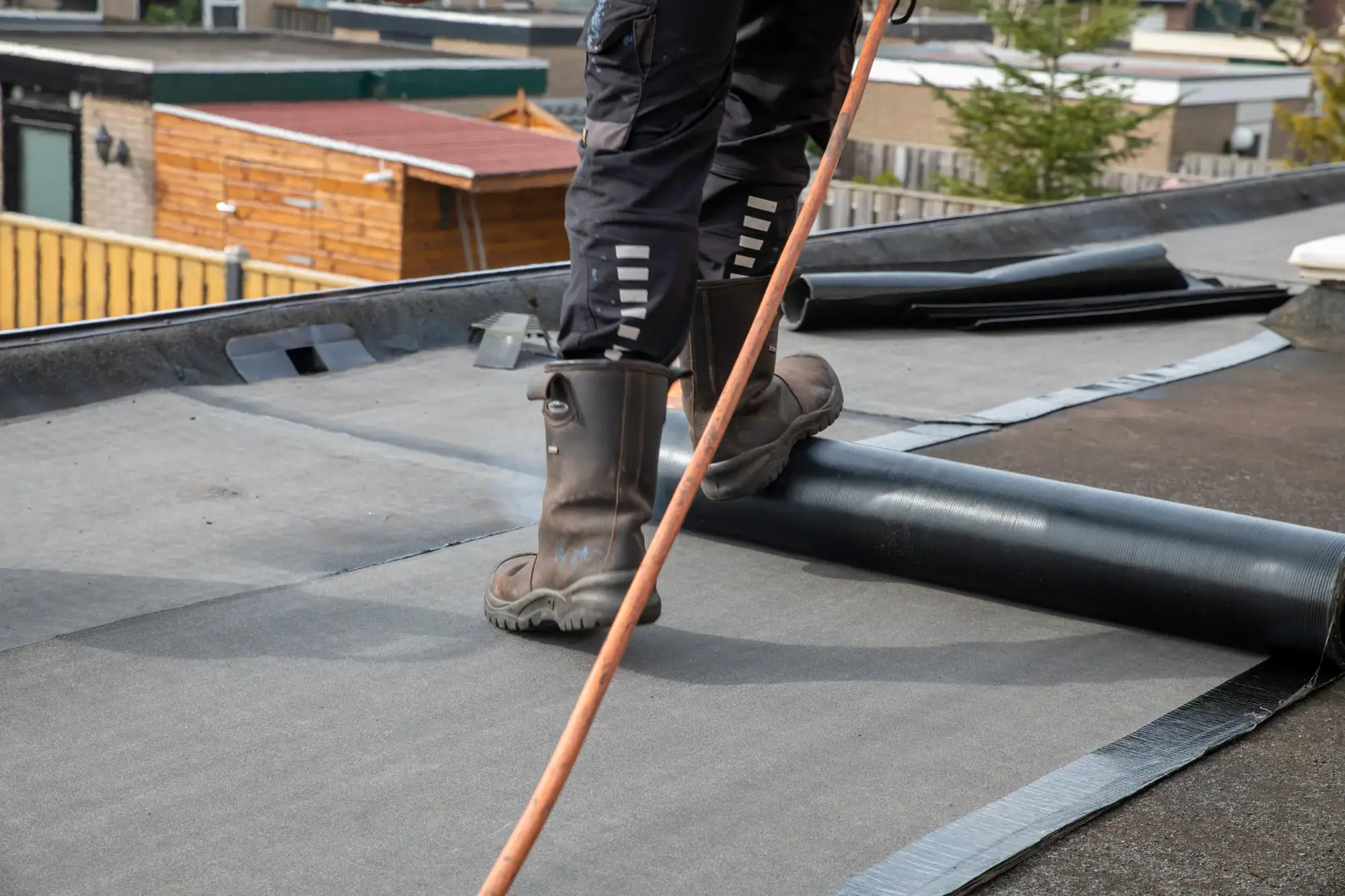
From there, the scope of work gets defined. If a full replacement makes sense, the existing membrane comes off completely. The deck gets inspected and repaired where needed before anything new goes down. Then comes the insulation layer, the new membrane — TPO, EPDM, modified bitumen, or PVC depending on your building and what performs best in this environment — and properly heat-welded or adhered seams throughout. Flashing gets done right at every transition point, because that’s where most flat roofs fail.
Since Dutch Neck Crossroads is unincorporated, permitting runs through Kent County’s Office of Inspections and Enforcement rather than a town building department. If your project requires a permit — typically when you’re changing the roof material type or replacing more than 25 percent of the sheathing — we handle that as part of the process. You don’t have to figure out the county system on your own.

Ready to get started?
Not every flat roof material performs the same way in a high-humidity bayshore environment. TPO membrane reflects a significant portion of solar load, which helps with energy costs during Delaware’s humid summers — and its heat-welded seams hold up well under the kind of sustained moisture exposure you get this close to Delaware Bay.
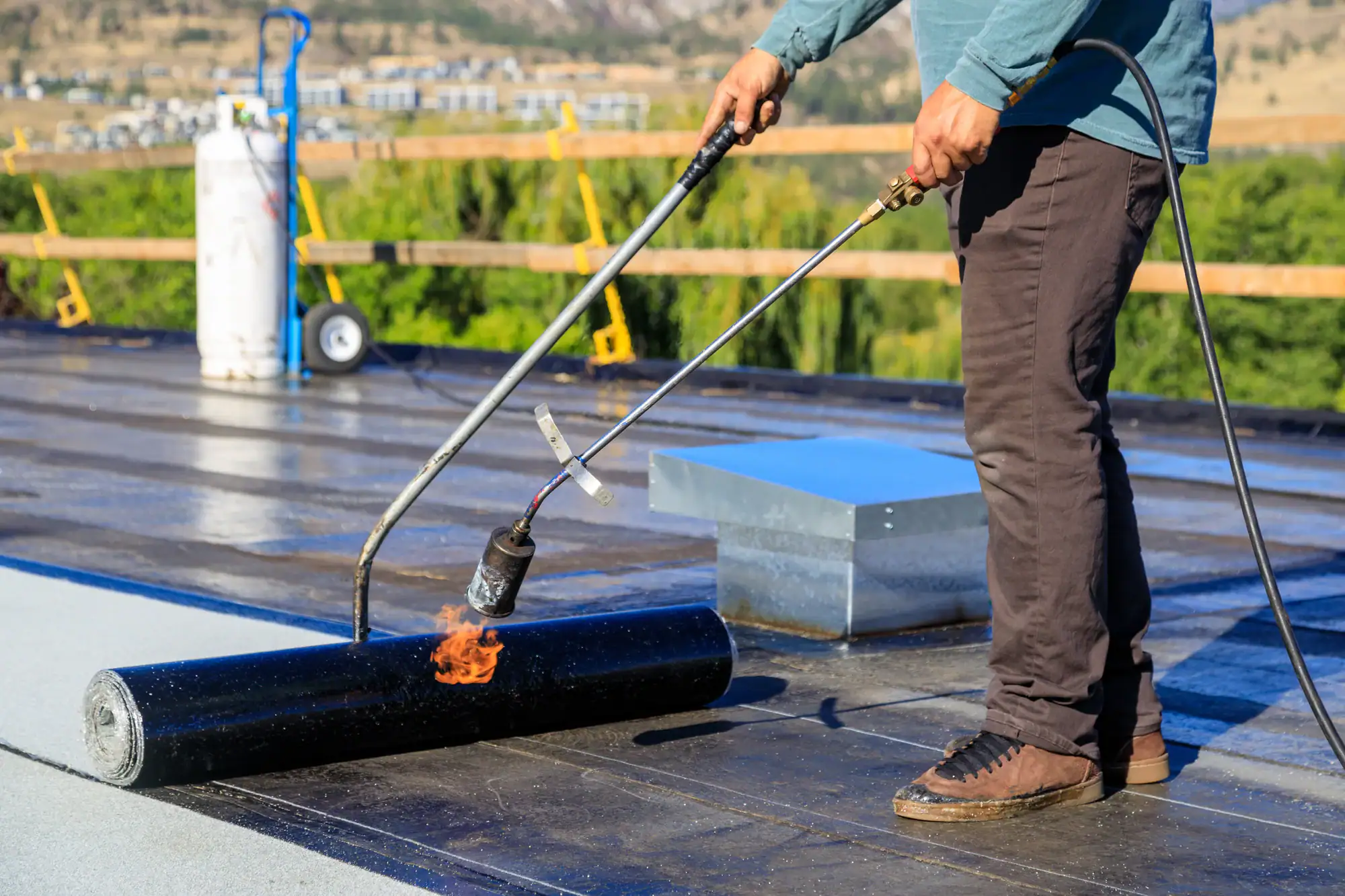
EPDM rubber roofing has a proven 20-to-30-year lifespan and handles the freeze-thaw cycling that hits Kent County every winter without cracking the way older mineral-surface systems tend to. Modified bitumen — torch-down roofing — is still a solid option for certain building types, and if you have an existing system that just needs targeted repair rather than full replacement, that’s a conversation worth having before committing to anything larger.
For agricultural outbuildings, garages, or structures with low-slope sections that are common on rural properties in this area, the right call depends on the building’s use, the drainage situation, and the existing deck condition. There’s no one-size answer, and any contractor who gives you one without looking at the roof first isn’t giving you real information.
We also handle insurance claims assistance for storm-damaged flat roofs. The Delaware Bayshore corridor takes a hit during nor’easters and the remnants of tropical systems that track up the bay — if your roof was damaged and you’re navigating a claim, we can help you document the damage and work through the process so you’re not left with a lowballed patch estimate. Financing is available for larger replacement projects, and the free estimate is always the starting point.

The proximity to Bombay Hook National Wildlife Refuge and Delaware Bay puts your property in a persistently high-humidity environment. Tidal salt marsh surrounds the area on the eastern side, and the ambient moisture in the air here is meaningfully higher than what you’d find in more inland Kent County communities.
That sustained humidity loading affects flat roof membranes differently than periodic rain does — it works on seams, flashing adhesion, and membrane surfaces continuously, not just during storm events. In practical terms, this means material selection matters more here than in a drier environment. EPDM and TPO both handle sustained moisture exposure well when installed correctly. Modified bitumen systems, particularly older single-ply installations, can show accelerated mineral surface wear in high-humidity conditions. If your flat roof is more than 15 years old and you haven’t had it professionally assessed, the bayshore environment is a good reason not to wait much longer.
These are three different membrane systems, and they each have a different performance profile. TPO is a single-ply thermoplastic membrane — it’s heat-welded at the seams, which creates a watertight bond that holds up well under moisture and temperature cycling. It also reflects a significant portion of solar load, which can reduce cooling costs during Delaware’s humid summers. Most commercial flat roofs being installed today use TPO.
EPDM is a rubber membrane — flexible, durable, and proven over decades of use. It handles freeze-thaw cycling well, which matters in Kent County winters, and its lifespan runs 20 to 30 years with proper maintenance. It’s a strong choice for both residential and agricultural structures. Modified bitumen, sometimes called torch-down roofing, is an asphalt-based system that’s been around for decades and still works well in the right application. It typically lasts 15 to 20 years. The right choice for your property depends on your building type, your drainage situation, and your budget — not just what’s cheapest or what we happen to stock.
Dutch Neck Crossroads is an unincorporated community, so there’s no town building department involved. All permitting runs through Kent County’s Office of Inspections and Enforcement under the Levy Court. Whether your project requires a permit depends on the scope of work.
A like-for-like membrane repair typically doesn’t trigger a permit requirement. A full replacement where you’re changing the roof material type — say, replacing an old modified bitumen system with TPO — generally does require a permit. The same applies if the project involves replacing more than 25 percent of the roof sheathing. We handle the permit process through Kent County as part of the project rather than leaving it for you to sort out independently. If you’re unsure whether your specific job requires a permit, that’s a straightforward question to answer during the estimate — before any work starts, not after.
The industry threshold is 48 hours. If water is still sitting on your flat roof more than 48 hours after a rain event, that’s ponding — and yes, it needs attention. It’s not just cosmetic. Standing water adds weight to the roof structure, accelerates membrane degradation, promotes mold and algae growth, and can void manufacturer warranties on newer membrane systems. Over time, it causes the deck underneath to absorb moisture, which leads to structural softening that turns a membrane replacement into a much larger and more expensive job.
In the Dutch Neck Crossroads area, the high water table from surrounding marshland and the volume of rainfall Delaware gets annually — around 45 inches — means drainage design is especially important. A flat roof that drains properly in a drier climate might still pond here because the surrounding ground doesn’t absorb runoff aggressively. If you’re seeing water sit on your roof after storms, the cause is usually a clogged drain, a low spot in the membrane, or a drainage layout that wasn’t designed for the actual rainfall load. All of those are fixable — but they don’t fix themselves.
The honest answer is that you usually can’t tell from the ground, and a lot of flat roof damage isn’t visible until it’s already causing interior problems. The signs that point toward repair rather than replacement are localized — a single area of membrane damage, a flashing failure at one penetration point, a seam separation in an isolated section. If the rest of the membrane is in good condition and the deck underneath is solid, a targeted repair makes sense and can extend the roof’s useful life by several years.
Replacement becomes the right call when the membrane has widespread cracking, blistering, or surface erosion; when there are multiple leak points; when the deck has taken on moisture damage in more than one area; or when the system is simply at the end of its expected lifespan. For properties along the Route 9 corridor near Dutch Neck Crossroads, where some of the building stock hasn’t been updated in decades, it’s not uncommon to find a roof that’s been patched multiple times and is past the point where another patch makes financial sense. A proper inspection gives you that answer clearly, without pressure to go one direction or the other.
Yes — and this is worth addressing directly because it’s a real concern for property owners in this area. Rural addresses along the Delaware Bayshore Byway corridor don’t always get the same contractor availability as denser suburban markets. Some contractors won’t come out, others send whoever is available rather than their regular crew, and follow-through after the estimate can be inconsistent.
We’re based in Smyrna, roughly 4.9 miles west on Route 9 — the same road that runs through Dutch Neck Crossroads. Kent County rural properties, including farms, outbuildings, and older rural homes with flat or low-slope roof sections, are standard territory for us, not an exception. Our no-subcontracting policy applies regardless of address — the same certified crew that handles jobs in Smyrna handles jobs out here. Free estimates are available across Kent County, and there’s no travel surcharge for rural locations. If you’ve had trouble getting a contractor to take your property seriously, that’s the gap we fill.
Other Services we provide in Dutch Neck Crossroads