

Hear from Our Customers

A properly installed roof in Milton isn’t something you think about anymore. No more water stains spreading across the ceiling after a nor’easter rolls up from Delaware Bay. No more wondering if that dark streak running down the south slope is cosmetic or something worse. You just live in your house without the background anxiety of a failing roof overhead.
For Milton homeowners, that peace of mind is harder to come by than it sounds. The Broadkill River corridor creates persistently high humidity — the kind that accelerates algae growth on asphalt shingles and quietly degrades the granule layer year after year. Add in the salt air that moves in from Prime Hook and Delaware Bay, and you’ve got conditions that corrode metal flashing and fasteners faster than most homeowners realize. A roof installed without accounting for this specific exposure profile will show it within a few years.
Getting the job done right the first time also means the warranty actually holds. Manufacturer warranties have requirements — proper underlayment, correct installation methods, ventilation that meets code. When those boxes are checked by a licensed, experienced contractor, you have real recourse if something goes wrong down the line. That’s the outcome worth paying for.
We’ve been doing this work in Delaware for over 22 years. We’re family-owned, based out of Milford — about 15 miles from Milton — and we cover Kent and Sussex counties. Richard McCain, our owner and president, puts his name on every estimate and every job. That’s not a marketing angle; it’s just how a small, owner-operated business works. When something needs to be addressed, there’s a real person to call.
We handle everything in-house — no subcontracting, no strangers showing up on your roof who weren’t part of the original conversation. That matters in a town like Milton, where a significant number of homeowners are retired, have owned their homes for decades, and aren’t looking for surprises. Whether it’s a straightforward replacement in Heritage Creek or a more complex job on a Victorian home in the historic district, the same standard applies.
We’re licensed through the Delaware Division of Professional Regulation, fully insured, and BBB accredited. Free estimates are available — no pressure, no commitment required to find out where things stand.
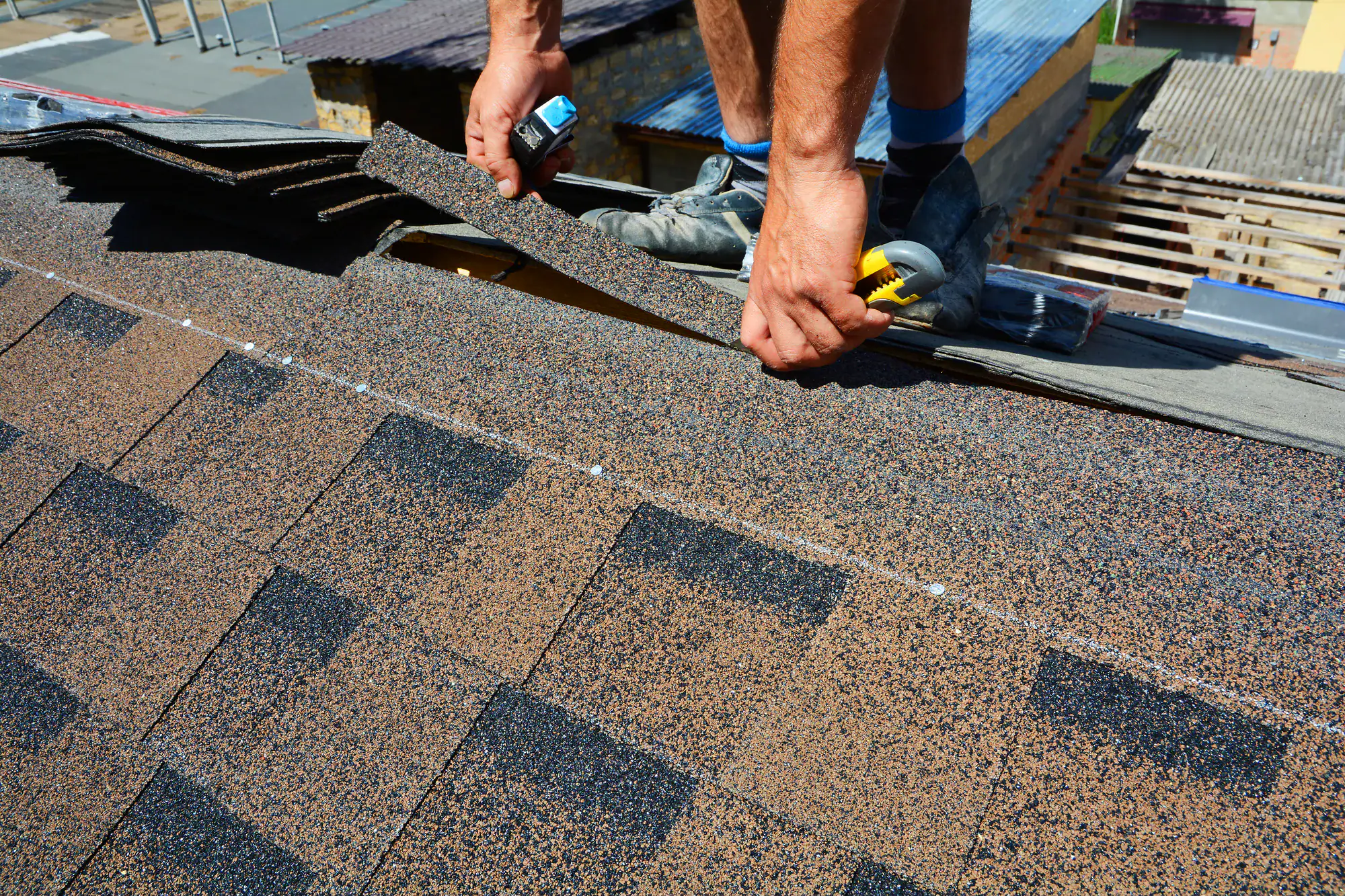
It starts with a free inspection. One of our team members comes out, gets on the roof, and gives you an honest assessment of what’s there — granule loss, flashing condition, underlayment integrity, ventilation, all of it. You get a written estimate with a clear scope of work before anything moves forward. No vague quotes, no “we’ll figure it out as we go.”
If your home is in Milton’s historic district, there’s an extra layer to account for. The Town of Milton’s Historic Preservation Commission reviews roofing alterations on designated historic structures to ensure material and color compatibility with the district’s character. That’s a real process with real timelines, and a contractor who doesn’t know it exists can cause costly delays. We work within that framework from the start — not as an afterthought.
Once everything is approved and scheduled, our crew arrives, completes the work, and cleans up completely before leaving. Sussex County requires a building permit for roofing replacement, and we handle that permit process — including the required inspection after the roof is in place — as part of the job. After completion, you’ll have documentation of the work, warranty details in writing, and a direct line to us if anything comes up later.

Ready to get started?
We handle the full range of residential and commercial roofing — replacement, installation, repair, emergency repair, inspection, and maintenance. On the residential side, that includes asphalt shingles, metal roofing, slate, rubber roofing, and clay tile. For commercial properties, we work with EPDM and TPO flat roofing systems. Given Milton’s rapid growth — with communities like Cannery Village, Heritage Creek, and the long-term Granary at Draper Farm development adding hundreds of new homes to the area — there’s no shortage of roofing needs across the full spectrum.
Material selection matters more in Milton than in most inland Delaware towns. The combination of coastal humidity from the Broadkill River corridor, salt air from Delaware Bay, and the algae-prone conditions that come with both means that not every shingle performs the same. Algae-resistant shingles are strongly recommended for Milton properties — dark streaking from Gloeocapsa magma is common in this area and isn’t just cosmetic. It shortens shingle lifespan. We can walk you through which materials make sense for your specific roof and exposure.
Beyond roofing, we also handle siding installation, gutter installation and repair, windows, and skylights. If your gutters are pulling away from the fascia or your siding is showing its age alongside a deteriorating roof, you don’t need to coordinate multiple contractors. We also provide insurance claims assistance for storm damage — which matters in a coastal community that sees nor’easters and tropical storm remnants with real regularity.

Yes, and this is one of the most important things Milton homeowners in the historic district need to know before starting a roofing project. The Town of Milton has a Historic Preservation Commission that reviews proposed alterations to structures listed on the National Register of Historic Places — and that includes roofing replacements. The HPC evaluates whether the proposed materials and colors are compatible with the historic character of the district. If you’re on Union Street, Federal Street, or anywhere within the designated historic area, you’ll need HPC approval before work begins.
This doesn’t mean you can’t get a new roof — it means the process has an additional step, and the materials need to meet certain standards. Working with a contractor who understands this process upfront saves significant time and prevents the frustration of having to redo an application or change materials mid-project. We work within the Town of Milton’s regulatory framework from the start, so the permitting side doesn’t become a problem that delays your project.
The honest answer is that it depends on a few things: the age of the roof, the extent of the damage, and what the underlying structure looks like once someone actually gets up there. A roof with isolated damage — a few missing shingles, a small area of compromised flashing — is often a legitimate repair candidate. But if the shingles are 20-plus years old, showing widespread granule loss, and the underlayment is compromised, a repair is usually just delaying the inevitable and adding cost.
In Milton specifically, the coastal humidity and salt air exposure tend to accelerate shingle deterioration compared to inland areas. A roof that might have another five years in a drier climate may already be past that point here. The algae growth common in this area also isn’t just aesthetic — it actively degrades the shingle surface over time. A free inspection from us gives you a documented, honest picture of what’s actually there, so you’re making a decision based on real information rather than guessing from the ground.
For most Milton homes, algae-resistant asphalt shingles are the practical baseline recommendation — they’re cost-effective, widely available, and specifically formulated to resist the Gloeocapsa magma algae that’s extremely common in humid, coastal-adjacent areas like the Broadkill River corridor. Standard asphalt shingles without algae resistance will show dark streaking within a few years in this environment, and that streaking shortens the shingle’s effective lifespan.
Metal roofing is a strong option for Milton homeowners who want longevity — metal roofs can last up to 50 years and handle wind events well, which matters given Milton’s exposure to nor’easters and coastal storms. The trade-off is higher upfront cost. For homes near Delaware Bay, you’ll also want to pay close attention to the quality of the flashing and fasteners, since salt air accelerates corrosion on lower-grade metal components. The right material choice depends on your specific roof, your budget, and how long you plan to stay in the home — all things worth discussing during a free estimate.
In most cases, yes — standard homeowner’s insurance policies cover sudden storm damage from wind, hail, and related events. Sussex County sees its share of qualifying events: nor’easters, tropical storm remnants, and the occasional severe coastal storm. The Prime Hook area just east of Milton sustained catastrophic damage from Hurricane Sandy in 2012, and the broader region deals with coastal storm impacts on a recurring basis. If your roof was damaged by a covered weather event, you likely have a valid claim.
The complication is the claims process itself. Documenting the damage correctly, communicating with the adjuster, and making sure the scope of the claim reflects the actual damage are all places where homeowners can leave money on the table — or have a claim denied unnecessarily. We work directly with homeowners’ insurance providers to simplify this process. That means helping you document what happened, what’s damaged, and what it will cost to restore it — so you’re not navigating the process alone. It’s worth calling before you assume the claim isn’t worth filing.
For a standard single-family home, the physical installation is typically completed in one day. That’s the actual tear-off and new roof installation. The timeline from first contact to completed job is longer — it includes the free inspection, the written estimate, any permitting required by Sussex County (which requires a building permit for roofing replacement and a post-installation inspection with 48-hour notice), and scheduling based on crew availability and weather.
For homes in Milton’s historic district, add the HPC review timeline to that picture. That process varies depending on when the commission meets and how quickly the application is processed, so it’s worth starting early if you’re in the historic area. Emergency repairs are handled differently — if you have active water intrusion or storm damage, we offer 24/7 emergency service to secure the roof and stop further damage while the full repair or replacement is planned. The goal in that situation is to stop the bleeding first, then address the full scope.
The most direct way is to ask the contractor to provide their license number and insurance certificates before signing anything. In Delaware, roofing contractors can be verified through the Delaware Division of Professional Regulation. That’s a public database — you can look up the company and confirm their license status independently. For insurance, ask for a certificate of general liability and workers’ compensation. A legitimate contractor will provide both without hesitation. If there’s any reluctance or vague answers, that’s a clear signal to keep looking.
This matters more in Milton than in some markets because the area attracts out-of-state contractors after storm events — particularly following coastal storms that affect Sussex County. These contractors are sometimes unlicensed in Delaware, carry inadequate insurance, and may not be familiar with local requirements like Sussex County building permits or Milton’s HPC process for historic structures. The work gets done, but the warranty is worthless if the company is gone six months later. We’re licensed through the Delaware Division of Professional Regulation, fully insured, and have been operating in Delaware for over 22 years — all of which you can verify before making a decision.
Other Services we provide in Milton