
Hear from Our Customers
When a flat roof is done right, you stop thinking about it. No water stains showing up on your ceiling after a hard rain. No anxiety every time a nor’easter rolls through coastal Sussex County. No wondering whether that pooling water on the low-slope section of your garage is a problem or just drainage doing its job. You just go about your life, and the roof does what it’s supposed to do.
That matters more in Milton than in a lot of places. The Broadkill River runs right through town, and the area has a documented history of storm-surge flooding from tropical remnants — Tropical Storm Isaias in 2020 being one of the more recent examples. Flat roofs here aren’t just dealing with Delaware’s standard 45-plus inches of annual rainfall. They’re dealing with coastal humidity that accelerates wear on flashings and seam adhesives, and storm loads that demand proper drainage design from the start, not as an afterthought.
For homeowners in Heritage Creek or Shipbuilders Village, and for commercial property owners along the historic downtown corridor on Union Street and Federal Street, a flat roof that was installed correctly — with the right membrane, properly detailed seams, and drainage that actually works — is the difference between a building that holds its value and one that quietly deteriorates until the damage becomes impossible to ignore. Getting it right the first time is the only version of this that makes sense.
We’ve been working on Delaware roofs for over 22 years — residential and commercial, new installations and replacements, straightforward jobs and complicated ones. That experience covers coastal Sussex County, which means our team understands what salt air and tidal humidity actually do to membrane systems over time, not just in theory.
Every project in Milton and across Delaware is managed start to finish by our own certified crew. There’s no outsourcing, no subcontracting to a crew you’ve never met. The people who show up to assess your roof are the people who do the work. That matters when you’re protecting a property in Milton, where median home values are approaching $500,000 and the stakes of a bad roofing decision are real.
We’re BBB accredited, fully licensed and insured, and carry a 5.0 out of 5 rating across 63-plus verified reviews. Customers consistently mention professionalism, clean worksites, and honest communication — not because those things are advertised, but because they show up consistently on the job.
It starts with a free estimate and a real assessment of what’s going on with your roof. Not a quick glance and a number — an actual look at the membrane condition, the drainage situation, the flashings at penetrations and edges, and the deck underneath. In Milton, that deck inspection matters more than people expect. Homes and commercial buildings along the historic district have roofing systems that have been patched and re-patched over decades, and what looks like a membrane problem on the surface is sometimes a deck problem underneath. You need to know what you’re actually dealing with before any material decisions get made.
Once the scope is clear, we match the right membrane system to your specific building — TPO, EPDM, modified bitumen, or PVC — based on your roof’s configuration, your budget, and the conditions your property faces. A commercial building in the downtown historic district on Federal Street has different needs than a residential addition in a newer development off Route 16. The material selection reflects that.
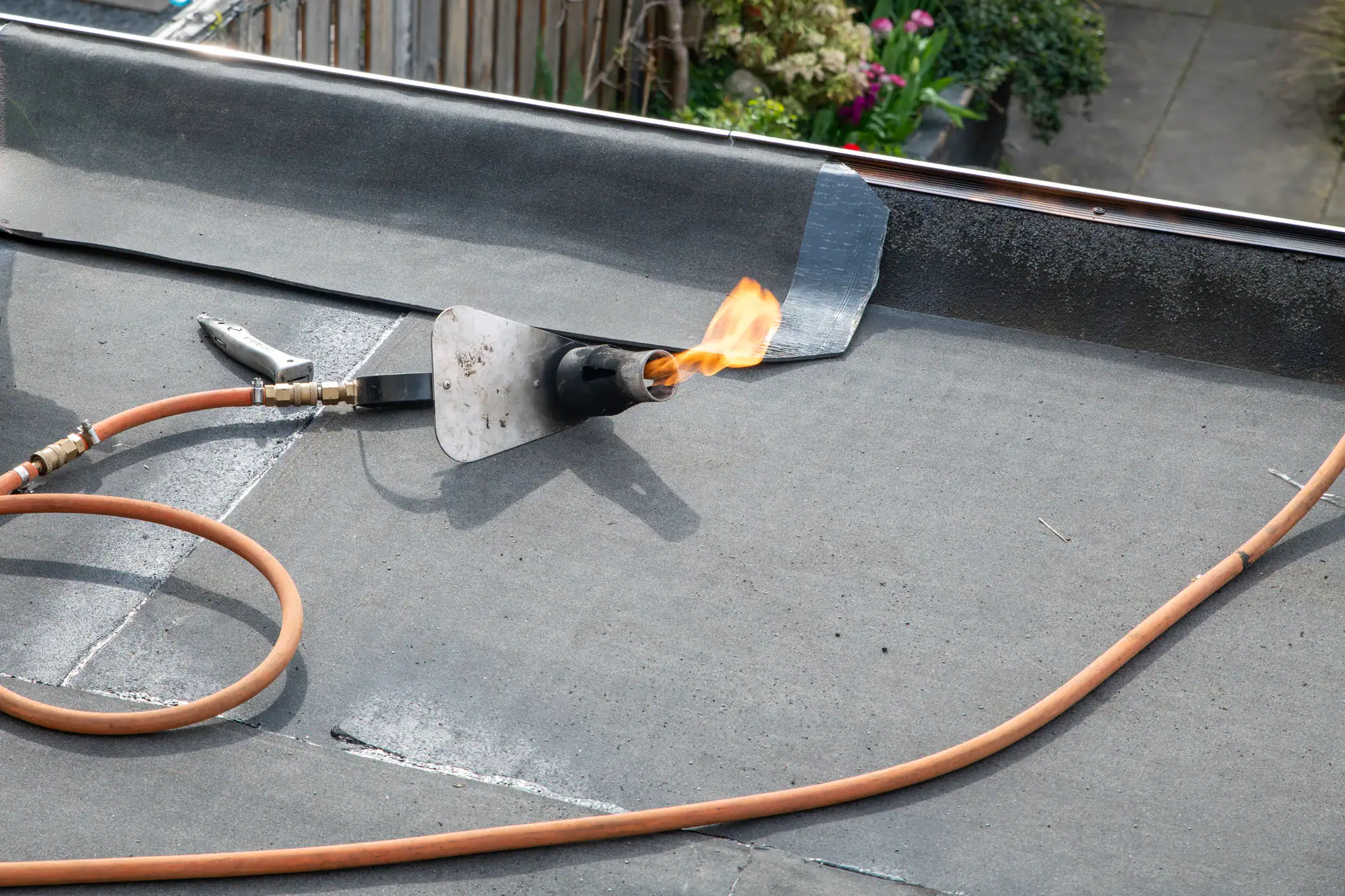
From there, the job follows a clean sequence: existing membrane removed, deck inspected and repaired where needed, insulation layer set, membrane installed with properly heat-welded or adhered seams, and flashing detailed at every penetration and perimeter edge. Before we wrap up, drainage is confirmed to be functioning. In Milton’s coastal environment, standing water on a flat roof isn’t just an inconvenience — water that sits for more than 48 hours accelerates membrane breakdown and can void manufacturer warranties. Getting drainage right is part of the job, not optional.
All work is permitted through the Town of Milton’s Planning and Code Enforcement Department, and for properties within the historic district, any applicable review requirements are handled as part of the process.

Ready to get started?
Flat roofing isn’t one material. It’s a category, and the right choice depends on your building, your budget, and the conditions your roof faces. In Milton’s coastal-adjacent environment, that last factor carries more weight than it does in inland Delaware towns.
TPO roofing membrane is the most common choice for commercial flat roofs and is well-suited to Milton’s humid summers. It reflects a significant portion of solar load, which helps with energy costs, and its heat-welded seams hold up well in coastal conditions where adhesive-based systems can degrade faster. EPDM rubber roofing — sometimes called rubber roof membrane — has been the go-to for residential flat roofs and low-slope sections for decades. It’s flexible enough to handle Delaware’s freeze-thaw winters without cracking, and its track record for longevity is hard to argue with.
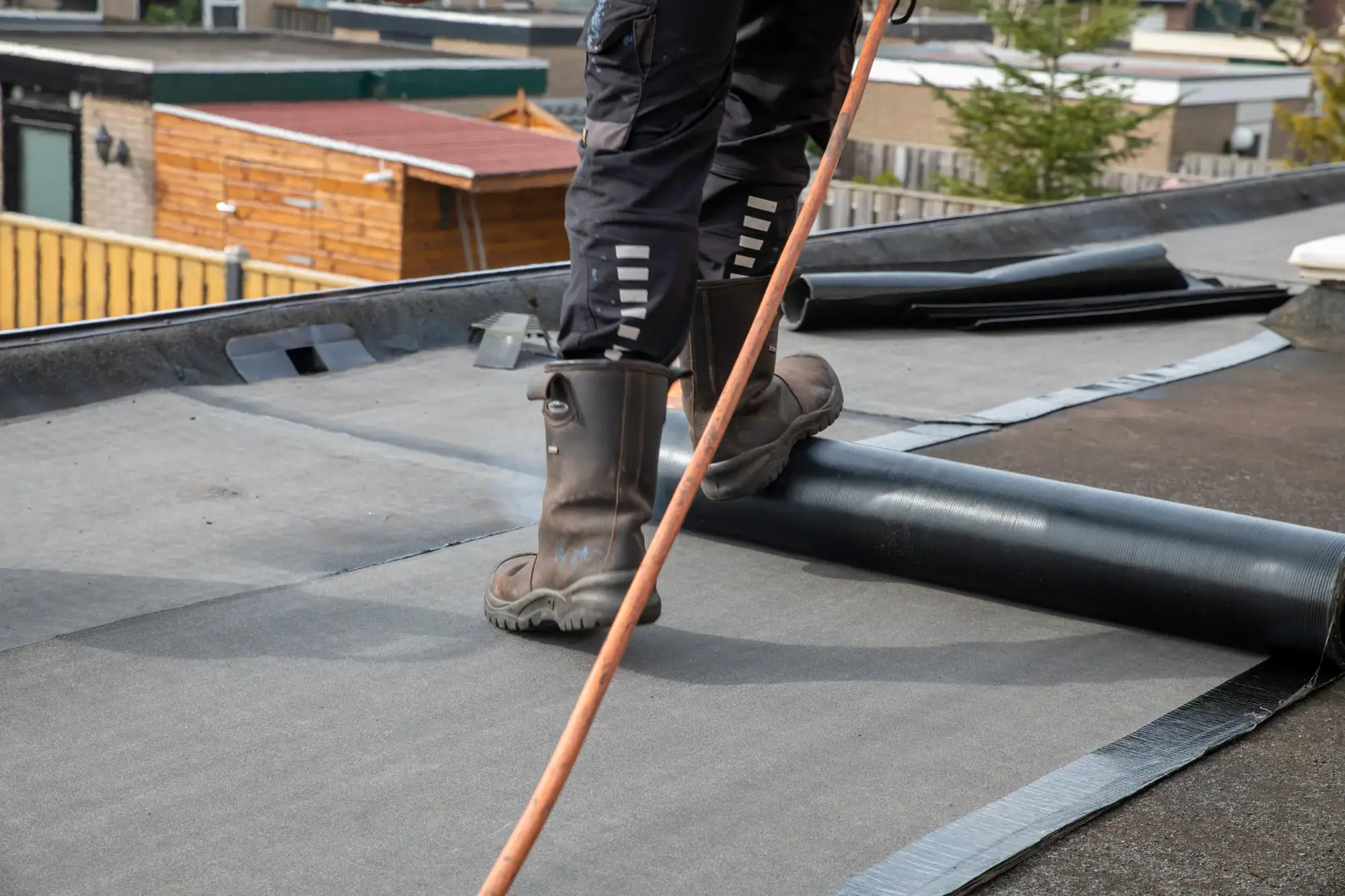
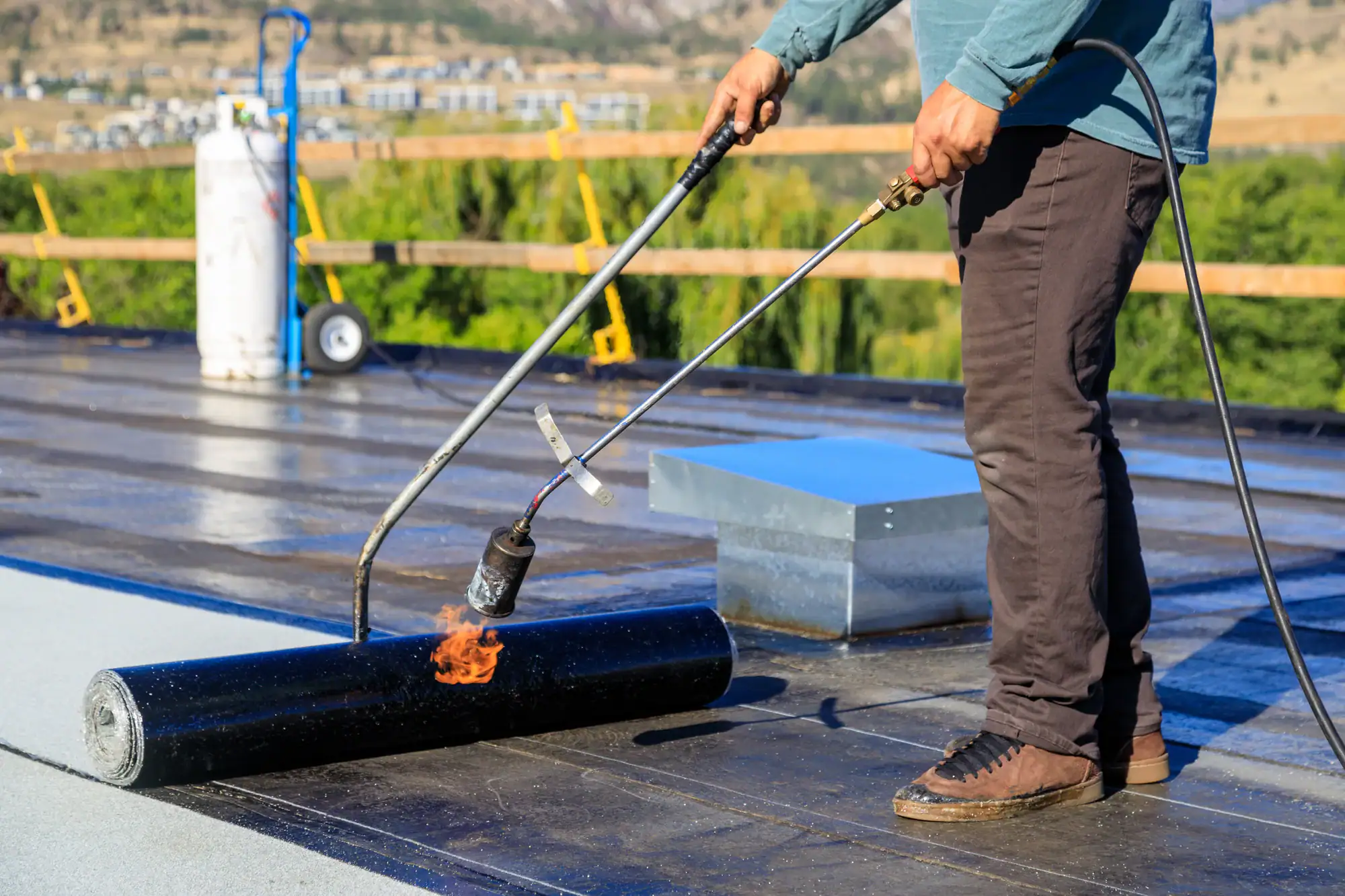
Modified bitumen, or torch down roofing, is common on older commercial buildings in Milton’s downtown historic district and remains a solid option for replacement when the existing system is modified bitumen. PVC roofing membrane rounds out the options for applications where chemical resistance or specific performance requirements are a factor.
Beyond material selection, we also provide emergency flat roof repair when damage can’t wait, insurance claims assistance for storm-related damage — which is a real and recurring situation in Milton given the area’s storm history — and financing options for property owners who’d rather spread the cost of a full replacement. Free estimates are available with no pressure and no obligation. If you’re not sure whether you need a repair or a full replacement, that’s exactly what the estimate is for.

Milton’s position at the head of the Broadkill River — with Delaware Bay just seven miles away — creates a roofing environment that’s meaningfully different from inland Delaware towns. Salt-laden air off the bay accelerates corrosion on metal flashings and edge details faster than manufacturers’ standard projections assume. It also degrades certain adhesive-based seam systems more quickly, which is why heat-welded membrane options like TPO tend to perform better in Milton than they might in a landlocked market.
The river itself adds another layer of risk. The Broadkill is tidal, and parts of Milton have experienced storm-surge flooding during significant weather events — Tropical Storm Isaias in 2020 being a documented example. For flat roofs, that means drainage design isn’t just about managing normal rainfall. It means making sure your system can handle the kind of rapid water accumulation that coastal storm events bring. A properly installed flat roof accounts for all of this from the start, not as a patch applied after the first problem shows up.
These are the three most common flat roofing membrane systems, and they each have a different profile. TPO is a single-ply membrane that’s heat-welded at the seams, which creates a strong, watertight bond that holds up well in coastal humidity. It also reflects a high percentage of solar load, which can meaningfully reduce cooling costs on commercial buildings during Delaware’s humid summers. It’s currently the most widely used commercial flat roof material in the country.
EPDM is a rubber-based membrane — often called rubber roofing material — that’s been used on residential and commercial flat roofs for decades. It’s highly flexible, which makes it resistant to cracking during freeze-thaw cycles like the ones Delaware winters produce. It has a long track record for longevity when properly installed and maintained. Modified bitumen, sometimes called torch down roofing, is an asphalt-based system that’s been the standard for many older commercial buildings in Milton’s historic district. It’s a solid option for replacement when the existing system is already modified bitumen, and it performs well when installed correctly. The right choice between these three depends on your building’s configuration, your budget, and the specific conditions your roof faces — which is exactly what the free estimate is designed to work through with you.
This is one of the most common questions, and the honest answer is that you usually can’t tell from the ground — or even from a casual visual inspection on the roof surface. A membrane can look intact while water is already tracking along the deck underneath and showing up inside the building in a completely different location. Flat roof leaks are notoriously difficult to trace because water enters at one point and travels before it becomes visible.
The assessment looks at a few key factors: the age and condition of the existing membrane, whether there’s evidence of deck damage or moisture intrusion beneath the surface, how the drainage is performing, and the condition of flashings at penetrations and perimeter edges. In Milton, older commercial buildings in the historic district along Union Street and Federal Street often have roofing systems that have been patched multiple times over many years. At some point, another patch stops being cost-effective and a full membrane replacement becomes the better investment. The free estimate is designed to give you a clear, honest answer on which situation you’re actually in — not to push you toward the more expensive option by default.
It depends on the cause of the damage. Most standard homeowner’s insurance policies cover sudden, storm-related damage — wind uplift, impact from debris, damage from a nor’easter or tropical storm event. Given Milton’s documented history with coastal storms, this is a real and recurring situation for property owners here. What policies typically don’t cover is damage that results from deferred maintenance or gradual deterioration — a membrane that’s been failing slowly over time is usually treated as a maintenance issue, not a covered loss.
Navigating the claims process is genuinely confusing, especially after a major storm when you’re dealing with an adjuster and trying to understand what your policy actually covers. We provide insurance claims assistance as part of our service offering — helping you document the damage correctly, understand what the adjuster is assessing, and make sure the scope of the replacement is accurate. A lowballed estimate that only covers a surface patch when the deck has water damage underneath is not a fair settlement, and having a contractor who understands that distinction makes a real difference in the outcome.
Under normal conditions, EPDM rubber roofing typically lasts 20 to 30 years, TPO membranes 15 to 25 years, and modified bitumen systems 15 to 20 years. Those ranges assume correct installation, functioning drainage, and regular maintenance. In Milton’s coastal environment, the variables that compress those lifespans are salt air exposure, elevated humidity, and the storm load that comes with being in coastal Sussex County near Delaware Bay.
The single biggest factor that shortens flat roof lifespan — regardless of material — is ponding water. Water that sits on a flat roof for more than 48 hours after rain isn’t just a drainage inconvenience. It accelerates membrane breakdown, promotes mold and algae growth, adds structural load, and can void manufacturer warranties. In a town with Milton’s rainfall and storm history, drainage design is not a secondary consideration. It’s central to how long your roof actually lasts. A flat roof installed with proper drainage, quality membrane, and correctly detailed seams and flashings will reach the upper end of its expected lifespan. One that cuts corners on any of those elements won’t.
Yes. The Town of Milton has its own Planning and Code Enforcement Department that handles building permits, inspections, and code compliance for properties within town limits. A flat roof replacement requires a building permit, and work must comply with Town of Milton ordinances, applicable Sussex County requirements, and state building codes. Permits issued by the town are valid for one year from the date of issuance, which is worth knowing if you’re planning a project that might span seasons.
For properties within Milton’s National Register Historic District — which covers approximately 200 structures in the historic downtown core — exterior alterations may also require review by the Milton Historic Preservation Commission. This is a layer of the process that catches some property owners off guard, particularly those who are newer to the area or unfamiliar with historic district requirements. It doesn’t necessarily make the project more complicated, but it does mean the permitting process needs to be handled correctly from the start. We manage the full project, including permit coordination, so you’re not left figuring out the regulatory side on your own while also trying to get your roof replaced.
Other Services we provide in Milton