Understanding EPDM: Why It’s the Gold Standard for Flat Roofs
Commercial rubber roofing contractors near me are specialists in installing, repairing, and maintaining EPDM (Ethylene Propylene Diene Monomer) membrane systems on flat and low-slope commercial buildings. If you need one fast, here’s what to look for:
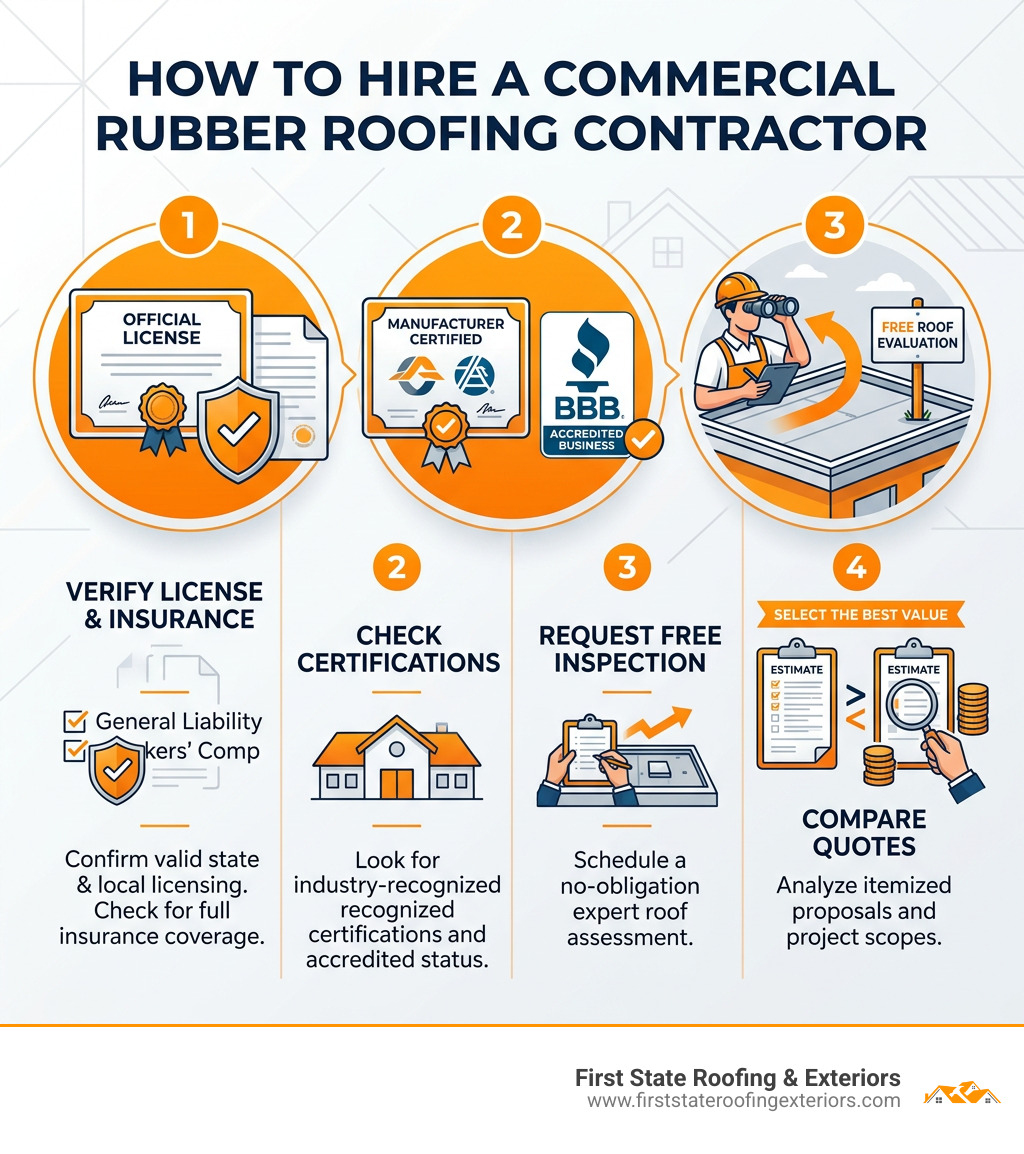
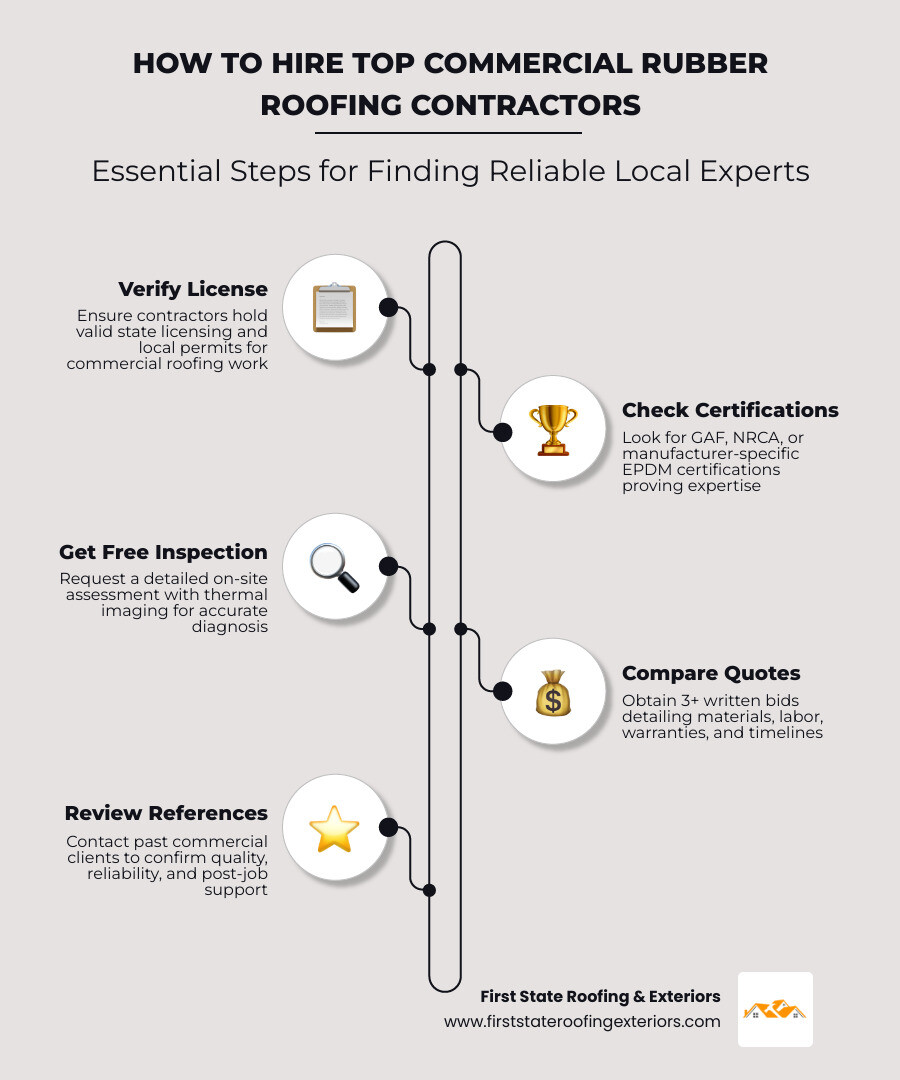
How to find and hire a commercial rubber roofing contractor near you:
- Verify licensing and insurance – Confirm general liability, workers’ compensation, and local Delaware contractor licensing
- Check certifications – Look for manufacturer certifications (e.g., GAF, Versico) and BBB accreditation
- Request a free inspection – First State Roofing & Exteriors gives free estimates; call (302) 222-4065 for a free inspection
- Ask about warranties – Quality contractors back their work with labor warranties of 25 years or more
- Confirm EPDM experience – Ask specifically how many EPDM systems they’ve installed and repaired
- Get itemized quotes – Compare fully adhered, mechanically fastened, and ballasted installation options
Your commercial roof is one of the most critical investments your business will make. EPDM rubber roofing has been a go-to solution for commercial flat roofs for more than 50 years — and for good reason. It’s durable, flexible, and capable of lasting 25 to 30 years with proper maintenance. But the material alone doesn’t protect your building. The contractor you hire makes all the difference. Too many business owners in Delaware discover that the hard way — after a failed seam, a missed penetration detail, or a crew that cut corners on adhesion.
That’s why choosing the right commercial roofing contractor matters as much as choosing the right material. This guide walks you through everything you need to know before signing a contract.
I’m Richard McCain, Owner and President of First State Roofing & Exteriors Co., a family-run Delaware contractor with more than 20 years of hands-on experience in rubber, metal, and asphalt roofing systems. I’ve helped countless Delaware businesses find qualified commercial rubber roofing contractors near me who deliver durable, code-compliant results — and in this guide, I’ll share exactly what to look for so you can make a confident, informed decision.
Quick commercial rubber roofing contractors near me terms:
When you start searching for commercial rubber roofing contractors near me, the term “EPDM” will pop up constantly. EPDM stands for Ethylene Propylene Diene Monomer. While that sounds like a mouthful from a high school chemistry textbook, it essentially means a high-performance synthetic rubber membrane. It is widely considered the “gold standard” for flat and low-slope roofs because it is incredibly resilient.
According to InterNACHI research on roof life expectancy, specialized roofing materials like EPDM are designed for the long haul. The secret lies in its chemical makeup. Because it’s made from ethylene and propylene, the membrane is inherently flexible. This allows the roof to “breathe” — expanding and contracting as Delaware temperatures swing from freezing winter nights to humid summer afternoons without cracking or becoming brittle.
EPDM is also a champion of UV resistance. While other materials might bake and crumble under the sun, EPDM remains stable. This durability is why it has been a staple in the industry for over half a century. If you want to dive deeper into how this compares to other types, check out our guide on rubber roofing types.
Versatility in Commercial Applications
One reason we recommend EPDM to our clients in Dover and Milford is its sheer versatility. Commercial roofs are rarely just empty flat spaces. They are often crowded with HVAC units, vents, pipes, skylights, and communication equipment.
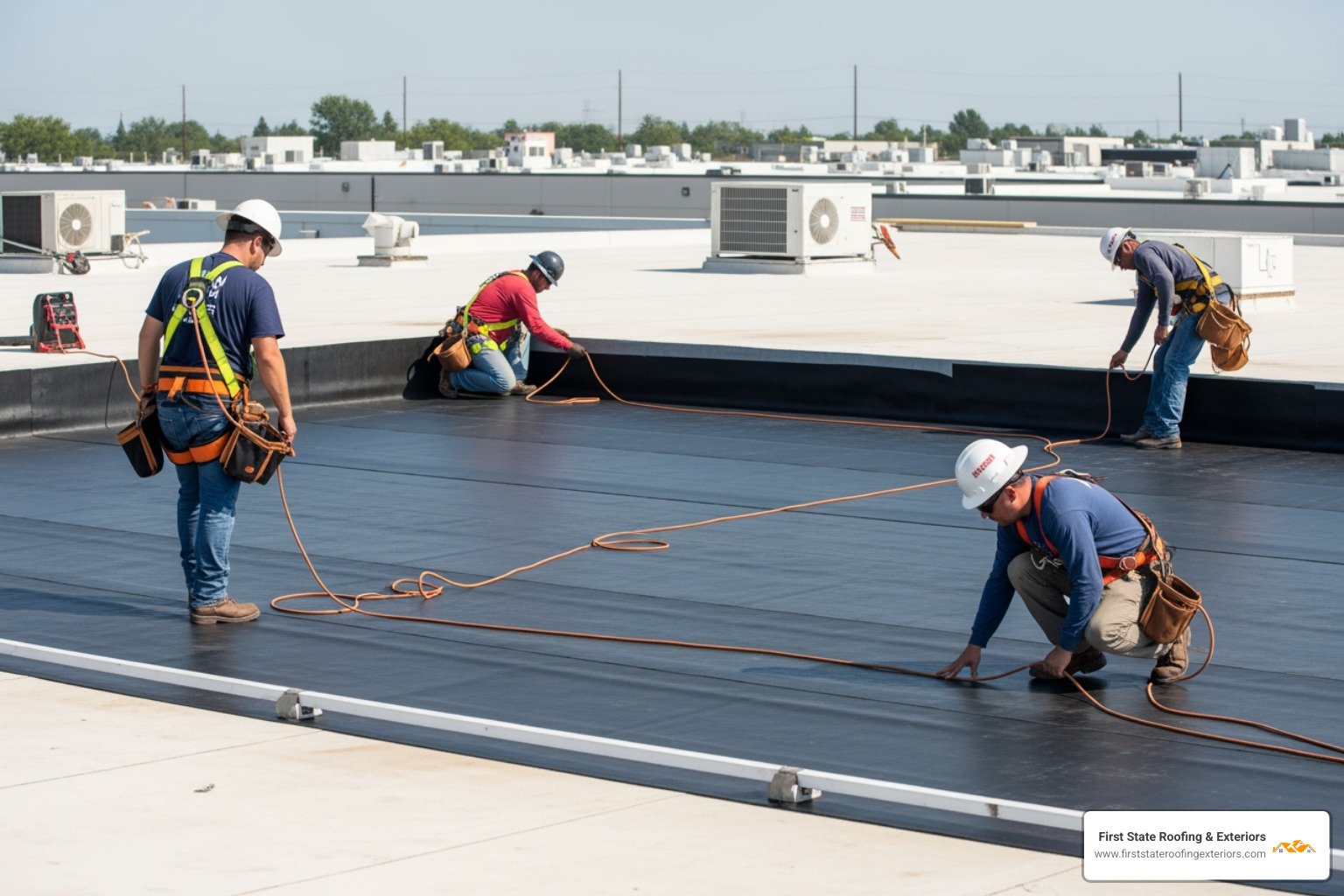
EPDM is a “forgiving” material. It can be easily molded and flashed around these rooftop projections to create a watertight seal. This is crucial because most commercial roof leaks don’t happen in the middle of a flat section; they happen at the seams and penetrations. When you find the right EPDM roofing specialist, they will use reinforced walk-pads in high-traffic areas to ensure that maintenance crews working on your AC units don’t accidentally puncture the membrane.
Black vs. White EPDM Membranes
When choosing your membrane, you’ll likely have to decide between traditional black and reflective white.
- Black EPDM: This is the classic choice. It’s excellent for colder climates because it absorbs solar heat, which can help melt snow and ice faster in the winter and reduce heating costs.
- White EPDM: Often referred to as “cool roofing,” white EPDM reflects sunlight. This can significantly reduce cooling costs during Delaware’s sweltering July heat. Many white EPDM options are Energy Star approved, making them a favorite for businesses looking to “go green.”
Key Benefits of Hiring Commercial Rubber Roofing Contractors Near Me
Why should you invest in an EPDM system rather than a cheaper alternative? The answer usually comes down to the Return on Investment (ROI). A new roof isn’t just an expense; it’s an asset. In fact, a Remodeling Impact report found that home and property owners can recover as much as 107% of a new roof’s value upon sale.
Superior Weather Protection and Durability
EPDM is a “tank” of a roofing material. It is highly resistant to impact — meaning hail often bounces right off it. It also boasts incredible wind uplift resistance, which is vital for commercial buildings in open areas or near the coast where gusts can be severe.
The seams are the lifeline of the roof. Reputable commercial rubber roofing contractors near me will often use 6-inch seam splice tape, which is twice the industry standard, to minimize the risk of human error during installation. This extra step ensures that the waterproof barrier remains intact for decades. If you are curious about what a full replacement might run you, we’ve broken down commercial roof replacement cost expectations to help you budget.
Sustainable and Eco-Friendly Features
For the eco-conscious business owner, EPDM is a winner. It is 100% recyclable at the end of its long life. Furthermore, because it lasts so much longer than traditional asphalt-based products, less waste ends up in Delaware landfills. Using low-VOC (volatile organic compound) adhesives during installation also means fewer fumes, making it a safer choice for sensitive environments like schools or medical facilities in Milford.
Installation Methods and Material Comparisons
There isn’t a “one size fits all” way to put down a rubber roof. Your contractor should explain which of these three methods is best for your specific building structure:
- Fully Adhered: The membrane is glued directly to the insulation or roof deck. This is the most popular choice because it is lightweight and provides the best wind uplift protection.
- Mechanically Fastened: The sheets are attached using special screws and plates. This is a quick installation method often used for buildings that can’t support the weight of ballast.
- Ballasted Systems: The membrane is laid down loosely and held in place by large stones or pavers. This can be aesthetically pleasing and provides excellent fire protection, but the building must be strong enough to handle the heavy weight.
Choosing the Right Commercial Rubber Roofing Contractors Near Me for Your Climate
In Delaware, our roofs face a unique set of challenges. We have high humidity, salt air near the coast, and intense freeze-thaw cycles. When water gets into a tiny crack and freezes, it expands, turning a small issue into a major leak.
That’s why you need a local expert who understands commercial roofing in Dover, DE. We know exactly how to prep the surface to ensure the adhesives bond correctly despite the local humidity levels.
Comparing EPDM to TPO and PVC
While EPDM is fantastic, it’s not your only option. Here is how it stacks up against other popular single-ply membranes:
| Feature | EPDM (Rubber) | TPO (Thermoplastic) | PVC (Vinyl) |
|---|---|---|---|
| Primary Benefit | Longevity & Flexibility | Heat-Reflective | Chemical Resistance |
| Installation | Adhesive/Tape | Heat-Welded Seams | Heat-Welded Seams |
| Lifespan | 25-30+ Years | 15-20 Years | 20-25 Years |
| Cost | Most Affordable | Moderate | Higher |
EPDM generally offers a better price point for large warehouses and industrial spaces, while TPO and PVC are often chosen for restaurants (due to grease resistance) or retail stores needing maximum reflectivity.
Maintenance and Identifying Common Rubber Roofing Issues
Even the best roof needs a little love. If you ignore your EPDM roof for ten years, you’re asking for trouble. Common issues we see when we are called out for repairs include:
- Seam Separation: Over time, the adhesive can fail if it wasn’t applied correctly or if the roof has aged significantly.
- Punctures: Falling branches or dropped tools from HVAC technicians can create small holes.
- Ponding Water: If your roof doesn’t drain properly, standing water can stress the seams and lead to leaks.
- Shrinkage: Older EPDM membranes can shrink slightly, pulling the flashing away from the edges of the building.
If you notice any of these, it’s time to call for specialized EPDM roof services.
Extending Roof Life Through Preventative Care
We always tell our clients: an ounce of prevention is worth a pound of cure. Annual inspections are the best way to extend your roof’s life to that 30-year mark. During these checks, we clear debris from drains, check the integrity of the flashing, and ensure no new punctures have occurred. For older roofs, we might recommend a silicone coating. This creates a seamless, waterproof layer over the existing EPDM, potentially adding another 10-15 years to the roof’s life for a fraction of the cost of a replacement. You can learn more about these strategies in our commercial exterior maintenance guide.
When to Repair vs. Replace
How do you know if you can get away with a patch or if you need a whole new roof? We use core sampling and moisture detection tools to see if the insulation underneath the rubber is wet. If the insulation is dry, we can often perform a “recover” — laying a new membrane over the old one. This is a common practice for EPDM roofs in Seaford and can save you a fortune in labor and disposal fees.
Vetting Commercial Rubber Roofing Contractors Near Me for Quality and Safety
Don’t just hire the guy with the lowest bid. Commercial roofing is dangerous work that requires specialized equipment and training. Ensure your contractor is OSHA compliant and follows all safety protocols, including the use of harnesses and perimeter warnings.
What to Expect During a Professional Inspection
A professional inspection should be more than just a guy walking around with a clipboard. At First State Roofing & Exteriors, we utilize advanced technology like thermal drone scans to identify trapped moisture that the naked eye can’t see. We provide a transparent, itemized quote so you know exactly where your money is going. If you’re looking for commercial roofing in Seaford, DE, demand this level of detail.
Verifying Insurance and Local Experience
Before anyone steps onto your roof, ask for their proof of insurance. You need to see General Liability (to protect your building) and Workers’ Compensation (to protect the workers). Also, check their Delaware licensing. A contractor who has been working in the First State for decades will have local references you can actually call. You can start your search by looking for a roofer near you with a proven track record.
Frequently Asked Questions about Commercial Rubber Roofing
How long does a commercial EPDM rubber roof typically last?
A professionally installed and maintained EPDM roof can last between 25 and 30 years, thanks to its inherent flexibility and resistance to UV radiation and extreme temperature fluctuations. Some systems have even been known to push past the 35-year mark if they are situated in favorable conditions and receive annual maintenance.
Is EPDM roofing more cost-effective than TPO or PVC?
Yes, EPDM is generally one of the most inexpensive commercial flat roofing options to install. It offers a lower initial price point for the materials and labor compared to heat-welded systems like TPO or PVC. Because of its long service life, it often provides the best long-term ROI for large-scale commercial properties.
Can EPDM be installed over an existing roof?
In many cases, EPDM can be used in a “recover” application over an existing roof system, provided the underlying structure is dry and sound. This can save significant money on tear-off and disposal costs. However, building codes usually limit a structure to two layers of roofing, so a professional inspection is required to see if your building is a candidate.
Conclusion
Choosing the right specialist ensures your commercial property remains protected against the elements while maximizing your building’s energy efficiency. First State Roofing & Exteriors provides expert EPDM solutions tailored to the unique needs of Delaware businesses, combining local knowledge with industry-leading craftsmanship.
As a family-owned company based right here in Delaware, we pride ourselves on integrity, transparency, and being available 24/7 when our neighbors need us most. Whether you are in Dover, Milford, or Seaford, we are here to protect your livelihood with a roof that stands the test of time.
First State Roofing & Exteriors gives free estimates; call (302) 222-4065 for a free inspection today. Experience the difference of working with a dedicated roofer near me in Seaford, DE.