Why Commercial Flat Roof Replacement is a Critical Investment for Your Business
Commercial flat roof replacement is a major decision that safeguards your property, protects your daily operations, and preserves the value of your building. For Kent and Sussex County, DE businesses, working with trusted local specialists like First State Roofing & Exteriors ensures the process is efficient, code-compliant, and custom to our regional climate. When your flat roof reaches the end of its lifespan—or shows signs of widespread damage—understanding the replacement process helps you avoid costly disruptions and make confident, informed choices with guidance from expert Kent and Sussex County, DE roofers.
Here’s what you need to know about commercial flat roof replacement:
- Average lifespan: Most commercial flat roofs last 15-30 years with proper maintenance
- Typical timeline: Projects range from a few days to several weeks, depending on size and complexity
- Key phases: Inspection, tear-off, substrate repair, new system installation, and final inspection
- Common materials: TPO (40% market share), EPDM (22%), Modified Bitumen (12.4%), PVC, and metal
- Main benefits: Improved energy efficiency, increased property value, updated warranties, and long-term cost savings
Signs you need replacement (not just repair):
- Frequent or widespread leaks
- Roof age of 20+ years
- Extensive membrane damage (cracks, blisters, punctures)
- Ponding water 48+ hours after rain
- Sagging or structural issues
- Saturated insulation or interior mold
A full replacement restores your entire roofing system’s integrity, whereas repairs only address isolated damage. The investment pays off through reduced maintenance costs, lower energy bills, and decades of reliable protection. Modern materials like reflective TPO can cut cooling costs significantly, while new warranties provide peace of mind.
Weather, building codes, and proper drainage all play crucial roles in replacement success. Working with an experienced contractor ensures your project meets local regulations, stays on schedule, and delivers a watertight result that stands up to Kent and Sussex County, DE’s coastal climate.
I’m Richard McCain, owner of First State Roofing & Exteriors, and over the past 20 years I’ve personally overseen hundreds of commercial flat roof replacement projects across Kent and Sussex County, DE. My hands-on approach ensures every installation meets manufacturer guidelines, stays code-compliant, and delivers the durable, energy-efficient results your business deserves.
This guide breaks down the entire replacement process—from the initial tear-off to the final top-off—so you know exactly what to expect at every stage. Whether you’re dealing with an aging roof, storm damage, or planning a proactive upgrade, you’ll learn how to choose the right materials, avoid common pitfalls, and partner with a contractor who treats your property like their own.
If you’re facing leaks, high energy bills, or an aging roof, don’t wait until minor issues become major emergencies. For reliable roof replacement services and a free estimate, call (302) 222-4065 today to schedule your free inspection.
Commercial flat roof replacement terms explained:
When to Replace vs. Repair Your Commercial Flat Roof
Deciding between a repair and a full replacement is the first critical step. While repairs can address isolated issues, a replacement is a long-term solution for systemic failure or an aging roof. A full replacement restores the entire system’s integrity, improves energy efficiency, and comes with new, comprehensive warranties.
Signs That Point to a Full Replacement
Knowing when to pull the trigger on a full replacement can save you from endless headaches and escalating costs. Here are the primary reasons a commercial flat roof needs replacement:
- Age of Roof: Most commercial flat roofs are designed to last anywhere from 15 to 30 years with regular maintenance. If your roof is nearing or has exceeded this expected lifespan, replacement often becomes more economical than continuous repairs. An older roof is simply more prone to widespread deterioration.
- Frequent or Widespread Leaks: While a small, isolated leak might be repairable, frequent leaks across different areas, or a single large breach, indicate a failing system. Water leaks or damp spots on your interior ceilings and walls are a telling sign of a breach in your roof’s waterproofing layers. If moisture has penetrated deep into the insulation and structural deck, repairs simply won’t cut it.
- Extensive Membrane Damage: Look for widespread cracking, blistering, puncturing, or delamination of the roofing membrane. These issues indicate that the material itself is breaking down and losing its protective capabilities.
- Saturated Insulation: If the insulation beneath your roofing membrane has become wet, it loses its thermal properties and can lead to structural damage and mold growth. This often requires a full tear-off, as repairs or retrofits won’t address the underlying moisture problem.
- High Energy Bills: A failing roof with compromised insulation or poor reflectivity can lead to significant heat loss in winter and heat gain in summer. If your energy bills are unexpectedly high, your roof might be the culprit.
- Structural Sagging: Any visible sagging or deformation of the roof deck is a serious warning sign, indicating potential structural damage that requires immediate attention and likely a full replacement.
- Ponding Water: While flat roofs are designed with a minimal slope for drainage, water should not remain on the roof 48 hours after rainfall. Persistent ponding water accelerates membrane degradation and can lead to leaks.
The Benefits of Replacing vs. Repairing or Retrofitting
Making the decision to invest in a new commercial flat roof replacement offers a multitude of advantages over temporary fixes.
- Long-Term Cost Savings: While the initial cost of replacement is higher than a repair, it eliminates the need for repeated, costly repairs that add up over time. A new roof also comes with a fresh warranty, protecting your investment for decades.
- Improved Property Value: A new, high-quality roof significantly improves your commercial property’s value and curb appeal, making it more attractive to tenants or potential buyers.
- Improved Energy Efficiency: Modern roofing materials and insulation offer superior thermal performance. Upgrading to a new system can dramatically reduce heating and cooling costs, providing substantial savings on utility bills. Reflective “cool roofs,” for example, can lower interior temperatures and reduce the strain on your HVAC system.
- Updated Building Code Compliance: Older roofs may not meet current building codes. A replacement ensures your property is up to date with the latest safety and performance standards in Kent and Sussex County, DE, which can also reduce insurance premiums.
- New Manufacturer Warranties and Why They Are Important: A full replacement typically comes with comprehensive manufacturer and contractor warranties, offering peace of mind and protection against defects in materials and workmanship. These warranties often span 10 to 30 years, a significant upgrade from the limited scope of repair guarantees.
- Increased Safety: A deteriorating roof can pose safety hazards to employees, customers, and maintenance personnel. Replacement eliminates these risks, creating a safer environment for everyone.
A Breakdown of Commercial Flat Roofing Systems
Choosing the right material is critical for the success of your commercial flat roof replacement. The best option depends on your building’s use, local climate, budget, and long-term performance goals. Each system offers a unique combination of durability, cost, and energy efficiency.
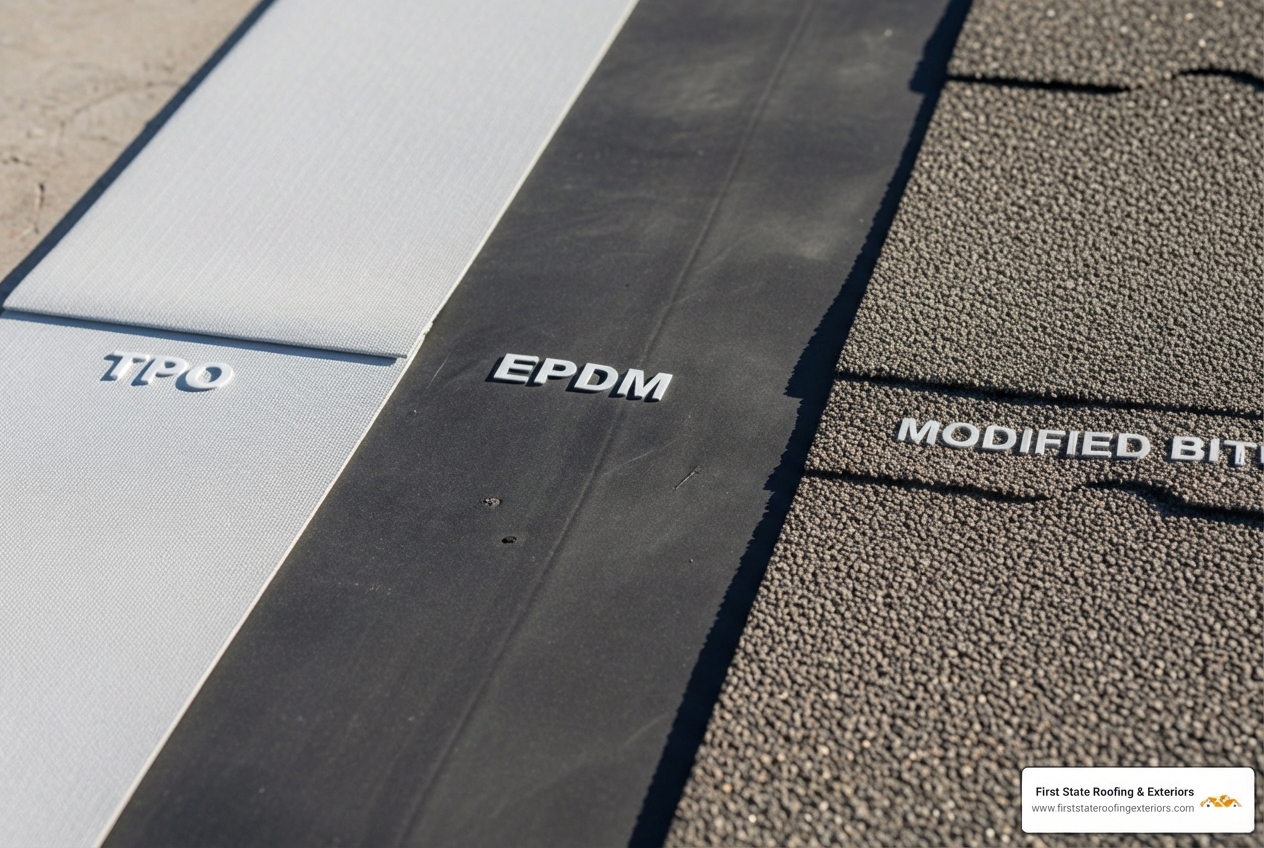
Single-Ply Membranes (TPO, EPDM, PVC)
These flexible sheets of compounded synthetic materials are manufactured in a factory to strict quality control requirements and are popular for their strength, flexibility, and long-lasting durability. The Single Ply Roofing Industry (SPRI) classifies these systems as a leading choice for commercial properties.
- TPO (Thermoplastic Polyolefin): TPO is currently the low-slope market leader, garnering a 40 percent share of the new construction market and 30 percent of the reroofing market. It’s known for being cost-effective, energy-efficient (especially in lighter colors), and resistant to UV rays and chemical exposure. TPO seams are heat-welded, creating a strong, watertight bond.
- EPDM (Ethylene Propylene Diene Monomer): EPDM, a thermoset membrane, captures 22 percent of the market share for new construction and 26 percent of the reroofing market. Often called “rubber roofs,” EPDM is highly durable, flexible, and resistant to extreme weather conditions. The EPDM Roofing Association (ERA) highlights its proven track record, with some original roofs still in service after 50 years. It’s available in both black and white.
- PVC (Polyvinyl Chloride): PVC membranes are highly resistant to chemicals, grease, and punctures, making them ideal for restaurants or facilities with exhaust systems that emit oils and fats. Like TPO, PVC seams are heat-welded for exceptional watertightness. It’s also known for its reflectivity and long lifespan.
These single-ply systems generally offer a lifespan of 15-30 years, with EPDM often reaching up to 50 years with proper maintenance.
Modified Bitumen & Built-Up Roofing (BUR)
These are multi-layer systems that offer robust protection and have a long history in commercial roofing.
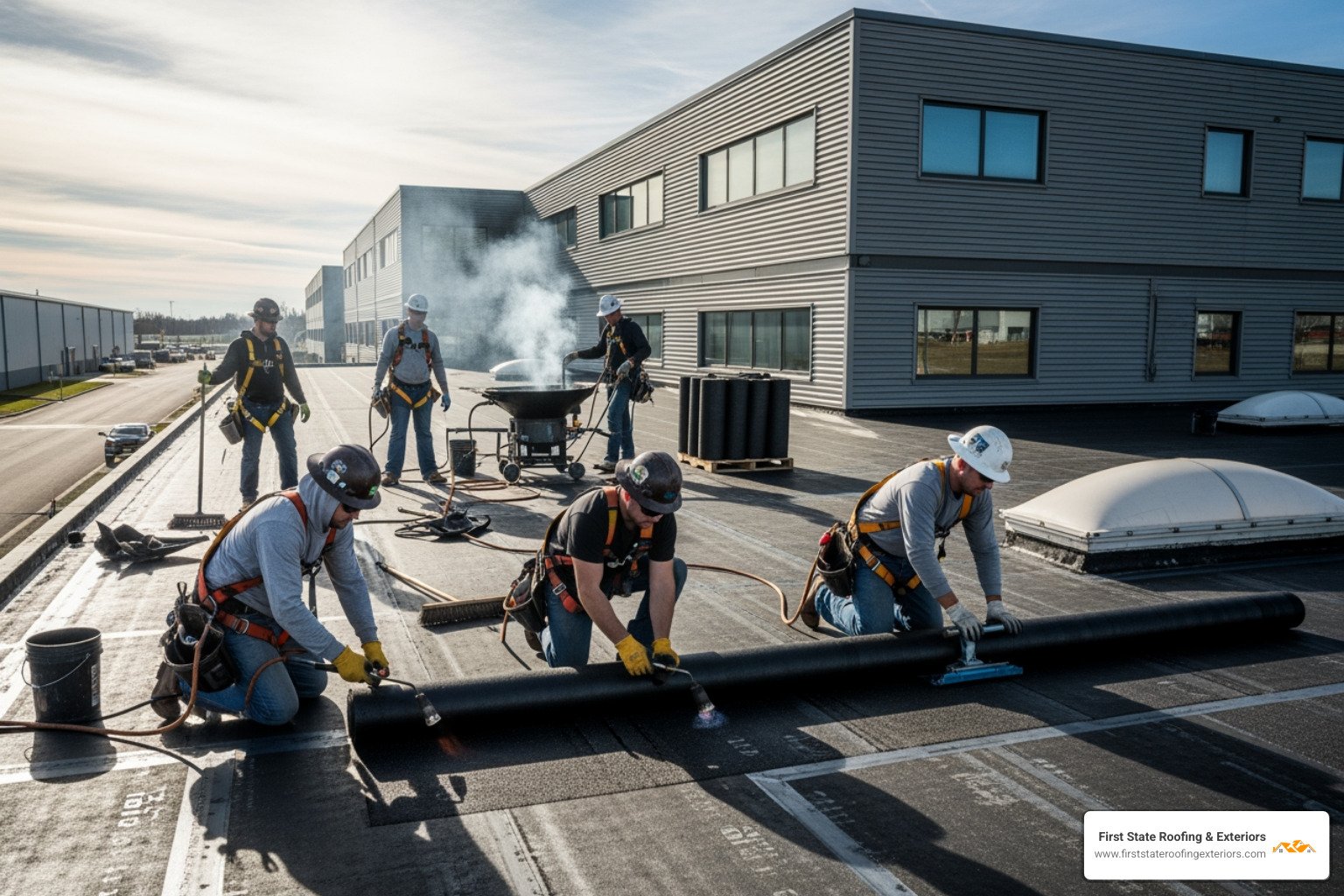
- Modified Bitumen (Mod Bit): Mod Bit is in third place for market share, at 12.4 percent of the new construction market and 14 percent of the reroofing market. It’s an asphalt-based system modified with rubber or plastic polymers to improve flexibility and durability. Installed in multiple layers, it offers superior puncture resistance and can handle moderate foot traffic. Mod Bit can be installed using a torch-applied method (though hot mopping is safer and faster), cold-applied adhesives, or self-adhering sheets. The Asphalt Roofing Manufacturers Association provides extensive resources on these systems. Lifespan typically ranges from 15-25 years.
- Built-Up Roofing (BUR): One of the oldest commercial roofing systems, BUR consists of alternating layers of asphalt (bitumen) and reinforcing fabrics (felts), topped with a layer of gravel or coating. This multi-ply “sandwich” creates a highly durable, waterproof membrane that is resistant to fire and punctures. BUR systems are known for their robustness and ease of repair, often lasting 20-30 years.
[TABLE] Comparing Flat Roofing Materials
| Material Type | Average Lifespan | Key Pros | Key Cons | Best For |
|---|---|---|---|---|
| TPO | 15-30 years | Cost-effective, energy-efficient (reflective), UV resistant, heat-welded seams | Less flexible in extreme cold, can be susceptible to some chemicals | General commercial buildings, warehouses, facilities seeking energy efficiency. |
| EPDM | 20-50 years | Highly durable, flexible, weather-resistant, long track record, low maintenance | Black color absorbs heat (white available), less puncture-resistant than multi-ply, prone to shrinkage | Buildings in varied climates, long-term investments, and those prioritizing durability. |
| PVC | 20-30 years | Chemical & grease resistant, highly reflective, strong heat-welded seams, durable | Higher initial cost, can be less flexible in extreme cold | Restaurants, food processing, buildings with chemical exhaust, facilities prioritizing reflectivity and chemical resistance. |
| Modified Bitumen | 15-25 years | Durable, handles foot traffic, good puncture resistance, easy to repair | Can be heavy, some installation methods involve open flame (torch-down), less reflective | High-traffic roofs, areas with moderate foot traffic, and those needing robust puncture resistance. |
| Built-Up Roofing (BUR) | 20-30 years | Very durable, fire-resistant, excellent waterproofing, long history | Heavy, labor-intensive installation, emits odors during installation, less flexible | Industrial buildings, roofs requiring heavy-duty protection, and those with a need for fire resistance. |
Other Viable Options
While single-ply and modified bitumen systems dominate the market, other specialized options are worth considering for your commercial flat roof replacement.
- Metal Roofing: Often associated with pitched roofs, metal is also a preferred low-slope roof covering for commercial, institutional, and industrial buildings due to its extreme durability and ability to protect against harsh weather. The Metal Construction Association (MCA) touts metal’s longevity, often lasting up to 50 years. It’s also energy-efficient, especially with reflective coatings.
- Fluid-Applied Membranes: These systems involve applying a liquid coating that cures to form a seamless, waterproof membrane over the existing roof. They are excellent for complex roof designs, offer a quick installation, and can provide a renewed lifespan and improved energy efficiency.
- Green Flat Roofing: Also known as vegetative roofs, these systems involve installing living plants in tray systems on top of the flat roof surface. They offer a range of benefits, including improved air quality, reduced stormwater runoff, improved visual appeal, and extended roof membrane life. While not a top market share contender, organizations like Green Roofs for Healthy Cities advocate for their environmental advantages.
The Commercial Flat Roof Replacement Process Step-by-Step
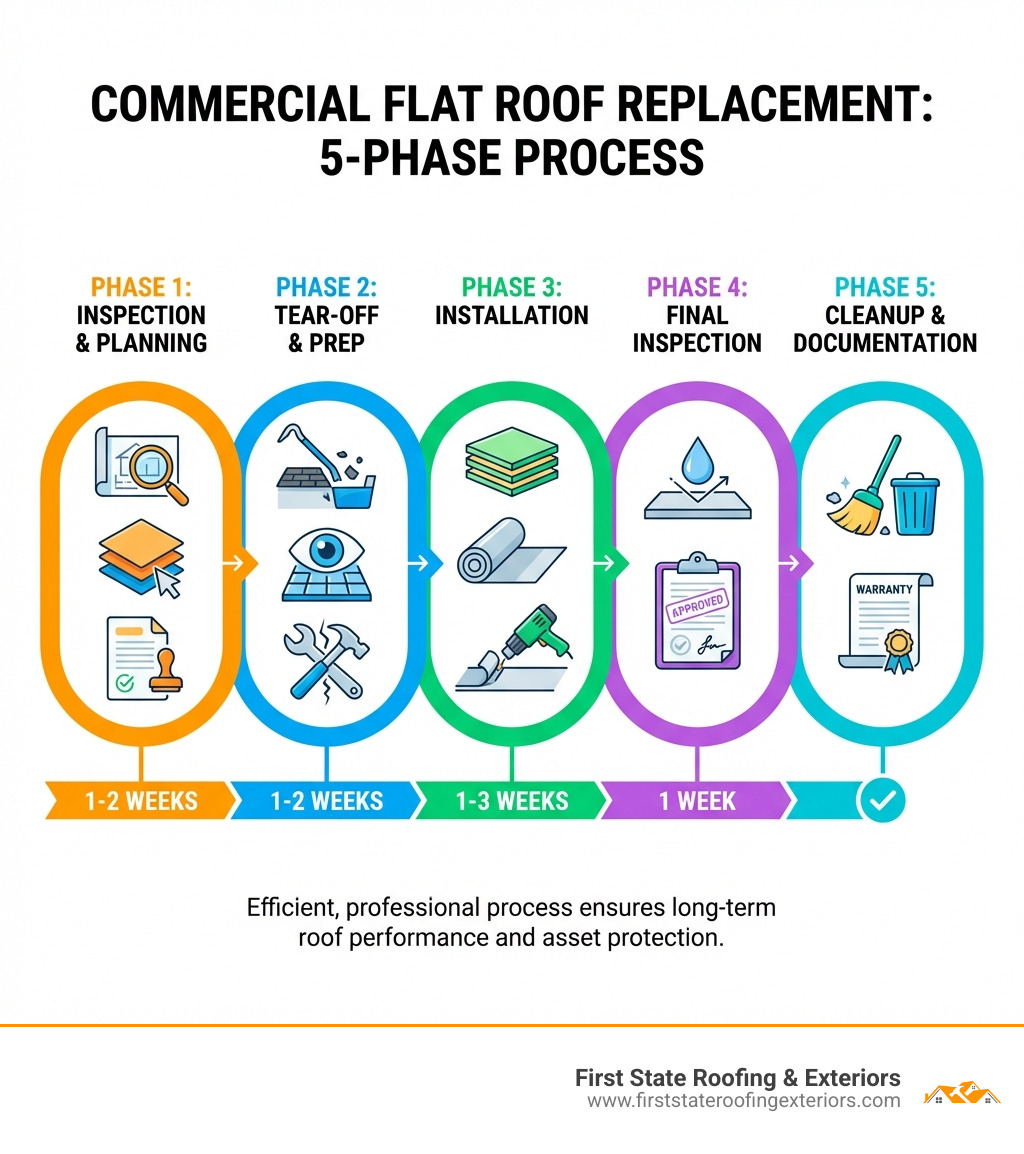
A professional replacement follows a structured process to ensure quality, safety, and minimal disruption to your business operations. From the initial tear-off to the final inspection, every step is crucial for a watertight and long-lasting result.
Phase 1: Thorough Inspection and Planning
Before any work begins, our team conducts a comprehensive assessment of your existing roof and building. This phase is crucial for an accurate estimate and a smooth project.
- Initial Assessment: We inspect both the interior and exterior of your building. Inside, we look for signs of water intrusion like discoloration, mold, or structural damage. Outside, we examine the current roofing system for tears, blisters, ponding water, damaged flashing, and drainage issues.
- Structural Deck Evaluation: We assess the condition of your roof deck, as its integrity is fundamental to the new system.
- Moisture Detection: Advanced tools help us identify hidden moisture within the roof assembly, which is critical for preventing future problems.
- Drainage Analysis: We evaluate your current drainage system to ensure it can adequately handle water runoff, making recommendations for improvements if necessary to prevent ponding water.
- Project Timeline Creation: We develop a detailed project timeline, considering the size and complexity of your roof, material availability, and weather forecasts for Dover, Milford, or anywhere in Kent and Sussex County, DE.
- Permit Acquisition: We handle all necessary permits and approvals from local government authorities, ensuring your project complies with all building codes and regulations.
Phase 2: Tear-Off and Substrate Preparation
This is where we clear the slate for your new, high-performance roof.
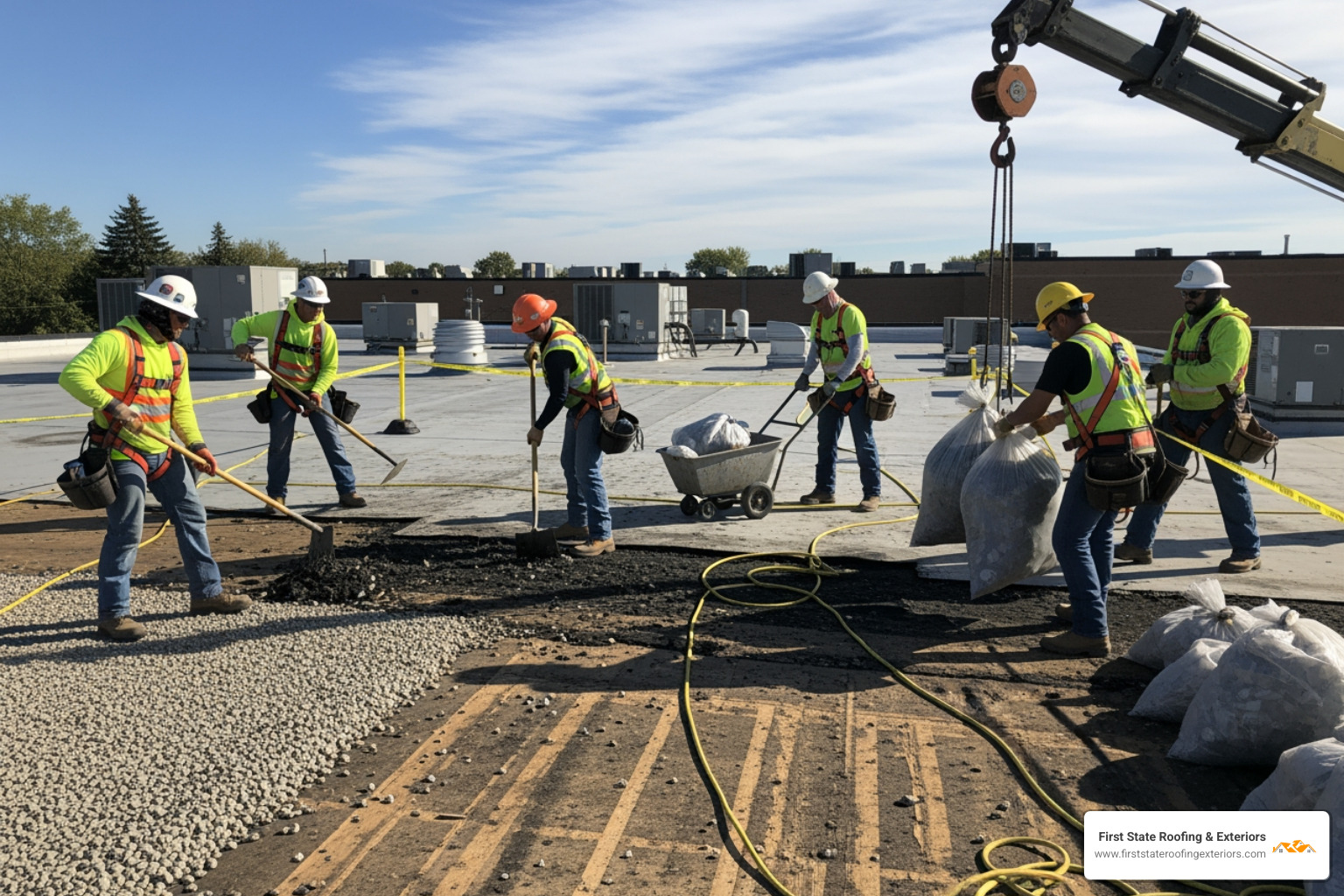
- Removal of Old Membrane: Our skilled crews, always adhering to OSHA safety standards and wearing proper safety harnesses, carefully remove the entire existing flat roofing system, down to the decking. This often involves using specialized tools like utility knives, saws, and heat guns.
- Disposal of Materials: All old roofing materials are safely removed from your property. We arrange for dumpsters and ensure proper disposal, considering recycling options where available. This phase can take anywhere from a day to a week or more, depending on the roof’s size and complexity.
- Decking Repair or Replacement: Once the old roof is off, we inspect the exposed roof deck. Any damaged, rotted, or compromised sections are repaired or replaced to provide a solid, stable foundation for the new roofing system. If more than 30% of the existing roof is wet, a full tear-off is absolutely necessary.
- Ensuring a Clean, Dry Substrate: Before installing any new components, we ensure the substrate is completely clean, dry, and free of debris. This is vital for the proper adhesion and performance of the new roofing materials.
Phase 3: Installation of New System Components
With the substrate prepared, we begin building your new, robust flat roof system.
- Insulation Installation: We install new insulation, often high R-value polyisocyanurate (polyiso) boards, to meet current energy codes and improve thermal performance. This is a crucial step in improving your building’s energy efficiency.
- Vapor Barrier Placement: In many cases, a vapor barrier is installed to prevent moisture from migrating into the insulation and roof assembly, protecting the system from within.
- Cover Board Application: A cover board is often applied over the insulation to provide an additional layer of protection, stability, and a smooth surface for the roofing membrane.
- Adhering or Fastening the New Membrane: The chosen roofing membrane (TPO, EPDM, PVC, Mod Bit, etc.) is then installed. This can involve fully adhering it with adhesive, mechanically fastening it with screws and plates, or ballasting it with gravel, depending on the system. Our team carefully follows manufacturer guidelines to ensure a flawless installation.
- Sealing Seams and Penetrations: All seams are expertly sealed (heat-welded for TPO/PVC, adhesive for EPDM, or hot-mopped for Mod Bit) to create a continuous, watertight barrier. Special attention is paid to sealing around roof penetrations like HVAC units, skylights, and vents, as these are common areas for leaks.
Phase 4: Final Inspection and Cleanup
The job isn’t done until every detail is perfect and your property is spotless.
- Watertightness Test: Depending on the system, a watertightness test may be performed to confirm the integrity of the new membrane.
- Manufacturer Inspection: In many cases, a technical representative from the roofing material manufacturer will conduct an inspection to ensure the installation meets their stringent standards, which is often a prerequisite for the full manufacturer’s warranty.
- Final Walkthrough: We conduct a thorough final walkthrough with you, the property owner or manager, to ensure your complete satisfaction with every aspect of the new roof.
- Site Cleanup: Our crew performs a meticulous cleanup of the entire work area, removing all debris and leaving your property pristine.
- Warranty Documentation: We provide you with all necessary warranty documentation, including both the manufacturer’s warranty and our workmanship warranty, ensuring your investment is protected.
Key Factors in Your Commercial Flat Roof Replacement
Beyond the materials and process, several other factors influence the longevity and performance of your new roof. Proactive planning around these elements can prevent common issues and maximize your return on investment.
Drainage and Water Pooling
One of the most persistent challenges for flat roofs is proper drainage. While “flat,” these roofs are designed with a minimal slope (typically ¼:12 to 3:12) to ensure water runs off.
- Importance of Slope: Insufficient slope or structural settling can lead to ponding water, which, if left for more than 48 hours, significantly accelerates membrane degradation and increases the risk of leaks. It’s like leaving a puddle on your kitchen floor – eventually, it’ll seep through!
- Clearing Drains and Scuppers: Regular maintenance includes keeping all drains, scuppers, and gutters clear of debris. Clogged drainage systems are a leading cause of water accumulation.
- Preventing Ponding Water: During replacement, we pay close attention to creating or enhancing positive drainage. This might involve adding tapered insulation to direct water flow more effectively. As mentioned, water leaks or damp spots on your interior ceilings and walls may indicate a breach in your roof’s waterproofing layers.
Energy Efficiency and “Cool Roofs”
Investing in a new commercial flat roof replacement is an excellent opportunity to boost your building’s energy performance.
- Reflective Materials: “Cool roofs” use highly reflective and emissive materials to reduce the amount of solar heat absorbed by the roof. Materials like white TPO and PVC are excellent choices, reflecting sunlight and keeping your building cooler. The Cool Roof Rating Council provides valuable data on these surfaces.
- Insulation R-Value: Upgrading your roof’s insulation with higher R-value materials, such as polyisocyanurate, significantly improves thermal resistance, leading to less heat transfer. This keeps your building warmer in winter and cooler in summer.
- Lowering Utility Costs: The combined effect of reflective membranes and superior insulation can lead to substantial reductions in your annual heating and cooling expenses, providing a significant return on your investment over the life of the roof.
Choosing a Qualified Contractor
Selecting the right roofing partner is paramount to the success of your commercial flat roof replacement project.
- Local Expertise: As a family-owned Kent and Sussex County, DE-based company, we understand the specific climate challenges and building codes unique to Dover, Milford, and the surrounding areas. Our local knowledge ensures your roof is designed and installed to withstand our regional weather patterns.
- Licensing and Insurance: Always verify that your contractor is fully licensed and insured. This protects you from liability in case of accidents or property damage during the project.
- Manufacturer Certifications: Certifications from leading manufacturers (like GAF Master Elite) indicate that a contractor has undergone rigorous training and meets high installation standards, often a requirement for premium warranties.
- Reviewing Past Projects: Look for contractors with a proven track record in commercial flat roof replacements. Ask for references and review their portfolio to see examples of their work.
- Hiring a Licensed Roofing Contractor or Inspector: The National Roofing Contractors Association (NRCA) emphasizes the importance of hiring qualified professionals to assess your existing system and ensure proper installation. This due diligence is crucial for a successful outcome.
- Local Service in Seaford, DE: We pride ourselves on being local experts, dedicated to protecting and enhancing businesses with integrity and transparency across Kent and Sussex County, DE.
Conclusion
A commercial flat roof replacement is a proactive investment in your building’s future. By understanding the warning signs, evaluating the best materials, and partnering with a trusted expert, you can ensure your new roof provides decades of reliable protection. For business owners in Kent and Sussex County, DE, choosing a local, family-owned company like First State Roofing & Exteriors guarantees a commitment to quality craftsmanship and transparent service. We are dedicated to protecting your investment with a durable, energy-efficient roofing solution.
Ready to secure your property? We provide free, no-obligation estimates, and our team is available 24/7 to assess your roof and explain your options in clear, straightforward terms. Call (302) 222-4065 to schedule your free inspection and learn more about our roof replacement services.