Why Finding the Right Roofer Matters for Your Home
When you need to find roofers in my area, the stakes are high—your roof protects your family, belongings, and your entire investment. A rushed decision can lead to poor workmanship, inflated costs, or even contractors who disappear mid-project. The good news? With the right approach, you can locate a qualified professional who delivers quality results at a fair price.
Quick Answer: How to Find Roofers in My Area
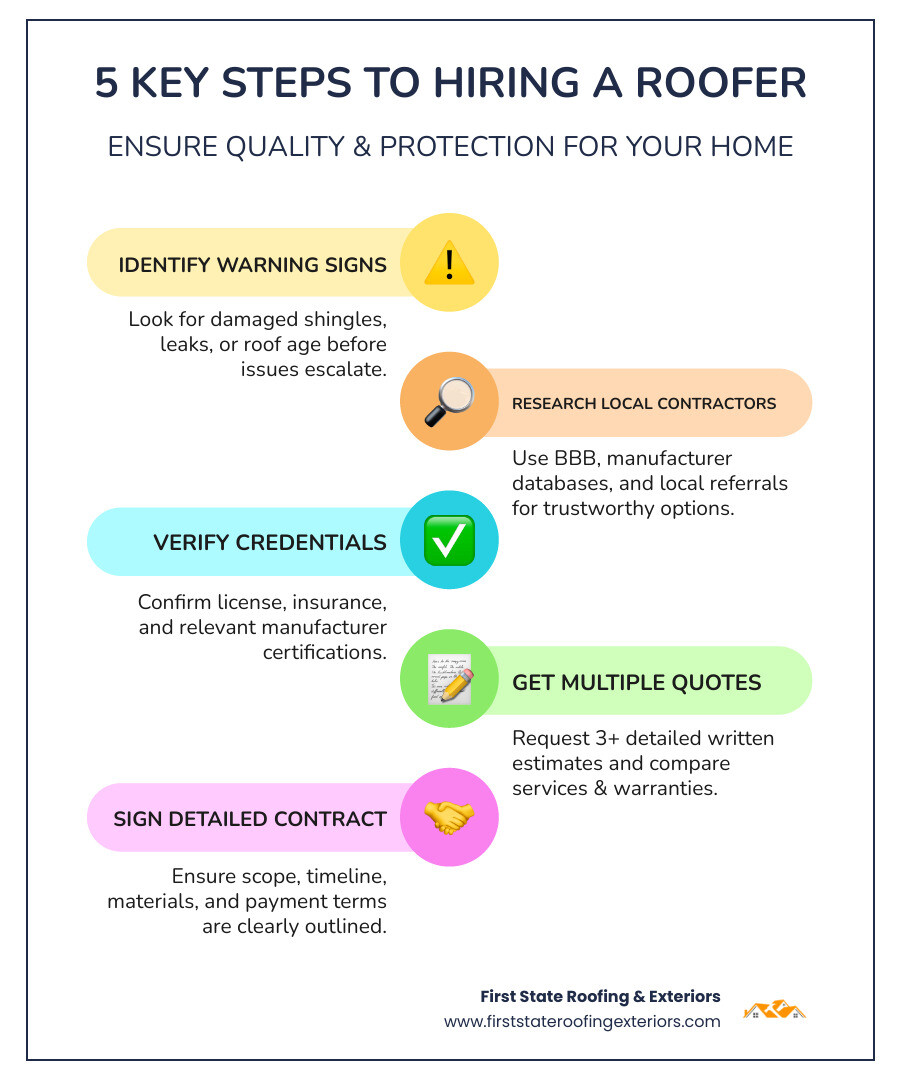
- Search online directories – Start with the Better Business Bureau (BBB) or manufacturer databases like GAF’s contractor finder
- Verify credentials – Confirm licensing, insurance, and manufacturer certifications
- Get multiple estimates – Request at least three detailed, written quotes
- Check local reviews – Read customer testimonials and ask for local references
- Ask the right questions – Inquire about warranties, timelines, and property protection
Whether you’re dealing with an aging roof, storm damage, or simply planning ahead, understanding how to vet contractors saves time and stress. For homeowners in Delaware seeking reliable local roofing solutions, this guide is your key to making a confident decision, ensuring you partner with contractors who understand regional weather challenges.
The typical roof repair costs between $380 and $1,800, while a full replacement averages $5,890 to $12,800. With an asphalt shingle roof lasting 20-25 years, choosing the right installer directly impacts decades of protection and value.
As Richard McCain, owner of First State Roofing & Exteriors with over 20 years of experience, I’ve helped countless Delaware homeowners successfully find roofers in my area who deliver honest, quality work. My team provides free estimates and inspections to assess your needs accurately—call us at (302) 222-4065 for a free inspection today.
7 Telltale Signs You Need a Roofer
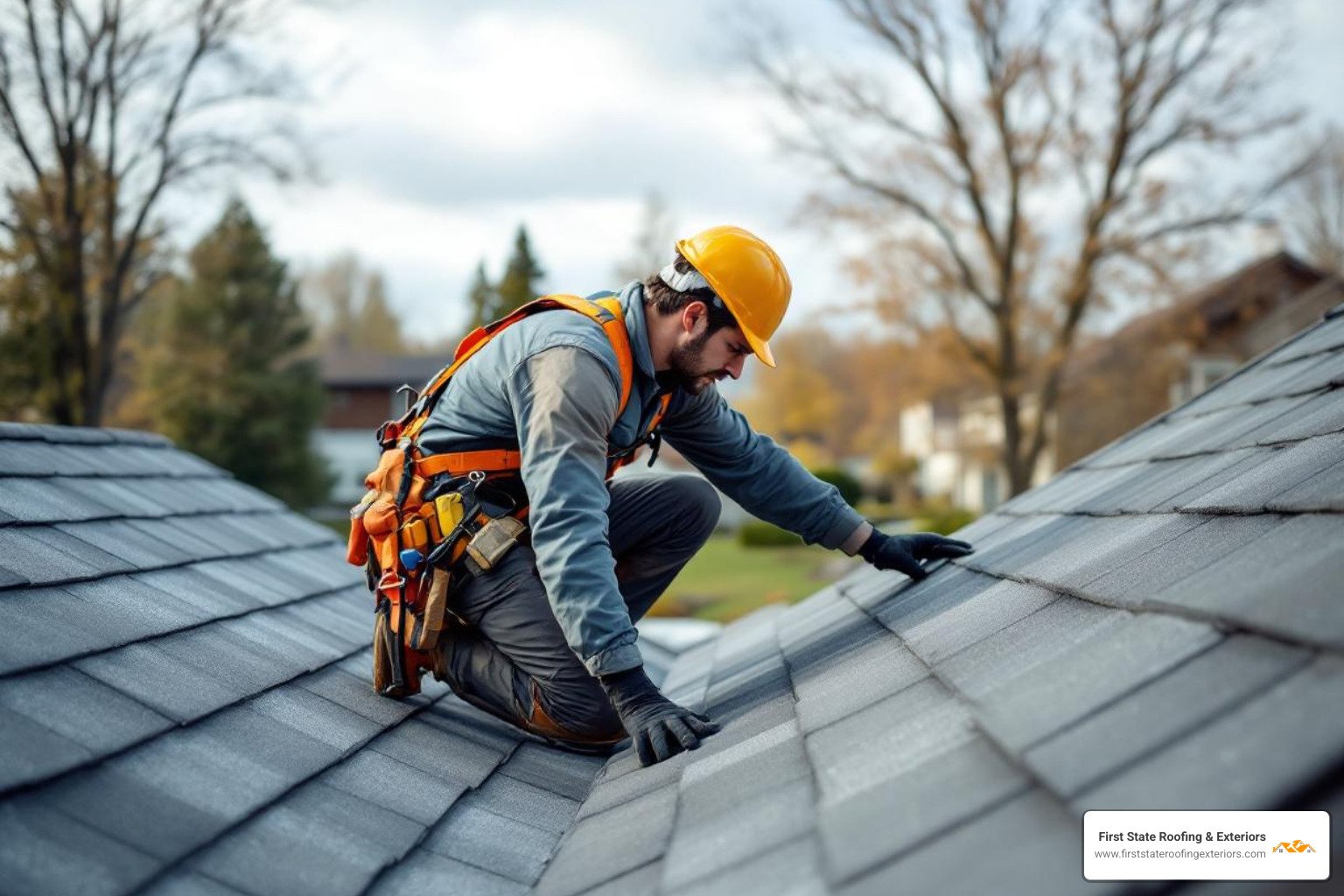
Your roof often gives subtle clues before screaming for help. Ignoring these signs can lead to costly repairs down the line. Here are the seven most common indicators that it’s time to call in the professionals:
- Roof Age: A typical asphalt shingle roof has a lifespan of 20-25 years. If your roof is approaching or has exceeded this age, even if it looks okay from the ground, it’s wise to have it inspected. Its protective capabilities diminish significantly over time.
- Damaged Shingles: Keep an eye out for shingles that are curling, buckling, or cracked. These are clear signs that the shingles are losing their ability to shed water effectively, making your home vulnerable to leaks.
- Bald Spots: When you find dark patches where granules have worn off on your shingles, or see loose granules accumulating in your gutters, it indicates significant wear. These granules protect the asphalt from UV rays, and once they’re gone, the shingle deteriorates rapidly.
- Ceiling Stains: Water spots on your interior ceilings or walls are a red flag for a leaky roof. Don’t ignore them, even if they seem small. Water intrusion can lead to mold, rot, and extensive structural damage if not addressed promptly.
- Moss and Algae: While sometimes just a cosmetic issue, extensive growth of moss and algae can trap moisture against your shingles. This moisture can degrade the roofing material and, over time, lead to significant damage.
- Sagging Roof Deck: If your roof has a noticeable dip or a sagging appearance, it points to structural issues. This is often caused by trapped moisture or inadequate support, and requires immediate attention from an expert.
- Higher Energy Bills: A failing roof can compromise your attic’s ventilation and insulation. This leads to heat escaping in winter and entering in summer, making your HVAC system work harder and driving up your energy costs.
How to Find Reputable Roofers in My Area
Once you’ve identified that your roof needs attention, the next crucial step is to find roofers in my area who are reputable, reliable, and skilled. This section is your roadmap to navigating the local market and selecting a trustworthy professional.
Where to Look for Local Roofing Experts
Finding the right local contractor starts with knowing where to look. We recommend focusing on sources that emphasize vetting and customer feedback:
- Online Directories: Start with trusted platforms like the Better Business Bureau (BBB) to find accredited professionals. The BBB assigns ratings from A+ to F and highlights businesses that meet their accreditation standards, offering a solid starting point for your search in Delaware. Another excellent resource is HomeAdvisor or Angi, where you can enter your zip code and get matched with top-rated roofers in your specific area.
- Manufacturer Databases: Major manufacturers like GAF, North America’s largest roofing manufacturer, certify local contractors who are trained to install their products correctly. You can often use their websites, like GAF’s contractor finder, to locate certified roofers in Dover, Milford, or other Delaware locations. These certifications often come with stronger warranties, too!
- Local Referrals: Sometimes, the best recommendations come from those closest to you. Ask friends, family, and neighbors in Delaware for their experiences and suggestions. A personal referral often comes with a level of trust that online searches can’t immediately provide.
- Community Groups: Local social media groups or neighborhood forums can be a source of candid reviews and suggestions. Just be sure to cross-reference any recommendations with other vetting methods.
Vetting Your Candidates: Credentials to Check
Once you have a list of potential roofers, it’s time to dig deeper. Verifying credentials is non-negotiable when you’re trying to find roofers in my area.
- Licensing and Insurance: A reputable roofer must have both general liability insurance and worker’s compensation. General liability protects your property from damage, while worker’s comp covers their employees if an accident occurs on your property. Always ask for proof and verify its validity. Operating without these can leave you liable for accidents.
- Manufacturer Certifications: A certified roofing company indicates a higher level of training and quality. For example, GAF offers various levels of certification, including “Master Elite” contractors, who are recognized for their commitment to ongoing training and quality craftsmanship. These certifications often allow contractors to offer improved manufacturer warranties.
- Industry Associations: Membership in organizations like the National Roofing Contractors Association (NRCA) shows a commitment to industry standards and best practices. While not mandatory, it often signifies a contractor’s dedication to professionalism and continuous improvement.
- Local Reputation: Beyond online reviews, ask for a list of local references you can contact. Speaking with past clients in your Delaware community can provide invaluable insight into a contractor’s reliability, communication, and quality of work.
Key Questions to Ask Before You Hire a roofer in your area
Before signing any contracts, a thorough conversation with your prospective roofer is essential. These questions help ensure you’re making an informed decision:
- How long have you been in business in this area? Experience matters, especially in local conditions. A long-standing presence in Delaware often indicates stability and a good track record.
- Can you provide proof of license and insurance? As mentioned, this is critical. A trustworthy contractor will readily provide these documents for verification.
- What warranty do you offer on your workmanship, and what manufacturer warranties are available? Understand both the contractor’s guarantee on their labor and the manufacturer’s warranty on the materials. GAF, for instance, offers various improved warranties like the Golden Pledge Limited Warranty when installed by certified contractors.
- Will you provide a detailed, written estimate? Never settle for a verbal quote. A comprehensive estimate should itemize materials, labor, debris removal, and any additional costs.
- What is the projected timeline for the project? Understanding the start and completion dates helps you plan and minimizes disruption to your daily life.
- How will you protect my property and landscaping during the work? A professional roofer will take precautions to safeguard your home, gardens, and driveways from falling debris.
- What is your process for handling unexpected issues? Sometimes, during a tear-off, hidden damage is uncovered. Knowing how your contractor addresses these situations (and the potential impact on cost/timeline) is important.
- Who will be performing the work, and are they employees or subcontractors? This can affect quality control and accountability.
Decoding the Costs: Roof Repair vs. Replacement
Understanding the financial aspect is a significant part of the process when you find roofers in my area. Roofing work can be a substantial investment, and knowing what to expect financially can help you budget and make the right decision for your home in Delaware.

- Repair Costs: Typical roofing repairs cost between $380 and $1,800 on average. However, most homeowners spend approximately $1,100 on a roofing repair project. The price can vary significantly based on the type of damage, the materials needed, and the complexity of the repair. A quick fix for a few missing shingles will be far less than addressing extensive water damage from a persistent leak.
- Replacement Costs: The cost of a full roof replacement is often significantly more expensive than the cost to repair it. On average, homeowners will spend between $5,890 and $12,800 to replace a roof. This higher cost reflects the extensive labor, materials, and disposal involved in a complete overhaul.
- Cost Factors: The final price for both repair and replacement is influenced by several factors:
- Roof Size and Pitch: Larger roofs require more materials and labor. Steeper pitches are more challenging and dangerous to work on, increasing labor costs.
- Accessibility: If your roof is difficult to access, requiring special equipment or extensive scaffolding, costs will be higher.
- Chosen Materials: As we’ll discuss, different roofing materials have vastly different price points.
- Your Geographic Location: Labor rates and material costs can vary even within Delaware.
Here’s a quick guide to help you decide when to repair and when to commit to a full replacement:
| When to Repair | When to Replace |
|---|---|
| Roof is under 15 years old | Roof is over 20 years old |
| Damage is isolated to a small area | Damage is widespread |
| Budget is a primary concern | You are planning to sell the home soon |
| Small leaks or minor wear | Multiple leaks are present |
| Repair cost is less than 25% of replacement cost | Repair cost approaches or exceeds 50% of replacement cost |
A Guide to Common Roofing Materials
Choosing the right material is crucial for your home’s longevity, budget, and curb appeal. When you find roofers in my area, they’ll guide you through the options, but it’s good to have a basic understanding yourself.
Asphalt Shingles: The Popular Choice
Asphalt shingles are by far the most common roofing material in Delaware and across the U.S., and for good reason.
- Pros: They are affordable, come in a wide variety of colors and styles to match any home aesthetic, and are relatively easy to install and repair. This makes them a versatile and cost-effective choice for many homeowners.
- Cons: Their main drawback is a shorter lifespan (typically 20-25 years) compared to other materials. They can also be susceptible to damage from very high winds, which is something we consider in coastal Delaware.
- Best For: Homeowners looking for a balance of cost-effectiveness, versatility, and proven performance.
Metal Roofing: Durable and Efficient
Metal roofing has seen a surge in popularity, particularly for those seeking long-term value and modern aesthetics.

- Pros: Metal roofs are extremely durable, often boasting a 50+ year lifespan. They are energy-efficient, reflecting solar radiant heat and reducing cooling costs. They’re also fire-resistant and surprisingly lightweight.
- Cons: The primary consideration is a higher upfront cost compared to asphalt shingles. Installation also requires specialized skill, so ensuring your chosen contractor has experience with metal roofing is key.
- Best For: Homeowners prioritizing longevity, energy savings, and a sleek, modern aesthetic. They are particularly well-suited for homes that may face harsh weather conditions.
Slate, Cedar, and Clay: Premium Options
For those looking for distinctive looks and exceptional performance, premium materials offer unique advantages.
- Slate: This natural stone is king for longevity, often lasting 100+ years. It’s incredibly beautiful, fireproof, and resistant to rot. However, it’s very heavy, requiring a robust roof structure, and significantly more expensive to install.
- Cedar Shake: Cedar shakes offer a beautiful, natural aesthetic that ages gracefully and provides good insulation. They are often chosen for their rustic charm. However, they require more regular maintenance, including cleaning and treatment, to prevent moss and rot, and their fire resistance is lower than other options unless treated.
- Clay Tiles: Extremely durable and fire-resistant, clay tiles are perfect for specific architectural styles, especially those with Mediterranean or Spanish influences. They can last for decades. The main downsides are their weight (similar to slate) and their brittle nature, which makes them prone to cracking if walked on improperly.
Proactive Care: Extending Your Roof’s Lifespan & Handling Storms
Your roof works hard day in and day out, protecting your home from the elements. A little maintenance and quick action after a storm can save you thousands in the long run. We believe in empowering homeowners with the knowledge to protect their investment.
Essential Roof Maintenance Tips
Think of roof maintenance like car maintenance – a little preventative care goes a long way.
- Regular Inspections: We recommend visually inspecting your roof at least twice a year, typically in the spring and fall. Always conduct an additional visual check after major storms, especially if there were high winds or hail. Look for loose, cracked, or missing shingles, and any debris accumulation.
- Clean Gutters: Ensure gutters and downspouts are clear of leaves, twigs, and other debris. Clogged gutters can cause water to back up, leading to fascia rot, ice dams in winter, and water intrusion into your home’s foundation or attic.
- Trim Trees: Cut back overhanging branches from trees near your roof. This prevents damage from falling limbs during storms and reduces the amount of debris (leaves, sap) that collects on your roof, which can promote moss and algae growth.
- Address Issues Promptly: Small issues like a single missing shingle or a tiny leak should be addressed quickly. What seems minor can rapidly escalate into significant water intrusion and costly structural damage if ignored.
What to Do After Storm Damage
Delaware weather can be unpredictable, and storms happen. Knowing what to do immediately after your roof sustains damage can make a big difference in the repair process and insurance claims.
- Safety First: Your safety is paramount. Do not climb on your roof, especially if there’s standing water, exposed electrical wires, or active storm conditions. Assess damage from a safe distance on the ground.
- Document Everything: As soon as it’s safe, take clear photos and videos of all damage. This includes missing shingles, dents, punctures, debris on the roof, and any interior leaks. This documentation is crucial for your insurance claim.
- Mitigate Damage: If it’s safe to do so, use a tarp to cover damaged areas to prevent further water entry. Many local roofers offer emergency tarping services. This step shows your insurance company you took reasonable measures to prevent further loss.
- Call a Professional: Contact a roofer specializing in storm damage repair as soon as possible. We can provide a professional assessment, help identify all damage (even hidden issues), and give you an estimate. Having a contractor present when your insurance adjuster inspects the roof can also be beneficial. You have the right to choose your contractor, not just use the one your insurance company suggests.
- Contact Your Insurance Provider: File your claim promptly. Provide them with your documentation and the assessment from your chosen roofer.
Frequently Asked Questions about how to find roofers in my area
When you’re trying to find roofers in my area, you likely have a lot of questions. Here are some of the most common ones we hear from homeowners in Delaware:
How often should I have my roof professionally inspected?
It is recommended to have a professional roof inspection at least once every two years, and always after a severe weather event like a hailstorm or hurricane. This helps catch minor issues before they become major problems. Regular inspections can identify small cracks, loose flashing, or early signs of shingle wear that might be missed during a ground-level visual check. Addressing these issues proactively can significantly extend your roof’s lifespan and prevent expensive emergency repairs.
Can I just install a new layer of shingles over my old ones?
While sometimes possible and known as a “re-roof” or “overlay,” it is generally not recommended. Most building codes in Delaware allow for a maximum of two layers of shingles. However, a complete tear-off allows the roofer to inspect the underlying roof deck for rot, water damage, or structural issues that would be hidden by the old shingles. It also ensures a proper, flat installation for the new roof system, which is critical for manufacturer warranty coverage and the longevity of your new roof. An overlay can also add excessive weight to your roof structure and may not provide as clean or durable a finish.
How long does a typical roof replacement take?
For an average-sized home with asphalt shingles, a full roof replacement can typically be completed in 1 to 3 days. However, factors like weather conditions (rain, extreme heat), the complexity of your roof (steep pitch, multiple valleys, skylights), and the type of material being installed (e.g., metal or slate takes longer) can extend this timeline. Our team prides itself on efficient and high-quality work, always keeping you informed of the project’s progress.
Conclusion: Making the Right Choice for Your Home
Finding the right roofer requires more than a quick search; it involves careful research, vetting, and asking the right questions. By checking for proper licensing, insurance, and certifications, you can protect your investment and ensure a quality installation. A roof is a long-term investment, and choosing the right professional today will pay dividends in peace of mind and protection for years to come.
For homeowners in Delaware, choosing a local, family-owned expert like First State Roofing & Exteriors guarantees a partner dedicated to integrity, transparency, and 24/7 availability. We understand the unique challenges our local climate presents and are committed to protecting and enhancing your home or business. We provide free estimates to help you make an informed decision. If you’re ready to partner with a trusted local expert, call us at (302) 222-4065 for a free inspection today.